


You go to work every day trusting a safety net is in place. If you get hurt, the workers’ compensation system is supposed to catch you, covering medical bills and lost wages while you heal. But what happens when that safety net has holes? A denied claim or a delayed payment can feel like a free fall. This guide shows you the essential steps to protect yourself after an injury. When the insurance company fights back, the best workers’ compensation lawyer in Springfield, MO can patch those holes. A skilled workers compensation lawyer ensures your claim is solid so you can focus on healing.
Key Takeaways
- Protect Your Claim from Day One: Immediately report your injury to your employer in writing and seek medical attention. This creates the official paper trail required to link your injury to your job and is the most important step in securing your right to benefits.
- Know the Full Scope of Your Benefits: Workers’ compensation is a safety net designed to cover 100% of your authorized medical bills and replace a portion of your lost wages, allowing you to focus on recovery without the added financial stress.
- Partner with a Professional Advocate: An experienced attorney manages the complex paperwork, deadlines, and all communication with the insurance company, fighting to secure the maximum benefits you’re entitled to so you can concentrate on healing.
How Does Workers’ Comp Work in Missouri?
If you’ve been injured at work, you’re probably feeling overwhelmed and unsure about what to do next. The workers’ compensation system can seem complicated, but it’s designed to protect you. Essentially, it’s a form of insurance that most employers in Missouri are required to have. It provides benefits to employees who get hurt or become ill because of their job.
Understanding the basics of this system is the first step toward getting the support you need to recover. It operates on a “no-fault” basis, which means you don’t have to prove your employer did something wrong to cause your injury. In return, you generally can’t sue your employer for the injury. Let’s break down the key rules, deadlines, and what kind of injuries are covered.
The Reality of Workplace Injuries in Missouri
It’s easy to think a serious injury at work is something that happens to other people. You follow the safety rules, you know your job, and you don’t take unnecessary risks. But accidents happen in even the safest environments, and the numbers show they are far more common than most of us realize. Understanding the frequency of these incidents is the first step in appreciating why the workers’ compensation system exists and why it’s so important to protect your rights if you get hurt. These aren’t just abstract figures; they represent real people whose lives were unexpectedly disrupted while simply trying to earn a living.
State and National Statistics
In Missouri alone, private employers report over 55,000 workplace injuries each year. That number highlights just how frequently people in our communities are getting hurt on the job. On a national scale, the issue is even more significant, with millions of non-fatal injuries and thousands of fatal incidents occurring annually. These statistics paint a clear picture: a workplace injury is a real and constant risk, regardless of your profession. It underscores the need for every employee to know what to do and who to turn to if they become part of that statistic, ensuring they can access the support they are legally entitled to receive.
More Than a Claim: The Personal Impact of a Work Injury
Getting hurt at work is more than just a physical event; it can completely turn your life upside down. Suddenly, you may be unable to work, provide for your family, or even enjoy your favorite hobbies. The financial strain of lost wages combined with the stress of recovery can take a serious toll on your mental health, affecting your self-worth and sometimes leading to depression. This ripple effect touches every part of your life, transforming a single incident into a prolonged period of hardship for you and your loved ones. It’s not just about filing paperwork; it’s about rebuilding your life.
To make matters worse, the system designed to help you can often feel like it’s working against you. Your employer and their insurance company have a primary goal: to minimize their costs. They have lawyers and adjusters dedicated to limiting what they pay out on claims. It’s a frustrating reality that many valid workers’ compensation claims are denied at first, often due to disputes over how the injury occurred or discrepancies in medical reports. When you’re trying to heal, the last thing you need is a fight. Having an advocate who understands personal injury law ensures you are treated fairly and your voice is heard.
What Are Missouri’s Workers’ Comp Laws?
Missouri’s workers’ compensation laws are in place to help you get back on your feet after a work-related injury. This insurance is meant to cover your medical bills and replace a portion of your lost wages while you’re unable to work. It can also pay for rehabilitation services, like physical therapy, to help you recover. In the tragic event that a worker dies on the job, the system provides benefits to their family. The goal is to ensure you receive necessary medical care and financial support without having to file a lawsuit against your employer. Navigating these laws is a key part of our personal injury practice.
Employer Coverage Requirements
You might assume every employer has workers’ compensation insurance, but that’s not always the case in Missouri. The law requires most employers with five or more employees to carry this coverage. However, the rules are stricter for the construction industry, where all employers must have workers’ compensation, regardless of how many people they employ. This requirement is the foundation of your protection, ensuring a dedicated insurance fund is available to cover your medical treatments and a portion of your lost income. If you’re ever unsure whether your employer is legally required to have this coverage, it’s a good idea to get a clear answer from a professional who understands these specific regulations.
Don’t Miss These Reporting Deadlines
After a workplace injury, time is of the essence. Missouri law requires you to report your injury to your employer, in writing, within 30 days. This is a strict deadline, and failing to meet it could jeopardize your right to receive any benefits. Even if the injury seems minor at first, it’s crucial to report it immediately. Some injuries get worse over time, and having an official record from the start protects you. Don’t let this critical step slip through the cracks. Notifying your supervisor or HR department in writing creates a paper trail and officially starts the claims process, ensuring you’ve done your part to secure your benefits.
Understanding the Two-Year Statute of Limitations
While you have 30 days to report your injury to your employer, there’s another critical deadline you need to know: the statute of limitations. In Missouri, you generally have two years to file a formal claim for compensation. This clock usually starts on the date of the accident, but it could also begin on the date of your last medical treatment paid for by your employer or the date of your last benefit payment. This detail can be tricky, and it’s where many people get confused. If you miss this two-year window, you could lose your right to any benefits, no matter how serious your injury is. Since many initial claims face delays or denials, keeping this deadline in mind is essential. If you’re worried about timelines or how to proceed, seeking legal advice can provide clarity and protect your rights.
What Injuries Are Covered?
For an injury to be covered by workers’ compensation, it must be “work-related.” This means the injury must arise out of and in the course of your employment. In simpler terms, it has to happen because of your job duties and while you were doing something that benefits your employer. This includes obvious accidents, like a fall on a construction site, as well as illnesses that develop over time from exposure to workplace conditions. It can also cover injuries that happen off-site, as long as you were performing a work-related task. If you’re unsure whether your injury qualifies, it’s always a good idea to contact our office to discuss your specific situation.
Common Types of Workplace Injuries
Workplace injuries aren’t limited to one or two specific scenarios; they can happen in any industry and take many forms. We handle a wide range of cases, from sudden accidents to conditions that develop over time. This includes everything from back injuries and bone fractures caused by a slip and fall to more severe incidents like industrial accidents, burns, or injuries from falling objects. Even issues like chemical exposure or occupational diseases that appear gradually are recognized. Whether you were hurt in a forklift accident, a work-related traffic collision, or from repetitive strain, your injury deserves attention. The system is designed to address the full spectrum of harm that can occur on the job, and our team is experienced in handling these diverse personal injury claims.
Who is Covered by Workers’ Comp?
You might be wondering if your employer is even required to have workers’ compensation insurance. In Missouri, the law is quite specific. Most employers with five or more employees are legally obligated to provide this coverage. The rule is even stricter for the construction industry, where all employers must have workers’ comp, regardless of how many people they employ. This mandate ensures that a safety net is in place for the vast majority of workers across the state. If you’re hurt on the job, there’s a strong likelihood that your employer has this insurance. If you have questions about your employer’s status or are facing resistance, don’t hesitate to contact our office for clarity.
What About Third-Party Claims?
Sometimes, your workplace injury isn’t caused by your employer or a coworker but by someone else entirely—a third party. For example, if you’re a delivery driver and get into a car accident caused by another motorist, you may have both a workers’ comp claim and a separate personal injury claim against the at-fault driver. The same applies if you were injured by a defective piece of machinery made by another company. These are known as third-party claims. Pursuing one allows you to seek compensation for damages that workers’ comp doesn’t cover, like pain and suffering. It’s a separate legal action that can be filed alongside your workers’ comp claim, and it’s a critical avenue to explore for full and fair recovery.
Injured at Work? Here’s What to Do Next
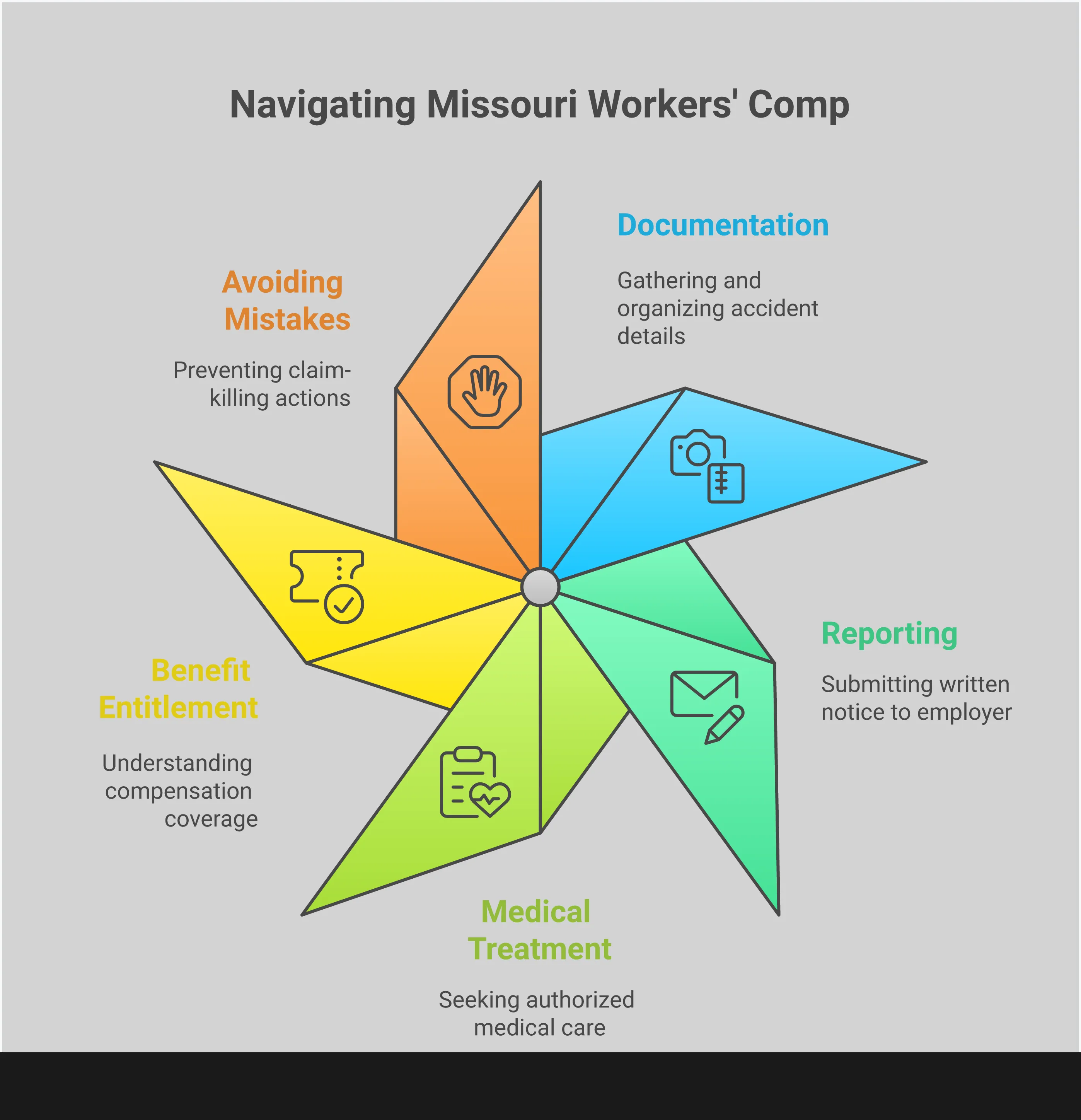
Getting hurt on the job can be disorienting. In the moments that follow, it’s easy to feel overwhelmed and unsure of what to do next. The steps you take immediately after an injury are critical, not just for your physical recovery but also for protecting your rights to workers’ compensation benefits. Think of it as a checklist to protect yourself. By getting medical care, documenting the details, and officially reporting the incident, you build a strong foundation for your claim.
It’s also important to be aware of common missteps that can jeopardize your case. The workers’ compensation system has specific rules and deadlines that can be tricky to handle on your own, especially when you’re focused on healing. Taking a calm, methodical approach can make all the difference. Let’s walk through exactly what you should do if you find yourself in this situation.
First Step: Get Immediate Medical Care
Your health should always be your first priority. Even if you think your injury is minor, seek medical attention right away. Some injuries, like concussions or internal damage, aren’t immediately obvious but can have serious long-term effects. Seeing a doctor ensures you get the care you need and creates an official medical record linking your injury to the workplace incident. This documentation is a cornerstone of your workers’ compensation claim.
In Missouri, your employer has the right to choose the doctor who treats your work-related injury. You must go to their designated physician to ensure your medical bills are covered by their insurance. If you’re facing a serious injury, understanding your rights within the workers’ comp system is key. Our firm handles a wide range of personal injury cases and can help you understand the process.
Create a Paper Trail: Document Everything
After an accident, details can become fuzzy. That’s why it’s so important to document everything you can while the memory is fresh. If possible, take photos of the accident scene, any equipment involved, and your visible injuries. Write down exactly what happened, including the date, time, and location. Make a note of anyone who witnessed the incident and get their contact information.
This evidence is crucial because a large part of any claim involves proving the injury happened at work. Keep a dedicated folder for all your paperwork, including medical reports, bills, and any correspondence with your employer or their insurance company. A detailed record strengthens your case and helps your attorney build the strongest argument on your behalf.
How and When to Report Your Injury
You must officially report your injury to your employer to start the workers’ compensation process. While Missouri law gives you 30 days to provide a written notice, you should do it as soon as possible. A delay could give the insurance company a reason to question whether your injury is truly work-related. Failing to report the incident correctly can put your benefits at risk.
Make your report in writing—an email or a formal letter works well. Clearly state what happened, what part of your body was injured, and the date and time of the incident. Be sure to keep a copy for your own records. If you’re unsure about how to phrase your report or if your supervisor is dismissive of your injury, it’s a good idea to contact an attorney for guidance.
Common Mistakes That Can Hurt Your Claim
The workers’ compensation system is more complex than most people realize. Insurance companies are businesses, and their goal is often to pay out as little as possible. A common mistake injured workers make is giving a recorded statement to an insurance adjuster without speaking to a lawyer first. These statements can be used against you later to minimize or deny your claim.
Another pitfall is assuming you don’t need legal representation. Many people believe hiring a lawyer is too expensive or unnecessary, but an experienced attorney can help you avoid costly errors and ensure you receive all the benefits you’re entitled to. In fact, having a lawyer often means you receive more benefits overall, even after accounting for legal fees. Don’t let a simple mistake prevent you from getting the support you deserve.
Do I Really Need a Workers’ Comp Attorney?
After a workplace injury, your focus should be on recovery, not fighting with insurance companies or trying to figure out complex legal paperwork. While you might think you can handle the claim yourself, bringing in a professional can make a significant difference in the outcome. An experienced attorney acts as your advocate, ensuring your rights are protected and you receive the full benefits you’re entitled to. They handle the legal heavy lifting so you can concentrate on getting better.
Debunking Myths About Hiring a Lawyer
Many people hesitate to call a lawyer because they worry about the cost. The most common myth is that you need money upfront to hire a good attorney. The truth is, most workers’ compensation lawyers work on a contingency fee basis, which means you pay nothing unless they win your case. Another misconception is that the workers’ comp system is straightforward. In reality, Missouri’s laws are complex, and a simple mistake can jeopardize your claim. An attorney understands the system’s intricacies and can protect you if your employer disputes your injury or refuses to file a report.
How an Attorney Can Maximize Your Benefits
An attorney’s primary goal is to ensure you get the best possible outcome. They level the playing field, fighting back against insurance companies whose goal is to pay out as little as possible. A skilled lawyer can help prove your injury happened at work and secure benefits you might not get on your own, like ongoing medical care for your injuries. They handle all the negotiations and legal arguments, building a strong case to maximize your compensation. By managing the details of your personal injury claim, they allow you to focus entirely on your health and recovery.
How Do Attorney Fees Work?
Worries about legal fees shouldn’t stop you from getting the help you need. In Missouri, workers’ compensation attorneys typically don’t charge any upfront costs. Instead, they use a contingency fee structure. This means the lawyer’s fee is a percentage of the money they recover for you. If they don’t win your case, you don’t owe them a fee. This approach gives you access to expert legal representation without any financial risk. The fee percentage is regulated by state law, so it’s fair and transparent. It’s a system designed to help injured workers, not create another financial burden.
When Is the Right Time to Call a Lawyer?
The best time to call an attorney is as soon as possible after your injury, but it’s especially critical in certain situations. If your employer denies your claim, disputes the severity of your injury, or pressures you to return to work before you’re medically ready, you need legal backup. You should also seek advice if your injuries are serious and will require long-term care or prevent you from returning to your old job. Don’t wait for a problem to arise. A proactive call can protect your rights and set your claim up for success from the start. If you have any questions about your rights, it’s always best to contact an attorney for guidance.
What to Expect From Your Workers’ Comp Lawyer
When you’re recovering from an injury, the last thing you want to deal with is a mountain of paperwork and stressful phone calls. Hiring a workers’ compensation attorney means you don’t have to. Your lawyer takes on the legal burdens so you can focus on what truly matters: your health and your family. They become your advocate, your guide, and your shield, managing every aspect of your claim from start to finish. Think of them as a professional partner who steps in to handle the complexities while you concentrate on getting better.
Your Legal Team: More Than Just an Attorney
When you hire a workers’ comp attorney, you’re getting more than just a legal expert. You’re gaining a dedicated advocate who manages the entire claims process for you. Your legal team handles the endless paperwork, keeps track of strict deadlines, and takes over all communication with the insurance company. This is a huge weight off your shoulders, especially when adjusters are pressuring you for statements or trying to minimize your injury. Their job is to build a protective barrier around you, allowing you to focus completely on your recovery while they fight to secure the full benefits you deserve. It’s about having a professional partner who handles the complexities of your personal injury claim so you can heal.
Let Your Lawyer Handle the Insurance Company
Let’s be direct: the insurance company’s goal is to pay out as little as possible. Their adjusters are trained to protect their employer’s bottom line, not yours. When you hire an attorney, all communication goes through them. You no longer have to field calls or answer tricky questions designed to weaken your claim. Your lawyer will manage the conversations, push back against lowball offers, and fight for benefits you might not even know you’re entitled to, like lifetime medical care. They understand the tactics insurers use and know how to counter them effectively, ensuring you are treated fairly throughout the process.
Ensuring Your Claim Is Filed Correctly
The Missouri workers’ compensation system is a maze of deadlines and detailed forms. A single mistake—a missed deadline or an incorrectly filled-out document—can lead to delays or even a denial of your claim. A skilled attorney whose practice focuses on workers’ compensation law will ensure every piece of paperwork is filed correctly and on time. They will gather all the necessary medical records, witness statements, and evidence to build a strong, comprehensive claim from the very beginning. This attention to detail is crucial for getting your claim approved without unnecessary complications.
Representing You at Hearings and Appeals
If your employer or their insurance company disputes your claim, you may have to attend a hearing before an administrative law judge. Facing a formal legal proceeding alone can be incredibly intimidating. Your attorney will be by your side every step of the way. They will prepare your testimony, present evidence, and argue your case on your behalf. Their role is to protect your rights and manage the entire appeals process if your claim has been denied. Having an experienced legal professional in your corner provides invaluable peace of mind during a stressful time. If you’re facing a hearing, it’s time to get in touch.
Negotiating the Best Possible Settlement
Insurance companies often start with a settlement offer that is far below what your claim is actually worth. They are counting on you not knowing the full value of your case. An experienced attorney does. They can accurately calculate the total cost of your injury, including future medical needs and lost earning capacity. Especially if you’ve had a serious injury requiring surgery, having a lawyer negotiate for you is critical to securing the best possible outcome. They will leverage their experience to negotiate a settlement that fairly compensates you for your losses, ensuring you get the financial support you need to move forward.
What Benefits Can You Receive?
When you’re injured on the job, the last thing you should worry about is how you’ll make ends meet. Missouri’s workers’ compensation system is designed to provide a safety net, offering specific benefits to help you recover without facing financial ruin. These benefits aren’t just about a single check; they cover a range of needs, from immediate medical care to long-term support for you and your family. Understanding what you’re entitled to is the first step toward securing your future. An experienced attorney can help you pursue all the benefits available for your specific personal injury case. Let’s walk through the main types of support you can receive.
Getting Your Medical Bills Paid
After a workplace injury, your health is the top priority. Workers’ compensation is set up to cover 100% of your authorized medical expenses. This includes everything from the initial emergency room visit and follow-up appointments to surgery, prescription medications, and physical therapy. You should not have to pay any co-pays or deductibles for treatment related to your work injury. The goal is to give you access to the care you need to heal properly without the stress of mounting medical debt. Your employer’s insurance company is responsible for these costs, ensuring you can focus entirely on your recovery.
Recovering Your Lost Wages
If your doctor says you cannot work while you recover, you may be eligible for benefits to replace a portion of your lost income. These are typically called temporary total disability (TTD) benefits. This financial support helps you cover your living expenses—like rent, utilities, and groceries—while you’re unable to earn your regular paycheck. If you can return to work but in a limited, lower-paying capacity, you might receive temporary partial disability (TPD) benefits to make up for some of the wage difference. These payments are crucial for maintaining financial stability for you and your family during a difficult time.
Support for Returning to Work
The ultimate goal of workers’ compensation is to help you return to the workforce. In some cases, an injury may prevent you from going back to your previous job. If this happens, you may be entitled to vocational rehabilitation services. These services are designed to help you re-enter the job market, and can include things like skills training for a new career, job placement assistance, and educational programs. An attorney can ensure you get the benefits you are owed, including the support needed to find meaningful employment after your injury. This benefit acknowledges that recovery isn’t just physical—it’s also about rebuilding your professional life.
Financial Support for Your Family
In the tragic event that a worker passes away due to a work-related injury or illness, workers’ compensation provides death benefits to their surviving dependents. This support is a critical lifeline for families navigating an unimaginable loss. These benefits typically include weekly payments to help replace the deceased’s income and a one-time payment to assist with funeral and burial expenses. While no amount of money can replace a loved one, these provisions are in place to ease the financial burden on grieving families. If you’ve lost a family member in a workplace accident, please contact our office for compassionate guidance.
Choosing the Right Workers’ Comp Lawyer in Springfield
Finding the right attorney can feel like a monumental task, especially when you’re also trying to recover from an injury and worried about paying your bills. But this decision is one of the most important you’ll make for your case. Think of it less as hiring a service and more as finding a partner—someone who will stand in your corner, fight for your rights, and guide you through a complex legal system. The right lawyer won’t just handle the paperwork; they will listen to your story, understand your goals, and build a strategy tailored to your specific situation.
Your attorney is your primary advocate. They are the one who will speak on your behalf to the insurance company and, if necessary, in front of a judge. You need to trust their expertise and feel confident in their ability to represent your best interests. A good working relationship is built on clear communication, mutual respect, and a shared commitment to achieving the best possible outcome. When you meet with a potential attorney, pay attention to how they make you feel. Do you feel heard? Do they explain things clearly? Taking the time to find a lawyer like Chad G. Mann, who is dedicated to their clients, can make all the difference in your case and your peace of mind.
Key Qualities of a Great Attorney
When you start your search, look for more than just a name on a billboard. You need an advocate who is genuinely invested in your case and your recovery. The best attorneys are not only skilled in the law but are also compassionate and dedicated to their clients. As you evaluate your options, remember that clear communication and a commitment to your rights are essential qualities to look for. This means finding someone who will take the time to explain your options, answer your questions, and keep you informed every step of the way. A true commitment to your rights means they are prepared to fight tirelessly to ensure you receive the full benefits you are entitled to.
Why a Workers’ Comp Specialist Matters
Workers’ compensation is a specific and often complicated area of law. You wouldn’t see a foot doctor for a heart problem, and the same logic applies here. An attorney who specializes in workers’ compensation and personal injury cases will have a deep understanding of Missouri’s laws, procedures, and the key players involved. They know the tactics insurance companies use to deny or reduce claims and, more importantly, how to counter them. An experienced specialist has likely handled hundreds of cases similar to yours, giving them valuable insight into how to build the strongest claim possible. This focused experience is a significant advantage when your financial stability and health are on the line.
Finding a Communication Style That Works for You
A successful attorney-client relationship depends on strong communication. During your initial consultation, pay close attention to how the attorney interacts with you. Do they listen attentively to your story, or do they seem rushed? A key quality to look for is the ability to clearly explain legal processes and keep you informed. The legal system can be confusing, and a good lawyer will break down complex information into understandable terms, ensuring you feel empowered to make informed decisions about your case. You should leave the conversation feeling more clear, not more confused. Trust your gut—if you don’t feel comfortable asking questions, that attorney probably isn’t the right fit for you.
Questions to Ask During Your Consultation
Your first meeting with an attorney is a two-way interview. It’s your chance to get the information you need to make a confident choice. Don’t be afraid to ask direct questions about their experience and approach.
Here are a few to get you started:
- How much of your practice is dedicated to workers’ compensation cases?
- What is your initial assessment of my case?
- How will you and your staff keep me updated on my case’s progress?
- What are the next steps if I decide to hire you?
If you’ve been injured at work, the best first step is to contact a workers’ compensation lawyer in Springfield, MO, to determine your eligibility for benefits and discuss your legal options.
Confirm Who You’re Meeting With
When you schedule your consultation, you probably expect to meet with the attorney whose name is on the sign. At some larger firms, however, your first meeting might be with a case manager or paralegal. While these team members are essential, they aren’t the person who will ultimately argue your case in front of a judge. Your attorney is your primary advocate—the one who speaks for you and builds your legal strategy. It’s vital that you connect with their communication style and feel confident in their approach. To make sure you do, simply ask who you’ll be meeting with when you call to set up the appointment. This helps you start building a strong relationship with the lawyer responsible for your case right from the start.
The Missouri Workers’ Comp Process, Step by Step
The workers’ compensation system can feel like a maze of paperwork and deadlines, especially when you’re focused on healing. But understanding the path forward can make all the difference. Let’s walk through the key stages of the claims process so you know what to expect and how to prepare for each step. Having a clear picture of the journey helps you feel more in control and ensures you’re taking the right actions to protect your rights.
What Paperwork Do You Need to File a Claim?
After an injury, the burden of proof is on you to show that it happened at work and as a result of your job duties. This means documentation is everything. You’ll need to collect medical records, incident reports, witness statements, and any communication with your employer about the injury. An attorney’s job includes helping you prove the injury is work-related by ensuring all the necessary paperwork is filed correctly and on time. They know exactly what insurance companies look for and can help you build a strong, well-documented case from the very beginning, covering all the essential practice areas of your claim.
A Realistic Timeline for Your Claim
In Missouri, you have a limited window to act. Generally, you must file a workers’ compensation claim within two years of the date of the injury. If a work-related incident results in a death, that same two-year deadline applies for the surviving family to file a claim. This might sound like a lot of time, but it can pass quickly when you’re dealing with medical treatments and recovery. Acting promptly is crucial. Missing this deadline can mean losing your right to benefits entirely, so it’s important to start the process as soon as possible to ensure your claim is heard.
Common Reasons for Claim Denial
It’s incredibly discouraging to have your workers’ compensation claim denied, but it happens more often than you might think. Insurance companies often deny claims for simple, avoidable reasons. A primary cause is late reporting; if you don’t notify your employer in writing within the 30-day window, your claim could be dead on arrival. Another common pitfall is inconsistent information. If your medical records don’t align with the incident report, or if you give a recorded statement to an adjuster that contradicts other facts, the insurer will use it as a reason to deny your benefits. This is why speaking to a lawyer first is so critical. Even minor paperwork errors or a dispute from your employer about whether the injury was truly work-related can be enough to halt your claim.
How to Appeal a Denied Claim
It’s incredibly disheartening to have your claim denied, but it’s not the final word. An initial denial is common, and you have the right to appeal the decision. The appeals process, however, is complex and involves strict procedures and deadlines. This is a critical point where legal guidance becomes invaluable. An attorney can review the reason for the denial, gather the additional evidence needed to strengthen your case, and represent you in hearings before a judge. If your claim has been denied, don’t give up. Instead, contact a lawyer to discuss your options for fighting the decision.
What to Know About Settlement Negotiations
The insurance company’s goal is to pay out as little as possible. Your goal is to get the full benefits you deserve to cover your medical care and lost income. This is where negotiations come in, and having a skilled professional on your side can significantly impact the outcome. An experienced attorney understands how to calculate the true value of your claim, including future medical needs and lost earning capacity. They handle all the back-and-forth with the insurer to secure a fair settlement, which can include benefits like lifetime medical care that unrepresented workers often miss out on.
Related Articles
- Workers’ Compensation in Missouri: What You Need to Know
- Missouri Workers’ Comp Guide: Know Your Legal Rights
- Your Guide to Understanding Worker’s Compensation in Missouri – The Law Office of Chad G. Mann, LLC
- Injured at Work in Missouri: Your Comprehensive Guide on What to Do Next – The Law Office of Chad G. Mann, LLC
Frequently Asked Questions
Can I be fired for filing a workers’ compensation claim? No. Missouri law makes it illegal for your employer to fire you or retaliate against you in any way simply because you filed a workers’ compensation claim. These protections are in place to ensure you can seek the benefits you need without fear of losing your job. If you believe you’re being punished for reporting an injury, you should speak with an attorney right away.
What if the accident was my fault? Can I still get benefits? Yes, in most situations you can. Missouri’s workers’ compensation system is “no-fault,” which means it doesn’t matter who caused the accident. As long as your injury happened while you were performing your job duties, you are generally eligible for benefits. The focus is on the injury being work-related, not on placing blame.
My employer is paying for my medical bills and told me not to file a claim. Is this okay? While it might seem helpful, this is a risky situation. Handling an injury “off the books” means you have no official record of the incident and no legal protection. If your injury becomes more serious later or you need to miss work, you won’t be able to claim lost wages or future medical care. Filing an official claim is the only way to fully protect your rights.
How long does a workers’ compensation case usually take to resolve? There isn’t a standard timeline, as every case is different. The duration depends on factors like the severity of your injury, how long your medical treatment lasts, and whether the insurance company disputes any part of your claim. A straightforward case might resolve in a few months, while a more complex case that requires hearings could take significantly longer.
Do I have to go to the doctor my employer chooses? Yes. Under Missouri law, your employer and their insurance company have the right to select the doctor who treats your work-related injury. To ensure your medical bills are covered by workers’ compensation, you must see their authorized physician. If you see your own doctor without approval, you could be responsible for the cost of that care.
Settlements for Permanent Disability
If your work injury results in a permanent disability, you may be entitled to a settlement to compensate for the long-term impact on your life and ability to work. This is often where the biggest disputes arise, as the insurance company will likely have a very different opinion than you and your doctor about the severity of your disability and what it’s worth. They often start with a lowball offer, hoping you’ll accept less than your claim is actually worth. This is why having an experienced attorney is so important. They can accurately calculate the true cost of your injury, factoring in not just current medical bills but also future treatments and your lost earning capacity. They fight back against lowball offers and work to secure a settlement that reflects the full extent of your losses, ensuring you have the financial support needed for your future. An attorney can help you pursue all the benefits available for your specific personal injury case.
Have you been injured? Take our free injury questionnaire to help us understand your case, or call (417) 842-8679 for a free consultation today.