


You don’t realize how much you rely on your wrists until one of them is injured. Suddenly, gripping a steering wheel or holding a coffee cup becomes a painful ordeal. This loss of function is frustrating and impacts every part of your life. We’re here to give you a clear path forward. This guide covers the most common wrist injuries, from symptoms and treatment to the full recovery process. We’ll also explain why documenting everything is critical, especially if your injury keeps you from working or was caused by someone else’s carelessness.
Key Takeaways
- Listen to Your Body’s Warning Signs: Don’t try to push through wrist pain. Symptoms like numbness, tingling, severe swelling, or an inability to perform simple movements are clear signals that you need a professional medical diagnosis to understand the extent of the injury.
- Proactive Care is Your Best Defense: You can prevent many common wrist injuries by making small adjustments to your daily life. Using ergonomic equipment, wearing protective gear for sports, and performing simple strengthening exercises can keep your wrists healthy and resilient.
- Know When an Injury Becomes a Legal Issue: If your wrist injury happened on the job or was caused by someone else’s carelessness, you may be entitled to compensation. Documenting the incident and your medical treatment is a critical first step in protecting your rights and financial stability.
What Are the Most Common Wrist Injuries?
Whether it’s from a sudden fall or a nagging ache that’s been building for weeks, wrist pain can seriously disrupt your life. The term “wrist injury” covers a lot of ground, from minor issues that heal with a little rest to serious problems that require medical care. Understanding the specific type of injury you have is the first step toward getting the right treatment and starting your recovery.
Your wrist is a complex structure of small bones, ligaments, tendons, and nerves, all working together to give you a wide range of motion. When one of these parts is damaged, it can cause pain, swelling, and weakness. Some injuries happen in an instant, like during a car accident or a slip on an icy sidewalk. Others develop slowly over time from repetitive motions at work or during a favorite hobby. Below, we’ll walk through some of the most common types of wrist injuries to help you make sense of what you might be experiencing. If your injury was caused by someone else’s carelessness, understanding the medical details is also a key part of exploring your legal options.
Is It a Sprain or a Ligament Tear?
It’s a natural reflex to throw your hands out to catch yourself during a fall. Unfortunately, that instinct is a leading cause of wrist sprains. A sprain happens when the tough, fibrous bands connecting your wrist bones—called ligaments—get stretched too far. In more severe cases, these ligaments can tear partially or completely. According to health experts, common types of wrist injuries from falls include sprains and dislocations. You’ll likely feel pain, swelling, and bruising, and your wrist might feel weak or unstable when you try to move it.
Understanding Sprain Grades: From Mild to Severe
When you see a doctor for a sprain, they’ll often classify it by “grade” to describe how serious it is. This helps determine the best course of treatment. A Grade 1 sprain is the mildest, involving stretched ligaments but no actual tears. It’s painful, but usually heals with rest and basic care. A Grade 2 sprain is more serious, with partial ligament tears that can cause some instability and loss of function in your wrist. The most severe is a Grade 3 sprain, where the ligament is torn completely. This type of injury often requires more intensive medical intervention, sometimes even surgery, to restore stability. Knowing the grade of your sprain is the first step toward a proper recovery plan.
The “Terry Thomas Sign”: A Red Flag for Ligament Tears
Sometimes, a wrist injury is more than just a simple sprain. One major red flag doctors look for is something called the “Terry Thomas sign.” Named after an actor known for the gap in his front teeth, this sign refers to a visible gap appearing between two of the small bones in your wrist. This gap indicates a complete tear of the scapholunate ligament, a critical stabilizer in the wrist. If you notice an unusual space or your wrist feels profoundly unstable after an injury, it’s a signal to get medical help right away. Ignoring a significant ligament tear can lead to long-term problems like chronic pain, instability, and arthritis.
How to Spot a Wrist Fracture
Many people use the words “fracture” and “break” interchangeably, and for good reason—they both mean you have a broken bone. A wrist fracture can involve any of the eight small carpal bones or the two long bones in your forearm, the radius and ulna. The most common break is the distal radius, which is the part of the forearm bone near your wrist. Another frequent but more troublesome fracture involves the scaphoid, a small bone near the base of your thumb that can be difficult to heal due to its limited blood supply.
Beyond the Basics: Chauffeur’s and Ulnar Styloid Fractures
Beyond the more common breaks, there are a couple of specific fractures you should know about, especially since they often result from a direct, forceful impact. A Chauffeur’s fracture, for instance, is a break at the base of the thumb. According to medical professionals, this injury typically happens from a direct impact to the bone near the base of the thumb and can seriously limit your hand’s function. Another one to be aware of is an Ulnar Styloid fracture, which is a break on the bony bump on the outer side of your wrist. This fracture is known to cause significant pain and swelling, making everyday movements difficult. Since both of these injuries can result from a sudden fall or accident, getting a prompt and accurate diagnosis from a doctor is the most important step toward recovery.
Could Overuse Be Causing Tendonitis?
Unlike a sudden break or sprain, tendonitis is an injury that creeps up on you. It’s caused by repetitive strain that irritates or inflames your tendons, the cords that connect muscle to bone. If your job or hobby involves constant wrist motion—like typing, using tools, or playing tennis—you might develop tendonitis. The pain is often described as a dull ache that worsens with movement. Because it’s an overuse injury, the symptoms can develop slowly and may come and go depending on your activity level.
De Quervain’s Tenosynovitis: More Than Just “Mommy’s Thumb”
You might have heard of De Quervain’s tenosynovitis by its more common nickname, “Mommy’s Thumb.” This painful condition often affects new parents from the repetitive motion of lifting a baby. However, it can happen to anyone who frequently uses their thumb and wrist in the same way, whether from gardening, knitting, or playing video games. It’s a specific type of tendinitis that causes swelling in the tendons running along the thumb side of your wrist. The inflammation narrows the tunnel these tendons pass through, leading to pain and restricted movement every time you try to use your thumb.
The most common symptoms include pain and swelling near the base of your thumb, which can spread into your forearm. You might find it difficult to grip objects or make a fist, and some people experience a “catching” or snapping sensation when they move their thumb. Because these symptoms can make simple tasks feel impossible, getting a proper diagnosis is important. Treatment for De Quervain’s tenosynovitis often starts with conservative measures like resting the wrist, applying ice, and using anti-inflammatory medication. Your doctor might also recommend wearing a splint to keep your thumb and wrist still, giving the inflamed tendons a chance to heal.
What Are the Signs of Carpal Tunnel?
If your symptoms include numbness, tingling, or a burning sensation in your hand and fingers, you might be dealing with carpal tunnel syndrome. This condition isn’t a direct injury to a bone or ligament. Instead, it happens when the median nerve, which runs through a narrow passageway in your wrist called the carpal tunnel, gets squeezed or compressed. The pressure on the nerve is what causes the distinct tingling and numbness, which can sometimes travel up your arm. It’s one of the most well-known wrist disorders and often stems from a combination of factors, including anatomy and patterns of hand use.
Ulnar Tunnel Syndrome: A Similar Nerve Issue
On the other side of your wrist, you have the ulnar nerve, which can also become compressed. This condition, known as ulnar tunnel syndrome, creates symptoms similar to carpal tunnel, but they show up in different places. Instead of the thumb and index finger, you’ll feel numbness and tingling on the pinky side of your hand and wrist. According to health experts, this happens when the ulnar nerve gets squeezed as it passes through a small channel in the wrist. While it’s less common than carpal tunnel, it’s another example of how nerve issues can cause significant discomfort and weakness in your hand, impacting your ability to grip and perform daily tasks.
How Common Are These Conditions?
Wrist injuries can feel isolating, but they are incredibly common. As noted by MedlinePlus, problems like sprains, fractures, and carpal tunnel syndrome are frequent issues that send people to the doctor. Many of these injuries happen unexpectedly, from a simple misstep to a more serious accident. Because the wrist is such a complex and frequently used part of the body, it’s vulnerable to a wide range of problems. The key is to pay attention to your symptoms and seek a proper diagnosis instead of trying to push through the pain, which can often make a minor issue much worse over time.
Arthritis and Other Inflammatory Conditions
Not all wrist pain comes from a sudden injury or repetitive motion. Sometimes, the problem is rooted in inflammation. Conditions like arthritis can cause chronic pain, swelling, and stiffness in the wrist joint, making everyday activities difficult. Unlike a sprain that heals over time, arthritis is often a long-term issue that requires ongoing management. It can develop from general wear and tear on the joint over many years or be triggered by an underlying autoimmune condition where the body’s own immune system attacks the joint lining. Understanding the source of the inflammation is the first step toward finding an effective treatment plan to manage your symptoms.
Osteoarthritis
Often called “wear and tear” arthritis, osteoarthritis is the most common form of this condition. It occurs when the protective cartilage that cushions the ends of your bones wears down over time. This can happen naturally as you age, but a previous wrist injury, like a fracture, can also make you more susceptible to developing it later on. The result is pain, stiffness, and a grinding sensation when you move your wrist. While there’s no cure for osteoarthritis, there are many ways to manage the symptoms and maintain your quality of life, from physical therapy to medication and lifestyle adjustments.
Gout and Pseudogout
Gout is another type of arthritis that can cause sudden, severe attacks of pain and swelling in the wrist. This happens when there’s too much uric acid in your body, which can form sharp, needle-like crystals in your joints. It’s intensely painful and can make even the slightest touch feel unbearable. There’s also a similar condition called pseudogout, which is caused by calcium pyrophosphate crystals instead of uric acid crystals. Both conditions are a result of crystal deposits in the joint, and while they have different underlying causes, they both lead to significant inflammation and discomfort that requires medical attention to control.
Less Common but Serious Conditions
While most wrist pain can be traced back to a common injury or condition, there are a few less frequent but more serious issues that are important to be aware of. These problems might not be the first thing a doctor looks for, but they can lead to significant long-term complications if they aren’t diagnosed and treated correctly. Because their symptoms can sometimes mimic more common injuries, getting a thorough medical evaluation is critical if your wrist pain is severe or isn’t getting better with standard treatments. A correct diagnosis is the only way to ensure you’re on the right path to recovery.
Kienböck’s Disease
Kienböck’s disease is a rare condition that affects one of the small carpal bones in the wrist called the lunate. For reasons that aren’t always clear, the blood supply to this bone gets cut off, causing the bone tissue to die and eventually collapse. According to Henry Ford Health, this can lead to chronic pain, stiffness, and eventually arthritis in the wrist. The symptoms often develop slowly, starting with wrist pain and tenderness that gradually worsens. Because it’s uncommon, it can sometimes be misdiagnosed as a simple sprain, which makes getting a specialist’s opinion so important for proper treatment.
Ganglion Cysts
If you’ve noticed a firm, round lump on your wrist, there’s a good chance it’s a ganglion cyst. These are noncancerous, fluid-filled sacs that develop out of a joint or tendon sheath. They are most common on the back of the wrist and are typically painless, though they can sometimes cause discomfort if they press on a nearby nerve. While they can be annoying and unsightly, the good news is that they are benign and sometimes even go away on their own. If a cyst is causing you pain or limiting your movement, a doctor can discuss options for draining or removing it.
Do You Have a Wrist Injury? Watch for These Signs
After a fall or an accident, it’s easy to dismiss wrist pain as just a minor sprain. But sometimes, what feels like a simple ache could be a sign of a more serious problem. Your body has its own way of sending signals when something is wrong, and learning to recognize them is the first step toward getting the right care. Paying close attention to specific symptoms can help you understand the severity of your injury and decide what to do next. From obvious signs like swelling to more subtle feelings like tingling, each symptom tells a piece of the story.
Checking for Pain and Swelling
Pain is usually the first and most obvious sign of a wrist injury. It can be a dull, constant ache or a sharp, intense pain that gets worse when you try to move your hand or wrist. Alongside the pain, you’ll likely notice swelling. Your wrist might look puffy or larger than usual, and the skin may feel tight. According to MedlinePlus, the most common symptom is wrist pain, but other signs can include swelling and weaker wrist strength. You might find it difficult to grip a coffee mug or turn a doorknob—tasks that used to be effortless. Don’t ignore these initial signs; they are your body’s alarm system.
Look for Warmth, Bruising, and Discoloration
Beyond the initial pain and swelling, take a close look at your wrist’s appearance. Does the skin feel warm to the touch? This warmth is a sign of increased blood flow, which is your body’s natural response to injury as it begins the healing process. You should also watch for any bruising or discoloration. A black-and-blue mark is a clear sign of bleeding under the skin from damaged blood vessels. According to the Cleveland Clinic, bruising is a common symptom of a sprained wrist. The color and size of the bruise can sometimes give clues about the severity of the injury. Don’t dismiss these visual cues; they provide important information about what’s happening inside your wrist.
Is Your Wrist Stiff or Hard to Move?
Beyond pain and swelling, pay attention to how well you can move your wrist. Are you experiencing stiffness, especially in the morning? Can you bend your wrist up and down or rotate it without discomfort? An injury can cause significant stiffness or make it impossible to move your wrist through its full range of motion. You might also notice tenderness in one specific spot or hear crackling or popping sounds when you try to move it. These are all indicators that something isn’t right with the bones, ligaments, or tendons in your wrist. This loss of function can interfere with daily activities and is a clear sign you need to get your wrist checked out.
Don’t Ignore Numbness or Tingling
If you feel a “pins and needles” sensation, numbness, or tingling in your wrist, hand, or fingers, it’s a sign that nerves may be involved. Nerves can be compressed, bruised, or even severed during an injury, leading to these strange sensations. The National Center for Biotechnology Information notes that if nerves are hurt, you might feel numbness or tingling in your fingers. This is a particularly important symptom because nerve damage can sometimes be long-lasting if not treated properly. It’s often associated with conditions like carpal tunnel syndrome but can also result from a sudden, traumatic injury. This isn’t a symptom to watch and wait on.
Did You Hear or Feel a “Pop”?
An audible “pop” or a distinct popping sensation at the moment of injury is an unmistakable and alarming sign. It’s your body’s way of telling you that something has given way suddenly. While a minor sprain involves the stretching of ligaments, a pop often indicates a more serious issue, like a complete ligament tear. These tough, fibrous bands are designed to be resilient, but a sudden, forceful impact can cause them to snap. According to the National Center for Biotechnology Information, a severe injury can cause ligaments to tear completely. This isn’t a symptom to brush off or “walk off.” It’s a clear signal that a key structure in your wrist has been compromised and needs immediate professional assessment to prevent long-term instability or chronic pain.
The popping sound isn’t limited to ligament damage; it can also be the sound of a bone breaking. A wrist fracture, whether it involves one of the small carpal bones or the larger forearm bones, can produce a similar sensation. As noted by Henry Ford Health, a fracture can occur in any of the wrist’s many bones. If you heard a pop and are now experiencing severe pain, a visible deformity, or can’t move your hand at all, it’s critical to seek medical help immediately. Don’t wait to see if it gets better on its own. Getting a prompt and accurate diagnosis is the most important step you can take to ensure proper healing and protect your future wrist function. This is especially crucial if the injury happened at work or in an accident, as medical records from the start are vital for any potential personal injury claim.
When to See a Doctor Immediately
While some minor wrist soreness might get better with rest, certain symptoms are red flags that demand immediate medical attention. If your wrist looks bent, deformed, or clearly out of place, head to an emergency room. The same goes for severe, unbearable pain or if you have an open wound associated with the injury. You should also see a doctor right away if you experience numbness or a loss of sensation in your hand or fingers. Delaying treatment for a serious injury can lead to improper healing, chronic pain, and long-term complications. Once you’ve received medical care, if your injury was caused by someone else’s actions, you may want to understand your options by learning about personal injury law.
What Causes Common Wrist Injuries?
Wrist injuries can happen in a split second or develop slowly over time. One moment you’re fine, and the next, a sudden fall or impact leaves you in serious pain. Other times, the discomfort creeps in after weeks or months of performing the same motions at work or during a favorite hobby. Understanding what led to your injury is a critical first step, not just for getting the right medical treatment, but also for figuring out your next steps. If your injury was caused by an accident that wasn’t your fault, such as a slip on an unsafe property or an incident at work, knowing the cause is essential. Different situations fall under various personal injury practice areas, and identifying the root of the problem helps clarify your options. From sudden accidents to the gradual strain of daily life, let’s look at some of the most common ways wrist injuries occur.
How Slips and Falls Impact Your Wrists
It’s almost a reflex: when you start to fall, you put your hands out to catch yourself. While this instinct can protect your head and face, it puts an incredible amount of force on your hands and wrists. A fall onto an outstretched hand is one of the most frequent causes of wrist injuries, from sprains to fractures. The sudden impact can bend your wrist back too far, stretching or tearing the ligaments that support it. This is a common scenario in premises liability cases, where a fall is caused by a hazardous condition like a wet floor without a warning sign, an icy sidewalk, or a broken stair. A direct blow to the wrist can cause similar damage.
Is Repetitive Motion Causing Strain?
Not all wrist injuries are the result of a single, dramatic event. Many develop gradually from overuse. If your job or hobby involves repetitive hand and wrist movements—like typing, using tools, or playing an instrument—you might be at risk for conditions like tendonitis or carpal tunnel syndrome. These injuries happen when repeated strain irritates the tendons or compresses nerves in the wrist. The pain often starts small and can come and go, but it can become constant and debilitating over time. Because they develop slowly, people sometimes dismiss the early signs, but addressing the strain early is key to preventing more serious damage.
Sports Activities That Put Wrists at Risk
Staying active is great for your health, but it can also put you at risk for certain injuries. The wrist is particularly vulnerable in sports that involve falling, high-impact contact, or repetitive stress. Activities like skating, snowboarding, gymnastics, and basketball are common culprits for wrist problems. A fall during a game or practice can lead to an acute injury like a fracture, while sports that put constant pressure on the wrists, such as weightlifting or tennis, can cause overuse injuries over time. Using proper protective gear and technique can help reduce the risk, but accidents can still happen to even the most careful athletes.
How Age and Health Play a Role
Certain personal factors can make you more susceptible to wrist injuries. As we get older, our risk of falling increases, which in turn raises the likelihood of injuring a wrist. Additionally, underlying health conditions can play a significant role. For example, people with osteoporosis have weaker, more brittle bones that are more likely to break during a fall. According to health experts, women over 50 are at a particularly high risk for wrist fractures. It’s important to be aware of these risk factors so you can take extra precautions to protect yourself from falls and other accidents that could lead to a serious injury.
Getting Your Wrist Injury Diagnosed and Treated
If you’re dealing with a wrist injury, your first priority is getting the right medical care. Understanding the process can make it feel less overwhelming. A doctor will work to pinpoint the exact cause of your pain and create a treatment plan to get you on the road to recovery. This plan is also a critical piece of documentation if your injury was caused by someone else’s carelessness, forming the foundation for any potential personal injury claim. From the initial exam to long-term recovery, here’s a look at what you can expect.
Getting a Diagnosis: What to Expect
Your doctor’s first step is to figure out exactly what’s wrong. This usually starts with a conversation about your symptoms and how the injury happened. Be prepared to answer questions about where it hurts, what the pain feels like, and what activities make it worse. Next, they’ll perform a physical exam, gently checking your wrist’s range of motion and strength. To get a clearer picture of what’s happening inside, they will likely order imaging tests like X-rays to look for fractures or an MRI to see soft tissues like ligaments and tendons. In some cases, blood tests may also be used to rule out other conditions.
Advanced Imaging: CT Scans and Arthrograms
Sometimes, a standard X-ray doesn’t tell the whole story, especially if your doctor suspects the damage goes beyond a simple fracture. When a more detailed look is needed, they may order advanced imaging tests. A CT scan, for instance, creates a more comprehensive view of your wrist’s bony structures, making it easier to identify complex fractures that might not be visible on a regular X-ray. This precision is crucial for ensuring your diagnosis is accurate from the very beginning, which sets the stage for a more effective treatment plan.
If the concern is more about soft tissues, like ligaments or cartilage, your doctor might suggest an arthrogram. This procedure involves injecting a special contrast dye into the wrist joint, which helps highlight these structures during an imaging scan. This technique is particularly useful for getting a clear picture of ligament tears or other soft tissue damage. Obtaining this kind of comprehensive diagnostic information allows your medical team to tailor a treatment plan specifically for your injury, paving the way for a smoother recovery.
First Steps: The RICE Method
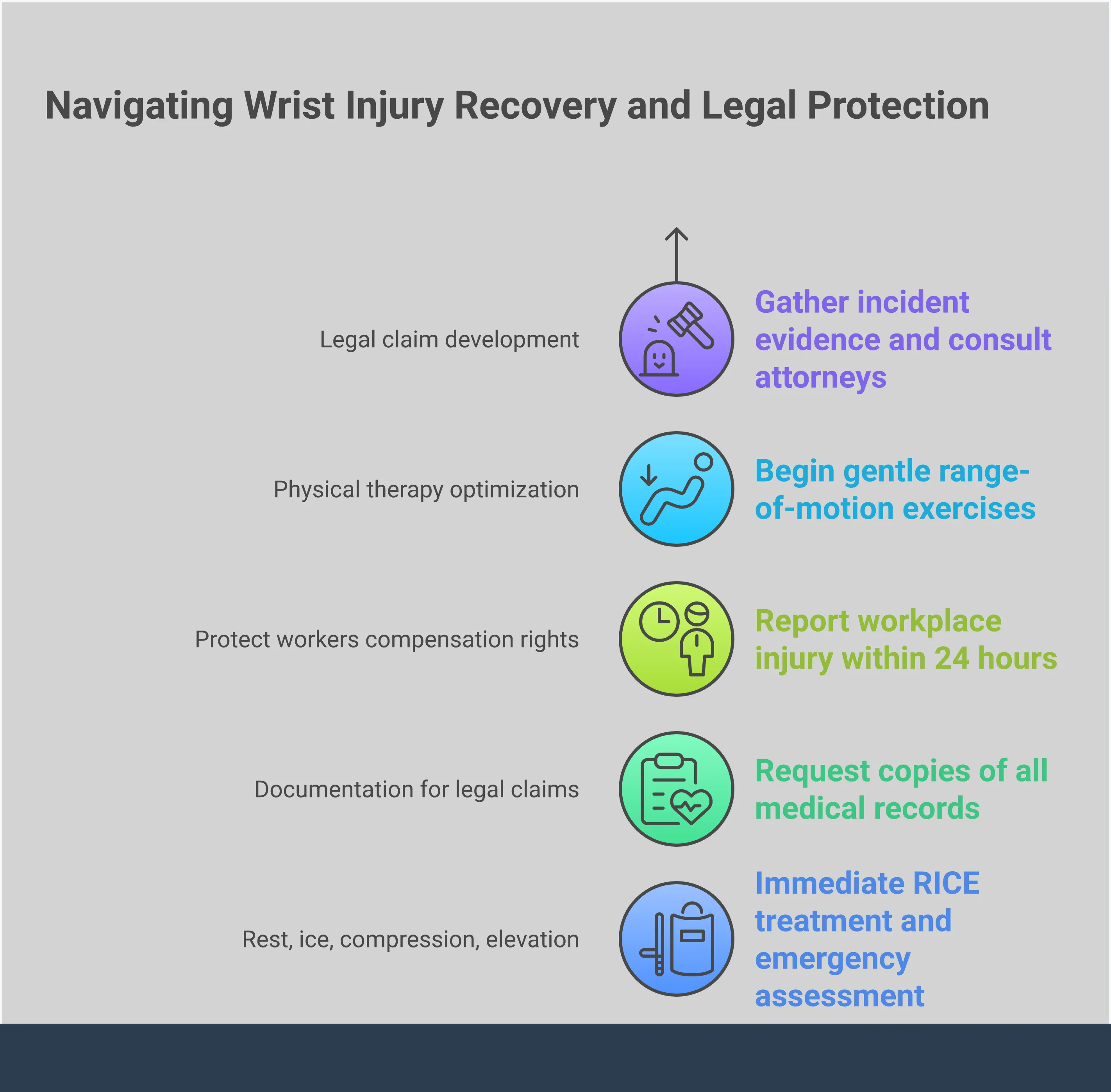
For many minor wrist injuries, immediate self-care can make a big difference. You’ve probably heard of the RICE method, and for good reason—it works. This simple acronym stands for Rest, Ice, Compression, and Elevation. The moment you feel pain, stop what you’re doing and rest the wrist. Apply an ice pack for about 20 minutes at a time to reduce swelling and numb the pain. Gently wrap the wrist with an elastic bandage for compression, which helps control swelling. Finally, whenever possible, keep your wrist elevated above the level of your heart. These initial steps can help manage your symptoms until you can see a doctor for a full diagnosis.
What Are Your Non-Surgical Options?
The good news is that many wrist injuries heal without surgery. After a thorough diagnosis, your doctor will likely recommend a conservative treatment plan first. This often involves immobilizing your wrist with a splint, brace, or cast to keep it stable and allow it to heal properly. To manage pain and inflammation, your doctor might suggest over-the-counter medications like acetaminophen or ibuprofen. In some cases, they may recommend topical pain creams. The goal of these non-surgical treatments is to give your body the support it needs to repair the damage, letting you get back to your daily activities with minimal disruption.
Considering Cortisone Injections
If your pain and inflammation are severe, your doctor might bring up the option of a cortisone injection. These shots deliver a powerful corticosteroid directly to the injured area to quickly reduce swelling and provide temporary pain relief. While they can be effective for conditions like tendinitis, it’s important to understand that they are not a long-term fix. Cortisone shots come with potential risks and are generally considered a short-term solution to manage symptoms while your body heals. The most common side effect is a temporary “flare” of pain for a day or two after the injection. More importantly, experts caution that overusing cortisone injections can lead to permanent damage to the surrounding tissues. It’s a tool for managing acute pain, not a cure for the underlying injury, so be sure to have a detailed conversation with your doctor about the benefits and drawbacks for your specific situation.
How Physical Therapy Helps You Heal
Once the initial healing has begun, the next phase of recovery often involves therapy. Your doctor may refer you to a physical or occupational therapist to help you regain full function. A therapist will guide you through specific exercises designed to restore your wrist’s flexibility, improve its range of motion, and rebuild muscle strength. This is a crucial step, as it not only helps you recover from the current injury but also strengthens the wrist to help prevent future problems. Following your therapist’s guidance is key to ensuring a complete and lasting recovery, helping you return to work, sports, and hobbies safely.
When Surgery Might Be Necessary
While most wrist injuries respond well to non-surgical treatments, surgery is sometimes the best option for a full recovery. This is typically reserved for more severe cases. For example, if you have a complex fracture where the bones are out of place, a surgeon may need to realign them with pins or plates. Surgery might also be necessary for a completely torn ligament or significant nerve damage, like in severe carpal tunnel syndrome. Your doctor will only recommend this path if it’s essential for restoring stability and function to your wrist. If your injury requires surgery, it’s especially important to understand your legal options, as medical costs can quickly add up.
Understanding Your Recovery and Long-Term Outlook
Once you have a diagnosis and a treatment plan, the focus shifts to recovery. This part of the journey requires patience, as healing isn’t always a straight line. The timeline can vary widely depending on the type and severity of your injury, your overall health, and how closely you follow your doctor’s advice. Understanding what to expect in the long term is about more than just managing your physical health; it’s also about planning for your life. If your injury impacts your ability to work or requires ongoing care, knowing the potential long-term outlook is a critical piece of the puzzle, especially when considering the full scope of a personal injury claim.
Healing Timelines: What to Realistically Expect
When it comes to wrist injuries, there’s no one-size-fits-all recovery schedule. The healing process depends heavily on the specific damage you’ve sustained. According to health experts, a mild sprain might feel better in just a few weeks, but more significant injuries require a much longer commitment to healing. For instance, the National Center for Biotechnology Information notes that while mild sprains often heal in two to three weeks, severe injuries like torn ligaments or fractures can take up to six months to fully mend. This is why getting a professional diagnosis is so important—it helps you set realistic expectations for your recovery and plan accordingly for things like time off work or arranging for help with daily tasks.
The Risks of Untreated Injuries: Instability and Arthritis
Trying to tough it out or skipping follow-up appointments can have serious consequences down the road. Ignoring a wrist injury, especially a more severe one, can lead to chronic problems that affect you for years. For example, an improperly healed ligament tear can result in long-term joint instability, where your wrist might feel weak or give way unexpectedly. Furthermore, medical research shows that untreated ligament damage can lead to the development of painful arthritis in the wrist years later. These aren’t just minor inconveniences; they can mean a lifetime of pain, limited function, and the need for future medical treatments. Following through with your complete treatment plan is the best way to protect your long-term health and prevent these complications.
How to Protect Your Wrists from Injury
Taking a few proactive steps can make a world of difference in keeping your wrists healthy and strong. Whether you work at a desk, play sports, or have a physically demanding job, being mindful of how you use your wrists is the best way to prevent painful injuries down the road. It’s all about creating good habits, using the right support, and listening to your body.
Choose the Right Gear and Setup
One of the simplest ways to protect your wrists is by using the right equipment for the task at hand. If you play sports like rollerblading, snowboarding, or anything else where a fall is possible, wearing wrist guards is a non-negotiable. This small piece of gear can absorb the impact that might otherwise lead to a fracture or a serious sprain.
The same principle applies to your work environment. If you spend hours at a computer, take a look at your desk setup. An ergonomic keyboard and mouse can help keep your wrists in a neutral, more natural position, reducing strain. Make sure your chair height allows your arms to rest comfortably, preventing you from bending your wrists at awkward angles. A few small adjustments to your workspace can significantly lower your risk of developing repetitive stress injuries like carpal tunnel syndrome.
Try These Simple Wrist-Strengthening Exercises
Just like any other part of your body, your wrists benefit from regular exercise. Building strength and maintaining flexibility can help them withstand daily stress and recover more quickly. You don’t need a complicated routine—a few simple movements each day can be incredibly effective.
Try gentle wrist circles, rotating your hands clockwise and then counter-clockwise to warm up the joints. You can also perform simple stretches, like extending your arm with your palm facing up and gently bending your wrist down with your other hand until you feel a light stretch. Holding for 15-20 seconds can help release tension. Incorporating basic hand and wrist exercises into your daily routine, especially as a break from repetitive tasks, is a great way to maintain your range of motion and prevent stiffness.
Adjust Your Technique to Prevent Injury
Your body is great at sending signals when something isn’t right, and it’s important to listen. If you have a job or hobby that involves repetitive wrist movements—like typing, knitting, or working on an assembly line—pay close attention to any discomfort. Pain is a warning sign. Don’t try to push through it, as that can turn a minor issue into a chronic one.
If you start to feel an ache or strain, take a break. If possible, try to adjust your technique to put less pressure on your wrists. This might mean changing your grip, altering your posture, or simply slowing down. Being mindful of how your wrists feel during certain activities allows you to make small changes before an injury has a chance to develop.
How to Keep Your Wrists Safe at Work
Your workplace should be a safe environment, but accidents can still happen. Wrist injuries are common on the job, whether from a sudden fall or from long-term repetitive strain. It’s important to follow all safety protocols, use provided protective gear, and report any unsafe conditions to your supervisor.
If you do injure your wrist at work, report it immediately. In many cases, you may be entitled to workers’ compensation to cover medical bills and lost wages. Proving that the injury is work-related is a key part of the process. If you’re facing challenges with a claim or believe your injury was caused by negligence, understanding your legal options is crucial. Our firm is experienced in handling personal injury cases and can help you get the support you deserve.
The Role of Nutrition in Bone Health
While we often think about external protection like wrist guards, building strong bones from the inside is just as important for preventing fractures. Your diet plays a huge role in your bone health. Nutrients like calcium and vitamin D are the fundamental building blocks for strong, dense bones. Calcium provides the raw material, but your body can’t absorb it properly without enough vitamin D. Your body also needs a team of other essential nutrients—like protein, magnesium, and potassium—to maintain bone strength. Eating a balanced diet rich in these elements is a powerful, long-term strategy to make your bones more resilient and less likely to break during a fall or accident.
When to Call a Lawyer About Your Wrist Injury
After a wrist injury, your first priority is getting the right medical care. But once you’re on the path to recovery, you might start wondering about the financial impact. Medical bills, time off work, and other costs can add up quickly, creating a lot of stress. Figuring out if you have a legal claim can feel overwhelming, especially when you’re trying to heal. This is where understanding your rights becomes so important.
If your injury was caused by something other than a simple accident at home, you may be entitled to compensation. This is particularly true if your injury happened on the job or because someone else was careless. A personal injury lawyer can help you understand your options and handle the complex process of filing a claim, allowing you to focus on getting better. They can assess your situation, explain the legal standards, and represent your interests to insurance companies or in court. Exploring your legal options is a practical step toward protecting your financial stability after an unexpected injury.
What to Do If You Were Hurt at Work
If you injured your wrist on the job, you are likely entitled to workers’ compensation benefits. These benefits are designed to cover your medical treatment and a portion of your lost wages while you recover. However, the process isn’t always straightforward. Your employer or their insurance company might dispute your claim or pressure you to return to work before you’re ready. An experienced attorney can help you file the necessary paperwork correctly and on time, ensuring you meet all the requirements to prove your injury arose out of your employment. They will advocate for you to receive the full benefits you deserve.
Was Your Injury Caused by Someone Else?
Sometimes, a wrist injury happens because another person or entity was careless. This could be a driver who caused a car accident, a property owner who failed to fix a broken handrail, or a manufacturer of a defective product. In these situations, you can sue for a wrist injury if it was caused by someone else’s negligence. To have a successful claim, you’ll need to show that the other party had a duty to act with reasonable care, they failed to do so, and their failure directly caused your injury and subsequent damages. A lawyer can help you gather the evidence needed to build a strong case.
What Compensation Can You Receive?
The compensation you can receive depends on the specifics of your case, whether it’s a workers’ comp claim or a personal injury lawsuit. Generally, you may be able to recover costs for medical expenses, including doctor visits, surgery, physical therapy, and medication. You can also be compensated for lost income if the injury kept you from working. In personal injury cases, you might also be entitled to damages for pain and suffering. An attorney can help you calculate the full value of your claim to ensure you don’t settle for less than you deserve.
How to Document Your Injury for a Claim
Strong documentation is the foundation of any successful injury claim. Start by seeking medical attention immediately after the injury occurs and be sure to tell your doctor exactly how it happened. Keep a detailed record of all your medical appointments, treatments, and expenses. If possible, take photos of the scene of the accident and your injury. If there were any witnesses, get their names and contact information. It’s also helpful to keep a simple journal detailing how the injury impacts your daily life. The more evidence you have, the easier it will be to connect your injury to the incident.
Related Articles
- Top-Rated Personal Injury Lawyers: A Practical Guide – The Law Office of Chad G. Mann, LLC
- A Guide to Workers Compensation Lawyers in Springfield MO
- Top 6 Personal Injury Attorneys in Springfield MO – Guide
- Personal Injury Attorney Guide – Find the Right Advocate
- How to Choose a Personal Injury Attorney in Springfield, MO – The Law Office of Chad G. Mann, LLC
Frequently Asked Questions
My wrist hurts, but I don’t think it’s broken. Do I really need to see a doctor? It’s tempting to take a “wait and see” approach, but even if you can move your wrist, persistent pain, swelling, or stiffness can be a sign of something more serious than a bruise. Issues like ligament tears or nerve compression won’t show up on the surface but can lead to chronic problems if left untreated. Getting a proper diagnosis from a doctor is the only way to know for sure what you’re dealing with and to get on the right path to healing.
How long will it take for my wrist to heal? Recovery time varies widely and really depends on the specific injury and your overall health. A minor sprain might feel better in a couple of weeks with proper care, while a complex fracture could take several months to heal completely. Following your doctor’s treatment plan, including any physical therapy recommendations, is the most important factor in ensuring a smooth and speedy recovery.
I hurt my wrist from a fall at a local store. What are the first things I should do? Your first priority should always be your health, so see a doctor right away. After that, it’s important to take a few key steps. Report the incident to the store manager and ask for a copy of the incident report. If you can, take photos of the exact spot where you fell, capturing whatever hazard caused it. Finally, write down everything you remember about the accident as soon as possible, while the details are still fresh in your mind.
My wrist pain is from repetitive motion at my job, not a single accident. Can I still file a workers’ compensation claim? Yes, you absolutely can. Workers’ compensation covers injuries that develop over time due to your job duties, not just those from a single event. Conditions like carpal tunnel syndrome or tendonitis that are caused by repetitive strain at work are often eligible for benefits. The key is to report your symptoms to your employer and see a doctor to establish a clear link between your work activities and your injury.
Why is it so important to document everything after my injury? Think of documentation as the official story of your injury and its impact on your life. Medical records prove the severity of the injury, while receipts for prescriptions and co-pays show the financial cost. Keeping a simple journal about your pain levels and daily challenges helps illustrate the personal toll. This collection of evidence is crucial for an insurance company or a court to understand the full extent of your damages, which is essential for receiving fair compensation.