


Your calls to the insurance adjuster go unanswered. They ask for the same paperwork again and again. When you finally get a settlement offer, it’s insultingly low. These aren’t just frustrating delays; they are major red flags. This isn’t just poor customer service; it’s a calculated strategy known as bad faith insurance, where a company puts its profits ahead of its legal duty to you. You don’t have to accept this. This guide breaks down the most common tactics, shows you how to document everything, and gives you a clear action plan to fight back.
Key Takeaways
- Bad Faith Is More Than a Simple Denial: It’s a violation of your insurer’s legal duty to treat you fairly. This includes unreasonable delays, baseless denials, and lowball settlement offers designed to protect their bottom line at your expense.
- Create a Detailed Paper Trail: Your most powerful tool is meticulous documentation. Keep a log of every conversation, save all correspondence to build a clear record of the insurer’s actions, and always demand written explanations for their decisions.
- Don’t Hesitate to Seek Legal Counsel: If you’re facing constant delays, unfair denials, or insultingly low offers, it’s time to call an attorney. The law allows you to hold insurers accountable and potentially recover not just your original claim, but also punitive damages and legal costs.
What Is Bad Faith Insurance?
When you buy an insurance policy, you’re entering into a contract. You agree to pay your premiums, and in return, the insurance company agrees to cover your losses if something goes wrong. This relationship is built on a promise of good faith. But what happens when your insurer doesn’t hold up their end of the bargain? That’s where the concept of bad faith insurance comes in.
Simply put, bad faith is when an insurance company unfairly denies, delays, or underpays a legitimate claim without a good reason. It’s not just about disagreeing on the value of a claim; it’s about the insurer acting unreasonably or dishonestly. This can look like an adjuster misrepresenting the terms of your policy, the company refusing to conduct a proper investigation into your accident, or them making a settlement offer that is insultingly low. You’ve paid your premiums diligently, and you have a right to expect fair treatment when you need to file a claim. When an insurer fails to provide that, they may be acting in bad faith.
The “Peace of Mind” Principle: Where Bad Faith Law Comes From
The entire concept of insurance is built on providing peace of mind. You pay your premiums expecting that if a crisis hits, your insurer will be there to help. This isn’t just a customer service expectation; it’s a legal principle known as the covenant of good faith and fair dealing. This duty is implied in every insurance contract and requires the company to treat you honestly and fairly. Courts have consistently recognized that there’s a significant power imbalance between a massive insurance corporation and an individual policyholder who has just been through a traumatic event like a car accident. Because you are in a vulnerable position, the law holds insurers to a higher standard, ensuring they can’t use their power to unfairly deny the benefits you’re rightfully owed.
The Profit Motive: Why Bad Faith Happens
At the end of the day, insurance companies are for-profit businesses, and their primary goal is to make money for their shareholders. This creates a fundamental conflict of interest. Every dollar they pay out on a claim is a dollar that comes directly out of their profits. This financial pressure can create a culture where adjusters are encouraged to delay payments, find technicalities to deny claims, or offer settlements that are far below what a case is actually worth. While not every adjuster is acting maliciously, the system itself incentivizes them to protect the company’s bottom line, often at your expense. If you feel like you’re fighting an uphill battle against a company that seems determined to not pay, you’re likely seeing this profit motive in action and may need to seek legal advice.
Understanding Your Insurer’s Duty of Good Faith
Insurance companies have a legal obligation to treat you fairly. This isn’t just a matter of good customer service—it’s a requirement baked into the law. Most states recognize an “implied covenant of good faith and fair dealing” in every insurance contract. This is a legal way of saying there’s an unspoken promise that both you and your insurer will act honestly and fairly with each other.
This duty requires your insurer to handle your claim with integrity. They must conduct a thorough and objective investigation, communicate with you clearly and promptly, and make a reasonable decision about settling your claim based on the facts. They can’t look for excuses to deny coverage or intentionally drag their feet. If they violate this fundamental duty, you may need professional legal representation to hold them accountable.
How This Impacts Your Insurance Claim
Understanding bad faith is crucial because it gives you powerful rights. If an insurance company acts in bad faith, you can take legal action against them for more than just a simple breach of contract. This type of wrongdoing is considered a “tort,” which is a civil wrong that causes someone to suffer loss or harm. This distinction is important because it opens the door to recovering more than just the original value of your insurance claim.
If you can prove that your insurer acted in bad faith, you may be entitled to the full amount of your original claim, plus additional compensation. This can include “punitive damages,” which are designed to punish the company for its misconduct and deter it from happening again. You might also be able to recover attorney fees and other costs associated with your case. If you believe you’re a victim of these tactics, it’s a good idea to discuss your case with an attorney.
First-Party vs. Third-Party Bad Faith Claims
Bad faith insurance tactics can show up in a couple of different ways, depending on who is filing the claim. The two main categories are first-party and third-party claims. Understanding the difference is key to recognizing when your insurer is failing to meet its obligations. A first-party claim is one you file with your own insurance company, while a third-party claim is filed by someone else against your policy. In both scenarios, your insurer has a strict duty to act in good faith, but their specific responsibilities can vary.
First-Party Claims: Your Insurer vs. You
A first-party claim is the most common type of insurance interaction. This is when you seek benefits directly from your own insurer under a policy you paid for. Think about filing a claim for collision damage after a car accident or for a roof leak under your homeowner’s policy. In these situations, bad faith occurs when your insurance company unreasonably puts its own financial interests ahead of its duty to you. This can look like inventing baseless reasons to deny your claim, making an insultingly low settlement offer, or creating endless, frustrating delays in the hopes that you’ll just give up. These are exactly the kinds of issues that arise in many personal injury cases where an insurer refuses to play fair.
Third-Party Claims: When Your Insurer Fails to Defend You
Third-party claims are a bit different. This situation arises when someone else files a claim against you, and it’s your liability insurance that is supposed to step in and protect you. For example, if you cause a car accident and the other driver sues you for their injuries, your auto liability coverage is responsible for handling the claim. Bad faith in a third-party context happens when your insurer fails to properly defend you or settle the claim against you. This failure can leave you personally exposed to a lawsuit and a judgment that could far exceed your policy limits, putting your personal assets at risk. In these cases, the insurer has two critical obligations: the duty to defend and the duty to settle.
The Duty to Defend
When someone sues you for something covered by your liability policy, your insurance company has a strong and immediate duty to defend you. This means they must hire an attorney to represent you and cover the costs of your legal defense. This duty is incredibly broad; in most cases, the insurer must defend you even if only part of the lawsuit is potentially covered by your policy. Refusing to provide a defense or failing to do so adequately is a serious breach of their contractual promise to protect you from legal claims.
The Duty to Settle
Beyond just defending you, your insurer also has a duty to try and settle claims made against you reasonably and within your policy limits. If the other party offers to settle for an amount your policy can cover, your insurer can’t unreasonably reject that offer and take a gamble by going to trial. If they do, and the court awards a judgment against you that’s *higher* than your policy limit, the insurance company may be held responsible for the entire amount because their bad faith actions are what exposed you to that excess judgment in the first place.
What Does Bad Faith Insurance Look Like?
When you file an insurance claim, you expect your provider to hold up their end of the bargain. After all, you’ve faithfully paid your premiums for that peace of mind. But what happens when they don’t? Bad faith isn’t just poor customer service; it’s when an insurer fails to fulfill its legal duties to you without a reasonable basis. It can feel confusing and deeply unfair, especially when you’re already dealing with the stress of an accident or injury.
Recognizing bad faith is the first step toward standing up for your rights. These aren’t just isolated mistakes; they are often patterns of behavior designed to protect the insurance company’s bottom line at your expense. These tactics can show up in various personal injury cases, from car accidents to premises liability claims. Understanding what these practices look like can help you identify when your insurer is crossing the line from negotiation to outright unfairness. Below are some of the most common ways insurance companies act in bad faith.
Denying Your Claim Without a Valid Reason
This is one of the most straightforward examples of bad faith. You submit a claim that is clearly covered by your policy, provide all the necessary documentation, and wait for a response. Instead of an approval, you receive a denial letter with a vague or nonsensical explanation—or no real reason at all. An insurer is legally required to provide a valid, specific reason for denying your claim that is based on the facts and the language in your policy. A flat-out refusal to pay a legitimate claim without proper justification is a major red flag that your insurer is not acting fairly.
Unreasonable Delays and Stall Tactics
Insurance companies know that time is not on your side. You have medical bills piling up and may be out of work, making you financially vulnerable. Some insurers exploit this by intentionally dragging out the claims process. They might ignore your calls, take weeks to respond to emails, or repeatedly claim they are “still investigating” without making any actual progress. While a complex claim can take time to resolve, unreasonable and unexplained delays are often a strategy. The insurer may be hoping that you’ll get frustrated and either give up or accept a much lower settlement than you deserve.
Making a Lowball Settlement Offer
Receiving a settlement offer can feel like a relief, but don’t cash the check just yet. A common bad faith tactic is to present a “lowball” offer that is nowhere near the actual value of your loss. The insurer is banking on the hope that you don’t fully understand the value of your claim or that you’re desperate enough to take whatever you can get. This isn’t just aggressive negotiation; it’s an attempt to unfairly minimize their payout. If an offer seems insultingly low and doesn’t cover your documented expenses and losses, it’s a strong sign of bad faith. It’s always a good idea to get a professional opinion before accepting any settlement.
Intentionally Misinterpreting Your Policy
Insurance policies are notoriously complex documents filled with dense legal jargon. Some companies take advantage of this by deliberately misinterpreting the terms of your policy to avoid paying a claim. They might point to an obscure exclusion or twist the meaning of a specific phrase to argue that your loss isn’t covered. You have a right to a fair and reasonable interpretation of the contract you signed. When an insurer uses confusing language or misrepresents your coverage to deny a valid claim, they are not upholding their duty to act in good faith.
Not Investigating Your Claim Thoroughly
Your insurance provider has a duty to conduct a prompt, thorough, and objective investigation into your claim. This means they should actively look for evidence that supports your claim, not just for reasons to deny it. A failure to investigate properly is a clear sign of bad faith. This could look like refusing to interview key witnesses, ignoring evidence you’ve submitted (like medical records or repair estimates), or making a decision without gathering all the relevant facts. A fair process requires a fair investigation, and cutting corners here is simply unacceptable.
Using Threats or Intimidation Tactics
Dealing with an insurance adjuster should be a professional process, not a confrontational one. If you find yourself on the receiving end of threats, abusive language, or other intimidation tactics, you are likely dealing with a case of bad faith. This can include an adjuster baselessly accusing you of fraud or using an aggressive tone to pressure you during recorded statements. This behavior is completely unacceptable and is a deliberate strategy designed to make you feel overwhelmed and powerless. The goal is to scare you into dropping your legitimate claim or accepting a settlement that is far less than what you are owed. You do not have to tolerate this kind of treatment.
Hiding Settlement Offers from You
In situations where someone is suing you and your insurance company is supposed to be defending you, they have a strict duty to keep you informed. A serious violation of this duty occurs when the insurer fails to tell you about a settlement offer from the person suing you. They might do this because they want to take their chances in court, hoping to pay nothing at all. This gamble, however, puts you at risk of being hit with a judgment that far exceeds your policy limits, leaving you personally responsible for the difference. Your insurer’s job is to protect your financial interests, not to risk them for their own potential gain.
Changing Policy Rules After You File a Claim
Your insurance policy is a contract, and its terms are set the moment you sign it. An insurance company cannot unilaterally change the rules of that contract after you have already filed a claim. This deceptive practice, sometimes called “post-claim underwriting,” is a clear sign of bad faith. For example, an insurer might suddenly decide to enforce a new interpretation of an exclusion or claim your policy doesn’t cover a specific situation, even though it was never mentioned before. The terms of your coverage are what they were on the day of your loss, and any attempt to retroactively alter them to avoid payment is illegal.
Misusing Your Medical Information
When you file a claim for a personal injury, you will need to grant the insurance company access to your relevant medical records. However, this does not give them a free pass to dig through your entire medical history. A common bad faith tactic is for an insurer to misuse your private information by searching for unrelated, pre-existing conditions they can use as an excuse to deny your claim. They are only entitled to review records directly related to the injuries from your accident. An attempt to use a decade-old injury to invalidate your current claim is an invasion of your privacy and a dishonest way to avoid their responsibility.
The “Incontestability Clause” in Life Insurance
Life insurance policies contain a crucial protection for beneficiaries known as the “incontestability clause.” This clause generally prevents an insurance company from voiding a policy that has been in effect for a certain period, typically two years, based on alleged misstatements in the original application. This means that if your loved one passed away after the policy was active for two years, the insurer usually cannot deny the claim by arguing there was an error on the application. If they try to do so, they are likely acting in bad faith. This provision ensures that families receive the benefits they are counting on without fear of a last-minute denial.
How to Spot Bad Faith Tactics
When you’re dealing with the stress of a claim, the last thing you need is an insurance company that isn’t playing fair. Unfortunately, bad faith tactics aren’t always obvious. They can be subtle strategies designed to make you give up or accept less than you deserve. Knowing what to look for is the first step in protecting your rights. Think of these as warning signs that your insurer might not be acting in your best interest. If you notice a pattern of this behavior, it’s a signal to start paying closer attention and documenting everything.
Red Flags in Your Insurer’s Behavior
One of the most significant red flags is a lowball offer that doesn’t come close to covering your losses. For instance, imagine a storm severely damages your roof, but your insurer only agrees to pay for half of the necessary repairs. An offer to pay only a portion of a claim that should be fully covered is a classic sign of a company putting its profits ahead of its policyholders. This can happen across many different practice areas, from property damage to car accidents. They are testing to see if you’ll accept an unfair settlement out of frustration or desperation.
Ignoring Your Calls or Being Unresponsive
Pay close attention to how the insurance adjuster communicates with you. Are your calls and emails going unanswered for long periods? When you do get a response, is it vague or non-committal? Unjustified delays, confusing explanations for denials, or a general unwillingness to provide clear information are all warning signs. If you feel like you’re being ignored or given the runaround, it may be time to seek expert advice. Consulting with an attorney can help you understand if your insurer is simply busy or if they are deliberately acting in bad faith.
Making You Resubmit the Same Paperwork
Does it feel like you’re stuck in a loop, submitting the same documents over and over again? This isn’t always an accident. A common tactic used by insurers is to repeatedly request information or documentation you’ve already provided. This can be a deliberate strategy to create delays and frustrate you into abandoning your claim. They are hoping you’ll get tired of the process and just go away. To protect yourself, it’s essential to keep a detailed record of what you send and when you send it. This paper trail can become crucial evidence if you need to prove they are acting in bad faith.
Requesting Excessive or Unnecessary Documents
While it’s reasonable for an insurer to ask for documents related to your claim, their requests should be fair and relevant. A sign of bad faith is when an insurer demands an excessive amount of unnecessary paperwork or fails to properly investigate your claim before denying it. An insurance company has a duty to conduct a thorough and objective investigation. If they deny your claim without doing their due diligence or try to bury you in paperwork, it’s a strong indicator that they are not acting in good faith and you may need to contact a lawyer for help.
How the Law Protects You from Bad Faith
When you’re up against a massive insurance company, it’s easy to feel powerless. But you have more rights than you might think. The law provides a strong framework to protect you from unfair treatment and hold insurers accountable when they don’t play by the rules. Understanding these protections is the first step toward getting the fair outcome you deserve.
The Legal Promise of “Good Faith and Fair Dealing”
Your insurance policy is more than just a piece of paper; it’s a contract built on a principle called “good faith and fair dealing.” This legal concept means that both you and your insurer have a duty to act honestly and fairly toward each other. You uphold your end by paying your premiums on time. In return, your insurance company is legally obligated to handle your claim reasonably and promptly. When an insurer fails to do this—by unreasonably denying, delaying, or lowballing your claim—they are breaking this fundamental promise. This isn’t just poor customer service; it’s a potential violation of your legal rights.
Intentional Action vs. Carelessness
It’s important to understand that not every mistake an insurance company makes is legally considered bad faith. The key difference often comes down to intent. Did the insurer make an honest error, or did they intentionally act unfairly to protect their profits? In most states, you have to show that the insurance company knew it was acting unreasonably or showed a reckless disregard for the facts of your claim. A single misplaced document might just be a mistake. But a consistent pattern of losing paperwork, ignoring evidence, and failing to return calls starts to look less like carelessness and more like a deliberate strategy. This distinction is why having a professional review your case is so important. An experienced personal injury attorney can analyze the insurer’s conduct to determine if it rises to the level of bad faith, giving you a clear path forward.
Your Protections Under Missouri Law
Here in Missouri, the law is on your side. State law explicitly requires insurance companies to act in good faith when handling claims from their policyholders. This isn’t a suggestion; it’s a mandate. If your insurer fails to meet this standard, you have the right to file a bad faith claim against them. This legal protection is especially critical in personal injury cases, where a fair and timely settlement is essential for your recovery. The legal system is designed to level the playing field and ensure that you are not taken advantage of by a powerful corporation.
How State Insurance Regulators Can Help
You’re not in this fight alone. Every state has a regulatory body that oversees the insurance industry, and in Missouri, that’s the Department of Commerce & Insurance. These regulators are like watchdogs, responsible for making sure insurance companies comply with the law and treat consumers fairly. They investigate consumer complaints and enforce state-specific regulations that govern how insurers must operate. While filing a complaint with the state regulator is a great step, it’s important to remember that their role is different from that of an attorney. They enforce regulations, but a lawyer will advocate directly for your personal financial recovery.
What Happens When Insurers Act in Bad Faith?
When an insurance company is found to have acted in bad faith, the consequences can be severe—and that’s by design. The penalties are meant to discourage this kind of behavior across the industry. A successful bad faith lawsuit can require the insurer to pay not only the original amount of your claim but also additional damages. This can include compensation for emotional distress, economic losses you suffered due to the delay, and your attorney fees. In some cases, courts may award punitive damages, which are intended to punish the company for its conduct. These penalties ensure that it’s more costly for an insurer to act unfairly than to simply honor their policy. If you believe you have a case, it’s worth discussing the potential outcomes when you contact an attorney.
A Bad Faith Act Can’t Be Undone Later
It’s important to understand that once an insurance company acts in bad faith, they can’t simply undo it later. Let’s say your insurer unreasonably denies your valid claim, but after you hire an attorney and apply pressure, they suddenly reverse their decision and agree to pay. While getting your payment is a good outcome, it doesn’t erase their initial wrongful act. The bad faith occurred the moment they first acted unfairly. This principle is critical because it means you may still have a valid bad faith claim against them, even if they eventually paid. The law recognizes that the stress, delays, and financial hardship caused by their initial behavior are damages in themselves, and you have a right to be compensated for that harm.
The Widespread Impact of Bad Faith Laws
The concept of holding insurance companies accountable for bad faith isn’t just a local rule; it’s a legal standard recognized across the United States. These laws were put in place because lawmakers understood the significant power imbalance between large insurance corporations and individual policyholders. The existence of these laws has a tangible impact on the entire insurance industry, creating a powerful incentive for companies to treat their customers fairly. They know that if they don’t, they could face serious financial consequences beyond just the value of the original claim. This legal framework is a crucial protection that helps level the playing field for consumers everywhere.
How Many States Recognize Bad Faith Claims
The legal protections against bad faith are incredibly widespread. In fact, nearly every state in the country has laws that allow policyholders to sue an insurance company for acting in bad faith. These laws generally fall into two categories: first-party claims, where you sue your own insurer for mishandling your claim, and third-party claims, where your insurer fails to protect you from a lawsuit brought by someone else. The vast majority of states recognize both types of claims. This near-universal adoption of bad faith laws shows a clear legal consensus that insurance companies have a fundamental duty to act fairly, and that consumers need a way to fight back when they don’t.
Financial Impact on Claim Settlements
Bad faith laws do more than just provide a legal remedy; they have a real, measurable financial impact on claim settlements. Studies have shown that in states with strong bad faith laws, insurance payouts for certain claims, like those involving uninsured motorists, are significantly higher—often by 10% or more. This suggests that the threat of a costly bad faith lawsuit makes insurers more careful and more likely to offer fair settlements from the beginning. This isn’t just about punishing bad actors; it’s about creating a system where insurers are financially motivated to do the right thing. If you feel you’re being treated unfairly, it’s a good idea to contact an attorney to understand how these laws can work for you.
Your Action Plan: What to Do If You Suspect Bad Faith
Feeling like your insurance company is giving you the runaround is incredibly frustrating, especially when you’re already dealing with the stress of an accident or loss. But you don’t have to feel powerless. If you suspect your insurer is acting in bad faith, there are concrete steps you can take to protect your rights and hold them accountable. Think of this as your roadmap for fighting back. By being methodical and proactive, you can build a strong case that clearly shows how the company has failed to meet its obligations. This plan will walk you through exactly what to do, starting right now.
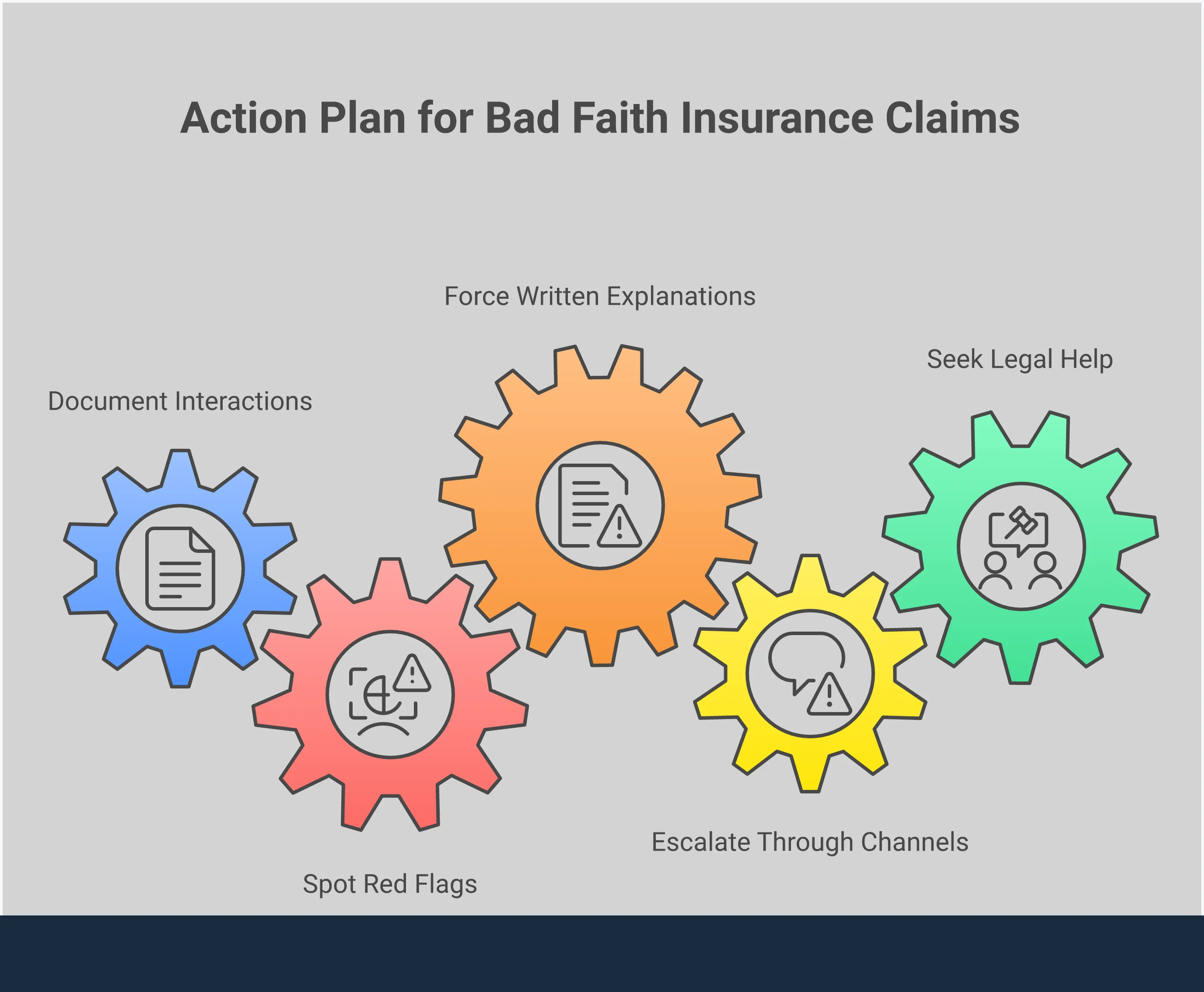
Keep a Detailed Record of Everything
This is your first and most important task. From this point forward, become a meticulous record-keeper. Keep detailed notes of every single call, email, and letter you have with your insurance company. For phone calls, write down the date, the time, the name of the person you spoke with, and a summary of what was said. Save every email and piece of mail, including the envelopes. It’s also crucial to keep clean copies of your full insurance policy and any claim denial or delay letters you receive. This paper trail is the foundation of your bad faith claim and provides undeniable proof of your experience.
Always Ask for Explanations in Writing
Phone conversations can be easily misinterpreted or denied later. That’s why you should always ask for important communications in writing. If your claim is denied, delayed, or you receive a lowball offer, don’t just accept a verbal reason. Send a polite but firm email or letter requesting a detailed explanation that cites the specific parts of your policy they are using to justify their decision. This forces the adjuster to go on the record and creates a clear, official document you can use as evidence. It makes it much harder for them to change their story down the line.
How to Write a Formal Complaint Letter
Sometimes, the adjuster you’re dealing with is the problem. Escalating the issue internally can occasionally resolve the situation. Write a formal complaint letter and send it directly to a claims manager or the insurance company’s dedicated consumer affairs department. In the letter, clearly and calmly outline the facts of your claim, explain why you believe you are being treated unfairly, and include copies of the documentation you’ve been collecting. This shows the company you are serious and gives them an official opportunity to correct their behavior before you take further action. If you need help, you can always contact us for guidance.
Filing a Complaint with Your State’s Insurance Department
Insurance companies are regulated by the state, and these agencies are there to protect consumers like you. In Missouri, you can file a formal complaint with the Missouri Department of Commerce & Insurance (DCI). The DCI investigates consumer complaints and can take action against insurers who are not complying with the law. Filing a report creates an official record of your dispute outside of the insurance company. While the DCI may not be able to force a specific settlement for your individual claim, their investigation can put pressure on the insurer and uncover patterns of bad faith conduct.
Collect All Your Supporting Documents
As you move through these steps, you are actively building your case. Consolidate all the information you’ve collected into one organized file. This evidence should include your detailed communication log, all written correspondence, and any proof of the insurer’s unfair practices. This can include records of unreasonable delays, a log of ignored phone calls and emails, unfair claim denials, and any settlement offers that are far below what your claim is worth. If you’ve had to get your own estimates or expert opinions to counter the insurer’s low valuation, include those as well. An experienced personal injury attorney can help you organize this evidence to present the strongest case possible.
Handling an Examination Under Oath (EUO)
If your insurer requests an Examination Under Oath (EUO), it’s a sign they are taking a hard look at your claim. This is a formal, recorded proceeding where their attorney will question you under oath. While it can be a valid part of an investigation, it can also be used to intimidate you or find reasons to deny your claim. The insurer’s lawyer is there to protect the company, not you, and may ask confusing or irrelevant questions hoping you’ll contradict yourself. You should never go into an EUO without your own legal representation. An experienced attorney can protect you from unfair tactics, ensure the questions are relevant to your loss, and prevent you from saying something that could jeopardize your case. Going in unprepared can have serious consequences, potentially leading to a full denial of your claim.
When Is It Time to Call an Attorney?
Trying to manage an insurance claim on your own is overwhelming, especially when you suspect the company isn’t being fair. While you can handle minor issues, certain red flags signal it’s time for professional legal help. Knowing when to call an attorney can be the most important decision you make. If an insurer is creating roadblocks or making you feel powerless, you don’t have to go it alone. A lawyer can advocate for your rights. Here are a few situations where calling an attorney is your best move.
When Your Claim Is Complex or Unusual
Some insurance claims are straightforward, but many are not. If your situation involves complex policy language, multiple parties, or severe injuries, the insurer may use that complexity to its advantage. Bad faith claims are notoriously difficult to prove without legal expertise. An insurance company might misinterpret a policy clause or argue an exclusion applies when it doesn’t. When you’re up against adjusters who handle these issues daily, it’s easy to get lost in the details. An attorney with experience in these specific practice areas can level the playing field and protect your rights.
When You’re Facing Repeated Denials or Delays
One of the most common bad faith tactics is dragging out the claims process. If your insurer is ignoring your calls, repeatedly asking for documents you’ve already sent, or delaying payment without a valid reason, it might be a deliberate strategy to make you give up. The same goes for a denial with a vague explanation. You have a right to a prompt and fair investigation. If you feel you’re getting the runaround, it’s time to seek help. An attorney can cut through the red tape and hold the insurer accountable. You can contact our office for guidance.
When a Lot of Money Is on the Line
When your claim involves significant financial losses—like major medical bills, lost wages, or extensive property damage—the insurance company has more incentive to minimize its payout. A lowball settlement offer might seem tempting, but accepting it could leave you covering substantial costs later on. An attorney can accurately assess your claim’s true value, factoring in future expenses and other damages. If an insurer acted in bad faith, you may be entitled to more than your original claim amount, including penalties and legal fees. Don’t risk your financial future by negotiating a high-stakes claim alone.
What Can You Recover in a Bad Faith Lawsuit?
When an insurance company acts in bad faith, the goal of a lawsuit isn’t just to get the money they originally owed you. It’s about holding them accountable for breaking their promise and causing you additional harm. The law recognizes that their actions can create significant financial and emotional stress, so you may be able to recover more than just your initial claim amount. The compensation you can seek is designed to make you whole again and to discourage insurers from treating other policyholders unfairly in the future.
Recovering the Full Value of Your Original Claim
First and foremost, a bad faith lawsuit aims to recover the full benefits you were entitled to under your policy. If your claim was worth $50,000 and the insurer wrongfully denied it or offered a fraction of that, the primary goal is to secure that original amount. But it doesn’t stop there. You can also seek compensation for any additional financial losses you suffered because of the insurer’s delay or denial. This could include lost wages, extra medical bills, or other costs that piled up while you were waiting for the payment you deserved. In some cases, you may also be compensated for the emotional distress their actions caused during your personal injury case.
Understanding Punitive Damages
In cases where an insurance company’s behavior was especially reckless or malicious, you may be able to recover punitive damages. This is an amount of money awarded on top of your actual losses. The purpose isn’t to pay you back for a specific harm but to punish the insurer for their misconduct and send a clear message that their actions are unacceptable. Think of it as a penalty designed to deter them—and other companies—from engaging in similar bad faith practices again. Courts reserve these damages for more extreme situations, but they can be a powerful tool for holding insurers accountable for willfully ignoring their duties to policyholders.
A Real-World Example: State Farm v. Campbell
To see how this works in the real world, look no further than the landmark case of State Farm v. Campbell. It began with a car accident, where State Farm had the chance to settle a claim against its policyholders, the Campbells, for their $50,000 policy limit. State Farm refused. The case went to trial, and the jury returned a verdict of over $185,000 against the Campbells. Instead of protecting its clients, State Farm refused to pay the excess amount, leaving the family facing financial ruin. The Campbells sued State Farm for bad faith, and the jury’s response was powerful. They awarded a verdict that included massive punitive damages, sending a clear signal that an insurer cannot abandon its duty to protect its policyholders. This case is a critical reminder that the law can hold even the biggest companies accountable for their actions.
Getting Your Attorney’s Fees Covered
The thought of paying for a lawyer can be intimidating, especially when you’re already dealing with financial stress. Fortunately, the law is on your side here. If you can prove the insurance company acted in bad faith, you can often recover the attorney fees and legal costs you incurred while fighting your case. This is incredibly important because it allows you to stand up to a large corporation without having to worry about being buried in legal bills. It helps level the playing field, ensuring you can get the expert legal help you need to secure justice. If you’re concerned about costs, it’s always best to schedule a consultation to understand your options.
Don’t Miss Missouri’s Filing Deadline
It’s crucial to understand that you don’t have an unlimited amount of time to take legal action. Each state has its own laws regarding insurance bad faith, including strict deadlines for filing a lawsuit, known as the statute of limitations. In Missouri, if you miss this deadline, you could lose your right to recover any compensation, no matter how strong your case is. These time limits can be complex and depend on the specifics of your situation. That’s why it’s so important to speak with an attorney as soon as you suspect bad faith. They can help you understand the specific deadlines that apply to your case and ensure all necessary steps are taken in time.
How Penalties Can Vary by State
One crucial thing to remember is that insurance laws are handled at the state level, not by the federal government. This means the rules and penalties for bad faith can look very different depending on where you live. While most states agree that insurers have a duty to act fairly, the specifics of what that means—and what happens when they don’t—can vary widely. Some states have detailed lists of what counts as an unfair practice, while others rely on broader legal principles. This directly impacts your case, as the damages you can recover are determined by your state’s laws. Here in Missouri, the law provides strong protections for policyholders, but understanding the specific legal landscape is essential for building a successful claim.
How to Protect Yourself from the Start
Dealing with an insurance claim is stressful enough without worrying if your provider is treating you fairly. The best way to handle potential bad faith practices is to be prepared from the very beginning. By taking a few proactive steps, you can build a strong foundation for your claim and make it much harder for an insurer to act improperly. Here’s how you can protect yourself.
Read and Understand Your Insurance Policy
Think of your insurance policy as the rulebook for your relationship with the insurer. It’s a contract that outlines what’s covered, your responsibilities, and the company’s obligations. Take the time to read through it, especially the declarations page and exclusions. Knowing the details empowers you to hold the company accountable. Remember, insurance companies are legally required to act in good faith and use fair claims practices. When you understand your policy, you’re in a much better position to spot when they aren’t upholding their end of the bargain. If the language seems confusing, don’t hesitate to ask for clarification.
Keep Detailed Records from Day One
From your very first interaction with the insurance company, start documenting everything. Keep detailed notes of every call, email, and letter. For phone calls, write down the date, the time, the name of the person you spoke with, and a summary of what was discussed. Save all emails and letters, including the envelopes they came in. It might feel like a lot of work, but this record-keeping is crucial. It creates a clear timeline of your claim and serves as powerful evidence if you ever need to prove delays, contradictions, or other bad faith tactics.
Communicate in Writing to Create a Paper Trail
While phone calls are convenient, written communication is your best friend during the claims process. A clear paper trail leaves little room for misinterpretation. If you discuss important details over the phone, follow up with a brief, polite email summarizing the conversation and asking the representative to confirm its accuracy. If your claim is denied or delayed, always ask the insurance company to provide the reason in writing. This forces them to put their justification on the record, making it much more difficult for them to change their story later on.
How to Choose a Reputable Insurer
Your best defense starts before you even have a claim. When shopping for insurance, look beyond the price. Research the company’s reputation for handling claims by reading customer reviews and checking their complaint record with state regulators. After an incident occurs, it’s wise to speak with an attorney before you submit your claim or give a recorded statement. An experienced lawyer can help you understand your rights, follow all the necessary procedures, and present your claim correctly from the start. If you find yourself in this situation, please contact our office for guidance.
Common Myths About Bad Faith Insurance, Debunked
When you’re dealing with an insurance company, it’s easy to get frustrated and feel like you’re being treated unfairly. The term “bad faith” gets thrown around a lot, but there’s a lot of confusion about what it actually means in a legal sense. Let’s clear the air and tackle some of the most common myths so you can better understand your situation and your rights.
Myth: Any Denied Claim Is Bad Faith
It’s incredibly disheartening to have a claim denied, but it’s important to know that a denial isn’t automatically an act of bad faith. Insurance companies are allowed to deny claims that aren’t covered by your policy or lack sufficient evidence. The key difference is why and how they denied it.
Just because your claim is denied doesn’t automatically mean it’s bad faith. To prove it, you need to show that the insurance company ignored the facts, didn’t properly investigate your claim, or had no reasonable basis for the denial. If your insurer can’t give you a clear, legitimate reason based on your policy for saying no, you might be dealing with a bad faith practice.
Myth: The Insurer Has to Act Maliciously
Many people think bad faith means an insurance adjuster was actively trying to cheat them. While that can certainly be the case, the legal standard isn’t always about proving malicious intent. Bad faith happens when an insurance company is dishonest or unfair in its dealings with you. It means they aren’t upholding their legal duties or the promises made in your insurance contract.
This can look like intentional deception, but it can also be a reckless disregard for the facts of your case. For example, if an insurer fails to conduct a reasonable investigation that would have confirmed your claim, their negligence could be considered bad faith. The focus is on the unreasonableness of their actions, not just their state of mind.
Myth: A Lawsuit Is Your Only Option
The thought of filing a lawsuit can be intimidating, and many people believe it’s the only way to fight back against a bad faith insurer. Fortunately, that’s not always true. Sometimes, having an experienced attorney review your case and send a formal demand letter is enough to make the insurance company reconsider its decision and offer a fair settlement.
If they still refuse to act fairly, a lawsuit is a powerful option. Missouri law allows you to hold insurers accountable for their actions. In a successful bad faith case, you may be able to recover not only the original amount of your claim but also additional damages as a penalty against the insurer. If you feel you’re at a standstill, it’s a good idea to discuss your options with a legal professional.
Related Articles
- Uninsured Motorist Lawyer: How They Help Your Case
- Car Accident Attorney: What To Do If Driver Has No Insurance
- Auto Accident Property Damage? Springfield MO Attorney
- Can You Settle a Car Accident Without Insurance?
Frequently Asked Questions
What’s the real difference between a legitimate claim denial and bad faith? A legitimate denial is based on the facts and the specific terms of your insurance policy. For example, if your policy clearly excludes flood damage and your home floods, a denial is expected. Bad faith, on the other hand, is when an insurer denies your claim without a reasonable basis. This could mean they ignored evidence that supported your claim, misinterpreted your policy on purpose, or failed to conduct a proper investigation before saying no. The key is the insurer’s unreasonable and unfair conduct, not just the denial itself.
What is the single most important thing I should do if I suspect my insurer is acting unfairly? Start documenting everything immediately. This is the most powerful step you can take. Keep a detailed log of every phone call, save every email, and hold onto all written letters. When you speak with an adjuster, follow up with a quick email summarizing the conversation. This creates a paper trail that serves as undeniable proof of delays, contradictions, or unreasonable demands, which is the foundation for building a strong case.
My claim was denied, and now I’m worried about the cost of hiring an attorney. How can I afford to fight a huge insurance company? This is a very common and understandable concern. The good news is that in Missouri, if you win a bad faith lawsuit, the law often allows you to recover your attorney fees and legal costs from the insurance company. This provision is designed to level the playing field, ensuring you can get the expert legal help you need without the burden of upfront costs. Most personal injury attorneys work on a contingency basis, meaning they only get paid if you win your case.
Is it considered bad faith if my adjuster is just slow to respond or seems difficult to work with? While poor customer service is frustrating, it isn’t automatically bad faith. The legal standard is higher than that. Bad faith involves a pattern of unreasonable behavior. For instance, a single unreturned phone call might just be a busy day for the adjuster. However, consistent, unexplained delays that stall your claim for weeks or months, combined with a refusal to provide clear answers, could be part of a deliberate strategy and may cross the line into bad faith.
How long do I have to file a bad faith insurance lawsuit in Missouri? You don’t have an unlimited amount of time. Missouri has strict deadlines, known as statutes of limitations, for filing a lawsuit. The exact time limit can be complex and depends on the specific details of your case. If you miss this deadline, you could lose your right to seek compensation entirely, no matter how strong your case is. This is why it is so important to contact an attorney as soon as you suspect you are being treated unfairly.
The Broader View on Bad Faith Laws
The concept of bad faith insurance feels like a fundamental part of consumer protection, but it’s important to understand that this legal framework is not universal. The rights you have as a policyholder in the United States are quite unique when compared to the rest of the world. At the same time, these laws are not without their own set of debates and complexities. Looking at the bigger picture helps you appreciate the protections available to you while also understanding the challenges that can arise within the system.
How U.S. Law Differs from Other Countries
In the United States, the legal idea of bad faith insurance is more established than in many other parts of the world. U.S. law specifically allows policyholders to sue their insurers for acting unfairly, recognizing it as a violation of the company’s legal duty. This covers everything from unreasonable delays to baseless denials. In contrast, many other countries, including the UK and Australia, have not developed similar standalone laws. While a country like Canada might allow for punitive damages in some cases, it doesn’t always recognize bad faith as a separate legal wrong. This distinction highlights just how unique and powerful the protections are for policyholders here in the U.S.
Criticisms and Potential Downsides
Despite the important protections they offer, bad faith laws do face some criticism. Some legal experts argue that these laws can sometimes lead to a situation where the focus shifts from reaching a fair settlement to trying to “trap” an insurance company in a bad faith claim. Another point of contention is that the legal standards for proving bad faith can differ quite a bit from one state to another. Most states require you to show that the insurer intended to act wrongfully, but a few allow claims based on simple negligence. This inconsistency can make the process more complicated for policyholders who are just trying to get what they are rightfully owed.