


After an accident, you’re dealing with more than just physical pain. You’re facing confusing next steps, pressure from insurance adjusters, and the stress of mounting bills. It’s overwhelming. This is where a personal injury lawyer becomes your strongest ally. They handle the complex legal details and shield you from the insurance companies, so you can focus on healing. They protect your rights, build a powerful case, and fight to secure the financial support you truly need to recover.
Key Takeaways
- Your lawyer levels the playing field: An attorney manages all communication and negotiations, preventing insurance companies from pressuring you into a low settlement while you focus on your recovery.
- Act promptly to protect your rights: While Missouri’s statute of limitations is five years, crucial evidence and witness memories can fade quickly. Contacting a lawyer early ensures your case is built on the strongest possible foundation.
- Focus on fit, not fees, when choosing an attorney: Most personal injury lawyers work on a contingency basis, so you pay nothing upfront. Prioritize finding a lawyer with relevant experience and a communication style that gives you confidence.
How a Columbia Personal Injury Lawyer Can Help You
When you’re injured because of someone else’s carelessness, the path forward can feel overwhelming. Between medical appointments, insurance calls, and the stress of recovery, taking legal action might seem like one more thing you can’t handle. This is where a personal injury lawyer steps in. Their job is to take the legal weight off your shoulders so you can focus on getting better. They represent you, fight for your rights, and work to get you the compensation you need to cover your medical bills, lost income, and other damages.
A personal injury attorney is your professional advocate. They handle the complex paperwork, gather crucial evidence like police reports and medical records, and speak to witnesses. A huge part of their role is negotiating with insurance companies, who are often focused on paying out as little as possible. Your lawyer knows their tactics and will work to ensure any settlement offer is fair. They understand the local laws and court systems in Columbia and can build a strong case tailored to your specific situation. Whether you were in a car crash or hurt by a faulty product, a lawyer has experience across many different practice areas and knows what it takes to secure a just outcome. Let’s look at some of the specific situations where a personal injury lawyer can help.
Getting Justice After a Car Accident
Car accidents are one of the most common reasons people seek legal help. If another driver’s negligence caused your crash, you shouldn’t be left with the bill for your injuries, car repairs, and time off work. A lawyer helps you prove the other party was at fault and calculates the full extent of your damages—including medical costs, lost wages, and pain and suffering. They will manage all communication with the insurance companies, who often try to settle for less than you deserve. Having an attorney ensures someone is fighting for your best interests every step of the way.
Accidents Involving Drunk or Uninsured Drivers
When the driver who hit you was drunk or didn’t have insurance, the situation gets complicated fast. It’s not just about proving they were at fault; it’s about figuring out how you’re going to get compensated. A personal injury lawyer is critical in these cases. They will investigate the accident to establish what happened and identify every possible source of recovery. This might include your own uninsured or underinsured motorist coverage, which many people don’t even realize they have. Your attorney will handle the complex claims process, ensuring you get the compensation you deserve, even when the responsible party lacks the means to pay for the damage they caused.
Motorcycle, Bicycle, and Pedestrian Accidents
Motorcyclists, bicyclists, and pedestrians are incredibly vulnerable on the road, and their accidents often result in severe injuries. Unfortunately, insurance companies sometimes try to shift the blame, suggesting the victim was somehow at fault. A skilled attorney understands these biases and knows how to counter them. They will gather evidence to clearly prove the other driver’s negligence and protect your rights. A lawyer is essential for anyone injured in these types of accidents, working to secure fair compensation for your medical bills, lost income, and the significant impact the incident has had on your life.
Hit-and-Run Incidents
A hit-and-run accident can leave you feeling helpless and angry. The person responsible is gone, and you’re left with injuries and property damage. A personal injury lawyer can take immediate action to help. They can work with investigators, search for surveillance footage, and interview witnesses to help identify the driver who fled the scene. Even if the driver is never found, your lawyer can help you explore other options for compensation, such as filing a claim through your own uninsured motorist policy. If you’ve been the victim of a hit-and-run, it’s important to get in touch with an attorney who can fight for your rights and work to ensure you aren’t left paying for someone else’s crime.
Filing a Medical Malpractice Claim
We trust medical professionals with our health, and when that trust is broken, the consequences can be devastating. Medical malpractice occurs when a healthcare provider’s mistake—like a wrong diagnosis, a surgical error, or a birth injury—causes you harm. These cases are incredibly complex because they require proving that the provider failed to meet the accepted standard of care. A personal injury lawyer works with medical experts to review your records and build a case that holds the responsible parties accountable for the suffering they caused.
Your Rights After a Slip and Fall
Property owners have a legal duty to keep their premises reasonably safe for visitors. When they fail to do so, serious injuries can happen. Slip and fall accidents are a common type of premises liability case, where you can seek compensation for injuries caused by unsafe conditions like a wet floor without a warning sign, a broken handrail, or an icy walkway. A lawyer helps you prove that the property owner knew, or should have known, about the hazard and did nothing to fix it. They gather evidence like photos and witness statements to build your claim.
Dog Bites and Animal Attacks
Dog bites can cause serious physical and emotional injuries that last long after the incident. Victims often face significant medical bills, pain and suffering, and even long-term psychological trauma. Proving who is responsible can be challenging, especially if the dog’s owner denies fault or claims you provoked the animal. A personal injury lawyer steps in to handle these complexities for you. They investigate the incident, gather evidence like animal control reports and witness statements, and work to establish the owner’s liability. Their goal is to ensure you receive fair compensation to cover your medical treatment, lost income, and emotional distress, allowing you to focus on healing.
Swimming Pool Accidents
Swimming pool accidents can lead to devastating injuries or even death, particularly for children. These tragedies often happen because of negligence, such as a lack of proper fencing, broken gates, or inadequate supervision. When a property owner fails to maintain a safe pool area, they can be held responsible for any harm that occurs. A personal injury lawyer can investigate the circumstances of the accident to determine if safety standards were ignored. They work to hold the negligent parties accountable and help your family pursue the compensation needed for medical bills, ongoing care, and other damages resulting from such a traumatic event.
Injuries from Unsafe Property Conditions
Beyond a simple slip on a wet floor, injuries can happen due to a wide range of unsafe property conditions. This could include poor lighting in a stairwell, crumbling steps, falling merchandise in a store, or even inadequate security that leads to an assault. In any of these situations, the core issue is the same: the property owner may have failed in their duty to keep you safe. A lawyer helps prove that the owner knew, or should have known, about the dangerous condition and did nothing to address it. They build a strong case by collecting evidence to support your claim, fighting to get you the resources you need for your recovery.
Seeking Justice with a Wrongful Death Claim
Losing a loved one is an unimaginable tragedy, and it’s even more painful when their death was caused by someone else’s wrongful act or negligence. While no amount of money can replace your loss, a wrongful death claim can provide financial stability for your family and a sense of justice. These claims allow the deceased’s family to seek compensation for funeral expenses, lost future income, medical bills, and the emotional pain of their absence. An attorney can handle these sensitive cases with compassion, guiding your family through the legal process during a difficult time.
Holding Manufacturers Responsible for Defective Products
When you buy a product, you expect it to be safe. Unfortunately, sometimes defective or dangerous products make it to the market and cause serious injuries. Product liability cases hold manufacturers, distributors, or sellers accountable for the harm their products cause. This could be anything from a faulty airbag in a car to a contaminated food item or a dangerous children’s toy. A personal injury lawyer can help you stand up to large corporations and prove that the product was defective, ensuring you receive fair compensation for your injuries.
Understanding the Types of Compensation Available
After an injury, one of the biggest sources of stress is money. How will you pay for everything? Compensation in a personal injury case is designed to make you “whole” again by covering the full range of losses you’ve suffered. It’s not just about the immediate bills; it’s about accounting for every way the accident has impacted your life, from your finances to your well-being. These losses are grouped into different categories, and a skilled attorney will work to identify and calculate all of them to ensure you receive a fair outcome. Understanding these types of damages can help you see the full value of your claim.
Special Damages: Covering Your Financial Losses
Think of special damages as the calculable, black-and-white expenses that come with an itemized bill. These are the most straightforward costs to prove because they have a clear paper trail. Your lawyer will gather receipts, invoices, and pay stubs to build a precise total of your financial losses. This figure often forms the foundation of your personal injury claim, representing the immediate economic impact the accident has had on your life. It’s crucial to keep detailed records of every expense, no matter how small, as they all contribute to this total.
Medical Bills and Treatment Costs
This is often the first thing people think of, and for good reason. Medical damages cover every aspect of your healthcare resulting from the injury. This includes the initial emergency room visit, any hospital stays, surgeries, and prescription medications. It also extends to ongoing needs like physical therapy, rehabilitation, doctor’s appointments, and any special medical equipment you might require, such as crutches or a wheelchair. Your attorney will ensure that both your past and currently known future medical expenses are fully documented and included in your claim.
Lost Income and Property Damage
When an injury forces you to miss work, the financial strain can be immediate. You can seek compensation for the wages you’ve lost while recovering. If your injuries prevent you from returning to your previous job or reduce your ability to earn money in the future, that loss of earning capacity is also considered. Beyond lost income, special damages cover the cost of repairing or replacing any property that was damaged in the accident. For a car crash, this would be your vehicle, but it can also include personal items like a laptop or phone that were destroyed.
General Damages: Accounting for Your Personal Suffering
Unlike special damages, general damages don’t come with a price tag. These compensate you for the intangible, personal ways the injury has affected your life. While it’s impossible to put a true dollar value on suffering, the legal system recognizes that these losses are real and deserve to be acknowledged. Calculating general damages is more complex and often relies on the severity of your injuries and the long-term impact on your daily life. An experienced lawyer can help articulate this suffering to an insurance company or jury to ensure it is properly valued.
Pain and Suffering
This category addresses the physical pain, discomfort, and general hardship you have endured because of your injuries. It acknowledges the chronic pain from a back injury, the discomfort of a broken bone, or the ongoing ache from severe bruising. The compensation is meant to recognize the daily physical toll the accident has taken on you, from the moment of impact through your recovery process. This includes not just the intense pain immediately after the accident but also the long-term, nagging discomfort that can affect your sleep, mobility, and overall well-being. The duration and intensity of your pain are key factors in determining a fair amount for this part of your claim.
Emotional Distress and Loss of Quality of Life
An accident’s impact goes far beyond the physical. Emotional distress covers the psychological harm you’ve experienced, such as anxiety, depression, fear, or post-traumatic stress disorder (PTSD). It also includes the loss of enjoyment of life—the inability to participate in hobbies, activities, or family events that once brought you joy. If your injury prevents you from playing with your kids, going for a run, or engaging in your favorite pastime, that loss has significant value and should be compensated.
Future Costs and Long-Term Care
Serious injuries often require a lifetime of care. A fair settlement must account for the expenses that will continue long after your case is closed. This includes future medical treatments, ongoing physical therapy, necessary home modifications to accommodate a disability, or the cost of in-home nursing care. It also considers your diminished earning capacity if you can no longer perform the same work you did before the accident. A lawyer may consult with medical and financial experts to project these long-term costs accurately, ensuring your settlement provides the financial security you need for the future.
Punitive Damages: Holding Reckless Parties Accountable
In some rare cases, you may be awarded punitive damages. These are not meant to compensate you for a loss but to punish the at-fault party for extremely reckless or intentional behavior. The goal is to deter them and others from similar conduct in the future. For example, punitive damages might be awarded in a case involving a drunk driver who caused a catastrophic accident or a company that knowingly sold a dangerous product. Because they are reserved for situations of gross negligence, they are not a part of most personal injury cases, but your attorney will determine if they apply to your situation.
How to Choose the Right Personal Injury Lawyer in Columbia
After an injury, choosing a lawyer can feel like another overwhelming task on a very long list. But finding the right legal partner is one of the most important steps you can take to protect your future. You need someone who not only understands the law but also understands you. The right lawyer will be your advocate, your guide, and your strategist. Think of this process as hiring a key member of your personal team. You’re looking for a combination of skill, experience, and a communication style that works for you. To make a confident choice, focus on a few key areas that separate a good lawyer from the right one for your case.
Verify Their Experience and Track Record
When you start your search, look beyond the number of years a lawyer has been practicing. You want someone with specific, relevant experience. A lawyer who has successfully handled cases similar to yours will know the local court systems, understand the tactics insurance companies use, and be prepared for the unique challenges your case might present. During your initial consultation, don’t hesitate to ask direct questions. A good starting point is, “What is your experience trying cases that are similar to mine?” Their answer will tell you a lot about their familiarity with your type of injury and the legal path ahead. A strong track record in relevant practice areas is a clear indicator of their ability to manage your case effectively.
Read What Past Clients Are Saying
What former clients have to say is incredibly valuable. Testimonials and online reviews give you a glimpse into the client experience that you won’t find on a firm’s homepage. Look for comments that speak to the lawyer’s professionalism, responsiveness, and ability to get results. While every case is different, a history of positive outcomes and satisfied clients is a good sign. Some firms might even share their success rate, which can show a strong history of achieving favorable results for clients. Reading about others’ experiences can help you understand if a lawyer’s approach aligns with what you’re looking for. It helps you get to know the person who will be representing you, like Chad G. Mann, before you even pick up the phone.
How Well Do They Communicate?
Clear and consistent communication is the foundation of a good attorney-client relationship. From your very first interaction, pay attention to how the law firm communicates. Do they return your call promptly? Do they answer your questions in a way you can understand, without confusing legal jargon? You need a lawyer who offers a personalized plan and is committed to keeping you informed throughout your case. You should feel like a priority, not just another case number. Before you commit, ask how they handle client communication. Knowing who your main point of contact will be and how often you can expect updates will set clear expectations and give you peace of mind. The initial contact is a great test of their responsiveness.
Do They Have the Resources to Win?
A personal injury claim requires more than just a sharp legal mind; it requires significant resources. A successful case often involves gathering evidence, hiring expert witnesses, and covering upfront litigation costs. It’s a mistake to hire an injury lawyer who doesn’t have the resources to properly handle all aspects of your claim. A well-supported lawyer has a skilled team of paralegals and administrative staff to keep your case moving forward efficiently. This support system ensures that deadlines are met and details aren’t missed. A firm that invests in its own knowledge base, perhaps by publishing articles and staying current on legal trends, shows a commitment to having the resources needed to fight for their clients.
What to Expect at Your First Legal Consultation
Walking into a lawyer’s office for the first time can feel intimidating, but it doesn’t have to be. Your initial consultation is simply a conversation. It’s your chance to share your story, and it’s the attorney’s chance to listen and explain how they might be able to help. Think of it as a two-way interview where you’re both deciding if you’re the right fit for each other.
At The Law Office of Chad G. Mann, we want you to feel comfortable and prepared. This first meeting is about understanding your situation and outlining your options. Most personal injury lawyers offer a free initial consultation, so you can get the information you need without any financial pressure. The goal is to leave with a clear understanding of your legal standing and what the next steps could look like.
What to Bring to Your First Meeting
To make the most of your consultation, it helps to come prepared with any documents related to your case. Don’t worry about having everything perfectly organized; just gather what you can. This includes any police or accident reports, photos or videos of the scene and your injuries, medical records and bills, and any correspondence you’ve had with insurance companies. Also, bring a list of names and contact information for any witnesses. Having this information on hand allows an attorney to get a fuller picture of your situation from the start. You can schedule a consultation with us to get started.
Questions to Ask Your Personal Injury Lawyer
This meeting is your opportunity to ask questions and get a feel for the attorney’s approach. You want to find someone you trust to represent you. Consider asking about their experience with cases similar to yours and what their general strategy is for handling them. It’s also helpful to ask about their communication style—how often will you receive updates, and who will be your main point of contact? Understanding their approach to settling cases versus going to court can also give you valuable insight into how they’ll handle your claim. Our firm handles a variety of personal injury cases, and we’re always happy to discuss our experience.
How a Lawyer Will Evaluate Your Case
During the consultation, the lawyer will listen to your story and review your documents to start evaluating your case. They’ll look at several key factors to determine its strength and potential value. One of the first things they’ll consider is who was at fault and how clear the liability is. The type and severity of your injuries also play a major role, as this directly impacts the amount of compensation you may be entitled to for medical expenses, lost wages, and pain and suffering. An experienced attorney will give you an honest assessment of your case based on these initial details.
Actions That Can Affect Your Case
Once you’ve hired an attorney, your work isn’t over. The choices you make and the actions you take during your personal injury claim can have a major impact on the outcome. Think of yourself as an active partner in your own case. Being mindful of your behavior, both online and off, helps your lawyer build the strongest possible argument on your behalf. It’s about protecting your claim from the common pitfalls that insurance companies look for to devalue or deny it. The following steps are crucial for anyone with a personal injury case and will help ensure you don’t unintentionally undermine your own efforts to secure fair compensation.
Avoid Discussing Your Case on Social Media
In the age of sharing, it can feel natural to post about what you’re going through. But when it comes to a personal injury case, silence is golden. Insurance companies and their lawyers actively search social media for any information they can use against you. A simple photo of you smiling at a family gathering or a comment about feeling a bit better one day can be twisted to argue that your injuries aren’t as severe as you claim. Even if your accounts are set to private, they can still be accessed through legal means. The safest approach is to stop posting on all social media platforms until your case is fully resolved. This prevents any innocent updates from being taken out of context and used to damage your credibility.
Be Completely Honest with Your Lawyer
Your relationship with your attorney is built on trust, and they need the complete picture to represent you effectively. It’s essential to be completely transparent about every detail, even if you think it’s irrelevant or potentially embarrassing. This includes pre-existing medical conditions, previous accidents, or anything else that might seem like a weakness in your case. The other side’s legal team will investigate your history, and it is far better for your lawyer to hear sensitive information from you first. This allows them to prepare a strategy to address it head-on. Surprises in court only benefit the opposition. An attorney like Chad G. Mann is your advocate, and giving them all the facts is the best way to protect your claim.
Seek Immediate Medical Attention and Follow Doctor’s Orders
Your health should always be your first priority after an accident. Seek medical care right away, even if you don’t feel seriously hurt. Adrenaline can mask pain, and some injuries may not show symptoms for days. Prompt medical attention is also critical for your legal case. Your medical records create a direct, documented link between the accident and your injuries. Any delay in seeking treatment can give the insurance company an opening to argue that your injuries were caused by something else or aren’t severe. It’s equally important to follow your doctor’s treatment plan precisely. Attending all follow-up appointments and physical therapy sessions demonstrates that you are taking your recovery seriously and strengthens your claim for damages related to your personal injury.
Don’t Accept the First Settlement Offer
Soon after an accident, you will likely receive a call from the at-fault party’s insurance adjuster with a settlement offer. It can be tempting to accept, especially when medical bills are piling up. However, this first offer is almost always far less than what your claim is actually worth. Insurance companies are businesses, and their goal is to resolve claims for as little money as possible. The initial offer rarely accounts for future medical expenses, long-term pain and suffering, or potential lost earning capacity. Once you accept a settlement, you forfeit your right to seek any further compensation. Never sign anything or agree to an offer without speaking to an attorney first. You can contact our office to ensure any offer you receive is fair.
How Much Does a Personal Injury Lawyer Cost?
After an accident, the last thing you should worry about is how to afford legal help. The cost of hiring a lawyer is a valid concern, but most personal injury attorneys have a payment structure designed to remove that financial barrier. This approach allows you to focus on your recovery while a professional handles your case. Understanding how lawyers are paid can give you the confidence to seek the justice you deserve without any upfront financial risk.
What Are Contingency Fees?
Most personal injury lawyers work on what’s called a contingency fee basis. In simple terms, this means you don’t pay any attorney fees unless you win your case. If you receive a settlement or a court award, the lawyer’s fee is a pre-agreed percentage of that amount, typically between 33% and 40%. This structure ensures your lawyer is motivated to secure the best possible outcome for you. It’s a partnership where your success is their success. This payment model applies to most personal injury cases, from car accidents to slip and falls, making legal representation accessible to everyone, regardless of their financial situation.
Are There Other Costs Involved?
Beyond the lawyer’s fee, every case involves certain expenses. These can include court filing fees, the cost of obtaining medical records, or fees for expert witnesses. A reputable personal injury lawyer will typically cover these costs for you as the case progresses. You shouldn’t have to pay anything out of pocket to get your case started. When your case is resolved, these expenses are usually deducted from your final settlement amount. It’s important to have a clear conversation about how these costs are handled from the start. Don’t hesitate to ask for a detailed breakdown during your initial consultation.
What Does “No Win, No Fee” Really Mean?
“No win, no fee” is another way of describing a contingency fee agreement. It’s a promise that you owe the attorney nothing if they don’t recover any money for you. While you are not legally required to hire an attorney to file a claim, going it alone can be incredibly challenging, especially when you’re up against experienced insurance adjusters. A lawyer who offers a “no win, no fee” arrangement is confident in their ability to handle your case effectively. When you meet with a potential lawyer, like Chad G. Mann, be sure to confirm this policy to ensure you have complete peace of mind.
Understanding How Fees Are Calculated
The contingency fee is calculated as a percentage of your total settlement or award. This percentage is agreed upon before your lawyer even begins working on your case and is clearly outlined in your fee agreement. The standard range for this fee is typically between 33% and 40%. For example, if your case settles for $100,000 and your agreement is for a 33% fee, the attorney’s portion would be $33,000. This system ensures your legal team is fully invested in getting you the best possible result. The American Bar Association notes that this arrangement makes it possible for individuals to seek justice without having to pay for a lawyer’s services out of pocket.
Gross Settlement vs. Net Recovery
It’s important to understand whether the attorney’s percentage is calculated from the “gross” settlement or the “net” recovery. The gross amount is the total sum recovered before any case expenses are deducted. The net is what’s left after those expenses are paid. Most commonly, the fee is taken from the gross settlement. Using our previous example, the 33% fee ($33,000) would be taken from the $100,000 total. After that, case costs—like filing fees or expert witness payments—are subtracted from the remaining amount. Always clarify this point in your fee agreement so you have a clear picture of how your final compensation will be distributed.
Can You Negotiate Attorney Fees?
Yes, you can often discuss the contingency fee percentage with a lawyer. While the 33-40% range is standard, some attorneys may be flexible, particularly if your case is straightforward or has the potential for a very large settlement. The most important thing is to have an open conversation and feel comfortable with the terms. A good lawyer wants you to feel confident in your partnership. The fee agreement is a legal contract, so read it carefully and ask questions about anything you don’t understand. A transparent attorney will be happy to walk you through every detail. If you have questions about how legal fees work, don’t hesitate to reach out and ask.
Common Personal Injury Myths, Debunked
When you’re dealing with an injury, the last thing you need is misinformation adding to your stress. Unfortunately, there are a lot of myths floating around about personal injury lawyers that can stop people from seeking the help they need. These misconceptions can be costly, both financially and emotionally. Let’s clear the air and look at some of the most common myths so you can make an informed decision about your future. Understanding the truth can empower you to take the right steps toward getting the compensation you deserve.
Myth: I Can’t Afford a Good Lawyer
This is probably the biggest worry people have. The thought of high hourly rates and upfront fees can be intimidating, especially when you’re already facing medical bills and lost wages. But here’s the reality: most personal injury lawyers, including our firm, work on a contingency fee basis. This means you don’t pay any attorney fees unless we win your case. Our payment comes from a percentage of the settlement or award we secure for you. This approach ensures that everyone has access to quality legal representation, regardless of their financial situation. It also means our goals are directly aligned with yours—we’re motivated to get you the best possible outcome.
Myth: The Insurance Company Is on My Side
It’s easy to assume that your insurance company—or the other party’s—will take care of everything after an accident. After all, that’s what you pay them for, right? The truth is, insurance companies are for-profit businesses, and their primary goal is to protect their bottom line by paying out as little as possible. They may offer a quick, lowball settlement that doesn’t cover the full extent of your medical bills, lost income, and pain and suffering. An experienced attorney understands the tactics insurers use and can advocate on your behalf to ensure you receive fair compensation for all your losses, not just the immediate ones.
Myth: I Can Handle My Own Injury Claim
While you technically have the right to represent yourself in a personal injury claim, it’s rarely a good idea. The legal system is complex, with strict deadlines, procedural rules, and mountains of paperwork. Insurance adjusters are trained negotiators whose job is to minimize your claim. Having a lawyer levels the playing field. We handle the communications with the insurance company, gather evidence, and build a strong case while you focus on your recovery. Statistics consistently show that people who hire legal representation for their personal injury cases generally receive significantly higher settlements than those who go it alone.
When Should You Contact a Personal Injury Lawyer?
After an accident, your first priority is your health and safety. But in the days that follow, you might start wondering about the legal side of things. Deciding when to call a lawyer can feel like a big step, but timing is one of the most important factors in a personal injury case. Acting promptly can protect your rights and give you the best chance of receiving fair compensation for your injuries. If you’re feeling unsure, it’s always better to get legal advice sooner rather than later. A good lawyer can help you understand your options and guide you through the process from the very beginning.
Don’t Miss Missouri’s Filing Deadline
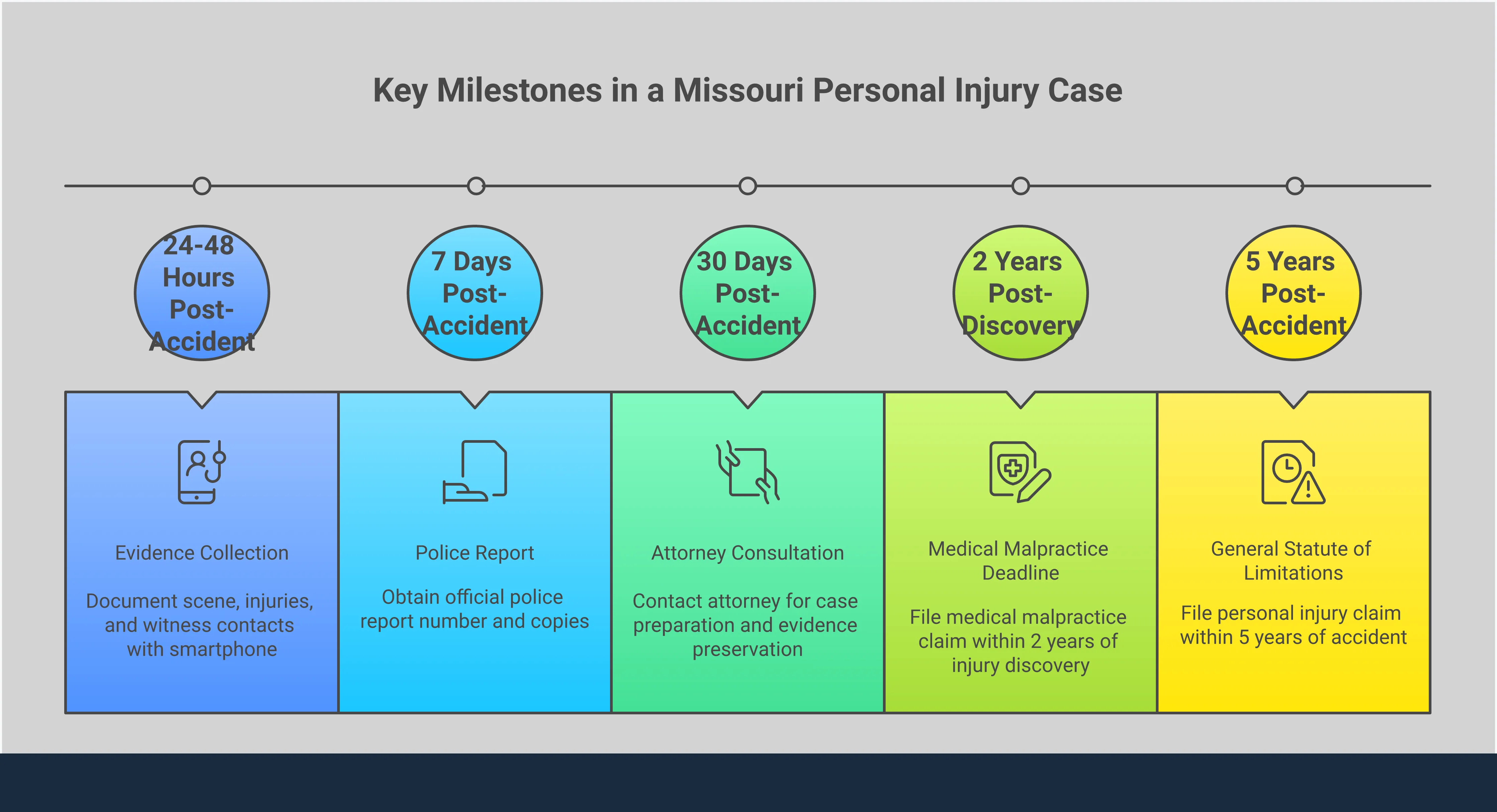
In Missouri, there’s a legal deadline for filing a personal injury lawsuit, known as the statute of limitations. For most personal injury claims, including those from car accidents or slip and falls, you have five years from the date of the incident to file your case. While five years might sound like a long time, it can pass quickly, especially when you’re focused on recovery.
If you miss this deadline, the court will almost certainly refuse to hear your case, and you will lose your right to seek compensation forever. This is a firm cutoff, which is why it’s so important to understand the timeline. Different types of legal claims can have different deadlines, so speaking with an attorney early on ensures you don’t accidentally miss your window of opportunity.
Why Acting Quickly Helps Your Case
While the statute of limitations gives you a five-year window, waiting is rarely a good strategy. The sooner you contact an attorney, the stronger your case is likely to be. Evidence has a way of disappearing over time. Skid marks fade, security camera footage gets erased, and physical evidence from the scene can be lost. Additionally, the memories of witnesses can become less reliable as months and years go by.
When you hire an attorney quickly, they can immediately begin preserving crucial evidence and gathering witness statements while the details are still fresh. This proactive approach builds a solid foundation for your claim. Statistically, people who hire an attorney tend to achieve better outcomes in their personal injury cases. Don’t hesitate to reach out for a consultation to get the process started.
Signs You Need a Lawyer Now
It can be hard to know if your situation warrants legal action. Here are a few clear signs that you should contact a personal injury lawyer right away:
- You were injured. If you suffered any type of injury—from minor whiplash to something more severe—you should speak with a lawyer. Medical bills can add up quickly, and you may be entitled to compensation for your pain and suffering.
- The insurance company contacts you. Insurance adjusters are trained to protect their company’s bottom line, which often means minimizing your payout. Never give a recorded statement or accept a settlement offer without first consulting an attorney.
- Fault is unclear or disputed. If there’s any question about who was responsible for the accident, a lawyer can help investigate and establish liability. You don’t have to figure this out on your own.
How a Lawyer Takes on Insurance Companies
After an accident, one of the most stressful parts of the recovery process can be dealing with insurance companies. Their goal is to protect their bottom line, which often means paying out as little as possible on claims. This is where a personal injury lawyer becomes your most important advocate. They step in to manage all communication and negotiations, ensuring the insurance adjuster doesn’t pressure you into accepting an unfair offer or admitting fault.
An experienced attorney understands the tactics insurance companies use to devalue claims. They know how to build a strong case backed by solid evidence, calculate the full extent of your damages, and fight for the compensation you truly deserve. By having a professional represent you, you level the playing field. Instead of you going up against a massive corporation alone, the insurance company has to deal with a legal expert who knows your rights and is prepared to defend them. This simple shift in dynamics can make a significant difference in the outcome of your case.
Settlement vs. Trial: What the Numbers Say
The idea of going to court can be intimidating, but the reality is that very few personal injury cases ever see the inside of a courtroom. The vast majority—around 95%—are resolved through a settlement agreement. This is because a settlement provides a guaranteed outcome, avoiding the uncertainty, stress, and expense of a trial. When a case does go to court, the outcome is essentially a coin toss, with plaintiffs winning about half the time. This is why having an experienced attorney is so crucial. They prepare your case as if it’s going to trial, which gives them the leverage to negotiate a fair settlement on your behalf. Their goal is to secure the best possible result for you, and people with legal representation often receive significantly higher settlements than those who go it alone.
Fighting for a Fair Settlement
The vast majority of personal injury cases are resolved through a negotiated settlement, not a trial. Your lawyer handles this entire process for you. After gathering all the necessary evidence—like medical records, proof of lost wages, and expert opinions—they will calculate the full value of your claim. This includes not just your current bills but also future medical needs and your pain and suffering.
Your attorney then sends a formal demand to the insurance company and begins negotiations. They will skillfully argue your case, countering any lowball offers with firm evidence. Because they have handled countless personal injury claims, they know what a fair settlement looks like and won’t let an insurer undervalue your losses.
Protecting You from Insurance Company Tactics
While you aren’t legally required to hire an attorney, doing so provides a critical layer of protection. Insurance adjusters are trained negotiators who may try to get you to make a recorded statement that could be used against you later. They might also rush you into accepting a quick, low settlement before you even know the full extent of your injuries.
When you have a lawyer, all communication goes through them. This prevents you from accidentally saying something that could jeopardize your claim. Your attorney will manage the deadlines, paperwork, and conversations, making sure your rights are protected at every turn. Having legal representation signals to the insurer that you are serious about receiving fair compensation, which often leads to a better outcome.
What Happens if Your Case Goes to Trial?
If the insurance company refuses to offer a fair settlement, your lawyer will be prepared to take your case to trial. While this is less common, a skilled attorney prepares every case as if it might end up in court. This thorough preparation often convinces the insurance company to settle before a trial becomes necessary.
Should your case go to trial, your lawyer will represent you in front of a judge and jury. They will present the evidence, call witnesses to testify, and argue persuasively on your behalf to show the full impact the injury has had on your life. Chad G. Mann has the courtroom experience needed to confidently present your case and fight for a favorable verdict.
What Evidence Do You Need for Your Case?
Building a strong personal injury claim is all about having a solid foundation of proof. The more quality evidence you can gather, the clearer the picture becomes for insurance companies, judges, and juries. Think of it as telling the story of what happened, backed by undeniable facts. From the moment an accident occurs, collecting the right information is one of the most important things you can do to protect your rights. An experienced attorney can guide you through this process, but getting a head start by preserving key documents and details will strengthen your position significantly. This evidence helps establish who was at fault, demonstrates the severity of your injuries, and justifies the compensation you are seeking.
Gathering Medical Records and Bills
After an accident, your health is the top priority. Your medical journey also creates one of the most critical forms of evidence for your case. Medical records and bills are crucial in establishing the extent of injuries you sustained. They provide a detailed timeline of your treatment, the diagnoses from your doctors, and the total costs you’ve incurred. This paper trail is essential for valuing a personal injury claim because it directly connects the accident to your physical and financial damages. Be sure to keep every document you receive, including hospital bills, co-pays, prescription receipts, and notes from your physical therapist. This documentation helps prove your need for ongoing and future medical care.
The Importance of Accident Reports and Photos
The official police report and any photos you take at the scene are powerful tools for proving what happened. Accident reports and photographs are essential pieces of evidence that can clarify the circumstances surrounding the incident. A police report provides an objective, third-party account of the events, often including diagrams and initial findings of fault. Photos and videos you take immediately after the accident can capture crucial details that might disappear over time, like vehicle damage, road conditions, and visible injuries. This evidence is vital because how clear it is who is at fault can directly influence the length of a personal injury case.
Using Witness and Expert Testimony
What other people saw can be just as important as what the official reports say. Witnesses can significantly impact the outcome of a personal injury case because their statements can back up your version of events. If anyone saw the accident, getting their name and contact information is a great step. Their testimony provides an unbiased perspective that adds credibility to your claim. In more complex situations, your attorney may also bring in an expert witness. This could be a medical professional to explain the long-term effects of your injuries or an accident reconstruction specialist to detail how the collision occurred. These expert statements help explain technical issues to a jury.
Key Factors That Influence Your Case
When you’re dealing with the aftermath of an injury, it’s natural to wonder what your case might be worth and how it will all play out. While no two personal injury cases are exactly alike, several key factors consistently influence the process and the final result. Understanding these elements can help you set realistic expectations and see why having an experienced attorney is so important. The strength of your case often comes down to three main pillars: who was at fault, how seriously you were injured, and the quality of the evidence you can present. Each piece plays a critical role in building a strong claim and securing the compensation you deserve. An insurance adjuster will scrutinize every detail, so having a clear, well-supported story is essential. We’ll walk through each of these factors so you know what to focus on as you move forward.
Who Is At Fault? Proving Liability
One of the first hurdles in any personal injury claim is proving that someone else was responsible for your injuries. This is known as establishing fault or liability. If it’s crystal clear who caused the accident—for example, if a driver ran a red light and hit you—your case may be more straightforward. However, things can get complicated if multiple parties are involved or if the other side tries to blame you. Missouri follows a “pure comparative fault” rule. This means you can still recover damages even if you were partially at fault, but your final compensation will be reduced by your percentage of blame. An attorney’s job is to investigate every detail of your automobile accident or injury to build a strong argument that minimizes your fault and holds the responsible party accountable.
Element 1: Duty of Care
The first step in any personal injury case is showing that the other person had a responsibility to act with reasonable care. This is called the “duty of care.” It’s a legal obligation we all have to avoid causing harm to others through our actions. For example, every driver on the road has a duty to obey traffic laws and pay attention to their surroundings. Similarly, a grocery store owner has a duty to keep their aisles free of spills or hazards that could cause a customer to fall. This principle is the foundation of negligence law. To build a case, your lawyer must first establish that this duty existed between you and the person who caused your injury.
Element 2: Breach of Duty
Once a duty of care is established, the next step is to prove that the person “breached” that duty. A breach is simply a failure to live up to that legal responsibility. It’s the specific careless or reckless action that put you in harm’s way. If a driver’s duty was to stop at a red light, texting while driving and running through the intersection is a clear breach of that duty. If a property owner’s duty was to fix a broken staircase, ignoring it for weeks would be a breach. This is the core element that demonstrates negligence. Your attorney will use evidence like police reports, photos, and witness statements to show exactly how the other party failed to act safely.
Element 3: Causation
Proving that someone was careless isn’t enough; you also have to show that their carelessness directly caused your injuries. This link is called causation. For example, if a driver ran a red light and hit your car, you must prove that the collision is what caused your whiplash and broken arm. The other party’s breach of duty must be the direct cause of the harm you suffered. Insurance companies will often try to argue that your injuries were pre-existing or caused by something else. Your lawyer’s job is to connect the dots with medical records and expert testimony, creating an undeniable link between the negligent act and your injuries.
Element 4: Damages
The final element is proving that you suffered actual harm, which is referred to as “damages.” This is the measurable loss you experienced as a result of your injuries. Damages aren’t just about physical pain; they cover a wide range of losses that have impacted your life. This includes all of your medical bills, lost wages from being unable to work, and the cost of repairing or replacing damaged property. It also includes non-economic losses, such as pain and suffering and emotional distress. Your attorney will carefully document all of these types of damages to calculate the full and fair compensation you are owed for everything you’ve been through.
How the Severity of Your Injuries Plays a Role
The nature and extent of your injuries are central to your claim’s value. A more severe injury that requires extensive medical treatment, results in long-term disability, or permanently alters your life will typically lead to a higher settlement. Compensation isn’t just about covering your immediate medical bills; it’s meant to account for future medical needs, lost income from being unable to work, and the non-economic impact of pain and suffering. This is why it’s absolutely essential to seek medical attention right after an accident and follow your doctor’s treatment plan. Doing so creates a clear medical record that directly links your injuries to the incident, making it much harder for an insurance company to downplay their severity.
Why Strong Evidence Is Crucial
A compelling personal injury case is built on a foundation of solid evidence. Your story is important, but you need proof to back it up. Strong evidence helps paint a clear picture of what happened and demonstrates the extent of your damages. This includes everything from the official police report and photos of the accident scene to your medical records and bills. Witness statements can also be incredibly powerful, offering an objective perspective on the events. An experienced lawyer knows exactly what kind of evidence is needed and how to gather it. We can help you compile all the necessary documentation to build a persuasive case and protect you if the other party tries to argue that a pre-existing condition caused your pain. If you have questions about your situation, we’re here to help you understand your options.
What Makes The Law Office of Chad G. Mann Different?
Choosing a lawyer can feel overwhelming, especially when you’re already dealing with the stress of an injury or legal dispute. You need more than just an expert; you need a partner who understands what you’re going through. At The Law Office of Chad G. Mann, the focus is on building a relationship of trust and providing clear, dedicated support from start to finish. It’s about making sure you feel heard, respected, and confident that your case is in the right hands.
Putting Our Clients First, Always
When you’re facing medical bills and can’t work, the last thing you need is another financial worry. That’s why we start with a free consultation to discuss your situation with no strings attached. This gives you a chance to understand your options without any pressure. Our firm operates on a contingency fee basis, which is a straightforward promise: you don’t pay any attorney fees unless we successfully recover compensation for you. This approach ensures our goals are perfectly aligned with yours—we are fully invested in achieving the best possible outcome for your case.
Why Our Columbia Roots Matter
Being based right here in Columbia, Missouri, gives us a distinct advantage. We have a deep understanding of the local legal landscape, from the specific procedures in Boone County courts to the nuances of state laws that can affect your case. This isn’t just about knowing the law; it’s about knowing the community. Our familiarity with the area, including its roads, businesses, and legal professionals, allows us to build a stronger, more relevant case on your behalf. Our practice areas are tailored to serve the specific needs of our neighbors in Southwest Missouri.
Comprehensive Support from Start to Finish
From the moment you decide to work with us, we handle the heavy lifting so you can focus on your recovery. Our team manages every detail of the legal process, from gathering police reports and medical records to communicating with doctors and negotiating directly with insurance companies. We are prepared to be your strongest advocate, whether that means securing a fair settlement or representing you in court if a trial becomes necessary. You can learn more about Chad G. Mann’s commitment to his clients and see how his experience translates into dedicated, effective support for your case.
Related Articles
- Columbia, SC Personal Injury Lawyer: Your Accident Claim Guide
- Columbia, MO Injury Lawyers: Find Trusted Representation
- Find Injury Attorneys in Columbia, MO – Your Guide
- Finding the Right Personal Injury Lawyer in Columbia – The Law Office of Chad G. Mann, LLC
- How to Choose an Injury Lawyer in Columbia – The Law Office of Chad G. Mann, LLC
Frequently Asked Questions
What if I lose my case? Do I still owe you money? No, you won’t. We handle personal injury cases on a contingency fee basis, which is a straightforward promise to you. It means you owe us absolutely nothing for attorney fees unless we successfully recover money for you through a settlement or a court verdict. We cover the upfront costs of building your case so you can focus on your health without any financial risk.
How long does a personal injury case usually take to resolve? There isn’t a single timeline that fits every case, as the duration depends on several factors. A straightforward claim with clear fault and minor injuries might be resolved in a matter of months. However, a more complex case involving severe injuries or a dispute over who was responsible could take longer, especially if the insurance company is unwilling to offer a fair settlement and the case needs to be prepared for trial.
What should I do to protect my case right after an accident? The most important thing is to seek medical attention, even if you feel fine, as some injuries don’t show up right away. After that, try to document everything you can by taking photos of the scene and your injuries. Avoid giving a recorded statement to the other party’s insurance company before you’ve had a chance to speak with an attorney. Their goal is to minimize your claim, and anything you say can be used against you.
Will my case definitely go to court? It’s unlikely, as the vast majority of personal injury cases are settled out of court. Our goal is always to secure a fair settlement for you through skilled negotiation. We prepare every case as if it will go to trial, which shows the insurance company we are serious. This thorough preparation often convinces them to offer a reasonable settlement without needing to involve a judge and jury.
How is the value of a personal injury claim determined? There is no simple calculator for determining a claim’s value because every situation is unique. The final amount depends on several key factors, including the total cost of your medical bills, any income you lost from being unable to work, and projected future medical needs. It also includes compensation for non-economic damages, such as your physical pain and emotional suffering, which are very real consequences of an injury.