


The phone call from the dog owner’s insurance company often comes when you’re still in shock. The adjuster will sound concerned, asking how you are and offering sympathy. But their true goal is to protect their company by getting you to accept a lowball offer or say something that hurts your case. It’s a common tactic, and falling for it can cost you dearly. This guide is your defense against those strategies. We’ll walk you through exactly what to do after a dog bite in Missouri to protect your rights and build a claim that covers the full extent of your recovery.
Key Takeaways
- Act quickly to protect your health and your claim: Your first priorities should be getting medical care and reporting the bite to the authorities. These actions create an official record of your injuries and the incident, which is essential evidence.
- Understand that Missouri law holds dog owners responsible: The state’s “strict liability” rule means an owner is liable for damages even if their dog had no prior history of aggression, which simplifies proving your case.
- Let your lawyer handle the insurance company: Politely refuse to give a recorded statement or accept an early settlement offer. Directing all communication to an attorney prevents you from saying something that could hurt your claim and allows a professional to fight for fair compensation.
Bitten by a Dog? Here’s What to Do First
A dog bite is a frightening and painful experience, and it’s easy to feel overwhelmed in the moments that follow. Taking a few clear, deliberate steps right away is the best thing you can do for your physical recovery and to protect your rights. Your first priority is always your health and safety. Before you worry about anything else, focus on getting to a safe location away from the animal and addressing the injury.
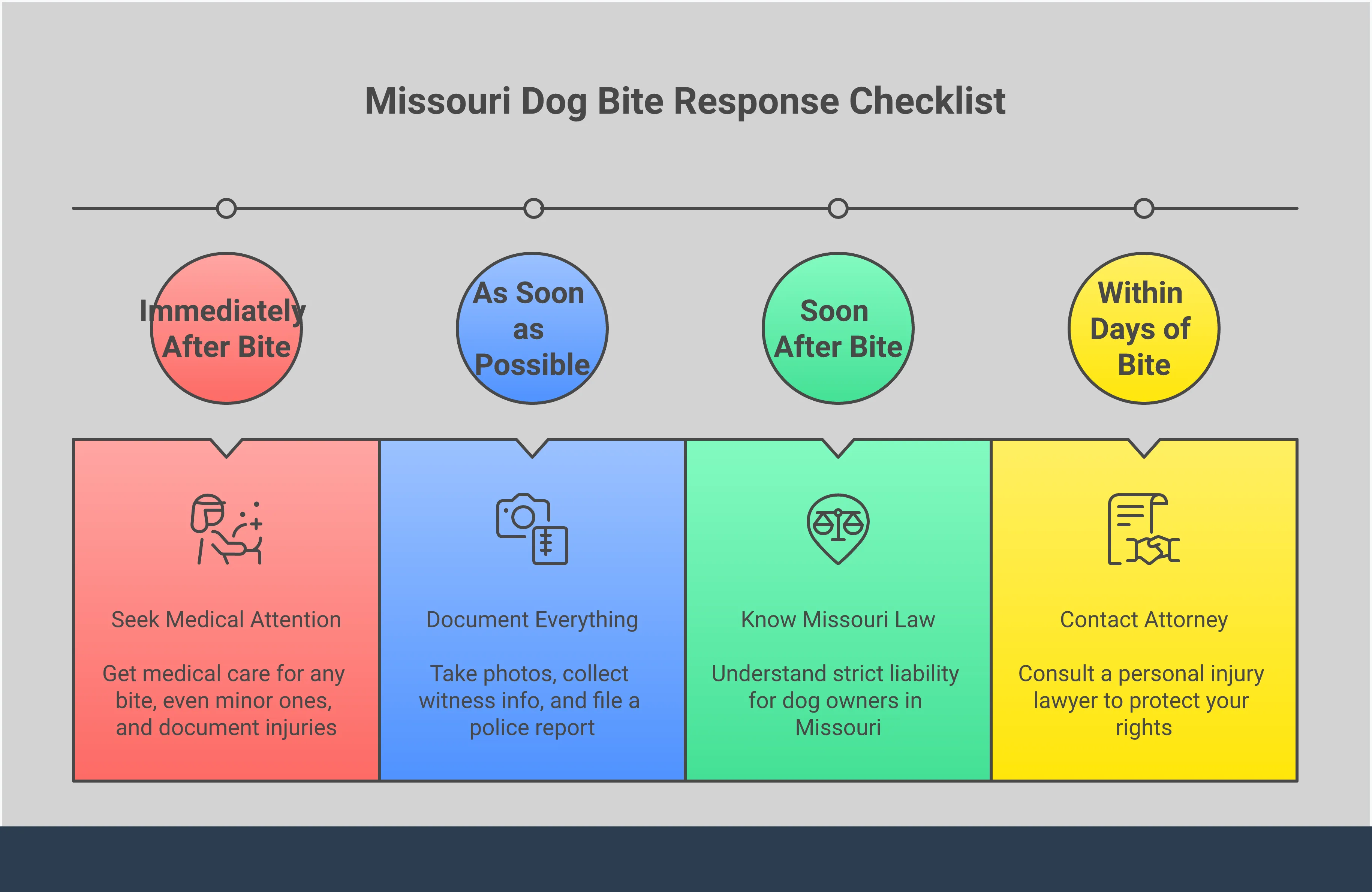
The actions you take immediately after the incident are critical. Proper first aid can prevent serious infections, and seeking prompt medical care ensures you get the treatment you need while also creating an official record of your injuries. This medical documentation is a cornerstone of any future legal claim. Once you’ve tended to your health, reporting the bite to the proper authorities helps create a public record of the event, which can be invaluable for both your case and for community safety. Think of these initial steps as the foundation for building your case, should you decide to seek compensation for your injuries. It’s about taking control of the situation, one step at a time, to ensure you are safe, healthy, and prepared for what comes next.
Stop the Bleeding and Assess the Wound
Your first step after getting to a safe place is to manage any bleeding. Using a clean towel or cloth, apply gentle but firm pressure to the wound. If you can, try to keep the injured area elevated above your heart to help slow the bleeding. Take a moment to look at the injury. Is it a deep puncture wound, a long tear, or more of a surface-level scrape? Understanding the type and severity of the wound will help you and your doctor determine the best course of treatment. Even if the bleeding stops quickly and the wound seems minor, it’s important to take it seriously.
Carefully Clean and Disinfect the Bite
Once any active bleeding is under control, you need to clean the wound thoroughly to reduce the risk of infection. Dog saliva carries a lot of bacteria that can cause serious complications if left untreated. Wash the bite area gently with mild soap and warm running water for at least five to ten minutes. This might sting, but it’s one of the most effective ways to flush out harmful germs. Avoid using harsh chemicals like hydrogen peroxide or alcohol, as they can damage the tissue and slow down the healing process. Pat the area dry with a clean cloth when you’re done.
Apply a Sterile Bandage and Ointment
After cleaning and drying the wound, apply a thin layer of an over-the-counter antibiotic ointment. This adds another layer of protection against infection. Next, cover the bite with a sterile bandage to keep it clean and protected from further irritation or bacteria. You’ll want to change this bandage at least once a day, or more often if it becomes wet or dirty. Keep a close eye on the wound over the next few days for any signs of infection, such as increased redness, swelling, warmth, pus, or a fever. If you notice any of these symptoms, see a doctor immediately.
Know When to See a Doctor
It is essential to see a doctor as soon as possible after any dog bite, no matter how small it seems. A medical professional can properly assess and clean the wound, determine if you need stitches, and decide if a tetanus shot or rabies prevention treatment is necessary. Getting prompt medical care is not just for your health; it’s also a critical step for any legal action. A doctor’s visit creates official documentation of your injuries, which is vital evidence in a personal injury claim. Don’t wait—make seeing a doctor your top priority.
Report the Incident to the Authorities
After you’ve received medical care, you should report the dog bite to your local animal control agency or police department. Filing an official report creates a legal record of the incident, documenting the date, location, and details of what happened. This report is not only important for your potential case but also for public safety, as it creates a history for a potentially dangerous animal. When you call, be prepared to provide as much information as you can, including the owner’s name and address, a description of the dog, and where the attack occurred. If you have questions about this process, you can always contact our office for guidance.
Mandatory Reporting to the Health Department
Beyond notifying animal control, you are also required by law to report the incident to your local health department. Missouri law is very specific, classifying mammalian animal bites as a condition that must be reported within 24 hours. This isn’t just a guideline; it’s a mandatory step that allows health officials to track public health risks, such as rabies. The process is usually simple and can be done over the phone. Fulfilling this official reporting requirement creates a crucial health record of the event, which is distinct from the animal control report.
This official health department record serves two vital purposes. First, it provides another layer of formal documentation that can significantly strengthen your personal injury claim by corroborating the details of the attack. This public record is especially powerful if the dog has a history of aggression, as it helps establish a pattern of dangerous behavior. Second, your report plays an important role in community safety. It gives health officials the data they need to monitor bite trends and take action to prevent future incidents. By making this call, you are not only protecting your legal rights but also contributing to a safer neighborhood for everyone.
How to Document Everything for Your Claim
After the initial shock of a dog bite wears off, it can be difficult to think about what to do next. Once you’ve addressed your immediate medical needs, your next priority should be to gather as much information as possible about the incident. Think of yourself as the lead investigator of your own case. The evidence you collect in the hours and days following the attack is crucial for building a strong foundation for your claim. This documentation creates a clear, factual record that can help you demonstrate the extent of your injuries and hold the responsible party accountable.
Photograph Your Injuries and the Scene
A picture is truly worth a thousand words, especially when it comes to a personal injury claim. Use your phone to take clear, well-lit photos of your injuries as soon as you can. Capture the wounds from multiple angles to show their depth and severity. It’s also a good idea to continue taking pictures throughout the healing process to document any scarring or long-term effects. Don’t forget to photograph the location where the bite occurred, paying attention to details like a broken fence or a lack of warning signs. Snapping a picture of any torn or bloody clothing also helps tell the full story of the attack.
Collect Contact Info from Witnesses
If anyone saw the dog bite happen, their account can be incredibly valuable. An independent witness can confirm your version of events and provide an objective perspective that strengthens your case. Politely ask anyone who was present for their name and contact information, including their phone number and email address. You don’t need a formal statement on the spot—just a way to get in touch with them later. Their testimony can be vital in clarifying key details, such as whether the dog was running loose or if it showed aggression before the attack.
Ask for the Owner’s Contact and Insurance Info
As soon as it’s safe to do so, try to get the dog owner’s information. Calmly ask for their full name, address, and phone number. It’s also important to ask if the dog is up-to-date on its vaccinations, especially rabies, as this will affect your medical treatment. Many dog bite claims are covered under the owner’s homeowner’s or renter’s insurance policy, so be sure to ask for their insurance provider and policy number. If the owner is uncooperative or refuses to provide this information, don’t argue. Simply make a note of it and contact an attorney for guidance.
Keep a File of All Medical Records and Bills
Creating a thorough paper trail is one of the most important things you can do. Keep every single piece of documentation related to your medical care. This includes emergency room reports, bills from doctors and specialists, receipts for prescriptions and medical supplies, and records of any physical therapy or counseling you receive. These documents are the primary evidence used to calculate the financial cost of your injuries. It’s also helpful to keep a simple journal where you track your pain levels, symptoms, and any daily activities you can no longer do because of the injury.
Make Sure an Official Report is Filed
Filing a report with local authorities creates an official record of the incident that can be used as evidence in your claim. Contact your local animal control agency or police department to report the bite. Provide them with a clear and factual account of what happened, including the date, time, location, and a description of the dog. This report not only supports your legal case but also serves a public safety function. By reporting the incident, you put the dog on the authorities’ radar, which can help prevent it from harming someone else in the future.
Understanding Dog Owner Liability in Missouri
After a dog bite, it’s natural to have questions about who is responsible. In Missouri, the law is designed to protect victims by placing clear responsibility on the dog’s owner. Understanding these rules can help you see the path forward for your claim. The legal system holds owners accountable for their pets’ actions, especially when those actions cause harm to others. This framework is crucial for ensuring you receive fair compensation for your injuries, medical bills, and other related costs. Navigating these laws is a key part of building a strong personal injury case.
What Is Missouri’s “Strict Liability” Rule?
In Missouri, the law is pretty clear-cut thanks to something called “strict liability.” This means a dog owner is legally responsible for a bite, even if their dog has never shown aggression or bitten anyone before. Some states have a “one-bite rule,” which gives owners a pass for the first incident, but Missouri does not. If a dog bites you and you were on public property or lawfully on private property (meaning you weren’t trespassing), the owner is held liable. This removes the burden of you having to prove the owner knew their dog was potentially dangerous.
Liability for Property Damage and Harm to Other Animals
In Missouri, a dog owner’s responsibility extends beyond injuries to people. The law also holds them accountable if their pet damages property or harms another animal. This could involve a dog digging up a neighbor’s prize-winning garden, chewing through a fence, or, in a more serious scenario, injuring your own pet at the park. The state’s “strict liability” rule applies here as well, meaning the owner is responsible for the damages even if their dog had no history of such behavior. This allows you to seek compensation for the cost of repairs or for the veterinary bills needed to treat your injured animal. Understanding this aspect of personal injury law is crucial, as it ensures that you can hold a negligent owner accountable for all the harm their dog causes, not just physical injuries to a person.
The Owner’s Duty to Cover Your Costs
Because of the strict liability rule, a dog owner is responsible for the damages their dog causes. This isn’t just about the immediate injury; it covers a range of costs you might face during your recovery. The owner may be required to pay for all of your medical expenses, including hospital visits, surgery, and physical therapy. They can also be held liable for lost wages if you had to miss work and for the pain and suffering the attack caused. The goal is to make you whole again by covering the financial and emotional toll of the incident.
What Happens When a Dog Is Labeled “Dangerous”?
The situation becomes even more serious if the dog has a history of aggression. A dog can be legally classified as a “dangerous dog” if it has previously bitten a person or another animal without being provoked. If an owner continues to keep a dog with this designation and it bites someone again, the owner could face criminal charges. Depending on how severe the injuries are, these charges can range from a misdemeanor to a felony. This law is in place to protect the public from known threats and to hold negligent owners to a higher standard of accountability.
Criminal Charges for Owners
When a dog has a known history of aggression, the owner’s responsibility increases significantly. If a dog has already been legally classified as “dangerous” for a previous unprovoked bite and then bites someone again, the owner may face criminal charges. This moves the case beyond a civil matter of paying for damages and into the realm of criminal law. The severity of these charges can vary, ranging from a misdemeanor to a felony, depending on how serious the victim’s injuries are. This legal escalation reflects the owner’s failure to prevent a foreseeable attack, holding them accountable for knowingly keeping a dangerous animal without proper safeguards.
Potential Fines
Beyond covering the victim’s medical bills and other damages, a dog owner found liable in Missouri can also face direct financial penalties from the state. According to state law, an owner may be required to pay a fine of up to $1,000. It’s important to understand that this fine is a punishment for violating the statute and is paid to the court or local government; it is completely separate from the compensation you are entitled to receive for your injuries. This penalty serves as an additional deterrent, reinforcing the owner’s legal duty to control their animal and protect the public from harm.
Consequences for the Dog
The legal system also addresses the future risk posed by the animal itself, and in some cases, the consequences are severe. If a dog that has previously bitten someone attacks again, or if any dog causes serious injury or death, the law requires immediate action. Animal control or the sheriff must impound the dog, which will then be held for 10 business days after the owner is notified. After this period, the dog may be euthanized. While this is a difficult outcome, it is a measure designed to ensure public safety and prevent future tragedies. You can find more information on related topics in our collection of legal articles.
Exceptions: When an Owner Isn’t At Fault
While owners are generally responsible, there are a few situations where their liability might be reduced. Missouri follows a “comparative fault” rule. This means if the injured person is found to be partially at fault for the incident—for example, by provoking or teasing the dog—their compensation could be reduced by their percentage of fault. If you were trespassing on the owner’s property when the bite occurred, the owner may not be held liable at all. These nuances are why it’s so important to have a clear account of the incident and to discuss your case with a professional.
The Criminal Activity Exception
While Missouri’s strict liability rule is strong, it isn’t absolute. There’s a significant exception that protects property owners: the criminal activity exception. This rule means that if someone is bitten by a dog while they are committing a crime on the owner’s property, the owner is generally not held liable for the injuries. The law recognizes that a dog may be acting defensively to protect its home and family from an intruder or someone causing harm. This exception makes sense, but figuring out what legally qualifies as “criminal activity” versus simple trespassing can be tricky, and the distinction is critical for your case.
The specifics of this rule are detailed in Missouri law, which states the person must be engaged in a crime when the bite occurs. This is an important detail, as it separates illegal acts from simple trespassing. For instance, a mail carrier cutting across the grass isn’t committing a crime, but someone trying to break into your car in the driveway is. Since the circumstances of the incident are everything, it’s vital to understand how the law applies to your situation. If you were bitten and there’s any question about what you were doing on the property, getting advice from a personal injury attorney is the best way to protect your rights.
What to Do if the Owner or Insurance Company Calls
After a dog bite, you’ll likely get a call from the dog’s owner or their insurance company. It’s a nerve-wracking moment, and it’s easy to feel pressured to say more than you should. Remember, the insurance adjuster’s job is to protect their company’s bottom line, which often means minimizing your claim. What you say in these early conversations can significantly affect the outcome of your case. Knowing how to handle these calls is key to protecting your rights and ensuring you’re treated fairly. The best approach is to be prepared, stay calm, and give away as little information as possible until you’ve had a chance to speak with an attorney.
What to Say (and Not Say) on the First Call
When the owner or their insurance representative calls, it’s important to be polite but cautious. You can confirm your name and the date the incident occurred, but that’s it. You are not obligated to discuss the details of the attack, the extent of your injuries, or your medical treatment. Avoid speculating on who was at fault or saying things like “I’m fine” or “It wasn’t that bad.” These seemingly innocent comments can be taken out of context and used to argue that your injuries aren’t serious. Keep the conversation brief and stick to the basic facts.
Don’t Agree to a Recorded Statement or Quick Payout
The insurance adjuster will almost certainly ask you to provide a recorded statement. You should always politely decline this request. Adjusters are trained to ask leading questions designed to get you to say something that could weaken your claim. Similarly, be wary of any quick settlement offers. Insurance companies often dangle an early, lowball offer hoping you’ll accept it before you understand the full cost of your injuries, including future medical care and lost wages. Accepting a fast payout usually means forfeiting your right to seek further compensation, so never agree to a settlement without getting professional legal advice.
Keep a Record of Every Call and Offer
From the very first call, keep a detailed log of every interaction you have with the dog owner and their insurance company. After each conversation, write down the date, time, the name of the person you spoke with, and a summary of what was discussed. Save all emails, letters, and text messages. If they make a settlement offer, be sure to document the amount and the date it was made. This paper trail creates a clear record of communication and can be incredibly valuable evidence if your claim becomes more complex. It helps your attorney understand exactly what has been said and offered so far.
Let Your Lawyer Do the Talking
The simplest and safest way to handle calls from the insurance company is to let a lawyer do it for you. Once you have legal representation, you can simply tell any callers, “Please direct all future questions to my attorney.” This immediately takes the pressure off you and puts a professional advocate in your corner. Your lawyer understands the tactics insurance companies use and will handle all communications and negotiations on your behalf. This allows you to focus on what truly matters—your physical and emotional recovery—while your attorney works to protect your rights. If you need help, don’t hesitate to reach out to our office.
Do I Need a Lawyer for a Dog Bite in Missouri?
Signs It’s Time to Call an Attorney
You might wonder if you really need a lawyer after a dog bite. The clearest sign is a call from the owner’s insurance company. While the adjuster may seem helpful, their goal is to settle your claim for as little as possible. If they ask for a recorded statement or make a quick cash offer, it’s a red flag. These offers rarely cover the full cost of your injuries, future care, or lost wages. Accepting one without legal advice could mean forfeiting your right to fair compensation. This is the moment to pause and call an attorney.
What Can a Dog Bite Lawyer Do for You?
A personal injury lawyer acts as your advocate, managing legal complexities so you can focus on recovery. They investigate the attack, gather evidence, and speak to witnesses to build a solid case. Attorneys are skilled in Missouri’s dog bite laws and know how to handle insurance company tactics designed to minimize your claim. By taking over all communications, your lawyer ensures your rights are protected from start to finish. Their goal is to secure the full compensation you deserve for your medical bills, lost income, and suffering.
Understanding What Your Claim Is Really Worth
The true cost of a dog bite extends beyond initial medical bills. In Missouri, you can seek compensation for a variety of damages. This includes all medical expenses, from the ER visit to ongoing physical therapy. If the injury forced you to miss work, you can recover those lost wages. Importantly, you are also entitled to compensation for non-financial damages, such as physical pain and emotional distress from the attack. A lawyer helps you calculate these costs to ensure your claim covers the full impact on your life.
The Financial Impact of Dog Bites Nationally
It’s helpful to understand that dog bite claims are a serious financial matter for insurance companies across the country. Nationally, the average settlement for a dog bite is around $84,000. This figure isn’t meant to set an expectation for your specific case, but it does show that these injuries are recognized as having a significant financial impact. The costs associated with a bite—including emergency care, potential surgery, and follow-up treatments—can add up quickly. This national average reflects the real-world expenses and suffering that victims endure, reinforcing why it’s so important to have your claim evaluated properly rather than accepting a quick, low offer from an insurer.
Average Dog Bite Settlement Costs
While national averages provide a broad picture, the reality is that settlement amounts vary dramatically from one case to another. Some sources report the average payout for a dog bite is closer to $65,000, with a typical range falling anywhere between $15,000 and hundreds of thousands of dollars. The final amount depends entirely on the specifics of your situation. A minor bite requiring a few stitches will result in a much lower settlement than a severe attack causing permanent scarring, nerve damage, or emotional trauma. An experienced attorney can help you account for all these factors to determine what fair compensation looks like for you.
The Risk of Fatal Dog Attacks
While the vast majority of dog bites are not life-threatening, it’s important to acknowledge the potential for severe outcomes. Tragically, about 43 people die from dog attacks in the U.S. each year. This sobering statistic highlights why dog bite laws exist and why every incident must be taken seriously. Reporting a bite and holding the owner accountable isn’t just about securing compensation for your injuries; it’s also a crucial step in promoting public safety. By creating a record of a dangerous animal, you can help prevent a similar or even more tragic event from happening to someone else in the community.
Don’t Miss Missouri’s 5-Year Filing Deadline
Acting in a timely manner is crucial. Missouri has a strict deadline for filing personal injury lawsuits, called the statute of limitations. For dog bite cases, you have five years from the date of the incident to file a claim. While that seems like a long time, evidence can be lost and memories can fade. If you miss this five-year window, you lose your legal right to seek compensation permanently. To protect your claim, it’s best to contact an attorney well before the deadline to discuss your case and start the process.
How to Build the Strongest Possible Dog Bite Claim
After a dog bite, your focus should be on healing. But it’s also important to take steps to protect your legal rights and ensure you receive fair compensation for your injuries. The actions you take in the days and weeks following the incident can significantly impact the outcome of your claim. Understanding a few key legal concepts and avoiding common pitfalls can make all the difference. This is where you shift from being a victim to being your own best advocate, and a knowledgeable attorney can be your most valuable partner in this process.
What is Missouri’s “Comparative Fault” Rule?
It’s important to understand how Missouri handles situations where both parties might share some responsibility. The state follows a “comparative fault” rule, which means if you are found partially at fault for the incident, your compensation can be reduced. For example, if the court determines you were 10% at fault for provoking the dog, your final settlement would be reduced by 10%. Insurance companies may try to use this rule to argue that you were teasing the dog or trespassing to lower the amount they have to pay. This is a key reason why having an experienced personal injury lawyer is so crucial; they can build a strong case to counter any unfair claims of fault and protect your right to full compensation.
What Damages Can You Recover in a Claim?
A dog bite can lead to more than just physical pain; it can affect your finances and emotional well-being. Fortunately, you can seek compensation for a wide range of damages. These typically fall into two categories. The first is economic damages, which cover tangible financial losses like medical bills for emergency care and future treatments, lost wages from time off work, and the cost of repairing or replacing any damaged property, like torn clothing. The second is non-economic damages, which compensate you for the personal, non-financial impact of the attack. This includes compensation for pain and emotional suffering, scarring, disfigurement, and the loss of enjoyment of life.
Wrongful Death Claims
When a dog bite tragically results in a fatality, Missouri law allows the victim’s family to seek justice through a wrongful death claim. This legal action lets surviving family members pursue compensation for the immense financial and emotional burdens they face, including funeral expenses, the victim’s final medical bills, and the profound loss of companionship. The state’s strict liability rule holds the dog owner accountable for the harm their pet caused, regardless of the dog’s past behavior. If the dog was already classified as a “dangerous dog,” the owner could face severe criminal penalties, as outlined in Missouri statutes. Dealing with such a devastating loss is incredibly difficult, and a personal injury attorney can provide the guidance needed to manage the complexities of the legal process.
Avoid These Common Claim Mistakes
The dog owner’s insurance company may contact you shortly after the incident. It’s their job to resolve the claim for as little money as possible. Be polite, but be careful. One of the biggest mistakes you can make is giving a recorded statement without speaking to a lawyer first. Anything you say can be taken out of context and used against you later. You should also avoid accepting any initial settlement offers. These early offers are often far less than what your claim is actually worth and won’t account for future medical needs. Until you have consulted with a lawyer, do not sign any documents or agree to any terms proposed by the insurance adjuster.
Actionable Steps to Strengthen Your Claim
Building a strong case starts from the moment the bite occurs. First, get medical help immediately, even if the wound seems minor. A doctor’s visit creates an official record of your injuries, which is essential for your claim. Second, document everything. Take clear photos of your injuries, the location where the bite happened, and any torn clothing. Write down every detail you remember about the incident as soon as possible. Keep a file with all your medical records, bills, and any communication you have with the dog owner. Finally, the most important step is to seek legal advice. An attorney can handle the insurance companies, manage the legal paperwork, and ensure you are on the right path to receiving the fair compensation you deserve.
Related Articles
- Dog Bite in Missouri? Step-by-Step Legal Guide
- Dog Bite Injury Attorney Springfield MO | Free Consultation
- Dog Bite Injury Attorney in Springfield, MO and Surrounding Areas – The Law Office of Chad G. Mann, LLC
Frequently Asked Questions
Do I really need to see a doctor if the bite isn’t bleeding much? Yes, you should always see a doctor after any dog bite, no matter how minor it seems. Puncture wounds can be deeper than they look and carry a high risk of infection from bacteria in the dog’s mouth. A medical professional can properly clean the wound and determine if you need a tetanus shot or other treatment. Just as importantly, a doctor’s visit creates an official medical record of your injury, which is a critical piece of evidence for your claim.
What if I don’t know who owns the dog that bit me? This is a tough situation, but you still have options. Your first step should be to report the bite to local animal control or the police. Provide them with a detailed description of the dog and where the attack happened. They can investigate and may be able to find the owner. You can also ask people in the neighborhood if they recognize the dog. Documenting the incident officially is the best first step toward protecting your rights.
The dog’s owner is claiming I provoked the dog. Can I still file a claim? This is a common defense tactic used to shift blame. Missouri’s “comparative fault” rule means that if you are found partially responsible, your compensation could be reduced. However, an owner simply saying you provoked the dog doesn’t make it true. An experienced attorney can help gather evidence, such as witness statements and details about the scene, to build a strong case that shows what actually happened and counter any unfair accusations.
Why shouldn’t I just accept the insurance company’s settlement offer? Insurance adjusters are trained to settle claims for as little money as possible. Their first offer is almost always a lowball amount that they hope you’ll accept out of a desire to move on quickly. This initial offer rarely covers the full cost of your medical bills, future care, lost wages, and the pain you’ve endured. Once you accept a settlement, you can’t ask for more later, so it’s best to consult with a lawyer before agreeing to anything.
How much does it cost to hire a lawyer for a dog bite case? Most personal injury lawyers work on what’s called a contingency fee basis. This means you don’t pay any fees upfront to get your case started. The attorney’s fee is a percentage of the final settlement or award they secure for you. If you don’t win your case, you don’t owe any attorney fees. This approach allows you to get expert legal help without any financial risk.
Using Medical Records as Key Evidence
Your medical records are more than just a summary of your treatment; they are one of the most powerful pieces of evidence in your claim. Getting prompt medical care is not just for your health; it’s also a critical step for any legal action. A doctor’s visit creates official, unbiased documentation of your injuries, detailing their severity and the necessary treatment. This record serves as concrete proof that directly links the dog bite to the harm you suffered. When an insurance adjuster tries to downplay your injuries or suggest they aren’t serious, your medical file provides a factual, expert-backed rebuttal. It transforms your case from your word against the owner’s into a matter of documented medical fact, making it much harder for the other side to dispute the validity of your personal injury claim.
How an Owner’s Denial Can Strengthen Your Case
It can be incredibly frustrating if the dog’s owner denies the attack ever happened. But a denial isn’t the end of your claim—in fact, it can sometimes make your case stronger. When an owner refuses to take responsibility, it shifts the focus to the objective evidence you’ve gathered. Even if the owner denies the bite, authorities will still investigate, especially with your medical evidence and the official report you filed. Your photographs, witness contact information, and medical records all come together to create a clear and compelling story that contradicts the owner’s denial. An owner’s lie can damage their credibility, making your documented account of the events appear even more trustworthy to an insurance company or a court. If you’re facing this situation, it’s a good time to contact an attorney for support.