


You do everything you can to protect your child in the car. But did you know a simple mistake with their booster seat could have serious legal and financial consequences? It’s more than just a traffic ticket. If you’re in an accident, failing to follow the booster seat requirements in Missouri could impact your ability to get full compensation for your child’s injuries. An insurance company might argue that improper restraint was a factor. I’ll walk you through the law in simple terms, helping you protect your child and your family’s rights.
Key Takeaways
- Prioritize Size Over Age: Don’t rush to ditch the booster seat on their eighth birthday. Missouri law requires children to stay in a booster until they are 4’9″ or 80 pounds, ensuring the adult seat belt fits their body correctly and safely.
- Check the Belt Fit Every Time: A booster seat’s main job is to position the adult seat belt correctly. Before each trip, ensure the lap belt sits low on your child’s hips and the shoulder belt crosses their chest—never their neck or stomach.
- Understand the Driver’s Responsibility: If you’re behind the wheel, you are legally responsible for ensuring every child is properly secured. A violation can result in fines and could seriously reduce your compensation in a personal injury claim if an accident happens.
Why Following Booster Seat Laws is Crucial
Following Missouri’s booster seat laws is about more than just avoiding a traffic ticket; it’s one of the most important things you can do to protect your child. These regulations are based on extensive research into what keeps kids safe during a car crash. An adult seat belt is designed for an adult body, and when it doesn’t fit a child correctly, it can cause serious harm in an accident instead of preventing it. Beyond the immediate safety concerns, failing to properly restrain your child can have serious legal consequences. If an accident occurs, an insurance company could argue that your child’s injuries were worsened by the lack of a proper restraint, potentially impacting your ability to receive fair compensation for their medical care.
The Hard Numbers: How Booster Seats Save Lives
It’s easy to underestimate the importance of a booster seat, but the safety statistics are compelling. The entire purpose of a booster is to make an adult seat belt fit a small body correctly, and the data shows just how critical that job is. Understanding the numbers can help reinforce why taking that extra step before every car ride is so vital for your child’s well-being.
Reducing Injury Risk for Young Passengers
According to the Governors Highway Safety Association, using a booster seat correctly lowers the risk of serious injury by 45% for children aged four to eight. The reason for this is straightforward: a booster seat elevates your child, ensuring the vehicle’s seat belt fits them properly. A correct fit means the lap belt lies snugly across their upper thighs and hips, and the shoulder belt crosses their chest and shoulder. This directs the force of a crash to the strongest parts of their body—their bones—which is critical for preventing severe internal or spinal injuries. It’s a simple device that makes a world of difference in a collision.
Car Crashes as a Leading Cause of Child Fatalities
The reality is that motor vehicle crashes are a leading cause of death for children in the United States. What makes this fact even more tragic is that many of these deaths are preventable. National data consistently shows that a large percentage of children who die in crashes were not buckled up at all. This isn’t about assigning blame but rather highlighting the immense power you have as a parent or guardian. Taking a few moments to ensure your child is secured correctly is a simple action that can have a life-saving impact. It’s a routine that reinforces safety and protects your most precious cargo on every trip, no matter how short.
The Dangers of Improper Restraints
When a child is too small for an adult seat belt, the risks are significant. Without a booster, the lap belt often rides up onto the soft abdomen, and the shoulder belt cuts across the neck or face. In a crash, this improper fit can lead to devastating injuries to internal organs, the spine, and the head. The statistics are stark: nearly half of the children killed in passenger vehicle crashes were unrestrained. If your family is involved in an automobile accident, the other party’s insurance adjuster will look for any reason to reduce their payout. Proving you followed all safety laws, including booster seat requirements, strengthens your case and helps ensure your child gets the resources they need to recover.
What Are Missouri’s Booster Seat Requirements?
Keeping your kids safe in the car is priority number one, but figuring out the specific rules for car seats and booster seats can feel overwhelming. Between changing recommendations and the sheer number of products on the market, it’s easy to feel unsure if you’re doing it right. Missouri law cuts through the confusion by setting clear guidelines based on a child’s age, weight, and height to ensure they are properly protected. Understanding these requirements is not only essential for your child’s safety but can also be a critical factor in the event of an automobile accident.
Think of these laws as a step-by-step guide to transitioning your child from a harnessed car seat to a standard seat belt. Each stage is designed to match their physical development, providing the right level of protection when they need it most. Adult seat belts are designed for adults, and these laws ensure that children are positioned correctly so the safety features in your car can work as intended. Following them isn’t just about avoiding a ticket; it’s about giving your child the best possible protection on the road. Let’s walk through the requirements for each age group so you can feel confident every time you buckle up.
Rules for Kids Under 4 Years Old
For the youngest passengers, the rules are straightforward. Missouri law requires all children under 4 years old to be in a child safety seat that meets federal safety standards. This typically means your little one will be in either a rear-facing or forward-facing car seat with a five-point harness. At this stage, the goal is to provide maximum support for their head, neck, and spine. It’s important to follow the manufacturer’s height and weight limits for your specific car seat and keep them harnessed for as long as possible before considering a booster seat.
Guidelines for Children Ages 4-7
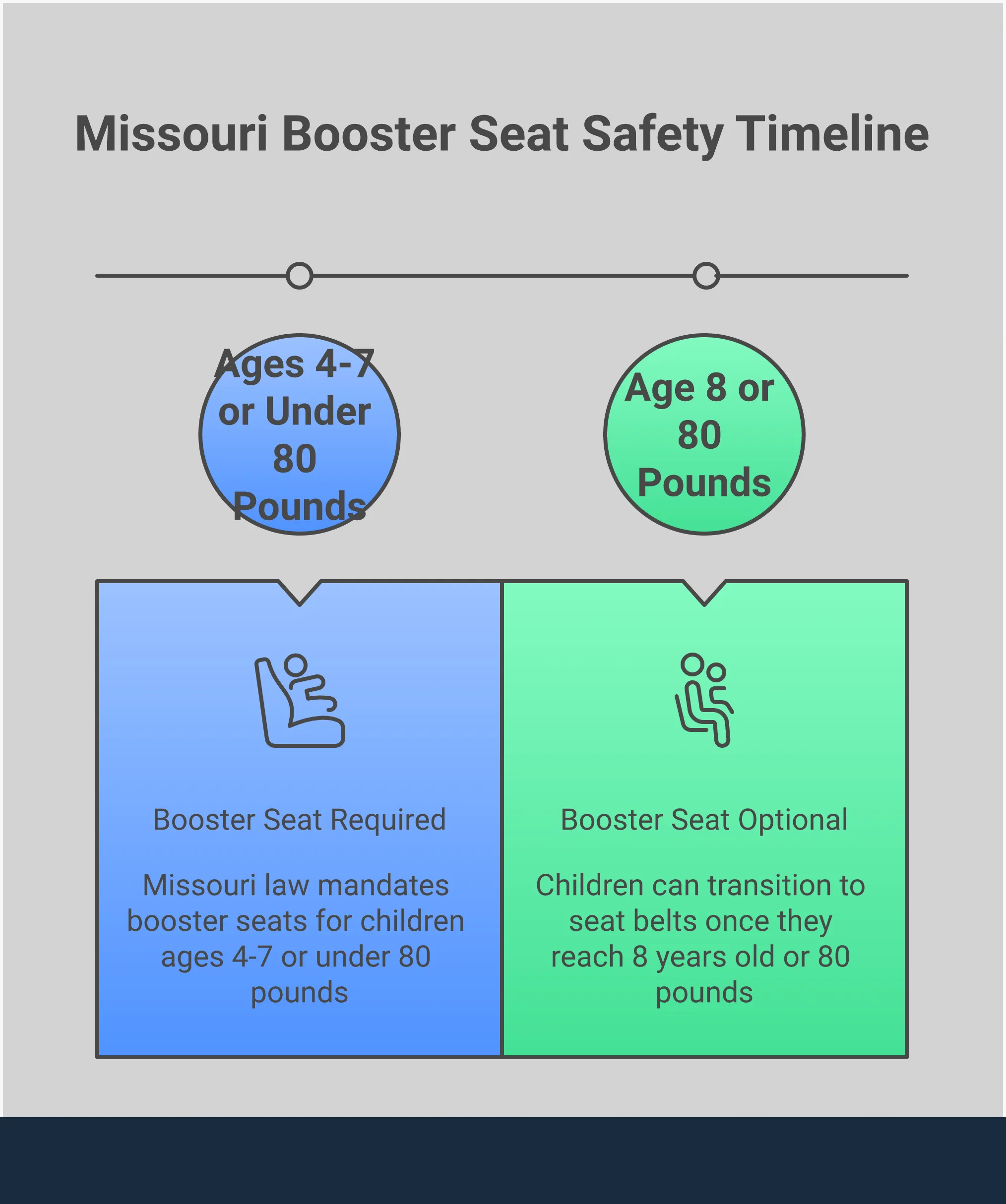
This is the prime age for booster seats. Once your child outgrows their harnessed car seat (usually around 40 pounds), it’s time to make the switch. According to Missouri law, children between 4 and 7 years old who weigh at least 40 pounds must be in a child safety seat or booster seat. They need to continue using it until they reach 80 pounds or are 4 feet 9 inches tall. A booster seat’s job is to lift your child up so the vehicle’s lap and shoulder belts fit them correctly, protecting their abdomen and chest in a crash.
When Kids 8+ Can Use a Seat Belt
While turning 8 is a milestone, it doesn’t automatically mean your child can ditch the booster seat. The law states that children 8 years old or older, or those who weigh at least 80 pounds or are taller than 4 feet 9 inches, must use a safety belt or be buckled into a booster seat. The key here is proper fit. If your 8-year-old hasn’t reached the height or weight minimum, they should remain in a booster. The adult seat belt needs to lie flat across their upper thighs and snug across their shoulder and chest—not cutting into their neck or stomach. If you have questions about a specific situation, please don’t hesitate to contact our office.
Is Your Child Ready to Graduate from a Booster Seat?
This is a big milestone for both you and your child, but it’s one you don’t want to rush. Moving out of a booster seat isn’t about reaching a certain birthday; it’s about making sure the car’s adult seat belt fits them correctly. An improper fit can cause serious injuries in a crash. Missouri law sets clear guidelines based on a child’s size to help you know exactly when they’re ready to make the switch safely. Think of it less as an age requirement and more of a safety checkpoint. Before you let your child ride without a booster, make sure they meet the state’s specific height and weight minimums.
The 80-Pound Weight Check
One of the key benchmarks for graduating from a booster seat is weight. Missouri law is straightforward: a child must weigh at least 80 pounds before they can legally ride without a booster seat, even if they are already eight years old. This rule exists because a child’s weight helps determine how the seat belt interacts with their body during a sudden stop or collision. If a child is too light, the seat belt may not engage properly or could apply pressure to the wrong parts of their small frame. Remember, hitting the 80-pound mark is just one part of the equation; they also need to meet the height requirement.
The 4’9″ Height Check
Alongside weight, height is the other critical factor. A child must be at least 4 feet 9 inches tall to safely use a vehicle’s seat belt. Why this specific height? Because adult seat belts are designed to sit across the strongest parts of the body—the hips and the shoulder. For a shorter child, the lap belt often rides up over their soft abdomen, and the shoulder belt cuts across their neck or face. Missouri’s car seat laws focus on height and weight to ensure the seat belt can do its job effectively, protecting your child instead of causing harm.
Why Height and Weight Matter More Than Age
It’s a common myth that once a child turns eight, they can automatically ditch the booster seat. The truth is that proper restraint depends entirely on their size. Children develop at different rates, and an eight-year-old can vary significantly in height and weight. The law prioritizes safety over age because a seat belt that doesn’t fit correctly is a serious hazard. If the lap belt rests on the stomach instead of the upper thighs, it can lead to organ damage or spinal injuries in an accident. The shoulder belt should lie flat across the center of the chest and shoulder, not the neck. Always check for a proper fit before making the switch.
The 5-Step Seat Belt Test
Even if your child meets the state’s height and weight minimums, the final verdict comes down to how the adult seat belt actually fits their body. The best way to check this is with the 5-Step Test, a simple method recommended by safety experts to ensure your child is protected. Before you move the booster seat out of your car for good, have your child sit on the vehicle seat and check these five points: First, does their back rest flat against the seatback? Second, do their knees bend naturally over the edge of the seat with their feet flat on the floor? Third, does the shoulder belt lie across their collarbone and chest, not cutting into their neck? Fourth, is the lap belt snug and low across their upper thighs, not their soft belly? Finally, can they comfortably stay in this position for the entire ride? If you can’t answer yes to all five, they still need their booster seat.
Assessing Your Child’s Maturity Level
Beyond physical size, your child’s maturity is a critical piece of the safety puzzle. A child who is ready to ride without a booster must be able to sit properly for the entire trip without reminders. This means no slouching, leaning over, or fidgeting in a way that moves the seat belt out of position. Many kids, especially on longer rides, are tempted to slip the shoulder belt behind their back or under their arm to get more comfortable. This is extremely dangerous, as it removes all upper body protection and can cause serious internal injuries in a crash. If your child isn’t mature enough to understand and respect the importance of keeping the seat belt in its proper place, they are not ready to go without a booster. Keeping them in a booster seat isn’t a punishment; it’s the most effective way to protect them in an automobile accident until they are truly ready.
What Happens If You Violate Car Seat Laws?
While your child’s safety is the main reason to follow Missouri’s booster seat laws, it’s also important to understand the legal consequences. Failing to use the correct car seat or booster isn’t just a safety risk—it can lead to financial penalties and complicate matters if you’re ever in an accident. The law places responsibility squarely on the driver to ensure every child is properly secured. Here’s a breakdown of the specific penalties you could face.
Understanding the Fines and Fees
If you’re pulled over and a child isn’t in the correct restraint system, you can expect a ticket. According to Missouri law, the penalty is a fine of up to $50 plus court costs. While $50 might not sound like a lot, court costs can increase the total amount you have to pay. This fine applies not just for forgetting a booster seat entirely, but also for using the wrong type of seat for a child’s age, height, or weight. The law is designed to ensure children are as safe as possible, and the fines serve as a direct incentive for compliance.
How Missouri’s Penalties Compare Nationally
While a $50 fine might seem minor, it’s generally in line with penalties in many other states. However, some states are taking a much tougher stance on child passenger safety. In places like California and New York, for example, fines can reach up to $500 for repeated violations. This trend shows a growing national focus on stricter enforcement of car seat laws. But the ticket is only one piece of the puzzle. The more significant consequence is how a violation can impact your family after a crash. If your child is injured, an insurance company may argue that improper restraint contributed to their injuries, which can seriously complicate your personal injury claim and reduce the compensation you receive.
Who Is Responsible for a Violation?
It’s crucial to know that the driver is always the one held accountable. The law is clear: the person operating the vehicle is responsible for making sure all children under 16 are properly buckled up. This means if you’re carpooling with a friend’s child or taking your niece to the park, their safety in your car is your legal duty. It doesn’t matter who the child’s parent is—if you are behind the wheel, you are the one who will receive the ticket. This rule underscores the importance of having the right car seats available or confirming a child’s safety before you start driving, especially in cases involving automobile accidents.
Will It Add Points to Your License?
The consequences of a booster seat violation can extend far beyond a ticket, especially if you are involved in a car crash. While the violation itself may not add points to your license, it can have a serious financial impact on a personal injury claim. If your child is injured in an accident and they were not in the proper booster seat, an insurance company may argue that your negligence contributed to their injuries. This legal concept, known as comparative fault, could significantly reduce the compensation you receive for your child’s medical bills and suffering. It’s a heartbreaking situation where a simple oversight could affect your family’s ability to fully recover.
Who is Liable if a Car Seat Fails?
You’ve done everything right. You researched the safest car seats, followed Missouri’s laws to the letter, and double-checked the installation. But what happens if the product you trusted to protect your child fails during an accident? It’s a terrifying thought, but it’s important to know that if a defective car seat causes or worsens an injury, the fault may not lie with you or even the other driver. In these situations, the manufacturer of the car seat can often be held legally responsible. This area of law, known as product liability, is designed to hold companies accountable for putting unsafe products into the hands of consumers.
Determining liability in these cases can be complex, as it often involves a separate claim from the one against the at-fault driver in the automobile accident. It requires a deep investigation into the product’s design, the manufacturing process, and the warnings provided to parents. If a flaw in the car seat is proven to be the cause of your child’s injuries, you may be able to pursue a claim against the company. This is about ensuring your family has the resources needed to recover and holding corporations to their promise of safety. It’s a critical step in seeking justice when the very device meant for protection causes harm.
Potential Manufacturer Liability
Car seat manufacturers have a fundamental duty to create products that are safe and effective. When they fail to meet this standard, the consequences can be devastating. If a car seat has a defect that leads to an injury, the company can be held liable for the damages. This responsibility isn’t just about issuing a recall after a problem is discovered; it extends to injuries that have already occurred due to a faulty product. A successful product liability claim demonstrates that the car seat was unreasonably dangerous and that its defects were a direct cause of your child’s injuries.
Design Defects and Manufacturing Errors
When a car seat fails, the problem usually falls into one of a few categories. A **design defect** means the product was unsafe from the very beginning, right from the blueprint stage. Even if it was built perfectly, the underlying design was inherently flawed. A **manufacturing defect**, on the other hand, happens during production—the design was safe, but an error on the assembly line created a weak spot, like a faulty buckle or a cracked frame. Finally, there’s a **failure to warn**, which occurs when a manufacturer doesn’t provide clear instructions or adequate warnings about potential hazards. Proving any of these issues requires a thorough investigation, and if you suspect a defective product contributed to your child’s injury, it’s important to understand your legal options. Please feel free to contact our office to discuss your situation.
Are There Exceptions to the Booster Seat Law?
While Missouri’s booster seat laws are in place to protect our kids, life isn’t always straightforward. You might wonder what to do when you’re grabbing an Uber, sending your child off on the school bus, or facing an unexpected emergency. The law does account for some of these unique situations. It’s helpful to know when the standard rules apply and when there’s a bit of flexibility.
Understanding these exceptions can save you from unnecessary stress and help you make the safest possible choice in the moment. Keep in mind that even when an exception applies, the goal is always to transport your child as safely as you can. Let’s walk through a few specific scenarios where the booster seat requirements might differ.
What About Taxis, Ubers, and Lyfts?
If you’ve ever tried to hail a cab or book a rideshare with a child in tow, you know the car seat dilemma is real. In Missouri, there’s a specific exception for these situations. Parents with children who would normally require a booster seat are not legally required to use one in taxis or rideshare vehicles. This means you won’t receive a ticket for not having a booster seat during these rides. However, safety experts still strongly recommend using a proper restraint whenever possible. Some parents find it helpful to travel with lightweight, portable booster seats for this very reason.
Do the Rules Apply on Public Transit?
You won’t see booster seats lining the seats of a school bus, and there’s a good reason for that. Missouri’s car seat laws include an exception for children riding on school buses. These vehicles are designed with safety in mind, using a concept called “compartmentalization” with high, padded seat backs to protect passengers in a crash. This exception generally extends to other forms of public transit as well. So, when your child is on the school bus, you can rest assured they are covered by different safety standards, and you don’t need to provide a booster seat for their ride to and from school.
Are Emergency Vehicles Exempt?
In a true emergency, getting your child to safety or to a hospital is the top priority. While there isn’t a specific law on the books that explicitly exempts booster seats in emergency vehicles like ambulances or police cars, first responders will prioritize life-saving care. The focus will be on securing your child as safely as possible under the circumstances. If you ever find yourself in an accident, the legal details can be overwhelming. Understanding the different practice areas of personal injury law can help you feel more prepared to handle the aftermath.
What If a Child Has a Medical Condition?
What if your child has a medical condition, like being in a spica cast, that makes using a standard booster seat impossible? While Missouri law doesn’t outline a formal process for medical exemptions, this is a recognized issue. The best course of action is to get a signed letter from your child’s doctor detailing the medical necessity for forgoing a traditional booster seat. Keep this letter in your vehicle at all times. You may also want to consult with a certified Child Passenger Safety Technician who can offer solutions for safely transporting a child with special needs.
A Note on Out-of-State Travel
Planning a road trip? It’s important to remember that booster seat laws can change as soon as you cross the state line. While Missouri requires kids to stay in a booster until they’re 4’9” or weigh 80 pounds, your destination state might have different rules. To avoid confusion and a potential ticket, it’s a good idea to look up the local laws before you go. The Governors Highway Safety Association provides a helpful breakdown of requirements for every state. Remember, this isn’t just about avoiding a fine; it’s about safety. Properly using a booster seat can reduce the risk of serious injury by 45% for kids aged 4-8, making it one of the most important things you can do to protect your child, no matter where you’re traveling.
Are You Making These Common Booster Seat Mistakes?
Even with the best intentions, it’s easy to make a mistake when using a booster seat. Knowing the common pitfalls is the first step toward making sure your child is as safe as possible on the road. From how the seat belt fits to when you make the switch to a regular seat, every detail matters. Let’s walk through some of the most frequent errors so you can feel confident every time you buckle up.
Getting the Seat Belt Path Wrong
One of the most critical parts of using a booster seat is ensuring the vehicle’s seat belt is positioned correctly over your child. A booster seat’s job is to “boost” your child up so the adult belt fits them properly. The lap belt should lie flat and snug across their upper thighs, never on their soft stomach. The shoulder belt should cross the middle of their chest and shoulder, staying clear of their face and neck. An improper fit can cause serious internal injuries in a crash. Always double-check the belt’s position before you start the car—it’s a simple step that makes a huge difference in your child’s car seat safety.
Switching to a Seat Belt Too Early
It’s tempting to move your child out of their booster seat, but making this transition too early is a serious risk. Many parents think age is the main factor, but a child’s size is what truly determines if they’re ready. An adult seat belt is designed for someone who is at least 4’9” tall. If your child is smaller, the belt won’t fit correctly, riding up on their stomach and neck. Before you ditch the booster, make sure your child can sit with their back against the vehicle seat, have their knees bend naturally at the edge of the seat, and keep their feet flat on the floor. Until they can do that, the booster is still the safest place for them.
Why a 5-Point Harness is Safest for as Long as Possible
Before you even think about a booster seat, it’s important to maximize the time your child spends in a forward-facing seat with a 5-point harness. Think of it this way: a harness is a complete safety system designed specifically for your child’s small frame. It secures them at the shoulders, hips, and between the legs, spreading the immense force of a crash across the strongest parts of their body. This provides critical support for their head, neck, and spine. A booster seat, on the other hand, simply positions the adult seat belt. Keeping your child in a harness until they reach the seat’s maximum height or weight limit is the single best way to protect them in an automobile accident.
Forgetting the “Back Seat Only” Rule
The back seat is always the safest spot for any child under the age of 13. Missouri law mandates that children ride in the back, and for good reason. Front-seat airbags are designed to protect adults and can deploy with enough force to cause severe or fatal injuries to a small child. Even with the booster seat, the force of a deploying airbag is a significant danger. Keeping your child properly restrained in the back seat minimizes their risk of injury from both the impact of a crash and the vehicle’s own safety features. It’s a simple rule that has a major impact on their well-being.
Using the Wrong Style of Booster Seat
Not all booster seats are the same, and choosing the right one for your child and your vehicle is essential. The two main types are high-back and backless boosters. High-back boosters provide head and neck support, which is crucial in vehicles without headrests or with low seat backs. Backless boosters are more portable but should only be used in cars that have adequate head support. Using the wrong type can lead to improper seat belt positioning and reduce the seat’s effectiveness in a collision. Always read your vehicle’s owner’s manual and the booster seat instructions to find the appropriate type of booster seat for your situation.
Types of Booster Seats Explained
Walking down the car seat aisle can feel like a pop quiz you didn’t study for. High-back, backless, combination—what’s the difference, and which one is right for your child? Choosing the correct type of booster seat is just as important as using one in the first place. The right seat ensures your vehicle’s seat belt is positioned correctly on your child’s body, which is the whole point of using a booster. An ill-fitting seat can be ineffective in a crash and could even cause harm. Understanding the main categories will help you cut through the noise and make a confident, safe choice for your family.
High-Back vs. Backless Boosters
The most common choice you’ll face is between a high-back and a backless booster. A high-back booster has a full back and headrest, providing crucial head and neck support. This is especially important in vehicles with low seat backs or no headrests. Many also offer side-impact protection and have guides that help position the shoulder belt correctly across your child’s chest. A backless booster is a simple, portable cushion that lifts your child up. While convenient for travel and carpooling, they should only be used in vehicles that have a headrest capable of providing adequate head support for your child. The vehicle’s seat itself must protect their head and neck in a rear-end collision.
When to Choose a High-Back Booster
A high-back booster is the safest choice for most situations. You should always choose a high-back model if your vehicle’s seat back doesn’t reach the top of your child’s ears, as this indicates a lack of proper head support. They are also the better option for younger children who have just transitioned into a booster. Another practical reason to choose a high-back booster is if your child often falls asleep in the car. The side wings provide a place for them to rest their head, which helps keep them upright and in the correct position for the seat belt to work effectively, even while they’re napping.
Combination and All-in-One Seats
If you’re looking for a long-term solution, combination or all-in-one seats are worth considering. A combination seat starts as a forward-facing car seat with a five-point harness and later converts into a booster seat once your child meets the height and weight requirements. Similarly, all-in-one car seats are designed to be the only seat you’ll ever need, transitioning from a rear-facing seat to a forward-facing harness and finally to a booster. These seats can be a great value, but it’s essential to check the specifications for each mode. Pay close attention to the height and weight limits for the booster function to ensure it will still be a safe fit for your older child.
Understanding the LATCH System in Booster Seats
Many parents are familiar with the LATCH (Lower Anchors and Tethers for Children) system from their child’s harnessed car seat, but its role with booster seats is often misunderstood. In a booster seat, the vehicle’s seat belt is what secures your child. The LATCH system on a booster is primarily a convenience feature. It anchors the empty booster seat to the vehicle, preventing it from sliding around or becoming a projectile in a sudden stop or crash. This is an important safety feature that protects all passengers in the car, not just the child. Using LATCH can also make it easier for your child to buckle themselves in, as the seat won’t shift around.
A Quick Guide to Proper Booster Seat Use
Using a booster seat correctly is just as important as having one in the first place. A proper fit ensures the seat belt can do its job during a sudden stop or a collision. Following these steps will help you feel confident that your child is buckled in safely for every ride. It’s about creating a simple, repeatable routine that protects your most precious passenger.
How to Position the Booster Seat
First, place the booster seat flat on the back seat of your vehicle. It should sit firmly against the vehicle’s seat back. Missouri law requires children to use a booster until they are 80 pounds or 4’9” tall, so ensuring the seat is stable is the first step to compliance and safety. Some high-back boosters have lower anchors or tethers for extra stability—if yours has them, be sure to connect them according to the manufacturer’s instructions. A secure booster seat won’t slide around during turns or sudden stops, providing a safer base for your child.
Installation Best Practices
Getting the installation right is just as important as choosing the right seat. To ensure your child’s booster provides maximum protection, follow these key steps every time.
- Read the Manuals First: Before you do anything else, read the booster seat manual and your vehicle’s owner’s manual. They contain specific instructions crucial for a safe setup. Once installed, the booster shouldn’t move more than one inch at the base when you pull on it.
- Ensure a Secure Fit: The booster should sit flat on the back seat, pressed firmly against the seat back. If your seat has lower anchors or tethers, connect them as instructed. A secure booster won’t slide during turns or sudden stops, which is critical for keeping your child stable in a crash.
- Check the Seat Belt Path: A booster seat’s main job is to position the adult seat belt correctly. The lap belt should lie flat and snug across your child’s upper thighs, never on their stomach. The shoulder belt must cross the middle of their chest and shoulder. A belt that cuts across the neck or face is a sign of a poor fit and can cause serious harm in an automobile accident.
- Perform Regular Checks: Make it a habit to check the installation and belt fit before every trip. Kids wiggle, and seats can shift over time. A quick check to ensure the booster is secure and the belt is properly positioned is a simple step that makes a huge difference for your child’s safety.
How to Check for a Proper Seat Belt Fit
This is the most critical step. A booster seat’s main purpose is to lift your child up so the adult seat belt fits them correctly. The lap belt should lie low and snug across your child’s upper thighs, never on their soft belly. The shoulder belt should cross the middle of their chest and shoulder, not cutting into their neck or slipping off their arm. Because Missouri’s car seat laws focus on height and weight, not just age, a proper fit is the ultimate goal. If the belt doesn’t sit right, the booster isn’t doing its job.
Why the Back Seat Is Always Safest
The back seat is the safest place for any child under the age of 13. This rule is especially important for children in booster seats. Front-seat airbags are designed to protect adults and can cause serious injury to a child in a crash. Keeping your child in the back seat minimizes their risk of injury from both the impact of a collision and the force of a deploying airbag. Make it a non-negotiable family rule: kids always ride in the back. It’s a simple habit that significantly improves their safety on the road.
Checking for Safety Recalls
Beyond getting the installation right, making sure your child’s booster seat is safe includes one more important step: checking for safety recalls. Manufacturers sometimes issue recalls when a defect is discovered or if a seat doesn’t meet federal safety standards. Staying informed is simple and can prevent you from using a product that could put your child at risk. The best way to do this is to visit the National Highway Traffic Safety Administration’s website, where you can search for recalls using your booster seat’s model number. It’s also a great idea to register your booster seat with the manufacturer as soon as you buy it. That way, you’ll receive automatic alerts directly if any safety issues come up, giving you peace of mind on every trip.
Where to Get a Free Car Seat Check in Missouri
Even the most careful parent can appreciate a second opinion. Across the state, you can find free Child Passenger Safety Inspection Stations where certified technicians can check your work. They will confirm that your booster seat is installed correctly, that it’s the right fit for your child, and that you’re using it properly. These technicians can also answer any questions you have and show you tips you might have missed in the manual. Taking a few minutes for a professional check provides invaluable peace of mind.
Related Articles
- Missouri’s Car Booster Seat Laws Explained
- Missouri Booster Seat Laws: What Parents Need to Know – The Law Office of Chad G. Mann, LLC
- MO Seat Belt Laws: Booster & Car Seat Rules – The Law Office of Chad G. Mann, LLC
- Missouri Car Seat Laws – A Parent’s 2024 Safety Guide
Frequently Asked Questions
My child just turned 8. Can they finally stop using a booster seat? Not necessarily. While age is part of the equation, the most important factors are your child’s height and weight. Missouri law requires a child to be at least 4 feet 9 inches tall and weigh 80 pounds before they can safely use an adult seat belt. A good way to check is to see if they can sit with their back flat against the vehicle seat while their knees bend comfortably over the edge. If they can’t, they still need the booster to ensure the seat belt fits correctly across their chest and thighs, not their neck and stomach.
What’s the real difference between a high-back and a backless booster seat? The main difference is head and neck support. A high-back booster is the best choice for cars with low seat backs or no rear headrests, as it provides crucial support in a crash. It also has guides that help position the shoulder belt correctly. A backless booster simply lifts your child up so the lap and shoulder belts fit better, but it relies on your car’s headrest for head protection. Always check your vehicle’s features to decide which type offers the safest fit for your child.
Do I really need to use a booster seat for a quick trip to the store? Yes, every single time. It’s a hard rule, but it’s there for a reason. Most car accidents happen close to home and at lower speeds. The law doesn’t make exceptions for short distances, and a crash can happen in the blink of an eye, even in your own neighborhood. Making the booster seat a non-negotiable part of every trip is one of the simplest and most effective ways to protect your child.
What if my child’s friend is in my car and doesn’t have their booster seat? As the driver, you are legally responsible for ensuring every child in your car is properly buckled up. It’s a good idea to keep a spare, inexpensive backless booster in your trunk for exactly these situations. If you don’t have an extra seat, you simply cannot drive that child. It might feel awkward to say no to a carpool, but that child’s safety is your responsibility the moment they get in your car.
How does a booster seat violation actually affect a car accident claim? This is a critical point that goes beyond the initial ticket. If you’re in an accident and your child is injured while not in the proper booster, the other party’s insurance company could argue that your actions contributed to the severity of their injuries. This is a legal concept called “comparative fault,” and it could significantly reduce the amount of compensation you receive for your child’s medical care. Following the law protects your child’s physical safety and your family’s financial recovery.
Other Resources for Installation Help
Even after reading the manuals, it’s completely normal to feel a little unsure about your car seat setup. The good news is you don’t have to guess. For extra confidence, you can get help from certified Child Passenger Safety Technicians (CPSTs), who are trained to ensure your child’s seat is installed correctly. Many communities across Missouri offer free inspection stations where a CPST will check your work, confirm the booster is a good fit for your child, and show you how to use it properly. Before you go, always read your car seat manual and your vehicle’s owner’s manual, as they are your best starting point. Taking a few minutes for a professional check can provide invaluable peace of mind, knowing you’ve done everything possible to keep your child safe.