


That phone call from the other driver’s insurance adjuster? It’s coming, and probably sooner than you think. It’s crucial to remember their job isn’t to help you; it’s to protect their company by paying as little as possible. They are trained negotiators, skilled at using your own words against you. This guide is here to prepare you for that conversation. We’ll walk you through the common mistakes that can weaken your claim and hurt your chances of getting full car accident compensation. We’ll cover the evidence you need, the deadlines you can’t miss, and the strategies to help you get what you’re owed for a car accident in Missouri.
Key Takeaways
- Know How Fault Works in Missouri: You can get compensation even if you were partially responsible for the accident due to the state’s “pure comparative negligence” rule. Your final settlement is just reduced by your percentage of fault, which is why proving the other driver’s negligence is so important.
- Document Everything to Prove Your Losses: A strong claim is built on solid proof. Immediately after an accident, prioritize getting a police report, taking photos, and seeking medical care to create a clear link between the crash and your injuries and expenses.
- Avoid Common Mistakes That Weaken Your Claim: Protect your right to fair compensation by never admitting fault at the scene, delaying medical treatment, or giving a recorded statement to the other driver’s insurance adjuster without legal advice.
Missouri Car Accident Laws: What You Need to Know
After a car accident, you’re likely dealing with a lot—vehicle repairs, medical appointments, and calls from insurance adjusters. On top of it all, you have to figure out Missouri’s specific legal system. Understanding a few key state laws is the first step toward protecting your rights and getting the compensation you deserve. The rules around fault, shared responsibility, and insurance can directly impact your claim. Let’s walk through the three main concepts you need to be aware of.
Missouri Car Accident Statistics
The numbers can feel overwhelming, but they paint a clear picture of what’s happening on our roads. In Missouri, thousands of people are injured in traffic accidents every year, and sadly, hundreds lose their lives. These aren’t just statistics; they represent families facing unexpected medical bills, lost income, and emotional trauma. The vast majority of these crashes are caused by preventable negligence, such as someone texting while driving, speeding, or running a red light. When another driver’s carelessness leads to injuries, from whiplash to more severe conditions, you have the right to seek compensation. Understanding that you’re not alone in this experience is the first step, and knowing that the law provides a path to hold negligent drivers accountable is the next.
How Does Missouri’s At-Fault System Work?
Missouri is an “at-fault” state. In simple terms, this means the person who caused the accident is legally responsible for paying for the damages. To get compensation, you or your attorney will need to prove that the other driver was negligent and that their actions led to your injuries and property damage. This is different from “no-fault” states, where your own insurance covers your initial bills regardless of who caused the crash. Because proving fault is so critical here, gathering strong evidence like police reports and witness statements is essential for a successful automobile accident claim.
Common Examples of Driver Negligence
Most car accidents aren’t really “accidents” at all—they happen because a driver was negligent. This is the legal term for careless or reckless behavior behind the wheel that puts others at risk. Common examples include distracted driving, like texting or talking on the phone, speeding, ignoring traffic signals, or driving under the influence of alcohol or drugs. These actions directly violate a driver’s duty to operate their vehicle safely. Proving the other driver committed one of these acts is the foundation of your claim and is essential for securing financial recovery for your injuries and other losses.
What Is Pure Comparative Negligence?
What happens if you were partially to blame for the accident? Missouri law has a rule for this called “pure comparative negligence.” This sounds complicated, but the idea is pretty straightforward: you can still recover damages even if you were partly at fault. Your final compensation amount is simply reduced by your percentage of fault. For example, if you have $100,000 in damages but are found to be 20% responsible for the crash, you can still collect $80,000. Insurance companies may try to assign you more blame to pay less, which is why having an advocate on your side is so important.
What Insurance Does Missouri Require You to Have?
Every driver in Missouri is required to carry a minimum amount of liability insurance. The law mandates coverage of at least $25,000 for bodily injury to one person, $50,000 for total bodily injuries in a single accident, and $25,000 for property damage. Additionally, drivers must have uninsured motorist coverage. This protects you if you’re hit by someone who has no insurance at all. While these are the minimums, it’s often a good idea to have more coverage. If you have questions about how insurance limits might affect your claim, it’s a good idea to contact a legal professional for clarity.
What Car Accident Compensation Can You Claim?
After a car accident, the term “compensation” covers much more than just the cost of fixing your car. In Missouri, you can seek payment for a wide range of losses resulting from the crash. These losses are typically grouped into three main categories: economic, non-economic, and, in rare situations, punitive damages. Understanding what you can claim is the first step toward getting a fair settlement that truly covers what you’ve been through. An experienced attorney can help you identify all potential areas of compensation to ensure nothing is overlooked during this stressful time.
Common Injuries in Car Accidents
Car accidents can cause a wide range of physical harm, from seemingly minor issues to life-altering conditions. One of the most common is whiplash, a neck injury caused by the forceful, rapid back-and-forth movement of the head during a collision. While it might just feel like soreness at first, it can lead to chronic pain if left untreated. More severe impacts can result in broken bones, deep cuts, and internal injuries. It’s also critical to be aware of traumatic brain injuries (TBIs), which can happen even without a direct blow to the head and may have symptoms that appear days later. This is why seeking a full medical evaluation immediately after a crash is so important. A doctor’s report creates an official record of your injuries, which is essential for building a strong automobile accident claim and ensuring you are compensated for your recovery.
Covering Your Financial Losses (Economic Damages)
Think of economic damages as any loss that comes with a clear price tag. These are the tangible, out-of-pocket expenses you’ve incurred because of the accident. The most common examples include medical bills for everything from the initial emergency room visit to ongoing physical therapy, lost wages from time you had to take off work to recover, and property damage to your vehicle. It’s also possible to claim future lost income if your injuries affect your ability to work long-term. To support your claim for these damages, it is absolutely essential to keep meticulous records of every receipt, invoice, and pay stub. These documents are the foundation of your personal injury claim.
Lost Earning Capacity vs. Lost Wages
While they sound similar, “lost wages” and “lost earning capacity” cover two different types of financial harm. Lost wages are the specific earnings you missed out on while recovering from your injuries. Proving this is straightforward; you’ll use pay stubs and a letter from your employer to show the exact amount. Lost earning capacity, however, looks to the future. It refers to the money you *could have* earned but now cannot because your injuries permanently affect your ability to work in the same role or field. Proving this is more complex and often requires expert witnesses, like a vocational specialist, to demonstrate how your injuries have reduced your long-term earning potential.
Other Economic Costs to Consider
Your financial losses often extend far beyond the obvious medical bills and missed paychecks. Many smaller, accident-related expenses can add up quickly, and you have the right to be compensated for them. These can include the cost of transportation to and from doctor’s appointments, prescription co-pays, and the price of medical equipment like crutches or a wheelchair. If your injuries prevent you from performing daily tasks, you may also be able to claim the cost of hiring help for things like housekeeping, childcare, or lawn maintenance. It’s crucial to keep receipts for every single one of these expenses, as they are all part of the financial recovery you are entitled to pursue.
Wrongful Death Claims: Funeral and Burial Costs
In the most devastating cases, a car accident can lead to the loss of a loved one. When this happens, surviving family members may file a wrongful death claim to hold the at-fault party accountable. While no amount of money can replace a family member, compensation can help ease the sudden financial strain. A significant part of the economic damages in these claims includes the full cost of funeral and burial services. These expenses can be substantial, and a grieving family shouldn’t have to bear that burden alone. Documenting every cost associated with the memorial service, burial, or cremation is a critical step in ensuring these final expenses are covered.
Compensation for Pain and Suffering (Non-Economic Damages)
Non-economic damages cover the impacts of an accident that don’t have a neat and tidy bill attached. These losses are deeply personal and can be just as devastating as financial ones. This category includes compensation for your physical pain and suffering, emotional distress like anxiety or PTSD, and loss of enjoyment of life—for instance, if your injuries prevent you from playing with your children or participating in hobbies you once loved. While it’s harder to assign a dollar value to this kind of suffering, it is a critical part of your compensation. An experienced attorney can help you articulate these losses and fight for a settlement that acknowledges the full human cost of the accident.
Loss of Consortium
A serious injury doesn’t just affect the victim; it impacts their entire family. Loss of consortium is a specific type of non-economic claim that can be filed by the spouse of an injured person. It seeks compensation for the loss of companionship, affection, and intimacy that results from the accident. This can include the loss of a partner’s help with household duties, the emotional strain on the relationship, and the inability to enjoy life together as you once did. It acknowledges that a severe injury can fundamentally change a marriage. Proving this type of loss requires a sensitive and experienced approach, which is why discussing it with a knowledgeable attorney is so important.
Permanent Disability or Disfigurement
When an accident leaves you with a permanent disability or disfigurement, the impact goes far beyond the initial medical bills. This type of non-economic damage provides compensation for life-altering injuries like scarring, the loss of a limb, chronic pain, or a traumatic brain injury. These conditions can permanently alter your appearance, limit your ability to work or enjoy hobbies, and cause significant emotional distress. The goal of this compensation is to acknowledge the profound, long-term human cost of the injury. It addresses the daily pain, the loss of independence, and the mental anguish that comes with knowing your life has been changed forever by someone else’s negligence.
When Are Punitive Damages Awarded?
Punitive damages are different from the other two categories. They aren’t designed to compensate you for a specific loss but to punish the at-fault party for exceptionally reckless or malicious behavior. Think of situations involving a drunk driver or someone who intentionally caused the crash. These damages are meant to deter similar conduct in the future. Because they are reserved for the most serious cases, punitive damages are not awarded often. In Missouri, there are also legal caps on the amount you can receive. While not a factor in most automobile accident cases, it’s important to know they exist for instances of extreme negligence.
How Much Is My Car Accident Claim Worth?
It’s the question on every accident victim’s mind: What is my claim actually worth? While there’s no magic calculator that can give you an exact number, there are established methods used to determine a fair settlement amount. The final value depends on a combination of factors, including the severity of your injuries, the total of your medical bills and lost wages, and the impact the accident has had on your daily life. Understanding how these pieces fit together is the first step in figuring out what you should expect from a settlement that truly reflects everything you have been through.
How Settlement Amounts Are Calculated
A settlement is designed to cover all of your losses—both the ones with clear price tags and the ones that are harder to quantify. The process starts by adding up your economic damages, which include all your medical expenses, lost income, and property damage. This gives you a baseline number. From there, a value is assigned to your non-economic damages, like pain and suffering. Because this part is subjective, attorneys and insurance companies rely on specific formulas to arrive at a figure that reflects the true extent of your ordeal and helps ensure you are compensated fairly.
The Multiplier Method for Pain and Suffering
One of the most common ways to calculate pain and suffering is the multiplier method. This approach takes the total amount of your economic damages and multiplies it by a number, typically between 1.5 and 5. The multiplier used depends entirely on the severity of your case. A minor injury with a quick recovery might get a 1.5 multiplier, while a catastrophic injury resulting in permanent disability could warrant a 5. This method provides a structured way to account for the physical and emotional toll the accident has taken on your life, translating your suffering into a tangible figure.
The Per Diem Method
Another approach is the “per diem” method, which assigns a daily rate to your suffering. This rate is often based on your daily earnings, using the logic that dealing with the pain from an injury is at least as difficult as going to work every day. The daily rate is then multiplied by the number of days you were in pain or recovering from your injuries. While less common than the multiplier method, it can be an effective way to calculate damages in certain personal injury cases, especially when the recovery period is well-defined and documented by medical professionals.
Average Settlement Payouts
While every case is unique, looking at average settlement amounts can give you a general idea of what to expect. It’s important to remember that these are just estimates; your final compensation could be higher or lower depending on the specifics of your accident. Factors like the quality of your evidence, the clarity of who was at fault, and the insurance policy limits involved all play a significant role. These figures should be seen as a starting point for understanding potential outcomes, not a guarantee of what your claim is worth. An attorney can help you understand how these factors apply to your specific situation.
Compensation Ranges by Injury Type
Settlements often fall into broad ranges based on the seriousness of the injuries. Minor accidents involving issues like whiplash might settle for between $3,000 and $15,000. Moderate accidents with injuries that require more extensive treatment could range from $15,000 to $50,000. Severe accidents that lead to long-term or permanent injuries can result in settlements from $50,000 to over $1,000,000. An experienced attorney can help you accurately assess the severity of your injuries and gather the necessary medical documentation to build a strong case for fair compensation that reflects the true extent of your damages.
Are There Caps on Damages in Missouri?
A common concern for accident victims is whether there’s a limit on the amount of compensation they can receive. In Missouri, the good news is that for most car accident claims, there are no caps on economic or non-economic damages. This means there is no legal limit on the amount you can recover for your medical bills, lost wages, or pain and suffering. However, the state does place a cap on punitive damages, which are only awarded in rare cases involving extreme recklessness. If you have questions about how this might apply to your situation, it’s best to discuss the details with a legal professional.
How Does Comparative Negligence Affect Your Compensation?
If you’ve been in a car accident in Missouri, one of the most important legal concepts you’ll encounter is “pure comparative negligence.” It sounds complicated, but the idea is fairly simple: you can still receive compensation for your injuries even if you were partially at fault for the crash. However, your final payout will be reduced by your percentage of fault.
Let’s say your total damages—including medical bills, lost wages, and pain and suffering—add up to $100,000. If an investigation determines you were 30% responsible for the accident (maybe you were slightly over the speed limit), you would be eligible to receive $70,000, which is the total amount minus your 30% share of the fault. This rule is a double-edged sword. While it allows you to recover money even if you made a small mistake, it also gives the other driver’s insurance company a powerful incentive to shift as much blame as possible onto you. The more fault they can assign to you, the less they have to pay. Understanding how this works is critical when dealing with automobile accidents and fighting for the compensation you deserve.
How Is a Percentage of Fault Calculated?
Fault percentages aren’t just pulled out of thin air. They are determined by carefully reviewing all the evidence from the accident. To build a strong claim, you and your attorney must show that the other driver had a responsibility to operate their vehicle safely, they failed to do so (for example, by texting or running a red light), and their actions directly caused the crash and your injuries. Insurance adjusters and juries will look at police reports, witness statements, traffic camera footage, and physical evidence from the scene to piece together what happened. They then assign a percentage of responsibility to each driver involved based on this evidence.
What This Means for Your Final Settlement
The percentage of fault assigned to you has a direct and significant impact on your final settlement. Your total damages are calculated first, and then that number is reduced based on your share of the blame. For instance, if your total damages are $50,000 and you’re found to be 10% at fault, your final settlement would be $45,000. This is why it’s so important to challenge any unfair accusations from the insurance company. Even a small, incorrect assignment of fault can cost you thousands of dollars. If you feel the other party is unfairly blaming you, it’s a good time to discuss your case with an experienced attorney who can help protect your rights.
What If I Had a Pre-Existing Condition?
It’s a common worry: if you already had a bad back or a previous injury, can you still get compensation if a car accident makes it worse? The short answer is yes. Under Missouri law, the at-fault driver is responsible for the harm they cause, and that includes aggravating a pre-existing condition. If the accident made an old injury worse, you can still get compensation for the new pain, medical treatment, and suffering you’re experiencing. The other driver’s insurance company can’t just dismiss your claim because you weren’t in perfect health before the crash.
The challenge, however, is proving that the accident directly caused your condition to worsen. Insurance adjusters will often try to argue that all your pain is from your old injury, not the crash. This is why clear medical documentation is so important. Your doctor’s records from before and after the accident can create a timeline that shows exactly how the collision impacted your health. A strong claim is built on solid proof, and in these cases, that proof must clearly link the other driver’s negligence to the flare-up or aggravation of your condition.
Because these claims can be complex, it’s a good idea to get legal advice. An experienced attorney can help you gather the right medical evidence and build a strong argument that separates your prior condition from the new harm caused by the accident. They know how to counter the insurance company’s tactics and fight to ensure you are compensated fairly for the damage that was actually done. Protecting your rights is essential when dealing with the nuances of a personal injury claim involving a pre-existing condition.
How to File a Missouri Car Accident Claim
After a car accident, figuring out what to do next can feel like a monumental task. Your head is spinning, you might be in pain, and now you have to deal with insurance claims. It’s a lot to handle. But you don’t have to do it all at once. By breaking the process down into clear, manageable steps, you can confidently move forward and protect your right to compensation. Think of this as your roadmap for the days and weeks following a crash.
What to Do Immediately After an Accident
Your first priority is safety. Before you think about insurance or legal claims, check on yourself and your passengers. If anyone is hurt, call 911 right away for medical assistance. You should also call the police, especially if there are injuries or property damage that looks to be over $500. An official police report is a vital piece of evidence. Once it’s safe, use your phone to take pictures of the scene, vehicle damage, and any visible injuries. Exchange contact and insurance information with the other driver, but avoid discussing who was at fault. Stick to the facts and let the evidence speak for itself.
How and When to Notify the Insurance Company
You’ll need to report the accident to your own insurance company as soon as you can. Most policies require prompt notification. However, be cautious when speaking with the other driver’s insurance adjuster. They may call you quickly and ask for a recorded statement. It’s often best to decline this request until you’ve had a chance to speak with an attorney. The adjuster’s job is to protect their company’s bottom line, and they are trained to ask questions that could be used to limit your claim. Understanding your rights is key before you give any formal statements about the automobile accident.
Gathering the Right Evidence for Your Claim
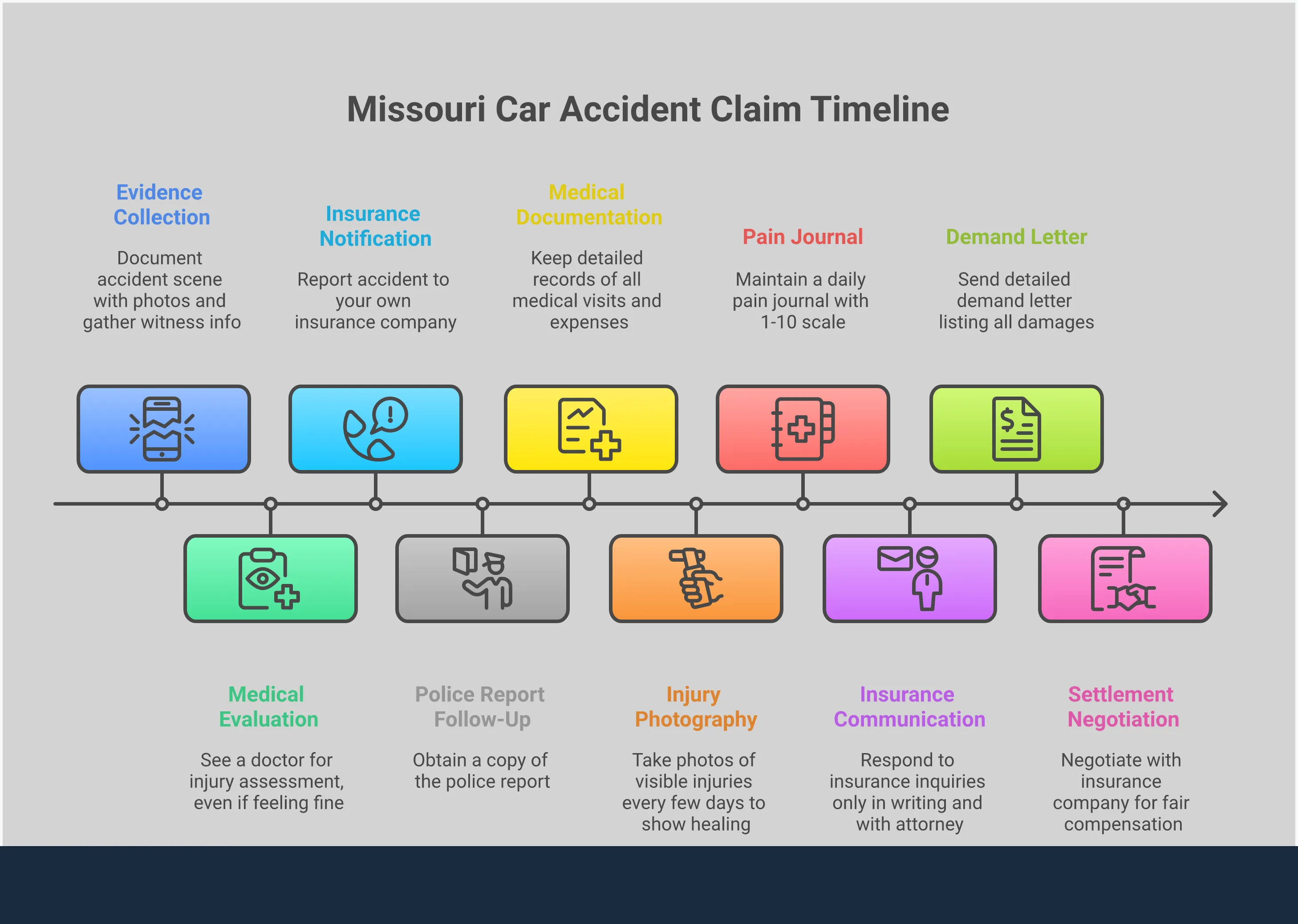
Building a strong claim is all about documentation. Start a dedicated folder and keep everything related to the accident in one place. This includes the police report, the other driver’s information, and any photos or videos you took at the scene. As you receive medical care, save every bill, receipt, and doctor’s note. If you miss work, get a letter from your employer detailing your lost wages. It’s also helpful to keep a simple journal. Write down how you’re feeling physically and emotionally each day and how your injuries are affecting your daily life. This record can be incredibly valuable for demonstrating your pain and suffering.
How to Officially File Your Claim
Once you have a clear understanding of your injuries and losses, it’s time to file a formal claim with the at-fault driver’s insurance company. This is typically done through a demand letter that outlines the facts of the accident and details the compensation you are seeking. It’s often wise to wait until you’ve reached what’s known as “maximum medical improvement” (MMI) to ensure all your current and future medical costs are included. In Missouri, you generally have five years from the date of the accident to file a lawsuit, but don’t wait. If you need guidance on this process, it’s a good idea to contact a legal professional to ensure you file correctly and on time.
Sending a Demand Letter
A demand letter is the official start of your settlement negotiations. It’s a formal letter sent to the at-fault driver’s insurance company that clearly lays out your case. The letter explains how the accident happened, details your injuries and medical treatment, and calculates your financial losses, including medical bills and lost wages. Finally, it states the total amount of money you are asking for to resolve your claim. This document is your opportunity to present a compelling, evidence-based argument for why you deserve fair compensation. Because it sets the tone for the entire negotiation process, it’s crucial that the letter is professional, thorough, and persuasive.
How Long Does It Take to Settle a Claim?
One of the most common questions after an accident is, “How long will this take?” The answer really depends on the specifics of your case. Straightforward claims with minor injuries and clear fault might settle in three to six months. However, more complex cases can take much longer. If you have serious injuries that require ongoing treatment, if it’s unclear who was at fault, or if the insurance company is uncooperative, the process could take one to two years or even more. While it’s frustrating to wait, it’s important not to rush into a settlement before you know the full extent of your damages. If you feel the process is dragging on, it may be time to get some legal advice to help move your claim forward.
Don’t Miss These Missouri Claim Deadlines
After a car accident, you’re juggling a lot—doctor’s appointments, car repairs, and just trying to get back to your routine. It’s easy to let things slide, but when it comes to your legal claim, time is not on your side. Missouri has strict deadlines, called statutes of limitations, for filing a lawsuit. If you miss these windows, you could lose your right to get any compensation for your injuries or damaged property. It’s a harsh reality, but it’s why understanding these timelines is one of the most important first steps you can take. Knowing these dates helps protect your rights and ensures you have the best possible chance of receiving a fair settlement for your automobile accident claim. Let’s break down the key deadlines you need to know.
Your Deadline for Personal Injury Claims
In Missouri, the main deadline you need to circle on your calendar is the statute of limitations for personal injury. You have five years from the date of the accident to file a lawsuit. While five years might sound like a long time, building a strong case takes effort. You’ll need to gather evidence, complete medical treatment, and negotiate with insurance companies. Waiting too long can make it harder to find witnesses and preserve crucial evidence. The car accident settlement timeline can vary, but if you don’t file your claim within this five-year period, the court will likely dismiss your case, and you’ll lose the ability to seek compensation for your medical bills, lost wages, and pain and suffering.
How Long Do You Have for Property Damage Claims?
The clock is also ticking on claims for your vehicle and any other personal belongings damaged in the crash. Just like with personal injuries, Missouri car accident laws give you five years to file a lawsuit for property damage. This covers the cost of repairing your car or, if it’s totaled, getting compensation for its value. It also applies to other items that might have been damaged, like a laptop or phone. It’s smart to handle your property damage claim alongside your injury claim to keep everything organized and ensure you don’t miss this important deadline. Acting promptly helps you get the funds you need for repairs or replacement without unnecessary delays.
Shorter Deadlines for Claims Against the Government
Things get a lot more complicated if your accident involved a government vehicle, like a city bus or a state-owned truck. The rules for suing a government entity are completely different and much stricter. You must provide a formal notice of your claim within 90 days of the accident. This isn’t a lawsuit—it’s a required first step before you can even consider filing one. This 90-day window is incredibly short, and missing it can permanently bar you from seeking compensation. Because these cases are so complex, it’s a good idea to contact an attorney immediately if a government employee was involved in your accident.
What Evidence Will Support Your Compensation Claim?
After a car accident, your word alone isn’t enough to secure the compensation you deserve. Insurance companies and courts rely on concrete evidence to understand what happened, who was at fault, and the extent of your damages. Building a strong case is like putting together a puzzle—each piece of evidence helps create a clear picture of the incident and its impact on your life. The more thorough and organized your documentation is, the better your position will be during negotiations or in court. A well-documented claim demonstrates professionalism and seriousness, signaling to the insurance company that you are prepared to fight for a fair settlement.
From the moment the accident occurs, you should think like an investigator. Your primary focus is your health and safety, but if you are able, gathering key information can make a significant difference in the outcome of your claim. This includes everything from official reports to personal records. Strong evidence substantiates your claim for medical costs, lost income, and pain and suffering. It removes doubt and provides a factual basis for your settlement demand, making it harder for the at-fault party’s insurance company to dispute or deny your claim. Without it, you risk leaving money on the table or having your claim dismissed entirely. Let’s walk through the essential types of evidence you’ll need to protect your rights.
Using Medical Records to Prove Your Injuries
Your health is the top priority, and documenting your medical journey is crucial for your claim. Medical records provide a direct link between the accident and your injuries. It’s essential to see a doctor as soon as possible after the crash, even if you feel fine, as some injuries have delayed symptoms. Failing to get prompt medical care is a common mistake that can give the insurance company an opening to argue your injuries aren’t related to the accident. Be sure to keep a detailed file of every doctor’s visit, diagnosis, treatment plan, prescription, and medical bill. These documents are the most powerful proof of your physical injuries and the financial cost of your recovery.
The Role of an Independent Medical Evaluation (IME)
At some point during your claim, the other driver’s insurance company might ask you to attend an Independent Medical Examination (IME). This sounds official, but it’s important to understand what it really is. An Independent Medical Examination (IME) is a medical evaluation with a doctor chosen and paid for by the insurance company. Their goal is to get a second opinion on your injuries, treatment, and recovery. The doctor performing the IME is not your physician; their loyalty is to the company that hired them. The insurance adjuster will use this doctor’s report to verify the severity of your injuries and determine if the treatment you’re receiving is necessary. If the IME report contradicts your own doctor’s findings, the insurance company will almost certainly use it as leverage to offer you a lower settlement or deny parts of your claim.
How Police Reports and Witness Statements Help
An official police report is one of the most valuable pieces of evidence you can have. It serves as an unbiased, third-party account of the accident, often including details like the date, time, location, road conditions, and preliminary findings on fault. In Missouri, you should always call the police if there are injuries or significant property damage. Additionally, statements from witnesses can be incredibly persuasive. If anyone saw the accident, get their name and contact information. An independent account that supports your version of events can strengthen your claim and counter any disputes from the other driver.
Why You Need Photos and Videos of the Scene
In the moments after a crash, your smartphone is a powerful tool. Visual evidence can capture the scene in a way that words cannot. If you are physically able, take photos and videos from multiple angles. Document the damage to all vehicles involved, the position of the cars, any skid marks on the road, relevant traffic signs or signals, and the weather conditions. It’s also important to take pictures of any visible injuries you have, like cuts or bruises. This visual proof helps paint a vivid picture for insurance adjusters and can be critical in establishing how the accident happened and the severity of the impact.
How to Document Your Lost Income
A car accident can disrupt more than just your health—it can also affect your ability to work and earn a living. You are entitled to compensation for any income you lose as a result of your injuries. To support this part of your claim, you’ll need to gather specific documents. This includes recent pay stubs to show your rate of pay and a letter from your employer confirming the dates you were unable to work. If your injuries prevent you from returning to your job long-term, you may also need documentation from your doctor. Keeping clear records is the best way to show your losses and recover the income you’re owed.
How to Maximize Your Car Accident Compensation
After a car accident, your main focus should be on your physical and emotional recovery. But the steps you take in the following days and weeks can have a huge impact on the financial compensation you receive. Insurance companies are businesses, and their goal is often to resolve claims as quickly and cheaply as possible. This means their first offers might not cover the full scope of your damages, which can include everything from immediate medical bills and car repairs to future treatment costs and lost income.
Getting fair compensation isn’t about hitting a jackpot; it’s about making sure you have the resources you need to put your life back together. To protect your rights and get the full amount you’re entitled to, you need to be strategic. This means understanding what your claim is really worth, carefully documenting your losses, and knowing how to handle conversations with insurance adjusters. By taking a proactive approach, you can build a strong case that shows the true impact the accident has had on your life.
Why You Shouldn’t Take the First Offer
It can be really tempting to take the first settlement offer you get, especially when bills are starting to pile up. But it’s important to be cautious. Insurance companies know you’re in a tough spot and may offer a quick payout to close your case for less than it’s truly worth. It’s often an attempt to pay you less than your claim is worth before you’ve had a chance to understand the long-term costs of your injuries. Before you sign anything, give yourself time to see how your recovery goes and talk to an attorney to figure out the real value of your claim. A fair settlement should cover all your current and future expenses, not just the immediate ones.
Keep Detailed Records of Everything
A strong claim is built on solid evidence, and that starts with careful documentation. From the moment the accident happens, keep a detailed record of everything related to your case. This includes medical bills, receipts for prescriptions, and records of any other out-of-pocket expenses, like paying for rides to your doctor’s appointments. Failing to document your medical treatment could make it harder to prove your injuries stem from the accident. It’s also a good idea to keep a simple journal detailing your pain levels, physical limitations, and how the accident is affecting you emotionally. This information will be crucial for showing the full extent of your losses when building your case.
Don’t Delay Your Medical Treatment
Your health should always come first. After an accident, you need to see a doctor right away, even if you don’t feel hurt. Some serious injuries, like whiplash or internal damage, can have delayed symptoms. Getting immediate medical attention not only protects your well-being but also creates an official record that links your injuries directly to the crash. Insurance companies often look for “gaps in treatment” to argue that your injuries aren’t as severe as you claim or were caused by something else. Following your doctor’s orders, going to all your follow-up appointments, and completing any prescribed therapy are critical steps for both your recovery and the strength of your legal claim.
How to Negotiate with the Insurance Company
Dealing with insurance adjusters can be tricky. Their job is to protect their company’s finances, and they are trained negotiators. They might try to get you to give a recorded statement, which can be used against you later, or use stalling tactics to pressure you into accepting less. In fact, one of the most effective insurance company tactics to reduce your settlement is simply stalling out the claims process. The best way to level the playing field is to have an experienced personal injury attorney handle all communications. An attorney understands these strategies and can negotiate for you to make sure your rights are protected and you receive a fair offer.
Avoid These Mistakes That Can Hurt Your Claim
After a car accident, the steps you take—and the ones you don’t—can significantly impact your ability to get fair compensation. In the aftermath of a crash, you’re likely dealing with shock, pain, and a flood of questions. It’s a stressful and confusing time, and it’s easy to make a mistake without even realizing it. Unfortunately, insurance companies are businesses, and their primary goal is to protect their bottom line, which often means paying out as little as possible on claims. Their adjusters are trained professionals whose job is to find any reason to reduce or deny what you’re owed.
Being aware of these common pitfalls can help you protect your rights and build a stronger case from the very beginning. Even small, seemingly innocent missteps, like a casual apology at the scene or a quick recorded statement over the phone, can have major consequences down the road. By understanding what to avoid, you put yourself in a much better position to recover the full amount you deserve for your injuries, property damage, and other losses. This section will walk you through the most frequent mistakes people make so you can be prepared. Think of it as your guide to safeguarding your claim from the moment the accident happens.
Never Admit Fault at the Scene
In the chaotic moments after a crash, it’s natural to want to be helpful or even apologize. However, you should never admit fault. Saying something as simple as “I’m so sorry” can be interpreted as an admission of guilt by insurance adjusters and used against you later. Stick to the facts when speaking with the other driver and the police. Exchange insurance information and provide a factual account of what happened without assigning blame. You may not have all the information about what caused the accident, and it’s the job of investigators and legal professionals to determine fault.
Why You Shouldn’t Wait to See a Doctor
Your health should always be your top priority. Seek medical attention as soon as possible after an accident, even if you don’t feel seriously hurt. Some injuries, like whiplash or internal damage, may not show symptoms for hours or even days. Delaying a medical evaluation creates a gap in your record that an insurance company can use to argue your injuries weren’t caused by the crash. A prompt medical exam not only ensures you get the care you need but also creates a crucial medical record that directly links your injuries to the accident, strengthening your personal injury claim.
Should You Give a Recorded Statement to an Adjuster?
Soon after the accident, you will likely get a call from the other driver’s insurance adjuster asking for a recorded statement. It’s important to remember that this person is not on your side. Their goal is to find information that will allow their company to pay out as little as possible. They are trained to ask questions that might confuse you or get you to say something that undermines your claim. You are not legally obligated to provide a recorded statement. You can politely decline and state that you will not be discussing the details of the accident until you have sought legal advice.
The Cost of Disorganized Records
A successful car accident claim is built on strong evidence. Failing to keep detailed records can make it difficult to prove the full extent of your losses. From day one, start a file and keep everything related to the accident. This includes medical bills, receipts for prescriptions, car repair estimates, and documentation of any lost wages from missing work. It’s also helpful to keep a simple journal detailing your pain levels, medical appointments, and how your injuries are affecting your daily life. This thorough documentation will be essential for calculating your damages and ensuring you are compensated for all your expenses.
Be Consistent and Honest in Your Statements
Everything you say after an accident can be examined, so your story must stay the same. Insurance adjusters will compare what you told the police at the scene with the notes your doctor made and what you say on the phone. Even minor inconsistencies can be used to question your credibility and weaken your claim. The best strategy is to stick to the facts you are absolutely sure of. Don’t guess about speeds, distances, or the exact timing of events. If you don’t know an answer, it’s better to say so than to speculate. This is why it’s so important to be careful before you provide any statements to an insurance company, as your words carry significant weight.
When Should You Hire a Personal Injury Attorney?
Deciding whether to hire an attorney after a car accident can feel like a big step, especially when you’re already dealing with injuries and vehicle repairs. For minor fender-benders with no injuries, you might be able to handle the claim on your own. However, many situations are far more complex and can quickly become overwhelming. If you find yourself facing mounting medical bills, confusing paperwork, or an uncooperative insurance adjuster, it’s a clear sign that you need a professional in your corner.
An experienced personal injury attorney does more than just file paperwork. They become your advocate, working to protect your rights and ensure you receive fair compensation for your losses. They understand the tactics insurance companies use to minimize payouts and know how to build a strong case on your behalf. Bringing in a lawyer allows you to focus on what’s most important—your recovery—while they handle the legal heavy lifting. If any of the following scenarios sound familiar, it’s time to consider seeking legal advice for your automobile accident claim.
If It’s Unclear Who’s at Fault
After a crash, it’s not always obvious who was at fault. The other driver might tell a different story, or there may have been no witnesses. When liability is unclear, an insurance company will likely try to place as much blame on you as possible to reduce their payout. This is where an attorney becomes invaluable. They can investigate the accident, gather crucial evidence like traffic camera footage and cell phone records, and consult with accident reconstruction experts to build a strong case that establishes fault. Trying to prove your side of the story alone can be an uphill battle, but a lawyer knows exactly what’s needed to demonstrate what really happened.
If You’ve Suffered Serious Injuries
If you’ve suffered serious injuries, hiring a lawyer is crucial. Significant injuries often lead to extensive medical treatment, long-term rehabilitation, and time away from work. An attorney can help ensure you receive the compensation you deserve for all of it—not just your current medical bills, but also future healthcare costs, lost wages, and your pain and suffering. They work with medical experts to understand the full impact of your injuries on your life and calculate the true value of your claim. This prevents you from accepting a settlement that falls short of covering your long-term needs, giving you the financial security to focus on healing.
If the Insurer Is Fighting Your Claim
Insurance companies are businesses, and their goal is to protect their bottom line. This means they often look for ways to deny or devalue legitimate claims. If the insurance company is disputing your claim, delaying payment, or offering a low-ball settlement that barely covers your expenses, it’s a major red flag. An attorney can step in and handle all communications and negotiations on your behalf. They know how to counter the adjuster’s tactics and will fight for a fair settlement. If the insurance company still refuses to be reasonable, your lawyer will be prepared to take your case to court.
Attorney vs. DIY: What’s the Better Choice?
While you have the right to represent yourself, the legal system is complex and unforgiving. An experienced personal injury attorney can manage the entire process, from investigating the accident to negotiating with insurance companies, ensuring you receive the maximum compensation possible. They handle the deadlines, the paperwork, and the stressful phone calls so you don’t have to. Having a dedicated advocate on your side not only levels the playing field against powerful insurance companies but also provides peace of mind. If you’re ready to get help, you can contact our office to discuss your case.
Ready to Take Action? Here Are Your Next Steps
Navigating the aftermath of a car accident can feel overwhelming, but you don’t have to do it alone. Understanding your options and knowing where to turn for help is the first step toward securing the compensation you deserve. Below are some key resources and actionable steps you can take to protect your rights and move forward with your claim in Missouri.
How to Find a Qualified Personal Injury Attorney
Deciding to hire a lawyer is a significant step. It’s often the right move if you’ve sustained serious injuries, are facing high medical bills, or feel the insurance company isn’t treating you fairly. When looking for representation, you want someone with specific experience in Missouri car accident cases. A qualified attorney will understand the nuances of state law, from proving fault to calculating damages. They can handle the complex negotiations for you, ensuring your focus remains on your recovery. Look for a firm that offers a client-centered approach and can clearly explain your legal options.
What Is the Tort Victims’ Compensation Fund?
Many people are unaware that Missouri has a specific fund to help those who have been injured due to someone else’s negligence. The Missouri Tort Victims’ Compensation Fund was created to provide financial assistance to individuals harmed in situations like car crashes. This fund can be a vital resource, especially in cases where the at-fault party is uninsured or underinsured. It’s worth exploring whether your circumstances make you eligible for this support. An attorney can help you understand the application process and determine if this is a viable path for your situation.
Where to Find Local Legal Aid
While local legal aid organizations provide invaluable services, they often focus on areas outside of personal injury. The good news is that most personal injury attorneys, including our firm, work on a contingency fee basis. This means you don’t pay any legal fees unless you win your case. This structure makes expert legal help accessible to everyone, regardless of their financial situation. It’s always wise to consult with an attorney before accepting any settlement offer from an insurance company. A professional can help you understand the long-term costs of your injuries and fight for a settlement that truly covers your needs.
How to Take Action on Your Claim
Time is a critical factor in any car accident claim. In Missouri, you generally have five years from the date of the accident to file a personal injury lawsuit. While that may seem like a long time, building a strong case requires immediate action. Start by gathering all your documentation and evidence. It’s also important not to accept a quick settlement offer from an insurance company, as these initial offers are often far less than what your claim is actually worth. The best first step is to discuss your case with an experienced attorney who can protect your rights and guide you through the claims process.
Related Articles
- Missouri Car Accident Laws: Key Facts You Need to Know
- Guide to Missouri Auto Accidents – Protect Yourself
- Traffic Accidents in Missouri: A Step-by-Step Guide
- How to Find Vehicle Accident Information in Missouri
- No Insurance Car Accident in Missouri? A Guide to Your Rights – The Law Office of Chad G. Mann, LLC
If you need experienced legal representation, our car accident lawyer in Springfield can help protect your rights and fight for the compensation you deserve. Call (417) 842-8679 for a free consultation.
For more information, read our guide on when insurance denies your claim.
For more information, read our guide on insurance claim lawyer.
Frequently Asked Questions
What should I do if the other driver’s insurance company calls me for a statement? It’s best to be cautious. The other driver’s insurance adjuster is trained to protect their company’s interests, which often means finding ways to minimize your claim. You can politely decline to give a recorded statement until you’ve had the chance to understand your rights. Simply provide your basic contact information and state that you are not ready to discuss the details of the accident. This gives you time to focus on your recovery and consider speaking with an attorney first.
How is a value placed on something like “pain and suffering”? This is a common question because it’s not as straightforward as adding up medical bills. There isn’t a simple calculator for pain and suffering. Instead, its value is determined by looking at the overall impact the injuries have had on your life. Factors like the severity and permanence of your injury, the amount of medical treatment required, and how the injury affects your daily activities and emotional well-being are all considered to arrive at a fair figure.
What happens if the driver who hit me has no insurance or not enough to cover my expenses? This is a stressful situation, but you still have options. Your own auto insurance policy in Missouri is required to include uninsured motorist coverage. This specific coverage is designed to step in and pay for your injuries if you are hit by a driver who has no insurance. If the at-fault driver has insurance but their policy limits aren’t high enough to cover all your damages, you may be able to use your underinsured motorist coverage, if you have it.
Does filing a car accident claim automatically mean I will have to go to court? Not at all. In fact, the vast majority of car accident claims are settled out of court through negotiations between your attorney and the insurance company. A claim is simply the formal process of seeking compensation from the at-fault party’s insurer. A lawsuit is only filed if the insurance company refuses to offer a fair settlement. The goal is always to reach a reasonable agreement without needing to go to trial.
I think I might have been a little bit at fault. Should I still bother filing a claim? Yes, you absolutely should. Missouri’s pure comparative negligence rule means you can still recover damages even if you were partially responsible for the accident. Your final compensation amount will simply be reduced by whatever percentage of fault is assigned to you. Insurance companies may try to place more blame on you than is fair, so it’s important to protect your right to the compensation you are owed.
Have you been injured? Take our free injury questionnaire to help us understand your case, or call (417) 842-8679 for a free consultation today.