


After an accident, you expect your insurance company to help. But their goal isn’t to make you whole—it’s to protect their profits. They know you’re facing medical bills and lost income, and they often use that pressure against you. A quick, low settlement offer might feel like a lifeline, but it’s usually a trap. To get what you’re owed, you need to understand their playbook. We’ll show you exactly how insurance companies handle these claims and the common tactics they use, so you can fight for the compensation you truly deserve.
Key Takeaways
- Remember Who the Adjuster Works For: The insurance adjuster’s job is to protect their company’s bottom line, which means paying you as little as possible. Treat every conversation as a business negotiation where your interests are not their priority.
- Be Strategic with Information and Documentation: Guard your claim by providing only essential facts to the adjuster and never giving a recorded statement without legal counsel. Your most powerful tool is thorough documentation of all injuries, treatments, and costs.
- Know When to Call for Backup: If your injuries are significant, the insurer is using delay tactics, or you receive a lowball offer, it’s time to consult an attorney. A lawyer acts as your advocate, managing the process and fighting for a fair settlement so you can focus on recovery.
Understanding the Financial Risks of an Accident
An accident can turn your life upside down in an instant, and the financial fallout is often just as devastating as the physical injuries. The reality is that accidents are far more common than we like to think. In fact, preventable injuries are a leading cause of death in the United States, with someone being accidentally injured every second. When these injuries are serious, the medical bills, lost wages, and long-term care costs can quickly become overwhelming. This is precisely when you expect your insurance to step in, but the path to fair compensation is rarely straightforward. Insurance companies are businesses, and they are structured to protect their financial interests, which often means minimizing what they pay out on claims.
This conflict of interest becomes most apparent when dealing with significant injuries. Insurance companies often fight hard against high-value claims, especially when a person requires extensive or long-term medical care. They may try to downplay the severity of your injuries, question the necessity of your treatments, or argue that a pre-existing condition is to blame. Understanding this dynamic is the first step toward protecting yourself. The financial stability of your future could depend on your ability to effectively counter these tactics and secure the compensation you need to recover fully. This is why documenting everything and understanding the claims process is so critical from the very beginning.
The Link Between Injuries and Financial Hardship
The connection between a serious injury and financial trouble is direct and immediate. Medical bills can start piling up right away, from the initial emergency room visit to ongoing physical therapy and specialist appointments. If your injury prevents you from working, the loss of income creates even more pressure. This is the moment when insurance companies often present a quick, low settlement offer. They know you are in a vulnerable position and may be tempted to take any amount of money to relieve the immediate financial stress. However, accepting an early offer can be a critical mistake, as it may not cover the full extent of your future medical needs or lost earning capacity.
The Long-Term Risk of Disability
When thinking about an accident, we often focus on the immediate recovery period. But what happens if an injury leads to a long-term or permanent disability? The Social Security Administration reports that roughly one in four of today’s workers will become disabled before reaching retirement age. A disabling injury can permanently alter your ability to earn a living, creating a lifetime of financial challenges. A fair settlement should account for this possibility, including compensation for future lost wages, ongoing medical care, and the cost of modifying your home or vehicle. This is why it’s so important to have a clear understanding of your long-term prognosis before ever agreeing to a settlement.
How Insurance Works: The Basics
At its core, insurance is a system of shared risk. You pay a regular fee, called a premium, to an insurance company. In exchange, the company agrees to cover specified financial losses if something bad happens, like a car accident or a slip-and-fall injury. The money from all policyholders’ premiums is pooled together to pay for the claims of the few who experience a loss. This model allows individuals to protect themselves from potentially catastrophic financial events that they couldn’t handle on their own. However, the process isn’t as simple as just paying your premium and getting a check when you need it. The entire system is built on complex calculations and specific rules that dictate how and when a company pays out.
The insurance policy you purchase is a legal contract that outlines the exact terms of your coverage. It specifies what types of losses are covered, the maximum amount the company will pay, and any conditions or exclusions that apply. Because it’s a contract, the language can be dense and difficult to understand for someone without a legal background. This is often where disputes arise. The insurance company interprets the policy one way, while you interpret it another. Understanding the fundamental principles of how insurance operates can help you better prepare for the claims process and advocate for your rights under the policy you’ve paid for.
How Premiums Are Calculated
Insurance companies don’t just guess what to charge you for a policy. They employ teams of actuaries who use statistics and complex algorithms to determine your premium. They start by looking at the likelihood of an event, like a car accident, happening to a large group of people. Then, they assess your individual risk factors to see if you are more or less likely than the average person to file a claim. For auto insurance, this includes your age, driving record, the type of car you drive, and even your zip code. The higher your perceived risk, the higher your premium will be, as the company anticipates a greater chance of having to pay out on your behalf.
Fundamental Rules of Insurance Policies
There are a few key principles that govern most insurance policies. One of the most important is the concept of “indemnity,” which means the goal of insurance is to restore you to the financial position you were in before the loss occurred, not to have you profit from it. This is why insurance typically pays for the actual cash value of damaged property, not what you paid for it or its sentimental value. Another rule is that you have a duty to be truthful in your application and when filing a claim. Misrepresenting facts can give the insurance company grounds to deny your claim or even void your policy entirely.
The Business Model of Insurance Companies
Understanding that insurance is a business is crucial to managing your expectations during a claim. The primary goal of an insurance company is to generate profit for its shareholders. This is achieved through a two-part business model: collecting more in premiums than they pay out in claims and investing the premiums they hold. This inherent conflict is at the heart of many disputes between policyholders and their insurers. While you see your policy as a safety net, the company sees it as a financial instrument. Every dollar they pay you is a dollar less on their profit margin, which is why their adjusters are trained to minimize payouts whenever possible.
This business model influences every interaction you have with the company after an accident. From the initial call to the final settlement negotiation, the insurer’s representatives are working to protect the company’s bottom line. They use established procedures and negotiation tactics designed to settle claims for the lowest possible amount. Recognizing this allows you to approach the process more strategically. Instead of viewing the adjuster as a helper, you can see them as a negotiator for the other side. This shift in perspective is essential for protecting your interests and ensuring you are treated fairly throughout the claims process, especially when you’re dealing with a serious personal injury.
How Insurance Companies Manage Financial Risk
The core of an insurance company’s strategy for managing risk is the law of large numbers. By insuring a very large group of customers, they can accurately predict the average number of claims they’ll have to pay in a given year. The premiums collected from the many policyholders who don’t file a claim are used to cover the costs for the few who do. This pooling of resources allows them to absorb the financial impact of individual claims, even very large ones. It’s a numbers game, and the company sets its premiums at a level that ensures, on average, they will have enough money to cover claims and still make a profit.
The Role of Investments in Profitability
A significant portion of an insurance company’s profit doesn’t come from premiums alone. It comes from investing the massive pool of money they hold. This money, known as the “float,” is the premiums they’ve collected but have not yet paid out in claims. By investing this float in stocks, bonds, and other financial instruments, they can generate substantial returns. This creates a powerful incentive for companies to delay paying claims. The longer they can hold onto your settlement money, the more time they have to invest it and earn a profit for themselves. This is why delay tactics are a common frustration for accident victims.
Why Premiums Change After an Accident
If you’ve ever been in an accident, you may have seen your insurance premium go up at your next renewal, even if the other driver was at fault. Many people assume this is the company’s way of recouping the money they paid out for the claim, but that’s not the case. The rate increase is based on risk assessment. Statistical data shows that drivers who have been involved in one accident are more likely to be involved in another one in the future. By raising your premium, the insurance company is adjusting your rate to reflect what they now see as your increased risk profile as a policyholder.
Using Reinsurance to Cover Major Losses
What happens when an insurance company faces a massive, unexpected loss, like from a natural disaster or a catastrophic industrial accident? To protect themselves from such events, insurance companies buy their own insurance, a practice known as “reinsurance.” They pay a premium to a reinsurance company, which agrees to cover a portion of their losses if claims exceed a certain amount. This allows the primary insurer to take on risks they otherwise couldn’t handle, like insuring a large commercial building, without jeopardizing their own financial stability. It’s another layer of financial management that ensures the industry can withstand even the most devastating events.
You’ve Filed a Claim. What Happens Next?
Filing an insurance claim is a huge first step, but it’s really just the beginning of the process. Once you’ve submitted the initial paperwork, the insurance company kicks into gear, and it helps to know what’s coming. Understanding the next few stages can make the entire experience feel more manageable and put you in a better position to handle what comes your way. Here’s a straightforward look at the immediate aftermath of filing your claim.
Your First Step: Contacting the Insurers
The first thing to sort out is who you’re dealing with. If the other driver was clearly at fault for the accident, you’ll file a claim with their insurance provider. This is known as a third-party claim. However, if you were at fault, or if the other driver doesn’t have insurance, you’ll likely need to go through your own policy. It’s essential to notify the correct insurance company to get the process started on the right foot. Make sure you have the other driver’s insurance information from the accident report and keep your own policy details handy.
The Documents You’ll Need Right Away
Soon after you file, the insurance company will assign an adjuster to your case. Think of the adjuster as the company’s investigator—their job is to review the accident and determine how much the insurance company should pay. Keep in mind that their goal is often to settle the claim for the lowest amount possible. The adjuster will ask you for several key documents to begin their investigation of the accident. You should be prepared to provide a copy of the police report, any photos you took of the accident scene and vehicle damage, and your initial medical records. Staying organized and having these items ready will help move things along.
How Long Will My Claim Take?
One of the most common questions is, “How long will this take?” Unfortunately, there’s no simple answer. The timeline for a car accident claim can vary widely depending on the details of your case. A straightforward claim with minor damage and no injuries might be resolved in a few weeks. However, a more complex case involving serious injuries or a dispute over who was at fault can take several months, or even longer. Factors like the insurance company’s responsiveness and the time it takes to complete medical treatment will also play a role. If you’re feeling overwhelmed by the process, it can be helpful to get in touch with an attorney to discuss your specific situation.
How Insurance Companies Handle the Investigation
After you file a car accident claim, the insurance company doesn’t just write a check. Instead, they launch a detailed investigation to understand exactly what happened. Their main goals are to determine who was at fault, verify the extent of the damages, and protect themselves from fraudulent claims. This process can feel invasive and overwhelming, especially when you’re trying to recover from an injury. The insurance adjuster, who works for the insurance company, will lead this investigation. They are trained to gather information that serves their employer’s best interests, which often means finding ways to pay out as little as possible.
They will collect evidence from multiple sources to piece together their version of the accident. This includes official documents, physical evidence, and statements from everyone involved. Understanding how they operate is your first line of defense. Knowing what they’re looking for and why they’re asking certain questions can help you protect your rights and ensure you’re treated fairly. While their investigation is a standard part of the process, it’s important to remember that the adjuster is not on your side. Their job is to minimize the company’s financial liability. This is why having someone in your corner who understands the system is so crucial.
What Evidence Does the Insurer Collect?
The first step for any insurance adjuster is to gather as much evidence as possible. They’ll start by requesting your official statement about what happened, but their work doesn’t stop there. They will collect photos of the accident scene, pictures of the vehicle damage, and any other documentation you can provide. Their goal is to create a comprehensive file that tells the story of the accident from their perspective. This collection of evidence forms the foundation of their entire evaluation, influencing everything from their initial fault determination to the final settlement offer you receive.
How They Use the Police Report
The official police report is one of the most important documents in an insurance investigation. The adjuster will review it carefully to get an objective, third-party account of the incident. This report contains critical details, including the date, time, location, weather conditions, and contact information for all parties and witnesses. It may also include a diagram of the accident and the officer’s initial opinion on who violated traffic laws. While the police report is a powerful piece of evidence, it’s not always the final word. An experienced automobile accident attorney can help you address any inaccuracies or contest a fault determination.
Talking to Witnesses: What They Ask
To get a fuller picture, the insurance adjuster will likely reach out to anyone who witnessed the accident. This includes passengers, other drivers who were not involved but saw what happened, and even pedestrians. Their goal is to gather independent accounts that can either support or contradict the statements made by the drivers. A neutral witness can have a significant impact on how the insurance company assigns fault. The adjuster will ask them what they saw and heard, trying to build a consistent timeline of events that led to the collision.
How They Inspect Your Vehicle’s Damage
The adjuster will also need to evaluate the physical damage to your vehicle. They might inspect the car themselves, send an appraiser, or ask you to get estimates from approved body shops. This assessment is used to determine whether your car can be repaired or if it’s a total loss. It’s important to know that while the insurance company may recommend a specific repair shop, you generally have the right to take your car to a mechanic you trust. This ensures you get quality repairs and a fair assessment of the damage.
What They Look for in Your Medical Records
If you were injured in the accident, the insurance company will ask for access to your medical records. They do this to verify that your injuries are directly related to the crash and to assess the cost of your treatment. However, adjusters often scrutinize these records for anything they can use to downplay your claim. They’ll look for pre-existing conditions, inconsistencies in your doctor’s notes, or gaps in your treatment schedule. This is one of the most critical stages of the investigation, and it’s where having legal representation can make a significant difference in protecting your privacy and ensuring your injuries are valued fairly.
What Does the Insurance Adjuster Do?
After you file a claim, the insurance company will assign an adjuster to your case. This person is the company’s investigator and representative, and they play a huge role in the outcome of your claim. While they are your main point of contact, it’s critical to remember that they work for the insurance company, not for you. Their primary goal is to investigate and settle your claim for the lowest amount possible, protecting their employer’s bottom line.
The Formal Role of a Claims Handler
On paper, the insurance adjuster, or claims handler, has a straightforward job. Their official role is to investigate insurance claims to make sure they are valid. When you report an accident, they are the ones assigned to check the information you’ve provided against the details of the insurance policy. They look at the facts of the case—the police report, witness statements, and medical records—to determine if the person filing the claim is entitled to receive money. Their main function is to confirm that the claim is legitimate and then arrange for payment up to the amount covered by the policy. This sounds simple enough, but it’s the approach they take to these tasks that can make the process so challenging for accident victims.
Key Duties and Responsibilities
An adjuster’s day-to-day responsibilities involve a lot more than just processing paperwork. They are tasked with investigating every angle of your claim, from verifying the policy coverage to determining who was at fault. They will analyze evidence, interview witnesses, and assess the damage to your vehicle and the extent of your injuries. A key part of their job is to calculate the value of your claim and negotiate a settlement. While their duty is to resolve the claim, their ultimate responsibility is to their employer. This means every decision they make is guided by the goal of minimizing the insurance company’s financial payout, which puts their interests in direct conflict with yours.
Skills Required for the Position
To be effective at their job, insurance adjusters need a specific set of skills. They are trained to be analytical, observant, and detail-oriented, allowing them to scrutinize every piece of information you provide. Their strong communication and questioning skills help them gather the statements they need, often looking for inconsistencies they can use to challenge your claim. They are also skilled negotiators, trained to make you feel like their settlement offer is the best you can get. Going up against someone with this professional training can be intimidating. This is why having an experienced personal injury attorney on your side can level the playing field, ensuring your rights are protected throughout the process.
The Adjuster’s Main Goals
The adjuster’s main job is to investigate the details of your accident. They gather facts by reviewing the police report, interviewing witnesses, and assessing the damage to your vehicle. They are the gatekeeper for any potential payout. While they might seem friendly and helpful, their professional duty is to the insurance company. Their performance is often measured by how much money they save their company, which puts their goals in direct opposition to yours. You want full compensation for your losses; they want to pay out as little as possible.
Putting a Price on Your Damages
To determine your claim’s value, the adjuster collects information on how the accident happened, the extent of property damage, and the nature of your injuries. They will have your car inspected to estimate repair costs, but you have the right to get a second opinion or choose your own repair shop. They will also review your medical records and bills to assess the cost of your treatment. This evaluation is a critical step in how they calculate a settlement for your automobile accident claim, so providing complete documentation is essential.
Who Makes the Final Settlement Offer?
Once the investigation is complete, the adjuster decides who they believe is at fault and determines how much the insurance company should pay based on the policy limits. They are the one who will make a settlement offer. Be cautious here—the first offer is often far less than what your claim is actually worth. It may not account for future medical needs, lost wages, or your pain and suffering. Insurance companies hope you’ll accept a quick, low payment to close the case, so it’s rarely in your best interest to accept it without careful review.
What to Expect When They Call
Adjusters are trained to ask specific questions to get your side of the story on record. They will likely ask for a recorded statement, but you are not obligated to provide one, especially to the other driver’s insurance company. Anything you say can be used to limit your payout or argue that you were partially at fault. It’s always wise to speak with an attorney before giving a formal statement or signing any documents. If you’re unsure how to handle these conversations, you can contact a legal professional for guidance.
Watch Out: How Insurance Companies Minimize Payouts
After an accident, it’s easy to assume the insurance company is on your side. But it’s important to remember that they are for-profit businesses. Their primary goal is to protect their bottom line, which often means paying out as little as possible on claims. To do this, they may use several common tactics designed to reduce your settlement. Knowing what to look for is the first step in protecting your rights and ensuring you receive the fair compensation you deserve for your injuries and damages.
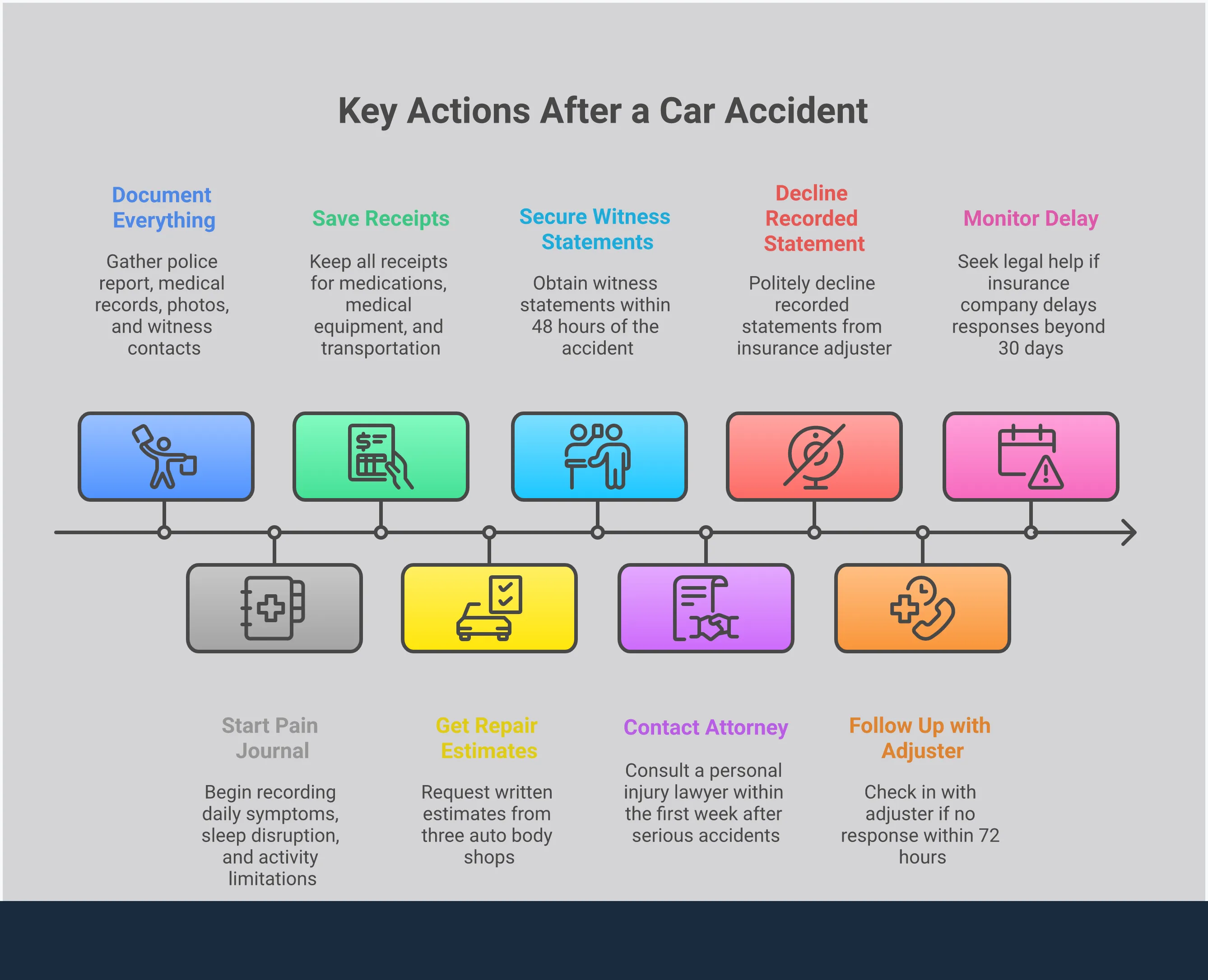
Watch Out for Claim Delays
One of the most common strategies is simply to drag things out. An insurance company might be slow to return your calls, lose your paperwork, or repeatedly ask for the same information. These delays aren’t always accidental. The goal is often to frustrate you to the point where you’ll accept a lower settlement just to be done with the process. They know that the longer it takes, the more financial pressure you might feel, making a quick, low offer seem more appealing. Don’t let these delays discourage you; stay organized, document every interaction, and be persistent.
Recognizing a Lowball Settlement Offer
Soon after your accident, you will likely receive a settlement offer from the adjuster. Be wary of this first offer. Insurance companies often start with a lowball figure, hoping you’ll be tempted by the fast cash and accept it without understanding the full extent of your damages. This is especially true if you haven’t finished medical treatment or don’t yet know if you’ll need future care. Accepting a quick settlement usually requires you to sign away your rights to any future compensation for that automobile accident, even if your injuries turn out to be more serious than you initially thought.
Using Your Medical Past Against You
Don’t be surprised if the insurance company requests access to your entire medical history. They aren’t just being thorough; they are looking for pre-existing conditions or prior injuries they can use to argue that your current pain isn’t solely from the accident. By claiming your injuries were already there, they attempt to minimize their responsibility for your medical bills and treatment. You are only obligated to provide records directly related to the injuries sustained in the accident. It’s wise to be cautious about signing broad medical authorizations that give them access to your entire past.
What if They Say You’re at Fault?
Another way insurers reduce payouts is by shifting the blame. Even if the other driver was clearly at fault, the insurance company might try to argue that you were partially responsible for the accident. In Missouri, this is based on a “pure comparative fault” rule, which means your settlement can be reduced by your percentage of fault. If they can successfully argue you were 10% responsible, they can reduce your settlement by 10%. They will scrutinize the police report, witness statements, and other evidence to find anything that suggests you share the blame, making it crucial to have a clear and accurate account of the incident.
The Dangers of a Recorded Statement
The insurance adjuster will likely ask you to provide a recorded statement about the accident. While it may seem like a standard request, it’s a tool they use to gather information that can be used against you. Adjusters are trained to ask questions in a way that might lead you to unintentionally admit partial fault or downplay your injuries. For example, a simple “I’m doing okay” can be twisted to mean you aren’t seriously hurt. It’s always best to politely decline to give a recorded statement until you’ve had the chance to speak with an attorney who can advise you on how to proceed.
Surveillance in High-Value Claims
When a claim involves serious injuries and a potentially large payout, the insurance company’s investigation can become much more intense. They fight hard against these high-value claims and may resort to surveillance to find evidence that weakens your case. This can include hiring a private investigator to follow you or closely monitoring your social media accounts. They are looking for anything that contradicts the severity of your injuries—a photo of you doing yard work or a post about a family vacation could be used to argue that you aren’t as hurt as you claim. It’s crucial to be cautious about your public activities and online presence while your claim is ongoing, as even innocent moments can be taken out of context to reduce your settlement.
How Is Your Settlement Amount Calculated?
After an accident, it’s easy to wonder what your claim is actually worth. Insurance companies don’t pull a number out of thin air. Instead, a settlement is a carefully calculated amount that accounts for every single way the accident has impacted your life, from your medical bills to your emotional well-being. Understanding these components is the first step toward ensuring you receive a fair offer that covers all of your losses.
Calculating Current and Future Medical Costs
Your health is the top priority, and your settlement should reflect that. This part of your compensation covers all medical expenses tied to the accident, including emergency room visits, doctor’s appointments, physical therapy, medication, and any assistive devices you might need. It’s also forward-looking. If your injuries require long-term treatment or future surgeries, those projected costs are included, too. This is why it’s so important to follow your doctor’s treatment plan precisely. Gaps in care can give an insurance company an excuse to argue your injuries aren’t as serious as you claim. A personal injury lawyer can help you document these expenses and fight for the full amount you need to recover completely.
Valuing Your Vehicle and Property Damage
If your car was damaged in the crash, you’re entitled to compensation for repairs or its replacement. The insurance company’s appraiser will assess the damage, but you don’t have to take their word for it. You have the right to get your own estimates and choose your preferred repair shop. If the cost to fix your car is more than its value, the insurer will declare it a “total loss.” They’ll then offer you a settlement based on the car’s pre-accident market value. Don’t be afraid to negotiate this amount if you have evidence—like recent upgrades or low mileage—that shows your vehicle was worth more than their initial offer.
Recovering Lost Wages and Future Earnings
An accident doesn’t just come with medical bills; it can also take away your ability to earn a living. Your settlement should cover any income you’ve lost from being unable to work. This is calculated using your pay stubs and employment records to show what you would have earned. But what if your injuries prevent you from returning to your old job or limit your ability to work in the future? That’s where “loss of earning capacity” comes in. This compensates you for the future income you’ll miss out on due to a long-term or permanent disability, ensuring your financial stability isn’t compromised by someone else’s negligence.
Calculating Pain and Suffering
Some of the deepest impacts of a car accident aren’t visible on a medical bill. “Pain and suffering” is the legal term for the physical discomfort, emotional distress, anxiety, and general loss of enjoyment of life that you experience after a crash. Because this is a non-economic damage, it’s harder to put a price on. Insurance companies often use formulas to calculate it, but your personal story is what truly matters. Keeping a journal to document your daily pain levels, challenges, and emotional state can be incredibly powerful evidence. An experienced attorney knows how to present this evidence to ensure your personal suffering is properly valued. If you need help, you can always contact our office for guidance.
How Fault Affects Your Compensation
In Missouri, the concept of fault plays a huge role in your final settlement amount. The state follows a “pure comparative fault” rule. This means your total compensation will be reduced by your percentage of fault for the accident. For example, if you are found to be 10% at fault, your settlement will be reduced by 10%. Because of this, insurance adjusters may try to shift as much blame as possible onto you to reduce their payout. This is a critical reason why you should never admit fault at the scene. An attorney who understands these complexities can protect your rights and build a strong case to demonstrate the other party’s liability, ensuring you receive the maximum compensation you deserve.
How to Talk to an Insurance Adjuster
That first phone call from an insurance adjuster can feel like a pop quiz you didn’t study for. They’ll be friendly, but it’s important to remember their job is to protect their company’s bottom line. Knowing how to approach this conversation is key to protecting your claim and your peace of mind. Let’s walk through how to handle this call so you can feel confident and prepared.
How to Prepare for the Adjuster’s Call
Before you even pick up the phone, take a deep breath and gather your thoughts. The single most important step you can take is to speak with a personal injury lawyer before talking to an adjuster, especially if you were hurt in the accident. An attorney can give you specific advice on how to handle the call and protect your rights from the very beginning. Have the basic facts ready—the date, time, and location of the accident—but don’t feel pressured to provide a detailed account on the spot. The goal of this initial call is simply to open a line of communication, not to settle your claim.
What to Say (and What Not to Say)
Stick to the facts and keep it simple. You can confirm your name, address, and the type of car you drive. However, you should never admit fault or even apologize. A simple “I’m sorry this happened” can be twisted and used against you later. It’s also crucial that you decline to give a recorded statement to the other driver’s insurance company. You are not legally required to do so, and it can lock you into a version of events before you have all the facts. Remember, the adjuster is trained to ask questions that might get you to say something that weakens your claim. Be polite, but be firm.
Document Everything: Your Communication Log
From the moment the accident happens, you should be documenting everything. After you speak with an adjuster, immediately write down the date, time, their name, and a summary of what you discussed. Keep a dedicated folder or notebook for all your accident-related paperwork, including medical bills, repair estimates, and receipts for any related expenses. This detailed record is incredibly valuable. It creates a clear timeline and provides the evidence you’ll need to support your claim and show the full extent of your damages. Think of it as building the instruction manual for your case—the clearer it is, the better.
What Are Your Rights During a Claim?
You have more power in this process than you might think. First, you do not have to accept the insurance company’s first settlement offer—and you probably shouldn’t. The initial offer is often just a starting point for negotiations. If you receive an offer that seems too low, you have the right to reject it and make a counteroffer. If the insurance company denies your claim or part of it, you can ask for a written explanation and provide additional information to have them reconsider. If you feel you’re being treated unfairly, remember that a lawyer can help you understand your options and fight for the compensation you deserve.
Avoid These Common Mistakes in Your Claim
After an accident, you’re juggling a lot—recovering from injuries, dealing with car repairs, and trying to get back to your normal routine. The last thing you need is to make a misstep with your insurance claim that could cost you dearly. Insurance companies are businesses, and their goal is to pay out as little as possible. They have teams of adjusters and lawyers trained to protect their bottom line. This puts you at an immediate disadvantage, especially when you’re not feeling your best. Understanding the common pitfalls can help you protect your rights and ensure you get the fair compensation you need to recover fully. Navigating the claims process requires careful attention to detail, from the first conversation with an adjuster to the final settlement offer. Knowing what to avoid is just as important as knowing what to do. Let’s walk through some of the most frequent mistakes people make and how you can steer clear of them. This knowledge can make a significant difference in the outcome of your personal injury claim.
Mistake #1: Sharing Too Many Details
It’s natural to want to be helpful, but when you’re talking to an insurance adjuster, less is more. Stick to the basic facts of the accident: where and when it happened, the type of collision, and the vehicles involved. Adjusters are trained to ask open-ended questions to get you talking. They hope you’ll say something they can use against you, like admitting partial fault or downplaying your injuries. For example, a simple “I’m fine” can be twisted to mean you weren’t hurt. You are not obligated to give a recorded statement right away. It’s wise to politely decline until you’ve had a chance to think clearly or speak with an attorney. Keep your answers short, factual, and don’t speculate on what happened or how you’re feeling.
Mistake #2: Taking the First Offer
When an insurance company presents a quick settlement offer, it can feel like a huge relief. But you should almost always view that first offer with skepticism. It’s typically a lowball amount sent in the hopes that you’ll accept it and close the case before you realize the full extent of your damages. Your injuries might require ongoing treatment, or you may be out of work longer than you initially thought. Once you accept a settlement, you waive your right to seek any further compensation for that accident, even if new medical issues arise later. Don’t feel pressured to make a fast decision. Take time to understand your future needs and consult with a legal professional to evaluate whether the offer is truly fair.
Mistake #3: Poor Injury Documentation
Consistent medical care is crucial for both your health and your claim. Insurance companies will scrutinize your medical records, looking for any reason to dispute the severity of your injuries. If you have large gaps in your treatment or don’t follow your doctor’s recommendations, they may argue that your injuries aren’t as serious as you claim or that they were caused by something other than the accident. Make sure you attend all your appointments, follow through with physical therapy, and fill your prescriptions. Keep a detailed file of every doctor visit, medical bill, and prescription receipt. This documentation creates a clear and undeniable record of your injuries and the costs associated with your recovery, strengthening your position when it’s time to negotiate.
Mistake #4: Missing Important Deadlines
Every state has a time limit for filing a personal injury lawsuit, known as the statute of limitations. In Missouri, you generally have five years from the date of the accident to file a claim. While that might sound like a long time, evidence can disappear, witnesses’ memories can fade, and building a strong case takes time. If you miss this critical deadline, you will likely lose your right to pursue compensation through the court system forever. There are also other important deadlines, such as the timeframe for notifying your own insurance company of the accident. It’s essential to act promptly to protect your legal rights. Don’t wait until the last minute to start the process or seek legal advice.
Mistake #5: Trying to Handle It All Alone
While it might seem straightforward, handling a personal injury claim on your own can be incredibly challenging. Insurance adjusters are skilled negotiators whose job is to minimize payouts. They know the law and the tactics that can pressure you into accepting less than you deserve. An experienced attorney levels the playing field. They can manage all communications with the insurance company, gather the necessary evidence to build a strong case, and accurately calculate your total damages, including future medical costs and lost wages. Having a professional on your side allows you to focus on your recovery while they work to protect your interests. If you feel overwhelmed or unsure about the process, don’t hesitate to reach out for help.
When Is It Time to Call an Attorney?
After an accident, you might wonder if you can handle the insurance claim on your own. While it’s possible for minor incidents, there are moments when the process becomes too complex or the insurance company’s actions just don’t feel right. Knowing when to bring in a professional can make all the difference in protecting your rights and getting the compensation you deserve. If you’re feeling overwhelmed or sense that you’re not being treated fairly, it’s probably a good time to consider legal advice.
When to Stop Talking and Call a Lawyer
It’s important to remember that insurance companies are businesses, and their goal is often to pay out as little as possible. Be on the lookout for tactics that don’t serve your best interests. If the adjuster is dragging their feet, taking weeks to respond to you, that’s a red flag. Another major one is receiving a settlement offer that feels insultingly low and doesn’t come close to covering your medical bills and repairs. They might also try to twist your words to suggest the accident was your fault or dig into your past medical history to argue your injuries aren’t related to the crash. These are signs that you need an advocate on your side.
How a Lawyer Can Help Your Claim
Hiring an attorney levels the playing field. Insurance companies have teams of lawyers and adjusters working for them; you deserve to have an expert in your corner, too. A personal injury lawyer understands the true value of your claim and can build a strong case to fight for fair compensation. They handle the negotiations, manage the paperwork, and deal with the insurance company so you can focus on your recovery. Having professional legal representation not only improves your chances of a better settlement but also provides peace of mind during a stressful time. You don’t have to go through this alone.
How a Lawyer Counters Insurance Tactics
An experienced attorney knows all the strategies insurance companies use to minimize payouts and is prepared to counter them. When an insurer delays your claim, a lawyer can apply legal pressure to get things moving. If you receive a lowball offer, your attorney will present a detailed demand letter outlining your actual damages—from medical costs to lost wages—to justify a higher amount. They will also advise you on how to handle requests for recorded statements or independent medical exams, which are often used to weaken your claim. Essentially, a lawyer acts as your shield, protecting you from unfair tactics and ensuring your voice is heard.
What to Expect When You Hire an Attorney
The first step is usually a free consultation to discuss your case. If you decide to move forward, your attorney will take over all communication with the insurance company. They will get to work immediately, gathering evidence like the police report, medical records, and witness statements to build your case. From there, your lawyer will negotiate directly with the adjuster for a fair settlement. While most cases are settled out of court, your attorney will be prepared to file a lawsuit if the insurance company refuses to be reasonable. If you’re ready to discuss your situation, you can contact our office to see how we can help.
Related Articles
- NAVIGATING PROPERTY DAMAGE CLAIMS AFTER AN AUTOMOBILE ACCIDENT – The Law Office of Chad G. Mann, LLC
- Auto Injury Attorneys: Protecting Your Rights After an Accident – The Law Office of Chad G. Mann, LLC
- Should I Get a Lawyer for a Minor Car Crash? – The Law Office of Chad G. Mann, LLC
- Car Accident No Insurance: What a Lawyer Can Do
- Insurance Claims after Car Accident – The Law Office of Chad G. Mann, LLC
Frequently Asked Questions
Do I really have to give a recorded statement to the insurance adjuster? You are not legally required to provide a recorded statement to the other driver’s insurance company. It’s often best to politely decline until you’ve spoken with an attorney. Adjusters use these statements to find inconsistencies or admissions that could weaken your claim. While you do have a duty to cooperate with your own insurance company, you can still ask for time to prepare before giving any formal statement.
The first settlement offer seems way too low. Should I just accept it to get this over with? It’s completely normal to feel tempted by a quick offer, but you should almost never accept the first one. Insurance companies often start with a low figure, hoping you’ll take it before you understand the full cost of your injuries, future medical needs, and lost wages. Accepting that offer means you sign away your right to any future compensation for this accident, so it’s critical to ensure the amount is fair before you agree to anything.
What happens if the insurance company tries to blame me for part of the accident? This is a common tactic used to reduce your settlement. Missouri follows a “pure comparative fault” rule, which means your final compensation can be reduced by whatever percentage of fault is assigned to you. For instance, if you’re found to be 20% at fault, your settlement is cut by 20%. This is why it’s so important not to admit fault and to have a clear, factual account of what happened.
How long should I expect this whole process to take? Unfortunately, there isn’t a standard timeline. A simple claim with clear fault and minor damage might resolve in a few weeks. However, if you have significant injuries that require ongoing treatment or if the insurance company disputes who was at fault, the process can take several months or even longer. The most important thing is not to rush the process at the expense of a fair outcome.
Can the insurance company force me to use their preferred auto body shop for repairs? No, you have the right to choose where you get your vehicle repaired. The insurance company may have a list of “approved” shops they work with, and while you can use one of them, you are not obligated to. You can get estimates from your own trusted mechanic to ensure you receive quality repairs and a fair assessment of the damage.