


Many people assume staying at an Airbnb is just like staying at a hotel, but the legal protections can be very different. Hotels are commercial operations with clear insurance policies and established safety protocols. An Airbnb, on the other hand, is often a private residence operating under a complex agreement between the host, the guest, and the platform. This unique setup means that when an injury occurs, the path to compensation isn’t always clear. It involves navigating Airbnb’s own insurance policies as well as the host’s personal homeowner’s insurance. Understanding these differences is essential for protecting your rights, which is why getting specific injury at Airbnb Missouri legal advice is so important.
Key Takeaways
- Your Host is Legally Responsible for Safety: Under Missouri’s premises liability law, Airbnb hosts must fix known hazards. If their negligence leads to your injury, they can be held accountable for the damages.
- Document Everything and See a Doctor Immediately: Your first priorities should be seeking medical care to create an official record of your injuries and taking photos of the scene and the hazard that caused the accident.
- Partial Fault Won’t Prevent Your Claim: Thanks to Missouri’s comparative negligence rule, you can still seek compensation even if you were partly to blame. Your total damages will simply be reduced by your percentage of fault.
Injured at a Missouri Airbnb? Know Your Rights
A relaxing getaway can quickly turn into a nightmare when an unexpected injury occurs. If you were hurt while staying at an Airbnb, you might feel overwhelmed and unsure about what to do next. It’s important to remember that property owners, including short-term rental hosts, have a responsibility to provide a safe environment for their guests. Just because you aren’t at home doesn’t mean you’ve lost your rights. Understanding the protections available to you under Missouri law is the first step toward getting the support and compensation you deserve.
What Protections Does Missouri Law Offer?
In Missouri, the legal principle of premises liability holds property owners accountable for maintaining safe conditions. This means your Airbnb host has a duty to fix known hazards or warn you about them. If they fail to do so and you get hurt as a result—whether from a broken stair, a faulty appliance, or an unsecured rug—they may be held liable for your injuries. Missouri also follows a “pure comparative negligence” rule. This rule allows you to recover damages even if you were partially at fault for the accident. For example, if you were found to be 10% responsible, you could still seek compensation for the other 90% of your damages.
How to Seek Fair Compensation
To build a strong case and seek fair compensation, there are a few critical steps you should take. First and foremost, get medical attention right away. Your health is the top priority, and seeing a doctor creates an official record of your injuries, which is essential for any future claim. Next, document everything you can. Use your phone to take clear pictures and videos of the hazard that caused your injury, the surrounding area, and your injuries themselves. Finally, before you speak with any insurance adjusters, it’s wise to consult with a personal injury lawyer. An experienced attorney can help you understand your rights and guide you through the process of seeking the compensation you need to recover.
Who Is Liable for an Injury at an Airbnb?
When you get hurt during a vacation rental stay, figuring out who is responsible can feel overwhelming. Was it the host’s fault? The property owner’s? Or does Airbnb itself hold some responsibility? The answer isn’t always simple, as liability can fall on one or more parties depending on the specific circumstances of your injury. Understanding the roles and responsibilities of each party is the first step toward seeking the compensation you deserve. This area of law, known as premises liability, holds property owners accountable for ensuring a safe environment for their guests.
What Are the Host’s Responsibilities?
Most of the time, the Airbnb host is the primary party responsible when a guest is injured. Under Missouri law, property owners and managers have a legal duty to keep their premises in a reasonably safe condition for visitors. This means your Airbnb host is responsible for routine maintenance, fixing known hazards, and warning you about potential dangers. For example, they should repair a loose handrail, clean up a spill promptly, or let you know if a deck becomes slippery when wet. They must also ensure the property complies with local safety regulations, like fire codes. If their failure to do so leads to your injury, they can be held liable.
Is Airbnb Responsible for Your Injury?
This is a common question, but the answer is usually no. Think of Airbnb as a digital marketplace that connects hosts with guests, not as the owner or manager of the properties listed. Because of this, the company is typically shielded from direct liability for injuries that happen at a rental. However, there are rare exceptions. If Airbnb was repeatedly warned about a dangerous property or a host with a history of safety complaints and did nothing to address the issue or remove the listing, they could potentially share some of the responsibility. Proving this can be difficult, but it’s a possibility worth exploring in certain cases.
Distinguishing Between the Host and Property Owner
To make matters more complex, the person you communicate with as the “host” may not be the legal owner of the property. The host could be a tenant subletting the space or a property management company hired by the owner. Identifying the correct liable party is crucial for a successful claim. Liability could even extend to a third party, like a maintenance company whose shoddy repair work caused your accident, or another guest whose actions led to your injury. Untangling these relationships to pinpoint fault is a critical step where professional legal guidance can make all the difference. If you’re unsure who to hold accountable, we can help you investigate your claim.
What to Do Immediately After an Airbnb Injury
When you’re injured during a vacation or getaway, it’s easy to feel overwhelmed and unsure of what to do next. The moments immediately following an accident are critical, not just for your health but also for protecting your rights. Taking a few specific, deliberate steps can make a significant difference if you decide to pursue a claim later. Think of it as creating a clear record of what happened. By prioritizing your well-being and carefully documenting the situation, you lay the groundwork for a stronger case. Here’s a straightforward guide on what to do right after an injury at an Airbnb property.
Get Medical Attention and Document Everything
Your health should always be your first priority. See a doctor or go to an urgent care clinic as soon as possible, even if your injury feels minor at first. Some injuries, like concussions or internal bruising, aren’t immediately obvious. Seeking prompt medical care ensures you get the treatment you need and creates an official medical record of your injuries. This documentation from a healthcare professional will be essential evidence, linking the incident directly to the harm you suffered. It’s a crucial first step in any personal injury claim and shows that you took your injuries seriously from the start.
Preserve Evidence at the Scene
Before the scene is altered or cleaned up, use your phone to document everything. Take clear photos and videos of the exact location where the accident occurred. Capture the specific hazard that caused your injury—whether it was a slippery floor without a warning sign, a broken railing, or a poorly lit staircase. Make sure to also take pictures of your injuries, like cuts, bruises, or swelling, as soon as they appear. This visual evidence is incredibly powerful because it captures the scene exactly as it was when you got hurt. Memories can fade, but photos provide a permanent, objective record that can help prove what happened.
Report the Incident to Your Host and Airbnb
It’s important to notify both your host and Airbnb about the incident right away. The best way to do this is through the official Airbnb app or website. Communicating in writing creates a timestamped record that proves you reported the issue promptly. Keep your message clear and factual—state what happened, where it happened, and that you were injured. Avoid admitting any fault or getting into a lengthy debate. Simply report the facts. This formal notification is a key step in the process and ensures that both the property owner and the platform are officially aware of the situation. If you need guidance, you can always contact our office for advice.
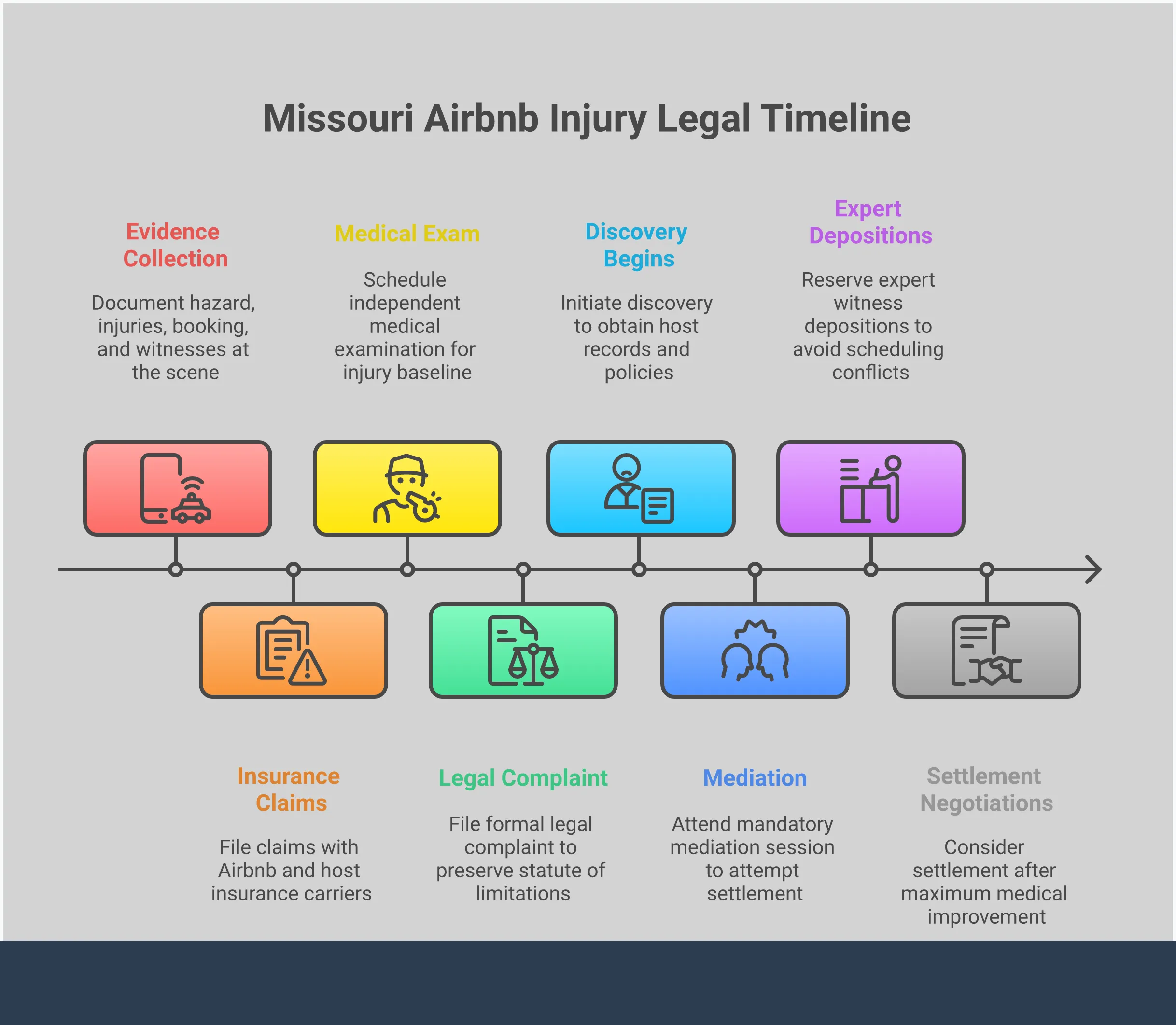
How Missouri’s Comparative Negligence Law Affects Your Claim
When you’re injured, it’s natural to replay the incident in your mind. You might even wonder if you could have done something differently. In many accidents, fault isn’t 100% one-sided, and Missouri law has a system for handling these situations. It’s called “pure comparative negligence,” and it’s a critical concept in any personal injury claim.
This rule directly affects how much compensation you can receive if you’re found to be partially responsible for your own injuries. It doesn’t mean you lose your right to seek damages, but it does mean the amount you can recover will be adjusted. Understanding how this works is the first step in figuring out what your claim might be worth and why having an experienced advocate on your side is so important. It’s a fair system, but it can also be complex, as it involves assigning a percentage of fault to everyone involved.
What if You’re Partially at Fault?
It’s a common worry: “What if the accident was partly my fault? Can I still file a claim?” In Missouri, the answer is yes. Our state’s pure comparative negligence rule means you are not barred from recovering damages just because you share some of the blame.
Here’s how it works: the court will determine the percentage of fault for each party involved in the incident. Your total compensation is then reduced by your percentage of fault. For example, if you were found to be 20% at fault for slipping on an icy step because you were looking at your phone, you could still recover 80% of the total damages. This system ensures that you can still get help, even if you weren’t completely blameless.
How Partial Fault Impacts Your Compensation
The percentage of fault assigned to you directly reduces the final amount of money you can receive. Let’s put it into numbers. Imagine your total damages—including medical bills, lost wages, and pain and suffering—add up to $50,000. If the court determines you were 10% at fault for the accident, your final compensation would be reduced by 10% ($5,000), meaning you could recover $45,000.
This calculation is why establishing the precise degree of fault is so crucial in an Airbnb injury case. Insurance companies may try to place more blame on you to reduce their payout. Having a clear understanding of the facts can make a significant difference, and it’s often best to discuss the specifics of your situation with an attorney who can protect your interests.
What Insurance Covers an Airbnb Injury in Missouri?
When you’re injured at an Airbnb, figuring out who pays for your medical bills and other damages can feel complicated. Unlike a hotel with straightforward commercial insurance, a short-term rental involves multiple parties and potentially several different insurance policies. The good news is that there are layers of protection in place for guests. The key is understanding which policy applies to your situation.
Coverage for an injury at a Missouri Airbnb typically comes from one of two main sources: an insurance policy provided by Airbnb itself or the host’s personal homeowner’s or landlord insurance. Each of these has its own rules and limitations. Knowing the difference can help you understand your options for seeking compensation and get a clearer picture of what to expect as you move forward with your claim. The right approach depends entirely on the specifics of your accident and the property where you were staying.
What is Airbnb’s Host Protection Insurance?
To protect its hosts, Airbnb provides a policy called “Host Liability Insurance.” This program offers up to $1 million in coverage per stay. It’s designed to cover a host’s legal responsibility for guest injuries or property damage that occurs during a booking. If you slip on a wet floor or fall down a poorly lit staircase, this is often the first line of defense for covering your damages. This insurance is primary, meaning it typically applies before the host’s own insurance. It’s an important safety net that protects both hosts from financial ruin and guests who suffer a legitimate personal injury.
Does the Host Have Separate Liability Insurance?
In addition to Airbnb’s policy, many hosts carry their own separate liability insurance. This could be a standard homeowner’s policy or a specific landlord policy designed for rental properties. This separate insurance can provide additional coverage for incidents that might not be fully covered by Airbnb’s insurance. For example, if your damages exceed the $1 million limit or if the type of incident is excluded from Airbnb’s policy, the host’s personal insurance may step in. It’s important for an investigation to determine the full extent of the host’s coverage and identify any potential gaps that may exist between the policies.
Common Misconceptions About Your Coverage
While Airbnb’s Host Liability Insurance offers significant protection, it’s a mistake to assume it covers everything. The policy has several important exclusions. For instance, it generally does not cover injuries resulting from intentional acts, car accidents on the property, or certain environmental issues like mold or asbestos. Understanding these limitations is crucial for navigating a claim effectively. If your injury falls into one of these excluded categories, you may need to pursue compensation directly from the host’s personal insurance or through a premises liability claim against the property owner.
Common Injuries at Airbnb Properties
An Airbnb should feel like a safe home away from home, but that cozy feeling can disappear in an instant if you get hurt. An unexpected injury can quickly derail your trip, leaving you with pain, medical bills, and a lot of questions about what to do next. The reality is that any property, including a short-term rental, comes with risks, and injuries can range from minor scrapes to life-altering events. While you’re focused on enjoying your vacation, you’re also trusting that the property owner has taken the necessary steps to ensure your safety.
Property hosts have a legal duty to provide a reasonably safe environment for their guests. This is a core part of premises liability law. When they fail to uphold this responsibility through negligence—whether by ignoring a known hazard or failing to perform routine maintenance—and you are injured as a result, you may be able to file a personal injury claim. Knowing the common types of accidents can help you stay aware of potential dangers during your stay. Below are some of the most frequent injuries that occur at short-term rentals and what they could mean for your rights as a guest in Missouri.
Slips, Trips, and Falls
It’s no surprise that slips, trips, and falls are one of the most frequent causes of injury at rental properties. These accidents are often preventable and happen because a host overlooked a clear hazard. Common causes include wet floors near a pool or in a bathroom without a warning sign, poorly lit stairwells, uneven pavement on a walkway, or loose rugs that aren’t properly secured. A fall can result in significant injuries like broken bones, severe sprains, head trauma, or back damage. Property owners are expected to keep their premises safe, and if they knew about a dangerous condition and failed to fix it, they may be liable for the harm you suffered.
Burns from Faulty Appliances
When you book a rental, you trust that the amenities, like the stove or water heater, are safe to use. Unfortunately, malfunctioning appliances can pose a serious risk of burns. These injuries can be caused by a defective kitchen appliance, a faulty outdoor grill or fire pit, or a water heater set to a scalding temperature. Hosts are responsible for making sure their property complies with local fire and safety codes, which includes performing regular maintenance on all appliances. If a host’s failure to maintain their property leads to a burn injury, you have the right to seek compensation for your medical care, pain, and suffering.
Assaults Due to Poor Security
Your safety should be a top priority for any host, and that includes providing a secure property. When a rental has inadequate security, it can become an easy target for criminals, putting you at risk of robbery or assault. Negligent security can take many forms, such as broken locks on doors and windows, poor lighting in hallways or parking areas, or failing to change the keypad code between guests. While determining fault in these situations can be complicated, a host may be held responsible if their negligence made the property unsafe. If you were harmed due to poor security at an Airbnb, it is crucial to speak with an attorney who can help you understand your legal options.
How a Personal Injury Attorney Can Help Your Case
Dealing with the aftermath of an injury is tough enough without having to figure out the legal system. While you might think you can handle a claim on your own, the process can quickly become overwhelming. You’re not just dealing with the property host; you’re up against Airbnb’s corporate policies and large insurance companies. This is where having a legal professional on your side makes a significant difference. A personal injury attorney acts as your advocate, managing the complex communications and legal requirements so you can focus on your recovery.
They understand the specifics of Missouri’s personal injury law and know how to build a case that stands up to scrutiny from insurers. From gathering evidence and interviewing witnesses to calculating the full extent of your damages, an attorney handles all the critical details. They work to ensure your rights are protected every step of the way. By leveling the playing field, they give you a much stronger chance of receiving the compensation you deserve for your medical bills, lost income, and pain and suffering. Essentially, they take the legal burden off your shoulders, allowing you to heal.
Investigate Your Claim and Prove Liability
To have a successful claim, you must prove that the Airbnb host was negligent and that their carelessness led to your injury. This is more than just saying what happened; it requires collecting solid evidence to build a strong argument. A personal injury attorney specializes in this kind of investigation. They will gather police reports, medical records, and photos of the scene, and may even hire experts to show how the hazardous condition caused your accident. This detailed work is crucial for establishing a clear case of premises liability and holding the responsible party accountable.
Handle Insurance Companies and Arbitration
While Airbnb offers Host Protection Insurance, getting a fair payout is rarely straightforward. Insurance adjusters are trained to minimize settlements, and they may try to get you to accept a low offer or say something that weakens your claim. An experienced attorney knows how to handle these negotiations. They will manage all communication with the insurance companies, present your case effectively, and fight for the maximum compensation you’re entitled to. If the insurer refuses to offer a fair settlement, your attorney can represent you in arbitration or file a lawsuit, ensuring your voice is heard. You can contact us to discuss the specifics of your case.
Meet Missouri’s Statute of Limitations
In Missouri, you have a limited amount of time to file a personal injury lawsuit. This deadline, known as the statute of limitations, is five years from the date of the injury. If you miss this window, you lose your right to seek compensation through the courts forever. An attorney will make sure all necessary legal documents are filed correctly and on time. They also understand the nuances of state laws, like Missouri’s pure comparative negligence rule, which allows you to recover damages even if you were partially at fault. Having an expert like Chad G. Mann manage your case ensures these critical details aren’t overlooked.
Legal Resources for Missouri Injury Victims
After an injury, figuring out your next steps can feel like a heavy burden. Beyond finding a personal injury attorney, you may need access to other community resources for legal and medical support. Knowing where to find this help is the first step toward protecting your rights and your well-being. It’s completely normal to feel overwhelmed by the process, but you don’t have to go through it alone. Below are some key resources available to injury victims throughout Missouri, from organizations that provide legal assistance to guidance on managing your medical care and records. These resources can help you get the support you need while you focus on your recovery.
Where to Find Legal Aid in Missouri
If you’re concerned about the cost of legal help, you should know that options are available. Missouri has several organizations dedicated to providing free or low-cost legal services to those who qualify. The Missouri Bar offers public resources, including information on finding legal help and understanding your rights. Additionally, organizations like Legal Services of Missouri provide direct assistance to low-income individuals across the state, ensuring that everyone has access to legal representation when they need it most. These groups can be an invaluable starting point for getting answers and understanding the legal process without the immediate financial pressure.
How to Access Medical Care and Records
Your health should always be your top priority after an injury. Seeking immediate medical attention creates an official record of your injuries, which is essential for any future claim. After your visit, you have the right to access your medical records. You can typically request these by contacting the records department of the hospital or clinic where you received treatment. According to the U.S. Department of Health & Human Services, you have a right to get copies of your health information. These documents are critical pieces of evidence that detail the extent of your injuries and the cost of your care, forming the foundation of your personal injury case.
Related Articles
- Missouri Premises Liability: Know Your Rights
- Premises Liability Lawyer – Injury Claims in Missouri
- Missouri Personal Injury Law – What You Should Know
- How to Find the Best Premises Liability Attorney Near Me
Frequently Asked Questions
What if the host blames me for the accident? It’s common for a property owner or their insurance company to suggest you were at fault. Don’t let this discourage you. Missouri law operates on a “pure comparative negligence” basis, which means you can still seek compensation even if you were partially responsible for your injury. The final amount would simply be reduced by your percentage of fault. An experienced attorney can help protect you from being assigned an unfair amount of blame and ensure the focus remains on the hazardous conditions that led to your accident.
Should I accept a direct offer from the host to pay for my medical bills? While it might seem like a helpful gesture, you should be very cautious about accepting any direct payment or offer from a host. Doing so could require you to sign a release, which would prevent you from seeking any further compensation for things like future medical care, lost wages, or pain and suffering. It’s best to understand the full extent of your damages before agreeing to any settlement.
What if my injury doesn’t seem serious right away? You should always seek medical attention and report the incident, no matter how minor your injury may seem at first. Some injuries, like concussions or soft tissue damage, can have delayed symptoms that worsen over time. Getting a medical evaluation creates an official record linking your injury to the incident. Likewise, reporting it to the host and Airbnb through the platform creates a timestamped log that can be essential if you need to file a claim later.
How long do I have to file a claim for an injury at an Airbnb in Missouri? In Missouri, the statute of limitations for personal injury claims is five years from the date the injury occurred. While that might sound like a lot of time, it’s important not to wait. Gathering evidence, interviewing witnesses, and building a strong case takes time. Acting promptly ensures that crucial details are not lost and that all legal deadlines are met.
Do I have to sue the host to get compensation? Not necessarily. Most personal injury claims are resolved through negotiations with insurance companies, without ever going to court. The first step is typically filing a claim against the appropriate insurance policy, like Airbnb’s Host Liability Insurance or the host’s homeowner’s policy. A lawsuit generally becomes an option only if the insurance company refuses to offer a fair settlement.