


The clock starts ticking the second an accident happens. While you focus on getting medical care, crucial evidence can begin to disappear. Security camera footage gets erased, witness memories fade, and the accident scene is quickly cleared. Building a strong claim depends on preserving these details right away. This is why one of the most important first steps you can take is contacting a legal professional. A personal injury lawyer can immediately launch an investigation to secure evidence, interview witnesses, and document everything needed to prove what happened. They act fast to protect your rights while you concentrate on healing.
Key Takeaways
- Focus on recovery, not paperwork: A personal injury lawyer manages the entire claims process for you, from investigating the accident and gathering evidence to negotiating with insurance companies, so you can prioritize your health.
- Protect your claim from the start: The steps you take immediately after an accident are crucial—seek medical attention to document your injuries, collect evidence at the scene, and avoid giving a recorded statement to an insurer before speaking with an attorney.
- Get expert legal help without upfront fees: Most personal injury attorneys work on a contingency fee basis, which means you don’t pay for their services unless they successfully recover compensation for you, making justice accessible.
What Can a Personal Injury Lawyer Do For You?
After an accident, you’re likely dealing with injuries, medical bills, and a lot of stress. The last thing you want to do is fight with insurance companies or try to figure out the legal system on your own. This is where a personal injury lawyer steps in. They do more than just file paperwork; they become your advocate, managing every detail of your case so you can focus on what truly matters—your recovery. From digging into the evidence to standing up for you in court, a lawyer provides the support and expertise you need to secure the compensation you deserve.
Investigating the Accident and Gathering Proof
A strong case is built on solid evidence. While you might snap a few photos at the scene, a personal injury lawyer launches a full-scale investigation to build the strongest claim possible. They know exactly what to look for and how to get it. This includes obtaining official police reports, tracking down and interviewing witnesses, and even securing surveillance footage from nearby businesses that may have captured the incident. For automobile accidents, this could mean bringing in accident reconstruction experts to prove what really happened. Your attorney’s job is to meticulously collect evidence to support your case, ensuring no detail is overlooked. They preserve crucial information that could otherwise be lost, giving you a solid foundation for your claim.
Proving Your Injuries with Medical Experts
Proving your injuries goes far beyond simply showing medical bills. It’s about demonstrating the full impact the accident has had on your life, both now and in the future. A personal injury lawyer will carefully review all of your medical records to build a clear picture of your injuries. For less visible injuries like traumatic brain injuries or chronic pain, they can consult with medical experts to provide testimony. As legal professionals note, proving these types of injuries requires strong medical records and consistent treatment. Your lawyer ensures your claim accounts for future medical care, lost wages, and pain and suffering, fighting for compensation that covers the true cost of your recovery.
Taking On the Insurance Company for You
Dealing with insurance companies can be one of the most frustrating parts of an accident claim. Adjusters are trained to protect their company’s bottom line, which often means offering you less than you deserve or trying to get you to say something that hurts your case. When you hire a lawyer, they take over all communication with the insurance companies. They know the tactics adjusters use and won’t let you be pressured into accepting a lowball settlement. Your attorney will handle the negotiations, presenting your evidence and arguing for a fair outcome. This allows you to focus on getting better without the stress of back-and-forth calls. If you’re feeling overwhelmed, it’s a good time to contact a lawyer.
Fighting for You in the Courtroom
While the majority of personal injury cases are settled out of court, the insurance company is more likely to offer a fair settlement if they know you have a lawyer who is ready and willing to go to trial. If a fair agreement can’t be reached through negotiation, your attorney will be prepared to represent you in court. They will file the necessary legal documents, handle all procedural requirements, and build a compelling case to present to a judge and jury. Having an experienced trial lawyer like Chad G. Mann means you have a professional who can advocate for your rights in a formal legal setting. This willingness to fight for you in the courtroom is often the leverage needed to secure the compensation you are owed.
Understanding the Role and Ethics of a Personal Injury Lawyer
When you hire a personal injury lawyer, you’re not just getting legal help—you’re gaining a partner who is bound by a professional code of ethics to act in your best interest. These attorneys operate within a specific area of the legal system designed to protect people who have been wrongfully injured. Understanding their role and the standards they uphold can give you confidence as you move forward with your case. From their qualifications to their professional conduct, every aspect of their practice is structured to ensure you receive fair and just representation. This commitment to integrity is the foundation of the trust you place in your legal advocate.
What is Tort Law?
Personal injury cases fall under an area of law known as “tort law.” It might sound complicated, but the concept is simple: if someone’s carelessness causes you harm, you have the right to seek compensation for your injuries. A personal injury lawyer is an expert in this field. Their job is to help people who have been physically or emotionally hurt because another person or company was negligent. This could be anything from a car crash to a slip and fall. They work to hold the responsible party accountable and secure fair payment for your medical bills, lost income, and suffering. It’s the legal framework that allows you to get justice when you’ve been wronged.
Lawyer Qualifications and State Licensing
Not just anyone can practice personal injury law. To become a lawyer, an individual must earn a law degree and pass a difficult state bar examination. But the requirements don’t stop there. Attorneys must be licensed to practice in the state where they work, which means they are accountable to that state’s legal standards. In many places, they also have to pass a separate ethics exam to prove they understand the rules of professional conduct. These strict qualifications ensure that the lawyer representing you has the necessary knowledge and has committed to upholding the legal and ethical obligations required to handle your case properly and protect your rights throughout the entire process.
Adhering to a Strict Code of Conduct
A personal injury lawyer’s primary goal is to help you get the compensation you deserve, but they must do so while following a strict code of professional conduct. These rules, like the Model Rules of Professional Conduct from the American Bar Association, are established and enforced by state bar associations, which have the power to discipline lawyers who violate them. This code ensures that your attorney acts with integrity, honesty, and loyalty toward you. They are required to keep your communications confidential, avoid conflicts of interest, and always advocate for your best interests. This ethical framework is what makes your lawyer a trustworthy ally, dedicated to securing justice for you in a fair and professional manner. It’s a commitment to service you can rely on.
The Importance of Professional Groups
While it’s not a requirement, many dedicated personal injury lawyers choose to join professional organizations like the American Bar Association or the American Association for Justice. Membership in these groups is a strong indicator of an attorney’s commitment to their profession. These organizations provide valuable resources, continuing education, and a network of peers, which helps lawyers stay current on the latest legal developments and trial strategies. When an attorney is an active member of professional groups, it shows they are invested in honing their skills and upholding the highest standards of legal practice. This dedication to excellence ultimately benefits their clients by ensuring they receive knowledgeable and effective representation.
How Do You Find the Right Personal Injury Lawyer?
Finding the right lawyer after an accident can feel like a monumental task, but it doesn’t have to be. The right legal partner will not only handle the complexities of your case but also provide the support you need during a difficult time. Think of this process as a series of clear, manageable steps. By focusing on a few key areas—experience, track record, communication, and fees—you can confidently choose an attorney who is the best fit for you and your case.
Prioritize Experience with Cases Like Yours
When you’re looking for a lawyer, you want someone who lives and breathes personal injury law, not a generalist who handles a little bit of everything. An attorney with specific experience in accident cases will understand the nuances of insurance negotiations, liability laws, and the tactics opposing counsel might use. Look for a lawyer whose primary focus is on personal injury law and who has a history of handling cases similar to yours, whether it’s a car accident, a slip and fall, or another type of incident. This specialized knowledge can make a significant difference in the outcome of your claim.
Read Past Client Reviews and Case Results
A lawyer’s past performance is often a good indicator of their future success. Before making a decision, do a little research into their track record. How many clients have they helped? What do past clients have to say about their experience? Positive reviews and testimonials can give you valuable insight into how an attorney treats their clients and the results they achieve. You can often find this information on their website or through independent review sites. Learning more about a lawyer’s background and professional philosophy on their About Me page can also help you determine if they are the right advocate for you.
Find a Lawyer Who Keeps You in the Loop
You and your lawyer will be working together closely, so it’s essential that you feel comfortable with their communication style. During your initial consultation, pay attention to how they listen to your story and answer your questions. Do they explain complex legal terms in a way you can understand? Are they responsive and attentive? A good lawyer will keep you informed about your case and be available to address your concerns. Remember, time is often critical after an accident, so it’s important to contact a lawyer who is prompt and communicative from the very beginning.
Ask About Their Fee Structure Upfront
The cost of hiring a lawyer is a valid concern for many people, but most personal injury attorneys work on a contingency fee basis. This means you don’t pay any attorney fees upfront. Instead, the lawyer’s fee is a percentage of the settlement or award they recover for you. If they don’t win your case, you don’t owe them a fee for their time. This arrangement allows you to get quality legal representation without financial risk. The typical fee ranges from 33% to 40% of the final amount. Always ask for a clear explanation of the fee structure and any other potential costs during your first meeting.
Understanding the Competitive Legal Market
You’ve likely seen the commercials and billboards—it’s clear that personal injury law is an incredibly competitive field. This means you have a lot of options, but it also means you need to look beyond the flashy advertisements to find the right advocate for your case. The best attorneys build their reputation on dedication, experience, and proven results, not just on who has the biggest marketing budget. Because most personal injury lawyers work on a contingency fee basis, their services are accessible, which further fuels the competition. Your goal should be to find a lawyer who is genuinely invested in your well-being and has the specific experience needed to handle your claim, ensuring you get personalized attention instead of just becoming another case number.
What Does It Cost to Hire a Personal Injury Lawyer?
After an accident, the last thing you should worry about is how you’ll afford legal help. The thought of adding lawyer fees to a growing pile of medical bills and lost wages can feel overwhelming, and it’s a concern that stops many people from seeking the support they need. Fortunately, most personal injury lawyers structure their fees in a way that makes justice accessible to everyone, not just those who can pay upfront. This approach allows you to focus on your recovery while your attorney focuses on fighting for you.
Understanding how payment works is a key part of choosing the right lawyer. The most common arrangement in personal injury law is a contingency fee, which means your lawyer only gets paid if you do. It’s a system built on shared risk and a shared goal: securing the compensation you deserve. This model ensures that your attorney is fully invested in the success of your case. Before you sign any agreement, a good lawyer will walk you through their fee structure, explain any additional case expenses, and answer all of your questions so there are no surprises down the road. This transparency is a hallmark of a client-focused firm and gives you the confidence to move forward.
What Is a Contingency Fee?
Most personal injury lawyers work on a contingency fee basis. In simple terms, this means you pay no attorney fees unless your lawyer successfully recovers money for you through a settlement or court verdict. If you don’t win your case, you don’t owe your lawyer a fee for their time. This arrangement removes the financial risk of hiring legal representation.
When your case is resolved, the lawyer’s fee is calculated as a percentage of your total recovery. This percentage typically ranges from 33% to 40%, depending on the complexity of your case. This structure ensures your lawyer is motivated to get you the best possible outcome for your personal injury claim. Their success is directly tied to yours, making them a true partner in your fight for justice.
How Contingency Fee Percentages Can Vary
While the 33% to 40% range is a common benchmark, the exact percentage of a contingency fee isn’t one-size-fits-all. Several factors can influence the final number, and it’s something you should always discuss with your attorney. The complexity of your case is a major consideration. For example, a straightforward claim that settles quickly before a lawsuit is filed might be on the lower end of the scale. However, if your case requires extensive investigation, expert witnesses, or proceeds to trial, the percentage may increase to reflect the additional time and resources involved. Some attorneys also use a sliding scale, where the fee percentage changes depending on how far the case progresses. This structure ensures the fee aligns with the amount of work required to resolve your claim.
Are There Other Potential Legal Expenses?
While the contingency fee covers your lawyer’s legal services, a personal injury case involves other costs. These are the out-of-pocket expenses required to build and pursue your claim. Common examples include court filing fees, the cost of obtaining medical records and police reports, deposition fees, and fees for expert witnesses who may need to testify on your behalf.
Most law firms, including ours, will advance these costs for you and then deduct them from your final settlement amount. It’s important to discuss how these expenses are handled during your initial meeting. Your attorney should provide a clear explanation in your fee agreement so you understand exactly what to expect when your case is settled.
Why You Should Start with a Free Consultation
A free consultation is your opportunity to get professional legal advice without any cost or obligation. It’s a crucial first step that allows you to discuss the details of your accident with an experienced attorney, understand your rights, and find out if you have a valid case. This meeting is completely confidential and designed to give you the clarity you need to decide on your next steps.
This initial conversation is also your chance to see if the lawyer is the right fit for you. You can ask questions about their experience, their process, and their communication style. At The Law Office of Chad G. Mann, we believe everyone deserves access to justice, which is why we encourage you to schedule a free consultation to get the answers you need.
What to Do Immediately After an Accident
The moments following an accident can feel chaotic and overwhelming. Your mind is racing, and it’s tough to think clearly. However, the steps you take right after a crash are critical for protecting both your health and your legal rights. By staying as calm as possible and focusing on a few key actions, you can set the foundation for a strong recovery and a fair claim.
Prioritize Medical Care and Document Everything
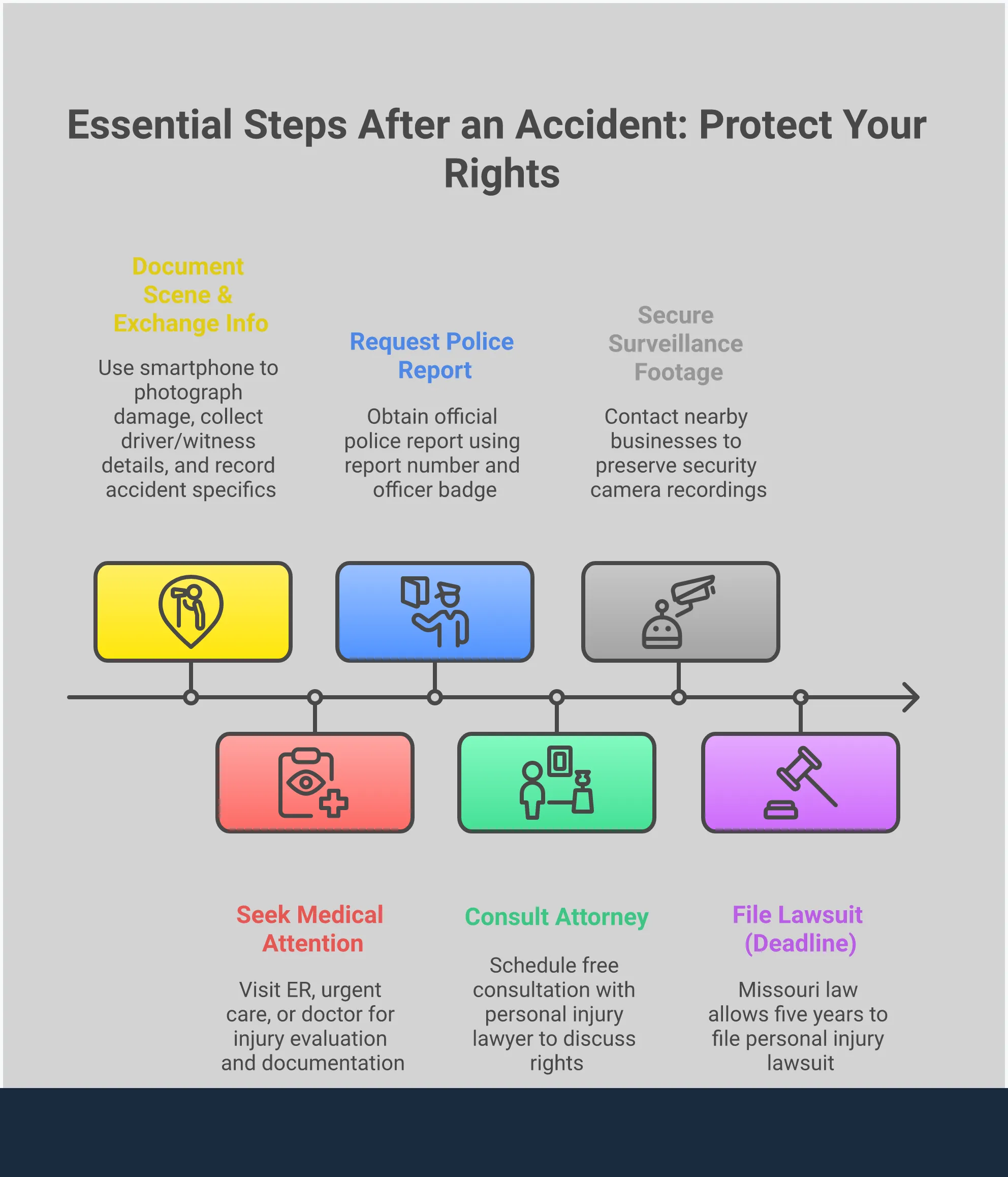
Your well-being is the absolute top priority. Even if you feel fine, it’s essential to get a medical evaluation. The adrenaline from an accident can easily mask pain, and some serious injuries, like concussions or internal damage, don’t show symptoms right away. Seeking prompt medical attention ensures you get the care you need. It also creates an official record that documents your injuries and connects them directly to the accident. This medical documentation is one of the most important pieces of evidence you’ll have if you decide to file a personal injury claim. Don’t wait—see a doctor, go to an urgent care clinic, or visit the emergency room as soon as you can.
Gather Key Evidence at the Accident Scene
If you are physically able, gathering evidence at the scene can make a huge difference in your case. Use your phone to take pictures of everything: the damage to all vehicles involved, their license plates, skid marks on the road, traffic signals, and any visible injuries you have. It’s also a good idea to get the names, contact information, and insurance details from the other driver(s). If there were any witnesses, ask for their names and phone numbers, too. Their accounts can be incredibly valuable. This evidence provides a clear snapshot of what happened, which is much more reliable than trying to recall details from memory later on.
Make Sure a Police Report Is Filed
Always call the police to the scene of an accident, no matter how minor it seems. A police officer will create an official accident report, which is a neutral, factual account of the incident. This report is a vital piece of evidence for both insurance companies and your attorney. It will contain key information like the date, time, location, weather conditions, and contact details for everyone involved. The officer may also include their initial observations about how the accident occurred. Before you leave, make sure you get the officer’s name, badge number, and the police report number so you can obtain a copy later.
Follow Your Doctor’s Orders Diligently
After an accident, your doctor provides a roadmap for your recovery—it’s crucial that you follow it. This means attending all your physical therapy sessions, taking prescribed medications, and adhering to any work restrictions. Following your doctor’s orders is not just essential for your physical healing; it also plays a significant role in the strength of your legal claim. When you consistently follow medical advice, you create a clear record that demonstrates the seriousness of your injuries. Insurance companies often look for reasons to downplay claims, and skipping appointments or ignoring restrictions can give them an opening to argue that you weren’t truly hurt. Taking your recovery seriously shows that you are committed to getting better and helps your attorney substantiate the full extent of your damages.
Preserve Physical Evidence
The evidence you collect immediately after an accident can be the foundation of a successful claim. While your memory might fade, physical proof tells a clear story. Keep any tangible items related to the incident, such as torn or bloody clothing, a damaged helmet, or broken personal belongings. These items serve as powerful visual evidence of the accident’s impact. It’s also important to preserve digital evidence. Create a dedicated folder on your computer or phone to save all photos and videos from the scene, screenshots of communications, and any other relevant files. By carefully preserving all physical evidence, you provide your attorney with the concrete proof needed to build a compelling case and fight for the compensation you deserve for your injuries.
Keep Detailed Records of All Documents
A personal injury claim is built on documentation. From the moment the accident occurs, you should start a file to keep track of every related piece of paper. This includes medical bills, receipts for prescriptions and assistive devices, explanation of benefits (EOB) statements from your health insurer, and pay stubs showing lost wages. It’s also helpful to keep a simple journal to log your pain levels, daily challenges, and any appointments. These records are essential for accurately calculating your damages and proving the financial and personal impact of the accident. Having everything organized makes the process smoother and ensures nothing is overlooked when it’s time to negotiate a settlement. If you need help getting organized, you can always contact our office for guidance.
Why You Should Call a Lawyer Sooner Than Later
Dealing with the aftermath of an accident is stressful enough without having to handle insurance adjusters on your own. Contacting a personal injury lawyer early in the process can protect you from saying something that could hurt your claim or accepting a settlement that’s far too low. An experienced attorney can guide you through the next steps, manage all communication with the insurance companies, and start building your case right away. Taking this step allows you to focus on what truly matters: your recovery. If you’re unsure what to do, a free consultation can provide clarity and peace of mind during a difficult time.
Common Mistakes to Avoid with Your Injury Claim
After an accident, you’re dealing with a lot—physical pain, emotional stress, and unexpected expenses. It’s a confusing time, and it’s easy to make a misstep that could jeopardize your ability to get the compensation you deserve. Insurance companies are aware of this and may use the chaos of the situation to their advantage. Knowing what not to do is just as important as knowing what to do. By avoiding a few common pitfalls, you can protect your rights and strengthen your claim from the very beginning.
Avoid Admitting Fault or Downplaying Your Injuries
In the immediate aftermath of an accident, it’s natural to want to be polite. You might be tempted to say, “I’m so sorry,” even if you don’t believe you were at fault. Resist this urge. An apology can be twisted by an insurance company and used as an admission of guilt to reduce or deny your claim. The same goes for downplaying your injuries. Adrenaline can mask pain, so saying “I’m fine” at the scene might not be accurate. Stick to the facts of what happened, and let medical professionals assess your condition. Let the official investigation determine who was responsible for the accident.
Why You Shouldn’t Take the First Settlement Offer
Soon after your accident, you’ll likely get a call from the other party’s insurance company with a settlement offer. It might seem like a relief to get a check quickly, but this first offer is almost always far less than what your claim is actually worth. Insurance companies want to close cases quickly and for the lowest amount possible. If you accept their offer, you forfeit your right to seek any more money for your injuries, even if you later discover you need more extensive medical treatment. It’s crucial to understand the full scope of your damages, including future medical bills and lost wages, before even considering a settlement.
What to Say (and Not Say) to an Insurance Adjuster
Remember that insurance adjusters work for their company, not for you. Their primary goal is to protect their employer’s bottom line by minimizing payouts. They are trained to ask questions in a way that might get you to say something that hurts your claim. They may ask for a recorded statement, which you are not obligated to provide. The safest approach is to avoid speaking with them altogether. Instead, direct them to your attorney, who can handle all communications on your behalf. If you need legal representation, you can contact our office for guidance.
Posting on Social Media After an Accident
It’s tempting to update friends and family on social media, but after an accident, your online activity can become evidence against you. Insurance adjusters regularly search claimants’ social media profiles, looking for anything that could contradict your injury claim. A photo of you smiling at a family event or a post about a short walk could be used to argue that your injuries aren’t as severe as you’ve stated. Even checking in at a location can be misconstrued. The safest approach is to avoid posting altogether while your case is active. If you must use social media, set all your accounts to the highest privacy settings and ask friends not to tag you in photos. Protecting your personal injury claim means being mindful of your digital footprint.
Don’t Miss Important Legal Deadlines
Every state has a time limit for filing a personal injury lawsuit, known as the statute of limitations. In Missouri, you generally have five years from the date of the accident to file your claim. While that might sound like a long time, it can pass quickly when you’re focused on recovery. More importantly, evidence can disappear long before the deadline. Witnesses move or their memories fade, and video surveillance footage gets erased. Acting promptly ensures that crucial evidence can be preserved. Consulting with a lawyer as soon as possible helps you stay on top of these critical deadlines for your personal injury case.
What to Expect: The Personal Injury Claim Process
Filing a personal injury claim can feel overwhelming, but it follows a structured path. Understanding the steps can help demystify the process and give you confidence as you move forward. While every case is unique, most follow a similar progression from your first meeting with an attorney to the final resolution. The goal is always to secure the compensation you deserve, whether through a negotiated settlement or a court verdict. Here’s a look at what you can generally expect.
Step 1: The Initial Consultation with Your Lawyer
The first step is sitting down with an attorney to discuss your case. Most personal injury lawyers, including our firm, offer a free initial consultation so you can share your story without any financial pressure. During this meeting, you’ll explain what happened, detail your injuries, and provide any documents you have, like a police report or medical bills. This is your chance to ask questions and get a feel for the attorney. We’ll listen carefully and give you an honest assessment of your case and your legal options. It’s a no-obligation conversation designed to help you make an informed decision about how to proceed.
Step 2: Investigating and Building Your Case
Once you decide to move forward, your lawyer will begin a thorough investigation. This is where we build the foundation of your claim. Collecting evidence is crucial to prove what happened and who was at fault. We will gather police reports, track down witnesses, and collect photos of the accident scene and your injuries. We’ll also obtain your medical records to document the full extent of your damages. This phase, known as “discovery,” involves a formal exchange of information with the other party. Our job is to assemble a compelling case that clearly shows why you are entitled to compensation for your automobile accident or other injury.
Step 3: Negotiating a Fair Settlement
With a strong case built, the next step is often negotiation. Your attorney will calculate the full value of your claim—including medical expenses, lost wages, and pain and suffering—and send a demand letter to the at-fault party’s insurance company. The insurer will respond, and negotiations will begin. The vast majority of personal injury cases are resolved at this stage through a settlement. We will handle all communication with the insurance company, fighting for a fair offer that covers your needs. Remember, we work on a contingency fee basis, which means you don’t pay us anything unless we win your case.
Step 4: What Happens if Your Case Goes to Trial?
If the insurance company refuses to offer a fair settlement, the next step is taking your case to court. While going to trial is less common, it’s important to have a lawyer who is prepared to fight for you in front of a judge and jury. If a lawsuit is necessary, your attorney will file the required legal documents and continue preparing your case for the courtroom. We will present evidence, question witnesses, and make a powerful argument on your behalf. Our goal remains the same: to secure the best possible outcome for you, and we are ready to see your case through to the very end.
What Kinds of Cases Do Personal Injury Lawyers Handle?
When you hear “personal injury,” you might immediately think of car crashes. While that’s a big part of it, this area of law is much broader. A personal injury case can arise anytime you’re harmed because of someone else’s carelessness or negligence. The core idea is that if another person, company, or entity is responsible for your injury, you shouldn’t have to bear the financial burden of medical bills, lost income, and other damages alone. This legal principle ensures that victims have a way to seek justice and financial stability after an unexpected event turns their life upside down.
Personal injury law covers a wide range of incidents, from a slip on an icy sidewalk to a complex accident involving a commercial truck. An experienced attorney can help you understand your rights and figure out the best path forward. At The Law Office of Chad G. Mann, we handle a variety of personal injury claims to help clients in Southwest Missouri get the justice they deserve. The goal is always to secure fair compensation that allows you to focus on what matters most: your recovery. Understanding the different types of cases can help you see if your situation fits and when it’s time to seek legal advice. It’s about more than just money; it’s about holding the responsible party accountable and ensuring you have the resources needed to rebuild.
Vehicle Accidents (Cars, Trucks, and Motorcycles)
Roadway accidents are one of the most common reasons people seek help from a personal injury lawyer. Personal injury lawyers handle many types of personal injury cases, including car, motorcycle, and truck accidents. Each type of accident comes with its own set of challenges. A motorcycle crash, for example, often results in more severe injuries, while a collision with a commercial truck can involve complex federal regulations and corporate insurance policies. An attorney helps investigate the accident, gather evidence like police reports and witness statements, and build a strong case to prove who was at fault. They handle the negotiations with insurance companies so you can focus on healing.
Slip and Fall Accidents (Premises Liability)
Have you ever been injured on someone else’s property? This could be anything from a fall in a grocery store with a wet floor to tripping on a broken step at an apartment complex. Personal injury lawyers also manage cases involving slip and falls, as well as premises liability, which pertains to injuries occurring on someone else’s property due to unsafe conditions. Property owners have a legal responsibility to maintain a reasonably safe environment for visitors. When they fail to do so and you get hurt, they can be held accountable. These cases require proving the owner knew, or should have known, about the hazard and did nothing to fix it.
Workplace Accidents and Injuries
Getting hurt on the job can be complicated. While workers’ compensation is designed to cover medical expenses and lost wages, it doesn’t always account for the full impact of a serious injury. Workplace injuries are another significant area of focus for personal injury lawyers, who advocate for victims to receive the compensation they deserve for their injuries sustained on the job. If your injury was caused by a third party—not your employer or a coworker—you might have a personal injury claim in addition to your workers’ comp case. For example, if you were injured by faulty machinery, you could potentially sue the manufacturer.
Dog Bites and Animal Attacks
An attack by an animal, especially a dog, can be a deeply traumatic experience, leaving both physical and emotional scars. When this happens, the law often looks to the animal’s owner for responsibility. Personal injury lawyers handle many types of personal injury cases, including dog bites and animal attacks. To build a successful claim, it’s typically necessary to show that the owner was negligent in some way. This could mean they violated local leash laws or knew their pet had aggressive tendencies but failed to take proper precautions. An attorney can investigate the animal’s history and the circumstances of the attack to establish liability and help you seek compensation for your injuries.
Medical Malpractice and Birth Injuries
We place an immense amount of trust in our doctors and healthcare providers. When that trust is broken and their negligence causes harm, the consequences can be life-altering. Medical malpractice cases arise when a healthcare professional fails to provide the accepted standard of care, resulting in injury to a patient. This can include a wide range of errors, from a misdiagnosis or surgical mistake to preventable injuries during childbirth. These cases are incredibly complex and almost always require testimony from other medical experts to prove that the provider acted negligently. A lawyer experienced in this area can help you gather the necessary evidence and expert opinions to hold the responsible parties accountable.
Injuries from Dangerous or Defective Products
When you buy a product, you have a right to expect that it’s safe to use as intended. Unfortunately, that’s not always the case. When a defective or dangerous product causes an injury, you may have a product liability claim. These cases typically fall into one of three categories: a flaw in the product’s design, a mistake during the manufacturing process, or a failure to provide adequate warnings or instructions. A personal injury lawyer can help victims prove that a product was unreasonably dangerous and directly caused their harm, fighting to hold manufacturers and sellers accountable for putting unsafe items into the hands of consumers.
Wrongful Death Claims
Losing a loved one is one of the most painful experiences a person can go through. When that loss is caused by someone else’s carelessness or wrongful act, the grief can be compounded by anger and financial uncertainty. Wrongful death claims are filed by surviving family members to seek justice and compensation for their devastating loss. While no amount of money can replace a loved one, a successful claim can provide financial stability by covering funeral expenses, lost future income, and compensation for the emotional suffering of losing a family member. It’s a way to hold the responsible party accountable and ease the financial burdens left behind.
Construction Site Accidents
Construction sites are among the most hazardous workplaces, with heavy machinery, heights, and dangerous materials creating a high risk of serious injury. While workers’ compensation is the primary avenue for recovery after a workplace accident, it may not be the only one. Construction site accidents can lead to serious injuries, and personal injury lawyers can help workers explore all their options. For example, if an injury was caused by a third party—such as a subcontractor from another company or the manufacturer of faulty equipment—you may be able to file a personal injury lawsuit in addition to your workers’ comp claim. An attorney can help you identify all liable parties to ensure you receive full compensation for your injuries.
What Are Your Rights After an Accident?
After an accident, it’s easy to feel overwhelmed and unsure of what to do next. Knowing your fundamental rights is the first step toward protecting yourself and your future. You have the right to seek compensation for your injuries, but you also have to follow specific legal rules and deadlines. Understanding these rights can make a significant difference in the outcome of your case. It ensures you aren’t taken advantage of by insurance companies and that you have a fair chance to get the support you need to recover.
Your Right to Fair Compensation
When you’re injured because of someone else’s negligence, you have the right to be compensated for your losses. This isn’t just about covering your immediate medical bills. Fair compensation can include payment for lost wages, future medical care, property damage, and the physical and emotional pain you’ve endured. Insurance companies often try to settle claims quickly by offering as little as possible. Their goal is to protect their bottom line, not yours. A personal injury lawyer advocates for you to make sure you receive the full amount you deserve for all your personal injury damages.
Economic and Non-Economic Damages
Compensation in a personal injury case is divided into two main types: economic and non-economic damages. Economic damages are the tangible, out-of-pocket costs you’ve incurred. Think of these as the losses with a clear price tag, like medical bills, lost wages from being unable to work, and the cost of future medical treatments. Non-economic damages, on the other hand, cover the intangible losses that don’t have a simple receipt. This includes compensation for your physical pain and suffering, emotional distress, and the overall impact the injury has had on your quality of life. A skilled attorney will work to calculate the full value of both types of damages to ensure your settlement is truly fair.
Understanding the Concept of Negligence
For a personal injury claim to be successful, you must prove that the other party was negligent. In legal terms, negligence simply means someone was careless, and their carelessness directly caused your injury. It’s not enough that an accident happened; you have to show that another person or entity had a responsibility to act with reasonable care, failed to do so, and that failure led to your harm. The core idea behind our legal system is that if someone else is responsible for your injuries, you shouldn’t have to carry the financial and emotional weight alone. Proving negligence is the key to holding the at-fault party accountable for the personal injury they caused.
What Is the Statute of Limitations?
The statute of limitations is a legal deadline for filing a lawsuit. In Missouri, you generally have five years from the date of the incident to file a personal injury claim. While that might sound like a long time, it’s crucial to act quickly. Waiting too long can cause you to lose your right to seek compensation forever. Evidence like witness memories, security footage, and accident scene details can be lost over time, making it harder to build a strong case. Contacting a lawyer soon after your accident ensures that important deadlines are met and that the process of gathering evidence begins right away.
What if You’re Partially at Fault?
Missouri follows a “pure comparative fault” rule, which can affect how much compensation you receive if you were partially responsible for the accident. This rule means your total compensation award is reduced by your percentage of fault. For example, if you were found to be 20% at fault for an accident and your damages totaled $100,000, you could still recover $80,000. Even if you believe you might share some of the blame, you shouldn’t give up on your claim. An experienced attorney can help accurately assess fault and fight to minimize your percentage of responsibility, ensuring you get a fair outcome.
When Is It Time to Call a Personal Injury Lawyer?
After an accident, you’re dealing with physical pain, emotional stress, and mounting bills. The thought of a legal battle can feel overwhelming, and you might wonder if you really need a lawyer. While some minor incidents can be handled on your own, certain situations make professional legal help essential. Waiting too long to call a lawyer can put your financial recovery at risk. Knowing when to get help is the first step toward protecting your rights and getting the support you need. Here are a few clear signs that it’s time to reach out to a personal injury lawyer.
If Your Injuries Are Serious or Long-Term
If you’ve been seriously hurt in an accident that wasn’t your fault, you shouldn’t have to settle for less than you deserve. Severe injuries often involve more than just initial hospital bills—they can mean long-term medical treatments, physical therapy, lost wages, and even permanent disability. Calculating the true cost of these future needs is incredibly difficult. An experienced lawyer can work with medical and financial experts to understand the full impact of your injuries on your life. They will fight to ensure any settlement offer covers not just your current expenses, but your future care and loss of earning capacity as well.
If Fault Is Disputed or Unclear
Sometimes, it’s not immediately obvious who caused an accident. This is common in multi-car pile-ups or slip-and-fall cases where the other party denies responsibility. Proving who was at fault and how much you should receive for your injuries is a complex process. A lawyer knows the laws and how to build a strong case. They will handle the investigation, gather evidence like police reports and witness statements, and work to clearly establish liability. Having a legal professional with deep experience in personal injury law on your side is critical when fault is disputed.
If the Insurance Company Is Fighting Your Claim
It’s important to remember that insurance companies are businesses. Their goal is to protect their bottom line, which means they often try to pay you as little as possible. You might get a quick, lowball settlement offer, or an adjuster might try to suggest your injuries aren’t as serious as they are. A skilled lawyer ensures your injury and suffering are taken seriously so you can get fair payment. They will handle all communications with the insurance company, protecting you from pressure tactics and fighting for the full amount you deserve. If you feel you’re not being treated fairly, it’s time to get in touch with an attorney.
Why a Lawyer Might Decline Your Case
It can be disheartening to reach out to a lawyer for help, only to be told they can’t take your case. It’s easy to take it personally, but the decision is rarely about you or the validity of your pain. Attorneys must carefully evaluate every potential case for a variety of legal and practical reasons. Sometimes, a case might have legal hurdles that are impossible to overcome, such as a missed filing deadline. In other situations, the potential financial recovery might not be enough to cover the significant costs of litigation. Understanding these factors can help you see the decision not as a rejection, but as a professional assessment of the case’s viability.
There are several common reasons a lawyer might decline a case. The most straightforward is if the statute of limitations has expired—if the legal deadline has passed, there’s simply no path forward. Other times, there may be a conflict of interest, meaning the firm has a professional connection to the other party. A lawyer may also determine that the evidence is too weak to prove fault or that the injuries, while real, are not severe enough to justify the time and expense of a lawsuit. Ultimately, a good lawyer will only take a case they believe they can win, which is a benefit to both you and the firm.
Addressing Common Criticisms of Personal Injury Law
Personal injury law sometimes gets a bad reputation. You’ve probably heard the jokes or seen the stereotypes on TV—images of “ambulance chasers” and people filing frivolous lawsuits over minor incidents. These portrayals can create a lot of skepticism and make people hesitant to seek the legal help they genuinely need. It’s easy to see why these criticisms exist, but they often overlook the fundamental purpose of personal injury law: to provide a path to justice for people who have been seriously harmed by someone else’s negligence. It’s not about getting rich quick; it’s about making sure an innocent victim isn’t left to shoulder the financial burden of an accident they didn’t cause.
The reality is that the legal system has checks and balances in place to weed out baseless claims. Lawyers who work on contingency, like we do, have a strong financial incentive to only take cases with real merit. We invest our own time and resources into building a case, and we only get paid if our client does. This section aims to address some of the most common criticisms head-on, separating myth from reality. By understanding how the system actually works, you can see that personal injury law plays a crucial role in holding people accountable and ensuring that victims have the resources they need to rebuild their lives.
Do Lawsuits Drive Up Costs for Everyone?
One of the most persistent criticisms is that personal injury lawsuits drive up the cost of everything from insurance premiums to consumer goods. The argument is that businesses pass their litigation and insurance costs on to customers. While there’s a grain of truth to this, it’s not the full picture. The primary goal of the legal system is to promote safety and accountability. When a company knows it can be held financially responsible for unsafe products or practices, it has a powerful incentive to make things safer for everyone. This accountability can prevent future accidents, which ultimately saves money and, more importantly, lives.
Furthermore, insurance premium hikes are often influenced by a wide range of factors that have little to do with lawsuits, such as an insurer’s investment returns, operating costs, and competition in the market. Blaming victims for rising costs overlooks the role of corporate responsibility and the insurance industry’s own business practices. At its core, a personal injury claim ensures that the financial costs of an accident are borne by the responsible party, not by the person who was wrongfully injured. It’s a system designed to provide individual justice, not to create widespread economic strain.
What Research Reveals About Tort Reform
You may have heard politicians and business groups talk about the need for “tort reform.” This is a broad term for laws designed to limit personal injury litigation, often by putting a cap on the amount of money a victim can receive in a lawsuit. Proponents argue that these reforms are necessary to stop frivolous claims and reduce costs. However, many consumer advocacy groups and legal experts warn that these measures can do more harm than good. When you place an arbitrary cap on damages, you risk leaving victims with catastrophic injuries without the resources they need for a lifetime of medical care.
Research from organizations like the American Association for Justice suggests that tort reform often fails to deliver on its promises of lower costs for consumers and can severely limit access to the courts for those who need it most. Instead of a one-size-fits-all cap, the current system allows a judge and jury to evaluate the specific details of each case and determine what is fair. This ensures that the compensation awarded is directly related to the actual harm a person has suffered. While no system is perfect, this individualized approach is designed to provide true justice for the injured.
Related Articles
- What to Do After a Car Accident with an Uninsured Driver
- Your Guide to Hiring an Auto Injury Lawyer After an Accident
- Auto Injury Attorneys | Protecting Rights After an Accident
- Find the Best Personal Injury Lawyer in Kansas City, Missouri – The Law Office of Chad G. Mann, LLC
- Property Damage Claims After a Car Accident | CHAD G MANN
Frequently Asked Questions
What if the accident was partly my fault? Can I still get compensation? This is a great question, and the answer in Missouri is yes, you often can. The state follows a “pure comparative fault” rule, which means you can still recover damages even if you were partially to blame. Your final compensation amount would simply be reduced by your percentage of fault. For example, if you were found to be 10% responsible, your award would be reduced by 10%. Don’t assume you don’t have a case just because you think you might share some of the blame. Determining fault is a complex process, and our job is to build the strongest case possible to protect your right to a fair recovery.
I’m worried about the cost. How much do I have to pay upfront to hire you? You pay nothing upfront. We handle personal injury cases on a contingency fee basis, which means our fee is a percentage of the money we recover for you. If we don’t win your case, you don’t owe us a fee for our time. This approach allows you to get high-quality legal help without any financial risk. We cover the costs of building your case, and we only get paid when you do. It ensures our goals are perfectly aligned with yours: getting you the best possible result.
Will I have to go to court for my injury claim? It’s unlikely, but we prepare every case as if it will. The vast majority of personal injury claims are settled through negotiations with the insurance company long before a trial becomes necessary. However, the insurance company is far more likely to offer a fair settlement when they know you have an experienced attorney who is fully prepared and willing to fight for you in court. Our goal is to resolve your case efficiently, but we will not hesitate to go to trial if that’s what it takes to get you the compensation you deserve.
The insurance adjuster for the other driver wants to talk to me. What should I do? It’s best to politely decline to give a recorded statement or discuss the details of the accident. While adjusters can seem friendly, their job is to protect their company’s interests by minimizing your claim. They are trained to ask questions that could lead you to say something that might hurt your case later. The safest move is to tell them that you will have your attorney contact them. This allows your lawyer to handle all communication, protecting you from these tactics so you can focus on your recovery.
How long does a personal injury case usually take to resolve? The timeline for every case is different, as it depends on several factors. These include the severity of your injuries, the time it takes for you to complete medical treatment, and the complexity of the accident itself. A straightforward case might be resolved in a matter of months, while a more complicated one could take over a year. We work to move your case forward as efficiently as possible, but our main priority is ensuring we secure a settlement that fully and fairly covers all of your damages, and that sometimes takes patience.