


The aftermath of an accident is chaotic. You’re dealing with injuries, mounting bills, and pressure from insurance companies. The last thing you need is another expense, so hiring a lawyer feels completely out of reach. Here’s the good news: it isn’t. Most injury lawyers work on a “contingency fee” basis. This means they only get paid if you win your case, and their fee is just a percentage of your settlement. This powerful arrangement removes the financial barrier, allowing you to get an experienced personal injury attorney on your side without paying a single dollar upfront.
Key Takeaways
- Contingency Fees Make Justice Accessible: Most personal injury attorneys work on a contingency basis, meaning their payment depends on winning your case. This system removes the financial barrier, allowing you to hire an experienced lawyer without paying any upfront fees.
- Understand the Fee Agreement in Detail: Beyond the attorney’s percentage, a case involves other expenses like court filing fees. Always ask for a written agreement and have your lawyer explain how these “case costs” are handled to ensure there are no financial surprises.
- Use Free Consultations to Find the Right Fit: Your initial meeting is a crucial, no-cost opportunity to interview potential attorneys. Come prepared with documents and questions about their experience and fee structure to find a skilled lawyer you trust.
What Does a Personal Injury Attorney Do?
At its core, a personal injury attorney is an advocate for people who have been physically or mentally harmed due to someone else’s negligence. Think of them as your personal champion in the legal system. Their job is to prove that another party—whether it’s a person, a company, or even a government entity—was careless and that this carelessness directly caused your injury. They handle the complex legal work so you can focus on your recovery. This includes gathering evidence, speaking with witnesses, negotiating with insurance companies, and, if necessary, representing you in court. Their ultimate goal is to secure financial compensation for your medical bills, lost income, and the pain you’ve endured.
Defining Personal Injury and Tort Law
You’ll often hear the terms “personal injury” and “tort law” used together. “Tort” is simply the legal term for a wrongful act that causes harm to someone else, leading to civil legal liability. Personal injury law is a specific type of tort law that allows you to sue the responsible party for compensation, or “damages.” Unlike criminal cases, which are brought by the government to punish wrongdoing, a tort case is a private lawsuit filed by the injured person. The focus isn’t on jail time but on making the injured person whole again, at least financially, by holding the negligent party accountable for the consequences of their actions.
Common Types of Personal Injury Cases
Personal injury law covers a wide range of incidents where negligence leads to harm. While the circumstances of each case are unique, most fall into a few common categories. These are the situations where an ordinary day is suddenly disrupted by an unexpected and preventable injury. An experienced attorney will have a deep understanding of the specific challenges and legal strategies associated with each type of case. At The Law Office of Chad G. Mann, we handle a variety of these claims, ensuring our clients have the dedicated representation they need. You can explore the different practice areas to see how we can help with your specific situation.
Car, Truck, and Motorcycle Accidents
Collisions involving vehicles are among the most frequent causes of personal injury claims. Whether it’s a fender bender or a serious multi-car pileup, these accidents often result from distracted driving, speeding, or other forms of negligence. An attorney helps victims deal with insurance companies, prove the other driver was at fault, and calculate the full extent of their damages, which can include future medical costs and diminished earning capacity. Cases involving large trucks or motorcycles can be especially complex, often requiring accident reconstruction experts and a thorough knowledge of state and federal traffic regulations.
Slip and Fall Incidents (Premises Liability)
Property owners have a legal duty to keep their premises reasonably safe for visitors. When they fail to do so, and someone gets hurt, it falls under an area of law called “premises liability.” The most common example is a slip and fall accident caused by a wet floor, icy sidewalk, or uneven pavement. However, premises liability also covers injuries from falling objects, inadequate security, or even dog bites. To win these cases, you must prove the property owner knew or should have known about the dangerous condition but did nothing to fix it.
Wrongful Death
When someone’s negligence results in a fatality, the victim’s surviving family members may be able to file a wrongful death lawsuit. This type of claim seeks compensation for the financial and emotional losses the family has suffered. Damages can include the deceased’s lost future income, medical and funeral expenses, and the loss of companionship and support. These are emotionally devastating cases that require a compassionate and skilled attorney to hold the responsible party accountable and provide a measure of justice for the family left behind.
Common Injuries Handled in These Cases
The physical toll of an accident can range from moderate to life-altering. Personal injury attorneys regularly work with clients suffering from a wide spectrum of injuries. These often include broken bones, severe burns, and soft tissue damage like whiplash, which is common in car accidents. More catastrophic injuries can involve spinal cord damage leading to paralysis, traumatic brain injuries (TBIs) with long-term cognitive effects, or even amputations. An attorney works with medical experts to fully document the severity of these injuries and calculate their long-term impact on your life, ensuring any settlement or verdict reflects your true needs.
The Legal Process and Your Rights After an Accident
After an injury, you might feel lost and unsure of what to do next. The legal process can seem intimidating, but understanding your rights and the key steps involved can empower you to take control of your situation. The journey from injury to resolution involves several critical stages, from seeking immediate medical care to negotiating a settlement. Each step is designed to protect your well-being and build a strong foundation for your claim. Knowing what to expect helps demystify the process and allows you to work effectively with your attorney to pursue the compensation you deserve for your injuries and losses.
What to Do Immediately After an Injury
The moments right after an accident are chaotic, but the actions you take can significantly impact both your health and your potential legal claim. Your first priority should always be your physical safety and well-being. Beyond that, it’s about preserving information that could become crucial evidence later on. It’s easy to be flustered or overwhelmed, but trying to stay as calm and methodical as possible can make a huge difference. Following a few simple guidelines can help protect your rights and lay the groundwork for a successful personal injury case should you decide to pursue one.
Seek Medical Attention
Your health is the top priority. See a doctor right away, even if you feel fine. Some serious injuries, like internal bleeding or concussions, don’t show immediate symptoms. Adrenaline can mask pain, making you think you’re unhurt when you’re not. Seeking prompt medical attention creates an official record that documents your injuries and links them directly to the accident. This medical record becomes a critical piece of evidence in your claim, helping to prove the extent of your injuries and the cost of your treatment. Delaying care can give an insurance company an excuse to argue your injuries aren’t serious or weren’t caused by the accident.
Preserve Evidence for Your Case
Evidence can disappear quickly, so it’s important to document everything you can. If possible, take photos and videos of the accident scene, your injuries, and any property damage. Get the names and contact information of any witnesses. If you were in a car accident, be sure to get the other driver’s name, license plate, and insurance information. Keep a file of all related documents, including the police report, medical bills, and receipts for any out-of-pocket expenses. Also, consider keeping a daily journal to track your pain levels, symptoms, and how the injuries are affecting your daily life.
Avoid Speaking with Insurance Adjusters Alone
Soon after the accident, you will likely get a call from the other party’s insurance adjuster. Be very careful what you say. Adjusters are trained to ask questions designed to get you to say something that minimizes their company’s liability. They may try to get you to admit partial fault or give a recorded statement before you know the full extent of your injuries. It’s best to politely decline to speak with them and tell them your attorney will be in touch. An experienced lawyer can handle all communications with the insurance company, protecting you from their tactics and ensuring your rights are preserved. If you need guidance, don’t hesitate to contact an attorney for a consultation.
Understanding Legal Deadlines (The Statute of Limitations)
Every state has a law called the “statute of limitations,” which sets a strict time limit on your right to file a lawsuit after an injury. If you miss this deadline, you will likely lose your right to seek compensation forever, no matter how strong your case is. These deadlines vary depending on the type of case and the state where the injury occurred. Because of this, it is absolutely critical to speak with an attorney as soon as possible after an accident. They can tell you the specific deadline for your case and make sure all necessary paperwork is filed on time, preserving your legal options.
Types of Compensation (Damages) in a Settlement
When you file a personal injury claim, you are seeking “damages,” which is the legal term for the money awarded to compensate you for your losses. These damages are typically broken into two main categories. The first is economic damages, which cover your measurable financial losses like medical bills (past and future), lost wages from being unable to work, and property damage. The second is non-economic damages, which are meant to compensate you for intangible losses that don’t have a specific price tag, such as pain and suffering, emotional distress, and loss of enjoyment of life. A skilled attorney will help calculate the full value of both types of damages.
How Cases Are Resolved: Settlement vs. Trial
Many people picture a dramatic courtroom battle when they think of a personal injury case, but the reality is that the vast majority of claims are resolved through a settlement without ever going to trial. A settlement is a formal agreement where the insurance company or at-fault party agrees to pay you a certain amount of money in exchange for you dropping the lawsuit. Your attorney will negotiate with the other side to reach a fair amount. While a good lawyer always prepares a case as if it’s going to trial, their goal is often to secure a favorable settlement, which saves you the time, expense, and stress of a court proceeding.
Is an “Affordable” Personal Injury Attorney Actually Affordable?
When you’re dealing with the aftermath of an accident, the last thing you need is another bill. The thought of hiring a lawyer can be intimidating, especially when you’re worried about medical expenses and lost time from work. Many people assume that quality legal help is out of their financial reach. But in the world of personal injury law, “affordable” means something entirely different. It’s not about finding the cheapest option; it’s about finding a skilled attorney who makes legal representation accessible to everyone, regardless of their bank account balance.
This is possible because most personal injury attorneys work on a system designed to protect you financially. Instead of charging hourly rates or demanding a large retainer upfront, they base their fees on the outcome of your case. This approach levels the playing field, allowing you to pursue the justice you deserve without risking your financial stability. It means your attorney is invested in your success right alongside you. This structure is built on confidence and a shared goal: securing the best possible outcome for your case. It ensures that your legal team is motivated by the same thing you are—a successful resolution. Let’s break down exactly what this looks like.
How Contingency Fees Work for You
The term you’ll hear most often is “contingency fee.” It’s a straightforward concept: your attorney’s payment is contingent on winning your case. Most personal injury lawyers work on a contingency fee basis, which means they only get paid if you receive a settlement or a favorable court verdict. If you don’t win, you don’t owe them any legal fees for their time. This arrangement removes the financial risk from your shoulders and places it on the law firm. It ensures that anyone with a valid claim can get experienced legal help, not just those who can afford to pay out of pocket.
What “No Upfront Costs” Really Means
A contingency fee arrangement comes with another major benefit: no upfront costs. When you hire a personal injury attorney, you don’t pay them any legal fees unless and until they win your case. This means there’s no money out of your pocket to get started. This is a critical lifeline when you’re already facing the financial strain of an injury. Your focus should be on your recovery, not on figuring out how to pay for a lawyer. This model also shows that your attorney believes in the strength of your case and is willing to invest their own resources to pursue it.
Are There Other Flexible Payment Options?
The flexibility of the contingency fee model extends to the entire process. It starts with a free consultation, where you can discuss your case with an attorney without any cost or obligation. This initial meeting is your chance to get professional advice, understand your legal options, and decide if the attorney is the right fit for you. If you decide to move forward, you won’t see a bill for legal services. Instead, the agreed-upon fee will be deducted from the final settlement or award. This structure is the ultimate flexible payment plan, designed to eliminate financial stress for you. You can schedule a consultation to learn more.
The Real Cost of Hiring a Personal Injury Attorney
When you hear “no upfront fees,” it’s easy to wonder what the catch is. The good news is, with personal injury law, there isn’t one. The entire system is designed to give you access to quality legal help without paying out of pocket. Instead of an hourly rate, your attorney works on a contingency fee basis, which means their payment is a percentage of the money they recover for you. This approach ensures your attorney is motivated to get you the best possible outcome.
But what does that percentage look like, and are there other expenses involved? Let’s break down the real costs so you know exactly what to expect.
What Percentage Do Personal Injury Lawyers Take?
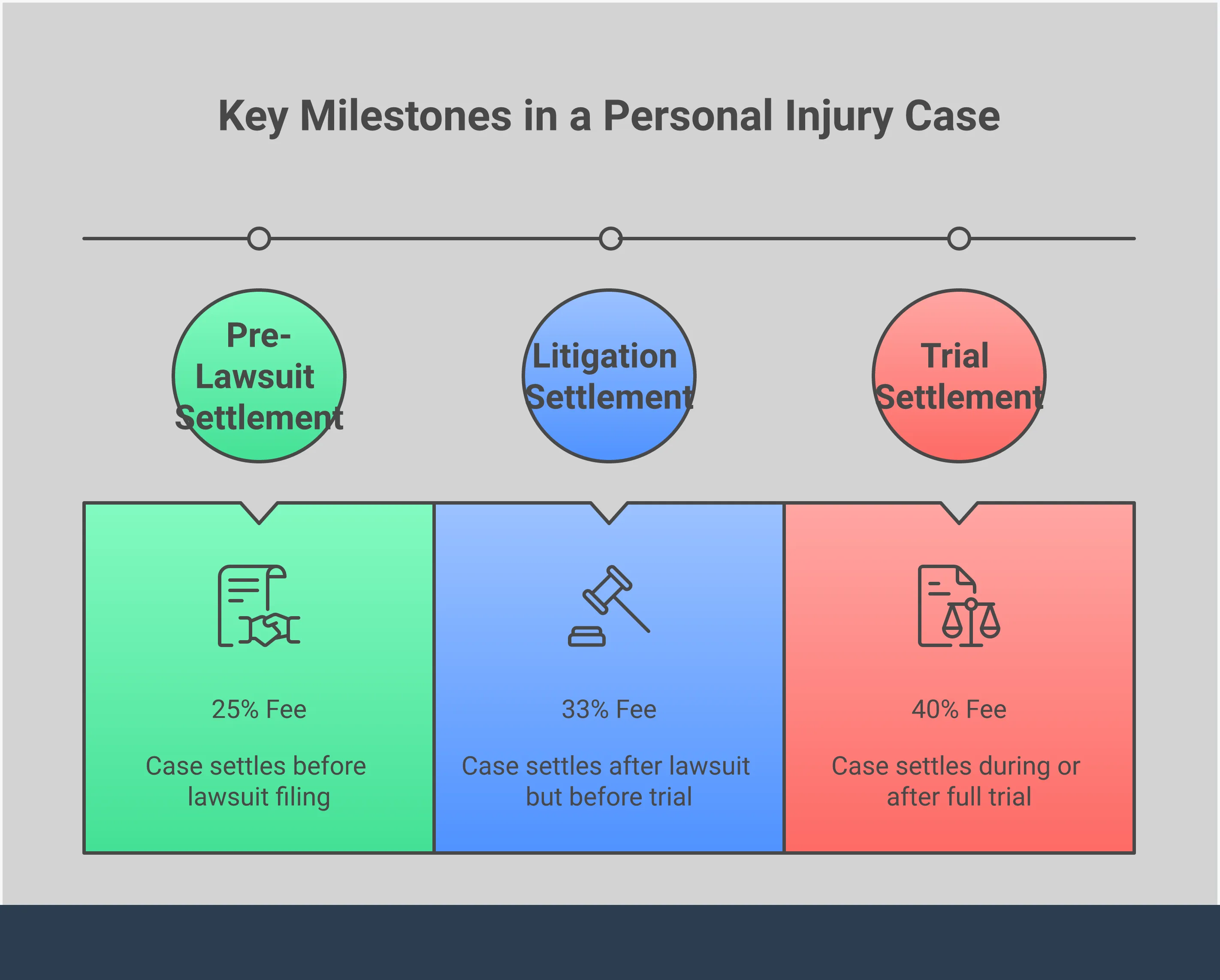
Most personal injury attorneys work for a percentage of the final settlement or award. This fee typically ranges from 25% to 40%. The exact percentage often depends on how much work your case requires. For instance, a case that settles quickly through negotiations before a lawsuit is even filed might be on the lower end, around 25%. If a lawsuit is filed and the case proceeds through discovery but settles before trial, the fee might be closer to 33%. Should your case go all the way to a court trial, the percentage could be around 40% to reflect the extensive time and resources involved.
What Other Costs Should You Expect?
Beyond the attorney’s contingency fee, there are other direct expenses related to building your case. These are often called “case costs” or “expenses,” and they are separate from the legal fees. Think of them as the operational costs of pursuing your claim. Common examples include court filing fees, the cost of obtaining your medical records, fees for expert witnesses who might need to testify, and costs for depositions. Your law firm usually covers these expenses upfront and is then reimbursed for them out of your final settlement, after the attorney’s fee is calculated. It’s a standard part of handling all types of personal injury cases.
Who Pays for Court Fees and Case Expenses?
So, what happens to these costs if you don’t win your case? This is a crucial question to ask. Under a “no-win, no-fee” agreement, you won’t owe your attorney any legal fees if you lose. However, you might still be responsible for repaying the case expenses the firm paid on your behalf. This detail varies from firm to firm and should be clearly outlined in your fee agreement. Always make sure you understand how these costs are handled before signing anything. A transparent attorney will be happy to walk you through every line item and answer all your questions when you first contact them.
How to Find an Affordable Personal Injury Attorney in Springfield
Finding the right attorney can feel like a huge task, especially when you’re already dealing with the stress of an injury. The good news is that “affordable” doesn’t have to mean “low quality.” For personal injury cases, most attorneys work on a contingency fee basis, which makes quality legal help accessible to everyone, regardless of their financial situation. This means you don’t pay any legal fees unless your attorney wins your case.
The key is to find a lawyer who is not only skilled and experienced but also someone you trust to handle your case with care. It’s about finding a partner who will fight for you. The process involves a bit of research and asking the right questions, but taking these steps will help you find a great advocate. Here’s a straightforward approach to finding the right affordable attorney in Springfield who fits your needs.
Start by Researching Local Attorneys’ Fees
Start by creating a list of personal injury attorneys in the Springfield area. As you look at their websites, pay close attention to how they talk about their fees. Most personal injury lawyers in Missouri use a “contingency fee” system. This is great for you because it means you don’t have to pay anything upfront. Your lawyer’s payment is contingent on them successfully recovering money for you, either through a settlement or a court verdict. This structure ensures your attorney is just as motivated as you are to get the best possible outcome for your personal injury case.
Your Best Resources: Bar Associations and Directories
To find qualified lawyers, turn to trusted resources. The Missouri Bar website is an excellent place to start, as it lists all licensed attorneys in the state. You can also use online legal directories, which often provide more detailed information. For example, you can find profiles of top-rated Springfield, Missouri personal injury attorneys on Super Lawyers, complete with their experience, areas of focus, and any accolades they’ve received. These directories can help you quickly create a shortlist of potential candidates to investigate further.
Verify State Licensing and Ethical Standards
Once you have a few names, your next step is a quick background check. It might sound formal, but it’s a simple and essential part of the process. Every lawyer practicing in Missouri must be licensed by the state. This isn’t just a piece of paper; it confirms they have the necessary legal education and have passed the bar exam. More importantly, a state license means the attorney is held to strict ethical standards, ensuring they are obligated to act in your best interest. You can easily verify an attorney’s license and check for any disciplinary history on The Missouri Bar’s website. It’s a quick search that provides significant peace of mind.
Look for Specialization and Professional Ratings
Not all lawyers handle the same types of cases. While some have a general practice, others focus on a specific area of law, like personal injury. Think of it this way: you wouldn’t go to a family doctor for a complex heart condition. The same logic applies here. An attorney who specializes in personal injury law deals with accident claims, insurance companies, and injury litigation every single day. This focused experience gives them a deep understanding of the strategies that work. Also, look for memberships in professional organizations like the American Association for Justice. While not mandatory, involvement shows a commitment to staying current in their field and upholding high professional standards.
Don’t Settle: Schedule Multiple Free Consultations
Most law firms offer a free initial meeting, and you should absolutely take advantage of this. Plan to meet with at least two or three different attorneys before making a decision. This consultation is your opportunity to share the details of your case, ask questions, and get a feel for the attorney’s personality and communication style. Use this time to discuss their experience with cases like yours and to get a clear explanation of their fee structure. It’s a no-pressure way to find someone you feel comfortable with. If you’re ready, you can schedule a free consultation to get started.
How to Spot Red Flags During Your Consultation
During your consultations, keep an eye out for any red flags. A trustworthy attorney will be transparent and straightforward. Be wary of anyone who guarantees a specific outcome or pressures you to sign a contract on the spot. A good lawyer will be honest about the strengths and weaknesses of your case and can help you understand the unique challenges that personal injury cases present. If an attorney seems evasive when discussing fees or dismisses your questions, they probably aren’t the right fit for you. Trust your gut—you want an advocate who is professional, respectful, and clear.
What to Expect During Your Free Consultation
Your free consultation is more than just a chance to tell your story; it’s a two-way interview where you decide if an attorney is the right partner for you. Walking in prepared can make all the difference, helping you feel confident and ensuring you get the answers you need. By knowing what to bring, what to ask, and how an attorney will look at your case, you can make the most of this important conversation.
Come Prepared: What to Bring to Your Consultation
To get the most out of your consultation, a little prep work goes a long way. Start by gathering any documents related to your case: police reports, medical records, photos of the scene or your injuries, and any correspondence with insurance companies. It’s also helpful to write down a simple timeline of events to help the attorney understand the situation quickly. This meeting is also your chance to see if the attorney is a good personal fit. You’ll be working closely together, so you want someone you trust and feel comfortable with.
Key Questions to Ask About Attorney Fees
Talking about money can be awkward, but it’s essential to understand the financial side of your case from the start. Since most personal injury attorneys work on a contingency fee basis, you won’t pay anything upfront. However, you should still ask specific questions to avoid surprises.
Here are a few key questions to ask:
- What is your contingency fee percentage?
- Are there other costs I might be responsible for, like court filing fees?
- Do you have experience with cases like mine?
A good attorney will be transparent and happy to answer any questions you have about costs.
What Will the Attorney Look for in Your Case?
During the consultation, the attorney will listen to your story to determine if you have a valid personal injury claim. They are looking for three key elements: that someone else was at fault (negligent), that their actions caused your injuries, and that you suffered damages like medical bills or lost wages. An experienced attorney can evaluate these factors and explain the strengths and potential challenges of your case. At The Law Office of Chad G. Mann, we review all the details to give you a clear, honest assessment of your legal options across all our practice areas.
Common Myths About Affordable Personal Injury Lawyers
When you’re dealing with the stress of an injury, the last thing you need is another worry, like how to pay for a lawyer. The term “affordable attorney” can sometimes make people skeptical, picturing someone who might cut corners or lack experience. But in personal injury law, “affordable” doesn’t mean lower quality. It usually refers to a payment structure designed to help you, the client, when you need it most. Let’s clear up some common misconceptions so you can find the right legal help with confidence.
Myth: An Affordable Lawyer is an Inexperienced Lawyer
It’s a common assumption that if a lawyer doesn’t charge high upfront fees, they must be new to the field. This couldn’t be further from the truth. Many of the most experienced and successful personal injury attorneys in Missouri work on a contingency fee basis. They do this because they believe everyone deserves access to justice, regardless of their financial situation. An attorney’s decision to offer a contingency fee plan is a reflection of their confidence in their ability to win cases, not a sign of inexperience. A seasoned lawyer like Chad G. Mann has the expertise to accurately assess a case’s potential and is willing to invest their own resources to pursue it.
The True Value of an Experienced Attorney
The true measure of a personal injury attorney isn’t their fee structure, but the results they deliver. A skilled lawyer’s primary goal is to secure fair compensation for your injuries, medical bills, lost wages, and suffering. They handle the complex negotiations with insurance companies and are prepared to take your case to court if necessary. Experienced firms have a track record of securing significant settlements for their clients, which demonstrates their ability to effectively represent your interests. When you hire a capable attorney, you’re not just paying for their time; you’re investing in their knowledge of the law and their dedication to your case’s success across all practice areas.
Why Contingency Fees Work in Your Favor
The contingency fee model is designed with your best interests at heart. It means you don’t pay any legal fees unless your attorney wins your case through a settlement or a court verdict. This arrangement removes the financial risk from your shoulders, as there are no upfront costs to get started. It also means your attorney is highly motivated to achieve the best possible outcome for you, because their payment is directly tied to your success. This structure levels the playing field, allowing you to access top-tier legal representation without worrying about out-of-pocket expenses. To learn more, you can always schedule a free consultation to discuss the specifics.
How to Maximize Your Settlement and Keep Costs Down
Securing an affordable personal injury attorney is a huge first step, but your involvement in the case also plays a big role in the final outcome. While a contingency fee protects you from upfront costs, being a proactive and organized client can help your attorney build the strongest case possible, leading to a better settlement and a more efficient process. Think of it as a partnership. Your lawyer brings the legal expertise, and you bring the crucial facts and cooperation needed to move the case forward.
Working effectively with your legal team, understanding the steps involved, and maintaining open communication about finances are key. When you and your attorney are on the same page, the entire process runs more smoothly. This alignment not only reduces stress but also ensures that your case is presented in the most compelling way. By taking an active role, you empower your attorney to fight for the maximum compensation you deserve while keeping any associated case expenses in check.
Partnering With Your Attorney for the Best Outcome
Building a strong, collaborative relationship with your lawyer is fundamental to your case’s success. Choosing a personal injury lawyer who offers direct, personal service can make a world of difference. When you have a good connection with your attorney, communication flows more easily, and you can work together as a team. Be completely open and honest from the start. Provide every detail you can remember about the incident and your injuries, even if it seems small or unimportant. Your attorney needs the full picture to build a solid strategy. Respond promptly to their requests for information or documents, and keep all your case-related paperwork organized for easy access.
What to Expect: The Personal Injury Case Timeline
If you’ve been in an accident, feeling unsure about what comes next is completely normal. A good attorney will give you a clear overview of the case timeline and help you understand what to expect. Personal injury cases move through several stages, from the initial investigation and gathering of evidence to negotiating with insurance companies and, if necessary, preparing for trial. Knowing these steps can help manage your expectations and reduce anxiety. Each case is unique, and your attorney can explain how the specifics of your situation fit into the broader legal process for different personal injury claims. This clarity helps you prepare for each phase and make informed decisions along the way.
How to Maintain Open Communication About Fees
Most personal injury lawyers work on a contingency fee basis, which means they only get paid if you receive a settlement or win your case. While this arrangement removes the burden of upfront legal fees, it’s still essential to have a clear conversation about all potential costs. Beyond the attorney’s percentage, cases can involve expenses like court filing fees, expert witness fees, or costs for obtaining medical records. Before you sign anything, make sure you understand how these expenses are handled. Ask for a written fee agreement that details the contingency fee percentage and explains whether case costs are deducted before or after the attorney’s fee is calculated. This transparency ensures there are no surprises later on.
Why Choose Chad G. Mann for Your Personal Injury Case?
Choosing the right attorney can feel overwhelming, especially when you’re already dealing with the stress of an injury or legal dispute. You need more than just a legal expert; you need a partner who understands your situation and is committed to your best interests. At The Law Office of Chad G. Mann, we build our practice on three core principles: accessible representation, proven experience, and a genuine client-first philosophy. This means you get dedicated support without the financial strain, from your first call to your final resolution.
Our Promise: Quality Representation You Can Afford
We believe that getting sound legal advice shouldn’t add to your financial worries. That’s why your first meeting with us is always free. This initial consultation is a chance for you to share your story, understand your options, and ask questions in a comfortable, no-pressure environment. It’s an opportunity for us to listen and give you a straightforward assessment of your case. Our goal is to provide clarity and support right from the start, ensuring you feel confident in your decisions. You can schedule a free consultation to discuss your case and see how we can help.
Local Expertise in Springfield Personal Injury Law
When you’re facing a legal challenge, experience is non-negotiable. Chad G. Mann has been practicing law in Missouri since 2004, dedicating two decades to fighting for clients in Springfield and the surrounding communities. Unlike large firms that advertise “combined” years of experience, you’ll work directly with a seasoned attorney who personally handles your case. This focused expertise in personal injury law and other legal matters means you get nuanced, knowledgeable guidance tailored to the specifics of your situation. You can learn more about Chad’s background and his commitment to justice.
You Pay Nothing Unless We Win
We understand that the last thing you need after an accident is another bill. That’s why we handle personal injury cases on a contingency fee basis. Simply put, you don’t pay any legal fees unless we win your case. This approach removes the financial risk from your shoulders and aligns our goals directly with yours—our success is tied to your success. This model allows you to pursue the justice you deserve without any upfront costs, so you can focus on what truly matters: your recovery. It’s a core part of our commitment to putting our clients first, every step of the way.
Related Articles
- Personal Injury Lawyer Costs in Missouri
- Your Guide to Accident Lawyers in Springfield, MO
- Choosing a Springfield Injury Attorney – A Legal Guide
- Choosing the Right Personal Injury Lawyer in Springfield, MO – The Law Office of Chad G. Mann, LLC
- Best Personal Injury Lawyer in Springfield, MO – Find Yours
Frequently Asked Questions
Do I have to pay anything at all if my case doesn’t win? This is the most important question to ask. If you don’t win, you won’t owe any legal fees for your attorney’s time and work. However, you might still be responsible for the direct case costs, such as court filing fees or the price of obtaining medical records. Every firm handles this differently, so be sure to get a clear answer on how these expenses are managed before you sign an agreement.
Why shouldn’t I just accept the insurance company’s first offer? Insurance companies are businesses, and their initial offers are often calculated to be the lowest amount they think you might accept. An experienced attorney understands the full value of your claim, which includes not just current medical bills but also future treatment, lost wages, and pain and suffering. They can build a strong case and negotiate for a settlement that truly reflects what you’re owed.
What’s the difference between ‘legal fees’ and ‘case costs’? Think of it this way: “legal fees” are what you pay your attorney for their expertise and work on your case. This is the percentage that comes out of your settlement. “Case costs” are the operational expenses required to build your case, like fees for expert witnesses, court reporters, and obtaining official documents. Your law firm typically pays these costs upfront and is then reimbursed from the final settlement.
Is the contingency fee percentage negotiable? While the percentage range for contingency fees is fairly standard in the legal field, the exact number can depend on the complexity and risk of your case. For example, a case that settles quickly may have a lower percentage than one that requires a full trial. This is a perfectly reasonable topic to discuss during your free consultation so you understand exactly how the fee is determined.
How long will my personal injury case take to resolve? There isn’t a one-size-fits-all answer, as the timeline depends entirely on the details of your case. A straightforward claim with clear evidence might settle in a matter of months. However, a more complex case that involves significant injuries or a dispute over who was at fault could take a year or longer, especially if it goes to trial. A good attorney will be able to give you a realistic estimate based on your specific situation and will keep you updated every step of the way.
Have you been injured? Take our free injury questionnaire to help us understand your case, or call (417) 842-8679 for a free consultation today.