


It’s so easy to blame yourself after a fall in a store. Maybe you were distracted or just feel like you should have been more careful. Many people wonder, “can you sue a store if you fall?” and assume the answer is no if they were even a little bit at fault. That’s simply not true in Missouri. The law recognizes that accidents are complex and responsibility can be shared. You might see a number like 1 800 injured and not know where to start. Before you dismiss your rights, here’s what you need to know.
Key Takeaways
- Focus on the Store’s Failure, Not Just the Fall: A successful claim requires proving the store knew or should have known about a dangerous condition and failed to address it, which directly caused your injuries.
- Gather Critical Evidence at the Scene: If you are able, take photos of the hazard, report the incident to a manager, and get contact information from any witnesses, as this evidence is time-sensitive and essential for your case.
- Shared Fault Reduces, But Doesn’t Eliminate, Your Compensation: Under Missouri law, you can still recover damages even if you were partially to blame for the accident; your final award is simply adjusted to reflect your percentage of fault.
Can You Sue a Store for a Slip and Fall in Missouri?
If you’ve been injured after falling in a store, you’re probably wondering what your rights are. The idea of taking on a large retailer can feel intimidating, but Missouri law provides a clear path for holding them accountable when their negligence causes you harm. Understanding the basics can help you feel more confident about your next steps. Let’s break down what a slip and fall case looks like and what a store is legally required to do to keep you safe.
What is Premises Liability in Missouri?
The short answer is yes, you can sue a store for a slip and fall. In Missouri, these cases fall under an area of law called “premises liability.” This legal concept holds property owners accountable for injuries that happen on their property due to unsafe conditions. However, simply falling in a store doesn’t automatically mean you have a winning case. To be successful, you must prove the store owner was negligent. This involves clearly showing four key things: the owner had a duty to keep you safe, they failed in that duty, this failure directly caused your fall and injuries, and you suffered real harm, like medical bills or lost wages.
How Stores Are Responsible for Your Safety
Every business that opens its doors to the public, from a small local shop to a large shopping mall, has a legal responsibility to keep its property reasonably safe for visitors. This isn’t just good customer service; it’s a legal duty of care. Store owners are expected to be proactive—regularly inspecting their floors for potential dangers, cleaning up spills promptly, and repairing any known issues like a broken handrail. They must take active steps to prevent accidents before they happen, ensuring that you can shop without facing unnecessary risks from hazards that they knew about or should have known about.
Watch Out for These Common Store Hazards
Most slip and fall accidents are entirely preventable and happen because of a hazard that should have been addressed. Think about the last time you were in a grocery store; you probably walked past several potential dangers without even realizing it. Common causes include wet floors from spills or recent mopping without a “Caution” sign, cluttered aisles that are difficult to walk through, or broken tiles creating an uneven surface. Other frequent culprits are poor lighting in stairwells or parking lots, torn carpeting that creates a tripping hazard, or merchandise that has fallen into the walkway. These aren’t just minor inconveniences; they are serious safety failures that can lead to significant injuries.
How Do You Prove the Store Was Negligent?
Just because you fell in a store doesn’t automatically mean the business is responsible. To have a successful slip and fall claim, you need to prove that the store’s carelessness—or negligence—is what led to your injuries. This isn’t always straightforward, but it boils down to showing that the store failed to keep its property reasonably safe for customers like you. Proving this involves building a case with clear, specific evidence that connects the store’s actions (or lack thereof) directly to the harm you suffered.
The 4 Things You Must Prove in a Negligence Claim
In Missouri, any personal injury claim based on negligence requires you to prove four specific things. Think of them as the four legs of a table—if one is missing, your case can’t stand.
- Duty of Care: First, you must show the store had a legal responsibility to keep you safe. Property owners have a duty to maintain a reasonably safe environment for their customers.
- Breach of Duty: Next, you have to prove the store failed in that duty. This could mean an employee created a hazard and didn’t fix it, or they knew about a danger and didn’t warn anyone.
- Causation: You must then connect the store’s failure directly to your fall. In other words, you have to show that their breach of duty was the actual cause of your accident and injuries.
- Damages: Finally, you need to demonstrate that you suffered actual harm, such as medical bills, lost income, or pain and suffering, because of the fall.
How to Show the Store Knew About the Hazard
A crucial part of your claim is showing the store knew, or should have known, about the dangerous condition that caused you to fall. This is often the most challenging part to prove. For example, if a customer drops a jar of salsa and you slip on it seconds later, it might be hard to argue the store had a reasonable amount of time to discover and clean it up. However, if that same spill was left on the floor for an hour and multiple employees walked past it, your case becomes much stronger. You need evidence that the hazard existed long enough for a diligent employee to have found and fixed it.
Real-World Examples of Store Negligence
A breach of duty can happen in many ways. It’s not just about spills; it can be any failure to maintain a safe environment. Some common examples include an employee mopping a floor without putting up a “wet floor” sign to warn customers, or a manager knowing about a leaky freezer but failing to fix it or block off the area. Another clear breach is when a dangerous condition, like a deep crack in the store’s entryway sidewalk, has been there for months. In these situations, the store had plenty of time to become aware of the problem and take action but failed to do so.
How to Prove the Fall Caused Your Injuries
Once you establish the store was negligent, you must clearly link that negligence to your injuries and financial losses. It’s not enough to say, “I fell because the floor was wet, and now my arm is broken.” You have to provide evidence that the fall directly caused the fracture, which then led to medical bills, time off work, and physical pain. This connection is essential for establishing the store’s liability. An experienced attorney can help you gather the necessary medical records and documentation to build a strong case and get the support you need.
Slipped and Fell in a Store? Take These Steps Immediately
A slip and fall can leave you feeling disoriented and unsure of what to do next. In the moments after an accident, your actions can significantly impact both your physical recovery and your ability to seek compensation later. By taking a few key steps, you can protect your health and preserve your rights. Think clearly and try to follow this simple guide.
Your First Priority: Get Medical Help
Your well-being is the top priority. See a doctor as soon as possible after the fall, even if you think your injuries are minor. Some serious issues, like soft tissue damage or concussions, don’t always show symptoms right away. Seeking immediate medical attention ensures you get the care you need. It also creates an official medical record that documents your injuries, which is essential evidence if you decide to file a personal injury claim. Make sure to attend all follow-up appointments and follow your doctor’s treatment plan.
Gather Evidence at the Scene
If you are physically able, gather as much evidence as you can right at the scene. Use your phone to take pictures and videos of the exact spot where you fell. Capture the hazard that caused your fall—whether it was a wet floor with no warning sign, a torn carpet, or a poorly lit staircase. Get photos from different angles to show the context of the area. If anyone saw what happened, ask for their name and phone number. Their account can be incredibly valuable. This initial evidence is powerful because conditions can change quickly after an accident.
File an Official Incident Report
Before you leave the store, make sure you report the fall to a manager or supervisor. Ask them to create an official incident report and request a copy for your records. This creates a formal record of when, where, and how the accident happened. When you speak with them, stick to the facts of what occurred. Avoid making statements like “I’m fine” or “It was my fault,” as these can be used against you later. Simply state what happened and that you were injured.
Avoid These Common Mistakes After an Accident
One of the biggest mistakes you can make is waiting too long to act. While Missouri law gives you time to file a lawsuit, evidence can disappear quickly. Security camera footage might be erased, witnesses may move or forget important details, and the hazardous condition will likely be cleaned up. It’s also important not to post about your accident on social media. Insurance companies often review social media profiles to find information that could weaken your claim. The best first step after getting medical care is to contact an attorney to understand your options.
What Evidence Do You Need for a Slip and Fall Claim?
Building a strong slip and fall claim is all about proving what happened and why the store is responsible. Think of it like putting together a puzzle—each piece of evidence helps create a clear picture for insurance companies or a jury. The more compelling evidence you have, the better your chances are of demonstrating that the store’s negligence led to your injuries. Gathering this proof is a critical step in any personal injury case.
It can feel overwhelming to think about collecting documents and photos when you’re focused on recovering, but starting early is key. Evidence can disappear quickly; spills get cleaned up, witnesses leave, and memories fade. Your attorney can handle the formal legal process of requesting documents from the store, but the evidence you gather at the scene and in the days following your accident is invaluable. Let’s walk through the most important types of evidence you’ll need.
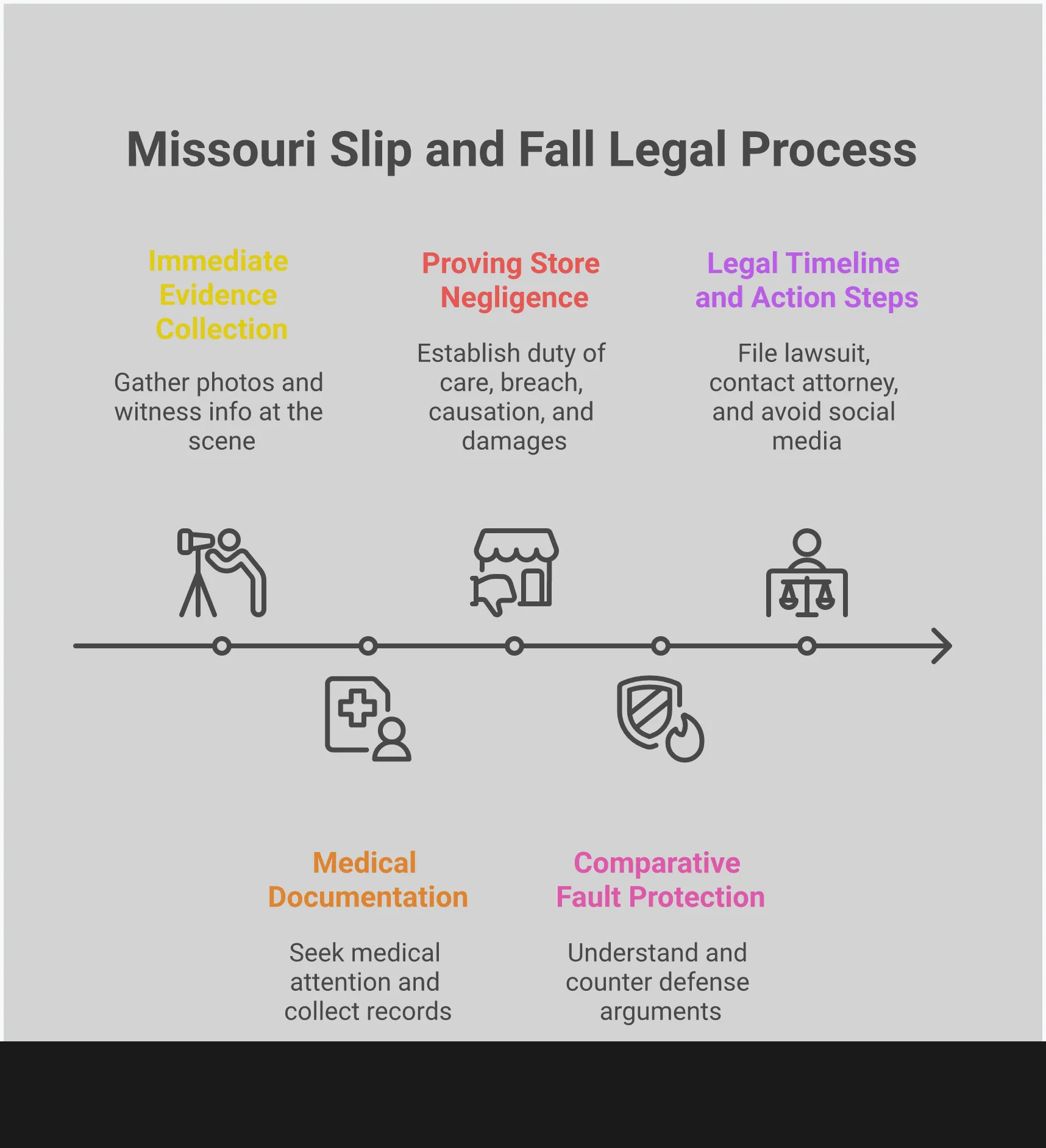
Capture the Scene with Photos and Videos
A picture is truly worth a thousand words in a slip and fall case. Photographic or video evidence captures the dangerous condition exactly as it was when you fell, before the store has a chance to clean it up or fix it. If you are physically able, use your smartphone to take as many pictures and videos as possible right after the accident.
Be sure to document the specific hazard that caused your fall—a puddle of water, a broken tile, a cluttered aisle—from multiple angles and distances. Take wide shots to show the location within the store and close-ups to show the details of the hazard. It’s also helpful to photograph the surrounding area, especially if there were no warning signs. This visual proof can be one of the most powerful tools for your claim.
Find Witnesses and Get Their Story
What other people saw can significantly strengthen your case. Independent witnesses who can confirm your version of events add a layer of credibility that is hard to dispute. If anyone saw you fall, including other customers or even store employees, ask for their name and contact information. A simple phone number or email address is all you need.
You don’t need a formal, written statement on the spot. Just securing their contact details allows your attorney to follow up with them later. Their testimony can confirm key details, such as how long the hazard was present or whether store employees were aware of it. Getting this information is a crucial part of collecting evidence immediately after an incident.
Keep Track of All Medical Records and Bills
Your medical records are the official proof of your injuries. They create a direct link between the slip and fall accident and the physical harm you suffered. It is essential to keep a detailed file of every document related to your medical treatment. This includes everything from the initial emergency room visit and ambulance bills to follow-up appointments with specialists, physical therapy sessions, and prescription receipts.
These records do more than just prove you were hurt; they document the severity of your injuries, the cost of your treatment, and your doctor’s prognosis for recovery. This information is vital for calculating the compensation you deserve for your medical expenses and your pain and suffering.
Getting the Store’s Internal Reports
When you report your fall to the store manager, they will likely create an official incident report. This document is a key piece of evidence because it confirms the date, time, and location of the accident. While the store may not give you a copy right away, the fact that a report was created is important. Your attorney can formally request a copy during the legal process.
Additionally, your lawyer can request other internal documents, such as maintenance logs, cleaning schedules, and security camera footage. These records can reveal whether the store was following its own safety protocols or if there was a pattern of negligence. If you need help obtaining these crucial documents, you can contact an attorney to manage the process for you.
How Long Do You Have to File a Lawsuit in Missouri?
After a slip and fall, your main focus should be on your recovery. However, it’s also crucial to understand the legal deadlines for taking action. Missouri has a strict time limit, called the statute of limitations, for filing a lawsuit. If you miss this window, you could lose your right to seek compensation entirely. This rule helps ensure claims are handled while evidence is still available. Here’s what you need to know about the timeline.
Don’t Miss Missouri’s 5-Year Filing Deadline
In Missouri, you generally have five years from the date of your slip and fall accident to file a lawsuit. This five-year rule applies to most personal injury claims, giving you a set timeframe to prepare your case. While five years might sound like a long time, building a strong case involves gathering evidence, consulting with experts, and negotiating with insurance companies, all of which takes time. It’s always best to start the process as soon as you’re able so you don’t risk running out of time to protect your legal rights.
When Does the Clock Officially Start?
The five-year countdown begins on the date of the accident. It doesn’t start when you first speak to a lawyer or when you finish medical treatment—it starts the moment the incident occurs. For example, if you slipped in a store on June 1, 2024, the clock would start ticking that day. This makes it essential to document the date and time of your accident accurately. If you’re unsure about your specific deadline, it’s a good idea to contact an attorney who can review the details of your case and confirm the timeline.
Are There Exceptions to This Deadline?
While the five-year rule is standard, some situations can change the deadline. These exceptions are not common, but they are important to know. For instance, if the injured person is a minor (under 18), the statute of limitations may be paused until they reach the age of majority. Another exception could apply if an injury wasn’t reasonably discoverable right away. These scenarios can be complex, and figuring out if an exception applies requires a careful legal analysis from an experienced personal injury lawyer. Understanding these nuances is key to filing your claim correctly and on time.
What if the Accident Was Partly Your Fault?
It’s a common worry after a fall: “What if they say it was my fault?” Maybe you were looking at your phone, or perhaps you didn’t see a warning sign. It’s natural to second-guess your actions. But in Missouri, sharing some of the blame doesn’t automatically prevent you from receiving compensation for your injuries. The law recognizes that accidents are often complex, and responsibility isn’t always a one-way street.
Instead of an all-or-nothing approach, Missouri law looks at the situation from all angles to determine how much each person was at fault. This means you can still hold a store accountable for its negligence, even if your own actions contributed to the incident. Understanding how this works is the first step toward protecting your rights and getting the support you need to recover. An experienced attorney can help you understand how your actions might affect your personal injury claim.
How Missouri’s “Comparative Fault” Rule Works
Missouri operates under a legal principle called “pure comparative fault.” It sounds complicated, but the idea is actually quite simple: you can still recover money for your injuries even if you were partly to blame for the accident. Your final compensation is just reduced by your percentage of fault. For example, if a jury decides you were 10% responsible for your fall, your total award would be reduced by 10%.
This system is more favorable to injured people than the laws in some other states. In those places, if you’re found to be even slightly at fault, you might not be able to recover anything at all. In Missouri, however, you have the right to seek compensation as long as the property owner shares at least some of the blame for your premises liability accident.
How Sharing Fault Affects Your Compensation
The concept of comparative fault directly impacts the amount of money you can receive. Let’s use an example. Imagine your total damages—including medical bills, lost wages, and pain and suffering—are calculated to be $100,000. After reviewing the evidence, the court determines that you were 20% at fault for the accident because you were looking at your shopping list and not where you were going.
Under Missouri’s rule, your $100,000 award would be reduced by your 20% share of the fault. This means you would receive $80,000. A skilled attorney’s job is to present evidence that minimizes your percentage of fault while maximizing the store’s, ensuring you receive the fairest compensation possible.
Common Myths About Being Partially at Fault
Store owners and their insurance companies will often try to shift as much blame as possible onto you. They might argue that the hazard was “open and obvious” and you should have seen it, or that you were careless or distracted. This is a standard defense tactic designed to reduce the amount they have to pay. Don’t let this discourage you.
Winning a slip and fall case often comes down to proving the store was negligent, which can be challenging without the right evidence and legal strategy. Just because the store claims you were at fault doesn’t make it true. An experienced attorney can counter these arguments by focusing on the store’s legal duty to keep its premises safe. If you have questions about your specific situation, it’s always best to contact a lawyer for guidance.
How Will the Store Defend Itself?
When you file a claim against a store, you can expect them to put up a fight. Large retailers and grocery chains have insurance companies and legal teams whose job is to minimize the amount of money they have to pay out. They aren’t trying to be difficult just for the sake of it; it’s simply how they protect their bottom line. Understanding their common defense strategies is the first step in building a strong case to counter them.
These defenses are designed to shift the blame away from the store and onto someone—or something—else. They will scrutinize every detail of the accident to find a reason why they shouldn’t be held responsible for your injuries. They might question what you were doing, what you were wearing, and whether the hazard was truly their fault. An experienced attorney has seen these tactics before and knows how to respond to them effectively. Let’s walk through the three most common arguments you’re likely to face.
Defense #1: The Hazard Was “Open and Obvious”
One of the most frequent defenses is the “open and obvious danger” argument. The store will essentially claim that the hazard—whether it was a puddle of water, a fallen object, or an uneven floor tile—was so apparent that any reasonable person would have seen it and avoided it. Their logic is that if the danger was easy to spot, you should have taken steps to protect yourself, and therefore, the store isn’t liable for your fall. While this can be a valid defense in some situations, it isn’t a catch-all excuse for negligence in premises liability cases. A skilled attorney can challenge this by showing the hazard wasn’t as obvious as the store claims.
Defense #2: They Weren’t Aware of the Danger
Another common tactic is for the store to claim ignorance. They may argue that they had no knowledge of the hazardous condition before you fell and, as a result, had no opportunity to clean it up or place a warning sign. For a negligence claim to succeed, you generally need to show the store either created the hazard, knew about it, or should have known about it through reasonable care. The store will try to prove they had no prior knowledge, suggesting a spill happened just moments before your accident. However, evidence like maintenance logs or witness statements can often show that the store had plenty of time to address the danger.
Defense #3: They Claim You Were Careless
Finally, the store will almost certainly try to argue that you were at least partially to blame for the accident. This is a strategy based on Missouri’s comparative fault rule. They might claim you were distracted by your phone, not paying attention to where you were going, or wearing inappropriate footwear. Their goal is to assign a percentage of fault to you, which would reduce the amount of compensation you can receive. For example, if a court finds you were 20% at fault for the fall, your total compensation award would be reduced by 20%. An attorney can help push back against these accusations and protect the full value of your claim.
What Compensation Can You Receive for a Slip and Fall?
If you’ve been injured in a slip and fall accident, you’re likely facing unexpected medical bills and time off work. The financial and personal toll can be overwhelming. When you file a claim against a store, you are seeking compensation—legally known as “damages”—to cover these losses. The goal is to help you get back to the position you were in before the accident happened.
Damages are typically broken down into two main categories. The first covers the concrete, calculable financial losses you’ve incurred because of your injury. The second addresses the more personal, non-financial impact the injury has had on your quality of life. Understanding what you may be entitled to is a key step in the process. A successful claim can provide the financial resources you need to heal and move forward without the added stress of mounting expenses.
Getting Paid Back for Medical Bills and Lost Work
Economic damages are the most straightforward part of a personal injury claim because they cover your direct financial losses. Think of these as any expense that comes with a receipt or a price tag. This includes all your medical bills, from the initial emergency room visit and ambulance ride to any future treatments you may need, like surgery, physical therapy, or prescription medications. It’s not just about the bills you have today, but also the estimated cost of care you’ll require down the road.
Beyond medical costs, economic damages also cover lost wages. If your injuries prevent you from working, you can be compensated for the income you’ve lost. This applies whether you missed a few weeks of work or if your injuries have permanently affected your ability to earn a living. Keeping detailed records of all these expenses is crucial for building a strong personal injury case.
Compensation for Your Pain and Suffering
Not all losses can be measured by a bill or a pay stub. Non-economic damages are meant to compensate you for the physical pain and emotional distress you’ve experienced as a result of the accident. This is often referred to as “pain and suffering.” While it’s harder to put a number on these damages, they are just as real and significant as your financial losses.
This compensation acknowledges the physical discomfort, chronic pain, anxiety, and loss of enjoyment of life that can follow a serious injury. For example, you may no longer be able to participate in hobbies you once loved or enjoy daily activities without pain. The amount awarded for these damages varies widely because it depends entirely on the severity of your injury and its specific impact on your day-to-day life.
What Influences the Value of Your Claim?
The value of your slip and fall claim isn’t arbitrary; several key factors determine the final amount. The most important factor is your ability to prove that the store owner was negligent. To do this, you and your attorney must show that the owner had a responsibility to keep the premises safe, they failed to do so, and their failure directly caused your fall and subsequent injuries. You also have to demonstrate that you suffered actual harm or losses.
The main challenge is often linking the property owner’s lack of care directly to your accident. Did they know about the wet floor and do nothing? Did they fail to fix a broken step? The strength of your evidence and the severity of your injuries will heavily influence the final compensation. Because these cases can be complex, it’s wise to discuss the details with an attorney who can help you assess the true value of your claim.
What to Expect When You File a Lawsuit
The idea of filing a lawsuit can feel overwhelming, but it’s a structured process designed to find a fair resolution. It’s not always the high-drama courtroom battle you see on TV. Most of the work happens behind the scenes, through a series of predictable steps. Having an experienced attorney guide you through each stage makes the process much more manageable. From the initial filing to the final outcome, your legal team will handle the complexities, allowing you to focus on your recovery. The goal is to build a strong case that clearly shows what happened and why you deserve compensation for your injuries.
The First Step: Filing the Complaint
The first official step is filing a petition with the court. This document formally begins your personal injury lawsuit and explains why you are suing the store. It details the circumstances of your fall, how the store’s negligence caused your injuries, and the damages you’ve incurred, such as medical bills and lost income. In Missouri, property owners have a legal duty to keep their premises reasonably safe for visitors. If they fail to do so and you get hurt, you have the right to seek compensation. It’s important to act in a timely manner, as you generally have five years from the date of the incident to file your claim.
Gathering the Facts: The Discovery Phase
Once the lawsuit is filed, we move into the discovery phase. Think of this as the official fact-finding mission for your case. Both sides exchange information and evidence to understand the strengths and weaknesses of their arguments. This is where we gather all the proof needed to show the store was negligent. We’ll collect photos and videos of the scene, your medical records, witness statements, and any incident reports. This process can involve written questions, requests for documents, and depositions, which are formal interviews conducted under oath. The goal is to build a solid foundation of evidence that proves the store is responsible for your injuries.
Will Your Case Settle or Go to Trial?
Believe it or not, the vast majority of slip and fall cases are resolved before they ever reach a courtroom. With strong evidence on our side, we can often negotiate a fair settlement with the store’s insurance company. We will present our case and demand compensation that covers your losses. However, be prepared for the insurance company to push back. They will likely try to argue you were at fault to reduce what they have to pay. If they refuse to offer a fair settlement, we will be fully prepared to take your case to trial. If you have questions about this process, please contact our office to discuss your specific situation.
Finding the Right Legal Help for Your Injury Claim
After an injury, choosing a lawyer is one of the most important decisions you’ll make. The right legal partner can make all the difference in your case, but with so many ads and options out there, it’s hard to know where to start. You’ll see commercials for large, nationwide services and memorable phone numbers that promise quick help. While these can be a starting point, it’s important to understand how they work so you can make an informed choice. Finding an attorney is about more than just convenience; it’s about finding a trusted advocate who will prioritize your specific needs and fight for your best interests.
Nationwide Lawyer and Doctor Referral Services
You’ve probably seen the commercials for services that promise to connect you with a personal injury lawyer in your area. These nationwide networks, like 1-800-Injured, serve as a bridge between people who need help and the professionals who can provide it. They offer a simple, immediate way to get in touch with someone after an accident, which can feel like a relief when you’re dealing with stress and uncertainty. Their goal is to make the process of finding a lawyer less intimidating by providing a single point of contact. For many, it’s the first step they take on their legal journey.
How Services Like 1-800-Injured Connect You with Help
These services function as large-scale directories. When you call their number or fill out a form on their website, they take your information and match you with a lawyer or medical provider in their network who serves your geographic area. The primary benefit is speed and simplicity. Instead of having to research multiple law firms on your own, you make one call and get connected to an attorney who is ready to take on new cases. This can be especially helpful in the chaotic hours and days immediately following an accident when you may not have the energy or clarity to begin an extensive search for legal representation.
A Word of Caution: Paid Placements vs. True Referrals
It’s important to understand that most of these large referral networks are essentially advertising platforms. The lawyers listed in their directories are typically paying for that placement. As the 1-800-INJURYS website itself notes, these are paid advertisements, not official recommendations from a bar association or a referral based on merit. This means the lawyer you’re connected with isn’t necessarily the best fit for your case—they are simply a member of the network who has paid for access to potential clients. A direct approach, like researching a local personal injury attorney, ensures you are choosing someone based on their experience and reputation, not their marketing budget.
The Power of “Vanity” Phone Numbers in Personal Injury Law
Along with referral networks, you’ll often encounter “vanity” phone numbers—those easy-to-remember numbers like 1-800-CALL-NOW or a local equivalent. These numbers are powerful marketing tools designed to stick in your memory. After a jarring event like a car crash, a simple, memorable number seen on a billboard or heard on the radio is much easier to recall than a standard seven-digit number. Law firms use these numbers to stand out in a competitive market and make it as easy as possible for injured people to reach out for help right when they need it most.
Why Memorable Numbers Are Effective Marketing Tools
The effectiveness of a vanity number lies in its simplicity and recall value. In a moment of crisis, the human brain is drawn to simple, clear solutions. A number like 1-800-INJURED is easy to remember and immediately communicates what service is being offered. This makes it a highly effective tool for law firms looking to attract a high volume of calls. By licensing a well-known number, a firm can instantly gain brand recognition and position itself as an accessible option for anyone who has recently been in an accident and is looking for immediate legal guidance without the hassle of a complicated search.
How These Services Benefit Both Clients and Law Firms
This model is designed to be a win-win. For the client, it provides a fast and straightforward way to connect with a lawyer. For the law firm, it’s a reliable source of new cases. The national company behind the vanity number does the heavy lifting of advertising and brand building, generating calls and website visits. Local law firms then license the number for their specific territory, and in return, they receive the calls from potential clients in that area. While this system is efficient, it’s still a marketing funnel. A more personal approach is to contact a firm directly to ensure you’re speaking with an attorney who is personally invested in the community they serve.
When Should You Contact a Personal Injury Attorney?
After a slip and fall, you might wonder if you really need a lawyer. While it’s a personal decision, these cases are often more complex than they seem. The store and its insurance company have legal teams ready to protect their interests, and it can be overwhelming to face them alone, especially while you’re recovering from an injury. Reaching out to an attorney as soon as possible is often the best way to protect your rights and ensure you have a fair chance at receiving the compensation you deserve.
The Difference an Experienced Attorney Makes
Slip and fall cases can be complicated. To get compensation, you have to prove the store was negligent, which isn’t always straightforward. An attorney can help you build a strong case and handle the insurance companies, who often try to place blame on you to reduce their payout. Having a legal professional on your side means you have an advocate who understands Missouri’s laws and will fight for the full amount you’re owed for your medical bills, lost income, and pain. This allows you to focus on what’s most important: your health and recovery.
How to Choose the Right Attorney for Your Case
When looking for legal help, you’ll want to find someone with specific experience in slip and fall claims. An experienced lawyer will know what evidence to gather, how to interview witnesses, and how to counter the arguments the store’s defense team will use. Look for an attorney who communicates clearly and makes you feel heard. You should feel comfortable asking questions and confident in their ability to represent you. Reading about an attorney’s background and approach can give you a good sense of whether they are the right fit for you and your case.
How The Law Office of Chad G. Mann Can Support Your Case
Acting quickly after a slip and fall is crucial for your case, and we can help from the very beginning. Our first step is to preserve all the important evidence. We work to gather photos and videos of the scene, collect statements from anyone who saw what happened, and compile your medical records to show the extent of your injuries. At The Law Office of Chad G. Mann, we take a client-centered approach to personal injury law, meaning we handle the legal details so you don’t have to. If you’re ready to discuss your case, get in touch for a consultation.
Related Articles
- WHAT IS A SLIP AND FALL LAWSUIT?
- Missouri Premises Liability: Know Your Rights
- Premises Liability Lawyer – Injury Claims in Missouri
- Your Guide to Premises Liability Lawyers in Missouri
- Missouri Premises Liability Law: The Complete Guide
If you need experienced legal representation, our slip and fall injury attorney can help protect your rights and fight for the compensation you deserve. Call (417) 842-8679 for a free consultation.
Frequently Asked Questions
What if the store manager offers to pay my medical bills right after my fall? You should be cautious before accepting any offer directly from the store or its insurance company. While it might seem like a helpful gesture, it’s often a tactic to get you to settle for a small amount and sign away your right to any future compensation. An initial offer will likely not account for future medical needs, lost wages, or the pain and suffering you’ve experienced. It’s always best to speak with an attorney before agreeing to or signing anything.
Do I still have a case if there wasn’t a “wet floor” sign? Yes, you very well could. The absence of a warning sign is often a key piece of evidence that shows the store was negligent. The main point you need to prove is that the store knew, or should have reasonably known, about the dangerous condition and failed to take appropriate steps to protect its customers. A missing sign is a clear example of that failure, but it’s just one part of building a complete and convincing case.
What if my fall happened in the store’s parking lot, not inside the building? A property owner’s legal responsibility to keep you safe extends to all areas they control, which absolutely includes their parking lots, sidewalks, and entryways. Cases involving falls in parking lots are very common and can be caused by hazards like potholes, inadequate lighting, cracked pavement, or a failure to clear ice and snow. The same principles of premises liability apply whether you were injured inside the store or on your way to the front door.
How much does it cost to hire a lawyer for a slip and fall case? Most personal injury attorneys, including our firm, handle these cases on a contingency fee basis. This means you don’t pay any attorney’s fees upfront. Instead, the lawyer’s fee is a percentage of the final settlement or court award we recover for you. If you don’t receive any compensation, you don’t owe any attorney’s fees. This approach allows you to get experienced legal help without any financial risk.
How long will my slip and fall case take to resolve? There isn’t a single answer to this question, as the timeline depends entirely on the specifics of your case. A straightforward case with clear evidence might be settled in a matter of months. However, if the injuries are severe or the insurance company disputes their responsibility, it could take longer to negotiate a fair settlement or, if necessary, prepare for trial. The most important thing is not to rush the process and to ensure you receive the full compensation you deserve.
Have you been injured? Take our free injury questionnaire to help us understand your case, or call (417) 842-8679 for a free consultation today.