


Getting hurt on someone else’s property is more than just painful—it’s frustrating. A property owner has a duty to keep you safe, whether that means cleaning a spill or fixing a broken stair. When they don’t, and you get hurt, you shouldn’t be the one paying for their mistake. This is about holding them accountable for their negligence. A dedicated slip and fall lawyer steps in to handle the fight for you. A good slip and fall attorney builds a case that proves what happened and secures the fair compensation you need to recover.
Key Takeaways
- Your Case Hinges on Proving the Owner’s Negligence: A successful claim requires showing the property owner knew about a dangerous condition and failed to fix it or warn you. An attorney’s primary role is to gather the specific evidence needed to prove this failure of responsibility.
- Time is Critical for Building a Strong Claim: Evidence like security footage can be erased and witness memories fade. Acting quickly to document the scene, report the incident, and contact a lawyer ensures you preserve crucial proof and meet Missouri’s strict legal deadlines.
- You Can Afford an Experienced Lawyer: Don’t let financial worries stop you from seeking justice. Most slip and fall attorneys work on a contingency fee basis, which means you pay no attorney fees unless they win your case, removing the upfront cost and risk.
The Reality of Slip and Fall Accidents
It’s easy to dismiss a slip and fall as a clumsy moment or a minor accident. We’ve all tripped over our own feet before. But when a fall is caused by someone else’s negligence—like an unmarked wet floor or a poorly maintained staircase—the consequences can be far from minor. These incidents often result in serious injuries that disrupt your life, your work, and your well-being. Understanding just how common and severe these accidents are is the first step toward recognizing that you are not alone and that your situation deserves to be taken seriously. It’s not just about a moment of embarrassment; it’s about a preventable event that can have lasting effects.
How Common Are These Incidents?
You might be surprised to learn just how frequently slip and fall accidents occur. They are a leading cause of unintentional injuries across the country, affecting people of all ages in public and private spaces. From grocery stores and restaurants to parking lots and apartment complexes, hazardous conditions can exist anywhere. The sheer volume of these incidents highlights a widespread issue of property owner negligence. When property owners fail to maintain safe environments, they create a risk that leads to countless preventable injuries each year, turning a simple outing into a life-changing event for many unsuspecting individuals.
A Look at National Statistics
The numbers paint a clear picture of the problem. According to one report, “Almost one million people go to the emergency room each year in the U.S. because of these injuries.” That’s a staggering figure that underscores the seriousness of these events. Many of these accidents could have been prevented if property owners had taken reasonable steps to address hazards. This isn’t just bad luck; it’s often a direct result of a failure to uphold a duty of care. When you’re facing medical bills and time off work, knowing that your injury was preventable can be frustrating, but it’s also the foundation of a premises liability claim.
Common Injuries Resulting From a Fall
The impact from a sudden fall can send a shockwave through your body, causing damage that isn’t always immediately apparent. While some people might walk away with only a few bruises, many others suffer from severe and debilitating conditions. These injuries can require extensive medical treatment, long-term rehabilitation, and can permanently alter your ability to work and enjoy life. It’s crucial to seek a medical evaluation after any fall, even if you feel fine at first, as some of the most serious injuries, like internal bleeding or concussions, may not show symptoms right away. Recognizing the potential severity helps you take the right steps to protect your health and your legal rights.
Head and Brain Injuries
Hitting your head during a fall can lead to some of the most devastating injuries. Even a seemingly minor bump can cause a concussion or a more severe traumatic brain injury (TBI). As one legal source notes, “slip and fall accidents can cause serious injuries like…traumatic brain injuries, concussions, and open head wounds.” The effects of a TBI can range from persistent headaches and memory problems to significant cognitive and motor function impairments. These injuries are often invisible, but they can profoundly impact your personality, relationships, and ability to perform daily tasks. Getting a proper diagnosis and treatment plan is essential for recovery.
Broken Bones and Fractures
While it might sound like an extreme outcome, broken bones are a frequent result of slip and fall accidents. In fact, research shows that “about 5% of people who slip and fall break a bone.” Common fractures include the hip, wrist, ankle, and collarbone. A broken hip, in particular, can be a life-altering injury, especially for older adults, often requiring surgery and leading to a significant loss of mobility and independence. The recovery process for any fracture can be long and painful, involving casts, physical therapy, and potentially keeping you out of work for an extended period, creating a significant financial strain on you and your family.
Neck, Back, and Spinal Cord Injuries
The awkward twisting and sudden impact of a fall can place immense stress on your neck and back. This can lead to injuries like whiplash, herniated discs, or even severe damage to the spinal cord. These types of injuries are particularly concerning because they can have “long-lasting effects on mobility and quality of life.” A spinal cord injury can result in partial or complete paralysis, while chronic back pain from a herniated disc can make it difficult to sit, stand, or walk for long periods. The ongoing medical care, including pain management and physical therapy, can be incredibly expensive, making it vital to seek legal guidance to ensure you can cover these costs.
What Can a Missouri Slip and Fall Lawyer Do for You?
When you’re injured after a fall on someone else’s property, it’s easy to feel overwhelmed and unsure of what to do next. This is where a Missouri slip and fall lawyer comes in. Their main job is to help you get compensation for your injuries by proving that the property owner was negligent. Think of them as your advocate, handling the legal complexities so you can focus on your recovery.
To build a successful case, your lawyer needs to show three things: that a dangerous condition existed on the property, that the owner knew (or should have known) about it, and that they failed to fix the problem or warn you about it. A skilled attorney knows exactly what evidence is needed to connect these dots and build a strong claim on your behalf. They handle everything from investigating the accident to negotiating with insurance companies, guiding you through every step of the legal process.
Building Your Case and Fighting for You
A slip and fall attorney does more than just file paperwork. They start by giving you a clear, honest assessment of your case, helping you understand your rights under Missouri law. They will investigate the incident thoroughly, gathering evidence like photos, witness statements, and incident reports to build your case. Your lawyer will also identify all the responsible parties and calculate the full extent of your damages, including medical bills, lost income, and pain and suffering. They are your legal guide, providing the support and representation you need to pursue the compensation you deserve.
More Than Just Slips: Types of Premises Liability Cases
You might be surprised by how many different situations fall under the umbrella of premises liability. These cases aren’t just about slipping on a wet floor at the grocery store, though that’s a common one. An experienced lawyer handles a wide range of incidents caused by unsafe property conditions.
Some frequent examples include:
- Falls on icy or snowy sidewalks and parking lots that weren’t properly cleared.
- Tripping over loose carpeting, uneven flooring, or debris left in a walkway.
- Accidents caused by poor lighting in stairwells or hallways.
- Falls resulting from broken steps or missing handrails.
If your injury happened in a scenario like this, you may have a valid claim. A lawyer specializing in personal injury law can help you figure out the best path forward.
Finding the Right Missouri Slip and Fall Lawyer
Finding the right lawyer can feel overwhelming, especially when you’re injured. But you don’t have to make this decision in the dark. A great slip and fall lawyer is a dedicated advocate who understands your situation and Missouri law. By focusing on a few key qualities—like their area of focus, past results, and communication style—you can find a legal partner who will fight for you every step of the way.
Why a Personal Injury Specialist Matters
Just as you’d see a medical specialist for a specific injury, you need a lawyer who specializes in personal injury law. An attorney focused on this area is deeply familiar with insurance company tactics and the nuances of proving negligence in slip and fall incidents. They spend their days handling cases just like yours, which gives them the focused experience needed to build the strongest possible claim. This specialization means they are prepared for the challenges unique to your case.
What’s Their Track Record of Success?
Experience matters, but results are what count. An attorney’s track record is a vital indicator of their capability, so look for a lawyer with a proven history of successful slip and fall claims. Don’t be afraid to ask about their experience during your initial consultation. While past results don’t guarantee a future outcome, a history of success shows the attorney knows how to value a claim and negotiate effectively. You can often learn more about an attorney’s experience by reviewing their website and learning about their background.
Do They Understand Missouri’s Specific Laws?
Slip and fall cases fall under “premises liability,” and these laws are state-specific. To win a case in Missouri, you must prove the property owner breached their duty of care. That’s why it’s essential to choose a lawyer who is knowledgeable about Missouri’s premises liability laws. A local attorney understands state statutes, recent court rulings, and local court tendencies. This insider knowledge is a significant advantage when building your case and proving the property owner was negligent.
Does Their Communication Style Match Yours?
A legal case is a partnership, and communication is key. You’ll be working with your lawyer for months, so it’s important to find someone you feel comfortable with. During your first meeting, notice how they listen and answer your questions. A good lawyer provides timely updates and sets realistic expectations, so you feel supported and informed, not left in the dark. If you’re ready to talk with a lawyer who prioritizes clear communication, you can contact our office to schedule a free consultation.
What Happens After You Hire a Slip and Fall Attorney?
Deciding to hire a lawyer can feel like a big step, but it doesn’t have to be intimidating. Knowing what the process looks like can help you feel more confident and in control. From your first conversation to building your case, a good attorney will guide you through each phase, making sure you understand what’s happening and why. The goal is to build a partnership based on trust and clear communication, so you can focus on your recovery while your lawyer handles the legal details.
The First Step: Your Initial Consultation
Think of your initial consultation as a two-way interview. While the attorney is learning about your slip and fall incident, you should be getting a feel for their approach and whether they’re the right fit for you. A good lawyer will listen carefully to your story, ask thoughtful questions, and explain the legal process in a way that makes sense. This first meeting is your chance to get to know the attorney and see if you feel comfortable with them. Don’t be afraid to ask about their experience with cases like yours. You should leave the conversation with a clear understanding of your options and a sense of confidence in their ability to represent you.
What Paperwork and Evidence Do You Need?
To build a strong case, your lawyer will need evidence. You can help get the ball rolling by gathering any relevant documents you have. This includes things like photos or videos of the accident scene, the contact information of any witnesses, and all of your medical records related to the injury. Every piece of documentation helps paint a clearer picture of what happened and strengthens your claim. Proving that a property owner was negligent is a key part of any premises liability case, and having solid evidence is the best way to do that. Your attorney will guide you on any additional information they might need, but starting with these items gives you a great head start.
Establishing a Timeline and Communication Plan
Clear and consistent communication is the foundation of a good attorney-client relationship. From the beginning, your lawyer should set realistic expectations for the timeline of your case and keep you informed about any progress. While every case is different, you should expect timely responses to your questions and regular updates on important developments. A transparent process helps you feel more involved and less anxious about the outcome. Don’t hesitate to ask how often you can expect to hear from them and what the best way to get in touch is. A lawyer who values open communication will make sure you never feel left in the dark.
How Much Does a Missouri Slip and Fall Lawyer Cost?
After an unexpected injury, the last thing you want to worry about is another bill. The thought of legal fees can be intimidating, but most personal injury lawyers in Missouri structure their fees to make getting help accessible. You shouldn’t have to choose between paying your medical bills and seeking justice.
Instead of charging hourly rates or asking for a large upfront retainer, slip and fall attorneys typically work on a contingency fee basis. This approach removes the financial risk from your shoulders, allowing you to focus on what truly matters: your recovery. Let’s break down what that means for you and your case.
What Is a Contingency Fee?
A contingency fee agreement is simple: your attorney only gets paid if you win your case. If you don’t receive a settlement or a favorable court verdict, you owe no attorney fees. This payment structure is the standard for most personal injury cases because it aligns your goals with your lawyer’s. We are both motivated to secure the best possible outcome. The fee is a pre-agreed-upon percentage of the final amount recovered. This ensures that everyone has access to quality legal representation, regardless of their current financial situation.
Are There Any Hidden Costs?
While the contingency fee covers your lawyer’s time and legal services, a lawsuit involves other expenses. These are often called “case costs” and can include things like court filing fees, the cost of obtaining medical records, fees for expert witnesses, or deposition expenses. Most law firms, including ours, will cover these costs upfront as your case progresses. Once your case is resolved, these expenses are typically reimbursed to the firm from the settlement or award. It’s important to discuss how these costs are handled, so be sure to ask about them during your initial consultation.
Can I Really Pay Nothing Upfront?
When you see a lawyer advertise that you “pay nothing upfront,” it refers to this contingency fee model. It means you can hire an experienced attorney without paying any out-of-pocket fees to get started. You won’t receive monthly bills for your lawyer’s time or the costs associated with building your case. This approach is designed to give you peace of mind and remove the financial barriers to pursuing a claim. By having a legal professional like Chad G. Mann handle your case on contingency, you can focus on healing while your attorney works on securing the compensation you deserve.
What’s Involved in a Missouri Slip and Fall Case?
When you’re injured on someone else’s property, it can feel overwhelming to think about the legal process. But understanding the basics of how a slip and fall case works in Missouri can give you a clearer path forward. These cases, which fall under an area of law known as premises liability, hinge on a few key concepts. It’s not just about proving you fell and got hurt; it’s about showing that the property owner was responsible for the conditions that led to your injury. Let’s walk through the main elements of a successful claim.
What Is the Property Owner’s Responsibility?
In Missouri, every property owner has a legal responsibility, or “duty of care,” to maintain a reasonably safe environment for visitors. This doesn’t mean their property has to be perfect, but it does mean they must take sensible steps to prevent foreseeable harm. For example, a grocery store owner should clean up spills promptly, and a homeowner should fix a broken step on their porch. To have a valid slip and fall case, you first need to establish that the property owner owed you this duty of care. Then, you must show they failed to meet that responsibility, which is known as a “breach of duty.” This breach is the foundation for establishing their liability for your injuries.
Varying Duty of Care Based on Visitor Status
Not all visitors are treated the same under the law, and the property owner’s responsibility changes depending on your reason for being there. A person’s legal standing on a property is known as their visitor status, which generally falls into one of three categories. An “invitee” is someone invited onto a property for a business purpose, like a customer in a store, and is owed the highest duty of care. A “licensee” is a social guest, like a friend visiting your home, who is owed a lesser duty. Finally, a “trespasser” is someone on the property without permission and is owed the lowest duty of care. Understanding where you fit is a critical part of your slip and fall claim.
Special Protections for Children
The law recognizes that children don’t have the same judgment as adults when it comes to recognizing danger. Because of this, property owners have a heightened responsibility to protect them from harm. This is especially true when a property has something that might attract a child’s curiosity, like a swimming pool or an old piece of equipment—a concept often called an “attractive nuisance.” In these situations, an owner must take reasonable steps to secure the area and prevent foreseeable injuries, even if the child is technically trespassing. These special protections acknowledge that a child’s safety requires extra care and precaution from property owners.
How to Prove the Property Owner Was Negligent
Proving negligence is the core of any slip and fall claim. It’s not enough to say the property was unsafe; you have to demonstrate that the owner’s carelessness led to your accident. Generally, this involves showing three things:
- A dangerous condition existed on the property.
- The property owner knew about the hazard, or reasonably should have known about it.
- The owner did not take action to fix the issue or warn visitors about it.
For instance, if a store manager knew a freezer was leaking but didn’t put up a “wet floor” sign or clean the puddle, they were likely negligent. An experienced attorney can help you gather the evidence needed to prove these points.
Common Causes and Locations of Falls
Slip and fall accidents often happen because of preventable hazards that property owners overlook. These aren’t just random mishaps; they’re typically caused by specific unsafe conditions. Common culprits include wet or freshly waxed floors without proper warning signs, torn carpets, or uneven sidewalks with dangerous cracks. You might also encounter cluttered aisles in a store, poorly lit stairwells, or icy patches in a parking lot that haven’t been salted. These dangers can be found almost anywhere, from grocery stores and restaurants to retail entryways and gas stations. The location doesn’t change the owner’s responsibility. When a property owner fails to address these types of hazards, their inaction can form the basis of a strong premises liability claim.
What Is “Comparative Fault” and How Does It Affect Your Case?
Missouri follows a “pure comparative fault” rule, which means the court will look at everyone’s actions leading up to the accident—including yours. If it’s determined that you were partially at fault for your fall (for example, you were looking at your phone and didn’t see an obvious warning sign), your compensation can be reduced. If you are found to be 20% at fault, your final settlement or award will be reduced by 20%. This rule doesn’t prevent you from recovering damages, but it does impact the final amount. Because assigning fault can be complex, it’s wise to discuss the details of your case with a lawyer who can assess the situation accurately.
Why Going It Alone Can Hurt Your Claim
After a slip and fall, you might think about handling the claim yourself to save on legal fees. It’s an understandable thought, but going it alone can be incredibly risky and may cost you more in the long run. The legal system is complex, and property owners’ insurance companies have teams of professionals dedicated to protecting their interests, not yours.
Without a legal advocate on your side, you could easily miss critical steps or fall prey to common insurance tactics. An experienced attorney does more than just file paperwork; they level the playing field, protect your rights, and work to secure the full compensation you deserve for your injuries. Before you decide to manage your case on your own, it’s important to understand the challenges you’ll face. From negotiating with adjusters to meeting strict legal deadlines, the process is filled with potential pitfalls that can jeopardize your claim.
Don’t Fall for These Insurance Company Tactics
One of the biggest hurdles you’ll face is the insurance company. Their primary goal is to protect their bottom line, which means their objective is to minimize payouts on claims. A common tactic is to offer you a quick, lowball settlement shortly after your accident. This might seem tempting, especially when medical bills are piling up, but these initial offers rarely cover the full extent of your damages, including future medical care, lost wages, and pain and suffering. They are counting on you to accept before you realize the true value of your claim. An attorney recognizes these strategies and can handle all communications and negotiations to ensure you aren’t pressured into an unfair deal.
The Challenge of Finding Witnesses and Evidence
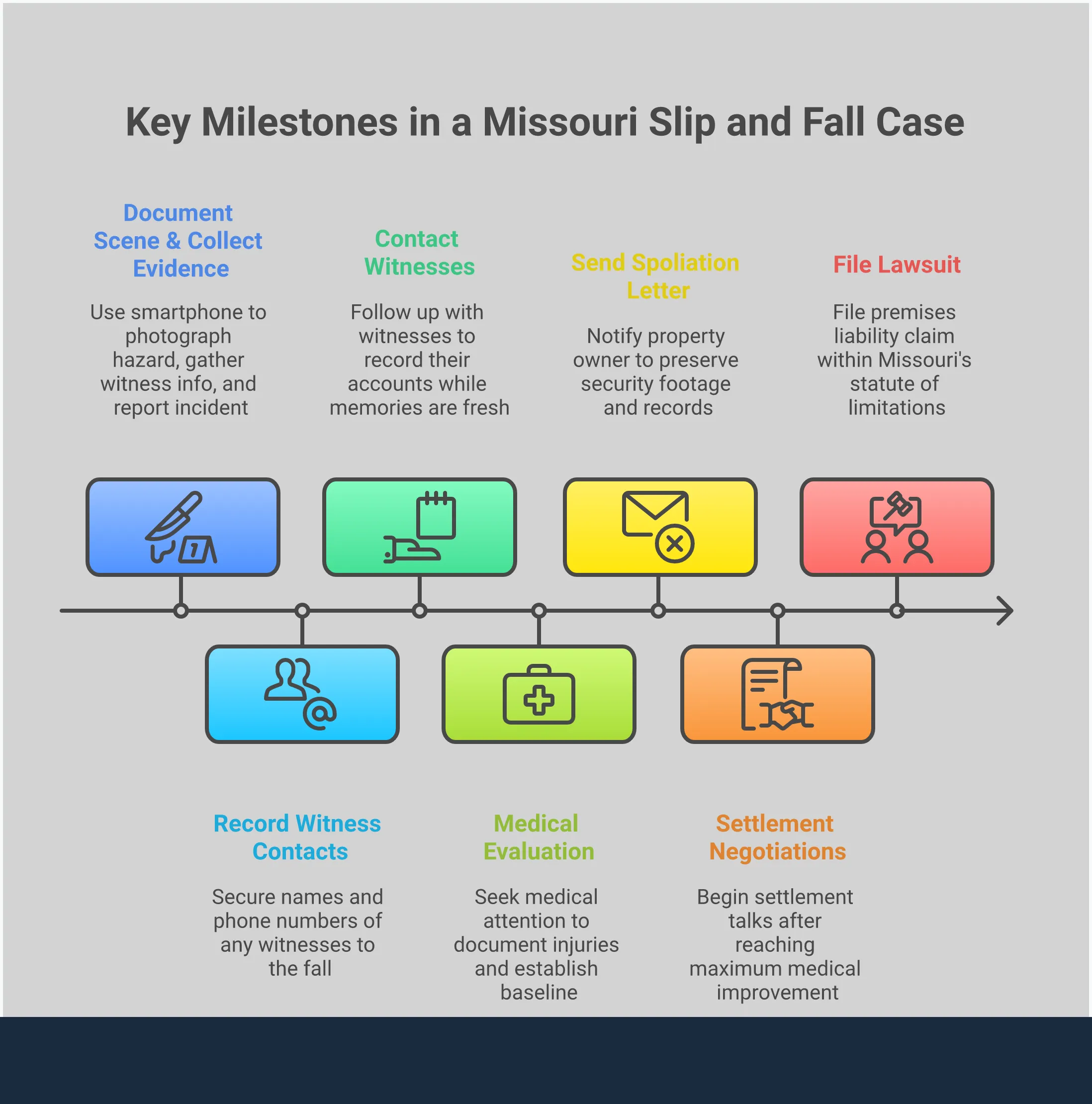
Building a strong slip and fall case depends on solid evidence, but gathering it can be difficult. You need to document the scene, get witness statements, obtain security footage, and collect all your medical records. Evidence like video footage can be erased, and witnesses can become hard to find over time. A lawyer knows exactly what’s needed to prove negligence and has the resources to act quickly. They can send official preservation letters to ensure evidence isn’t destroyed and can help you figure out all your damages to build the strongest case possible against the property owner. This support allows you to focus on your recovery while they handle the investigation.
The Risk of Missing Key Legal Deadlines
The legal system runs on strict deadlines and procedures. In Missouri, there are time limits, known as statutes of limitations, for filing a personal injury lawsuit. For most slip and fall cases, you have five years from the date of the incident to file. However, if your claim is against a government entity, that deadline can be much shorter. Missing a deadline, even by a day, can mean losing your right to pursue compensation forever. An attorney manages these critical dates and ensures all legal documents are filed correctly and on time, removing the risk of a simple procedural error derailing your entire case.
What Compensation Can You Recover?
After a slip and fall, the physical and emotional toll can be overwhelming, and the financial strain only adds to the stress. In a personal injury case, the goal of compensation—also known as damages—is to help you cover the costs of your accident and account for the ways the injury has impacted your life. These damages are typically broken down into two main categories: those with a clear price tag and those without.
Understanding the Types of Damages
A fair settlement should cover more than just your immediate medical bills. It needs to account for all the ways the injury has affected your life, both financially and personally. In the legal world, these losses are divided into two categories: special damages and general damages. Think of them as the tangible and intangible costs of your accident. Understanding both is the first step toward figuring out what your claim is truly worth and ensuring you don’t settle for less than you deserve.
Special Damages: Covering Financial Losses
Special damages are the most straightforward part of a personal injury claim because they cover the specific, calculable financial losses you’ve incurred. These are the expenses you can track with receipts, invoices, and pay stubs. The most common examples include all of your medical bills—from the initial emergency room visit to ongoing physical therapy—and any income you’ve lost from being unable to work. It also includes future medical costs if your injury requires long-term care. Essentially, if you can put an exact dollar amount on it, it likely falls under special damages. Your attorney will help you gather all the necessary documentation to calculate these costs accurately.
General Damages: Accounting for Non-Economic Harm
General damages are meant to compensate you for the non-financial harm you’ve suffered. These losses are harder to quantify but are just as real and impactful as any medical bill. This category includes things like pain and suffering, emotional distress, and loss of enjoyment of life. For example, you deserve to be compensated for the chronic pain that keeps you up at night or the anxiety you now feel in public places. If your injury prevents you from enjoying hobbies, playing with your children, or living your life as you did before the fall, that loss has value. An experienced attorney knows how to demonstrate the extent of these damages to an insurance company or jury.
How Are Settlement Amounts Determined?
There is no simple calculator for determining a slip and fall settlement amount because every case is unique. The final value depends on a combination of factors, starting with the severity of your injuries and their long-term impact on your life. A minor sprain that heals in a few weeks will result in a much different settlement than an injury requiring surgery and causing permanent disability. The total of your special damages—all your medical bills and lost wages—serves as a baseline for negotiations. From there, your attorney will build a case to demonstrate the value of your general damages, like pain and suffering.
Ultimately, the strength of your evidence is what drives the value of your claim. To secure a fair settlement, you and your lawyer must prove that the property owner was negligent. This means showing they had a responsibility to keep the premises safe, they failed in that duty, and their failure directly caused your injuries. The more clearly you can prove these points, the stronger your negotiating position will be. A skilled lawyer who handles premises liability cases knows how to weigh all these factors to determine a fair value for your claim and fight for the full compensation you are owed.
Getting Paid Back for Medical Bills and Lost Work
The most immediate financial burdens after an accident are often medical bills and lost income. These are called economic damages because they represent direct, calculable financial losses. You can seek compensation for every related expense, from the initial ambulance ride and emergency room visit to ongoing physical therapy, prescription medications, and future medical care. If your injury forced you to miss work, you can also recover those lost wages. It’s important to understand the full scope of what you can claim, which may even include damaged personal items. Keeping meticulous records of every bill and pay stub is crucial for proving these losses.
What About Your Pain and Suffering?
Not all injuries have a clear price tag. Non-economic damages are meant to compensate you for the physical pain and emotional distress caused by the accident. As one legal expert notes, these damages are about “how the injury affects your life, including pain and suffering, emotional distress, and loss of enjoyment of life.” This could mean compensation for chronic pain, anxiety, or the inability to enjoy hobbies and activities you once loved. While it’s difficult to put a dollar amount on this kind of suffering, an experienced attorney knows how to demonstrate the true impact the injury has had on your quality of life.
How to Maximize Your Settlement
Getting the full and fair compensation you deserve rarely happens by simply asking for it. Insurance companies are focused on protecting their bottom line, not on your recovery. This is where having a skilled lawyer makes all the difference. A personal injury attorney can help you identify all your damages, collect the necessary evidence, and build a strong case against the property owner. They will handle negotiations with the insurance company and are prepared to fight for you in court if a fair settlement can’t be reached. Having a professional advocate ensures your claim is taken seriously and you don’t leave money on the table.
What Evidence Strengthens Your Slip and Fall Case?
After a slip and fall, your priority is getting the medical care you need. But if you’re able, gathering evidence right away can make a significant difference in your ability to get fair compensation. A strong personal injury claim is built on proof that the property owner was negligent and that their negligence caused your injuries. The more evidence you have to support your story, the stronger your position will be when dealing with insurance companies.
Think of yourself as a detective at the scene of the accident. Your goal is to document everything exactly as it was when you fell. This evidence helps paint a clear picture of what happened and why the property owner is responsible. It can be challenging to think about these things when you’re in pain and disoriented, but any information you can collect will be invaluable later on. An experienced attorney can use this initial evidence to build a compelling case on your behalf, handling the legal complexities while you focus on your recovery.
The First Things to Document After a Fall
If you can, use your phone to take pictures and videos of the accident scene immediately after your fall. Capture the specific hazard that caused you to slip, like a wet floor without a warning sign, a patch of ice, a broken stair, or an uneven sidewalk. Take photos from multiple angles—close-ups of the hazard and wider shots of the surrounding area. It’s also a good idea to photograph your injuries, such as any visible cuts, bruises, or swelling. If anyone saw you fall, ask for their name and phone number. Their account of what happened can serve as powerful testimony.
Why You Should Never Admit Fault
In the moments after a fall, it’s a natural instinct to say something like, “I’m so sorry,” or “I should have been watching where I was going.” But even a simple apology can be twisted and used against you by an insurance company. In Missouri, the law follows a “pure comparative fault” rule, which is a key concept in state personal injury law. This means if you are found partially responsible for the accident, your compensation will be reduced by your percentage of fault. For example, if you are deemed 20% at fault, your final settlement will be cut by 20%. An insurance adjuster can easily argue that your apology was an admission of guilt, using it to shift blame onto you and reduce what they have to pay.
Instead of admitting fault, stick strictly to the facts of what happened. You don’t need to offer opinions or speculate about the cause of the fall. Simply report the incident to the property owner or manager and seek medical attention. The best way to protect your claim is to let an experienced attorney handle all communications with the insurance company. A lawyer knows how to present the facts of your case without accidentally accepting blame. They can build a strong argument that focuses on the property owner’s negligence, ensuring your words aren’t used to weaken your personal injury claim and fighting to get you the full compensation you deserve.
Why You Need Official Reports and Medical Records
Seeking medical attention right after a fall is crucial for both your health and your legal case. Even if you feel okay, some injuries don’t show symptoms right away. A doctor’s visit creates an official record that documents your injuries and connects them to the accident. These medical records are essential for proving the extent of your damages. You should also report the incident to the property owner or manager as soon as possible. Ask them to file an official incident report and request a copy for your records. This report serves as proof that the event occurred on their property at a specific time and date.
Tracking Down Witnesses and Video Evidence
Witnesses can provide an unbiased account of the accident, which can be incredibly helpful for your case. Statements from other customers or employees who saw what happened can confirm the dangerous conditions that led to your fall. Additionally, many businesses have security cameras that may have recorded the incident. This footage can be the most compelling evidence you have, but businesses often delete recordings after a short period. An attorney can send a formal request, called a spoliation letter, demanding that the property owner preserve any relevant video evidence. If you need help securing this crucial proof, it’s best to contact a lawyer right away.
When to Contact a Slip and Fall Lawyer
Knowing the right time to call an attorney after a fall can feel confusing, especially when you’re focused on recovering from an injury. The simple answer is: the sooner, the better. Evidence can disappear, witness memories can fade, and legal deadlines are strict. Reaching out early gives you the best chance to protect your rights and build a strong case. If you’re questioning whether your situation warrants legal action, it’s a clear sign that a conversation with a lawyer is a good next step.
Red Flags: When You Need a Lawyer Now
If you were injured on someone else’s property because of an unsafe condition, you may have a valid claim. This falls under an area of law called premises liability, which holds property owners responsible for keeping their spaces reasonably safe. Common examples that should prompt you to call a lawyer include slipping on a wet floor without a warning sign, tripping over a broken step or loose carpet, or falling on an icy sidewalk that wasn’t treated. If the property owner was careless and their negligence led directly to your injury, you shouldn’t have to bear the financial burden of their mistake alone.
Don’t Miss the Deadline to File Your Claim
In Missouri, you have a limited window of time to take legal action after a slip and fall accident. This deadline, known as the statute of limitations, is five years from the date the injury occurred. While five years might sound like a long time, it’s crucial to act quickly. Building a successful case involves gathering evidence, interviewing witnesses, and negotiating with insurance companies—all of which takes time. Waiting too long can make it difficult to find the proof needed to support your claim. Contacting an attorney as soon as possible ensures that critical evidence is preserved and your case is filed correctly before the deadline expires.
Exceptions to the Statute of Limitations
While the five-year deadline is the general rule, certain circumstances can change the timeline for filing your claim. These exceptions are important to understand, as they can either extend or significantly shorten your window to take action. For example, if the injured person is a minor, the five-year clock typically doesn’t start until their 18th birthday. Similarly, if an injury isn’t discovered right away, the deadline may be paused until the injury is found or reasonably should have been found. The rules are very different for claims against government entities, which often have much shorter deadlines—sometimes as little as 90 days. Because these exceptions are complex, it’s crucial to discuss your case with an attorney who can clarify which deadlines apply to your specific situation.
How to Prepare for Your First Consultation
Walking into your first meeting with a lawyer can feel intimidating, but a little preparation goes a long way. Before you go, try to gather a few key items. If you can, take photos of the exact spot where you fell, capturing the hazard that caused it. Report the incident to the property owner or manager and keep a copy of any report you file. Most importantly, seek medical attention right away, even for what seems like a minor injury, and keep all related records. It’s also helpful to start a simple journal documenting your pain levels and how your injuries are impacting your daily life. Having this information ready will help your attorney understand your case and advise you on the best path forward when you schedule a consultation.
Related Articles
- WHAT IS A SLIP AND FALL LAWSUIT? – The Law Office of Chad G. Mann, LLC
- Premises Liability Lawyer – Injury Claims in Missouri
- Your Guide to Premises Liability Lawyers in Missouri – The Law Office of Chad G. Mann, LLC
- Missouri Premises Liability: Know Your Rights
- How to Find the Best Premises Liability Attorney Near Me
If you need experienced legal representation, our Springfield slip and fall lawyer can help protect your rights and fight for the compensation you deserve. Call (417) 842-8679 for a free consultation.
For more information, read our guide on suing a store after a fall.
Frequently Asked Questions
What if I think I was partially at fault for my fall? This is a very common concern, but it doesn’t automatically prevent you from having a case in Missouri. The state follows a “pure comparative fault” rule, which means your compensation may be reduced by your percentage of fault. For example, if you were found to be 10% responsible, your final award would be reduced by 10%. An experienced attorney can help assess the situation and build a case that accurately presents the property owner’s negligence.
How long does a slip and fall case usually take to resolve? The timeline for a slip and fall case can vary quite a bit. Some straightforward cases might settle in a matter of months, while more complex situations that involve significant injuries or uncooperative insurance companies could take longer. The key is to build a strong case, which takes time. Your attorney will keep you informed about the progress and manage the process so you can focus on your health.
What should I avoid doing after a slip and fall accident? After an accident, it’s wise to be careful about what you say and do. You should avoid giving a recorded statement to the property owner’s insurance company without first speaking to a lawyer, as your words can easily be taken out of context. It’s also a good idea to stay off social media or at least refrain from posting about your accident or injuries, as insurance companies can use this information against you.
Do I still have a case if there were no witnesses to my fall? Yes, you can absolutely still have a strong case even if no one saw you fall. While witness testimony is helpful, it’s just one piece of the puzzle. Other forms of evidence, such as photos of the dangerous condition, security camera footage, your medical records, and incident reports, can be just as powerful in proving that the property owner was negligent.
Is it worth getting a lawyer if the property owner’s insurance already offered me a settlement? You should be very cautious about accepting an early settlement offer. Insurance companies often make quick, lowball offers hoping you’ll accept before you understand the full extent of your injuries and costs. These initial offers rarely account for future medical care, lost income, or pain and suffering. An attorney’s job is to calculate the true value of your claim and negotiate for a fair amount that covers all of your damages.
Have you been injured? Take our free injury questionnaire to help us understand your case, or call (417) 842-8679 for a free consultation today.