

A loose dog, a dispute with a neighbor, or concerns about an animal’s welfare—these situations get complicated, fast. What starts as a simple problem can quickly become a stressful legal issue. Knowing your rights and responsibilities under Missouri animal control laws is the key to finding a solution. Whether you need to report a violation or you’re facing an accusation yourself, having clear information is critical. This guide breaks down the essential rules, explains who enforces them, and outlines the steps you can take to handle these difficult situations effectively.
Key Takeaways
- Check Local Laws First: While Missouri sets the baseline for animal welfare, your city or county creates the specific rules you must follow for things like leashes, licensing, and pet limits. Always verify your local ordinances to ensure you’re compliant.
- Ownership Is a Legal Responsibility: The law requires you to provide adequate food, water, shelter, and veterinary care for your animals. You are also legally accountable for keeping your pet properly restrained to prevent it from causing harm.
- Know the Stakes and How to Act: Violations can result in serious consequences, from misdemeanor fines to felony charges and the loss of your pet. If you witness animal cruelty or neglect, report it to your local animal control or police department to get help.
Breaking Down Missouri’s Animal Control Laws
Understanding Missouri’s animal laws can feel tricky because they operate on two levels: state and local. The state sets the baseline for what’s expected of pet owners, particularly concerning animal cruelty and basic care. However, your specific city or county has the authority to create its own, often stricter, rules. This means the regulations you need to follow can change just by crossing a town line. For pet owners, this patchwork of laws makes it essential to know both the statewide requirements and the specific ordinances in your community. If you ever find yourself in a situation involving an animal, from a dog bite to a dispute with a neighbor, knowing which laws apply is the first step toward finding a resolution.
Who Makes the Rules? State vs. Local Animal Laws
Think of Missouri’s state laws as the foundation for animal welfare. They establish broad rules that apply everywhere, from St. Louis to Springfield. However, the state gives a lot of power to local governments. According to Missouri’s state statutes, cities can create their own ordinances about licensing and taxing dogs, preventing them from running loose, and issuing fines to owners who don’t comply. This is why you’ll see different leash laws, pet registration fees, and even rules about how many pets you can own depending on where you live. Always check your city or county’s official website for the specific rules that apply to you.
The Role of Federal Law: The Animal Welfare Act
In addition to the rules set by your city and the state of Missouri, federal law also steps in to protect animals. The main piece of legislation here is the Animal Welfare Act (AWA). Think of it as a national safety net that establishes the minimum standards of care for animals in certain commercial settings, including research labs, zoos, and large-scale breeding operations. The AWA is designed to ensure these animals receive adequate food, water, shelter, and veterinary attention, setting a baseline for humane treatment no matter where in the U.S. they are.
It’s important to know that the AWA doesn’t cover every animal—it famously exempts birds, rats, and mice bred for research. Still, it serves as a vital tool for preventing neglect and abuse. Facilities that fall under the AWA must be licensed and are subject to regular inspections to make sure they’re following the rules. This federal law doesn’t override Missouri’s own animal cruelty statutes; rather, it works alongside them, adding another layer of accountability to help keep animals safe.
Why Your City’s Rules Might Be Different
The differences between local ordinances can be significant. For example, one town might have a strict leash law for all public spaces, while a neighboring county might only require leashes in designated parks. Some cities have breed-specific legislation that places extra restrictions on certain types of dogs, while others focus on the behavior of individual animals. Missouri law also has specific rules for keeping exotic animals, which often require you to register them with the local sheriff’s office. Because these rules are so localized, what’s perfectly legal in one area could be a violation in another, which is especially important to know when dealing with personal injury cases involving animals.
What Does “Proper Animal Care” Mean in Missouri?
Across the state, Missouri law is very clear on the minimum standards of care every pet owner must provide. The law defines an “animal” as any living creature with a backbone (excluding humans) and makes it illegal to neglect or abandon one. Neglect includes failing to provide adequate food, clean water, shelter, or necessary veterinary care to maintain an animal’s health. The state law specifically defines animal abuse and sets these requirements to ensure animals are treated humanely. These aren’t just suggestions; they are legal obligations for anyone who owns or cares for an animal in Missouri.
How Missouri Defines Animal Cruelty
When we think of animal cruelty, we often picture extreme, deliberate acts of violence. While that is certainly part of it, Missouri law takes a broader view to protect animals from various forms of harm. Understanding these laws is important for every responsible pet owner and concerned citizen. The state’s statutes clearly outline what constitutes cruelty, breaking it down into two main categories: passive cruelty, like neglect and abandonment, and active cruelty, which involves intentional harm.
Navigating these situations can be stressful, whether you’re reporting a suspected case of abuse or facing an accusation yourself. The key is to know what the law says. Missouri’s animal cruelty laws are designed to set a minimum standard of care and to hold individuals accountable when they fail to meet it or when they purposefully inflict suffering. If you find yourself in a situation involving animal welfare or injury, understanding your rights and responsibilities is the first step. Our firm handles a variety of practice areas, and we believe that clear information helps everyone make better decisions.
What Counts as Animal Neglect or Abandonment?
Neglect is the most common type of animal cruelty. Under Missouri law, it’s illegal to neglect an animal by failing to provide it with adequate food, water, shelter, or veterinary care. The law also makes it a crime to abandon an animal you are responsible for. These rules are in place to ensure that animals don’t suffer due to an owner’s inaction.
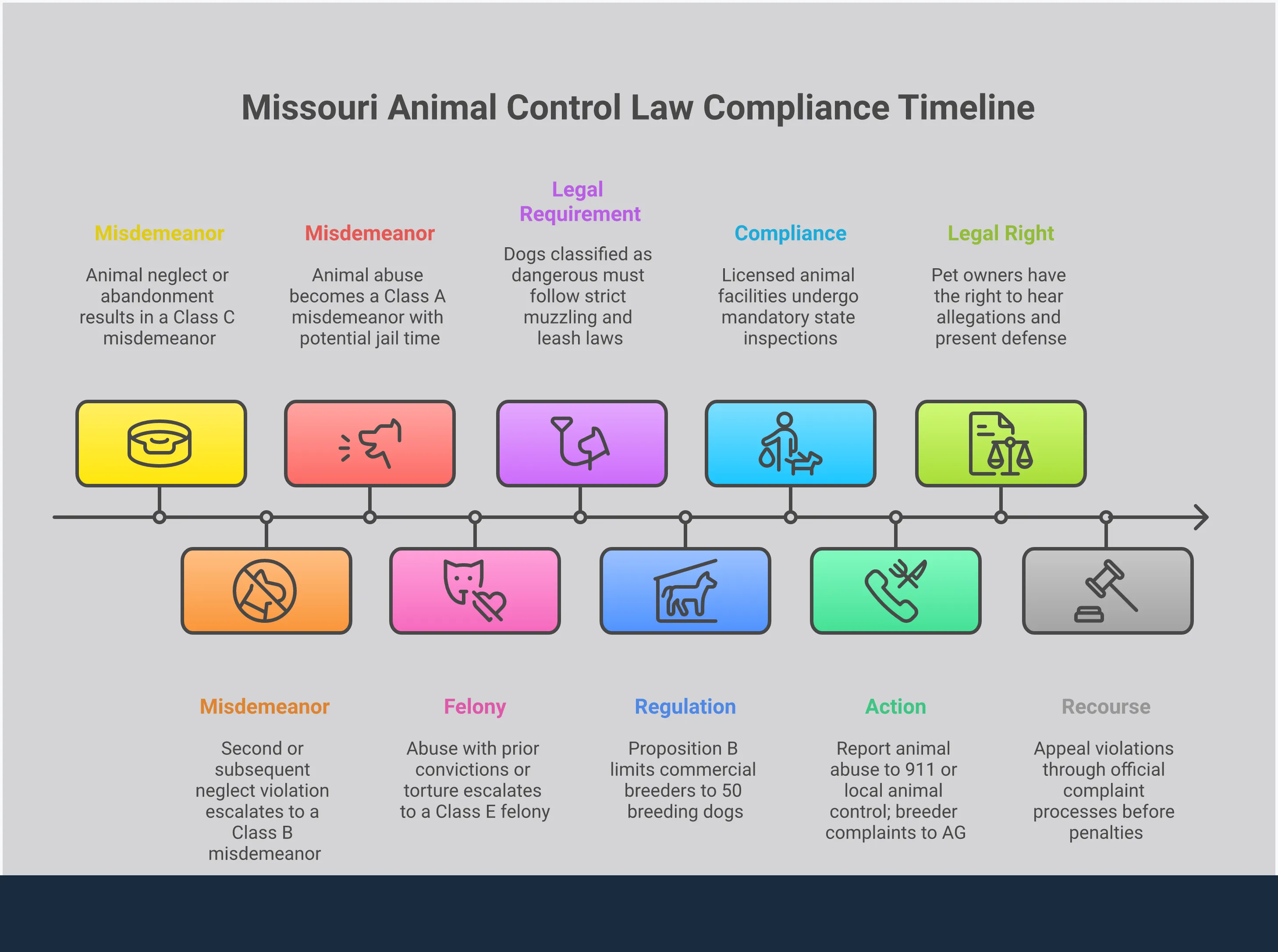
According to Missouri statutes, a first offense for neglect or abandonment is typically a Class C misdemeanor. However, if it’s a repeat offense, the penalty increases to a more serious Class B misdemeanor. This tiered approach shows that the state takes ongoing neglect seriously, aiming to prevent animals from enduring prolonged suffering.
When Does Mistreatment Become Intentional Abuse?
Beyond neglect, Missouri law addresses acts of intentional harm. An individual is guilty of animal abuse if they kill or injure an animal intentionally and purposely. This part of the law targets active cruelty, where a person makes a conscious decision to inflict pain or death upon an animal. This is different from accidental harm or situations where a person acts in self-defense.
The words “intentionally and purposely” are critical here. To be considered abuse under this statute, the action must be deliberate. This covers a wide range of violent acts and is treated as a serious offense. Proving intent is often the central issue in these cases, which can make them legally complex.
Exceptions to the Cruelty Laws
Missouri’s animal cruelty laws are broad, but they aren’t without limits. The state recognizes that some actions, even if they result in harm to an animal, don’t legally count as cruelty. These exceptions exist to protect necessary and traditional activities. For instance, licensed veterinarians providing medical care, scientists conducting approved research, and people legally hunting or fishing are exempt. The law also makes allowances for standard farming practices and for animal control officers who must humanely euthanize an animal. According to Missouri’s statutes, these exemptions create a balance between protecting animals and allowing for these other activities. Understanding this distinction is critical, especially when an incident involving an animal leads to injury. These situations can raise complex questions about liability and often touch on several legal practice areas.
Common Myths About Missouri’s Animal Cruelty Laws
There are a few common misunderstandings about what counts as animal cruelty in Missouri. For instance, while deliberately harming an animal is a crime, there is an exception for lawful hunting. This distinction is important in a state with a strong hunting tradition.
Another misconception involves the role of animal control officers. Some people have an outdated image of a “dog catcher,” but modern animal control officers are professionals responsible for enforcing animal welfare laws and protecting public safety. They investigate cruelty reports, rescue animals in distress, and help ensure owners are meeting their legal responsibilities. Their goal is to protect animals and support the community, not to punish pet owners unnecessarily.
Specific Animal Protection Laws in Missouri
Beyond the general rules for animal care and cruelty, Missouri has several specific laws designed to protect animals in unique situations. These regulations cover everything from organized animal fighting to ensuring your pet is cared for after you’re gone. Knowing about these specific protections can help you understand the full scope of animal welfare in our state and what resources are available in different circumstances. These laws reflect a growing understanding of the important role animals play in our lives and the state’s commitment to protecting them from harm in various contexts.
Animal Fighting Laws
Missouri takes a hard-line stance against animal fighting. Thanks to a law known as Proposition A, it’s not just the organizers who face serious trouble. The state makes it a felony to fight animals, allow a fight to happen on your property, or promote an event. But the law doesn’t stop there. It is also a serious misdemeanor to knowingly attend an animal fight, sell an animal for fighting purposes, or even own cockfighting tools. This comprehensive approach aims to dismantle the entire network surrounding these cruel events, from the participants to the spectators, sending a clear message that this activity is not tolerated in our state.
Protections for Pets in Domestic Violence Cases
In difficult domestic situations, the safety of a pet is a real and pressing concern. Missouri law recognizes this and includes protections for animals in domestic violence cases. When a person seeks an order of protection from abuse, a judge has the authority to include the pet in that order, ensuring it can legally stay with the person leaving the abusive environment. This is a critical provision that helps protect all members of a family, including the furry ones. It acknowledges the deep bond people have with their pets and prevents animals from being used as leverage in dangerous situations.
Creating a Pet Trust for Future Care
Have you ever worried about what would happen to your pets if you were no longer around to care for them? Missouri law provides a wonderful solution: a pet trust. This legal tool allows you to set aside money specifically for your pet’s care, managed by a trustee you appoint. You can outline instructions for their food, vet visits, and daily life. This is a key part of estate planning for pet owners, giving you peace of mind that your beloved companion will be looked after according to your wishes. The trust remains active for the life of your pet, ending only after the last animal covered by it passes away.
Laws Protecting Assistance Animals
Assistance animals play a vital role in the lives of many Missourians, and the state has specific laws to protect them. These regulations are separate from general animal welfare statutes and are designed to safeguard the rights of individuals who rely on guide dogs and other service animals. According to Missouri statutes, these protections ensure that assistance animals can perform their duties without interference and that their handlers are not discriminated against. Understanding these specific rules is important for business owners and the public to ensure everyone respects the essential work these animals do.
Endangered Species Regulations
Missouri’s commitment to animal welfare extends to wildlife, particularly endangered species. State law makes it illegal to import, transport, sell, or even possess any endangered fish or wildlife, including any parts of the animal. This is a strict rule aimed at preserving our state’s natural heritage and protecting vulnerable populations from trafficking and exploitation. Violating this law is considered a Class B misdemeanor, reinforcing the seriousness of conservation efforts in Missouri. These regulations help ensure that future generations can also enjoy the state’s diverse wildlife.
What Happens If You Break an Animal Law in Missouri?
Missouri law doesn’t take animal mistreatment lightly. The penalties for violating animal protection laws aren’t just a slap on the wrist; they can have a lasting impact on your life. Depending on the severity of the offense and your history, you could face anything from fines to serious jail time. Understanding these consequences is the first step in grasping the importance of responsible pet ownership and knowing your rights if you’re ever accused of a violation. Let’s walk through the different levels of penalties you might encounter, from misdemeanors to life-altering felony convictions.
From Fines to Misdemeanors: The Common Penalties
For many first-time offenses, animal abuse is treated as a serious crime. In fact, “In most cases, animal abuse is classified as a Class A misdemeanor.” This isn’t a minor infraction; it’s a charge that can result in a jail sentence of up to one year and significant fines. The exact fine amount can vary, and courts often increase the financial penalty for repeat offenses. It’s important to remember that a misdemeanor conviction creates a criminal record that can follow you, affecting future employment and housing opportunities. It’s much more than just paying a ticket and moving on.
When Does Animal Cruelty Become a Felony?
Sometimes, an animal abuse charge can become much more serious. The law draws a clear line for when an offense moves from a misdemeanor to a felony. As the Missouri Statutes explain, a charge escalates to a major crime, or a Class E felony, if the offender has prior abuse convictions or if the animal was subjected to torture while alive. A felony conviction carries much heavier penalties, including longer prison sentences and the loss of certain civil rights, like the right to own a firearm. This escalation shows just how seriously the state considers patterns of abuse or acts of extreme cruelty.
Could You Lose Your Pet? Other Legal Consequences
The legal repercussions don’t stop with fines and jail time. The courts can impose other penalties that have a long-term impact on your life. Violating animal laws can lead to court-ordered community service, the seizure of the animal in question, and even the loss of your right to own animals in the future. This ban can be temporary or permanent, depending on the case. For any pet owner, this is a devastating outcome. If you’re facing accusations of violating animal laws, it’s critical to understand the full range of potential consequences. Seeking legal guidance can help you understand your specific situation, so please contact our office to discuss your case.
Missouri’s Dog Breeding Laws: What You Need to Know
Missouri has specific regulations for dog breeders, designed to ensure the health and safety of animals. These laws came about largely due to public concern over large-scale breeding operations, and they cover everything from the number of dogs a breeder can have to the specific standards of care they must provide. Understanding these rules is important whether you’re buying a puppy or are concerned about a local facility. If you have questions about a breeder’s practices, our team can help you understand your legal options.
What Makes Someone a “Commercial Breeder”?
Back in 2010, Missouri voters passed “Proposition B,” a law aimed at setting clear rules for large-scale dog breeders, sometimes called “puppy mills.” A key part of this law is that a commercial breeder cannot own more than 50 breeding dogs if they sell puppies as pets. This rule was designed to manage the size of breeding operations and prevent overcrowding, ensuring breeders can provide adequate care for every animal. These regulations are part of a broader set of Missouri statutes that govern animal welfare across the state.
Legal Standards for Housing, Care, and Exercise
The law goes beyond just limiting the number of dogs. Commercial breeders are held to strict standards for daily care and are legally required to provide sufficient food, clean water, and appropriate housing for each dog. The rules also mandate necessary veterinary care to prevent and treat illness or injury. Furthermore, the law ensures dogs get regular exercise and adequate rest between breeding cycles. These standards exist to meet the animals’ basic needs, reflecting a commitment to humane treatment under Missouri animal laws.
How Licensing and Inspections Work for Breeders
To ensure compliance, Missouri requires a license for anyone operating a commercial breeding facility, a rule that also applies to pet shops, shelters, and dealers. This licensing system allows state officials to conduct inspections and hold facilities accountable. If a breeder violates these regulations, they can face a misdemeanor charge known as “puppy mill cruelty.” This legal consequence underscores the seriousness of these standards. If you believe an operation isn’t following the law, it’s important to know your options for taking action and seeking legal guidance.
Are There Special Laws for Dangerous or Exotic Animals?
While most animal laws apply broadly, Missouri has specific rules for animals that pose a higher risk to public safety. These regulations are designed to protect the community from potential harm and place a greater responsibility on the owners of these animals. Whether it’s a dog with a history of aggression or an unconventional exotic pet, understanding these special laws is crucial for both owners and anyone who might be affected by these animals. If you’ve been involved in an incident, knowing these distinctions can be a key part of understanding your rights and legal options.
What Gets a Dog Labeled as “Dangerous”?
In Missouri, a dog isn’t just “dangerous” because of its breed or size; it earns that label through its actions. A dog may be legally classified as dangerous if it has bitten or attacked a person or another domestic animal without being provoked. This classification comes with serious responsibilities for the owner. According to the Missouri Animal Control Association, owners of dangerous dogs are often required to follow strict rules, such as keeping the dog muzzled and on a leash in public. They may also be required to carry a specific amount of liability insurance to cover any potential damages. These measures are in place to prevent future incidents and ensure public safety.
Missouri’s Laws on Owning Exotic Animals
Thinking of owning a tiger or a python? Missouri has specific laws you’ll need to follow. The state regulates the ownership of exotic animals to ensure the safety of both the public and the animals themselves. For many species, you are required to register your animal with the local sheriff’s office. Certain animals, like large carnivores, primates, and some venomous reptiles, may require special permits and enclosures. These regulations, often detailed by local authorities like the Livingston County Sheriff’s office, are not meant to discourage ownership but to ensure it’s done responsibly. Before bringing an exotic pet home, it’s essential to research both state and local ordinances to make sure you can meet all legal requirements.
The Large Carnivore Act
Missouri takes the ownership of large, predatory animals very seriously, which is why the state has the Large Carnivore Act. This law is quite direct: it generally bans individuals from owning, possessing, breeding, or moving animals like lions, tigers, and bears. While there are some specific exceptions for licensed facilities, the message for the general public is clear. The consequences for violating this act are significant and can include misdemeanors or even felony charges. A conviction could lead to community service, a court order revoking your right to own animals, and the seizure of the animal. These strict regulations reflect the state’s commitment to public safety.
Rules for Other Dangerous Wild Animals
The regulations don’t stop with large carnivores. Missouri also has rules for other types of animals considered dangerous, including wolves and certain large or poisonous reptiles. Under Missouri law, these animals cannot be kept unless they are properly registered with the local police or sheriff’s department. This registration requirement doesn’t apply to accredited zoos, circuses, veterinary hospitals, or research facilities, as they are governed by their own professional standards. For a private owner, however, failing to register a dangerous wild animal is a Class C misdemeanor, reinforcing the legal responsibility that comes with owning such a pet.
Does Your Pet Need to Be on a Leash? A Look at the Law
While Missouri doesn’t have a single, statewide leash law that applies everywhere, state law does require that animals be reasonably restrained so they don’t cause injury to people, property, or themselves. In practice, most specific leash laws are set at the city or county level. This means the rules in Springfield might be different from those in Joplin. Generally, these local ordinances require dogs to be on a leash whenever they are in public spaces like parks, sidewalks, and town squares. It’s your responsibility as a pet owner to know and follow your local leash laws. If you’ve been injured by an unrestrained animal, the owner may be liable for failing to follow these local rules. If you have questions about an incident, our team is here to help you understand your personal injury rights.
Public Health and Safety Rules
Beyond setting standards for animal welfare, Missouri law also includes specific rules designed to protect people. These regulations address public health concerns, like the spread of disease, and safety issues, such as dogs running loose. They establish clear procedures for authorities to follow and place direct responsibility on animal owners to prevent their pets from causing harm. Understanding these rules is essential for maintaining a safe community and knowing what to do if an incident occurs. These laws are not just about managing animals; they are about ensuring the well-being of everyone in the community.
Rabies Control and Animal Bite Procedures
When an animal bites someone, public health becomes the immediate priority. Missouri has laws in place to control the spread of rabies and other diseases. If a bite occurs, it must be reported to the local county health department. The animal’s owner is then legally and financially responsible for the consequences. This includes covering the costs of any necessary rabies testing or treatment for the victim. According to the state statutes, the owner is also accountable for any other damages the animal causes, which is a critical aspect of personal injury cases involving animal attacks.
Impounding Loose Dogs
To ensure public safety, Missouri law gives city marshals the authority to deal with loose dogs. Any dog found running at large without a collar must be caught and impounded. These animals are held for one week, giving owners a chance to reclaim them. If a dog is not claimed within that time, it is humanely euthanized. The law takes this duty seriously; marshals who fail to follow this procedure can be fined. This rule underscores the importance of proper identification and restraint for pets, as it not only keeps them safe but also prevents them from becoming a public safety issue.
Laws for Specific Activities and Industries
Missouri’s animal laws extend beyond typical pet ownership to cover specific activities and commercial operations. These regulations recognize that certain situations, from hunting wildlife to running a horse stable, come with unique responsibilities and risks. The state has created a framework to govern these areas, setting clear expectations for businesses and individuals involved. Whether you’re participating in a recreational activity or using a professional animal service, these targeted laws are in place to ensure safety, humane treatment, and legal accountability for everyone involved.
Hunting and Wildlife Regulations
In Missouri, all wildlife is managed and protected by the state. The Missouri Department of Conservation is the agency responsible for setting the rules for hunting, fishing, and trapping. It is illegal to hunt, kill, or even possess any wildlife unless you are following the specific regulations established by the department. These rules are in place to manage animal populations, ensure ethical hunting practices, and preserve the state’s natural resources for future generations. Anyone who violates these wildlife codes is committing a misdemeanor, which can result in fines and other legal penalties.
Horse Activity Liability Law
Engaging in horse-related activities comes with inherent risks, and Missouri law acknowledges this. The state’s Horse Activity Liability Law generally protects the operators of stables, riding events, and other equestrian activities from being sued if a participant is injured or killed. This legal shield applies to injuries that result from the natural risks associated with horse activities, such as a horse spooking or a rider falling. Because of this law, participants typically cannot hold the operator responsible for these types of incidents. This is an important consideration in any premises liability case involving equestrian facilities.
Laws Protecting Animal Facilities
Missouri provides specific legal protections for animal facilities, such as those used for research or agricultural production. It is illegal for anyone to intentionally release, steal, injure, or kill an animal at one of these locations. The law is designed to prevent disruptions and protect the valuable work and property of these facilities. The severity of the penalty depends on the financial damage caused by the act. If the damages are less than $300, the offense is a misdemeanor. However, if the damages exceed $300, the violation becomes a felony, carrying much more serious consequences.
Veterinary and Shelter Regulations
To ensure a standard of care, Missouri requires most businesses that handle animals to be licensed. This includes animal boarding facilities, pet shops, shelters, dealers, and commercial breeders. This licensing system allows for oversight and helps hold these operations accountable for the welfare of the animals in their care. Furthermore, the state’s “canine cruelty prevention act” makes it a misdemeanor for anyone in charge of an animal to knowingly place it in serious risk. This law reinforces the legal responsibility of all animal care providers to maintain a safe and humane environment.
Liens for Animal Care Services
Businesses that provide services for animals, such as boarding stables or training facilities, have a legal right to be paid for their work. In Missouri, the law gives these service providers a “lien” on the animal and its equipment. This means they can legally keep possession of the animal until the owner has paid the bill in full. This is a powerful tool for business owners to ensure they are compensated for the care, training, or boarding they have provided. It also highlights an important area of law where animal ownership intersects with creditor representation and contract disputes.
Who Enforces Missouri’s Animal Laws?
When you see an animal in distress or a pet owner breaking the law, it can be confusing to know who to call. In Missouri, enforcing animal laws is a team effort involving local and state agencies. Your local police or sheriff’s department and dedicated animal control officers are your first line of defense. They handle everything from loose dogs to serious cruelty investigations.
For specific issues, like those involving commercial dog breeders, the Missouri Department of Agriculture gets involved. The Attorney General’s Office can also step in to file lawsuits when necessary, often based on referrals from other agencies. Understanding who does what can help you report problems effectively and get animals the help they need. It’s not just about punishment; enforcement also focuses on education and ensuring the community is safe for both people and pets. The goal is to uphold the standards of care that every animal deserves under the law.
Who to Call: Animal Control vs. the Police
Your local animal control and police departments are the primary enforcers of animal laws in your community. City and county Animal Care and Control agencies are responsible for handling violations of local ordinances, such as leash laws, licensing requirements, and noise complaints. They also play a crucial role in promoting responsible pet ownership and public safety.
In more serious situations, like animal abuse or neglect, you should contact your local police or sheriff’s department. These law enforcement officers have the authority to investigate criminal acts and press charges. Some situations, like registering certain exotic animals, may specifically require you to work with your local sheriff’s office, as they handle many animal control issues in rural areas.
See Something? How to Report an Animal Law Violation
If you witness animal abuse or a life-threatening situation, you should act immediately. The best course of action is to call 911 or your local animal control hotline. For example, residents in Kansas City are advised to call 911 if they witness animal abuse. For non-emergencies, like a stray dog or a barking complaint, a call to your local animal control office is the right step.
For concerns related to licensed breeders or puppy mills, you can file animal welfare complaints with the Missouri Attorney General’s Office. This office often works with the Missouri Department of Agriculture to investigate and can file a lawsuit if allegations are substantiated. When you report, be prepared to provide specific details, including the location, date, time, and a description of the situation.
Where to Find Help for an Animal in Need
Beyond law enforcement, several organizations offer resources and support for animal welfare in Missouri. While they don’t have enforcement powers, they are vital for education, advocacy, and assistance. The Missouri Coalition of Animal Care Organizations works to unite shelters and rescue groups across the state, strengthening the collective effort to protect companion animals.
Another key resource is the Missouri Animal Control Association (MACA), which provides training and support for animal control professionals. This helps ensure that the officers enforcing the laws are well-equipped and informed. If you’re looking for information on responsible pet ownership or want to support local animal welfare efforts, connecting with these organizations is a great place to start.
What Are Your Rights as a Pet Owner?
As a pet owner in Missouri, you have rights that protect your relationship with your animal. The law recognizes pets as personal property, but it also goes further by establishing specific protections against harm and outlining processes for disputes. Understanding these rights is the first step in advocating for yourself and your pet if you ever face a complaint or violation. It’s all about knowing where you stand legally so you can act confidently and protect your furry family member.
Your Legal Protections
Your most fundamental right is to keep and care for your pet without undue interference, as long as you follow the law. Missouri provides legal protections for your animal, which in turn secures your rights as an owner. State law makes it a crime to deliberately and maliciously harm or kill an animal. This means if someone injures your pet, they have broken the law, and you have legal recourse. These protections ensure that your pet is safe from intentional abuse, giving you peace of mind and a clear path to justice if the unthinkable happens.
How to Appeal an Animal Control Violation
If you’re accused of violating an animal control ordinance, you have the right to due process. Receiving a citation doesn’t automatically mean you’ll be fined or lose your pet. You are entitled to hear the specific allegations against you and have an opportunity to present your side of the story. The official complaint process often involves an investigation to substantiate any claims before legal action is taken. If you believe you’ve been wrongly accused, you can appeal the violation. It’s important to gather evidence, such as veterinary records or witness statements, to support your case.
Your Rights vs. Your Responsibilities as a Pet Owner
With rights come responsibilities. While you have the right to own a pet, you also have a legal duty to ensure it doesn’t become a nuisance or a danger to others. Missouri has many laws designed to ensure animals are treated well and kept safely. This includes providing proper food, water, and shelter, as well as keeping your pet under reasonable control. An animal must be restrained so it doesn’t injure itself, another person, or someone else’s property. Fulfilling these duties is not just good practice—it’s the best way to protect your rights as a pet owner.
What to Do if Animal Control Visits Your Property
An unexpected knock on the door from an animal control officer can be unsettling, even if you’re confident you’ve done nothing wrong. In these moments, it’s easy to feel pressured or intimidated. The most important thing you can do is stay calm and remember that you have rights. Knowing what you can and cannot be compelled to do is your best defense. This isn’t about being uncooperative; it’s about ensuring the situation is handled correctly and that your rights are protected from the start. By understanding the proper procedure, you can handle the visit confidently and avoid making simple mistakes that could complicate things later.
Your Right to Refuse a Search
If an animal control officer asks to look around your property, you are not required to agree. According to guidance from animal advocacy groups, you have the right to refuse a search of your home, yard, or other private areas without a warrant. An officer cannot simply enter your property because a complaint was made. They must have a legally valid search warrant signed by a judge, or you must give them your consent. You can politely and calmly state, “I do not consent to a search of my property without a warrant.” This is a clear assertion of your rights and helps ensure that proper legal channels are followed.
Your Right to Remain Silent
Just as you don’t have to consent to a search, you also don’t have to answer every question an officer asks. Beyond providing your name to identify yourself, you have the right to remain silent. Anything you say can be written down and potentially used against you later, even if your words are taken out of context. You can simply say, “I would like to remain silent,” or, “I am not going to answer any questions without speaking to my attorney first.” This isn’t an admission of guilt; it’s a smart way to protect yourself from accidentally saying something that could be misinterpreted or used to build a case against you.
Why You Shouldn’t Sign Documents Without Legal Advice
During their visit, an officer might ask you to sign a document. It could be a citation, a warning, or a form that seems routine. However, you should never sign anything—other than a court summons—without first having an attorney review it. These documents can contain language where you might unknowingly admit guilt, give up your rights to your pet, or consent to actions you don’t agree with. Politely decline to sign and explain that you would like to have your lawyer look at it first. This simple step ensures you fully understand what you are agreeing to and protects you from giving up important legal protections.
Proactive Steps to Protect Your Rights
You don’t have to wait for a problem to arise to protect yourself and your animals. One of the most effective things you can do is become familiar with your local animal ordinances. Since rules about leashes, licensing, and pet limits are set at the city or county level, knowing the specific laws in your area helps you stay compliant and avoid violations in the first place. You can usually find these ordinances on your city or county’s official website. Understanding the rules also prepares you to have an informed conversation if a neighbor or official ever raises a concern, as you’ll know exactly what is required of you.
Another simple but powerful step is to clearly mark the boundaries of your property. Posting “No Trespassing” signs can be a useful deterrent and establishes a clear legal boundary. While these signs don’t prevent law enforcement with a warrant from entering, they do remove any doubt that your property is private. This makes it harder for anyone, including officials, to claim they had an implied right to be on your land. It’s a straightforward, low-cost way to reinforce your property rights and add a layer of legal protection against unauthorized entry or observation.
Understanding the Legal Difference Between “Owner” and “Caregiver”
In the eyes of the law, words matter, and the distinction between being an animal’s “owner” and its “caregiver” can be significant. An owner is legally responsible for the animal in every respect—providing food, shelter, and veterinary care, and being liable for its actions. However, someone who simply provides food and water for community cats (often called feral or free-roaming cats) may be considered a “caregiver.” This is an important legal difference, as many local laws do not hold caregivers to the same level of responsibility as owners. You may not be legally required to pay for veterinary care or be held liable if a community cat damages property.
This distinction is critical if you are caring for animals that are not technically your pets. If animal control questions you about community cats on your property, understanding your role is key. You can explain that you are a caregiver providing basic necessities, not the legal owner of the animals. This can protect you from being unfairly held responsible for things outside your control. Knowing how your local ordinances define these terms can provide a crucial layer of protection and help clarify your legal standing in any dispute or investigation involving the animals you care for.
Staying on the Right Side of Missouri’s Animal Laws
Understanding your responsibilities is the first step to being a great pet owner and a good neighbor. Following Missouri’s animal laws isn’t just about avoiding fines; it’s about ensuring the well-being of our animal companions and our communities. The good news is that the rules are straightforward, and plenty of resources are available to help you stay on the right track.
A Checklist for Responsible Pet Owners
In Missouri, the law defines an “animal” as any living creature with a backbone, excluding humans. As an owner, your primary duty is to provide adequate care. It’s illegal to neglect an animal by failing to provide sufficient food, water, shelter, or veterinary care. Abandoning an animal is also against the law.
Here’s a quick checklist to keep in mind:
- Provide the basics: Always ensure your pet has access to fresh food, clean water, and appropriate shelter from the elements.
- Know local rules: Many cities and counties have their own ordinances regarding pets. These can include leash laws, registration or licensing requirements, and rules about how many pets you can own. Check your local municipality’s website for specific details.
- Understand business regulations: If you operate a pet shop, boarding facility, or commercial breeding operation, you must be licensed and follow specific state guidelines. You can find more details in the Missouri Statutes.
Where to Find Official Rules and Resources
You don’t have to figure everything out on your own. Several organizations are dedicated to animal welfare and can provide clear, reliable information. The Humane Society of Missouri is an excellent resource, offering a straightforward summary of the state’s current animal laws, from abuse and neglect statutes to fighting regulations.
If you’re looking for broader support, the Missouri Coalition of Animal Care Organizations works to connect and strengthen animal welfare groups across the state. These organizations often provide educational materials and support for pet owners. When you have questions, turning to these established groups is a great way to get accurate guidance and ensure you’re doing what’s best for your pet and your community.
How to Stay Updated on Animal Law Changes
Laws can and do change, so it’s wise to check in on them from time to time. Websites like the Humane Society of Missouri not only summarize the laws but also provide direct links to the full text of the statutes. This allows you to read the official language for yourself if you need to get into the specifics.
For those interested in the bigger picture of animal protection, the Animal Legal Defense Fund is a key player. This organization works at the federal, state, and local levels to advocate for stronger animal protection laws. Following their work can give you insight into potential changes and ongoing efforts to improve animal welfare in Missouri. Staying informed is a simple but powerful part of responsible pet ownership.
Related Articles
- Missouri Animal Laws – The Law Office of Chad G. Mann, LLC
- Domestic Animal Laws Missouri – The Law Office of Chad G. Mann, LLC
- Missouri’s Miscellaneous Animal Laws – Barking Dog Nuisance
- Missouri Agricultural Laws – The Law Office of Chad G. Mann, LLC
- Missouri Animal Law – The Law Office of Chad G. Mann, LLC
If you have been injured, take our free injury questionnaire to help us understand your case, or call (417) 842-8679 for a free consultation.
Frequently Asked Questions
What should I do first if I witness animal abuse? If you see an animal in immediate, life-threatening danger, your first step should be to call 911 or your local animal control agency. Your safety is also a priority, so never try to intervene directly in a dangerous situation. When you report the incident, be prepared to give the dispatcher a clear, calm description of what you saw, the location, and any other relevant details. This is the most effective way to get professional help to the animal quickly.
Why are the leash laws different from one town to the next? This is a perfect example of how state and local laws work together in Missouri. The state sets a general foundation for animal welfare but gives individual cities and counties the authority to create their own specific ordinances. This is why you might find a strict leash law in one city and a more relaxed one in the neighboring county. As a pet owner, it’s your responsibility to look up the specific rules for your community, which you can usually find on your city or county’s official website.
Can I get in trouble if my pet gets sick and I can’t afford vet care? Under Missouri law, failing to provide necessary veterinary care to maintain an animal’s health can be considered neglect. While the circumstances of each case are unique, the law focuses on the animal’s well-being and an owner’s legal duty to provide for it. If you’re facing financial difficulties, many local humane societies and rescue organizations offer resources or can point you toward low-cost clinics. Taking proactive steps to find care is always the best course of action.
My dog bit someone. Does that automatically mean it will be labeled a “dangerous dog”? Not necessarily, but it will likely trigger an investigation. In Missouri, a dog is legally classified as “dangerous” if it attacks a person or another domestic animal without provocation. A single incident, especially if there were mitigating circumstances, doesn’t always result in this official label. However, if it does, you as the owner will be required to follow much stricter rules, such as using a muzzle in public and carrying liability insurance.
Is there a statewide limit on how many pets I can own? Missouri’s statewide laws primarily focus on regulating commercial breeders, who are limited to 50 breeding dogs. For the average pet owner, however, there is no state law that caps the number of animals you can have in your home. These limits are almost always set at the local level by city or county ordinances. If you’re thinking about adding another pet to your family, it’s a good idea to check your local rules first.