


After a slip and fall, evidence can vanish in minutes. A wet floor is mopped clean. Security footage gets erased. Witnesses forget key details. While you’re dealing with the shock and pain, the proof you need for your claim is disappearing. This is why acting fast is so important. An experienced slip and fall attorney Springfield MO knows how to preserve this crucial evidence before it’s gone for good. They immediately start an investigation, securing witness statements and footage, so you can focus on what matters most: your recovery.
Key Takeaways
- An Attorney Is Your Advocate and Strategist: A personal injury lawyer handles the complex legal work—from investigating the scene and negotiating with insurers to representing you in court—so you can concentrate on healing.
- Protect Your Rights from the Start: After a fall, immediately document the scene with photos, seek medical care to create an official record of your injuries, and report the incident to the property owner.
- Proving Negligence Is Key to Compensation: A successful claim requires showing the property owner knew about a dangerous condition and failed to address it. Your compensation will reflect your medical costs, lost income, and the personal impact on your life.
The Reality of Slip and Fall Accidents
It’s easy to dismiss a slip and fall as a simple, clumsy moment. But the truth is, these accidents are often serious and incredibly common. They can happen in the blink of an eye—on a wet floor in a grocery store, an icy patch in a parking lot, or a poorly lit staircase—and leave you with injuries that impact your life for months or even years. Understanding the frequency and seriousness of these incidents is the first step toward recognizing that you are not alone and that your situation deserves to be taken seriously. It’s not just about a moment of embarrassment; it’s about a preventable accident that can cause real harm, leading to significant medical bills, lost wages, and lasting pain.
How Common Are These Injuries?
You might be surprised to learn just how often slip and fall accidents occur. According to reports, more than a million people go to emergency rooms in the United States each year because of falls. These aren’t just minor bumps and bruises; they often result in severe injuries like broken bones, spinal cord damage, and traumatic brain injuries. A sudden fall can completely disrupt your life, making it difficult to work, care for your family, or even perform simple daily tasks. The physical recovery can be long and painful, and the financial strain from medical expenses and time off work only adds to the stress of the situation.
Addressing Misconceptions About Personal Injury Claims
There’s a common myth that people who file personal injury claims are just looking for an easy payout. This couldn’t be further from the truth. Most people are simply trying to cover their legitimate costs and get back on their feet after an unexpected injury caused by someone else’s carelessness. The reality is that insurance companies often work to protect their own bottom line, which can mean offering you far less than you deserve. It’s important to get a lawyer because an insurer might try to downplay your injuries or argue that you were at fault. An experienced attorney advocates for your best interests and ensures your side of the story is heard, helping you secure the resources you need for a full recovery. Our firm handles various personal injury cases and understands how to counter these tactics.
Understanding the Legal Side of a Slip and Fall
When you’re injured on someone else’s property, the incident falls under a specific area of law designed to protect you. It’s not just a matter of bad luck; property owners have a legal obligation to ensure their premises are safe for visitors. If they fail to meet this standard, they can be held accountable for any harm that results. This legal framework exists to ensure that victims of negligence aren’t left to bear the financial and physical burden of an accident alone. Understanding these core principles is crucial for anyone considering a claim, as it shifts the focus from a simple accident to a question of legal responsibility and care.
What is Premises Liability?
Slip and fall cases are rooted in a legal concept called “premises liability.” In simple terms, this means property owners are responsible for keeping their property reasonably safe for people who visit. This applies to all kinds of properties, from retail stores and restaurants to private homes and apartment complexes. For a successful claim, you must show that the property owner was negligent. This means proving they knew, or should have known, about a dangerous condition—like a spilled liquid, a broken step, or an uneven sidewalk—and did nothing to fix it or warn you about it. It’s this failure to act that makes them legally responsible for your injuries.
The Property Owner’s Duty to Keep You Safe
All property owners, whether they run a business or own a home, have a “duty of care” to keep their places safe for visitors. This legal obligation requires them to maintain their property and address any potential hazards in a timely manner. If they don’t, and someone gets hurt as a result, they may be held responsible for the consequences. This doesn’t mean they have to guarantee no one will ever get hurt, but they must take reasonable steps to prevent foreseeable accidents. If you believe a property owner’s negligence led to your injury, it’s important to understand your rights. An attorney can help you determine if the owner breached their duty of care and guide you on the next steps. If you’d like to discuss your situation, please feel free to contact our office for guidance.
What Does a Springfield Slip and Fall Attorney Actually Do?
When you’re recovering from an injury, the last thing you want to deal with is a mountain of paperwork and stressful phone calls. A slip and fall attorney does much more than just file a claim; they become your advocate, strategist, and guide through a complex legal system. Their primary goal is to handle every aspect of your case so you can focus on your health.
From the moment you hire them, a personal injury lawyer starts working to build a strong foundation for your claim. They manage communications, gather critical evidence, and handle negotiations, all while preparing to take your case to court if necessary. Think of them as the professional who steps in to manage the legal burdens, ensuring your rights are protected and you have the best possible chance of receiving fair compensation for your injuries. Their work is a blend of detailed investigation, skilled negotiation, and, when needed, powerful courtroom representation.
Building Your Case with Solid Evidence
The first thing your attorney will do is launch a thorough investigation into the accident. This is the critical groundwork for your entire case. They will work quickly to preserve evidence that might otherwise disappear, like security camera footage of the fall or photos of the hazardous condition that caused it. An attorney and their team will also identify and interview witnesses, review accident reports, and obtain your medical records to fully document the extent of your injuries. This detailed evidence-gathering is essential for proving that the property owner was negligent and that their negligence directly led to your fall, which is the core of any successful premises liability claim.
Handling the Insurance Companies for You
Dealing with insurance companies can be incredibly intimidating. Adjusters are trained negotiators whose job is to protect their company’s bottom line by paying out as little as possible. Your attorney levels the playing field. They will handle all communication with the insurance company, preventing you from saying something that could unintentionally harm your case. After building a strong case with solid evidence, your lawyer will submit a formal demand letter outlining your damages and arguing for a fair settlement. They know the tactics insurers use and are prepared to counter lowball offers, fighting to secure compensation that covers your medical bills, lost wages, and pain and suffering.
Fighting for You in the Courtroom
While most personal injury cases are settled out of court, it’s crucial to have an attorney who is ready and willing to go to trial. This preparation sends a strong message to the insurance company that you won’t accept an unfair offer. If a reasonable settlement can’t be reached, your lawyer will file a lawsuit and represent you in court. They will handle every step of the litigation process, from filing motions and conducting depositions to presenting your case before a judge and jury. Having a skilled trial lawyer like Chad G. Mann shows the other side you are serious about getting the justice you deserve.
How to Choose the Right Slip and Fall Attorney
Finding the right attorney after a slip and fall can feel like a monumental task, especially when you’re dealing with an injury. But the lawyer you choose can make all the difference in your case. You’re not just looking for any lawyer; you’re looking for a partner who will advocate for you, understand the specifics of your situation, and guide you through the legal process. It’s about finding someone with the right experience, a proven track record, and a communication style that puts you at ease. Taking the time to vet your options carefully will help you find a legal professional you can trust to handle your claim with the care and attention it deserves.
Does Their Experience Match Your Needs?
Not all personal injury lawyers specialize in slip and fall cases. This area of law, known as premises liability, has its own unique rules and complexities. If you’ve been hurt on someone else’s property, you need an attorney who understands the legal responsibilities of property owners and how to prove negligence. A lawyer with a deep background in these specific cases will know what evidence to look for, which experts to consult, and how to build the strongest argument on your behalf. When you’re meeting with potential attorneys, don’t hesitate to ask directly about their experience with slip and fall claims just like yours.
What Are Past Clients Saying?
An attorney’s reputation is one of the best indicators of what you can expect. Look for a lawyer with a history of success in slip and fall cases and positive client reviews. While past results don’t guarantee a future outcome, they show that the attorney has a record of securing favorable settlements and verdicts for their clients. Check their website for testimonials or case results, and look at independent review sites like Google or Avvo. Reading about other people’s experiences can give you valuable insight into the attorney’s professionalism, responsiveness, and ability to get the job done. It helps you build confidence that you’re placing your trust in capable hands.
Find an Attorney Who Keeps You in the Loop
You and your attorney will be working together closely, so it’s essential that you can communicate effectively. You need someone who will listen to your story, answer your questions clearly, and keep you informed about your case’s progress. During your initial consultation, pay attention to how the attorney interacts with you. Do they explain legal concepts in a way you can understand? Do you feel comfortable asking questions? A strong legal case often hinges on specific details, so you need a lawyer who makes communication a priority. You can start that conversation by reaching out for an initial consultation to see if their style is a good fit.
How Do They Get Paid?
Concerns about cost should never prevent you from seeking justice. Most reputable personal injury attorneys work on a contingency fee basis, which means you don’t pay any attorney fees unless they win your case. This arrangement can significantly alleviate financial pressure while you focus on your recovery. Before you sign any agreement, make sure you have a clear understanding of the fee structure. Ask for a written contract that outlines the percentage the attorney will receive and explains how other case-related costs, like court fees or expert witness expenses, will be handled. A trustworthy attorney will be transparent about all potential costs from the very beginning.
Understanding Contingency Fees
Let’s break down what a contingency fee really means. In simple terms, your attorney’s payment is “contingent” on winning your case. They receive a pre-agreed percentage of the settlement or court award they secure for you. If they don’t win, you don’t owe them any attorney fees. This setup is designed to remove financial stress from the equation, allowing you to focus completely on your recovery. A trustworthy attorney will provide a clear, written agreement that details their percentage and explains how other case-related costs, like court filing fees or payments for expert testimony, are managed. This transparency is key and is something you should expect when you discuss your case in an initial consultation.
What to Do Immediately After a Slip and Fall
A slip and fall can leave you feeling shaken, disoriented, and unsure of what to do next. In the moments following an accident, it’s easy to feel overwhelmed by the pain and confusion. However, the actions you take immediately after the incident can have a significant impact on both your physical recovery and your ability to secure fair compensation for your injuries. Property owners in Missouri have a legal responsibility to keep their premises reasonably safe for visitors, but proving that this duty was breached requires clear evidence and timely action.
Navigating the aftermath involves more than just dealing with the injury itself. You’ll likely face medical bills, potential time off from work, and calls from insurance adjusters who may not have your best interests at heart. It’s a stressful situation, but you don’t have to go through it without a plan. By focusing on a few key priorities, you can protect your health and build a strong foundation for a potential premises liability claim. Think of the following steps as your immediate action plan—a guide to help you stay in control and ensure your rights are protected from the very beginning. These actions are critical for gathering the necessary information and creating the records that will support your case down the road.
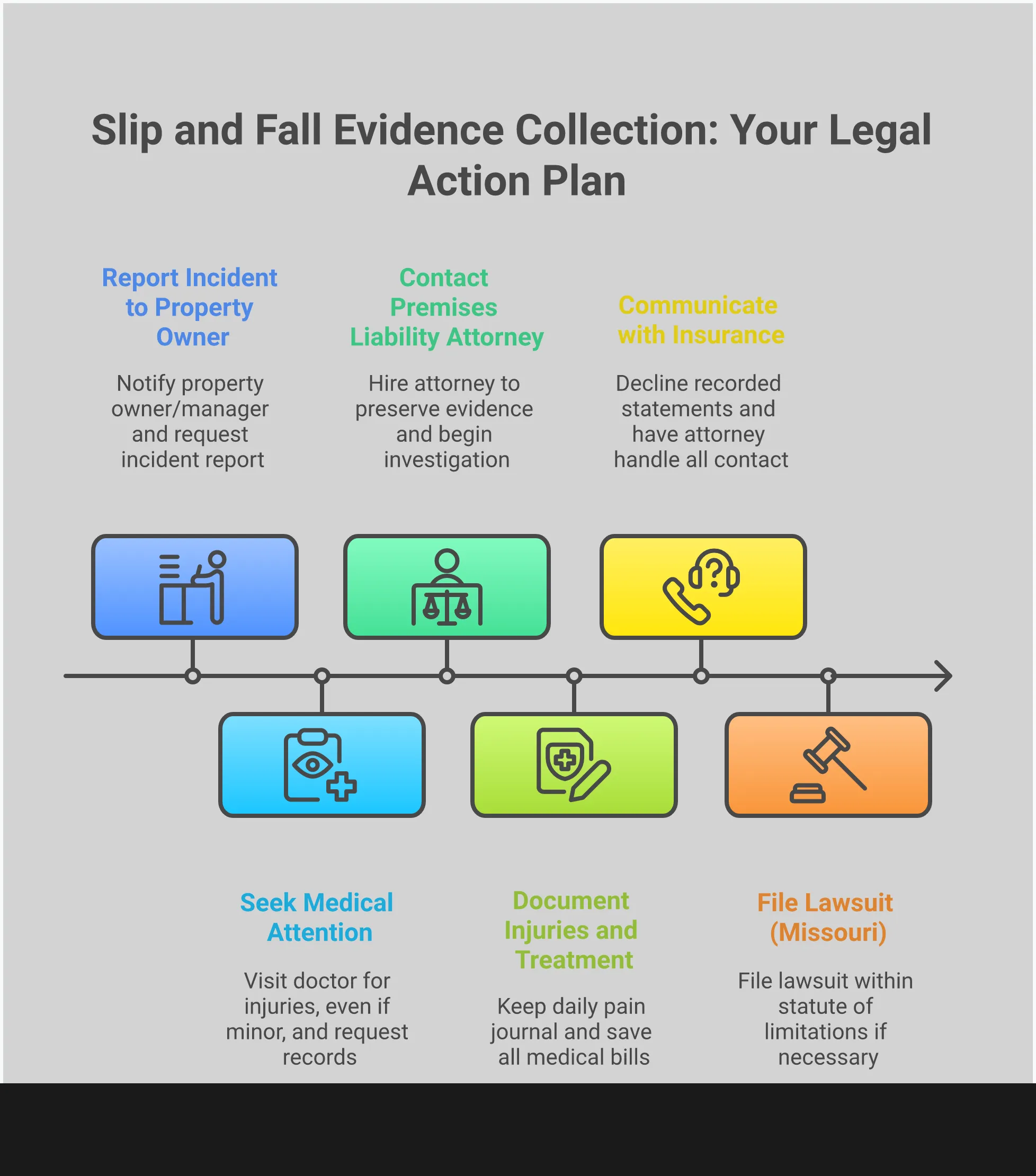
Take Photos and Notes at the Scene
If you are physically able, your phone is your most important tool right after a fall. Before the scene is cleaned up or changed, take pictures and videos of everything. Capture the specific hazard that caused you to fall—was it a wet floor with no warning sign, a cracked sidewalk, or a poorly lit staircase? Get wide shots of the area and close-ups of the problem. It’s also a good idea to photograph any visible injuries you have. If anyone saw what happened, ask for their name and phone number. Their account could be incredibly helpful later. This evidence creates a snapshot of the conditions at the time of the accident, which is essential for establishing what happened.
Prioritize Your Health: See a Doctor
Your well-being is the absolute priority. Even if you feel like you can just “walk it off,” please see a doctor as soon as possible. Some serious injuries, like concussions or internal damage, don’t show obvious symptoms right away. Seeking immediate medical care ensures you get the treatment you need and prevents a minor issue from becoming a major one. From a legal standpoint, it also creates an official record that connects your injuries directly to the fall. This medical documentation is crucial when it comes to demonstrating the extent of your injuries and the cost of your care. Don’t delay—make your health the first thing you take care of.
Tell the Manager or Property Owner
Make sure you officially report the fall to the owner, manager, or landlord of the property. Do this as soon as you can. If it’s a store, ask to speak to the manager and file an incident report. Always ask for a copy for your own records. When you explain what happened, stick to the facts: where, when, and how you fell. Avoid apologizing or saying anything that could be misinterpreted as admitting fault. The goal here is simply to create a formal record that the incident occurred on their property. This notification is a key step, as property owners have a legal duty to maintain a safe environment for visitors.
Protecting Your Claim from the Start
Be Careful What You Say and Post Online
After an accident, it’s natural to want to talk about what happened, but it’s important to be very careful with your words. When you speak with a manager or an insurance adjuster, anything you say can be recorded and potentially used to weaken your claim. Stick to the basic facts of the incident and avoid making statements like “I’m okay” or apologizing, as these can be twisted to suggest you weren’t really hurt or that you were at fault. This caution extends to your social media accounts. Insurance companies frequently review public profiles for photos or posts that might contradict your injury claim. A picture of you at a family barbecue, for example, could be used to argue that your injuries aren’t as severe as you say, even if you were in pain the entire time.
Preserve Important Physical Evidence
Physical evidence can make or break a slip and fall case, and it often disappears quickly. The hazardous condition that caused your fall—like a puddle of water or a broken handrail—could be fixed or cleaned up within minutes. This is why the photos and videos you take at the scene are so valuable. Beyond pictures, it’s also wise to preserve the shoes and clothing you were wearing at the time of the accident. An experienced attorney will act fast to secure other crucial evidence, such as requesting that the property owner preserve any security camera footage before it gets erased. This immediate action is a key part of building a strong premises liability case and proving the property owner’s negligence.
Know When to Call a Lawyer
After you’ve addressed your immediate medical needs, it’s wise to speak with an experienced personal injury attorney. You don’t have to face the insurance companies alone. Their goal is often to settle claims for the lowest amount possible, and they may try to get you to accept an offer that doesn’t cover your long-term expenses. An attorney acts as your advocate, protecting your rights and handling all communication on your behalf. A consultation will help you understand your options and what your claim might be worth. Taking this step allows you to focus on your recovery while a professional handles the legal complexities. If you’re ready to discuss your situation, you can contact our office for guidance.
Filing a Slip and Fall Claim in Missouri: What to Expect
The idea of filing a legal claim can feel overwhelming, especially when you’re focused on recovering from an injury. But knowing what to expect can make the process much clearer and less stressful. When you decide to pursue a slip and fall claim, you’re not just filling out paperwork; you’re taking a structured path toward getting the compensation you need to heal. Let’s walk through the key stages of filing a claim in Missouri so you can feel prepared for the road ahead.
How Long Do You Have to File a Claim?
First things first, there’s a deadline. In legal terms, this is called the statute of limitations. In Missouri, you generally have five years from the date of your injury to file a lawsuit. While five years might sound like a long time, it’s crucial to start the process as soon as possible. Evidence can disappear, witnesses’ memories can fade, and a strong case takes time to build. Waiting too long can jeopardize your ability to get fair compensation. Contacting an attorney early ensures all the necessary steps are taken well before the deadline approaches, giving your case the best chance of success.
Are There Exceptions to the Standard Deadline?
While the five-year deadline covers most slip and fall cases in Missouri, it’s not a one-size-fits-all rule. The law recognizes that certain circumstances can prevent someone from filing a claim within the standard timeframe. These exceptions are designed to protect the rights of individuals who may be at a disadvantage, such as minors or those who are mentally incapacitated. It’s also important to know that the rules can change dramatically if your fall happened on government property. Understanding these nuances is critical, as missing a deadline—especially a shortened one—can mean losing your right to seek compensation entirely. This is another area where an experienced attorney can provide crucial guidance on the specific legal details of your case.
Claims Against Government Property
If your slip and fall occurred on property owned by a government entity—like a public park, a city sidewalk, or inside a government building—the rules are completely different. You don’t have five years. In fact, you may have as little as 90 days to file a formal notice of your claim. This is a strict and much shorter deadline that is easy to miss if you’re not aware of it. These special rules exist to give the government entity a prompt opportunity to investigate the incident. Failing to provide this notice in time can permanently bar you from recovering any compensation, no matter how severe your injuries are. This is one of the most critical exceptions to be aware of.
Special Rules for Minors
The law provides special protections for children who are injured in accidents. If the injured person is a minor (under the age of 18), the five-year statute of limitations is “tolled,” which is a legal term for paused. The clock doesn’t start ticking until the child’s 18th birthday. This means that a child who was injured at age 10 would have until their 23rd birthday to file a lawsuit. This rule ensures that a minor’s right to seek justice isn’t lost because they are too young to take legal action themselves. It gives them the opportunity to pursue their claim once they become a legal adult.
Exceptions for Mental Capacity
Similar to the exception for minors, the statute of limitations can also be paused if the injured person is considered mentally incapacitated. This could apply to someone who suffered a traumatic brain injury in the fall and is in a coma, or an individual with a pre-existing condition that prevents them from understanding their legal rights. In these situations, the five-year clock may not start until the person is deemed mentally competent again. Proving incapacity requires specific medical and legal documentation, making these cases particularly complex. It’s a vital protection that ensures vulnerable individuals don’t lose their rights while they are unable to advocate for themselves.
What Paperwork Will You Need?
The strength of your claim often comes down to the quality of your evidence. It’s so important to document your injuries and the accident scene quickly. This means taking pictures of whatever caused your fall—a wet floor without a sign, a broken step, or an icy patch of pavement. You should also take photos of your injuries right after the accident and as they heal. If anyone saw what happened, get their names and contact information. Keep a file with all your medical bills, records, and receipts for any related expenses. A detailed, well-documented file is one of the most powerful tools you and your attorney will have.
How Your Lawyer Guides You Through the Process
You don’t have to go through this alone. A dedicated attorney will handle the complexities of your case so you can focus on your recovery. Your lawyer will conduct a thorough investigation, which includes reviewing the scene, gathering evidence, and interviewing witnesses. They will also handle all communications with the property owner and their insurance company, who are often focused on paying out as little as possible. From filing the initial claim to negotiating a settlement, your attorney is your advocate. They manage the legal legwork and ensure your rights are protected every step of the way.
What if You Think You Were Partially at Fault?
It’s easy to assume that if you fall on someone else’s property, they are automatically responsible. However, one of the most widespread myths about slip and fall accidents is that simply falling guarantees you compensation. To have a successful claim, you must prove the property owner was negligent. This means showing they knew, or should have reasonably known, about a dangerous condition and failed to fix it or provide adequate warning. Missouri also considers “comparative fault,” meaning if you were partially at fault for your accident, your compensation could be reduced. Understanding these nuances is why having an experienced personal injury attorney is so important.
What Kind of Compensation Can You Expect?
If you’ve been injured in a slip and fall, you’re likely facing unexpected bills and a lot of stress. It’s natural to wonder what kind of financial recovery you can expect. In a personal injury case, the compensation you receive is meant to cover the losses—both financial and personal—that you’ve suffered because of the accident. The goal is to help you get back to the position you were in before the injury occurred.
While every case is different, compensation typically falls into a few key categories. These are designed to address everything from the immediate medical bills piling up to the long-term impact the injury has on your life and ability to work. Understanding these categories can help you see the full picture of what a potential settlement or court award might cover. An experienced attorney can help you calculate these damages accurately to ensure you’re asking for a fair amount that truly reflects what you’ve been through.
Understanding Legal “Damages”
In the legal world, the compensation you receive for your injuries is referred to as “damages.” This isn’t about property damage; it’s about making you whole again after an accident caused by someone else’s negligence. The law recognizes that your losses aren’t just about the medical bills you can stack on a table. They also include the physical pain, the emotional toll, and the ways your life has been disrupted. Damages are broken down into different categories to account for every aspect of your suffering, from the easily calculated costs to the more personal, intangible impacts. Understanding these categories helps you see what a fair settlement should truly cover.
Special Damages for Financial Losses
Think of special damages as the black-and-white costs of your accident—the ones you can track with receipts and pay stubs. These damages are meant to cover financial losses directly caused by your injury. This includes the obvious expenses like hospital stays, doctor’s visits, and prescription medications. But it also covers the income you lost from being unable to work, the cost of physical therapy, and even travel expenses for your medical appointments. If you had to install a ramp at your home or modify your car because of your injury, those costs would fall under special damages, too. Essentially, if you have a bill for it, it’s likely a special damage that can be included in your claim.
General Damages for Non-Financial Harm
General damages are for the losses that don’t come with a price tag. These are deeply personal and compensate you for the human cost of your injury. This category addresses your physical and mental injuries, like pain, the amount of treatment you need, and how your life has changed. This includes the physical pain and suffering you’ve endured, as well as emotional distress like anxiety or depression resulting from the accident. It also considers the loss of enjoyment of life—for example, if your injury prevents you from participating in hobbies you once loved or playing with your children. Because these damages are subjective, they are more complex to calculate, which is why having an experienced attorney is so important.
When Punitive Damages May Apply
Punitive damages are in a category all their own. They aren’t designed to compensate you for your losses but to punish the person or company responsible for your injury. As the name suggests, their purpose is punitive. These are only awarded in specific situations where the defendant’s behavior was particularly outrageous or malicious. In rare cases, you might receive ‘punitive damages’ to punish extremely reckless behavior. For example, if a property owner knew about a dangerous condition that had repeatedly injured people and did absolutely nothing to fix it, a court might award punitive damages to send a clear message that such disregard for safety will not be tolerated.
Covering Your Medical Bills (Past and Future)
One of the most immediate financial burdens after a slip and fall is medical bills. Compensation is designed to cover all of your related medical costs, from the initial emergency room visit and ambulance ride to any surgeries, hospital stays, and prescription medications. But it doesn’t stop there. Serious injuries often require long-term treatment. Your settlement can also include funds for future care, such as physical therapy, rehabilitation, necessary medical equipment, or ongoing doctor’s appointments. It’s crucial to account for these future needs so you aren’t left paying out-of-pocket down the road.
Recovering Lost Income from Missed Work
An injury doesn’t just affect your health; it can also impact your paycheck. If you had to miss work while recovering, you can seek compensation for those lost wages. Be sure to keep records of the days you missed and the income you lost. In more severe cases, an injury might permanently affect your ability to do your job or earn the same amount of money as before. This is called a loss of earning capacity. For example, if a permanent injury prevents you from returning to your previous line of work, your compensation can help cover that long-term financial loss.
Accounting for Your Pain and Suffering
Not all losses come with a price tag. The physical pain, emotional distress, and general loss of enjoyment of life you experience after an accident are very real, and you can be compensated for them. This category, often called “pain and suffering,” acknowledges the human cost of an injury. It considers the physical discomfort you’ve endured and the emotional toll of the accident, including anxiety or depression. It also accounts for how the injury has limited your ability to enjoy hobbies, activities, or time with family that you once took for granted.
What Factors Influence Your Settlement?
The final settlement amount depends on several key factors. The severity of your injuries and the total cost of your medical treatment play a huge role. The amount of income you’ve lost and the long-term impact on your daily life are also critical. Another major element is proving the property owner’s negligence—you’ll need to show they knew (or should have known) about a dangerous condition and failed to fix it. Because so many variables are at play, it’s essential to work with a skilled personal injury attorney who can build a strong case on your behalf.
Related Articles
- Springfield Slip and Fall Lawyer: Your Guide to Injury Claims – The Law Office of Chad G. Mann, LLC
- Need a Personal Injury Lawyer in Springfield? Here to Help
- How to Hire a Personal Injury Lawyer in Springfield
- Your Guide to Accident Lawyers in Springfield, MO
- Slip and Fall Injury Attorney in Springfield, MO and Surrounding Areas – The Law Office of Chad G. Mann, LLC
Frequently Asked Questions
What if I’m not sure the property owner was at fault for my fall? It’s completely normal to feel uncertain about who is legally responsible. Determining fault in a slip and fall case is rarely straightforward. It involves showing that the property owner knew about a dangerous condition but failed to address it. This is a key part of what an attorney investigates for you. Even if you think you might have been partially at fault, Missouri law allows you to still recover damages. Don’t decide you don’t have a case on your own; let a legal professional evaluate the details first.
How much does it actually cost to hire a slip and fall attorney? Concerns about cost should never stop you from getting legal help. Most personal injury attorneys, including our firm, work on a contingency fee basis. This means you pay nothing upfront. The attorney’s fee is a percentage of the settlement or award they win for you. If you don’t receive compensation, you don’t owe any attorney fees. This structure allows you to pursue justice without any financial risk.
The property owner’s insurance adjuster called me. What should I say? It’s best to say as little as possible. You can politely decline to give a recorded statement and tell them your attorney will be in touch. Insurance adjusters are trained to protect their company’s interests, and anything you say could potentially be used to reduce your claim’s value. Once you hire an attorney, they will handle all communications with the insurance company, protecting your rights and ensuring you don’t unintentionally harm your case.
My injuries didn’t seem that bad at first, but now I’m in a lot of pain. Is it too late? No, it’s not too late, but it is important to act quickly. Some injuries take time to fully appear, which is why seeking a medical evaluation right after a fall is so critical, even if you feel fine. Continue to follow up with your doctor to document your symptoms and treatment. This medical record is essential for connecting your worsening condition to the accident. An attorney can help you build a case that reflects the true extent of your injuries, not just how they felt in the first few hours.
Will I definitely have to go to court? Most people worry about this, but the reality is that the vast majority of personal injury cases are settled out of court. A skilled attorney will build a strong case and negotiate with the insurance company to reach a fair settlement that covers your losses. Preparing a case as if it will go to trial is actually the best way to show the other side you are serious, which often leads to a better settlement offer without ever needing to step inside a courtroom.
If you or a loved one has been affected by a slip and fall in Springfield or Southwest Missouri, the experienced legal team at The Law Office of Chad G. Mann is here to help. Contact our Springfield slip and fall lawyer for a free consultation, or call (417) 842-8679 today.
Have you been injured? Take our free injury questionnaire to help us understand your case, or call (417) 842-8679 for a free consultation today.