

Is the problem a squirrel chewing on your siding or the dog next door that barks all night? Legally speaking, the answer changes everything. In Missouri, issues with wildlife and problems with domestic pets are handled under completely different sets of rules. One falls under the state’s Wildlife Code, while the other is governed by local city or county ordinances. This distinction is the most important thing to understand when navigating the animal nuisance laws Missouri has established. This article breaks down both sides of the issue, clarifying who you should call, what your responsibilities are, and how you can legally address the specific animal problem you’re facing.
Key Takeaways
- Know Which Rules Apply: Your legal options depend on whether the animal is wild or domestic. Nuisance wildlife is governed by the state’s Wildlife Code, while problems with pets, like a neighbor’s barking dog, are handled by local city and county laws.
- Protect Your Property Within the Law: Missouri allows you to remove most animals causing damage without a permit, but this right has limits. You cannot harm protected species, and you are legally required to report any animal taken to the Missouri Department of Conservation within 24 hours.
- Start with Prevention, but Call a Pro When Needed: The most effective long-term solution is making your property unattractive to wildlife by removing food and shelter. If that fails, or if you’re facing a dangerous animal, hiring a licensed professional is the safest way to resolve the issue.
What Is a Nuisance Animal in Missouri?
When you hear the term “nuisance animal,” you might picture a cartoon raccoon tipping over a trash can. While that’s a classic example, the legal definition in Missouri is a bit more specific. Simply put, a nuisance animal is any wild creature that is causing property damage, creating a health or safety hazard, or just being a persistent pest. It’s not about the animal itself being “bad,” but about the conflict that arises when its natural behaviors interfere with our lives and property.
Understanding what qualifies as a nuisance is the first step in knowing your rights and responsibilities as a property owner. The rules for dealing with a squirrel chewing on your attic wires are very different from handling a neighbor’s dog that won’t stop barking. Missouri law provides clear guidelines for managing wildlife issues, ensuring you can protect your property while still respecting the state’s natural resources. This distinction is important because how you can legally handle the situation depends entirely on whether the animal is considered wild or domestic.
Wildlife vs. Pets
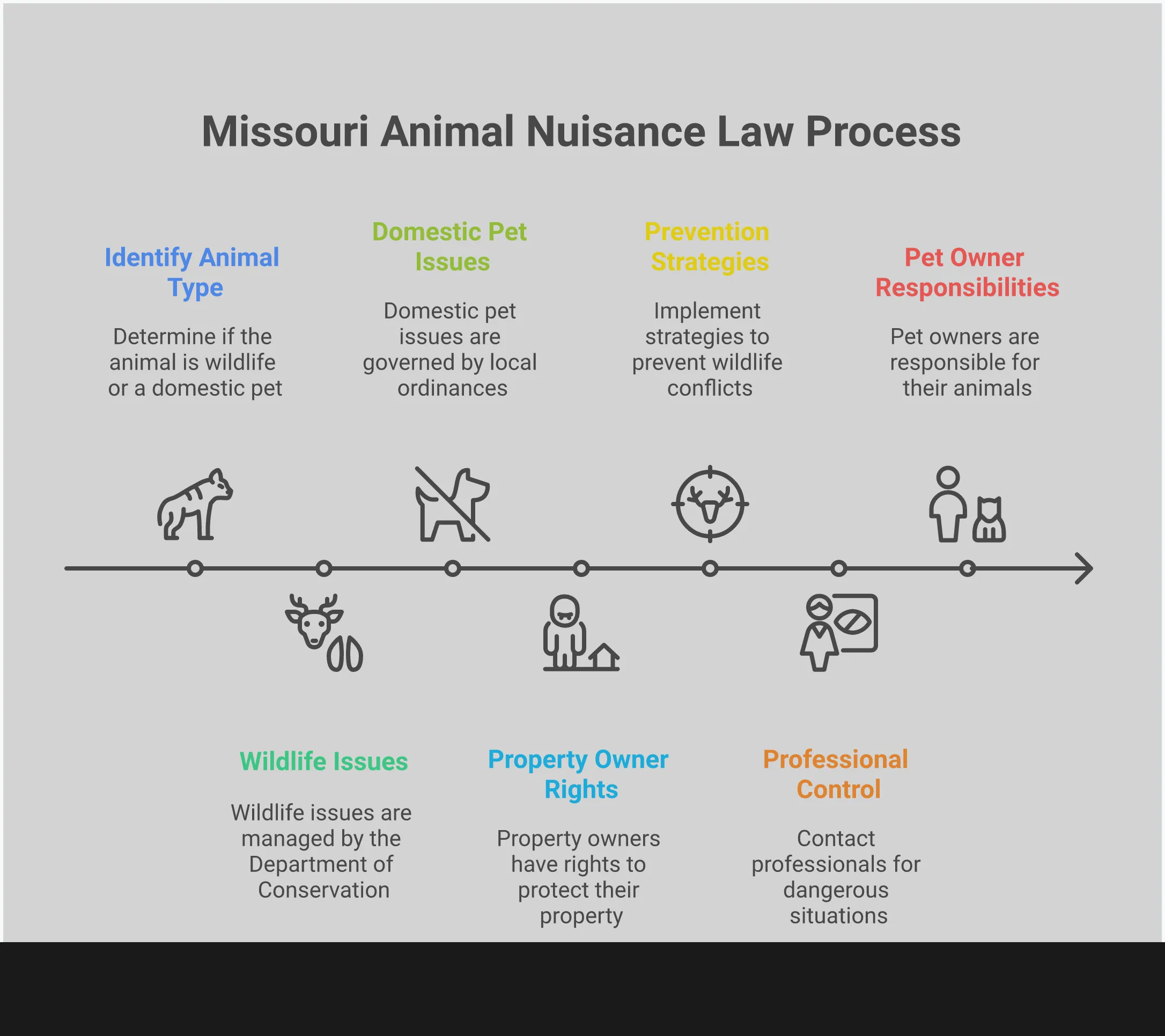
The key distinction in Missouri law is between wildlife and domestic animals. Nuisance animal regulations almost always refer to native wildlife. The Missouri Department of Conservation explains that these are animals native to the state that are causing trouble. Think of deer eating your garden, beavers flooding a part of your land, or Canada geese deciding your local park is a year-round residence.
These situations are handled under the Wildlife Code of Missouri. On the other hand, problems caused by pets—like dogs, cats, or other domestic animals—fall under local city or county ordinances. So, while a raccoon in your chimney is a wildlife issue, a barking dog next door is a separate matter for your local animal control.
Common Critters and Their Habits
Missouri is home to a wide variety of wildlife, and many species can occasionally become a nuisance. The most common culprits include raccoons, opossums, skunks, squirrels, groundhogs, coyotes, and deer. Each one brings its own unique set of challenges, from groundhogs digging destructive burrows under your shed to deer treating your prize-winning roses like an all-you-can-eat buffet.
If you’re dealing with property damage, the good news is you often have the right to address the problem. According to state wildlife control guidelines, property owners can usually trap or shoot most animals causing damage without needing a special permit, even outside of normal hunting seasons. However, there are important exceptions and rules to follow, especially for protected species.
What Are Missouri’s Rules for Nuisance Wildlife?
When a wild animal starts causing trouble on your property, it’s easy to feel frustrated and unsure of what to do next. Before you take action, it’s important to know that the state has specific regulations you need to follow. These rules are laid out in the Wildlife Code of Missouri and are designed to manage wildlife populations responsibly while allowing property owners to protect their land and homes.
Understanding these guidelines is your first step toward resolving the issue safely and legally. The rules cover everything from whether you need a permit to which animals are off-limits and how to properly handle the situation after an animal has been removed. Following them not only keeps you on the right side of the law but also ensures that wildlife is handled humanely and effectively.
Do You Need a Permit?
For the most part, if a wild animal is damaging your property, Missouri law allows you to handle the problem without getting a permit first. This means you or a professional you hire can typically shoot or trap most nuisance animals, even if it’s outside of the regular hunting season. The key here is that the animal must be actively causing damage—think of a raccoon tearing up your roof or a groundhog digging under your foundation. This provision in the law gives you the immediate ability to protect your property from further harm without waiting for official approval.
Protected Animals You Can’t Touch
There are some very important exceptions to the no-permit rule. You cannot shoot or trap certain protected species, even if they are causing damage. This protected list includes migratory birds, white-tailed deer, mule deer, elk, turkeys, black bears, mountain lions, and any endangered species. If one of these animals is the source of your problem, your only legal course of action is to contact your local county conservation agent or a Missouri Department of Conservation (MDC) office. They have the training and authority to handle these specific situations safely and legally.
Rules for Reporting and Disposal
After you’ve dealt with a nuisance animal, your responsibilities aren’t over. The law requires you to report any animal you take to the Missouri Department of Conservation within 24 hours. When you call, they will provide instructions for what to do with the animal. According to the state’s Wildlife Control Guidelines, you generally have a few options for disposal. You can bury the animal on your property, leave it in a remote area for nature to take its course, or bag it for your regular trash pickup—though you might want to freeze it first to manage any odor.
What Are Your Rights as a Property Owner?
Finding a raccoon in your trash cans or a groundhog burrowing under your porch can be incredibly frustrating. As a property owner in Missouri, you have rights when it comes to protecting your home and land from damage caused by wildlife. The good news is that you don’t always have to wait for official help. According to the Missouri Department of Conservation, if an animal is damaging your property, you or a professional you hire can typically shoot or trap most of these problem animals without needing a special permit, even outside of regular hunting seasons.
This gives you the power to take action when you need to. However, it’s important to know that this right comes with responsibilities. The key is to understand which animals are included and what rules you need to follow. Not all wildlife is fair game, and any actions you take must be handled safely and legally. Before you set a trap or take more drastic measures, it’s wise to familiarize yourself with the state’s wildlife control guidelines to ensure you’re acting within the law and handling the situation effectively.
How to Protect Your Property from Damage
The best way to deal with nuisance wildlife is to prevent them from showing up in the first place. Animals are usually looking for three things: food, water, and shelter. If you make your property less inviting, they’ll likely move on. The Missouri Department of Conservation suggests a simple but effective strategy: “Keep attractants like pet food, garbage, and animal feed put away so wildlife can’t get to them.” Securing your trash can lids, feeding pets indoors, and cleaning up fallen fruit from trees can make a huge difference. Taking these small, preventative steps can save you a lot of headaches down the road.
Can You Defend Yourself Against Nuisance Animals?
Yes, you can defend your property, but you have to do it by the book. While you have the right to manage wildlife causing damage, your actions are governed by state law. The Missouri Department of Conservation is clear: “You must follow the Wildlife Code of Missouri when dealing with problem wildlife.” This means you can’t just do whatever you want. A critical rule to remember is that any control measures you take must happen on your own property. You can’t pursue an animal onto a neighbor’s land or public property. Sticking to these guidelines ensures you’re protecting your property without breaking the law.
A Quick Look at Missouri’s Wildlife Code
The Wildlife Code of Missouri is the official rulebook for managing the state’s animal populations, and it includes regulations for dangerous wild animals. The main goal of these laws is to protect the public. As the Missouri Revisor of Statutes explains, “The law aims to control who can keep dangerous wild animals and where, to ensure public safety.” If you own an animal classified as dangerous, like a lion, tiger, or bear, you are required by Missouri law to register it with your local law enforcement agency. This code helps ensure that both wildlife and people can coexist safely.
What Are a Pet Owner’s Responsibilities Under Missouri Law?
While dealing with raccoons in the attic is one thing, navigating issues with neighborhood pets is a completely different challenge. In Missouri, owning a pet comes with a set of legal responsibilities designed to ensure your furry friend doesn’t become a problem for others. These rules aren’t just about being a good neighbor—they’re about preventing property damage and injuries.
Most specific regulations, like leash laws, are handled at the city or county level. However, they all stem from the same core legal principle: you are responsible for controlling your animal and are liable for what it does. If your dog digs up a neighbor’s prize-winning garden or, worse, bites someone, you can be held legally and financially accountable. Understanding these duties is the first step in protecting yourself, your pet, and your community. If an incident does occur, it often falls under premises liability law, which holds property owners responsible for injuries that happen on their land.
Keep Your Pet from Becoming a Nuisance
The term “nuisance” can feel a bit vague, but when it comes to pets, it has a clear meaning. It’s all about preventing your animal from negatively impacting your neighbors’ lives. As the city of Chesterfield explains, residents must “make sure their dogs, cats, or other animals do not roam freely (‘at large’).” They also have a duty to ensure their animals do not cause problems for others, which is the very definition of a nuisance.
This goes beyond just keeping your dog from running loose. A pet can be considered a nuisance if it damages property, chases people or cars, attacks other animals, or creates unsanitary conditions with its waste. Essentially, your responsibility is to manage your pet so it doesn’t interfere with your neighbors’ ability to peacefully enjoy their own property.
Leash Laws and Keeping Your Pet Contained
While state law addresses liability for dogs running loose, most specific leash laws are created and enforced by local municipalities. Nearly every city and county in Missouri has an ordinance requiring dogs to be on a leash and under your control whenever they are off your property. This is one of the most fundamental rules of responsible pet ownership.
Keeping your pet contained isn’t just about following the rules; it’s about safety. A secure fence, a reliable leash, and attentive supervision prevent your pet from getting lost, hit by a car, or causing harm to others. Under Missouri law, pet owners can be held strictly liable for damages their animal causes. Proper containment is your best defense against accidents and the potential legal issues that follow.
What to Do About Barking and Other Behaviors
A dog that barks when the mail carrier arrives is one thing. A dog that barks for hours on end is another. Legally, a nuisance is anything that “interferes with how you use or enjoy your property,” which can absolutely include excessive noise. While every pet makes noise, constant, disruptive barking, howling, or other sounds can cross the line from a minor annoyance to a legitimate legal nuisance.
The same goes for aggressive behaviors, like growling or charging at people through a fence, or strong, unpleasant odors from a yard that isn’t cleaned regularly. If you’re a pet owner, be mindful of these behaviors and consider training or other solutions to address them. If you’re the one being affected, the first step is often a calm conversation with your neighbor, but if that fails, you may have grounds for a formal nuisance complaint.
How Can You Legally Handle Nuisance Wildlife?
When you’re dealing with a raccoon in your trash cans or a squirrel in your attic, you want a solution, and you want it fast. The good news is that Missouri law gives property owners several options for dealing with nuisance animals. The key is to handle the situation legally and safely. Your approach can range from simple preventative tactics to more direct intervention, depending on the animal and the extent of the problem. Before you take action, it’s helpful to understand the different methods available and the rules that go along with them. This way, you can protect your property without accidentally breaking the law.
Preventative Measures and Habitat Changes
The easiest way to solve a wildlife problem is to prevent it from happening in the first place. Most animals are drawn to your property for two simple reasons: food and shelter. If you can remove these attractions, they’ll often move on by themselves. The Missouri Department of Conservation puts it simply: “Keep attractants like pet food, garbage, and animal feed put away so wildlife can’t get to them.” Securing your trash can lids, feeding pets indoors, and cleaning up fallen fruit from trees can make a huge difference. You can also make your property less inviting by sealing holes in your foundation, capping your chimney, and trimming overgrown shrubs where animals might hide.
Best Practices for Humane Trapping
If preventative measures aren’t enough, trapping may be your next step. You don’t always have to buy your own equipment. As the Missouri Department of Conservation notes, “You can often rent traps from local animal control agencies or rental companies. Hardware and garden stores also sell them.” Before you set a trap, however, you need a plan. What will you do with the animal once you catch it? Releasing wildlife on your own can be tricky, as you may need a permit to move a live animal to a new location. It’s important to research proper wildlife control methods to ensure you’re handling the situation humanely and legally.
When Is Lethal Control an Option?
In situations where an animal is causing significant property damage, Missouri law allows for lethal control. According to the Missouri Department of Conservation, “If wildlife is damaging your property, you or someone you hire can usually shoot or trap most problem animals without a permit and even outside of hunting season.” Notice the word “most”—this rule doesn’t apply to protected species. If you do have to take this step, you are legally required to report any animal taken to the Missouri Department of Conservation within 24 hours. They will also provide you with specific instructions for disposal. This is a critical step in the process that ensures you remain in compliance with state regulations.
Your Toolkit for Managing Nuisance Wildlife
When you’re dealing with a persistent animal problem, it’s easy to feel overwhelmed. The good news is you have several effective and legal options at your disposal. The key is to choose the right tool for the job, whether that means preventing animals from getting in, scaring them away, or knowing when to call for backup. Different situations call for different strategies, and understanding your options can save you a lot of time and frustration.
Before taking any drastic measures, it’s worth exploring these proven methods for managing wildlife on your property. Many of these tactics are simple, humane, and can provide a long-term solution to your nuisance animal issues. From physical barriers to professional services, here’s a breakdown of the tools you can use to protect your home and yard. Remember, the goal is to resolve the conflict with as little harm as possible to both your property and the animal.
Using Barriers and Exclusion Tactics
One of the most effective ways to handle nuisance wildlife is to stop them from entering an area in the first place. This approach, known as exclusion, involves using physical barriers to block access. Think of it as proactive defense for your property. You can install fences around your garden, place netting over fruit trees, or add a cap to your chimney. According to experts on wildlife control methods, exclusion is often a lasting and humane solution. While it can be expensive to implement over a large area, the long-term peace of mind is often worth the initial investment.
Repellents and Scare Tactics That Work
If a barrier isn’t practical, frightening devices can be a good alternative for scaring animals away. These tactics work by creating an environment that feels unsafe for wildlife. You can use visual deterrents like shiny scare tape or plastic owls, audio devices that emit loud noises, or even motion-activated sprinklers that startle critters. The main drawback is that animals can get used to these devices over time, making them less effective. For this reason, scare tactics are often best used as a short-term fix or in combination with other methods to keep wildlife guessing.
Hiring a Professional Wildlife Service
Sometimes, a nuisance animal problem is too big or too dangerous to handle on your own. If you’re dealing with an aggressive animal or need to use specialized traps like foothold or body-gripping traps, it’s time to call a professional. The Missouri Department of Conservation’s Wildlife Control Guidelines recommend contacting your local county conservation agent in these situations. They can connect you with a licensed local trapper or an MDC wildlife-damage biologist who has the skills and equipment to resolve the issue safely and legally. Don’t hesitate to ask for help when you need it.
What Happens If You Break Animal Nuisance Laws?
Ignoring animal nuisance laws in Missouri can lead to more than just a frustrated neighbor. The consequences can be serious, ranging from financial penalties to legal action. Whether you’re dealing with wildlife on your property or managing your own pets, understanding the potential repercussions is key to handling the situation correctly and protecting yourself from liability.
Fines, Misdemeanors, and Other Penalties
If you violate state statutes regarding animal nuisance or neglect, you could face significant penalties. Depending on the severity of the offense, certain violations are classified as class C misdemeanors. This isn’t just a simple ticket; a misdemeanor charge goes on your legal record and often comes with hefty fines. These consequences are designed to ensure that both pet owners and property owners take their responsibilities seriously. Failing to follow the rules for trapping, for example, or allowing your pet to become a public nuisance can quickly escalate into a legal issue with lasting financial and personal impacts.
Being Held Liable for Property Damage
If an animal you own or are responsible for causes damage or interferes with a neighbor’s use of their property, you could be held financially responsible. Under the private nuisance law in Missouri, a nuisance is anything that disrupts someone’s ability to use or enjoy their property. This can include persistent noise, unpleasant odors, or property damage. If the problem is severe enough to be considered a permanent nuisance, you could be sued for the decrease in your neighbor’s property value. This makes it crucial to manage your pets and any wildlife issues on your land proactively to avoid a costly civil lawsuit.
How Nuisance Laws Are Enforced
Enforcement of these laws involves following a clear set of rules, especially when it comes to wildlife. The first step is always to adhere to the Wildlife Code of Missouri, which details the proper and legal methods for handling problem animals. This code is the primary guide for enforcement across the state. However, local governments often have their own specific ordinances. Before you set a trap or take any other action, you need to check with your city or county officials about their regulations. Local rules can vary widely, and following them is essential to ensure you’re handling the situation legally and effectively.
When Should You Call a Wildlife Professional?
While many minor wildlife issues can be handled with simple, at-home solutions, some situations call for professional expertise. Trying to manage a persistent or dangerous animal on your own can lead to property damage, injury, or legal complications. A professional wildlife control operator has the training, equipment, and knowledge of local laws to resolve the problem safely and effectively. If you find yourself in a situation that feels too big to handle, or if your own efforts aren’t working, bringing in an expert is the smartest and safest path forward. They can not only remove the animal but also help you identify and fix the underlying issues that attracted it in the first place.
Signs It’s Time to Call a Pro
It’s time to call a professional when the animal poses a safety risk to you, your family, or your pets. This includes any animal that appears sick, acts aggressively, or is a known carrier of diseases like rabies. You should also seek help if the animal is located in a hard-to-reach or dangerous area, such as a chimney, attic, or within your walls. If wildlife is causing significant or repeated damage to your property, the Missouri Department of Conservation clarifies that you can hire someone to handle it. When your own humane deterrents have failed and the animal keeps returning, an expert can offer a more permanent solution and prevent future issues.
How to Find a Licensed Professional
Finding a qualified expert in Missouri is straightforward. You can start by searching online for local businesses under terms like “wildlife removal,” “animal control,” or “pest control.” For a list of state-approved experts, the Missouri Department of Conservation is your best resource. They provide guidance and can help you find a licensed professional trained to handle nuisance wildlife legally and humanely. You can also contact your local county conservation agent for referrals, especially if you’re dealing with a protected species. Before hiring anyone, be sure to ask if they are licensed and insured and what methods they use to ensure the problem is resolved for good.
Who to Call: Local Authorities and Animal Control
When you’re dealing with a raccoon in the attic or a groundhog tearing up your garden, knowing who to call can feel overwhelming. For wildlife issues, it’s best to contact a specialist. The Missouri Department of Conservation (MDC) is the primary authority and maintains a list of approved experts trained to handle nuisance and problem species safely and legally. Contacting one of these professionals ensures the problem is addressed effectively and helps you avoid breaking state laws. They can identify the animal, determine the best course of action, and implement a solution.
City vs. State: Who Makes the Rules?
In Missouri, managing wildlife is a bit of a team effort between state and local governments. The state sets the foundation with the Wildlife Code of Missouri, which outlines the general rules for dealing with problem animals. However, your local city or county government can have its own, often stricter, ordinances. For example, state law might permit certain types of traps, but your city could have specific regulations about where or how they can be used. This is why it’s so important to do your homework before taking action. Always check your local municipal code in addition to the state’s wildlife control guidelines. A quick call to your city hall or a visit to their website can save you from accidentally breaking a local rule.
How to Report a Nuisance Animal
If you end up taking action against a nuisance animal on your property, your responsibility doesn’t end there. Missouri law requires you to report the incident to the Missouri Department of Conservation within 24 hours. This report is crucial because the MDC will then provide you with specific instructions for the proper and legal disposal of the animal. This process ensures that everything is handled in a way that is safe and compliant with state regulations. On the flip side, if the nuisance is a domestic animal, the rules are different. Many cities, like Chesterfield, have ordinances that address animal complaints and hold pet owners responsible for their animals’ behavior. This includes everything from roaming freely to excessive barking.
Related Articles
- Missouri’s Miscellaneous Animal Laws – Barking Dog Nuisance
- Missouri Animal Laws – The Law Office of Chad G. Mann, LLC
- Missouri Animal Law – The Law Office of Chad G. Mann, LLC
- When Wild Animals Attack in Missouri – Strict Liability
- Domestic Animal Laws Missouri – The Law Office of Chad G. Mann, LLC
Frequently Asked Questions
What’s the first thing I should do if I suspect a wild animal is causing damage? Before you do anything else, try to identify the animal and the extent of the damage. Your first and best line of defense is often making your property less attractive. This means securing trash cans, bringing pet food inside, and sealing any potential entry points into your home, like gaps in the foundation or an uncapped chimney. Often, removing the source of food or shelter is enough to encourage the animal to move on without any further intervention.
Can I get in trouble for getting rid of a nuisance animal on my own? Yes, you absolutely can if you don’t follow the rules. While Missouri law allows property owners to handle most animals causing damage without a permit, there are strict guidelines. You must report any animal you take to the Missouri Department of Conservation within 24 hours, and you cannot take action against protected species like deer, bears, or turkeys. Always check your local city or county ordinances as well, as they may have additional restrictions.
My neighbor’s dog won’t stop barking. Does that count as a nuisance animal issue? This is a common point of confusion. The state’s nuisance wildlife laws apply specifically to wild animals native to Missouri. Problems with domestic pets, like a constantly barking dog or a cat that damages your garden, are handled under local city or county ordinances. While it is still considered a legal nuisance, the process for resolving it is different and typically involves your local animal control rather than the Department of Conservation.
What if the animal causing problems is a deer or a black bear? If you’re dealing with a protected species like a deer, bear, turkey, or mountain lion, you cannot take matters into your own hands. These animals are managed differently under state law, even if they are causing significant property damage. Your only legal option is to contact your local county conservation agent or a Missouri Department of Conservation office. They have the authority and expertise to handle these specific situations safely and legally.
Do I have to kill the animal, or are there non-lethal ways to handle the problem? You have several non-lethal options, and they are often the most effective long-term solutions. Using barriers like fences or chimney caps to physically block an animal’s access is a great strategy. You can also try scare tactics like motion-activated sprinklers or shiny tape to make an area feel unsafe. If those methods fail, humane trapping is another possibility, but be sure you have a plan for what to do with the animal once it’s caught, as relocating wildlife may require a permit.