


You’ve seen the billboards and the commercials. When you’re looking for legal help after an injury, it can feel like you have too many options and not enough information. But here’s the truth: not all attorneys are created equal, especially for a personal injury case. Making the right choice is about more than picking a name from a list; it’s about finding a dedicated partner for your recovery. Understanding what to look for in a personal injury lawyer in Springfield is the key. We’ll walk you through the essential steps to vet your options and select a firm with the experience your case deserves.
Key Takeaways
- Focus on a Local Personal Injury Specialist: Your case deserves an attorney who concentrates on personal injury law in Missouri. Verify they are licensed, have a strong track record with cases similar to yours, and understand the Springfield court system.
- Understand the Contingency Fee Structure: You shouldn’t pay any attorney fees unless you win your case. Before hiring anyone, get a written agreement that clearly explains the fee percentage and how other case-related costs are handled so there are no surprises.
- Treat the Consultation as Your Interview: Come prepared with questions about communication, case strategy, and timelines. The right lawyer will answer clearly, listen to your concerns, and make you feel comfortable and respected from the very first meeting.
Do You Have a Personal Injury Case in Springfield?
“Personal injury law” might sound complicated, but the idea behind it is straightforward: if you’ve been hurt because someone else was careless or acted wrongfully, you have the right to seek compensation. This area of law, also known as tort law, provides a legal path for you to recover the costs associated with your injury. It’s a system designed to help you manage overwhelming medical bills, make up for lost income when you can’t work, and account for the physical pain and emotional distress you’ve experienced. The ultimate goal is to make you “whole” again, at least from a financial standpoint, after an accident that wasn’t your fault.
Essentially, personal injury law is about fairness. It ensures that the person or entity responsible for causing harm is held accountable. This legal framework covers a vast range of incidents, from a car crash on Glenstone Avenue to a slip and fall at a local business. Knowing that you have rights is the first and most important step toward recovery. It allows you to focus on healing while your legal team works to secure the resources you need. Our firm is dedicated to helping clients through these difficult times, and you can explore our specific practice areas to understand the full scope of how we can assist you.
What Kinds of Cases Qualify as Personal Injury?
When people hear “personal injury,” they often think of car accidents, and for good reason—they are very common. But this area of law covers much more than just collisions. You might have a personal injury case if you’ve been harmed in a variety of situations.
Here are some of the most frequent types of cases we see:
- Car, truck, and motorcycle accidents
- Slip and fall incidents (a type of premises liability)
- Medical mistakes or malpractice
- Injuries that happen at work
- Harm caused by defective products
- Dog bites
- Wrongful death, where a family seeks justice for a loved one
- Bicycle and pedestrian accidents
If you’ve experienced an injury in one of these scenarios, it’s worth exploring your legal options. You can find more detailed information in my articles on these topics.
How Long Do You Have to File a Claim in Missouri?
In Missouri, there’s a time limit for filing a personal injury lawsuit, known as the statute of limitations. Think of it as a legal deadline. If you miss it, you could lose your right to seek compensation forever, no matter how strong your case is.
For injuries caused by negligence or carelessness—like most car accidents or slip and falls—you generally have five years from the date of the incident to file a lawsuit. However, for injuries that were caused intentionally, the window is shorter, typically two years. Because every case has unique details, it’s crucial not to wait. Evidence can disappear, and memories can fade. The best thing you can do is speak with an attorney as soon as possible to understand the specific deadline for your situation. Don’t hesitate to contact us for a consultation.
Exceptions to the Standard Deadline
While the five-year deadline covers many situations, the law recognizes that some circumstances are unique. Missouri has specific exceptions to this rule to ensure fairness, especially for those who are most vulnerable or are facing different types of harm. It’s important to know about these because they can dramatically change the timeline for your case.
- For Minors: If the injured person is under the age of 21, the clock on the statute of limitations is paused. They have five years from their 21st birthday to file a claim. This rule exists to protect children, giving them the chance to pursue a claim once they are legal adults and can make those decisions for themselves.
- For Mental Incapacity: Similarly, the law provides protection for individuals who are mentally incapacitated at the time of their injury. The statute of limitations is paused, or “tolled,” until they are deemed mentally competent again. This ensures that someone’s inability to advocate for themselves doesn’t prevent them from seeking justice later on.
- For Wrongful Death: When an injury tragically results in a person’s death, the case becomes a wrongful death claim. The timeline for the surviving family members to file is different—typically three years from the date of death, not the date of the initial incident. This is a critical distinction for grieving families to understand as they consider their legal options.
Navigating these timelines can be tricky, and misinterpreting a deadline can jeopardize your entire case. Because every situation is different, getting clear guidance is essential. An experienced attorney can help you understand exactly how these rules apply to you and ensure you don’t miss your window to seek justice. If you have questions about your specific circumstances, we’re here to help you understand your legal options.
What to Do to Protect Your Claim After an Accident
The moments following an accident are often a blur of confusion and adrenaline. It’s hard to think clearly when you’re shaken up, but the actions you take—and the words you say—can have a lasting impact on your ability to get fair compensation. Protecting your claim starts right at the scene. By being mindful of a few key dos and don’ts, you can build a strong foundation for your case and avoid common mistakes that insurance companies often use to deny or reduce a settlement. It’s about being prepared and knowing how to safeguard your rights from the very beginning.
What to Say (and What to Avoid Saying)
In the aftermath of an accident, it’s natural to want to be helpful or polite. However, your words can easily be taken out of context. Insurance adjusters are trained to look for any statement that could shift blame or minimize the severity of the incident. What you say to the other driver, witnesses, and especially to insurance representatives can become official record. Knowing what to avoid saying is just as important as knowing what information to share. This isn’t about being difficult; it’s about being precise and protecting your future well-being.
Avoid Admitting Fault or Apologizing
Even if you think you might have been partially to blame, never admit fault at the scene. A simple “I’m so sorry” can be interpreted as an admission of guilt, even if you just meant it as a sympathetic gesture. The full picture of what caused the accident often isn’t clear until all the evidence is reviewed. Let the police and insurance companies conduct their official investigations to determine fault. Stick to the facts of what happened without offering opinions or apologies. Your priority is to ensure everyone is safe and to exchange necessary information.
Don’t Downplay Your Injuries by Saying “I’m Fine”
Adrenaline is a powerful chemical that can mask serious pain. After a collision or a fall, you might not immediately feel the effects of an injury like whiplash, a concussion, or internal damage. Replying with “I’m fine” or “I’m not hurt” can be used against you later. An insurance company might argue that your injuries weren’t caused by the accident if you initially said you were okay. The safest response is to say you’re not sure how you feel and that you plan to see a doctor. Always seek a medical evaluation, even if you don’t think you’re seriously injured.
Decline to Give a Recorded Statement to the Other Insurer
Soon after the accident, you will likely get a call from the other party’s insurance adjuster. They will be friendly and may ask you to provide a recorded statement about what happened. You are not legally obligated to do this, and it’s almost always a bad idea. The adjuster’s job is to protect their company’s bottom line, and they are skilled at asking questions designed to get you to say something that weakens your claim. Politely decline their request and tell them your attorney will be in touch. Before speaking with any insurance representative, it’s wise to get legal advice to ensure your rights are protected.
Stay Off Social Media
In the age of sharing, it’s tempting to post about a major life event like an accident. However, you should resist the urge. Insurance companies actively search claimants’ social media profiles for anything they can use to dispute a claim. A photo of you at a family barbecue or a comment about feeling better could be twisted to suggest your injuries aren’t as severe as you claim. The best policy is to stop posting on all social media platforms until your case is fully resolved. Also, ask friends and family not to post photos of you or tag you in their posts.
Evidence to Collect for Your Claim
While avoiding certain statements is crucial, proactively gathering evidence is just as important for building a strong case. The more documentation you have, the clearer the picture of the accident and its impact on your life becomes. Think of yourself as a fact-finder. Your attorney will use the information you collect to reconstruct the event and demonstrate the extent of your damages. Taking a few simple steps to preserve evidence can make a significant difference in the outcome of your claim, ensuring you have the proof needed to support your side of the story.
Gather Witness Names and Contact Information
Independent witnesses can be incredibly valuable to your case. Their unbiased accounts of what happened can confirm your version of events and counter any conflicting stories from the other party. If anyone saw the accident, politely ask for their name and phone number. Most people are willing to help. A neutral third-party perspective can carry a lot of weight with insurance companies and, if necessary, a jury. Don’t rely on the police to get everyone’s information; they may be busy and could miss someone.
Get the Official Accident Report Number
If the police respond to the scene, they will create an official accident report. This document contains essential details, including the officer’s initial assessment of fault, diagrams of the scene, and statements from drivers and witnesses. Make sure you get the report number from the responding officer before you leave. You should also ask for the officer’s name and badge number. This report is a critical piece of evidence, and having the number will make it much easier for you or your attorney to obtain a copy later.
Keep a Personal Diary of Your Symptoms and Appointments
Your memory will fade over time, but a written record is permanent. Start a journal to document your recovery journey. Each day, write down your pain levels, any physical limitations you’re experiencing, and how the injuries are affecting your daily activities—from sleeping and working to household chores. Also, keep track of all doctor’s appointments, medications, and mileage to and from medical visits. This detailed diary provides powerful evidence of your pain and suffering and helps ensure that all your related expenses are accounted for when calculating your compensation.
How to Choose the Right Personal Injury Lawyer in Springfield
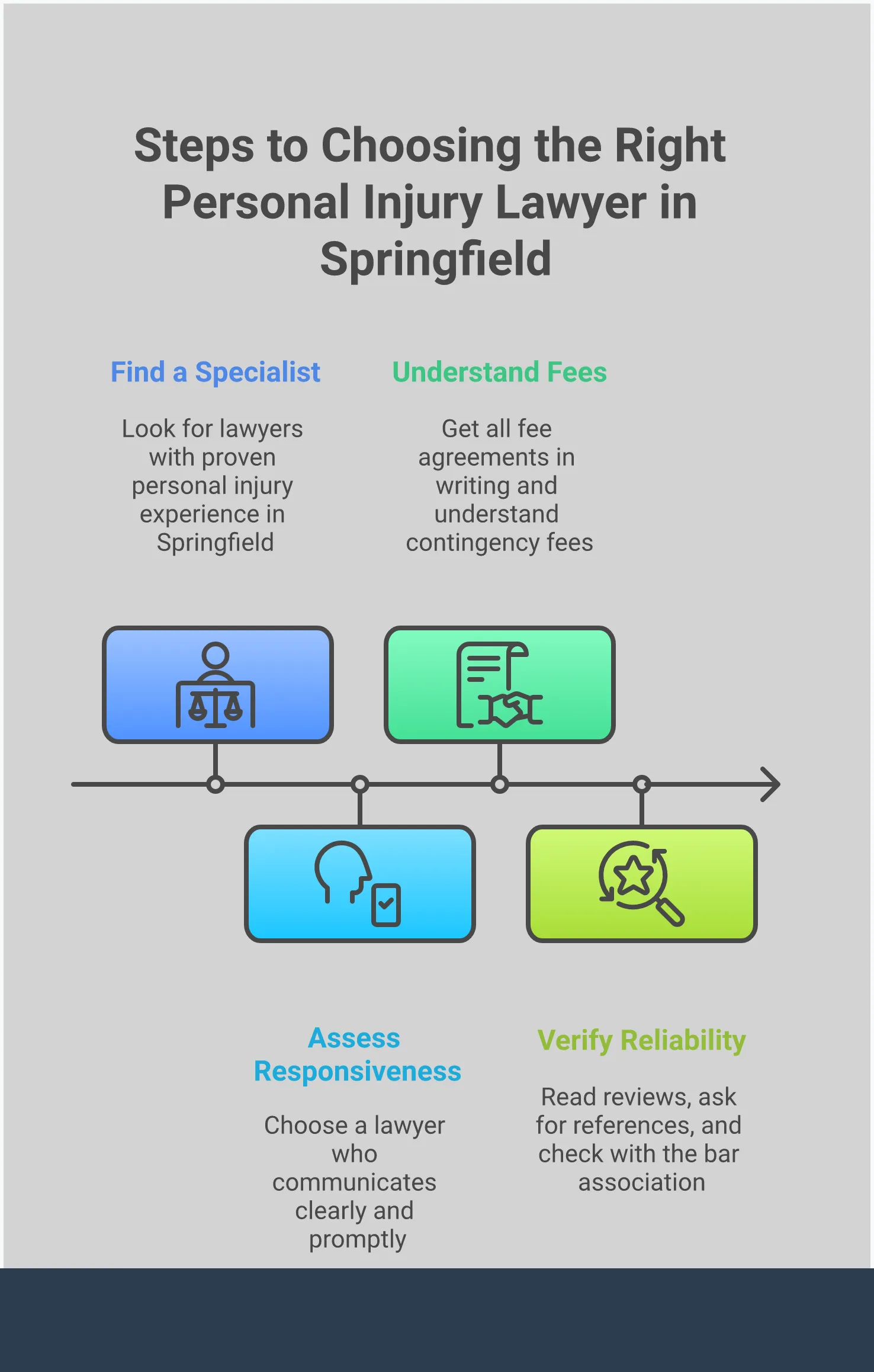
After an injury, finding the right legal support can feel overwhelming. With so many options, how do you know who to trust with your case? The key is to look for specific qualities that set an excellent personal injury lawyer apart from the rest. It’s not just about finding someone with a law degree; it’s about finding a dedicated advocate with the right experience and a proven track record. By focusing on a few key areas—their qualifications, specialty, relevant case history, and courtroom readiness—you can confidently choose the right attorney for your situation.
Confirm Their Missouri Bar Admission and Training
First things first, any lawyer you consider must be licensed to practice in Missouri. This is a non-negotiable starting point. To earn this license, an attorney must graduate from law school and pass the rigorous Missouri bar exam. This process ensures they have a solid grasp of state laws and legal procedures. While it might seem like a basic requirement, it’s the foundation of their ability to represent you effectively. You can always verify a lawyer’s standing with the Missouri Bar to confirm they are in good standing and have the necessary credentials to handle your case.
Do They Specialize in Personal Injury Law?
You wouldn’t see a foot doctor for a heart problem, and the same logic applies to law. General practice lawyers are great for certain things, but when you’re dealing with an injury, you need a specialist. Look for a lawyer whose practice is centered on personal injury law. These attorneys live and breathe this area of law. They understand the tactics insurance companies use, know the local court systems, and are up-to-date on the specific laws that will affect your claim. A specialist’s focused knowledge can make a significant difference in the strength and outcome of your case.
Have They Handled Cases Similar to Yours?
Beyond a general focus on personal injury, find a lawyer who has successfully handled cases similar to yours. If you were injured in a slip-and-fall at a store, an attorney who primarily handles car accidents might not be the best fit. During your consultation, don’t be shy about asking for examples of their experience with your specific type of case. This is also a great time to gauge their communication style. A good lawyer will explain things clearly, listen to your concerns, and be transparent about their fee structure from the very beginning, making you feel comfortable and informed.
Ask About Their Settlement and Trial Experience
While the majority of personal injury cases are settled out of court, you want a lawyer who is fully prepared to go to trial if needed. An attorney’s reputation as a skilled trial lawyer gives you leverage during settlement negotiations. Insurance companies are more likely to offer a fair settlement when they know your lawyer won’t back down from a courtroom battle. Ask about their trial experience and their history of securing favorable settlements. You should also look for a firm that offers personal service, allowing you to have direct communication with your attorney rather than being passed off to a paralegal.
What Does Meaningful Experience Look Like?
“Experience” is a word you’ll see on every lawyer’s website, but it means more than just the number of years they’ve been practicing. Meaningful experience is specific. You want an attorney who has a deep and successful history with cases just like yours. If you were hurt in a truck accident, you need someone who understands the complex federal regulations involved, not a lawyer who mostly handles different types of claims. A true specialist in personal injury law has seen the tactics insurance adjusters use time and again and knows how to counter them effectively. They have built a reputation in the local courts and have a portfolio of successful outcomes that prove they can deliver results.
Another critical aspect of experience is a lawyer’s readiness to go to trial. While most personal injury claims settle before reaching a courtroom, the best settlements are often secured by attorneys who aren’t afraid to litigate. Insurance companies keep track of which lawyers will fight and which ones will fold. When your attorney has a reputation as a skilled trial lawyer, the insurer is far more likely to offer a fair settlement to avoid the risk and expense of a trial. This willingness to see a case through to the end is a powerful form of leverage that directly benefits you and your final compensation.
How to Research a Lawyer’s Reputation and Track Record
Once you have a shortlist of potential lawyers, it’s time to do a little homework. A lawyer’s reputation is more than just a name; it’s a reflection of their experience, professionalism, and the results they get for their clients. Taking the time to look into their track record will help you feel confident that you’re putting your case in capable hands. Here’s how you can get a clear picture of who you’ll be working with.
What Do Online Reviews and Testimonials Reveal?
Start by seeing what past clients have to say. Online reviews on platforms like Google and Avvo can give you a candid look into the client experience. Look for comments that describe the lawyer’s communication style, responsiveness, and overall support. While a single negative review isn’t a dealbreaker, patterns of similar complaints could be a red flag.
Remember, you’re looking for a firm that offers personal service and makes you feel heard. Testimonials on a lawyer’s website are handpicked, but they still show you what the firm considers a success story. Reading these can help you see if their approach aligns with what you need.
Check Their Standing with the Missouri Bar Association
This is a critical, non-negotiable step. Before you hire anyone, you need to confirm they are a licensed attorney in good standing. The official Missouri Bar lawyer directory is the best place to do this. You can verify that their license is active and check for any public disciplinary actions against them.
This simple check ensures you’re working with a qualified professional who is held to the state’s ethical standards. It also allows you to confirm that they genuinely focus on personal injury law, which is crucial for getting the specialized knowledge your case requires. Don’t just take their word for it—verify it yourself.
Look Up Their Profiles in Legal Directories
Beyond the state bar, other legal directories can offer valuable insights. Websites like Avvo, Martindale-Hubbell, and Super Lawyers often feature ratings, peer reviews, and awards. These can give you a sense of a lawyer’s standing within the legal community. A lawyer who is respected by their peers is often a strong advocate for their clients.
Also, check if the attorney is a member of local legal groups, like the Springfield Metropolitan Bar Association. A lawyer who is active in the local community often has a better grasp of the Springfield courts, judges, and even how local insurance companies operate. This insider knowledge can be a significant advantage for your case.
Ask to See Their Past Case Results
While every case is unique, a lawyer’s past results can tell you a lot about their experience and capabilities. You want an attorney who has a history of securing favorable outcomes for clients with cases similar to yours. Many law firms will share information about their successful settlements and verdicts on their websites or during a consultation.
Don’t be afraid to ask about their experience with your specific type of case, whether it’s a car accident or a slip-and-fall. A confident lawyer will be transparent about their track record. Looking at their past results helps you gauge their ability to handle the complexities of different practice areas and fight for the compensation you deserve.
Consider Their Involvement in the Local Community
A lawyer’s connection to the Springfield community says a lot about their character and commitment. When an attorney is actively involved in local events, supports local charities, or participates in community service, it shows they care about more than just their caseload. They are invested in the well-being of their neighbors—the same people they represent. This level of engagement helps build a reputation based on trust and integrity, not just legal victories. It suggests they see their clients as people, not just case files, which is exactly the kind of personal dedication you want on your side during a difficult time.
This local involvement also provides a tangible advantage for your case. An attorney who is a familiar face in the community often has a better understanding of the local legal environment. They know the tendencies of Springfield judges and the tactics used by local insurance company branches. This familiarity isn’t something you can learn from a book; it comes from years of being part of the city’s fabric. This insider knowledge can be a powerful tool in negotiations and in the courtroom, giving you a strategic edge from the start.
How Much Does a Personal Injury Lawyer Cost in Springfield?
The cost of hiring a lawyer is a major concern for anyone dealing with the aftermath of an accident. You’re likely facing medical bills and lost wages, so the last thing you need is another financial burden. The good news is that personal injury law is structured to make legal help accessible, regardless of your financial situation. Let’s break down how legal fees typically work in Springfield so you know exactly what to expect.
How Contingency Fees Work
Most personal injury lawyers, including our firm, work on a contingency fee basis. This is a straightforward arrangement: you don’t pay any attorney fees unless we win your case. If we secure a settlement or a court award for you, our fee is a pre-agreed-upon percentage of that amount, usually between 33% and 40%. This model ensures that everyone has access to quality legal representation for their personal injury case. It also means our goals are perfectly aligned with yours—we are motivated to get you the best possible outcome because we only get paid if you do.
Are There Other Costs Besides the Lawyer’s Fee?
While the attorney’s fee is contingent on winning, every legal case involves other expenses. These are the out-of-pocket costs required to build and pursue your claim. Common expenses include court filing fees, the cost of obtaining medical records, fees for expert witnesses (like accident reconstructionists or medical experts), and deposition costs. A reputable attorney will be transparent about these potential expenses from the very beginning. During your initial consultation, be sure to ask for an estimate of these costs and clarify how they will be handled—whether they are deducted from your final settlement or if you need to cover them separately.
Don’t Believe These Myths About Lawyer Fees
There are a lot of misconceptions floating around about the cost of hiring a lawyer. One of the biggest myths is that you can’t afford one. Because of the contingency fee model, this simply isn’t true for personal injury cases. Another common myth is that you can handle an insurance claim on your own to save money. In reality, studies show that accident victims who hire a lawyer often receive significantly larger settlements than those who don’t, even after accounting for legal fees. You can read more about the legal process in some of our articles.
Why You Need a Clear Fee Agreement
When you’re choosing a lawyer, fee transparency is non-negotiable. You should feel completely comfortable with the fee structure and have a clear understanding of all potential costs before you sign anything. A trustworthy attorney will provide a detailed written agreement that outlines their contingency fee percentage and explains how case expenses will be managed. This transparency builds a foundation of trust and ensures there are no unwelcome surprises down the road. It allows you to focus on your recovery while your lawyer focuses on securing the compensation you deserve. If you have questions, don’t hesitate to contact a lawyer for a clear explanation.
Questions to Ask During Your Initial Consultation
Your first meeting with a personal injury lawyer is more than just a chance to tell your story—it’s a two-way interview. You’re deciding if they are the right person to represent you, and they’re evaluating your case. Coming prepared with a list of questions will help you make the most of this time and choose an attorney with confidence. Think of this as your opportunity to understand their approach, communication style, and how they would handle your specific situation. A good lawyer will welcome your questions and provide clear, straightforward answers. This initial conversation sets the tone for your entire professional relationship, so it’s important to get the information you need to make an informed decision.
Ask About Their Proposed Case Strategy
Every personal injury case is unique, and you need a lawyer who will treat it that way. During your consultation, ask how they would approach your specific circumstances. A good attorney will investigate your accident, gather evidence, and handle communications with insurance companies on your behalf. You can start by asking, “Based on what you’ve heard so far, what do you see as the main strengths and weaknesses of my case?” Also, inquire about who will be your primary point of contact and who will be doing the day-to-day work. Understanding their plan for your specific practice area will give you a clear picture of what to expect moving forward.
How Will They Keep You Updated?
Feeling left in the dark about your own case is frustrating. That’s why it’s so important to find a lawyer who prioritizes clear and consistent communication. You need someone who will explain legal complexities in a way you can understand and keep you updated on any progress. Ask them directly: “How will you keep me informed about my case?” and “How often can I expect to hear from you?” It’s also wise to find out their preferred method of communication—whether it’s phone, email, or in-person meetings—and what their policy is for returning messages. Don’t hesitate to contact the office to get a feel for their responsiveness before you even commit.
Confirm All Potential Fees and Costs
Don’t be shy about discussing money. Most personal injury lawyers in Springfield work on a contingency fee basis, which means you don’t pay any attorney fees unless they win your case. The fee is typically a percentage of your settlement or award, often between 33% and 40%. Be sure to ask for the exact percentage. You should also ask about case-related costs, such as filing fees, expert witness fees, and costs for obtaining medical records. Ask who is responsible for these expenses if you win and, just as importantly, if you lose. A trustworthy lawyer will be transparent about all potential costs and provide you with a detailed written fee agreement.
What’s the Expected Timeline and Process?
While no lawyer can predict the exact timeline of a case, an experienced one can give you a general idea of the process and what to expect. Ask them to walk you through the typical stages of a personal injury claim, from the initial investigation to a potential trial. Inquire about how long similar cases have taken to resolve. It’s also critical to discuss Missouri’s statute of limitations, which generally gives you a limited time from the date of the injury to file a lawsuit. Understanding the potential timeline and key milestones will help you prepare for the road ahead. A dedicated attorney like Chad G. Mann can guide you through each step with clarity and focus.
How to Compare Personal Injury Lawyers in Springfield
Once you have a shortlist of potential attorneys, it’s time to dig a little deeper. Finding the right lawyer is about more than just credentials; it’s about finding a partner you can trust during a challenging time. This research phase is your opportunity to compare different approaches, personalities, and strategies to find the best fit for you and your case. A methodical approach here will pay off, ensuring you feel confident in your final decision.
Create a Shortlist of Potential Lawyers
A great place to start your research is with official resources. Websites like The Missouri Bar offer a lawyer search tool that lets you verify an attorney’s credentials. This is the first and most important step—you need to confirm they are licensed in Missouri and that their practice areas include personal injury. Legal directories like Avvo or FindLaw can also provide helpful information, including client reviews, peer endorsements, and detailed professional profiles. Use these tools to get a broad overview of each lawyer on your list and narrow it down to your top contenders.
Set Up at Least Two or Three Consultations
Most personal injury lawyers offer a free initial consultation, and you should absolutely take advantage of this. Think of it as an interview where you’re in the driver’s seat. The goal is to meet different lawyers and find one you feel comfortable with. A good rapport and clear communication are essential for a strong attorney-client relationship. Try to schedule meetings with two or three different attorneys. This will give you a sense of different communication styles and legal strategies, helping you make a more informed choice. When you’re ready, you can easily schedule a consultation to discuss your case.
Use a Checklist to Make Your Final Decision
To make the most of your consultations, a little preparation goes a long way. Before you meet with a lawyer, gather any important documents you have, such as police reports, medical records, and photos of the incident. It’s also a great idea to write down a list of questions you want to ask. This ensures you don’t forget anything important and can compare answers from different attorneys. Your checklist should also include what you’re looking for in a lawyer. Do you want someone who provides personal, one-on-one service? Do you want to speak directly to your attorney, not just a paralegal? Knowing your priorities will help you find the perfect fit.
Red Flags to Watch For When Choosing a Lawyer
Choosing a lawyer is a significant decision, and while finding someone with the right qualifications is important, it’s just as crucial to know what to avoid. Your relationship with your attorney should be built on trust, transparency, and clear communication. If something feels off during your initial search, it probably is. Paying attention to these warning signs can save you a lot of stress down the road and help you find a legal partner who truly has your best interests at heart.
Beware of Guaranteed Wins or High-Pressure Tactics
If a lawyer guarantees a specific, large settlement amount before they’ve even thoroughly reviewed your case, consider it a major red flag. The legal process has too many variables for anyone to promise a certain outcome. A reputable attorney will give you a realistic assessment of your case’s strengths and weaknesses. You should also be wary of anyone who pressures you to sign a contract on the spot. You need time to review the agreement and make a clear-headed decision. Most personal injury attorneys work on a contingency basis, meaning their payment is contingent on winning your case. Their success is tied to yours, so there’s no need for high-pressure sales tactics to secure your business.
Are They Hard to Reach or Unresponsive?
From your very first phone call or email, pay close attention to how the law firm communicates. If it takes days to get a response, your messages go unanswered, or you can never seem to speak directly with an attorney, these are signs of what’s to come. You deserve an advocate who is accessible and keeps you informed. While you’ll likely interact with paralegals and office staff, you should have confidence that you can reach your lawyer when it matters. A good attorney will listen to your concerns, answer your questions clearly, and make you feel like a priority, not just another case number.
Do They Give Vague Answers About Their Fees?
A trustworthy lawyer will always be upfront and transparent about their fees. If you ask about costs and get evasive or confusing answers, it’s best to walk away. Most personal injury lawyers in Springfield work on a contingency fee basis, which means their fee is a percentage of the money you receive—typically between 33% and 40%. However, you also need to ask about other case costs, such as court filing fees or expenses for expert witnesses. A professional will happily break down their fee structure and provide a written agreement that clearly outlines all potential costs, ensuring there are no surprises later on.
Do They Lack Experience with Your Type of Case?
Law is a vast field, and not every attorney is equipped to handle a personal injury claim. One of the biggest mistakes you can make is hiring a lawyer who doesn’t specialize in personal injury law. You wouldn’t ask a family doctor to perform heart surgery, and the same principle applies here. Make sure any lawyer you consider is licensed in Missouri and has a proven track record with cases like yours. Ask them directly about their experience with your specific type of accident. An attorney with deep knowledge in this area will understand the local laws and procedures that are critical to building a strong case.
Why a Local Springfield Lawyer Gives You an Edge
When you’re dealing with the aftermath of an injury, it might seem like any qualified lawyer can handle your case. While that’s technically true, choosing an attorney with deep roots in Springfield offers a distinct advantage. Personal injury law isn’t just about knowing the statutes; it’s about understanding the local legal environment, from the courthouse dynamics to the specific tactics of local insurance companies. A lawyer who practices here every day brings a level of insight that can’t be learned from a book. They have firsthand experience with the people and processes that will ultimately shape the outcome of your case, giving you a home-field advantage when it matters most. This local expertise is often the key to building a stronger case and achieving a more favorable result.
An Expert Grasp of Missouri Personal Injury Law
Every state has its own set of rules for personal injury claims, and Missouri is no exception. To win your case, your attorney must prove that another party was negligent and that their carelessness directly caused your injuries. On top of that, Missouri has a strict statute of limitations, meaning you generally have two years from the date of the incident to file a lawsuit. A lawyer who specializes in personal injury law in Missouri will be fluent in these requirements. They understand the nuances of our state’s comparative fault rules and will ensure every deadline is met, protecting your right to seek compensation. This deep legal knowledge is the foundation of a successful claim.
They Know the Local Springfield Courts and Judges
An attorney who regularly works within the Springfield court system understands its unique rhythm. They know the local court procedures, the preferences of different judges, and the common strategies used by opposing lawyers in our community. This insider knowledge is invaluable. A lawyer who knows the local landscape can anticipate challenges, tailor their arguments to be more persuasive to a specific judge or jury, and handle the legal process more efficiently. This familiarity isn’t just about convenience; it’s a strategic advantage that allows your attorney to make more informed decisions on your behalf, from filing motions to negotiating in the courthouse hallways.
Connections with Local Medical and Legal Professionals
A strong personal injury case often relies on more than just legal arguments. It requires compelling evidence from credible experts, such as doctors, accident reconstruction specialists, and financial planners. A local Springfield attorney will have a built-in network of trusted professionals they can call on to support your claim. They know which medical experts are respected by local courts and which specialists can provide clear, powerful testimony. This network saves you the time and stress of finding qualified experts on your own and ensures the evidence presented is both reliable and effective. Having an attorney with strong community ties means you have a whole team of local professionals ready to strengthen your case.
Experience Negotiating with Local Insurance Companies
Dealing with insurance companies can be one of the most frustrating parts of a personal injury claim. A skilled attorney can take that burden off your shoulders so you can focus on your recovery. A local lawyer brings an added benefit: they’ve likely dealt with the same Springfield-area insurance adjusters before. They understand the tactics these adjusters use to minimize payouts and know how to counter them effectively. This history allows your lawyer to cut through delays and negotiate from a position of strength. Their experience can make a significant difference in securing a fair settlement that truly covers your medical bills, lost wages, and other damages.
Ready to Hire? How to Make the Final Call
After you’ve done your research, checked reviews, and had a few consultations, it’s time to make a decision. This final step is about more than just credentials; it’s about finding the right partner for your case. The choice you make will shape your experience for months or even years to come, so it’s important to feel confident in your selection. By focusing on a few key areas—your personal comfort, the fine print, and mutual understanding—you can select an attorney who will not only represent you effectively but also support you through the process.
Go with the Lawyer You Feel Most Comfortable With
This seems simple, but it’s incredibly important. You’ll be sharing personal details and relying on this person during a vulnerable time. You need an attorney who makes you feel comfortable and respected. As our own Chad G. Mann advises, “Choose someone who explains things clearly and keeps you updated.” If a lawyer uses confusing jargon, dismisses your questions, or makes you feel rushed, they might not be the right fit. The best attorney-client relationships are built on trust and open communication. Pay attention to how you feel during the consultation. Do you feel heard? Does their communication style work for you? Your intuition is a powerful tool in making this choice.
Review the Fee Agreement Line by Line
Before you sign anything, you must understand the terms of your agreement. Most personal injury lawyers work on a contingency fee basis, which means their payment is a percentage of your settlement or award. However, the details matter. The retainer agreement is a legal contract that outlines the fee structure, how case-related costs (like expert witness fees or court filing fees) are handled, and the scope of the lawyer’s work. Read every line. Ask questions about anything you don’t understand. A trustworthy attorney will be happy to walk you through the document and clarify any points of confusion. This ensures you are fully aware of the financial terms before moving forward with your personal injury case.
Establish Clear Communication and Expectations
A successful partnership with your lawyer depends on mutual understanding. From the beginning, you should both be on the same page about how your case will proceed. Discuss how often you can expect updates and the best way to communicate. Will you speak directly with the attorney or primarily with their staff? What are the key milestones in your case, and what is the expected timeline? A good firm will offer personal service and make you feel like a priority, not just another case number. By establishing these expectations early, you build a strong foundation for a productive relationship and ensure you and your attorney are working toward the same goals. If you’re ready to have that conversation, we’re here to help you get started.
Related Articles
- How to Hire a Personal Injury Lawyer in Springfield
- Springfield, MO Personal Injury Lawyers – Your Legal Team
- Need a Personal Injury Lawyer in Springfield? Here to Help
- Top Personal Injury Attorney in Springfield, Missouri
- Finding the Right Injury Attorney in Springfield, MO | Guide
Frequently Asked Questions
What if I was partially at fault for my accident? Can I still have a case? Yes, you absolutely can. Missouri follows a “comparative fault” rule, which means you can still seek compensation even if you share some of the blame for the incident. The amount you can recover is simply reduced by your percentage of fault. For example, if it’s determined you were 20% responsible, your final compensation amount would be reduced by 20%. Don’t assume you don’t have a case just because you think you might have made a mistake; it’s a complex legal question that a good lawyer can help you sort out.
Will I definitely have to go to court? This is a common worry, but the reality is that the vast majority of personal injury cases are resolved through a settlement without ever stepping inside a courtroom. The goal is usually to negotiate a fair agreement with the insurance company. However, choosing a lawyer who is ready and willing to go to trial is crucial. That readiness is what gives you leverage during negotiations and pressures the other side to make a fair offer.
My injuries don’t seem that serious right now. Is it still worth talking to a lawyer? It is always a good idea to have a conversation with an attorney, even if your injuries seem minor at first. Some injuries can worsen over time or lead to complications you didn’t anticipate. Speaking with a lawyer soon after an incident ensures you understand your rights and protects you from missing important legal deadlines. A free consultation can give you peace of mind and a clear understanding of your options without any obligation.
What kind of information should I bring to my first meeting with a lawyer? To make your initial consultation as productive as possible, it helps to bring any documents related to your accident. This could include a copy of the police report, photos or videos you took at the scene, contact information for any witnesses, and any medical records or bills you’ve received so far. Don’t worry if you don’t have everything; just bring what you can. This information gives the attorney a clearer picture of your situation and helps them provide a more accurate initial assessment of your case.
How much of the settlement will I actually receive after legal fees? This is a very practical question. With a contingency fee, your lawyer’s payment is a set percentage of the total settlement amount we win for you. After that fee is calculated, any case-related costs, like fees for expert reports or court filings, are also deducted from the total. A trustworthy attorney will provide you with a written agreement that clearly explains the fee percentage and how these costs are handled, so you will see a transparent breakdown of where every dollar goes before you receive your final check.
### The Importance of Being Honest with Your Lawyer
Disclosing Prior Injuries and Medical History
It might feel tempting to omit details about a past injury, especially if you think it could complicate your current claim. However, complete honesty with your attorney is one of the most important things you can do to protect your case. Think of your lawyer as your strategic partner; they need all the facts to build the strongest argument for you. The insurance company’s lawyers will request your medical records, and they will find out about any previous injuries. If that information comes as a surprise, it can damage your credibility and make it seem like you were trying to hide something, which can be devastating to your case.
Being upfront allows your lawyer to prepare for the defense’s arguments. A common tactic is to blame your current pain on a pre-existing condition. But if your attorney knows your full medical history, they can proactively frame the narrative. An accident can absolutely aggravate an old injury, and you are entitled to compensation for that new level of pain and suffering. By disclosing everything, you give your lawyer the tools they need to effectively argue your personal injury case and show exactly how the accident impacted your health, ensuring you have the best chance at a fair outcome.
Have you been injured? Take our free injury questionnaire to help us understand your case, or call (417) 842-8679 for a free consultation today.