


So, is your emotional support animal legally a pet? The answer isn’t a simple yes or no. When it comes to your housing, federal law says no—your ESA is a medical necessity, not a pet. But the moment you step into a coffee shop or grocery store, the answer flips to yes. This critical difference is where most confusion and conflict begins. To protect yourself and your companion, you need to understand these distinctions clearly. Let’s break down Missouri’s specific support animal law, covering the rules for housing, public spaces, and travel so you can feel confident in any situation.
Key Takeaways
- Your ESA’s rights are for housing, not public spaces: The Fair Housing Act protects your right to live with your ESA in most “no-pet” buildings without extra fees, but this protection does not apply to businesses like stores or restaurants.
- Secure a valid ESA letter from a licensed professional: This is the only documentation legally required for housing accommodations. Avoid online registries and certificates, as they hold no legal value and won’t protect your rights.
- Uphold your responsibilities as an owner: Your housing rights depend on your animal being well-behaved and not causing damage. You are also responsible for providing your landlord with a current ESA letter to validate your accommodation request.
Emotional Support Animal vs. Service Animal: What’s the Difference?
It’s easy to get confused by the terms “emotional support animal” and “service animal.” While both play important roles, the law views them very differently. Understanding this distinction is the first step to knowing your rights and responsibilities as an owner in Missouri. Let’s break down what sets them apart.
What is an Emotional Support Animal?
An emotional support animal (ESA) is a companion animal that provides comfort and therapeutic benefit to someone with a mental or emotional health condition, like anxiety or depression. Unlike service animals, ESAs don’t need specialized training to perform specific tasks. Their very presence is what helps alleviate symptoms and provide a sense of calm. Think of them as a crucial part of a person’s mental health treatment plan, often recommended by a licensed mental health professional. Their role is to offer companionship and support simply by being there for their owner.
How Do ESAs and Service Animals Differ?
The biggest difference comes down to training and tasks. Service animals are almost always dogs (though federal law also recognizes miniature horses in some cases) that are individually trained to do specific work for a person with a disability. These tasks must be directly related to the person’s disability—like guiding someone with vision loss, alerting a person who is deaf, or calming someone during a PTSD episode. Emotional support animals, on the other hand, are not required to have any task-specific training. Their job is to provide comfort through companionship, which is valuable but legally distinct from the work of a service animal.
What Kinds of Animals Qualify?
While the Americans with Disabilities Act (ADA) is very specific about service animals—recognizing only dogs—the rules for emotional support animals are much more flexible. Under housing law, an assistance animal is any animal that provides support to help with the effects of a disability. Since an ESA’s job is to offer comfort simply by being there, they don’t need task-specific training. This means other animals, like cats or even rabbits, can be considered valid emotional support animals, provided they offer a genuine therapeutic benefit. Ultimately, what matters is the animal’s positive impact on your mental health, not its species.
Service Animals in Training
The rules for service animals in training can be a bit confusing. Under federal ADA guidelines, an animal that is still being trained doesn’t automatically get the same public access rights as a fully trained service animal, meaning a business owner can legally deny entry. But that’s not the whole story. Many states have their own laws that do grant access to service animals in training, and these rules often differ from federal regulations. Because these state laws vary so much, it’s crucial to know the specific rules for Missouri before you take an animal-in-training into a public space.
Why Do the Legal Definitions Matter?
These definitions aren’t just about semantics; they have significant real-world implications for your rights. Federal and state laws use these classifications to determine where your animal is allowed to go and what protections you have. For example, the Fair Housing Act (FHA) offers protections for ESAs in housing, meaning a landlord generally can’t enforce a “no pets” policy or charge extra pet fees for a legitimate ESA. However, the Americans with Disabilities Act (ADA), which grants service animals access to public places like restaurants and stores, does not extend those same protections to ESAs. If you believe your housing rights have been violated, it’s wise to seek legal guidance.
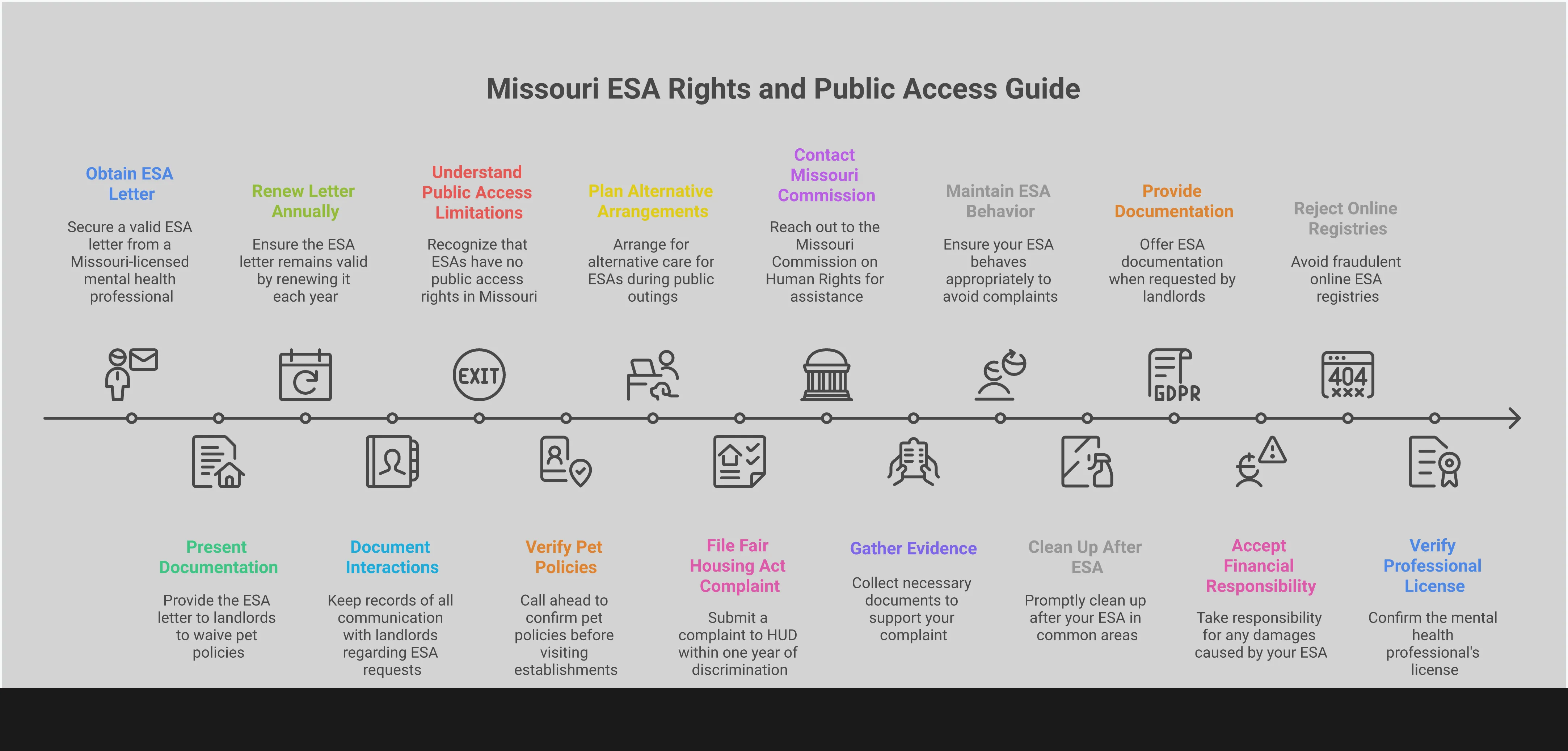
Federal Support Animal Law: Your Rights in Missouri
When it comes to your rights as an Emotional Support Animal owner in Missouri, the most powerful protections don’t actually come from state-specific legislation. Instead, a few key federal laws shape where you and your ESA are welcome. Understanding these laws is the first step to confidently asserting your rights, whether you’re dealing with a landlord, planning a trip, or just going about your day. It’s easy to get confused about what is and isn’t allowed, especially since the rules can feel different depending on the situation.
The three main federal acts you need to know are the Fair Housing Act (FHA), the Air Carrier Access Act (ACAA), and the Americans with Disabilities Act (ADA). Each one governs a different part of your life. The FHA is your strongest ally, providing significant protections for your right to live with your ESA. The ACAA covers air travel, and its rules have changed recently, which is crucial to know before you book a flight. Finally, the ADA addresses access to public places like restaurants and stores, and it’s where the distinction between an ESA and a service animal becomes incredibly important. Knowing which law applies to which situation will help you understand your rights and responsibilities as an ESA owner. If you ever feel your rights under these laws have been violated, especially in housing, it’s important to know your legal options.
How the Fair Housing Act Protects Your ESA
This is where your rights as an ESA owner are strongest. The federal Fair Housing Act (FHA) requires landlords to provide “reasonable accommodation” for individuals with disabilities, and this includes allowing them to live with their Emotional Support Animals. This rule applies even if the building has a strict “no-pet” policy. Your request for an ESA is not a request to have a pet; it’s a request for an accommodation that is necessary for your well-being.
Because an ESA is considered a medical tool and not a pet, landlords cannot charge you pet fees, a pet deposit, or extra “pet rent.” They are legally required to waive these fees as part of the reasonable accommodation. This protection is a cornerstone of your housing rights and ensures you aren’t financially penalized for needing an assistance animal.
Can You Fly with an Emotional Support Animal?
If you’re planning to fly, it’s important to know that the rules for traveling with an ESA have changed. A few years ago, the U.S. Department of Transportation updated its regulations under the Air Carrier Access Act. As a result, airlines are no longer legally required to allow Emotional Support Animals to fly in the cabin with their owners. This was a major shift, and it means you can’t assume your ESA will be able to accompany you.
Now, the decision is left up to each individual airline. Some may still permit small ESAs to fly in a carrier as a carry-on pet (which requires a fee), but others may not allow them at all. Before you book a ticket, you must check the airline’s specific pet policy to see what their rules are.
Why the ADA Doesn’t Cover ESAs
You’ve probably seen service dogs in grocery stores, restaurants, and other public places. Their access to these spaces is protected by the Americans with Disabilities Act (ADA). However, the ADA does not extend these same protections to Emotional Support Animals. This is one of the most common points of confusion for ESA owners. Businesses are not legally required to allow your ESA inside.
The key difference comes down to training. Under the ADA, service animals are individually trained to perform specific tasks for a person with a disability—like guiding someone who is blind or alerting someone to an impending seizure. ESAs, while incredibly important, provide therapeutic support through their presence and are not required to have this specialized task training. This distinction is why they don’t have the same public access rights.
Understanding Service Animal Rights Under the ADA
While ESAs are not covered by the ADA, service animals have robust legal protections. Under the ADA, a service animal is a dog that has been individually trained to perform specific tasks for a person with a disability. These are highly skilled working animals, not pets. The tasks they perform are essential and directly related to their handler’s disability, such as guiding a person who is blind, alerting someone who is deaf, pulling a wheelchair, or calming a person with PTSD during an anxiety attack. This specialized training is the key distinction that grants them legal access to public spaces where pets—and ESAs—are typically not allowed.
Rules for Interacting with Service Animal Handlers
Knowing the rules can prevent uncomfortable or illegal situations for everyone. If it isn’t obvious what service an animal provides, staff at a business are only allowed to ask two questions: “Is the dog a service animal required because of a disability?” and “What work or task has the dog been trained to perform?” They cannot ask about the person’s disability, require medical documentation, or ask the dog to demonstrate its task. It’s also important to remember that allergies or a fear of dogs are not valid reasons to deny access to a person with a service animal. If you believe your rights have been violated in a public establishment, it’s important to understand your legal options, as these situations can sometimes fall under premises liability law.
When a Service Animal Can Be Asked to Leave
A service animal’s right to be in a public space is not absolute. A business can legally ask a service animal to leave, but only under two specific circumstances: if the dog is out of control and the handler does not take effective action to control it, or if the dog is not housebroken. The handler is solely responsible for the care and supervision of their service animal. This means staff are not required to provide food, water, or a designated relief area for the animal. As long as the service animal is under the handler’s control and well-behaved, it has the right to be there.
What Are Your ESA Housing Rights in Missouri?
Navigating housing rules with an emotional support animal can feel overwhelming, especially when you’re faced with a lease that has a strict “no-pet” clause. The good news is that your rights as a tenant with an ESA are protected by powerful federal laws. The most important one to know is the Fair Housing Act (FHA), which prevents housing discrimination based on disability. This law ensures that landlords provide reasonable accommodations for tenants who need an emotional support animal, giving you a solid legal foundation to stand on. Understanding these protections is the first step to securing housing for you and your companion without unnecessary stress or conflict.
Can You Have an ESA in a “No-Pet” Building?
If you’ve found the perfect apartment but it has a firm “no-pets” policy, you don’t have to give up. Under the Fair Housing Act, landlords are required to make an exception for your emotional support animal. This is because, legally, an ESA is not considered a pet. Instead, it’s viewed as a medical tool necessary for your well-being, similar to a wheelchair or prescription medication. Your landlord cannot evict you or refuse your application simply because you have an ESA, as long as you provide the proper documentation. This protection applies to most types of housing, including apartments, condos, and single-family homes.
What is a “Reasonable Accommodation?”
You’ll hear the term “reasonable accommodation” a lot when discussing ESAs, and it’s a simple concept. It just means your landlord must make a fair and sensible adjustment to their rules to allow you to live comfortably with your disability. For an ESA owner, the most common reasonable accommodation is waiving a “no-pet” policy. The request shouldn’t create an excessive financial or administrative burden on the landlord. For example, allowing your cat to live with you in a no-pet building is reasonable. Asking the landlord to build a custom outdoor enclosure for your animal would likely be considered unreasonable. The goal is to ensure you have the same opportunity to enjoy your home as any other tenant.
When Can a Landlord Legally Deny an ESA?
While your right to a reasonable accommodation is strong, it’s not absolute. There are specific, legally defined situations where a landlord can deny your request for an emotional support animal. It’s important to know these exceptions so you can be prepared and ensure your request is valid. A denial isn’t always a case of discrimination; sometimes, it falls within the landlord’s rights under the law. Understanding these boundaries helps you protect yourself and address any potential issues with your housing provider correctly.
Landlord Exemptions Under the FHA
The Fair Housing Act is clear about when a landlord can push back. According to the U.S. Department of Housing and Urban Development (HUD), a housing provider can deny your request if they can demonstrate that your specific animal poses a direct threat to the health or safety of others or would cause significant physical damage to the property. This isn’t about stereotypes related to breed; it requires evidence that your animal is a danger. For example, if your dog has a documented history of aggression, a landlord may have grounds for denial. The burden of proof is on the landlord to show that the risk is real and cannot be managed through other reasonable means.
Undue Burden and Other Valid Reasons for Denial
A landlord can also deny a request if it creates an “undue financial or administrative burden” or would fundamentally change their operations. The concept of “reasonable accommodation” is central here; the request must be fair. For instance, allowing a well-behaved dog in a no-pet building is typically reasonable. However, asking your landlord to install a special fence for your animal would likely be seen as an undue burden. A denial can also be valid if you fail to provide a legitimate ESA letter from a licensed professional or if your animal is consistently disruptive and you take no effective action to control its behavior. Your rights come with the responsibility of being a considerate tenant and a responsible owner.
Can Landlords Charge Pet Fees for an ESA?
No, landlords cannot charge you extra fees for having an emotional support animal. Because an ESA is a medical necessity and not a pet, standard pet-related charges do not apply. This means you cannot be charged a pet deposit, a one-time pet fee, or a monthly “pet rent.” This protection saves you from extra costs that could make housing unaffordable. However, it’s important to remember that you are still responsible for your animal’s behavior. If your ESA causes damage to the property, your landlord can charge you for the cost of repairs, just as they would for any damage caused by a tenant.
What Your Landlord Can and Can’t Ask For
While your rights are protected, landlords have rights, too. If your disability is not immediately obvious, your landlord is allowed to ask for documentation to verify your need for an ESA. This is typically your official ESA letter from a licensed healthcare provider. However, they cannot ask you about the specifics of your medical condition or demand access to your medical records. A landlord can legally deny your ESA request in a few specific situations: if the animal poses a direct threat to the health and safety of others, would cause substantial property damage, or creates an undue financial burden. Understanding these boundaries can help you have a productive conversation with a potential landlord and ensure your legal needs are met.
How to Get a Legitimate ESA Letter
To ensure your rights are protected, you need more than just a pet you love. The law requires specific documentation that verifies your need for an Emotional Support Animal. This isn’t just a formality; it’s the key that unlocks your housing protections under the Fair Housing Act. Without the right paperwork, a landlord can treat your ESA just like any other pet, which could mean facing “no-pet” policies, extra fees, or even eviction.
The cornerstone of this documentation is the ESA letter. This official letter serves as proof to your landlord that your animal is not just a pet, but a necessary part of your well-being. It’s important to understand what makes a letter valid and who is qualified to write one. Getting this right from the start can save you a lot of stress and potential conflict down the road. It also helps you avoid common scams that prey on people who are unfamiliar with the process. Let’s break down exactly what you need.
What Makes an ESA Letter Valid?
A valid ESA letter is an official document written and signed by a licensed mental health professional. Think of it as a prescription. Its purpose is to confirm that you have a mental or emotional disability and that your animal provides essential support to help you manage it. To be considered legitimate, the letter should be printed on the professional’s official letterhead and include their license number, the date it was issued, and their signature.
The letter doesn’t need to disclose your specific diagnosis, but it must state that you have a disability and that the ESA is a necessary part of your treatment plan. This official letter is what grants you legal protections and allows you to request a reasonable accommodation for your animal in housing.
State-Specific Anti-Fraud Measures
Unfortunately, as more people have learned about the benefits of ESAs, the number of fake online certifications has exploded. To protect people who genuinely need these animals, many states have put anti-fraud laws in place. It’s important to know that trying to pass off a pet as an emotional support animal with fake documents can have serious consequences. Many states have laws that punish people who lie about having an ESA, with penalties that can range from hefty fines to even jail time. These measures are designed to maintain the integrity of ESA laws and ensure that the protections remain available for those who truly depend on them.
This is why having a valid ESA letter from a licensed mental health professional is non-negotiable. This official document confirms that you have a mental or emotional condition and that your animal provides necessary support to help you manage it. By getting a legitimate letter, you’re not just following the rules—you’re protecting your own rights and helping to preserve the credibility of the emotional support animal community. Being aware of these anti-fraud measures in Missouri is key to avoiding legal trouble and ensuring you and your animal are protected.
Who Can Write an ESA Letter?
Not just any doctor can write a valid ESA letter. The letter must come from a licensed mental health professional who is qualified to assess your condition. This includes professionals like psychiatrists, psychologists, licensed clinical social workers (LCSW), and licensed professional counselors (LPC). A letter from a family doctor might not be sufficient unless they are also treating you for a mental health condition.
Crucially, the professional who writes your letter must be licensed to practice in the state of Missouri. A landlord has the right to verify their credentials, and a letter from an out-of-state provider who has never treated you may be rejected. Ensuring your documentation is from a qualified, local professional is a critical step in securing your rights. If you’re facing challenges with documentation, our firm handles a wide range of legal matters and can offer guidance.
How to Spot Fake ESA Registries and Scams
One of the biggest points of confusion surrounding ESAs is the idea of “registration.” Let’s be clear: there is no official, legally-recognized government registry for Emotional Support Animals in the United States. Any website that offers to “register” your ESA for a fee in exchange for a certificate and an ID card is selling you a product that has no legal value.
These online registries are not required by law and do not provide any additional rights. The only document you need is a valid ESA letter from a licensed mental health professional. Be cautious of any service that promises instant approval or suggests that buying a vest or ID is necessary. These are often signs of a scam. If a landlord insists on a “registration number” or you feel your rights are being violated, it may be time to contact an attorney for help.
Where Can You Take Your ESA in Public?
While your emotional support animal has protected rights in your home, the rules for public spaces are entirely different. This is one of the most common areas of confusion for ESA owners, and it’s where the distinction between an ESA and a service animal becomes critical. In Missouri, businesses, transportation services, and other public areas have specific guidelines you’ll need to follow, and knowing them ahead of time can save you a lot of stress.
Do ESAs Have Public Access Rights?
In Missouri, emotional support animals do not have the same legal protections as service animals in public places. Federal laws like the Americans with Disabilities Act (ADA) mandate access for trained service animals, but these protections do not extend to ESAs. This means that places like restaurants, shopping malls, and parks are not legally required to allow your ESA inside. While it can be frustrating, it’s important to know that Missouri’s laws align with federal standards on this issue, treating ESAs as pets in public settings. Always check a location’s pet policy before you go.
Can a Business Deny Your ESA Entry?
Yes, a business in Missouri can legally deny entry to your emotional support animal. Because ESAs are not classified as service animals under the ADA, public establishments like stores, hotels, and theaters are within their rights to refuse access. A business must allow a service animal, but they are not required to make the same accommodation for an ESA. Some businesses are pet-friendly and may welcome your animal, but this is at their own discretion. It’s always best to call ahead and ask about their policy to avoid any difficult situations at the door.
Tips for Traveling with Your ESA in Missouri
When it comes to travel, your ESA is generally subject to the same rules as any other pet. Airlines are no longer required to allow emotional support animals to fly in the cabin for free, a major change from previous regulations. You will need to check each airline’s specific pet policy, which often involves fees and carrier requirements. The same applies to other forms of public transportation like buses and trains. You can find more information about traveling with an ESA, but the safest approach is to always confirm the rules with the transportation provider before you book your trip.
Assistance Animals in the Workplace and at School
Just like with public spaces, the rules for bringing an assistance animal to work or school are specific and can be confusing. Your rights in these environments are governed by different aspects of the law, and it’s important to know what to expect before you make a request. Whether you’re an employee seeking an accommodation or a parent advocating for your child, understanding the legal framework is the first step toward a successful outcome. The key is knowing that what applies in housing doesn’t automatically carry over to your job or your child’s classroom.
Your Rights at Work Under the ADA
When it comes to the workplace, the Americans with Disabilities Act (ADA) once again plays a central role. Under the ADA, allowing an employee to bring a service animal or an emotional support animal to work can be considered a reasonable accommodation. This is a significant difference from public access rules, as the ADA provides a path for ESAs in the workplace where one doesn’t exist for them in stores or restaurants. Your employer is expected to engage in a good-faith discussion with you to determine if your request is reasonable and doesn’t create an “undue hardship” for the company.
If your disability and your need for the animal are not obvious, your employer has the right to ask for documentation to support your request. This is where your valid ESA letter from a licensed mental health professional becomes essential. It serves as the verification your employer needs to proceed with the accommodation process. They cannot, however, ask for your specific medical history. The process is meant to be a collaborative conversation, and if you feel your employer is unfairly denying your request, it may be time to seek legal advice to understand your options.
Service Animals in Educational Settings
In educational settings, the rules depend on the type of animal and the type of school. For K-12 public schools, the ADA requires that they allow service animals to accompany students with disabilities. These animals are individually trained to perform specific tasks, like guiding a student with vision impairment or providing seizure alerts. Their access is protected because they are considered essential for the student to participate in their education. The school can only ask two questions: if the animal is required because of a disability and what task it has been trained to perform.
Emotional support animals, however, do not have the same automatic access. An ESA might be allowed in a public school, but it is not a guaranteed right under the ADA. Instead, this decision is typically made by the student’s special education team as part of their Individualized Education Program (IEP) or 504 plan. The team would need to determine that the animal is necessary for the student to receive an appropriate education. For colleges and universities, the rules often mirror housing laws, with student dorms required to provide reasonable accommodations for ESAs under the Fair Housing Act.
Debunking Common Myths About Missouri ESA Laws
There’s a lot of confusion out there about what an emotional support animal is and what rights come with having one. This misinformation can lead to frustrating and stressful situations with landlords, business owners, and even neighbors. When you rely on your animal for support, the last thing you want is a conflict based on a misunderstanding of the law. That’s why it’s so important to separate fact from fiction. Many people mistakenly believe that the rules for ESAs are the same as those for highly trained service animals, which can create unrealistic expectations and lead to disappointment or legal trouble.
In Missouri, the laws are specific, and knowing them helps you advocate for yourself effectively. It also helps you be a responsible ESA owner who respects the boundaries of the law and the rights of others. By understanding what is and isn’t true, you can avoid common pitfalls and ensure your relationship with your support animal is protected where it matters most—in your home. Let’s clear up some of the most common myths so you can feel confident about your rights and responsibilities.
Myth: ESAs Have the Same Public Access as Service Animals
This is one of the biggest misconceptions. While you often see service animals in public places like grocery stores and restaurants, the same rules don’t apply to ESAs. Under federal and state law, emotional support animals are not granted the same automatic access to public accommodations. This means businesses are not legally required to allow your ESA inside. While the Fair Housing Act protects your right to have an ESA in your home, that protection doesn’t extend to places like malls, movie theaters, or hotels. It’s always up to the individual business to decide whether to welcome your animal.
Myth: Your ESA Needs Special Training or Registration
Unlike service animals, which are trained to perform specific tasks for a person with a disability, ESAs don’t need any specialized training. Their purpose is to provide comfort and support through their presence alone. You may have seen websites offering to “register” your ESA for a fee, often providing a certificate and a vest. It’s important to know that these registries are not legally recognized. An official-looking ID card from an online service holds no legal weight and doesn’t give you any extra rights. The only documentation you need is a legitimate ESA letter from a licensed mental health professional.
Myth: ESAs and Service Animals Are Legally the Same
The law makes a clear distinction between emotional support animals and service animals, and it all comes down to function. A service animal is almost always a dog that has been individually trained to do work or perform tasks directly related to a person’s disability—like a guide dog for someone who is blind. An ESA, on the other hand, provides therapeutic benefits through companionship. Because their roles are different, their legal protections are, too. Understanding these legal definitions is key to knowing where your animal is and isn’t allowed, and it’s a core part of our firm’s focus on client advocacy.
What Are Your Responsibilities as an ESA Owner?
While federal and state laws provide important protections for you and your emotional support animal, those rights are balanced with clear responsibilities. Think of it as a partnership: the law protects your need for an ESA, and in return, you have a duty to be a responsible owner. Understanding these obligations is the key to a smooth and positive experience with landlords, property managers, and even your neighbors. It’s about more than just having the right paperwork; it’s about ensuring your animal is a positive presence in the community.
By taking these responsibilities seriously, you not only protect your right to live with your animal but also help uphold the integrity of ESA provisions for everyone who needs them. When ESA owners are conscientious, it reduces friction and misunderstandings with housing providers. Fulfilling your obligations is the best way to prevent conflicts, address concerns before they become problems, and ensure you and your companion can live peacefully in your home. This includes everything from maintaining control over your animal in common areas to promptly cleaning up after them and ensuring they don’t disturb others. These simple acts of consideration go a long way in building a good relationship with your landlord and community.
Ensuring Your Animal is Well-Behaved
Your right to housing with an ESA doesn’t excuse destructive or disruptive behavior. Landlords can legally require the removal of any animal, including an ESA, that is out of control, poses a threat to others, or causes significant property damage. This is why it’s essential to ensure your animal is well-behaved and potty-trained. Think of it as being a good neighbor—your ESA should not be a nuisance to others in the building. Basic obedience and good manners go a long way in preventing conflicts with your landlord or other tenants. You are responsible for any damages your animal causes, so proactive training is key.
How to Keep Your ESA Letter Current
To receive housing accommodations, you must have a valid ESA letter written by a mental health professional who is licensed to practice in Missouri. This letter is the official documentation that establishes your need for the animal. It’s important to remember that these letters often need to be renewed, typically on an annual basis, to remain valid. An expired letter can put your housing rights at risk. Always check the expiration date on your letter and schedule an appointment with your provider ahead of time to get it updated. Keeping your documentation current is a simple but critical step in maintaining your legal protections under fair housing laws.
When and How to Disclose Your ESA to a Landlord
You are required to inform your landlord about your ESA and provide them with your letter to receive a reasonable accommodation. It’s best to do this in writing before you move in or as soon as you get the animal. If your disability and your need for the ESA are not obvious, your landlord is permitted to ask for documentation to verify your request. They cannot, however, ask for specific details about your medical condition. If your landlord is resistant or denies your valid request, it can be a stressful situation. If you find yourself facing an unfair denial, it may be time to seek legal guidance to understand your options.
What Happens When a Landlord Denies Your ESA?
It can be incredibly stressful and disheartening when a landlord denies your request for an emotional support animal. You might feel stuck, but it’s important to know that you have rights. A landlord can’t simply turn down your request without a valid reason, especially since your ESA is a necessary part of your well-being. Understanding the rules that protect you is the first step toward finding a solution. If your landlord is pushing back, their denial could be more than just an inconvenience—it might be a violation of federal law. Let’s walk through what this means and what you can do about it.
Is Your Landlord Violating the Fair Housing Act?
In Missouri, a landlord generally cannot deny your emotional support animal, even if their building has a strict “no pets” policy. This protection comes from the federal Fair Housing Act (FHA), which prevents housing discrimination against people with disabilities. An ESA is considered a reasonable accommodation, not a pet. If your disability and your need for the animal aren’t immediately obvious, your landlord is allowed to ask for documentation, like a valid ESA letter from a licensed professional. However, an outright refusal without a valid, legally recognized reason can be a direct violation of your housing rights.
What Penalties Can Landlords Face?
When a landlord improperly denies an ESA, they are not just breaking a rule; they are violating federal law, and there can be serious consequences. Landlords found guilty of housing discrimination may face significant fines and penalties. They also cannot charge you extra fees, like a “pet deposit” or “pet rent,” for your assistance animal. It’s important to remember that these protections are for legitimate ESAs. Missouri law also includes penalties for individuals who falsely represent a pet as an assistance animal, so ensuring your documentation is in order is a key step in protecting your rights.
How to Take Legal Action
If you believe a landlord has unlawfully denied your ESA, you don’t have to accept it. Your first step is often to file a formal complaint. You can file a complaint with the U.S. Department of Housing and Urban Development (HUD), which investigates FHA violations. You can also file a complaint with the Missouri Commission on Human Rights. Because federal laws often provide more comprehensive protections than state laws, the process can feel complicated. If you’re unsure how to proceed or if your landlord is refusing to cooperate, it may be time to contact an attorney to discuss your specific situation and explore your legal options.
Missouri’s Specific Support Animal Laws
When it comes to emotional support animals, Missouri law primarily follows federal guidelines. This means your most important protections, especially for housing, come from the Fair Housing Act. However, the state does have specific rules you need to know, particularly concerning how you represent your animal. It’s also smart to remember that laws can change from one city or county to the next. Understanding these layers of law—federal, state, and local—is the best way to protect your rights and meet your responsibilities as an ESA owner.
How Missouri Law Views Emotional Support Animals
You might be surprised to learn that Missouri doesn’t have a specific statewide law dedicated to emotional support animals. Instead, the state relies on federal law to handle ESA-related issues. The most significant of these is the Fair Housing Act (FHA), which protects your right to live with your ESA, even in buildings with “no-pet” policies. Under the FHA, landlords are required to provide a “reasonable accommodation” for tenants with a valid ESA letter. This means they generally cannot deny your housing application or evict you because of your assistance animal. Think of federal law as the foundation for your rights in Missouri.
What Are the Penalties for Faking an ESA?
While Missouri law supports legitimate ESAs, it takes a firm stance against fraud. It is illegal in Missouri to knowingly misrepresent a pet as an assistance animal to receive accommodations you aren’t entitled to. This law is in place to protect the integrity of the system and ensure that people with genuine needs receive the support they deserve. If you falsely claim your pet is an emotional support or service animal, you could face legal penalties. This is why it’s so important to follow the proper process and obtain a legitimate ESA letter from a licensed mental health professional.
How to Check Local City and County Rules
While state law defers to federal guidelines, your local government might have its own rules. For example, some cities or counties may have specific ordinances that affect housing associations or define local enforcement procedures. The Missouri Human Rights Act can also offer protections at the local level. Before you sign a lease or if you encounter an issue with a landlord, it’s a good idea to check the specific regulations in your city or county. If you’re dealing with a complex situation involving a homeowners association or a landlord who seems unaware of the law, it might be time to get legal advice to understand your options.
Finding Legal Help and Resources for Your ESA
If you’re facing challenges with your landlord over your emotional support animal, it’s important to know where to turn. Understanding your rights is the first step, but knowing how to enforce them is what makes a difference. Here are the resources and steps you can take if you encounter resistance.
How to File a Fair Housing Complaint
If your landlord denies your request for a reasonable accommodation for your emotional support animal, you don’t have to just accept it. Under the federal Fair Housing Act (FHA), landlords in Missouri must allow ESAs, even if they have a “no pets” policy. Refusing to do so can be considered housing discrimination.
If you believe your rights have been violated, you can file a complaint online with the U.S. Department of Housing and Urban Development (HUD). You can also file a complaint with the Missouri Commission on Human Rights (MCHR). Be prepared to provide details about your situation, including your ESA letter and any communication you’ve had with your landlord. Acting promptly is important, as there are deadlines for filing.
Key ESA Rights to Remember
It’s easy to get overwhelmed by legal details, so let’s simplify what you need to remember. Your most important right is that your emotional support animal is protected in housing under both federal and state laws. These protections are outlined in the Fair Housing Act, which prevents landlords from discriminating against you because of your need for an ESA.
However, it’s crucial to remember that ESAs do not have the same public access rights as service animals. This means that while your landlord must accommodate your ESA at home, businesses like restaurants, grocery stores, or hotels with “no pet” policies are not required to let your animal inside. Understanding this distinction helps you know where your rights apply.
When Should You Call a Lawyer?
While filing a complaint is a great first step, some situations are more complex and benefit from legal guidance. If your landlord denies your ESA request without a valid reason, tries to charge you illegal “pet fees,” or retaliates against you for asserting your rights, it may be time to consult a lawyer. An attorney can help you understand your specific options, communicate with your landlord on your behalf, and ensure your rights are protected.
Navigating housing laws can be challenging, but you don’t have to do it alone. If you’re facing pushback and aren’t sure what to do next, speaking with an attorney can provide the clarity and support you need to move forward.
Related Articles
- Missouri Animal Laws – The Law Office of Chad G. Mann, LLC
- Domestic Animal Laws Missouri – The Law Office of Chad G. Mann, LLC
- Missouri Animal Law – The Law Office of Chad G. Mann, LLC
- When Pets Cause Problems: Animal Liability in Missouri
- Missouri’s Miscellaneous Animal Laws – Barking Dog Nuisance
If you need experienced legal representation, our experienced dog bite lawyer can help protect your rights and fight for the compensation you deserve. Call (417) 842-8679 for a free consultation.
If you have been injured, take our free injury questionnaire to help us understand your case, or call (417) 842-8679 for a free consultation.
Frequently Asked Questions
Do I have to tell a potential landlord about my ESA before I sign the lease? While you are not legally required to disclose your emotional support animal before signing a lease, it’s often best to be upfront. You can make the request for a reasonable accommodation at any time, even after you’ve moved in. However, providing your valid ESA letter along with your rental application can make the process smoother and prevent any misunderstandings with your landlord from the start.
What if my emotional support animal is a breed that’s normally banned by the apartment complex? Under the Fair Housing Act, a landlord’s breed or weight restrictions do not apply to emotional support animals. Since an ESA is considered a medical necessity rather than a pet, a landlord must make a reasonable accommodation. They cannot deny your animal based on its breed alone. The only exception would be if your specific animal, regardless of its breed, poses a direct threat to the safety of others or would cause substantial property damage.
Can my landlord evict me if my ESA is loud or damages the apartment? Yes, they can. Your rights as an ESA owner come with responsibilities. The protections of the Fair Housing Act do not cover an animal that is a nuisance, is destructive, or poses a threat to other tenants. You are responsible for your animal’s behavior and for any damages it causes. If your ESA is consistently disruptive or destructive, your landlord can take action, which could include revoking the accommodation or even eviction.
Is a certificate I bought from an online registry the same as an ESA letter? No, they are not the same, and this is a critical distinction. Those online registries that sell certificates, ID cards, or vests hold no legal authority. The only document that legally protects your right to have an ESA in housing is a legitimate letter from a licensed mental health professional who is treating you for a condition and is licensed to practice in Missouri.
So, just to be clear, where can I not take my ESA? You generally cannot take your emotional support animal into public places where pets are not allowed. This includes most restaurants, grocery stores, shopping malls, and movie theaters. The Americans with Disabilities Act (ADA) grants public access rights to trained service animals, but those protections do not extend to ESAs. Always assume your ESA is not permitted unless the business has a specific pet-friendly policy.