

When it comes to farming, advice often travels over the fence line, but not all of it is accurate. Believing a “Right-to-Farm” law gives you total immunity or that local rules don’t apply can lead to serious legal trouble. The reality is a specific framework of laws governs what you can and cannot do. To operate with confidence, you need facts, not folklore. We’re here to clear up the confusion around the animal regulations Missouri has established. This guide debunks common misconceptions and gives you a straightforward look at the actual rules for animal care, transport, and disposal.
Key Takeaways
- Partner with a Veterinarian for Compliance: Your vet is essential for meeting Missouri’s health standards and providing the required Certificate of Veterinary Inspection (CVI) needed to legally transport animals.
- Check Local Ordinances Before State Law: While state laws provide a baseline, your specific city or county zoning rules determine animal limits and types allowed on your property, so verifying them first is crucial.
- Maintain Organized Records as Legal Protection: Detailed records of health certificates, vet visits, and animal identification are your best defense in liability situations and are necessary to prove you are following the law.
Missouri’s Farm Animal Laws: What Do You Need to Know?
If you own or plan to own farm animals in Missouri, it’s helpful to understand the state-level rules that apply to you. These regulations aren’t just about paperwork; they’re designed to protect the health of all livestock across the state, which in turn protects our food supply and the livelihoods of farmers. Think of them as a community health plan for animals. The state sets clear guidelines for disease prevention, veterinary care, and the safe transport of animals. Following these rules helps ensure your animals are healthy and keeps you on the right side of the law.
How to Prevent Disease: Missouri’s Animal Health Rules
Missouri takes animal health seriously to prevent the spread of costly and dangerous diseases. The state’s Animal Health Division, led by the state veterinarian, is in charge of this effort. This division manages programs for disease control, eradication, and testing for all kinds of livestock. Their work is crucial for maintaining the health of Missouri’s animal populations. By establishing strong standards and conducting thorough testing, the state helps protect both individual farms and the broader agricultural community from the devastating impact of widespread animal diseases.
What Veterinary Care and Inspections Are Required?
Before moving most livestock into Missouri, you’ll need to plan a visit with your veterinarian. The state requires that most animals have an official health certificate, also known as a Certificate of Veterinary Inspection (CVI), before entering. This isn’t something you can get weeks in advance; the certificate must be issued by an accredited veterinarian within 30 days of the animal’s move. This timeframe ensures the animal’s health status is current right before transport. This simple step is one of the most important ways the state keeps its livestock populations safe from imported illnesses.
When Do You Need a Certificate of Veterinary Inspection (CVI)?
So, when exactly do you need that CVI? The general rule is that if you are bringing animals into Missouri, they must meet specific rules to safeguard the health of all animals already here. The CVI is the official document proving your animal has been inspected by a vet and is free from contagious diseases. It’s your proof that you’re following the rules. Different species have different requirements, so it’s always a good idea to check the latest regulations for your specific animal. This ensures a smooth process and shows you’re doing your part to protect animal health statewide.
Understanding Missouri’s Animal Cruelty Laws
Beyond the rules for health and transport, Missouri has specific laws that define the humane treatment of animals. These regulations are not just for farmers; they apply to anyone who owns or cares for an animal. Understanding the basics of Missouri’s animal cruelty laws is essential for responsible ownership and for ensuring you stay on the right side of the law. These statutes outline what constitutes an animal, what actions are considered abuse or neglect, and the legal consequences for each. Knowing these details helps protect both the animals in our communities and the people who care for them.
Legal Definition of an Animal
In Missouri, the law is quite specific about what it considers an animal. According to state statutes, an animal is defined as any living creature with a backbone, except for humans. This is a broad definition that covers everything from your family dog and the cattle in your pasture to the deer in the woods. Understanding this scope is the first step in grasping how cruelty laws are applied, as they are designed to protect a wide range of creatures under this legal umbrella. This definition forms the foundation of the state’s animal protection framework, ensuring that accountability extends across many different species.
Activities Exempt from Cruelty Laws
While the animal cruelty laws are comprehensive, they also include specific exemptions for certain standard practices. Activities such as licensed veterinary care, approved scientific experiments, and traditional outdoor sports like hunting, fishing, and trapping are not subject to these particular statutes. The law also makes exceptions for public zoos and established rodeo practices. It’s important to recognize that these activities are typically governed by their own sets of rules and regulations. This distinction ensures that lawful, regulated practices aren’t unintentionally penalized while still holding individuals accountable for genuine acts of cruelty outside of these contexts.
Penalties for Animal Abuse
Missouri law draws a clear line between neglect and outright abuse. Animal abuse is defined as purposely and unlawfully killing an animal, intentionally causing it injury or suffering, or failing to provide adequate care in a way that results in serious physical harm. This charge focuses on deliberate actions or severe negligence that directly leads to an animal’s suffering. The consequences for animal abuse are significant, reflecting the seriousness of the offense. The legal system treats these acts with gravity, and the penalties are structured to match the severity of the harm inflicted on the animal.
Class A Misdemeanor vs. Class E Felony
Typically, a first-time conviction for animal abuse is classified as a Class A misdemeanor, which carries substantial penalties. However, the charge can escalate to a Class E felony under two specific circumstances. The first is if the individual has a prior conviction for animal abuse, establishing a pattern of behavior. The second is if the act of abuse involved torturing or mutilating the animal while it was still alive. This escalation to a felony charge underscores how seriously the state treats repeat offenses and acts of extreme, intentional cruelty, which come with much more severe consequences.
Penalties for Animal Neglect
Animal neglect is treated differently from abuse and centers on the failure to provide for an animal’s basic needs. Under Missouri law, you could be charged with neglect if you have custody of an animal and knowingly fail to provide it with adequate care, or if you abandon it altogether. Adequate care includes sufficient food, clean water, necessary veterinary attention, and appropriate shelter from the weather. The key element here is the failure to act, which can put an animal’s health and well-being at risk, even without the intent to cause direct harm or suffering.
First-Time vs. Repeat Offenses
The penalties for animal neglect are designed to be corrective, with consequences that increase for repeat offenders. A first offense is considered a Class C misdemeanor, a less severe charge intended to penalize the failure in care and prevent it from happening again. However, if a person is convicted of animal neglect a second time or more, the charge is elevated to a Class B misdemeanor. This tiered system shows that while a single instance of neglect is taken seriously, the law imposes stricter penalties on those who demonstrate a continued failure to provide for the animals in their charge.
What Paperwork Do You Need to Transport Animals in Missouri?
Moving animals, whether it’s across the county or across the country, involves more than just loading up a trailer. Missouri has specific rules in place to protect the health of its animal populations, and having the right paperwork is a critical part of that process. Getting your documents in order before you hit the road can save you from major headaches, delays, and potential legal trouble. Think of it as a passport for your animals—it proves they are healthy and safe to travel.
Crossing State Lines: Rules for Animal Transport
If you’re bringing animals into Missouri from another state, your most important document will be an official health certificate, also known as a Certificate of Veterinary Inspection (CVI). A licensed veterinarian must issue this certificate within 30 days of the animal’s arrival. Missouri is flexible and accepts most electronic versions, like eCVI and GVL, as well as paper forms from other states that have a unique ID number. One key exception to remember is that the APHIS form 7001 is not accepted for entry into Missouri.
Some species, particularly cervids like deer and elk, require a special entry permit in addition to the health certificate. To get a permit, you’ll need to provide details like the health certificate number, the number and type of animals, and the origin and destination addresses. You can find the full list of livestock movement requirements on the Missouri Department of Agriculture’s website.
Animals Requiring an Entry Permit
For some animals, a health certificate alone isn’t enough; you’ll also need a special entry permit. Think of it as an extra layer of screening for animals that might pose a higher risk for disease transmission. These permits are only valid for 15 days, so timing your application is key. The list of animals requiring a permit is quite specific and includes all rodeo animals, dairy cattle, young calves under 60 days old that aren’t with their mothers, and all pigs. It also covers animals from certain disease-risk areas, all deer-like animals (cervids), poultry, and animals moving between approved zoos. Before you plan your transport, it’s a good idea to confirm if your animal falls into one of these categories to ensure you have all the necessary approvals ahead of time.
Accepted and Unaccepted Health Certificate Forms
When you get a health certificate, the format matters. Missouri requires that the certificate be issued by a vet within 30 days of the move and must include the full physical addresses for both the origin and destination points. The good news is that the state accepts most modern electronic health certificates (eCVI), including platforms like GVL, VET-CVI, and Vet Sentry. Most paper forms with unique tracking numbers are also fine. However, there is one major exception to be aware of: the APHIS form 7001 is not an accepted health certificate for animals coming into Missouri from other states. Making sure your vet uses an approved form will prevent any issues at the state line.
Transporting Animals Within Missouri: What to Know
Even if you aren’t crossing state lines, you still need to follow state rules for moving animals. The regulations for transporting animals within Missouri can vary depending on the species, so there isn’t a single one-size-fits-all rule. For example, the requirements for moving cattle might be different from those for moving sheep or goats.
Before you transport any livestock, it’s a good idea to check the specific movement requirements for your particular animals. This is a crucial step in preventing the spread of disease and ensuring you are fully compliant with state law. Taking a few minutes to confirm the rules can help protect your animals and your business, keeping everything running smoothly and legally.
What to Expect at Border Inspections
When you transport animals across state lines, you should always be prepared for an inspection at the border. Officials may stop you to check your animals and review your paperwork. To make this process as seamless as possible, keep your health certificate and any other required permits organized and easily accessible.
Familiarizing yourself with the state’s “Animal Movement Regulations” beforehand will help you know exactly what to expect and ensure you have everything you need. The goal of these inspections is simply to verify that all incoming animals are healthy and pose no risk to Missouri’s livestock. Being prepared shows that you’re a responsible owner and helps the inspection go quickly, so you can get back on the road. If you encounter a legal dispute during transport, it’s wise to seek legal guidance to understand your rights.
Regulations for Specific Animals and Activities
Beyond general livestock rules, Missouri has specific laws that apply to certain animals and activities. Whether you’re breeding dogs, hosting horse events, or own an exotic pet, you need to know the regulations that govern your specific situation. These laws are in place to ensure animal welfare and public safety, and not knowing them isn’t a valid excuse if something goes wrong. Understanding these nuances is essential for staying compliant and avoiding potential legal issues that could impact your livelihood and freedom.
Dog Breeding Regulations and “Puppy Mill Cruelty”
Missouri has taken a firm stance against unethical breeding practices with its “puppy mill cruelty” law. If you are a large-scale dog breeder, you are legally required to provide your animals with adequate food, clean water, proper housing with sufficient space, and necessary veterinary care. The law also mandates regular exercise and rest periods between breeding cycles. To prevent overcrowding and ensure better living conditions, breeders who sell puppies directly to the public as pets are not allowed to own more than 50 breeding dogs. Failing to meet these standards isn’t just poor practice; it’s a misdemeanor crime under state law, designed to protect both the animals and consumers.
Liability for Horse-Related Activities
If you’re involved in equine activities, from sponsoring a rodeo to offering trail rides, it’s important to understand Missouri’s liability laws. The state generally protects sponsors and professionals from being held responsible for injuries or deaths that result from the inherent risks of working with horses. This means participants who are injured typically cannot sue, as they are considered to have assumed a certain level of risk. These risks include the unpredictable behavior of horses or changing surface conditions. While this provides a layer of protection, it doesn’t grant total immunity, especially in cases of gross negligence. Understanding where that line is drawn is key to protecting your business and yourself from potential legal challenges.
Laws for Exotic and Dangerous Animals
Missouri law draws a clear line when it comes to owning animals that pose a significant risk to public safety. The state has specific, strict regulations for exotic and dangerous wildlife, covering everything from large carnivores to certain reptiles. These rules are not suggestions; they are legal requirements with serious consequences for violations. If you own or are considering owning an animal that falls into this category, you must be aware of the laws that apply to you.
The Large Carnivore Act
The Large Carnivore Act specifically targets large cat species and bears that are not native to Missouri. With very few exceptions, the law makes it illegal to own, possess, breed, or transport these animals within the state. This act is designed to prevent private ownership of potentially dangerous predators that require specialized care and containment. If you violate this law, the penalties are severe. You could face misdemeanor or felony charges, be required to perform community service, and permanently lose your right to own animals. Authorities can also seize the animal, ensuring it is moved to a secure and appropriate facility.
Rules for Other Dangerous Wildlife
Beyond the Large Carnivore Act, Missouri has rules for other types of dangerous wildlife. You are generally prohibited from keeping animals like lions, tigers, wolves, bears, or long and dangerous reptiles on your property. However, there are exceptions for licensed facilities such as zoos, circuses, veterinary hospitals, and animal refuges. For private owners who meet certain criteria, there is one crucial step: you must register the animal with your local law enforcement agency. This registration ensures that authorities are aware of the animal’s location, which is a critical measure for community safety. Failure to follow these rules can lead to legal action and the removal of the animal.
Missouri Livestock Laws Every Farmer Should Know
Beyond the paperwork for moving animals, your day-to-day operations are also guided by state laws. These rules are designed to ensure animal welfare, prevent the spread of disease, and protect both farmers and the public. Understanding these key requirements will help you run a compliant and successful farm.
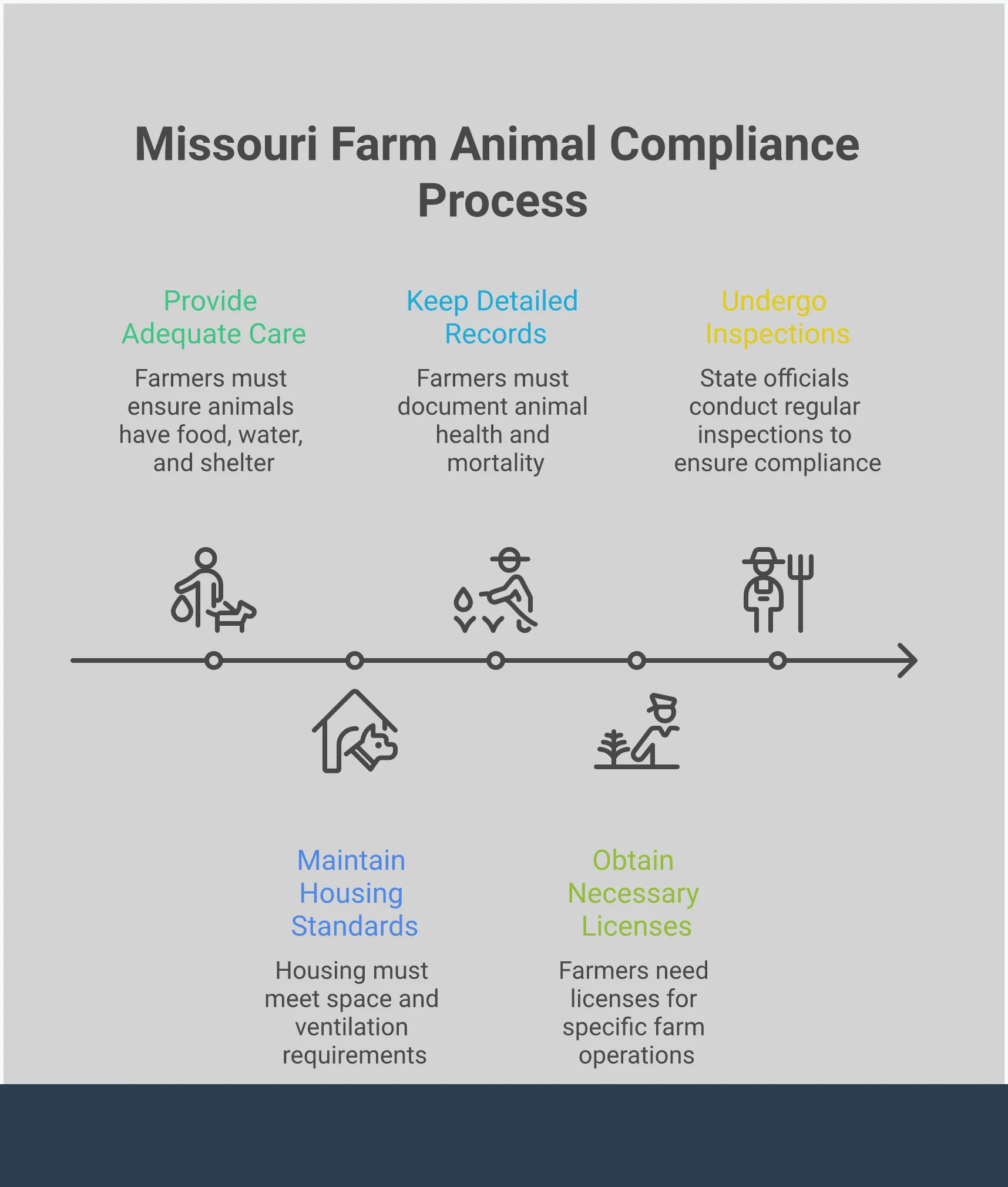
Meeting State Standards for Housing and Welfare
Missouri law requires that all livestock have adequate housing and shelter. This means providing protection from extreme weather, whether it’s the summer heat or winter cold. The goal is to keep animals safe, healthy, and comfortable. The state has strong rules and thorough disease testing protocols in place because healthy conditions prevent expensive and dangerous outbreaks that can devastate a farm.
Proper animal welfare isn’t just about following the rules; it’s about smart farming. Clean living spaces, proper ventilation, and safe enclosures reduce stress on your animals, which in turn can lead to better growth and production. Think of these standards as a baseline for maintaining a healthy and productive herd.
Following the Rules for Safe Animal Feed
Just as important as shelter is providing consistent access to clean food and water. State regulations mandate that animals receive sufficient, nutritious feed to maintain good health. This is a fundamental aspect of responsible animal husbandry and is taken seriously by state regulators. Dehydration and malnutrition can lead to serious health issues, and neglect in this area can result in legal penalties.
Ensuring your livestock have a steady supply of quality feed and fresh water is one of the most basic tenets of Missouri farm laws. It’s a simple but non-negotiable part of your responsibility as an animal owner. A well-fed and hydrated animal is more resilient to disease and contributes to a more stable and profitable farm operation.
What Records You Need to Keep
Good record-keeping is essential for compliance and your own legal protection. For instance, most animals entering Missouri need an official health certificate from a licensed veterinarian, issued within 30 days of their arrival. Keeping these documents organized is crucial.
Beyond transport papers, you should also know that an owner can be held responsible for the actions of their animals. This is why understanding farmers’ liability for their animals is so important. Maintaining detailed records of veterinary visits, vaccinations, and animal identification can be invaluable if an incident occurs. These records demonstrate your commitment to responsible management and can serve as critical evidence if your liability ever comes into question.
Beyond State Law: How Local Rules Affect Your Animals
While state laws provide a foundation for farm animal regulations in Missouri, your local city and county rules add another important layer of requirements. These local ordinances can have a big impact on your day-to-day operations, especially if you live in a residential or suburban area. Understanding how these rules work together is key to keeping your farm compliant and running smoothly.
Before you bring any animals home, it’s crucial to check the specific regulations for your property. What’s allowed in one town might be prohibited just a few miles down the road. Getting familiar with your local ordinances will save you from potential headaches, fines, and disputes with neighbors. Here’s a breakdown of what you need to know about local farm animal laws.
County vs. State: Who Has the Final Say?
When it comes to farm animal regulations, it can be confusing to figure out which rules to follow—county or state. In Missouri, the state sets the baseline. A recent bill clarified that county rules for livestock production should not be “inconsistent with or more stringent than” state regulations. This means your county can’t create laws that are tougher than what the state already has on the books. This approach helps create more consistent rules for raising livestock no matter where you are in Missouri, ensuring a level playing field for all farmers. Think of state law as the minimum standard that every county must follow.
How Many Animals Can You Legally Keep in Town?
If you’re farming or raising animals in a more populated area, you’ll likely face stricter limits. For example, some cities have specific animal laws and regulations that state you can have “no more than four domestic animals on your property” in residential zones. This is especially important for anyone interested in backyard chickens, goats, or other small livestock. These limits are designed to manage noise, smell, and space in densely populated neighborhoods. Always check your city or town’s municipal code to see what animal limits apply to your property before you invest in any new animals.
City Powers for Dog Control and Loose Animals
Beyond zoning, cities in Missouri have broad authority to manage domestic animals, especially dogs. According to state statutes, city councils can tax dogs, prevent them from running loose, and even order them to be put down if they are found at large in violation of city rules. This means if your dog gets out, you could face more than just a scare—you could be hit with a fine. These local powers are designed to ensure public safety and responsible pet ownership. It’s a reminder that even for common pets, your local government has the final say on what’s acceptable within city limits, and not following those rules can have real consequences.
Local Ordinances: St. Louis Examples
To see just how specific local rules can get, it’s helpful to look at a major city like St. Louis. While you may live in a different part of the state, these examples show the kinds of regulations your own town might have. In St. Louis, for instance, a residential property is limited to a total of four domestic animals, like dogs or cats, over six weeks old. It’s important to note that this limit applies to the entire property, not to each person living there. This is a perfect illustration of why you must check your local animal laws before bringing a new pet home, as you could unknowingly violate an ordinance.
Tethering Rules for Pets
Many cities also have detailed rules about how you can restrain your pets outdoors. In St. Louis, the regulations are very specific to ensure animal welfare. You cannot tie up a dog or cat outside for more than 10 consecutive hours or for more than 12 hours total within a 24-hour period. The rules even dictate the type of equipment you must use: the tether has to be at least 15 feet long, have swivels on both ends to prevent tangling, and be attached to a properly fitting collar or harness. These laws are in place to protect animals from neglect and unsafe conditions.
Prohibited Exotic Animals
If you’re thinking of owning something more unusual than a cat or dog, you absolutely must check your local ordinances first. Many cities and counties have a list of prohibited exotic animals, primarily for public safety. In St. Louis, the list is long and includes animals like bears, large cats such as lions and tigers, monkeys, wolves, alligators, and venomous snakes. Even large constrictor snakes over eight feet long are banned. Owning a prohibited animal can lead to its seizure and significant fines. Furthermore, if an illegal animal were to cause an injury, the owner would face immense legal liability, a situation where seeking advice from a personal injury attorney would be critical.
Rules for Keeping Chickens
The rise of urban homesteading has made backyard chickens popular, but you can’t just set up a coop without checking the rules. Cities often regulate the number of fowl you can keep. In St. Louis, residents are allowed to keep chickens, but the number is tied to the amount of space you can provide. The rule is one fowl for every four square feet of indoor coop space and every 10 square feet of outdoor run space. Even with adequate room, no property can have more than eight fowl in total. This ensures the birds have enough space to live humanely and prevents nuisance issues in residential neighborhoods.
Can You Keep Farm Animals on Your Property?
Zoning laws are where things can get really specific, and they often vary from one town to the next. It’s not uncommon for local rules to change drastically even within the same county. As some Missouri residents have noted, “one town might have very strict rules (like only allowing cats and dogs), while other parts of the county are much more open to different animals.” This is why you can’t assume the rules in a neighboring town apply to you. You’ll need to look up the specific zoning ordinances for your address to find out what types of animals are permitted and if there are any special conditions.
When to Get a Permit for Additional Animals
What if you want to keep more animals than the local ordinance allows? In some cases, you may be able to apply for a special permit. For instance, one city’s code states that if you want to keep more than eight small farm animals, you need a special permit from the Health Commissioner. This often comes with other requirements, such as owning a certain amount of land—in this case, at least 20,000 square feet. If you’re planning to expand, look into the permit process early. It usually involves an application, a potential inspection, and a fee, so it’s best to factor that into your plans.
What Happens if You Violate Missouri’s Animal Laws?
Understanding Missouri’s animal laws is about more than just good animal husbandry—it’s about protecting yourself from serious legal trouble. The state doesn’t take animal welfare lightly, and the consequences for violating these regulations can range from minor fines to significant felony charges. Whether it’s a case of neglect or a more severe offense, the penalties are designed to be a strong deterrent. Knowing what’s at stake can help you ensure your practices are always up to standard. The legal system has a clear, tiered approach to enforcement, meaning the consequences become more severe depending on the nature of the violation and your history. Let’s walk through what you can expect if you find yourself on the wrong side of these laws.
The Cost of Neglect: Understanding Fines and Penalties
In Missouri, animal neglect and abandonment are taken seriously right from the first offense. A first-time conviction is typically classified as a class C misdemeanor. This can result in fines and, in some cases, community service. The state’s consolidated cruelty statutes show that the system is designed to escalate penalties for repeat issues. If you are convicted a second time, the charge is increased to a class B misdemeanor, which carries heavier fines and potential jail time. This structure makes it clear that while a first mistake may be treated with some leniency, a pattern of neglect will lead to much stricter consequences.
When a Violation Becomes a Felony
While many violations fall into the misdemeanor category, certain situations can elevate the offense to a felony. This usually happens in cases involving extreme cruelty or significant financial damage. According to the Revised Statutes of Missouri, if an act of animal cruelty or neglect results in loss or damage to an animal facility of $75,000 or more, the offense becomes a class B felony. This is a very serious charge with severe penalties, including substantial prison time. It’s a clear signal that acts causing widespread harm or economic damage to agricultural operations are treated with the utmost severity under state law.
What Happens if You’re a Repeat Offender?
The legal system generally treats first-time and repeat offenders very differently. For a first conviction of animal neglect, a court might have the discretion to waive fines and penalties, provided you have a clean record. However, this leniency is not extended to those who have been convicted before. Local ordinances often reflect this approach, ensuring that repeat offenders face harsher penalties. This policy underscores the state’s commitment to preventing ongoing animal neglect. It serves as a strong incentive for animal owners to correct any issues immediately and maintain compliance, as the consequences for failing to do so become progressively more severe with each violation.
Legal Protections and Other Key Animal Laws
Missouri’s animal laws cover more than just farming and cruelty. A number of specific statutes are in place to address unique situations, from protecting research facilities to ensuring your pet is cared for if you pass away. These laws reflect a broad understanding of the different roles animals play in our lives—as companions, as part of our economy, and as wildlife. Knowing these rules can help you handle various situations, whether you’re a hunter, a pet owner, or a business operator. They provide a framework for resolving disputes and protecting the rights of both people and animals across the state.
Protection for Animal Facilities and Research Labs
Missouri law provides specific protections for places like farms, veterinary clinics, and research laboratories. It is illegal to steal, release, or harm animals housed in these facilities. The law also makes it a crime to damage property at these locations or to gain access by providing false information. These rules are designed to safeguard the animals and the important work being done, whether it’s agricultural production or scientific research. By criminalizing these actions, the state helps ensure that these facilities can operate safely and without the threat of disruption or vandalism, which could compromise both animal welfare and public safety.
Hunter Harassment Laws
In a state with a strong hunting tradition, Missouri has laws in place to protect those who are participating in the sport legally. It is a Class A misdemeanor to intentionally interfere with someone who is lawfully hunting, fishing, or trapping. This includes actions like making loud noises to scare away wildlife, creating physical obstructions, or otherwise disrupting the activity. These “hunter harassment” laws ensure that people can enjoy these outdoor traditions without being deliberately impeded by others. The law focuses on intent, meaning the interference must be a purposeful act designed to get in the way of a lawful hunt.
Liens for Animal Care and Boarding
If you provide professional care for someone else’s animal, Missouri law offers you a form of financial protection. Businesses that board, train, or provide veterinary services have a legal right, known as a lien, to keep an animal until the owner pays for the services rendered. For example, if a horse owner fails to pay their boarding fees, the stable owner can legally hold onto the horse and associated equipment, like a saddle, until the debt is settled. This law ensures that animal care professionals are compensated for their work and are not left with unpaid bills after providing essential services.
Estate Planning for Your Animals: Pet Trusts
For many of us, pets are family. Missouri law recognizes this bond by allowing you to create a “pet trust” as part of your estate plan. This is a legally enforceable arrangement that lets you set aside money and appoint a caregiver to ensure your animals are taken care of after you’re gone. The trust remains active for the lifetime of your pet, or until the last surviving pet passes away. Setting up a pet trust is a thoughtful way to provide peace of mind, knowing your companion will receive proper care. Including this in your estate planning is a straightforward process that a knowledgeable attorney can help you with.
Pets in Domestic Violence Protection Orders
Recognizing that pets can be involved in volatile domestic situations, Missouri law was updated to offer them protection. As of 2021, courts can include pets in domestic violence protection orders. This means a judge can grant temporary custody of a pet to the person seeking protection. This change acknowledges the deep emotional connection between people and their pets and addresses the unfortunate reality that animals are sometimes used to manipulate or control victims of abuse. If you are in a difficult situation and need legal assistance, it’s important to know that these protections are available. You can contact our office for guidance on this and other family law matters.
The Federal Animal Welfare Act (AWA)
While Missouri has its own set of robust animal laws, it’s also important to be aware of the main federal law in this area: the Animal Welfare Act (AWA). This act sets the minimum standards of care and treatment for certain animals, particularly those bred for commercial sale, used in research, transported commercially, or exhibited to the public. The AWA works in tandem with state laws to create a comprehensive regulatory environment. It ensures a baseline of humane treatment across the country for animals in specific industries, complementing the protections offered at the state level.
Importing Animals? Rules for Large-Scale Farms
Bringing animals into Missouri or managing a large-scale farm involves a specific set of rules designed to protect our state’s agricultural health and environment. These regulations aren’t just about paperwork; they are crucial for preventing the spread of disease and ensuring that farming operations are sustainable and safe for the surrounding community. Whether you’re importing a single horse or running a facility with hundreds of cattle, understanding these state-level requirements is the first step toward smooth and compliant operations.
The two main areas to focus on are the health requirements for incoming animals and the environmental standards for large farms. For imports, the state wants to ensure new animals don’t introduce diseases that could harm local livestock. For large operations, known as Concentrated Animal Feeding Operations (CAFOs), the focus is on managing waste and minimizing environmental impact. Working through these rules can feel complex, but they all share a common goal: keeping Missouri’s animals and natural resources healthy. If you find yourself dealing with compliance issues or have questions about your farm’s legal obligations, understanding these foundational rules is key.
Quarantine and Testing Rules for Different Species
If you plan to bring an animal into Missouri, you’ll need to prove it’s healthy first. The state mandates that “All animals entering Missouri shall be accompanied by an official Certificate of Veterinary Inspection (CVI, health certificate) issued within 30 days prior to entry.” This certificate is a document from a licensed veterinarian confirming the animal is free from contagious diseases.
The specific testing and health requirements can vary depending on the species. For example, the tests needed for cattle may differ from those for horses or poultry. It’s essential to check the latest Livestock Movement Requirements from the Missouri Department of Agriculture to see what applies to your animals. These rules are in place to safeguard the entire state’s livestock industry from potential outbreaks.
Understanding Missouri’s CAFO Regulations
Large-scale animal farms, officially known as Concentrated Animal Feeding Operations (CAFOs), have their own set of environmental regulations. Because these facilities house a large number of animals in a confined space, they generate a significant amount of waste. To protect our air and water quality, “Concentrated Animal Feeding Operations (CAFOs) are subject to specific regulations to manage waste and protect the environment.”
These rules often require operators to obtain special permits and create detailed plans for manure management. The goal is to prevent runoff from contaminating nearby streams, rivers, and groundwater. Complying with CAFO regulations is not just a legal requirement but also a commitment to responsible farming and being a good neighbor to your community.
How to Meet Environmental Standards
Meeting Missouri’s environmental standards is a core part of modern farming. The state takes this seriously because, as officials note, “Missouri’s stringent animal health regulations and rigorous disease testing help keep Missouri free from costly and threatening livestock diseases.” This same commitment applies to protecting our land and water. For farmers, this means implementing practices like proper manure storage, nutrient management planning, and safe carcass disposal.
Following these standards helps ensure your farm is sustainable for the long haul and protects you from potential fines and legal disputes. It’s about more than just following the rules; it’s about responsible stewardship of the land. If you’re ever unsure about how these environmental laws apply to your property or operations, it’s always a good idea to seek clear legal guidance.
Proper Animal Disposal: What Missouri Law Requires
Losing an animal is tough, and figuring out what to do next can be stressful. In Missouri, there are specific rules for disposing of dead animals to protect public health and the environment. Following these guidelines isn’t just about being a good neighbor; it’s about staying on the right side of the law and avoiding unnecessary fines or liability issues. Let’s walk through what you can and can’t do.
Illegal Disposal Methods You Must Avoid
When it comes to animal disposal, Missouri law is very clear about what isn’t allowed. You are explicitly prohibited from disposing of a dead animal by burning or cooking it. The regulations also forbid any other method besides burial or using a licensed facility. These rules are in place for good reason—to prevent the spread of disease and protect our water and soil from contamination. Understanding these restrictions is the first step in handling the situation correctly and avoiding potential legal consequences related to farmers’ liability for their animals. Ignoring these regulations can lead to significant penalties, so it’s best to stick to the approved methods.
Legal Disposal: Licensed Facilities vs. On-Farm Burial
So, what are your options? Missouri law approves two primary methods for animal disposal: taking the animal to a licensed disposal plant or burying it. Licensed facilities are equipped to handle disposal in a way that is safe, sanitary, and environmentally sound. It’s a good idea to know the location of the nearest licensed plant ahead of time. The other approved method is burial. If you choose to bury an animal on your property, make sure you do so in a way that prevents contamination of water sources and keeps other animals from disturbing the site. Following these approved procedures ensures you are compliant with state law and protects you, your farm, and your community.
Common Myths About Missouri’s Farm Animal Laws
When it comes to farm animal laws, what you hear from a neighbor isn’t always the full story. Misinformation can spread easily, leading to confusion and potential legal issues down the road. Let’s clear up a few of the most common myths so you can operate your farm with confidence and clarity. Understanding the facts helps you protect your animals, your property, and your livelihood.
Myth: The “Right-to-Farm” Law is a Free Pass
One of the biggest misconceptions revolves around Missouri’s “Right-to-Farm” law. Many people think this law provides a blanket shield for all farming activities, no matter what they are. In reality, its protections have clear limits. The law is designed to safeguard normal, lawful farming operations from nuisance lawsuits. However, it does not protect practices that are illegal or inhumane. As legal analysis points out, the law protects “current farm practices that are consistent with existing law” but is not a defense for “overtly inhumane practices—like puppy mills.” This means you are still expected to follow all other animal welfare and environmental regulations.
Myth: State Law Always Trumps Local Rules
Another common myth is that local county or city governments can create any rules they want for livestock and farming. While local authorities do have some power, they can’t overstep state law. Missouri law aims to create a predictable legal landscape for farmers across the state. To that end, any county regulations targeting livestock production cannot be “‘inconsistent with or more stringent than’ state regulations.” This ensures that farmers face consistent rules and aren’t caught between conflicting state and local demands. Your local zoning ordinances still matter, but they must operate within the framework established by the state.
Myth: “Common Sense” Care is Always Compliant
Many assume that farmers have complete freedom in how they manage the disposal of deceased animals. This is simply not true. Missouri has specific regulations in place to protect public health and the environment. According to state law, it is illegal “to dispose of a dead animal by burning, cooking or any method other than burial, except at a licensed disposal plant.” This rule is a key part of the state’s guidance on farmers’ liability for their animals. Following proper disposal methods isn’t just a suggestion—it’s a legal requirement that prevents the spread of disease and environmental contamination.
How to Stay Compliant with Missouri Animal Regulations
Staying on top of farm animal regulations can feel like a lot, but it doesn’t have to be overwhelming. The key is to break it down into manageable steps. By being proactive about your animals’ health, keeping your records in order, and knowing who to call for help, you can confidently meet state requirements and focus on what you love—caring for your animals. Think of these steps as your go-to checklist for keeping your farm running smoothly and legally. It’s all about creating good habits that protect you, your animals, and the broader agricultural community in Missouri.
Partner with a Vet to Monitor Animal Health
One of the best things you can do for your farm is to build a strong relationship with a local veterinarian. They are your number one partner in keeping your animals healthy and ensuring you’re following the law. Missouri has strong rules and thorough disease testing protocols to prevent the spread of illness, and your vet is the expert who can help you meet these standards. Regular check-ups, vaccinations, and prompt care for sick animals aren’t just good practices—they’re often legal requirements. A vet can also issue the health certificates you’ll need for transport and sale, making them an indispensable part of your team.
Create a Simple System for Your Paperwork
Good record-keeping is your best defense against compliance issues. When it comes to transporting animals, for example, you’ll almost always need an official health certificate from your vet, issued within 30 days of the move. Instead of scrambling for documents at the last minute, create a simple system to keep everything in one place. A binder or a dedicated digital folder can work wonders. Make sure to file records for every animal, including purchase or birth details, medical treatments, vaccinations, and any official certificates. This habit will save you countless headaches, especially if you ever face an inspection or need to prove your compliance.
How to Work with the MO Department of Agriculture
Don’t think of the Missouri Department of Agriculture as just an enforcement agency; see it as a valuable resource. The department’s goal is to promote and protect Missouri agriculture, and they offer educational materials and outreach programs to help you succeed. If you have questions about biosecurity, disease prevention, or specific regulations, their website is a great place to start. Reaching out to them for clarification shows you’re making a good-faith effort to comply with the law. Being proactive and informed is always a better strategy than waiting for a problem to arise.
Where to Find Help and Information
Navigating Missouri’s farm animal regulations can feel overwhelming, but you don’t have to do it alone. Several state and local organizations are dedicated to helping farmers and animal owners stay informed and compliant. Knowing where to turn for reliable information can save you time, prevent costly mistakes, and give you peace of mind. Whether you have a question about transporting livestock or need to understand your legal responsibilities, these resources are your best starting point.
Your Contact at the MO Department of Agriculture
The Missouri Department of Agriculture is the primary authority on animal health and safety in the state. Their goal is to protect both the animals and the agricultural industry. As they put it, “Missouri’s stringent animal health regulations and rigorous disease testing help keep Missouri free from costly and threatening livestock diseases.” This department is your go-to source for official rules and updates.
If you need specific details on moving animals, their page on livestock movement requirements is an essential resource. You can find information on permits, disease testing, and other regulations that ensure the safe and legal transport of your animals.
Connecting with Local Extension and Farm Groups
For more hands-on guidance, local extension services and farm groups are invaluable. These organizations offer practical advice and connect you with a community of fellow farmers. The Missouri Farmers Union (MFU), for example, is a grassroots organization that works to protect the well-being of family farmers across the state. You can find a collection of helpful links and contacts through the University of Missouri’s farm law resources.
Another excellent resource is the Missouri Farm Bureau, an organization founded by farmers to support other farmers. They provide a wealth of information aimed at helping you improve your operations and understand the complex web of agricultural regulations. Their farmer resources page is a great place to find practical guides and industry news.
When to Seek Legal Guidance
While state and local groups offer great support, some situations require professional legal advice. Understanding your liability as an animal owner is critical. According to the University of Missouri Extension, “An animal owner can be subject to legal liabilities for acts of animals owned as part of a farm enterprise or even as pets.” This means if your animal causes property damage or injures someone, you could be held responsible.
Handling these potential liabilities and ensuring you’re fully compliant with the law can be tricky. Consulting with a legal professional can help clarify your responsibilities and protect you from future legal issues. If you find yourself in a situation involving premises liability or have questions about your legal obligations, seeking guidance is a proactive step toward protecting your farm and your family.
Related Articles
- Missouri Agricultural Laws – The Law Office of Chad G. Mann, LLC
- Missouri Animal Laws – The Law Office of Chad G. Mann, LLC
- Missouri’s Miscellaneous Animal Laws – Barking Dog Nuisance
- Domestic Animal Laws Missouri – The Law Office of Chad G. Mann, LLC
- Right-to-Farm Statute Missouri – The Law Office of Chad G. Mann, LLC
If you have been injured, take our free injury questionnaire to help us understand your case, or call (417) 842-8679 for a free consultation.
Frequently Asked Questions
I only have a few backyard chickens. Do all these big farm laws really apply to me? Yes, many of them do, especially when it comes to local rules. While state-level regulations for disease testing and transport are often aimed at larger operations, your city or county zoning laws will have the most direct impact on you. These local ordinances often dictate how many animals you can keep, where on your property they can be housed, and what kind of shelter they need. It’s always best to check your specific municipal code before bringing any animals home.
What’s the single most important piece of paper I need to have for my animals? If you plan on moving an animal into Missouri from another state, the most critical document is the Certificate of Veterinary Inspection (CVI), also known as a health certificate. This is the official proof from a veterinarian that your animal is healthy and free from contagious diseases. It must be issued within 30 days of the move. Think of it as your animal’s passport for safe and legal travel across state lines.
My town has its own rules about animals. Which laws do I follow—state or local? You need to follow both, but it helps to understand how they work together. State law sets the minimum standard that all counties must follow, and local rules cannot be more restrictive than the state’s. However, local zoning ordinances are where you’ll find specific rules for your property, like limits on the number of animals you can own in a residential area. Always start by learning your local rules, as they will dictate your day-to-day operations.
What actually happens if I accidentally break one of these rules? The consequences depend on the specific violation. For a first-time issue, like animal neglect, it’s often treated as a misdemeanor with fines. The legal system is designed to be stricter with repeat violations, so a second offense would likely carry heavier penalties. More serious issues, like those involving extreme cruelty or causing major economic damage to another farm, can even become felonies. The best approach is to be proactive and ensure your practices are always compliant.
This is a lot of information. What’s the first thing I should do to make sure I’m compliant? A great first step is to build a relationship with a local veterinarian who has experience with farm animals. They are your best resource for understanding health requirements, getting the proper paperwork like health certificates, and keeping your animals healthy. Beyond that, take some time to look up your specific city or county zoning ordinances online. Knowing those local rules will answer many of your immediate questions and set you on the right path.