


When you’re facing a family law issue, it feels like everything is on the line. The stakes are incredibly high—your finances, your home, and most importantly, your children. Making the right decisions is critical, but high emotions can make it difficult to see clearly. This is where a professional makes all the difference. Hiring the right Missouri family law attorney isn’t about starting a fight; it’s about finding a strategic partner to protect your rights and guide you toward a fair resolution. This article will give you a clear roadmap for finding that partner.
Key Takeaways
- Family law attorneys handle all of life’s transitions, not just divorce: They provide essential legal guidance for adoption, prenuptial agreements, and child custody, protecting your rights and your family’s future.
- Focus on more than just a legal resume when hiring an attorney: The right fit depends on their specific experience in local Missouri courts, a communication style you’re comfortable with, and a transparent fee structure.
- Be an active partner in your own case for the best results: Your attorney handles the legal strategy, but your honest communication and prompt delivery of information are essential for building a strong case together.
How a Missouri Family Law Attorney Can Help
When you’re facing a significant life change involving your family, the legal system can feel overwhelming. A family law attorney is your guide and advocate through these sensitive and often emotional situations. Their job is to handle the legal complexities so you can focus on your family’s well-being. They represent people, not just cases, and their work covers a wide spectrum of domestic matters, from the beginning of a union to its end, and everything in between.
Think of a family law attorney as a specialist who understands the specific laws that govern relationships in Missouri. Whether you’re navigating a divorce, figuring out a custody arrangement, or looking to grow your family through adoption, they provide crucial advice and representation. Their goal is to protect your rights and help you achieve the best possible outcome for your unique circumstances. At The Law Office of Chad G. Mann, we handle a variety of family law matters with the care and attention they deserve, ensuring you have a clear path forward.
Guidance Through Divorce and Separation
Going through a divorce is one of the most challenging experiences a person can face. A family law attorney helps you manage every step of the process, from filing the initial petition to finalizing the settlement. Missouri is a “no-fault” divorce state, which means you don’t have to prove someone was to blame; you only need to state that the marriage is irretrievably broken. However, certain behaviors, like infidelity, can still influence the court’s decisions on matters like property division and child custody. An attorney will help you understand your rights and work to secure a fair division of assets and debts, ensuring your financial future is protected.
Understanding Equitable Distribution in Missouri
Many people assume that when a couple divorces in Missouri, everything gets split right down the middle. However, that’s not quite how it works. It’s a common misconception that Missouri is a 50/50 divorce state. Instead, Missouri is an “equitable distribution” state. This means the court’s goal is to achieve a *fair* division of assets and debts, which doesn’t always mean an equal 50/50 split. What’s considered fair is unique to each couple and depends entirely on the specific circumstances of the marriage. The court looks beyond a simple mathematical division to create an outcome that is just and reasonable for both parties involved.
Factors Influencing Property Division
So, what does a court consider “fair” when dividing property? A judge will look at the whole picture of your marriage to make a determination. When deciding on a fair division, a Missouri court will look at many things, including the assets each person brought into the marriage (separate property) versus what was gained during the marriage (marital assets). They also consider each spouse’s future earning potential, their age and health, and their overall conduct during the marriage. If one spouse did something wrong with money, like hiding it or spending it improperly, that can also influence the outcome. Presenting these factors clearly is a key part of any divorce proceeding.
Navigating Legal Separation and Annulment
While divorce is the most common path for ending a marriage, it’s not the only one. In some situations, a legal separation or an annulment might be a better fit. A legal separation allows you and your spouse to live apart and formalize arrangements for finances and child custody without officially ending the marriage. This can be useful for personal, religious, or financial reasons, like needing to stay on a spouse’s health insurance plan. An annulment, on the other hand, voids the marriage, treating it as if it never legally existed. This is only granted under specific circumstances, such as fraud or if one person was not legally able to consent. Understanding which option is right for you is a critical first step, and it’s a conversation best had with an experienced family law attorney.
Establishing Child Custody and Support
When children are involved, their well-being is the top priority. A family law attorney is essential for establishing fair and stable child custody and support arrangements. In Missouri, custody is divided into two parts: legal custody (who makes major decisions about the child’s life) and physical custody (where the child lives). The court’s primary goal is to create a plan that serves the child’s best interests. Your attorney will advocate for a parenting plan that works for you and your children. They also help navigate Missouri’s child support guidelines, which use parental income and expenses to calculate payments, ensuring your child receives the financial support they need.
Types of Custody and Common Parenting Schedules
In Missouri, the court looks at custody in two distinct ways: legal and physical. Legal custody gives a parent the right to make important decisions about their child’s upbringing, such as education, healthcare, and religious instruction. Physical custody refers to where the child lives most of the time. While one parent might have sole physical custody, it’s common for courts to award joint legal custody, ensuring both parents remain involved in their child’s life. The goal is to create a stable and predictable routine through a detailed parenting plan. This schedule outlines when the child will be with each parent, covering everything from weekly arrangements to holidays and summer vacations, all designed to support the child’s best interests.
How Courts Determine the “Best Interests of the Child”
Every custody decision in Missouri revolves around one central question: What is in the “best interests of the child?” This isn’t just a catchphrase; it’s a legal standard that guides every ruling. Courts always put the child’s physical safety and emotional well-being first when making decisions. A judge will look at a wide range of factors, including the child’s relationship with each parent, each parent’s willingness to support the other’s involvement, and any history of abuse or neglect. They also consider the child’s adjustment to their home, school, and community. An attorney’s role is to present your circumstances in a way that clearly demonstrates how your proposed plan aligns with these crucial factors.
Child Support and Special Circumstances
Child support is designed to ensure that children of separated parents have the same level of financial support they would have if the family were still together. Missouri uses a specific formula, often called Form 14, to calculate the amount. This calculation considers both parents’ gross monthly incomes, the cost of work-related childcare, health insurance premiums, and the amount of overnight visitation each parent has. However, the formula isn’t the final word. The court can adjust the amount for special circumstances, such as a child’s extraordinary medical needs or educational expenses. It’s also important to know that these orders can be modified later if there is a substantial and ongoing change in circumstances for either parent.
Establishing Paternity
For unmarried parents, establishing paternity is the first legal step toward securing custody, visitation, and child support rights. Until paternity is legally recognized, a father has no legal rights or responsibilities to the child. In Missouri, paternity can be established voluntarily if both parents sign an Affidavit Acknowledging Paternity, usually at the hospital when the child is born. If there is a dispute, either parent can file a petition with the court to establish paternity, which may require genetic testing. This process is fundamental for protecting the rights of the child and both parents, ensuring the child can receive financial support and benefits. Navigating these family law matters correctly from the start sets a stable foundation for your child’s future.
Assisting with Adoption and Guardianship
Family law isn’t only about separation; it’s also about creating and protecting families. An attorney can guide you through the joyful but complex legal processes of adoption and guardianship. If you’re looking to adopt a child, your lawyer will handle the extensive paperwork, court filings, and hearings required to make the adoption legally binding. Similarly, if you need to establish guardianship for a minor or an adult who cannot care for themselves, an attorney ensures all legal requirements are met. They help you build or protect your family with confidence, making sure every detail is handled correctly.
Drafting Agreements to Protect Your Future
Prenuptial and postnuptial agreements are practical tools for couples who want to define their financial rights and responsibilities. A prenuptial agreement is created before marriage, while a postnuptial agreement is made after. These legal documents outline how assets and debts would be divided in the event of a divorce. Far from being unromantic, they can provide clarity and prevent future conflicts. A family law attorney can help you and your partner draft a fair and enforceable agreement that protects both of your interests, allowing you to enter or continue your marriage with peace of mind.
Securing Orders of Protection for Your Safety
In situations involving domestic violence or harassment, your safety is the most urgent concern. A family law attorney can help you obtain an Order of Protection from the court. This legal order prohibits an abuser from contacting or coming near you and your children. The process can be intimidating, but an attorney will stand by your side, help you file the necessary petitions, and represent you in court to present the evidence. If you are in a dangerous situation, getting legal help is a critical step toward securing your safety and well-being. Please don’t hesitate to contact our office for immediate assistance.
Handling Modifications and Enforcement
Life doesn’t stand still after a court order is finalized. A significant change in circumstances, like a new job, a relocation, or a shift in income, may mean your original custody or support agreement is no longer practical or fair. A family law attorney can help you petition the court for a modification. While Missouri child support follows state rules based on income, judges can adjust it when circumstances warrant. If you and your ex-spouse can agree on the changes, the court will often approve your new plan, making the process much smoother. On the other hand, if your former partner isn’t holding up their end of the deal—by failing to pay child support, for example—an attorney can help you take action. They can file a motion for contempt to enforce the court’s order and ensure your family receives the support it’s entitled to.
Assisting with Military Divorce
Divorces involving a service member come with a unique set of rules that don’t apply in civilian cases. Federal laws, like the Servicemembers Civil Relief Act (SCRA), provide specific protections for active-duty personnel, which can affect the timing and proceedings of a divorce. An attorney experienced in military divorce understands how to handle these complexities. They can address critical issues such as the division of military retirement pay and benefits under the Uniformed Services Former Spouses’ Protection Act (USFSPA). These matters require a detailed understanding of both Missouri state law and federal military regulations. Having a lawyer who is familiar with these unique considerations ensures that the rights of both the service member and the civilian spouse are protected throughout the process.
Finding the Right Missouri Family Law Attorney for You
Finding the right attorney can feel like a monumental task, especially when you’re already dealing with a stressful family situation. The key is to be methodical and find someone who not only has the right experience but also makes you feel heard and supported. Think of this process as building your team; you want the best possible advocate in your corner. By taking a few deliberate steps, you can narrow down your options and find a legal partner you can trust to guide you through the complexities of Missouri family law.
Start Your Search with Online Directories and the Bar
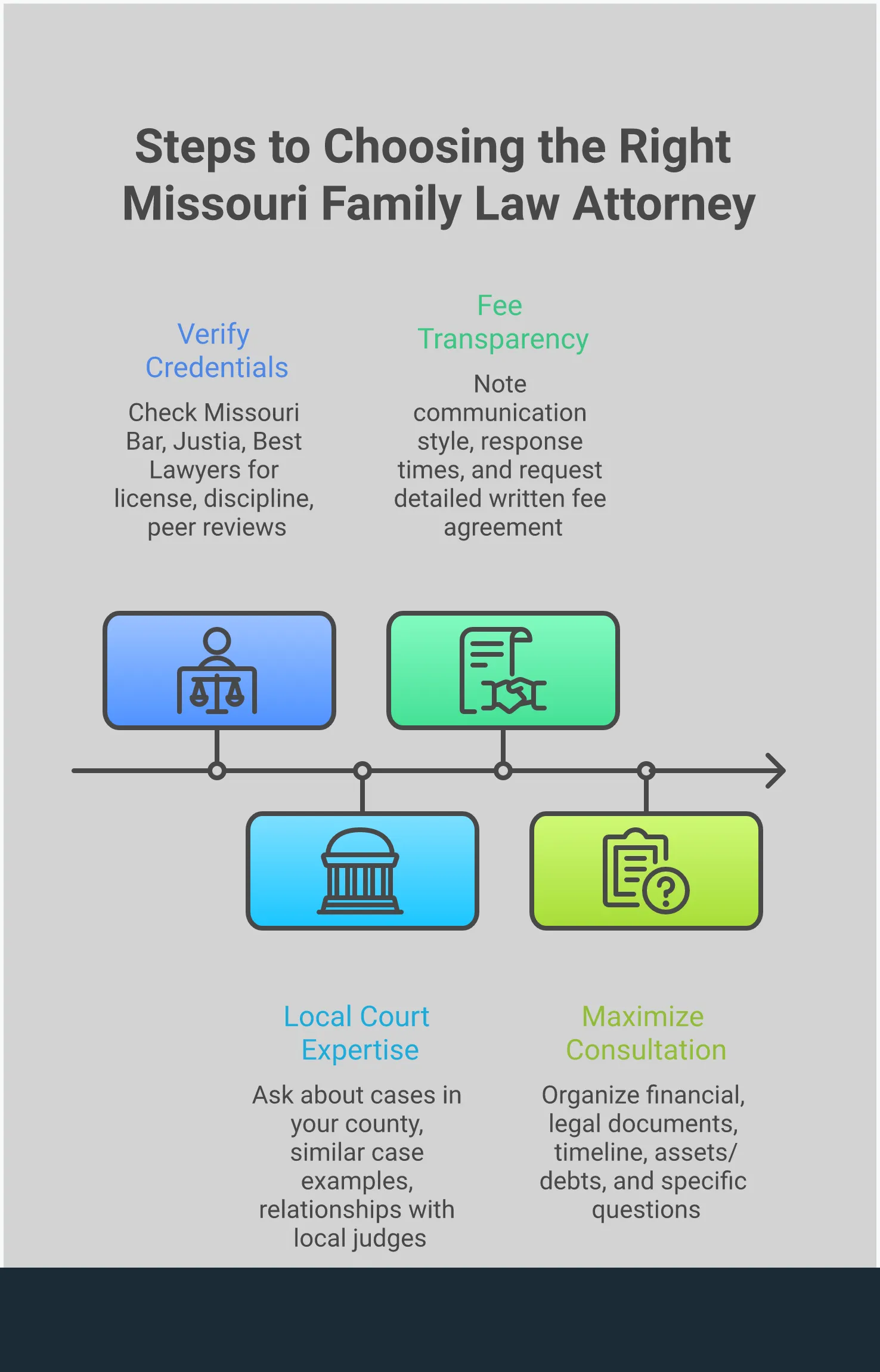
A great place to start your search is with reputable online legal directories. Websites like Justia and Best Lawyers allow you to filter for family law specialists right here in Missouri, giving you a solid list of potential candidates. These directories often include peer reviews and detailed professional profiles, which can be incredibly helpful. More importantly, you should always verify an attorney’s credentials with The Missouri Bar. This official resource lets you confirm that a lawyer is licensed and in good standing, which is a non-negotiable first step before you even consider picking up the phone.
Get Recommendations from Friends and Family
While online research is valuable, don’t underestimate the power of a personal recommendation. Reaching out to friends, family members, or even other professionals you trust (like your accountant or therapist) can provide invaluable insight. Hearing about someone’s firsthand experience with an attorney can tell you a lot about their communication style, professionalism, and how they handle sensitive cases. A referral can help ease the anxiety that often comes with hiring a lawyer, as you’re starting the process with a degree of built-in trust. It’s one of the best ways to find someone who is not only qualified but also a good fit for your personality.
Check Their Credentials and Read Online Reviews
Once you have a shortlist, it’s time to do some deeper research. Don’t just glance at a firm’s homepage; look for specifics. Does the attorney specialize in family law, or is it just one of many practice areas? A dedicated family law attorney will have a much deeper understanding of the nuances of your case. Check out their professional background and read any articles or resources they’ve published. This will give you a sense of their expertise and approach. Online reviews can also be useful, but read them carefully. Look for consistent themes in feedback rather than focusing on a single glowing or negative review. This thorough vetting process ensures you find an attorney with the right experience to handle your unique situation.
What Qualities Matter in a Missouri Family Law Attorney?
Once you have a short list of potential attorneys, it’s time to dig a little deeper. Finding the right lawyer goes beyond credentials and online reviews; it’s about finding a professional partner who fits your specific needs. Family law cases are deeply personal, and you deserve an advocate who not only understands the law but also understands you.
When you’re making this important decision, focus on three key areas: their specific experience, their communication style, and how they handle their fees. These factors will give you a clear picture of what it would be like to work with them and help you choose an attorney who can guide you through this challenging time with confidence and clarity.
Look for Experience with Local Missouri Courts
Family law can be complicated, and the rules aren’t always the same everywhere. It’s crucial to find a lawyer who has deep experience with Missouri’s specific family law statutes and understands how local courts operate. Procedures and even interpretations of the law can vary from one county to another, and an attorney who is familiar with the local judges and court staff can provide a significant advantage.
This kind of localized experience means your attorney won’t be starting from scratch. They’ll know the tendencies of the court and the strategies that are most effective in that specific jurisdiction. During your consultation, be sure to ask about their experience handling cases similar to yours in your county.
Find a Communication Style That Fits Your Needs
You’ll be sharing sensitive information with your family law attorney, so it’s essential that you feel comfortable talking to them. You need an advocate who promises to talk straight and keep you fully informed about your case, explaining complex legal terms in a way that makes sense. The right attorney will listen to your concerns, answer your questions patiently, and provide regular updates so you’re never left in the dark.
Pay close attention to how an attorney communicates during your first meeting. Do they listen more than they talk? Do they make you feel heard? This initial interaction is often a good indicator of what the working relationship will be like. You should walk away feeling understood and confident in their ability to represent you.
Insist on a Clear and Transparent Fee Structure
Legal fees can be a major source of stress, but they don’t have to be a mystery. A trustworthy attorney will be upfront and transparent about their fee structure from the very beginning. The cost of a family lawyer in Missouri can vary widely depending on the complexity of your case, so it’s important to understand how you’ll be billed.
Ask whether they charge an hourly rate or a flat fee, and be sure to request a written fee agreement that outlines all potential costs. A clear contract protects both you and the attorney, ensuring there are no surprises down the road. You deserve to know the total cost upfront, without worrying about hidden or open-ended fees, so you can focus on what truly matters: your family’s future.
What Does a Family Law Attorney Cost?
Let’s be honest: legal fees can be stressful, especially when you’re already dealing with a difficult family situation. The good news is that most family law attorneys are transparent about their costs. Understanding how they charge is the first step toward feeling in control. Before hiring anyone, you should have a clear picture of their fee structure, what a retainer covers, and other potential expenses. A clear conversation about costs from the start prevents surprises and builds a trusting relationship with your legal team.
Breaking Down Hourly Rates vs. Flat Fees
Attorneys typically charge in one of two ways: hourly rates or flat fees. Many charge by the hour for the actual time they spend on your case, including calls, drafting documents, and court appearances. These rates in Missouri vary based on a lawyer’s experience and your case’s complexity. Alternatively, some attorneys offer a flat fee for predictable services like an uncontested divorce, giving you a clear, upfront cost. The best billing structure for you really depends on the specifics of your situation.
Understanding Retainers and Your Total Investment
You’ll also likely hear the term “retainer,” which is a down payment to secure an attorney’s services. It’s not the total cost, but an upfront fee your lawyer bills their hourly work against. In Missouri, a typical retainer is around $3,500 but can range widely depending on your case. This money is held in a trust account, and as your attorney works, they deduct their fees from it. If any money is left over when your case concludes, it’s returned to you. Always ask for a clear retainer agreement.
Don’t Forget About Court Costs and Other Expenses
Attorney fees are the main expense, but they aren’t the only one. Family law cases often have other costs, like court filing fees, serving legal papers, expert witness fees, and mediation costs. These expenses can add up, especially in contentious cases where total costs can reach several thousand dollars or more. During your initial consultation, ask for an estimate of these additional expenses to get a complete financial picture. If you’re ready to discuss your case, you can contact our office to schedule a meeting.
Understanding the Missouri Family Law Process
The family law process can seem like a maze of legal deadlines and confusing procedures. Knowing what to expect can make the entire experience feel more manageable and give you a sense of control. Every case is unique, but most follow a general path from filing the initial paperwork to reaching a final resolution. Understanding the typical timelines and the different ways you can resolve your case—both in and out of court—is the first step toward making informed decisions for your family’s future. This knowledge empowers you to work effectively with your attorney and choose the path that best suits your goals.
Typical Case Timelines
One of the first questions people ask is, “How long will this take?” In Missouri, the answer largely depends on whether your case is contested or uncontested. If you and your spouse agree on all major issues, like property division and child custody, you can pursue an uncontested divorce. These cases are much faster and can often be finalized in about 60 to 90 days. This includes a mandatory 30-day waiting period that starts the day you file. On the other hand, a contested divorce, where you disagree on one or more issues, will take longer. These cases can stretch over several months or even years, depending on the complexity of the disputes and the need for court intervention.
Alternatives to a Court Trial
A dramatic courtroom battle isn’t your only option, and for many families, it’s not the best one. Going to trial can be emotionally draining and expensive, which is why many people explore alternatives that allow for more privacy and control. Methods like mediation and collaborative divorce are designed to help you reach an agreement without a judge making the final decisions. These processes are often faster, less adversarial, and can lead to more creative and personalized solutions. They foster a cooperative environment, which is especially valuable when you need to maintain a positive co-parenting relationship for your children long after the legal case is over.
Mediation
Mediation is a process where you and the other party sit down with a neutral third-party professional, called a mediator, to work through your disagreements. The mediator doesn’t take sides or make decisions for you. Instead, their job is to facilitate a productive conversation, help you both communicate clearly, and guide you toward a mutually acceptable agreement. It’s a confidential and voluntary process that puts the decision-making power back in your hands. Many people find that mediation helps them resolve issues more quickly and with less conflict than a traditional court case.
Collaborative Divorce
Collaborative divorce is another powerful alternative to a court trial. In this process, you, your spouse, and your respective attorneys all sign an agreement to resolve your issues outside of the courtroom. Everyone commits to working together respectfully and transparently to reach a settlement. This approach is built on cooperation and open communication, allowing you to craft solutions that are tailored to your family’s unique needs. It often involves other professionals, like financial specialists or child psychologists, to help you make the best decisions. A collaborative divorce can be a healthier way to end a marriage, especially when you want to minimize conflict and protect your children from the stress of litigation.
Can’t Afford an Attorney? Here Are Your Options
The cost of legal representation is a valid concern for many people facing a family law issue. If you’re worried about how you’ll pay for an attorney, please know that you aren’t out of options. Missouri has a strong network of organizations and programs designed to ensure everyone has access to legal help, regardless of their financial situation. Exploring these resources can provide the support you need to move forward with your case. While our firm handles specific practice areas, we believe everyone deserves access to justice, and these organizations are a great place to start.
Explore Missouri’s Legal Aid Organizations
If you need legal assistance for a civil case (which includes most family law matters) but can’t afford to hire a private attorney, Missouri’s legal aid organizations are here to help. These groups provide free legal services to eligible individuals based on income and other factors. For example, Legal Aid of Western Missouri is dedicated to helping people with a wide range of issues, including orders of protection in domestic violence cases, housing law, and access to healthcare and public benefits. These organizations are staffed by dedicated attorneys and paralegals who can offer advice, help with paperwork, and even represent you in court. They are a fantastic first stop if you need legal guidance on a limited budget.
Look into Pro Bono Services and Self-Help Resources
In addition to formal legal aid groups, many private attorneys volunteer their time to help those in need through pro bono services. You can often apply for this type of assistance through the legal aid program that serves your county. Organizations like Legal Services of Southern Missouri connect people with volunteer attorneys and provide other essential resources for residents in our part of the state. Furthermore, many courts have self-help centers that offer guidance and information to help you understand legal procedures and fill out the necessary forms if you decide to represent yourself. These centers are an invaluable resource for navigating the legal process on your own and can help you feel more prepared for what’s ahead.
Consider Limited Scope Representation
Hiring a lawyer doesn’t have to be an all-or-nothing commitment. If you feel confident handling some parts of your case but need expert help on others, you can consider limited scope representation. This allows you to pay an attorney for specific tasks, like drafting legal documents or preparing you for a court hearing, instead of for the entire case. It’s a practical way to manage costs while ensuring you have professional guidance where it counts the most. A clear agreement is essential, as it outlines exactly what services the attorney will provide and at what cost, so there are no surprises. This approach gives you more control over your legal expenses and is an option we’re happy to discuss with you.
How to Prepare for Your First Consultation
Walking into a law office for the first time can feel overwhelming, but preparing for your initial consultation is one of the best things you can do to calm your nerves and make the meeting productive. Think of it as setting the stage for a successful partnership. When you come prepared, you help your potential attorney get a clear picture of your situation right from the start. This allows them to give you more specific, helpful advice and a realistic outlook on your case. It also ensures you use your time effectively, focusing on the issues that matter most. A little bit of homework now can save you time, money, and stress down the road. Below, we’ll cover the key documents you should bring and the important questions you should be ready to ask.
What to Bring: A Document Checklist
Before your meeting, take some time to collect any paperwork related to your family law matter. Having these documents on hand helps your attorney understand the full context of your case. Start by gathering any existing legal documents, such as a prenuptial agreement, separation agreement, or previous court orders for custody or support. You should also bring financial records like recent pay stubs, tax returns, and bank statements. If property is a factor, documents like deeds or mortgage statements are helpful. Don’t worry if you can’t find everything; just bring what you can. This initial collection of important papers gives your attorney a solid foundation to work from.
Key Questions to Ask Your Potential Attorney
Your first consultation is a two-way street. While the attorney is learning about your case, you should be learning about them to see if they’re the right fit. Come prepared with a list of questions. Start with the practical stuff: ask about their fees, whether they charge an hourly rate or a flat fee, and if a retainer is required. It’s also crucial to ask about their professional experience. You can ask, “How many cases like mine have you handled in this county?” This gives you insight into their familiarity with local courts. Finally, ask about their communication style and how they plan to support you. Understanding their approach will help you feel confident when you’re ready to schedule a consultation.
Should I Hire an Attorney or Represent Myself?
It’s understandable to consider representing yourself in a family law matter, especially if you’re trying to keep costs down. While it’s possible, it’s important to recognize that family law is incredibly nuanced. The decisions made during this time can have a lasting impact on your finances, your property, and your children. An attorney does more than just fill out paperwork; they provide guidance through a complex legal system, protect your rights, and work toward a fair outcome, giving you peace of mind that things are being handled correctly.
Why You Need an Attorney for Complex Family Cases
Even a situation that seems straightforward on the surface can have hidden legal complexities. An amicable divorce, for example, still requires the proper division of assets like retirement accounts, real estate, and investments, as well as the fair allocation of debt. Without a legal background, it’s easy to overlook a crucial detail or agree to something that isn’t in your best interest. An experienced attorney can help you avoid expensive mistakes by identifying potential issues you might not see. They ensure all legal requirements are met for matters ranging from property division to spousal support, which are all part of our firm’s practice areas.
Why an Attorney is Crucial in High-Conflict Cases
When emotions are running high, it’s difficult to communicate effectively and make rational decisions. A common misconception is that hiring a lawyer will only escalate the conflict. In reality, an attorney can act as a valuable buffer, managing communication with your ex-partner or their lawyer. This can actually lower the tension by allowing a neutral professional to handle negotiations. This is especially critical when children are involved. Your attorney helps you stay focused on the most important goal: reaching a custody and support agreement that serves your children’s best interests. Having a dedicated legal advocate like Chad G. Mann ensures your rights are protected while you work toward a stable future for your family.
Requirements for Representing Yourself (Pro Se)
If you decide to represent yourself, a process known as appearing “pro se,” it’s important to understand that you’re taking on the full responsibility of an attorney. In Missouri, this includes a specific requirement: you must complete the online Litigant Awareness Program and file a certificate of completion with the court. This program is designed to ensure you understand the basics of the legal process. This path is generally only advised for the simplest of cases, such as an uncontested divorce where both parties agree on every single issue, from property to parenting time.
Even in an agreeable case, you are held to the same standards as a lawyer. You’ll need to understand court rules, file the correct documents, and meet all deadlines. It’s a good idea to review state resources and the relevant laws, but remember that court clerks cannot give you legal advice or help you fill out forms. Because the risk of making a costly mistake is high, many people who represent themselves still choose to have an attorney review their final paperwork. This small investment can provide peace of mind and help you avoid future legal headaches.
Common Myths About Missouri Family Law Attorneys
When you’re dealing with a sensitive family matter, the last thing you need is more confusion. Unfortunately, there are a lot of misconceptions floating around about family law that can make it hard to know what to do next. Let’s clear the air and tackle some of the most common myths so you can move forward with confidence. These misunderstandings can add unnecessary stress to an already difficult time, and getting the facts straight is the first step toward finding a path forward.
Myth #1: An Attorney Will Only Escalate Conflict
It’s a common fear: bringing a lawyer into the picture will turn a disagreement into an all-out battle. Many people worry that hiring an attorney will only make things more hostile. In reality, a good family law attorney often does the opposite. Their job is to provide a steady hand and guide you through a complex legal system, not to escalate conflict. A skilled lawyer can act as a buffer, handling difficult conversations and focusing on the facts. This can actually lower the emotional temperature and lead to a more peaceful, fair resolution. They are there to advocate for your best interests and help you understand all of your legal options.
Myth #2: Any Family Law Attorney Will Do
This is one of the most dangerous myths out there. Believing that any attorney can handle your family law case is like thinking any doctor can perform heart surgery. Family law is a highly specialized area with its own unique rules and procedures. An attorney’s experience, negotiation style, and familiarity with local Missouri courts can dramatically affect the outcome of your case. It’s so important to find someone whose approach fits your situation and who you feel comfortable with. Take the time to learn about a potential attorney’s background and philosophy to ensure you’re putting your trust in the right hands. You need an advocate who truly understands your needs, and getting to know who you’re hiring is the first step.
How to Build a Strong Partnership with Your Attorney
Choosing the right attorney is a huge first step, but the work doesn’t stop there. The success of your case often depends on how well you and your lawyer work together. Think of it as a partnership. Your attorney brings legal expertise and strategic guidance, while you bring the essential facts and details of your situation. A strong, collaborative relationship built on trust and clear communication is your best asset for getting through this challenging time.
When you work effectively with your attorney, you make the legal process smoother and more efficient. This means responding to their requests in a timely manner, being organized with your documents, and keeping them informed of any new developments. This partnership ensures your attorney has everything they need to represent you effectively. Remember, they are your advocate, and the more you empower them with information and cooperation, the better they can fight for your interests.
Why Open and Honest Communication is Key
It’s completely normal to feel nervous when you hire an attorney, especially for a sensitive family matter. But it’s so important to remember that your lawyer is on your side. To represent you effectively, they need the full story—the good, the bad, and the complicated. Holding back information because it’s embarrassing or you think it’s unimportant can seriously harm your case down the road.
Your attorney is there to help you manage the complexities of family law, so don’t hesitate to ask questions. If you don’t understand a legal term, a document, or the next step in the process, speak up. A good lawyer wants you to be informed and will take the time to explain things clearly. Open, honest dialogue builds the trust needed for a successful partnership.
Know Your Responsibilities as a Client
While your attorney handles the legal strategy, you play a critical role on the team. Your main responsibility is to be the expert on the facts of your case. This means providing all necessary information and documentation promptly when your lawyer requests it. Being organized and responsive not only helps your case move forward but can also make the process more cost-effective by saving your attorney time.
Think of yourself as an active participant. Keep your lawyer updated on any changes in your situation, whether it’s a new job, a change in address, or a communication from the other party. By being proactive and engaged, you empower your attorney to build the strongest case possible for you. Your cooperation is one of the most valuable tools you have.
Related Articles
- Family Law Attorney in Missouri | Divorce, Custody & Adoption
- Filing for Divorce in Missouri | Step-by-Step Legal Guide
- Missouri Divorce Lawyer Cost (2025): Fees & What to Expect
Frequently Asked Questions
My ex and I agree on everything. Do we really need separate lawyers for our divorce? Even in the most amicable situations, it’s wise for each person to have their own legal counsel. An attorney’s job is to look out for your individual best interests, and there are often complex financial details, like dividing retirement accounts or handling debt, that can be easily overlooked. Having a lawyer review your agreement ensures it’s fair and legally sound, which helps prevent costly and stressful complications for you both in the future.
What exactly is a retainer fee, and is it possible to get any of it back? Think of a retainer as a down payment for your attorney’s services. This money is placed into a special trust account, and as your lawyer works on your case, they will bill their time against that fund. It is not the total cost of your case. If your case is resolved and there is still money left in the retainer account, that remaining balance is returned to you.
I’m worried that hiring an attorney will make my situation more hostile. How can I prevent that? This is a very common and understandable fear. However, a skilled family law attorney often acts as a buffer, reducing conflict rather than creating it. They can manage difficult communications and focus negotiations on facts and legal standards, which removes much of the emotion. The key is to hire a lawyer whose approach aligns with your goals, whether that’s mediation or collaborative problem-solving.
Beyond experience, how do I know if an attorney is the right personal “fit” for me? Finding the right fit comes down to trust and communication. During your initial consultation, pay attention to how the attorney interacts with you. Do they listen carefully to your story? Do they explain complex legal ideas in a way you can understand? You should feel comfortable asking questions and confident that they respect your concerns. You’ll be working closely together, so you need an advocate you can truly connect with.
What can I expect during my first meeting with a family law attorney? Your first consultation is a two-way conversation designed to see if you and the attorney are a good match. You’ll have the chance to share the details of your situation, and the attorney will ask questions to understand the key issues. It’s also your opportunity to ask about their experience, their approach to cases like yours, and their fee structure. You should leave the meeting with a clearer understanding of your legal options and a sense of whether you’ve found the right person to guide you.