


Just because you can buy an animal doesn’t mean it’s legal to own. That’s a dangerous and often costly assumption, especially when it comes to Missouri exotic animals. The laws are a patchwork, changing by species, county, and even your local HOA. You have to look past what’s available for sale and focus on what’s legally allowed. This guide cuts through the confusion. We’ll clarify which animals are off-limits, walk you through the registration process, and explain your legal duties so you can avoid fines or the confiscation of your pet.
Key Takeaways
- Check Local and HOA Rules First: State approval doesn’t guarantee you can keep an exotic pet. Your city, county, or Homeowners Association can have stricter rules or outright bans, so always verify their specific regulations before acquiring an animal.
- Not All Exotic Pets Are Regulated Equally: Missouri law separates animals into distinct categories. Some are prohibited without special permission, others require registration with local law enforcement, and certain captive-bred reptiles are permit-free. You must know which category your animal falls into.
- You Are Strictly Liable for Any Harm Caused: As an owner, you are legally and financially responsible if your exotic animal injures someone or damages property, regardless of fault. Violating ownership laws can also lead to criminal charges, fines, and having your animal confiscated.
Missouri’s Exotic Animal Laws: What You Need to Know
If you’re thinking about owning an exotic pet in Missouri, it’s important to know that the state has specific rules you’ll need to follow. These aren’t just suggestions; they are laws designed to protect public safety and ensure the welfare of the animals. The primary regulations are found in The Wildlife Code of Missouri, which outlines what is and isn’t allowed.
Generally, the state categorizes exotic animals in a couple of ways. Some species are outright prohibited as pets unless you obtain special written permission from the state director. Other animals are considered “controlled,” which means you can own them, but you must comply with strict requirements. For many animals classified as dangerous—such as lions, tigers, bears, wolves, nonhuman primates, and certain venomous or large reptiles—the law is very clear. You cannot keep them unless they are registered with your local law enforcement agency, like the county sheriff’s office.
Failing to follow these registration rules isn’t a minor oversight; it can be a criminal offense. These exotic animal laws exist because these animals, by their nature, can pose a significant risk to the community if they escape or are not handled properly. Before bringing an exotic animal into your home, you have a responsibility to understand and adhere to every legal requirement. This includes not only state laws but also any additional ordinances from your city or county, which can sometimes be even more restrictive.
Missouri’s Unique Stance on Exotic Animals
Missouri has a reputation for being more permissive than many other states when it comes to exotic animal ownership. This perception isn’t entirely wrong; the state is home to one of the country’s largest exotic animal auctions, and the regulations can seem less stringent at first glance. However, this “looseness” creates a complex and often confusing legal environment for potential owners. It’s not a free-for-all. The state’s approach places a significant amount of responsibility on the individual to understand the law, not just for their own safety, but for the well-being of the community and the local ecosystem. The consequences of getting it wrong can be severe, extending beyond fines to include serious liability if your animal causes harm.
A Hub for the Exotic Animal Trade
Because of its relatively relaxed regulations, Missouri has become a central point for the exotic animal trade. While the state does require owners of certain dangerous animals—like large cats, wolves, and bears—to register them with local law enforcement, many other species fall into a legal gray area. This means you might find a wide variety of non-native animals for sale that don’t require any special permits. However, just because you can buy an animal doesn’t mean you’re in the clear. This environment makes it incredibly important for prospective owners to do their homework, as the absence of a state-level ban doesn’t override local city ordinances or homeowners association rules that may prohibit the same animal.
The Threat of Invasive Species in Missouri
Beyond the immediate legal and safety concerns, owning an exotic pet carries a significant environmental risk: the potential for it to become an invasive species. When a non-native animal is released into the wild—whether intentionally or by accident—it can have devastating effects on the local environment. These introduced species are a major threat to Missouri’s native wildlife because they compete for food and resources, introduce diseases, and can completely alter natural habitats. An escaped pet might seem like an isolated incident, but it can be the starting point for a much larger ecological problem that is difficult, if not impossible, to reverse.
Impact on Native Wildlife
The damage caused by invasive species is not just a minor disruption; it’s a leading cause of extinction. In North America, the introduction of non-native species is the second biggest factor driving freshwater fish toward extinction, surpassed only by habitat loss. When an aggressive or highly adaptable exotic animal enters a balanced ecosystem like a Missouri river or forest, native animals that have evolved there for thousands of years are often unable to compete. This can lead to a rapid decline in their populations, threatening the biodiversity that makes our state’s natural landscapes so unique and vibrant.
Common Invasive Species to Know
To understand how quickly an introduced species can take over, look no further than the Common Carp. This fish was deliberately brought to the United States in the 1800s and is now the most prevalent large fish in Missouri’s waters. They muddy rivers and lakes by uprooting vegetation, which harms the native fish that rely on that plant life for food and shelter. The story of the Common Carp is a powerful reminder that even well-intentioned introductions can have unforeseen and long-lasting negative consequences for the environment, illustrating why preventing the release of exotic pets is so critical.
Missouri’s Native Wildlife
While the laws around exotic animals can be complicated, Missouri’s native wildlife is something we can all appreciate and protect. Our state is home to a rich diversity of animals that are perfectly adapted to its forests, prairies, and waterways. From the iconic white-tailed deer to the smallest songbirds, these species are the foundation of our local ecosystems. Focusing on the preservation of our native fauna is a crucial part of being a responsible resident. Understanding and celebrating these animals not only connects us to our natural heritage but also reinforces why regulations on non-native species are so important for maintaining the delicate balance of our environment.
Meet the Official State Animal
The official state animal of Missouri is the Missouri Mule, a creature that perfectly symbolizes the spirit of the state. Known for its remarkable strength, intelligence, and famously stubborn yet even-tempered nature, the mule played a vital role in Missouri’s agricultural and pioneering history. This hardy animal represents the resilience and determination of Missourians. The Missouri Mule is more than just a symbol; it’s a nod to the practical, hardworking character that has defined the state for generations and a piece of our living history that continues to be celebrated today.
Unique and Protected Native Species
Missouri is also home to some truly unique and protected animals, including the Ozark Hellbender. This fascinating creature is one of the largest salamanders in the world, growing up to two feet long, and it lives exclusively in the cool, clear rivers of the Ozarks. Often called a “snot otter” for its slimy coating, the Hellbender is a crucial indicator of water quality—its presence signals a healthy river system. As a protected species, the Ozark Hellbender represents the fragile wildlife that we stand to lose if our native habitats are disrupted by pollution or invasive species, making its protection a priority for the state.
Which Exotic Animals Are Illegal to Own in Missouri?
Thinking about adding a unique animal to your family? It’s an exciting idea, but before you bring home a capybara or a kinkajou, it’s crucial to understand Missouri’s laws. The state has clear rules about which animals you can and can’t own as pets, primarily for public safety and animal welfare. Some animals are completely off-limits for private ownership unless you go through a specific, and often difficult, process to get special permission from the state director.
These regulations are in place because exotic animals have complex needs that are difficult to meet in a typical home environment. They can also carry diseases or pose a direct threat to people and local ecosystems if they escape. Understanding these restrictions upfront can save you from potential legal trouble, fines, and the heartbreak of having to surrender an animal you’ve grown to love. Let’s look at some of the specific animals that are illegal to own in Missouri without that special state-level approval.
Understanding “Dangerous Wild Animals”
Missouri law specifically identifies a category of “dangerous wild animals” that are prohibited as pets. This classification is pretty broad and covers animals that pose a significant risk to public safety, like large predators and powerful primates. To own one of these animals, you must obtain special written permission directly from the state director. This isn’t a simple permit; it’s an exception granted only in very specific circumstances, often to facilities like wildlife sanctuaries or research institutions. The state’s pet regulations are designed to prevent dangerous situations before they happen by keeping animals that aren’t suited for domestic life out of residential areas.
Why Flying Foxes and Fruit Bats Are Prohibited
You might not think of them as particularly dangerous, but certain species of flying foxes and fruit bats are also on Missouri’s prohibited list. Just like the more obviously threatening animals, you cannot legally keep them as pets without securing that special written permission from the state director. The reasoning behind this restriction often relates to public health. Bats are known carriers of diseases that can be transmitted to humans, and their specific dietary and environmental needs are incredibly difficult for the average person to meet. This rule helps protect both the community and the welfare of these unique animals.
The Ban on Mongooses and Wild Dogs
The list of restricted animals continues with a few more surprising entries. For instance, all types of mongooses, including the popular meerkat, are prohibited in Missouri without special permission. The same goes for wild canids, which means you can’t legally own a wolf, coyote, or fox as a pet. These animals, along with bears, are considered dangerous wildlife and fall under strict ownership rules. Local governments, like Cole County, often provide additional resources on why these animals are restricted, emphasizing their wild nature and the potential danger they pose in a residential setting.
Animals Requiring Special Written Approval
Beyond the animals that are strictly illegal, Missouri has a list of species that you can only own with special written approval from the state director. This isn’t your average pet permit. Obtaining this permission is a challenging process reserved for very specific situations, and it’s not something the average person can expect to get. These rules apply to animals that, while not completely banned, are considered too dangerous or difficult to care for in a typical home setting. The state wants to ensure that anyone housing these animals has the expertise, resources, and facilities to do so safely and humanely, which is why the barrier to entry is so high.
Prohibited Mammals
When it comes to mammals, the state is particularly cautious. The list of prohibited species reads like a who’s who of the animal kingdom’s most formidable members. You cannot legally own lions, tigers, bears, wolves, or any nonhuman primates without that special written permission. These animals are classified as inherently dangerous, and for good reason. Their strength, predatory instincts, and complex social needs make them unsuitable for private ownership. The law is very clear on this point, and attempting to keep one without the proper authorization can lead to serious legal consequences, including criminal charges and the seizure of the animal.
Prohibited Birds
The restrictions aren’t limited to large, toothy predators. Certain species of flying foxes and fruit bats are also on Missouri’s prohibited list, requiring the same special permission from the state director. While they might seem less threatening than a tiger, the concern here is largely about public health. Bats are well-known vectors for diseases that can be transmitted to humans, including rabies. Furthermore, their specialized diets and habitat needs are extremely difficult to replicate outside of a professional setting like a zoo or a conservation center. These regulations protect both the public and the welfare of these sensitive animals.
Prohibited Fish and Reptiles
The world of reptiles and fish isn’t without its own set of rules. Missouri law is very strict regarding the ownership of venomous reptiles, such as certain snakes and lizards, as well as large constrictors and crocodilians. These animals fall squarely into the “dangerous” category and require special state approval. If you are granted permission, you must also register them with your local law enforcement agency, like the county sheriff. The potential for a dangerous bite or an escape that could threaten the community means the state takes their ownership very seriously, imposing multiple layers of legal requirements.
Prohibited Invertebrates
Even creatures without a backbone can be subject to strict regulations. While Missouri’s laws don’t list every single prohibited invertebrate, the principle remains the same: if an animal poses a threat, its ownership will be controlled. This can include venomous species like certain spiders and scorpions, or species that are considered invasive and could harm the local ecosystem if they were to escape. Before you decide to own any unusual invertebrate, it’s essential to research its specific legal status. Assuming a small animal is unregulated is a risky move that could end with fines and the loss of your pet.
Which Exotic Animals Require Registration in Missouri?
While Missouri doesn’t have a blanket ban on owning exotic animals, it does require you to register certain species that are considered potentially dangerous. The state’s goal is to manage public safety risks by creating a formal registration system. If you plan to own one of these regulated animals, you must register it with your local law enforcement agency. This ensures authorities are aware of the animal’s location and can verify it is housed securely. The rules are quite specific and cover four main categories of animals. Let’s break down which animals fall under these strict registration requirements.
Rules for Large Cats and Big Game Animals
If you’re considering owning a large feline, you need to be aware of Missouri’s strict regulations. The state requires you to register animals like lions, tigers, leopards, ocelots, jaguars, cheetahs, and even smaller wild cats such as mountain lions, bobcats, and margays. According to local county guidelines, you can’t simply keep them in your home or backyard. These animals must be housed in an approved, properly maintained facility, such as a zoological park, circus, or dedicated animal refuge. This law protects both the public and the animals by ensuring they receive proper care in a safe, controlled environment.
Owning Bears and Wolf Species
The registration requirements also apply to several other large, potentially dangerous mammals. Specifically, you cannot legally keep bears, wolves, coyotes, or hyenas without registering them with the proper authorities. As with large felines, the state’s primary concern is public safety. These animals have powerful natural instincts that can make them unpredictable, especially in a residential setting. By requiring registration, law enforcement can confirm that owners are taking the necessary precautions and that the animals are housed in a way that prevents escapes or accidental encounters with people in the community.
Monkeys, Apes, and Other Primates
Monkeys, apes, and other nonhuman primates are also on the list of regulated animals in Missouri. While they might seem more manageable than a bear, primates present unique challenges, including complex social needs and the potential to transmit diseases to humans. To legally own a primate, you must register the animal with your local authorities. This regulation helps ensure that owners are fully prepared for the significant responsibility of caring for these intelligent and demanding animals. It also provides a layer of oversight to protect the community from potential risks.
Keeping Venomous Snakes and Reptiles
Missouri law is very clear when it comes to reptiles that pose a threat. You are not allowed to own any deadly, dangerous, or poisonous reptile unless it is properly registered. This rule also extends to any non-venomous but still dangerous reptile that grows to be over eight feet long. Similar to the other animals on this list, these reptiles must be kept in secure, properly maintained facilities. The goal is to prevent accidental bites or escapes, which could have serious consequences. If you have questions about these specific regulations, our firm can help you understand your legal obligations.
How to Register an Exotic Animal in Missouri
Bringing an exotic animal into your life is a major commitment, and part of that responsibility is making sure you’re following the law. Missouri has a clear registration process designed to protect you, your animal, and your community. It might seem like a lot of steps, but it’s entirely manageable when you know what to expect. The process involves getting approval at both the state and local levels, ensuring every exotic animal is properly accounted for and cared for.
Think of registration as the foundation of responsible ownership. It confirms that your animal is healthy and that you have the proper setup to keep it safely. By following these procedures, you’re not just checking boxes; you’re taking an important step to provide a secure and stable home for your pet while respecting public safety. Let’s walk through exactly what you need to do to register your exotic animal correctly in Missouri.
Step 1: Apply for Your State Permit
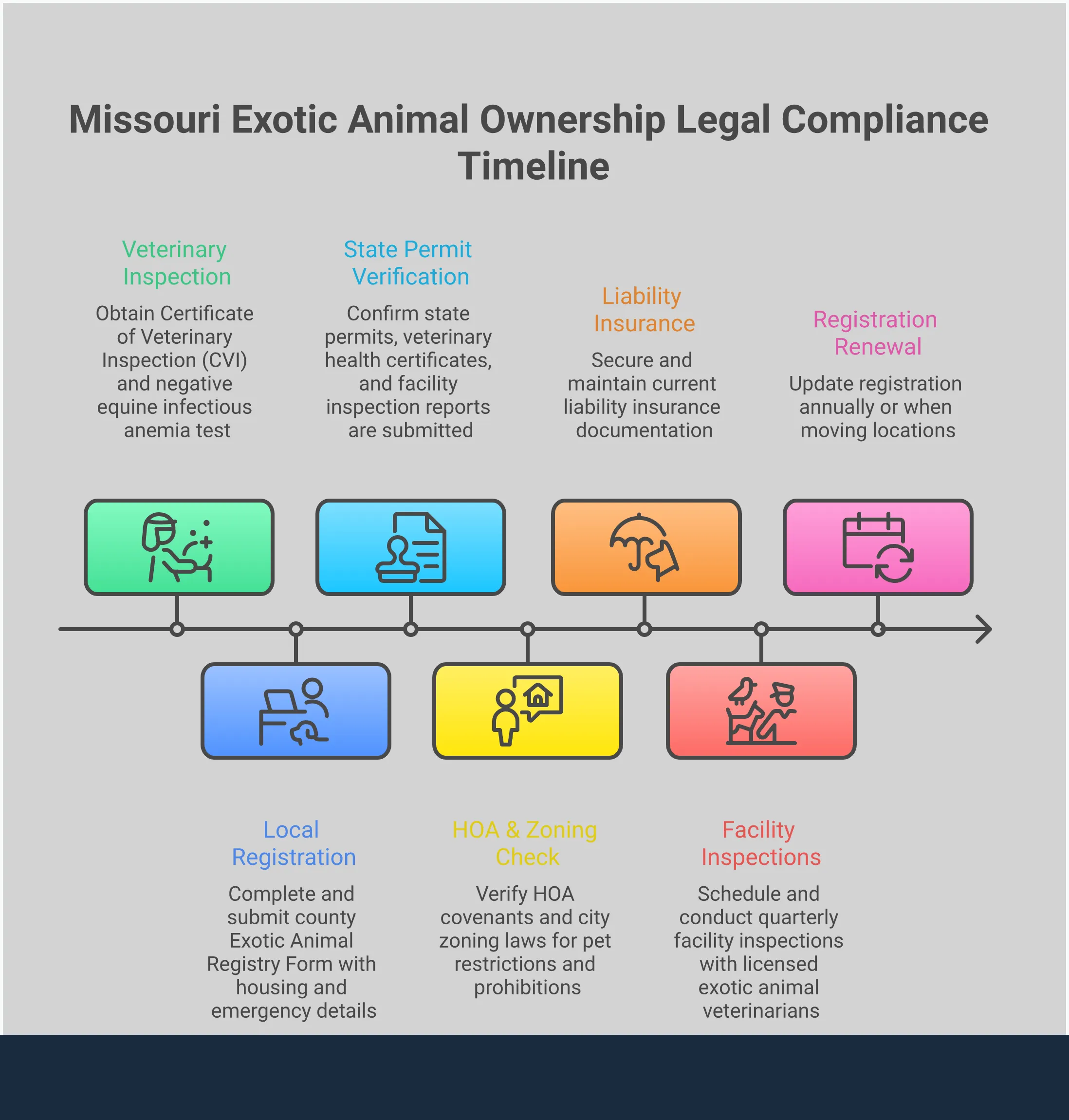
Your first step is to work with the state. In Missouri, you must get a permit from the Missouri Department of Agriculture’s Division of Animal Health. This is a non-negotiable requirement for legal ownership. Additionally, if you are bringing an animal into the state, you’ll need a health certificate from a veterinarian. This certificate must be issued within seven days of the animal’s arrival and confirm it is free from specific diseases. For example, the animal must have a negative test for equine infectious anemia within the past year. This ensures that new animals don’t introduce health risks to local wildlife or other animals.
Step 2: Register with Your Local Sheriff
Once you have your state-level affairs in order, you need to address local requirements. Many counties require you to register your exotic animal with the local sheriff’s office. For instance, the Cole County Sheriff’s Office mandates registration for specific dangerous animals, including lions, tigers, wolves, bears, and certain reptiles over eight feet long. Ownership of these animals is not permitted without proper local registration. Because rules can differ from one county to another, it’s essential to contact your local sheriff’s office directly to understand the specific requirements in your area. This local step is crucial for ensuring first responders are aware of the animal’s presence in an emergency.
Gathering Your Paperwork and Health Records
To complete your local registration, you’ll need to fill out some paperwork. Most counties provide a specific form, such as the ‘Exotic Animal Registry Form,’ which you can often find on the sheriff’s office website. After you print and complete the form, you’ll need to submit it according to their instructions. For example, in Cole County, the form is mailed directly to the Sheriff’s Office. Don’t forget to include a copy of the veterinary health certificate you obtained for the state permit, as this is often required at the local level, too. Keeping organized copies of all your documents will make the process much smoother.
What Are the Requirements for an Exotic Animal Permit?
Getting a permit to own an exotic animal in Missouri involves more than just filling out a form. It’s a comprehensive process designed to ensure you’re fully prepared for the significant responsibility ahead. State officials need to know that you can provide a safe, secure, and healthy environment for the animal long before it ever comes into your care. These regulations aren’t arbitrary hurdles; they are thoughtfully put in place to protect the animal, you, and the wider community from potential harm.
Think of the permit as your formal commitment to responsible ownership. It’s your way of demonstrating that you understand the animal’s unique needs and are aware of the potential risks involved. The requirements touch on every aspect of care, from the specific dimensions and materials of the animal’s enclosure to your legal and financial obligations if an accident occurs. Before you even think about purchasing an animal, you must have a detailed plan that meets all of the state’s criteria. This proactive approach is crucial for preventing dangerous situations and ensuring the animal receives the specialized care it deserves from the very beginning. Fulfilling these standards is the first and most critical step in your journey as an exotic pet owner.
Meeting Housing and Safety Standards
One of the most important rules is that you must have your permit approved before you acquire the animal. The Missouri Department of Conservation requires you to have the permit in hand when you go to purchase your pet. This is because officials need to verify that your housing and containment plans meet strict safety standards. Your enclosure must be strong enough to prevent escapes, which could endanger the public and the animal itself. The specific requirements will vary depending on the species, but the core principle is always the same: safety and security come first.
Do You Need Special Insurance?
Owning an exotic animal comes with a unique level of legal responsibility known as “strict liability.” This means if your animal harms someone or damages property, you are held responsible, even if you took every precaution to prevent it. Carelessness doesn’t have to be a factor for you to be found liable. This is a significant legal risk that every potential owner must understand and prepare for. An incident can lead to serious personal injury claims and substantial financial consequences. Understanding this liability is a crucial part of making an informed decision about whether an exotic pet is right for you.
Arranging for Proper Veterinary Care
Bringing an exotic animal into the state also involves strict health protocols. Any animal transported into Missouri must have a recent health certificate, also known as a Certificate of Veterinary Inspection (CVI), from a licensed veterinarian. This certificate, typically issued within a few days of the animal’s arrival, confirms it is free from contagious diseases. For certain species, specific tests are also required to screen for illnesses that could pose a threat to local wildlife or public health. These animal health requirements are essential for preventing the spread of disease and ensuring your new pet is healthy from the start.
Rules for Transporting Animals into Missouri
If you’re bringing an exotic animal into Missouri from another state, you’ll need to follow specific transportation rules designed to protect public health. The most important document you’ll need is a Certificate of Veterinary Inspection (CVI), often called a health certificate. This must be issued by a licensed veterinarian shortly before your animal travels, and it serves as official proof that your pet is free from contagious diseases. Depending on the species, additional tests may be required to screen for illnesses that could harm local wildlife or other animals. These regulations are a critical part of responsible ownership, ensuring that the movement of animals across state lines doesn’t introduce new health risks. You can find detailed information on these requirements through the Missouri Department of Agriculture, which oversees animal health and importation.
Can You Own Any Exotic Animals Without a Permit?
Yes, you can own certain exotic animals in Missouri without a state-level permit, but it’s not a simple free-for-all. The key is understanding which animals are exempt and which fall under strict state regulation. Many people assume any non-traditional pet automatically requires a permit, while others believe that if an animal is for sale, it must be legal to own. The truth is somewhere in the middle and depends entirely on the species.
Before bringing home any exotic pet, it’s your responsibility to know the law. The state has specific rules designed to protect both the public and the animals themselves. While some species are perfectly fine to keep as personal pets without a permit, others that seem harmless might come with a surprising amount of red tape. It’s always better to do your research upfront than to face potential legal issues down the road. The following categories break down what you can generally own without a permit and clarify some common points of confusion.
Which Domesticated Exotics Are Exempt?
The term “domesticated exotic” can be a bit misleading. While some animals, like zebras, might seem more like unique livestock than dangerous wildlife, they are still subject to state oversight. Missouri law allows ownership of these animals, but you must obtain a permit from the Missouri Department of Agriculture. This process isn’t just paperwork; it ensures the animal has passed necessary health checks and has a veterinary certificate before entering the state. So, even if an animal isn’t considered inherently dangerous, its non-native status often means you’ll need official permission to keep it. This helps prevent the spread of disease and ensures the animal is cared for properly.
Common Reptiles and Amphibians You Can Own
Here’s where you’ll find the most flexibility. Missouri law does not require a permit for you to own nonvenomous and unprotected reptiles or amphibians as personal pets. This is great news for reptile enthusiasts who want to keep animals like bearded dragons, leopard geckos, or certain types of frogs. However, there are two critical conditions: the animal must be captive-bred, and you must have gotten it from a legal, licensed source. You can’t simply capture a wild animal and keep it. This rule ensures that the pet trade doesn’t harm native wildlife populations and that the animals entering homes are healthy and accustomed to captivity.
Don’t Assume: Common Permit Misconceptions
One of the biggest myths is that you need a permit for any and every exotic animal. As we’ve seen, that’s only a half-truth. While many species do require registration, plenty of others do not. The opposite misconception is just as risky: assuming an animal is legal to own without a permit just because you saw it for sale. Pet stores don’t always provide information on local or state laws. It’s up to you to verify that a specific species is exempt from permit requirements. When the rules seem unclear, it’s wise to understand the different legal practice areas to know where to turn for help.
What Are the Penalties for Violating Exotic Animal Laws?
Failing to follow Missouri’s exotic animal laws comes with steep consequences. This isn’t just about getting a simple ticket; you could be facing criminal charges, the heartbreak of having your animal taken away, and some very serious fines. The state takes the health and safety of the public—and the animals themselves—very seriously. These regulations are designed to protect everyone, and the penalties for ignoring them reflect that.
Understanding the potential penalties is the first step in making sure you’re a responsible owner who stays on the right side of the law. The consequences can impact your finances, your freedom, and your ability to keep your pet. If you’re unsure about your situation or the specific rules that apply to your animal, it’s always better to be proactive than to wait until you’re dealing with legal trouble. These regulations are complex, and navigating the various practice areas of law can be challenging. Knowing what’s at stake can help you make informed decisions and ensure you have all your ducks—or tigers—in a row.
Facing Misdemeanor Charges
In Missouri, simply failing to register your exotic animal isn’t a minor slip-up—it can be charged as a Class C misdemeanor. This means it’s a criminal offense that goes on your record. While it’s not a felony, a misdemeanor conviction can still carry significant penalties, including fines and even jail time. It’s a serious charge that shows how important the state considers proper registration. This isn’t just administrative paperwork; it’s a legal requirement with real teeth. Facing a criminal charge can be overwhelming, which is why understanding your obligations as an owner from the very beginning is so important.
The Risk of Losing Your Animal
Beyond criminal charges, one of the most devastating penalties is having your animal confiscated by law enforcement. If you own a dangerous animal—like a lion, tiger, wolf, bear, or even certain reptiles over eight feet long—and you haven’t registered it, authorities have the right to take it from you. The state has strict rules for these specific species because of the potential danger they pose to the community. Losing a pet is heartbreaking under any circumstances, but having it confiscated due to a legal violation is an entirely preventable tragedy. This underscores the importance of following every step of the registration process to the letter.
Dealing with Fines and Court Costs
The financial hit for violating exotic animal laws can be substantial. You could face fines of up to $10,000 for each infraction. That means if you have multiple unregistered animals or are violating several different regulations, the costs can multiply quickly. These aren’t just small penalties; they are designed to be a serious deterrent. On top of the official fines, you’ll also have to consider the cost of legal fees if you need to defend yourself in court. If you find yourself facing these kinds of penalties, getting sound legal advice is critical. You can contact our office to understand your options and protect your rights.
Why You Need to Check Local Laws, Too
Getting approval from the state of Missouri is a huge first step, but it’s not the last one. Before you bring an exotic animal home, you also need to understand how local rules can add another layer of requirements. State law sets the baseline, but your city, county, or even your neighborhood can have much stricter regulations. It’s your responsibility as a potential owner to do your homework and make sure you’re compliant on all levels, not just with the state. This helps prevent legal trouble and ensures a safe environment for you, your pet, and your community.
Checking City and County Ordinances
Even if a specific animal is perfectly legal under Missouri state law, your city or county might have its own ordinances that prohibit it. For example, a rural county may have different rules than a dense city like Springfield or Joplin. These local laws are just as enforceable as state regulations, and ignoring them can lead to serious consequences. The best way to be sure is to directly contact your local city and county government offices. This simple step can save you from fines and the potential confiscation of your animal. It’s crucial to verify the specific pet regulations in Missouri for your exact address before making any commitments.
Does Your HOA Allow Exotic Pets?
If you live in a community with a Homeowners Association (HOA), you have another set of rules to follow. HOAs operate under private covenants, which are legally binding agreements you accept when you buy a home in the neighborhood. These bylaws often include specific restrictions on the types, sizes, and even breeds of pets allowed. While the state may have detailed reptile ownership laws, your HOA could have a simple, blanket ban on all snakes or lizards. Always get a copy of your HOA’s covenants and review the pet policies carefully before bringing an exotic animal onto the property. Don’t assume that state approval is enough.
How Zoning Laws Can Impact Ownership
Zoning laws are another important local factor. These regulations dictate how land can be used in certain areas—whether it’s for residential, commercial, or agricultural purposes. The rules for keeping animals can vary dramatically depending on how your property is zoned. A home in an area zoned for agriculture might have very lenient rules, while a property in a single-family residential zone could have strict limitations on non-domestic animals. It’s always a good idea to check your local laws and confirm with your city or county’s planning and zoning department to ensure that owning your desired pet won’t violate any local ordinances. This proactive check helps you avoid unexpected legal issues down the road.
Thinking of Getting an Exotic Pet? Read This First
Bringing an exotic animal into your home is a major decision that goes far beyond the initial excitement. Unlike getting a cat or dog, owning an exotic pet involves a unique set of challenges and responsibilities. Before you commit, it’s important to have a clear picture of what it takes to provide a safe and healthy life for the animal while protecting yourself and your community. Thinking through the long-term care, legal duties, and safety risks will help you make an informed choice.
Considering the Animal’s Long-Term Needs
The first thing to consider is the animal’s well-being for its entire life. Many exotic species live for decades, and their needs are often complex and expensive. Before you even think about buying, research the specific animal you’re interested in. You’ll need to understand its diet, social needs, and required habitat. Providing the right environment can be a significant undertaking. Be prepared to invest the time and resources necessary to care for your pet properly throughout its lifespan. You can find helpful information on pet regulations in Missouri that outlines some of these responsibilities.
Understanding the Costs and Legal Duties
Owning an exotic pet comes with a stack of legal paperwork and financial obligations. In Missouri, some animals are prohibited without special permission, while others are controlled, meaning you must register them with your local sheriff’s office. You’ll need to have your permit secured before you purchase the animal. These regulations are not suggestions; they are legal requirements designed to protect both the public and the animals. Understanding your duties under the law is critical, as mistakes can lead to serious consequences. Navigating these rules can be tricky, so it’s wise to familiarize yourself with all relevant practice areas of the law.
Keeping Your Family and Neighbors Safe
Many restrictions on exotic animals exist for a simple reason: they can be dangerous. As an owner, you are legally responsible for any harm your animal causes. Even if you have the proper permits, you can be held liable if it injures someone or damages property. This is especially true for animals classified as dangerous, like large cats, wolves, bears, and certain reptiles. You must prioritize the safety of your family, friends, and neighbors by securing the animal’s enclosure and handling it with extreme care. If you have questions about liability or find yourself in a difficult situation, it’s best to contact a legal professional for guidance.
Where to Find Legal Help and Official Information
Knowing where to turn for accurate information is the most important step in responsible exotic animal ownership. State and local agencies have specific rules you need to follow, and when things get complicated, professional legal advice can save you from fines, penalties, and heartache. Here are the key resources you should know.
Contacting the Missouri Department of Agriculture
If you plan to own an exotic animal, your first stop should be the Missouri Department of Agriculture. The Division of Animal Health is in charge of issuing the necessary permits and ensuring any animal brought into the state has a recent health certificate from a veterinarian. This department also has the authority to inspect your property to confirm that you’re meeting all health and safety standards. It’s a good idea to familiarize yourself with their requirements before you even consider bringing an exotic pet home, as this will set you up for success from the start.
Getting Information from Your Local Sheriff
On top of state laws, you also need to be aware of local rules, which can vary from one county to the next. For example, Cole County requires owners to register their exotic animals directly with the Cole County Sheriff’s Office. Failing to do so can lead to a Class C misdemeanor. No matter where you live in Missouri, you should always check with your local sheriff’s department to see if they have additional registration requirements or restrictions. This simple step can help you stay compliant and avoid unexpected legal issues down the road.
Consulting with a Lawyer for Complex Cases
Exotic animal laws can be tricky, with different rules for native and non-native species. Because these regulations can change, it’s wise to consult with a lawyer if you have questions or are facing a complex situation. An attorney can help you understand your rights and responsibilities, ensuring you’re fully compliant with both state and local ordinances. If you’re unsure how these laws apply to you, don’t hesitate to reach out for legal guidance. It’s the best way to protect yourself, your family, and your animal.
Related Articles
- Missouri Animal Laws – The Law Office of Chad G. Mann, LLC
- Domestic Animal Laws Missouri – The Law Office of Chad G. Mann, LLC
- Missouri’s Miscellaneous Animal Laws – Barking Dog Nuisance
- Wild Animal Laws – The Law Office of Chad G. Mann, LLC
- Missouri Animal Law – The Law Office of Chad G. Mann, LLC
If you have been injured, take our free injury questionnaire to help us understand your case, or call (417) 842-8679 for a free consultation.
Frequently Asked Questions
What’s the difference between an animal that’s prohibited and one that just needs to be registered? Think of it as a hard “no” versus a “yes, if.” Prohibited animals, like wolves or bears, are illegal for private ownership unless you secure special, and very rare, written permission from the state director. These exceptions are typically for facilities like wildlife sanctuaries, not for individuals. Registered animals, such as large constrictor snakes or certain primates, are legal to own, but you must follow a strict process that includes registering them with local law enforcement and meeting specific housing and care standards.
Do these laws apply to animals I get from a licensed breeder or pet store in Missouri? Yes, they absolutely do. The responsibility for legal ownership falls on you, the owner, not the seller. A breeder or pet store may be licensed to sell an animal, but that doesn’t automatically mean you are legally cleared to own it in your specific city or county. It is up to you to research and comply with all state, local, and even homeowners’ association rules before you make a purchase.
What happens if my registered exotic animal accidentally gets out? This is where the concept of “strict liability” becomes very important. In Missouri, you are held responsible for any harm or damage your exotic animal causes, even if the escape was a complete accident and you took all the proper precautions. This is why secure housing is so heavily emphasized in the law and why understanding your legal and financial risk is a critical part of the decision to own one of these animals.
I live in a rural area. Do I still need to follow all these city and county rules? You do. State laws apply to every resident of Missouri, regardless of whether you live in a city or on a farm. While your local county or town might have different ordinances than a more populated area, you are never exempt from the state-level permit and registration requirements. You must always check the regulations at both the state and local levels to ensure you are fully compliant.
What is the single most important step to take before getting an exotic pet? The most critical first step is to do your homework on the laws. Before you get attached to an animal, you need to thoroughly research Missouri’s state regulations, your specific city and county ordinances, and any rules from your homeowners’ association. Confirming that you can legally, safely, and responsibly house the animal in your location is the foundation of responsible ownership and will save you from potential legal trouble and heartbreak later.