


An injury from a faulty product can leave you feeling powerless, especially when facing a big company. But you have rights. Product liability law exists to level the playing field. It’s a powerful tool that holds companies responsible when their negligence causes harm. This isn’t just about covering your medical bills and lost income—it’s about accountability. You don’t have to fight this battle alone. A skilled Product Liability Attorney is your advocate, handling the legal complexities so you can focus on healing. This guide will explain the fundamentals and show you how to get started.
Key Takeaways
- Your right to safe products is protected: Product liability law allows you to hold companies accountable for injuries caused by defective items and seek compensation for medical bills, lost income, and pain and suffering.
- A product’s flaw determines your case: A successful claim proves a defect in the product’s design, its manufacturing process, or its failure to include adequate safety warnings. Pinpointing the specific flaw is essential.
- Preserve key evidence immediately: After an injury, your most important actions are to keep the product, save all medical records and receipts, and take photos of your injuries. This evidence is crucial for building a strong claim.
What Exactly is Product Liability Law?
When you buy a product, you expect it to be safe. Whether it’s a new car, a child’s toy, or a kitchen appliance, you trust that it will work as intended without causing harm. But what happens when that trust is broken and a product injures you or someone you love? That’s where product liability law comes in.
Product liability is the area of law that holds companies accountable for dangerous or defective products. It ensures that the entire chain of commerce—from the manufacturer who designed the item to the retailer who sold it—can be held responsible if their product causes an injury. The core idea is simple: companies have a duty to sell safe products, and when they fail, this law provides a way for injured people to seek compensation for their harm. It’s a critical part of our legal system that protects consumers and encourages companies to prioritize safety above all else.
How Product Liability Law Protects You
Product liability law isn’t just a legal theory; it’s a practical shield for you and your family. If a faulty product has turned your life upside down, this is the legal framework that allows you to seek justice and financial security. Taking action can help you cover medical bills, lost wages, and other costs that pile up after an unexpected injury. More than that, filing a claim sends a powerful message. It holds negligent companies accountable and pushes them to create safer products, which protects other consumers from going through the same ordeal. Your case could be the one that prompts a recall or a design change, preventing future injuries in our community.
What Are Your Rights If a Product Hurts You?
As a consumer, you have the right to expect that the products you purchase are safe. When a product fails and causes harm, the law is on your side. Generally, a product is considered “defective” in one of three ways. A design defect means the product is inherently unsafe, even if it was made perfectly. A manufacturing defect happens when a mistake during production makes a specific item dangerous. Finally, a failure to warn occurs when a product doesn’t come with adequate instructions or warnings about potential dangers. Understanding these distinctions is a key part of all personal injury law and helps determine how to approach your case.
Common Injuries Caused by Defective Products
When a product fails, the consequences can be devastating. The injuries caused by defective items range from minor to life-altering, affecting your health, your ability to work, and your overall quality of life. Everyday items we take for granted—from home appliances and children’s toys to car parts and medical devices—can harbor hidden dangers. Understanding the types of harm these products can cause is the first step in recognizing that you may have a valid claim. These injuries are not just unfortunate accidents; they are often the direct result of a company’s failure to prioritize safety, and you have the right to hold them accountable for the damage they’ve caused.
Burns and Electric Shocks
Faulty electronics, kitchen appliances, and even power tools can cause severe burns and electric shocks. A simple design flaw or a mistake in the manufacturing process can lead to exposed wires, overheating components, or a complete failure of safety mechanisms. These injuries often require extensive medical treatment, including skin grafts and long-term physical therapy, and can leave permanent scars. If a product has burned you or a loved one, it’s crucial to understand that the manufacturer had a responsibility to ensure its electrical components were safe for household use. The resulting pain and medical expenses should not be your burden to bear alone.
Poisoning
Poisoning from a consumer product is a terrifying and often invisible danger. This can happen in several ways, from contaminated food and beverages to unsafe chemicals in household cleaners, cosmetics, or children’s toys. When companies fail to test their products properly or use hazardous materials to cut costs, they put consumers at serious risk. The health effects of poisoning can be immediate and severe or develop over time, leading to chronic illness. Proving a link between the product and your health issues is a critical part of a product liability case, making it essential to seek both medical and legal help right away.
Broken Bones and Amputations
Some of the most severe physical injuries from defective products involve broken bones or, in the worst cases, amputations. A poorly constructed ladder that collapses, a faulty power tool that shatters during use, or a defective vehicle part that causes a car crash can all lead to catastrophic harm. These injuries fundamentally change a person’s life, creating enormous physical, emotional, and financial challenges. Companies have a duty to ensure their products are structurally sound and can withstand normal use. When they fail, the law provides a path for you to seek the resources needed for recovery and long-term care.
Brain and Spinal Cord Injuries
Injuries to the brain and spinal cord are among the most serious and life-altering outcomes of a defective product. A faulty helmet that fails to protect you in a bicycle accident, a car seat that comes loose during a collision, or a piece of heavy equipment that malfunctions can all result in permanent damage. These injuries often require a lifetime of medical care, rehabilitation, and assistance with daily activities. The financial and emotional toll on victims and their families is immense. Holding the responsible company accountable is not just about compensation; it’s about securing the support needed to adapt to a new reality.
Legal Foundations of a Product Liability Claim
When you’ve been injured by a defective product, the law offers several ways to hold the responsible parties accountable. These cases aren’t just about proving you were hurt; they’re about showing that the product was flawed and that this flaw directly caused your injury. Product liability claims are typically built on one of three legal theories: strict liability, negligence, or breach of warranty. Each provides a different angle for approaching your case, and an experienced attorney can determine which strategy is the strongest for your specific situation. Understanding these foundations can help you see how a strong case is constructed and why it’s so important to have a professional on your side.
Strict Liability
Strict liability is a powerful concept in personal injury law that simplifies the process for an injured consumer. Under this principle, you don’t have to prove that the manufacturer was careless or negligent. Instead, you only need to show that the product had a defect, that the defect caused your injury, and that you suffered damages as a result. This rule exists because manufacturers are in the best position to ensure product safety. It holds them responsible for any harm their products cause, regardless of intent. This is often the most direct path to securing compensation in a product liability case.
Negligence
Another way to build a product liability claim is by proving negligence. This approach argues that the company failed to exercise a reasonable level of care in making or selling the product. To win a case based on negligence, you and your attorney must demonstrate four key things. First, that the company had a duty to sell a safe product. Second, that they breached that duty. Third, that their failure directly caused your injury. And finally, that you suffered actual damages, like medical bills or lost wages. This requires a more detailed investigation into the company’s actions than a strict liability claim.
Breach of Warranty
A breach of warranty claim is based on the idea that a product failed to live up to the promises made by the manufacturer or seller. There are two types of warranties: express and implied. An express warranty is a specific promise, like a statement that a product is “shatterproof.” An implied warranty is an unspoken guarantee that a product is reasonably safe for its intended use. If a product injures you while you are using it as intended, it has likely violated this implied warranty of safety, giving you grounds for a claim.
Who Can Be Held Responsible?
One of the most common questions after an injury is, “Who is at fault?” In a product liability case, the answer can be more complex than you might think. It’s not always just the company whose name is on the box. Responsibility can extend to every business involved in the product’s journey from the factory to your home. This is known as the “chain of distribution.” The law allows you to hold any or all of these parties accountable, which can increase your chances of receiving fair compensation for your injuries. An attorney can help identify all the potential defendants in your case.
Designers and Manufacturers
The company that designed and manufactured the product is usually the primary target in a liability claim. These are the parties that made the fundamental decisions about the product’s materials, structure, and safety features. If a product is unsafe because of a design flaw or a mistake during assembly, the manufacturer is almost always considered responsible. They have the ultimate duty to ensure their products are safe for consumers and to provide clear warnings about any potential dangers. Proving their failure to do so is a cornerstone of many successful product liability cases.
Wholesalers and Distributors
The “middlemen” who transport and supply products from the manufacturer to retail stores can also be held liable. Wholesalers and distributors are a key link in the chain of distribution. Even though they didn’t design or make the product, they played a role in putting the dangerous item into the hands of consumers. The law includes them to ensure that there are multiple parties an injured person can turn to for compensation, especially if the original manufacturer is based overseas or has gone out of business. Their involvement makes them part of the overall responsibility for the product’s safety.
Retail Stores
The store where you bought the defective product can also be held responsible. Retailers have a responsibility to sell products that are safe for their customers. By placing an item on their shelves, they are implicitly vouching for its safety. If that product turns out to be defective and causes an injury, the retailer can be held liable right alongside the manufacturer and distributor. This is an important protection for consumers, as it provides a local and accessible entity to hold accountable. If you’ve been hurt, don’t hesitate to contact our office to discuss who may be at fault.
3 Common Types of Product Liability Claims
When a product injures you, it’s usually because something went wrong in one of three key areas: its design, its manufacturing, or its marketing. Product liability law holds the responsible parties accountable for the harm caused, whether it’s the designer, the manufacturer, or the retailer. Understanding which type of defect caused your injury is the first step in building a strong case. These claims ensure that companies are held to a high standard of safety for the items they put on the market.
Each type of claim focuses on a different stage of the product’s journey from an idea to your home. A design flaw means the product was unsafe from the very beginning, while a manufacturing defect means a safe design was built incorrectly. A failure-to-warn claim happens when a product, even if designed and made perfectly, lacks the necessary instructions or warnings for safe use. Identifying the specific failure is something an experienced attorney can help you with as they investigate your personal injury case.
Design Defects: Flawed from the Start
A design defect is a flaw in the product’s very blueprint. This means that every single item made with that design is potentially dangerous, even if it was manufactured perfectly according to plan. The problem isn’t a one-off mistake; it’s inherent to the product’s core concept. For example, a piece of furniture designed to be top-heavy without proper support could easily tip over and cause injury, or an SUV model might be designed with a high center of gravity that makes it prone to rolling over. To win this type of claim, you must show that a safer, practical, and economically feasible alternative design was available.
Manufacturing Defects: Errors During Production
Unlike a design defect, a manufacturing defect occurs during the production process. The product’s design may have been perfectly safe, but an error on the assembly line made a specific unit or batch unsafe. This type of flaw makes the product different from its intended design. Common examples include a batch of prescription drugs contaminated with the wrong substance, a bicycle assembled with a cracked frame, or a car that comes off the line with a faulty brake installation. These are often isolated incidents rather than a problem with every product in the line. If you have questions about a potential claim, we encourage you to contact our office.
Failure to Warn: Inadequate Instructions or Dangers
Some products are inherently dangerous even when designed and manufactured correctly. In these cases, the manufacturer has a duty to provide adequate warnings and instructions for safe use. A failure-to-warn claim, also known as a marketing defect, arises when these warnings are missing, unclear, or insufficient. For instance, a powerful chemical cleaner sold without a clear warning about the need for ventilation could lead to respiratory injuries. Similarly, a children’s toy with small, detachable parts that pose a choking hazard must include a clear age-appropriateness warning. The law requires companies to inform you of the risks you can’t readily see.
Real-World Examples of Defective Products
Defective products can be found in almost any industry, from the car you drive to the food you eat. The law holds manufacturers, distributors, and sellers accountable for injuries caused by these items, regardless of the type of defect. Some common examples of products that frequently lead to liability claims include defective auto parts like airbags and tires, dangerous prescription drugs with unforeseen side effects, faulty medical devices, unsafe children’s toys and furniture, and malfunctioning household appliances. If an everyday item has caused you or a loved one harm, it’s worth exploring your legal options.
How a Product Liability Attorney Can Help
When you’re recovering from an injury caused by a defective product, the last thing you want to do is manage a complicated legal claim. That’s where a product liability attorney comes in. Their job is to handle the legal heavy lifting so you can focus on what matters most: your health and your family. An experienced lawyer acts as your advocate, guiding you through each step of the process and fighting for the compensation you need to move forward. From gathering evidence to facing off against large corporations, they have the skills and resources to build a strong case on your behalf.
How We Investigate Your Claim
The first thing your attorney will do is launch a full investigation into what happened. This isn’t just a quick look at the facts; it’s a deep dive to uncover why the product failed and who is responsible. Your legal team will gather and review crucial evidence, which might include the product’s design specifications, internal company safety records, and reports of similar incidents. By meticulously piecing together the evidence, they can establish a clear link between the product’s defect and your injury, which is the foundation of a successful personal injury claim.
What Is Your Product Liability Claim Really Worth?
It’s difficult to put a number on what you’ve lost, but an attorney can help calculate the true value of your claim. This goes far beyond just your initial medical bills. They will assess all the ways the injury has impacted your life, including the cost of future medical care, lost wages from time off work, and any impact on your ability to earn a living in the future. They also work to quantify non-economic damages like pain and suffering. This comprehensive approach ensures you pursue the full compensation you are rightfully owed.
Fighting for You in Negotiations
Manufacturers and their insurance providers have teams of lawyers dedicated to minimizing payouts. Going up against them alone can be intimidating and often leads to a lowball settlement offer. Your attorney will step in and handle all communications and negotiations for you. They know the tactics insurers use and won’t be pressured into accepting an unfair deal. With an expert negotiator in your corner, you can feel confident that your rights are protected and that you have a powerful voice fighting for a fair settlement.
Your Advocate in the Courtroom
While many product liability cases are settled out of court, sometimes a manufacturer refuses to offer a fair settlement. If that happens, you need an attorney who is prepared to take your case to trial. Your lawyer will represent you in court, presenting the evidence and making a compelling argument to a judge and jury. Having a trial-ready attorney shows the other side you are serious about your claim. If you have questions about the process, you can always contact our office for a consultation to discuss your specific situation.
What to Look for in a Product Liability Attorney
Choosing the right attorney can feel overwhelming, especially when you’re dealing with an injury. You’re not just looking for legal representation; you’re looking for a partner who will stand up for you. When it comes to product liability claims, certain qualities are non-negotiable. Here’s what to focus on to find an attorney who can effectively handle your case and prioritize your needs.
Look for Proven Experience and Results
Product liability cases are a different beast. They often involve going up against large manufacturers with deep pockets and aggressive legal teams. This is why you need an attorney with specific experience in this area of law. Look for someone who has handled cases like yours before and has a history of securing fair outcomes for their clients. An attorney with a proven track record understands the complexities of these claims, from proving a product defect to arguing against corporate lawyers. Their expertise in various practice areas shows they have the background needed to build a strong case on your behalf.
A Reputation for Taking Cases to Trial
While most personal injury claims are resolved through settlements, you don’t want an attorney whose only strategy is to settle. Insurance companies and corporate legal teams are well aware of which lawyers are willing to take a case to court and which ones will fold for a quick, low offer. An attorney with a reputation for being trial-ready brings more leverage to the negotiating table from day one. This willingness to fight often results in a more favorable settlement offer because the other side knows you’re serious. And if they refuse to be fair, you need an experienced trial attorney who can confidently present your case and advocate for your rights in front of a judge and jury.
Choose an Attorney Who Puts You First
Beyond experience, you need an attorney who sees you as a person, not just a case number. A client-first approach means they take the time to listen to your story, understand your goals, and keep you informed every step of the way. This is about more than just legal strategy; it’s about trust and communication. A dedicated attorney will thoroughly review the details of your situation to give you a clear picture of your options. Finding a lawyer with a genuine commitment to their clients ensures you have a true advocate in your corner. You can learn more about my approach and how I work with clients to seek justice.
Convenience for Injured Clients
When you’re injured, your top priority should be your recovery—not wrestling with legal paperwork or fielding calls from insurance adjusters. A good attorney understands this and steps in to manage the entire legal process for you. They handle the investigation, gather the necessary evidence, and take over all communications with the opposing side. Their role is to do the legal heavy lifting so you can focus on your health and your family without added stress. If the thought of a lawsuit feels overwhelming, remember that you don’t have to manage it alone. You can contact an attorney to take that weight off your shoulders and fight for you.
What Do You Need for a Strong Product Liability Case?
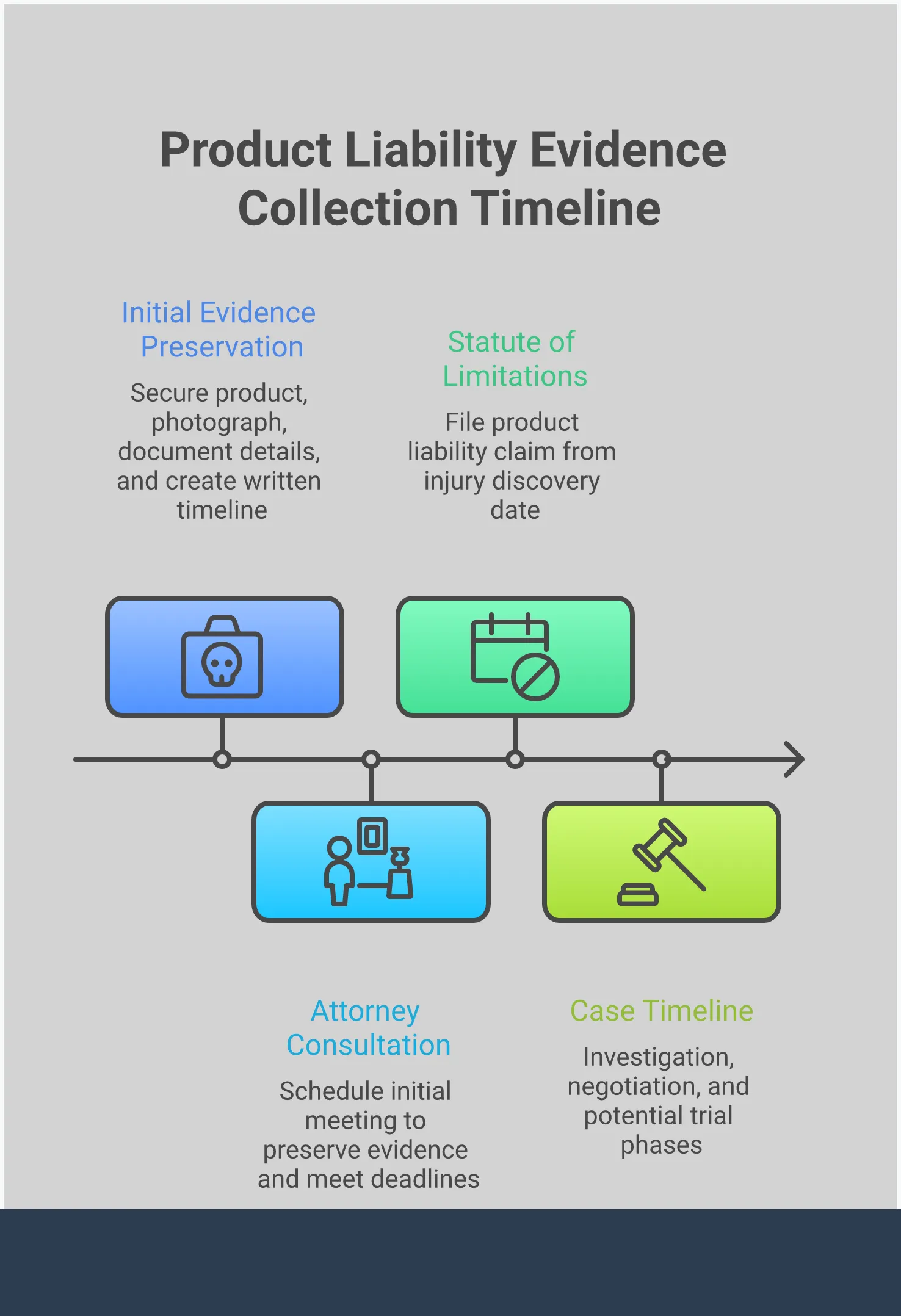
When you’ve been hurt by a faulty product, the path to getting compensation can feel overwhelming. While your attorney will handle the legal complexities, there are a few key pieces of evidence you can gather to build a strong foundation for your case. Think of yourself as the lead detective of your own experience. The more information you can preserve from the start, the clearer the picture becomes. Taking these steps helps your legal team demonstrate exactly what happened and how it has impacted your life. Our firm specializes in the complexities of personal injury law, and we’ve seen firsthand how solid evidence can make all the difference. By working together, we can piece together the story and fight for the justice you deserve. It’s about making sure your side is heard, loud and clear, with undeniable proof to back it up. This initial work on your part can streamline the entire process, allowing us to focus on building the strongest legal argument possible on your behalf. Remember, the goal is to create a comprehensive file that leaves no room for doubt about the product’s failure and the harm it caused you.
Keep the Product and Your Receipt
First and foremost, if it is safe to do so, hold onto the product that caused your injury. This item is the single most important piece of evidence in your claim. Don’t try to fix it, take it apart, or throw it away. Store it in a safe place where it won’t be lost or damaged further. Next, locate your proof of purchase. This could be a physical receipt, an email confirmation, or a credit card statement showing the transaction. This document proves you owned or used the product, linking it directly to you and the incident.
Documenting Your Injuries and Medical Costs
Your health is the top priority, so seeking medical attention right after the injury is crucial. Doing so also creates an official record of the harm you’ve suffered. Be sure to keep a detailed file of all related documents, including hospital bills, doctor’s notes, prescription receipts, and costs for any physical therapy or follow-up care. These records provide clear, documented proof of the extent of your injuries and the financial costs you’ve incurred as a result. We will carefully review these records to understand the full impact on your life and build a comprehensive claim.
Take Photos and Videos of Everything
Visual evidence is incredibly powerful. Use your phone to take clear photos and videos as soon as you can. Capture the defective product from multiple angles, paying special attention to the part that malfunctioned or caused the harm. You should also document your injuries. Take pictures right after the incident and continue to take them periodically as you heal. This visual timeline can illustrate the severity of the injury and the recovery process in a way that words alone cannot. This evidence helps us tell a compelling and accurate story to insurance companies or a jury.
Gather Contact Info from Any Witnesses
If anyone saw the incident happen, their account can be a huge asset to your case. Try to get the names and contact information of any witnesses. This includes anyone who saw the product fail or witnessed the immediate aftermath of your injury. A statement from an objective third party can corroborate your version of events and add significant credibility to your claim. Don’t hesitate to ask for their details at the scene if you are able. Once you have this information, we can reach out to them to get a formal statement to support your case.
The Role of Expert Testimony and Evidence
Proving a product was defective requires more than just showing you were hurt. To build a successful claim, you have to demonstrate four key things: the product was faulty, its flaw directly caused your injury, you suffered real harm, and you were using the product as intended. This can get technical, fast. That’s where expert witnesses become essential. These are specialists, like engineers who can analyze a product’s design or medical professionals who can link your injury to the defect. They provide credible testimony that explains complex details in a clear, understandable way. Your attorney will find the right experts to analyze the evidence and strengthen your personal injury claim, making sure the facts are presented powerfully and accurately.
Let Your Attorney Handle Insurance Companies
After an injury, the last thing you need is the stress of dealing with a large corporation’s insurance company. These companies have teams of adjusters and lawyers whose main goal is to protect their bottom line by minimizing what they pay out. They are trained to find ways to devalue your claim or get you to accept a quick, lowball offer. When you hire an attorney, you get a professional shield. We handle all communications and negotiations, so you don’t have to. We know the tactics they use and won’t let them pressure you into an unfair settlement. Having an experienced advocate in your corner ensures your voice is heard and your rights are protected throughout the entire process.
Common Challenges in a Product Liability Claim
Filing a product liability claim is your right when a defective item causes you harm, but the path to securing fair compensation can have its share of challenges. Manufacturers and their insurance companies have a lot at stake and often go to great lengths to protect their bottom line. Understanding these potential obstacles from the start can help you prepare for the process ahead. From proving the product was flawed to countering the arguments of a corporate legal team, it’s important to know what you might be up against. Let’s walk through some of the most common hurdles you may face.
The Challenge of Proving a Defect
The foundation of your entire case rests on one key element: proving the product that injured you was defective. This isn’t as simple as just saying it broke or malfunctioned. Legally, a product can be considered defective in its design, during its manufacturing, or because it lacked adequate warnings or instructions. For example, a product is considered to have a design defect if a flaw in its original blueprint makes it unreasonably dangerous for consumers. Proving this often requires in-depth investigation, expert analysis, and a clear demonstration of how the defect directly caused your injury. This is one of the most technical parts of a claim and a primary reason why having experienced legal guidance is so critical.
Going Up Against Corporate Legal Teams
When you file a claim, you’re not just up against a company; you’re up against its team of experienced defense attorneys and insurance adjusters. These professionals handle liability claims every day. Their job is to protect the company’s interests by minimizing or denying your claim. Because the financial stakes in these lawsuits can be incredibly high for a manufacturer, they will invest heavily in their defense. They may argue that you used the product incorrectly or that the product wasn’t defective at all. Having a dedicated personal injury attorney on your side helps level the playing field, ensuring your voice is heard and your rights are protected.
Don’t Believe These Product Liability Myths
Many people hesitate to seek legal help because of common myths they believe about product liability. One major misconception is that you can’t file a claim if you weren’t using the product exactly as intended. In reality, manufacturers are often responsible for injuries that occur during a “foreseeable misuse” of their product. Another myth is that an expired warranty means you’ve lost your right to a claim. Warranties and product liability are separate legal concepts. A product can still be dangerously defective long after its warranty has expired. Don’t let these myths stop you from exploring your options. The best way to know if you have a case is to discuss the specifics with an attorney.
Your Product Liability Claim: A Step-by-Step Guide
If you’ve been injured by a defective product, the legal process can feel overwhelming. Knowing what to expect can make a huge difference. While every case is unique, most product liability claims follow a similar path. We handle the legal complexities so you can focus on your recovery. Here’s a straightforward look at the steps involved, from our first conversation to what you can anticipate as your case moves forward.
Step 1: Your First Meeting With Us
It all starts with a conversation. During your initial consultation, we’ll sit down with you to listen to your story and understand what happened. This first meeting is a crucial opportunity for us to evaluate your case and identify your legal options. We’ll discuss the product that caused your injury, the extent of your damages, and who might be responsible. Think of this as a strategy session where we map out the best course of action for your specific situation. Our goal is to give you a clear picture of your rights and how we can help you assert them. You can schedule a consultation to get started.
Step 2: We File the Official Claim for You
Once you decide to move forward, we get to work building your case. We begin by conducting a comprehensive review of the incident to establish a strong foundation for your claim. This involves gathering all the necessary evidence, including the product itself, your medical records, and any details about your purchase. We meticulously review the facts to assess the viability of your claim and develop the most effective legal strategies. This thorough investigation is essential for proving that the product was defective and directly caused your injuries. Our experience in personal injury law guides us through this critical fact-finding phase.
Step 3: Understanding the Claim Timeline
Product liability cases don’t resolve overnight. After filing the claim, we enter a period of negotiation, and if necessary, litigation. The law holds manufacturers, designers, and sellers accountable for any harm caused by a defective product, whether it’s due to a manufacturing defect, a design flaw, or a failure to provide adequate warnings. We will handle all communications with the responsible parties and their insurance companies. While we always aim for a fair settlement, we are fully prepared to take your case to court if that’s what it takes to secure the justice you deserve. We’ll be with you every step of the way, keeping you informed and fighting for your best interests.
How Long a Product Liability Case Can Take
It’s natural to wonder how long your case will take, but there’s no simple answer. Product liability claims aren’t quick; they require a thorough investigation to prove the product was defective and directly caused your injuries. The timeline often depends on the complexity of your case and how willing the manufacturer is to negotiate a fair settlement. Some cases can be resolved through negotiations in a matter of months. Others, especially if they involve serious injuries or uncooperative companies, may need to proceed to litigation, which can extend the process significantly. We always aim for an efficient resolution, but our priority is securing the justice you deserve, no matter how long it takes.
What Kind of Compensation Can You Expect?
If you’ve been injured by a defective product, you’re likely facing a mountain of unexpected costs and challenges. It’s completely normal to feel overwhelmed and wonder how you’ll manage it all. A product liability claim is designed to help you recover compensation, often called damages, for the harm you’ve suffered. This isn’t just about covering your immediate bills; it’s about addressing the full impact the injury has had on your life, both now and in the future. The goal is to help make you whole again by providing the financial support you need to cover your losses and focus on healing.
Understanding what you may be entitled to is a crucial first step. Compensation in these cases is broken down into different categories to reflect the various ways an injury can affect you. This includes clear, calculable expenses like hospital bills and lost paychecks, which are known as economic damages. But it also includes non-economic damages, which are meant to account for the physical pain and emotional distress you’ve experienced. The legal system recognizes that an injury creates ripples across every area of your life, and a successful claim should reflect that reality. We’ll explore the main types of compensation you can pursue.
Covering Current and Future Medical Expenses
One of the most immediate financial burdens after an injury is medical expenses. Compensation in a product liability case is meant to cover all related medical costs, from the initial emergency room visit and hospital stay to ongoing needs like physical therapy, prescription medications, and appointments with specialists. It’s not just about the bills you have today. If your injury requires long-term care, future surgeries, or assistive devices, those projected costs are also calculated and included in your claim. An experienced attorney can help you accurately document every medical expense to ensure your settlement fully supports your path to recovery.
Compensation for Lost Wages and Future Earnings
An injury often means taking time away from work to recover, leading to lost wages that can put a serious strain on your finances. Your claim can include compensation for the income you’ve already lost while healing. But what if your injury affects your ability to work long-term? If the harm you suffered prevents you from returning to your previous job or reduces your overall earning capacity for the future, you may also be compensated for that loss. We work to secure a fair payment that accounts for both the immediate and the long-term effects on your career and financial stability.
Accounting for Your Pain and Suffering
Not all damages from an injury come with a clear price tag. The physical pain, emotional distress, and mental anguish caused by a defective product are very real, and you deserve to be compensated for them. This category of damages, known as “pain and suffering,” covers the non-economic impact of your injury. It acknowledges things like chronic pain, anxiety, trauma, loss of enjoyment of life, and even the strain an injury can put on your relationships. While no amount of money can erase what happened, this compensation is a critical part of recognizing the full extent of your suffering and holding the responsible party accountable.
Special Damages: Covering Financial Losses
When you’re dealing with an injury, the financial strain can be one of the most stressful parts of the experience. Special damages, also known as economic damages, are designed to address this head-on. This category of compensation covers all the tangible, out-of-pocket expenses that have a clear dollar amount attached to them. Think of it as reimbursement for every direct financial loss you’ve suffered because of the defective product. These are the costs you can track with receipts, bills, and pay stubs. The goal is to restore you to the financial position you were in before the injury occurred by covering every verifiable cost.
Medical Bills and Future Care
Compensation in a product liability case is meant to cover all related medical costs, from the initial emergency room visit and hospital stay to ongoing needs like physical therapy, prescription medications, and appointments with specialists. It’s not just about the bills you have today. If your injury requires long-term care, future surgeries, or assistive devices, those projected costs are also calculated and included in your claim. We work to ensure that your settlement or award accounts for the complete picture of your medical needs, so you aren’t left with unexpected expenses down the road.
Lost Wages and Earning Capacity
Your claim can include compensation for the income you’ve already lost while healing. But what if your injury affects your ability to work long-term? If the harm you suffered prevents you from returning to your previous job or reduces your overall earning capacity for the future, you may also be compensated for that loss. This is a critical component of many personal injury cases, as it addresses the profound impact an injury can have on your financial security. We help calculate these future losses to ensure your compensation reflects the full effect on your career.
General Damages: Compensating for Non-Financial Harm
Some of the most significant impacts of an injury aren’t financial. General damages, or non-economic damages, are intended to compensate you for the personal, non-monetary ways your life has been affected. This includes the physical pain, emotional trauma, and overall loss of quality of life that you’ve endured. While it’s impossible to put a true price on this kind of suffering, the legal system recognizes that it is a very real and significant part of your experience. This compensation acknowledges the human cost of the injury and is a vital part of a comprehensive claim.
Pain and Suffering
The physical pain, emotional distress, and mental anguish caused by a defective product are very real, and you deserve to be compensated for them. This category of damages, known as “pain and suffering,” covers the non-economic impact of your injury. It accounts for the day-to-day struggles you face, from chronic pain that keeps you from activities you once loved to the frustration and hardship of a long recovery. It’s a way for the law to recognize the full, personal toll the injury has taken on you and your family.
Emotional Distress
Compensation for emotional distress acknowledges the psychological impact of an injury, including anxiety, trauma, and loss of enjoyment of life. An unexpected injury can leave deep emotional scars, leading to issues like depression, fear, or post-traumatic stress disorder (PTSD). This aspect of damages is crucial for recognizing the full extent of your suffering and holding the responsible party accountable. It validates that the harm you experienced goes far beyond the physical, affecting your mental and emotional well-being in profound ways.
Punitive Damages: Punishing Gross Negligence
In some rare cases, a company’s behavior is so reckless or intentionally harmful that the court decides to do more than just compensate the victim. This is where punitive damages come in. Unlike special and general damages, which are about making you whole, punitive damages are meant to punish the wrongdoer and discourage them (and others) from doing similar harmful things in the future. These are awarded only when there is clear evidence that the company acted with extreme negligence or a conscious disregard for consumer safety, such as knowingly selling a dangerous product. This type of compensation sends a powerful message that prioritizing profits over people has severe consequences.
What Factors Influence Your Settlement Amount?
Every product liability case is unique, and the final settlement amount depends on several key factors. The severity of your injuries, the total of your medical bills and lost wages, and the long-term prognosis for your recovery all play a significant role. The strength of your evidence—including detailed medical records, information about the defective product, and any witness statements—is also crucial for building a compelling case. An attorney will carefully review the facts of your case to build a strong claim and determine what a fair settlement looks like for your specific situation, giving you a clear picture of your legal options.
Understanding the Costs of Hiring an Attorney
After an injury, the last thing you should have to worry about is how you’re going to afford legal help. Many people hesitate to call an attorney because they’re concerned about the cost, but getting justice shouldn’t depend on the size of your bank account. That’s why most product liability attorneys work on a contingency fee basis. This approach is designed to remove the financial barriers for injured people, allowing you to access experienced legal representation without paying any upfront fees. It ensures that your ability to fight for your rights isn’t limited by your financial situation, giving you a fair chance to hold negligent companies accountable.
How Contingency Fees Work
The contingency fee system is straightforward: you don’t pay any attorney fees unless we win your case. Your lawyer’s payment is entirely “contingent” on securing a successful outcome for you, either through a settlement or a court verdict. If we don’t recover any money for you, you owe us nothing in legal fees. This model aligns our goals directly with yours. We are invested in getting you the best possible result because our payment depends on it. This approach allows you to pursue your personal injury claim with confidence, knowing you have a dedicated advocate on your side without any upfront financial risk.
Negotiating Fee Percentages
The percentage an attorney charges in a contingency fee agreement can vary. It often depends on factors like the complexity of your case, the amount of work and resources required, and the attorney’s level of experience. In many situations, this percentage is open for discussion. You can and should talk to your lawyer about their fee structure. A transparent conversation ensures you understand the agreement and feel comfortable with it before moving forward. This is a partnership, and feeling clear about the financial arrangement from the start is an important part of building a strong attorney-client relationship.
Other Case-Related Expenses
It’s important to understand the difference between attorney fees and case expenses. While the contingency fee covers your lawyer’s time and legal services, there are other costs associated with building a strong case. These can include things like court filing fees, the cost of obtaining medical records, fees for expert witnesses to testify on your behalf, and expenses for depositions. Our firm typically advances these costs for you, so you still don’t have to pay anything out of pocket. These expenses are then reimbursed to the firm from the settlement or award before the attorney’s percentage is calculated.
Expert Witness and Court Filing Fees
The costs for things like expert testimony and court filings are part of the investment we make in your case. By covering these expenses, we take on the financial risk of the litigation. This is a key part of the contingency fee arrangement. If for some reason your case is not successful, you do not have to pay us back for these costs, and you still owe no attorney fees. This system is designed to help people who are already dealing with medical bills and lost income get the justice they deserve. If you have questions about our fee structure, please contact our office for a clear explanation.
How We Evaluate Your Case
When you come to us after being injured by a product, our first priority is to understand every detail of what happened. Building a strong product liability claim isn’t about guesswork; it’s a methodical process of gathering evidence and applying legal principles to the facts. We want you to feel confident and informed every step of the way, so we take a transparent approach to evaluating your case from our very first conversation.
Our evaluation process is designed to determine the strength of your claim and map out the best legal strategy for you. We look at the situation from every angle, anticipating the arguments the manufacturer’s legal team might make and preparing to counter them effectively. This involves three key stages: a thorough review of the facts, a precise identification of the product’s defect, and a careful application of Missouri law. By breaking it down this way, we can build a solid foundation for your case and work toward securing the compensation you deserve for your injuries. Our commitment to personal injury law means we have the experience to handle these complex cases with the diligence they require.
A Detailed Review of the Facts
The first step is always to listen. We start by reviewing all the facts of your situation, from how you were using the product to the timeline of your injuries. This involves carefully examining your medical records, the product itself, and any proof of purchase to get a complete picture. This initial deep dive is crucial for assessing the viability of your claim and outlining your legal options. It’s where we piece together the story of what happened and identify the key evidence we’ll need to move forward. To begin this process, we encourage you to contact our office for an initial consultation where we can discuss the specifics of your experience.
Pinpointing the Specific Product Defect
At the heart of any product liability case is the defect itself. It’s not enough to show you were injured; we must prove that the product was unreasonably dangerous due to a specific flaw. Our job is to pinpoint whether the problem was a design defect, a manufacturing error, or a failure to provide adequate warnings. For example, a product is defective by design if a flaw in its blueprint makes it unsafe for its intended use. This step often requires collaboration with engineers or industry experts who can analyze the product and provide a professional opinion on what went wrong, giving us the technical evidence needed to build a compelling case.
How Missouri’s Comparative Fault Law Applies
Understanding state law is critical, as it sets the rules for your claim. In Missouri, we operate under a “pure comparative fault” system. In simple terms, this means you can still recover damages even if you are found to be partially at fault for your injury. However, your final compensation award would be reduced by your percentage of fault. For instance, if you were awarded $100,000 but found to be 10% responsible, your award would be reduced to $90,000. Manufacturers’ lawyers often use this rule to try and shift blame to the consumer, but we know how to counter these tactics and protect your right to fair compensation.
Why Work With The Law Office of Chad G. Mann?
Choosing an attorney after an injury is a significant decision, especially when you’re feeling overwhelmed and unsure of what to do next. You need someone who not only understands the law but also understands what you’re going through. At The Law Office of Chad G. Mann, we build our practice on a foundation of integrity, service, and a genuine commitment to our clients. When you’re up against a large manufacturer with a team of corporate lawyers, it’s easy to feel like the underdog. That’s where we come in.
We act as your dedicated legal advocate, standing by your side to explain your options clearly and fight for your best interests every step of the way. We believe that effective legal representation is about more than just winning a case; it’s about ensuring you feel heard, supported, and confident in the path forward. Our approach is designed to remove the burden from your shoulders so you can focus on what truly matters—your health and recovery. We handle the complex investigations, the paperwork, and the tough negotiations with insurance companies and corporate legal teams. We are here to provide the guidance and strength you need during a difficult time.
Our Focused Personal Injury Experience
When you’ve been hurt by a defective product, you need more than a general practice lawyer. Product liability cases are complex, involving detailed investigations and a deep understanding of state and federal laws. Our firm is dedicated to the practice of personal injury law, and we have the focus required to handle these challenging claims. We are committed to holding negligent manufacturers accountable and helping you secure the full and fair compensation you deserve for your injuries, medical expenses, and other losses. Our dedication means we stay current on the nuances of product liability law to build the strongest possible case for you.
A Team That’s Always on Your Side
At our firm, you are never just another case file. We know there is a person and a story behind every claim, and we take the time to listen. Our client-first approach starts with a thorough review of your situation, where we go over the facts, your medical records, and the product details. We prioritize clear and open communication, ensuring you understand all your legal options and feel empowered to make informed decisions. Chad G. Mann personally handles cases with the goal of making you feel supported throughout the entire legal process. We are here to answer your questions and provide the personalized attention your case deserves.
Related Articles
- Product Liability & the Missouri Merchandising Practices Act
- Missouri Personal Injury Law – What You Should Know
- Missouri Premises Liability: Know Your Rights
- What Are Unlawful Merchandising Claims in Missouri?
- Missouri Premises Liability: Know Your Rights
Frequently Asked Questions
How much does it cost to hire an attorney for a product liability case? We handle personal injury cases, including product liability claims, on a contingency fee basis. This means you don’t pay any attorney’s fees unless we win your case and secure compensation for you. Our fee is a percentage of the final settlement or award. This approach allows you to get expert legal help without any upfront financial risk, so you can focus entirely on your recovery.
What if I was using the product in a slightly different way than the instructions said? This is a very common concern, but it doesn’t automatically prevent you from having a valid claim. The law recognizes that people may not always follow instructions to the letter. If your use of the product was a “foreseeable misuse”—meaning the manufacturer should have reasonably anticipated it—they can still be held responsible. Don’t decide you don’t have a case on your own; it’s a complex issue that we can help you sort through.
How long do I have to file a claim after being injured by a product? In Missouri, there is a time limit, known as the statute of limitations, for filing a product liability lawsuit. Generally, you have five years from the date the injury occurred or was discovered. It is very important to act quickly, as waiting too long can prevent you from ever being able to seek compensation. Contacting an attorney soon after your injury ensures that crucial evidence is preserved and all deadlines are met.
Do I still have a case if I don’t have the original receipt? While the original receipt is helpful, it’s not the only way to prove you owned or used the product. We can often use other evidence, such as credit card statements, bank records, photos of the product in your home, or even witness testimony to establish proof of purchase. If you can’t find the receipt, don’t worry. We can explore all available options to build your case.
Will I have to go to court? Most product liability cases are resolved through a settlement with the manufacturer’s insurance company before ever reaching a courtroom. We are skilled negotiators and always work toward securing a fair settlement that covers your losses. However, if the company refuses to offer a reasonable amount, we are fully prepared to take your case to trial and fight for you in front of a judge and jury. Our goal is to achieve the best possible outcome for you, whether that’s at the negotiating table or in court.
Have you been injured? Take our free injury questionnaire to help us understand your case, or call (417) 842-8679 for a free consultation today.