


No one wants to think about a time when they can’t make their own healthcare decisions. But preparing for it is a true act of love for your family. Without a living will, your loved ones face the stress of guessing what you would have wanted. This simple document becomes your voice, giving clear instructions to family and doctors about your medical care. It ensures your values are respected and prevents painful disputes. Working with a living will attorney is the best way to create a legally sound document that protects everyone and leaves no room for doubt.
Key Takeaways
- Define Your Medical Care on Your Own Terms: A living will ensures your specific wishes for medical treatment are followed if you’re unable to communicate. This provides clear direction for your family and doctors, preventing confusion and honoring your values during a stressful time.
- Make It Official with Proper Signatures and Witnesses: A verbal agreement isn’t enough in Missouri; your living will must be a written document signed in front of two qualified witnesses. An attorney helps ensure your document is legally sound and integrates seamlessly with your complete estate plan.
- Treat Your Living Will as a Living Document: Your wishes can change, so it’s important to review and update your living will after major life events. Once it’s signed, give copies to your doctor and key family members so it can be found and used when needed.
What is a Missouri Living Will and Why Do I Need One?
A living will is a legal document that speaks for you when you can’t. It clearly outlines your preferences for medical care if you become terminally ill or permanently unconscious and are unable to communicate. This isn’t just a piece of paper; it’s your voice, ensuring your values are honored. In Missouri, a living will gives you control over your medical treatments and provides clear guidance for your family and doctors during an incredibly stressful time. It’s a fundamental part of planning for the unexpected.
Take Control of Your Future Medical Care
Creating a living will is one of the most considerate things you can do for your loved ones. It allows you to decide on things like life-prolonging treatments and pain management ahead of time, removing the heavy burden from your family of guessing what you would have wanted. Instead of leaving them with uncertainty, you provide a clear roadmap for your care. This document is a key piece of a complete estate planning strategy, working alongside other documents to ensure all your affairs are in order, giving both you and your family peace of mind.
What a Living Will Can Include
Your living will is your personal instruction manual for your future medical care. It’s where you can be specific about what matters most to you, ensuring your wishes are clearly understood and followed. While every person’s document will be unique, a comprehensive living will generally addresses several key areas. It allows you to specify the types of medical treatments you do or do not want, such as the use of breathing machines, feeding tubes, or other life-support measures. This clarity ensures your family and doctors understand your choices during critical moments.
Beyond specific treatments, your living will can outline your preferences for end-of-life care, including whether you wish to receive palliative care to manage pain or be moved to a hospice facility. You can also include your decisions regarding organ donation. It’s important to treat this as a dynamic document; your preferences may change over time, so you should plan to review and update it after major life events. By covering these details, you provide a complete guide for your loved ones, making sure your medical care aligns perfectly with your values.
Living Will vs. Last Will: What’s the Difference?
It’s easy to get these two documents confused, but they have very different jobs. A living will handles your medical care while you are still living but unable to communicate—it’s your directive to doctors about your health. A last will and testament, on the other hand, only comes into effect after you pass away. It details how you want your property and assets distributed and can name guardians for minor children. While both are vital for a solid life plan, one protects your wishes for your body, and the other protects your wishes for your legacy.
Understanding the Last Will and Testament
A last will and testament is your instruction manual for what happens to your assets after you’re gone. This document clearly states who should receive your property, money, and other belongings. It also lets you name an “executor”—the person you trust to manage your financial responsibilities, like paying off any remaining debts and ensuring your assets go to the right people. If you have minor children, a will is the place to name a guardian for them. Without one, state laws will determine how your property is divided and who cares for your kids, which may not be what you would have wanted. A will gives you the final say, protecting your legacy and your loved ones.
The Role of Probate in Estate Settlement
Probate is the formal court process that authenticates your will and oversees the settlement of your estate. While it serves an important function, it can often be a lengthy and expensive burden on your family. The court’s involvement means the process is public and can take months, or even years, to complete, all while your loved ones are grieving. A well-structured estate plan can help simplify or sometimes even avoid the probate process entirely, saving your family time, money, and unnecessary stress. Discussing your options with an attorney can help you create a plan that ensures your estate is settled as smoothly and privately as possible.
Living Will Myths vs. Facts
Many people have misconceptions about living wills. A common one is that a simple conversation with family is enough. Unfortunately, without a legally sound document, your wishes might not be honored. A well-drafted living will is specific and meets all of Missouri’s legal requirements, leaving no room for confusion. Another myth is that you only need a living will or a last will. In reality, you need both for a comprehensive plan. Having both ensures that all your wishes—for your health and your estate—are clearly defined and legally enforceable.
Limitations of a Living Will
While a living will is a crucial tool, it’s important to understand its boundaries. Its authority is strictly limited to your medical care when you are incapacitated and cannot speak for yourself. This document has no say over your finances or property; it cannot be used to manage your bank accounts, pay bills, or determine how your assets are distributed after your death. Because it’s impossible to predict every potential medical situation, a living will might not cover a specific circumstance that arises. That’s why it’s often paired with a durable power of attorney for health care, which appoints a trusted person to make decisions for you, filling in any gaps your living will doesn’t address as part of a comprehensive estate plan.
How to Make Your Missouri Living Will Official
Creating a living will is one of the most empowering steps you can take for your future. It ensures your voice is heard even when you can’t speak for yourself. In Missouri, this document, often called an “advance directive,” must follow specific rules to be legally binding. While it might seem straightforward, getting the details right is essential to guarantee your wishes are honored.
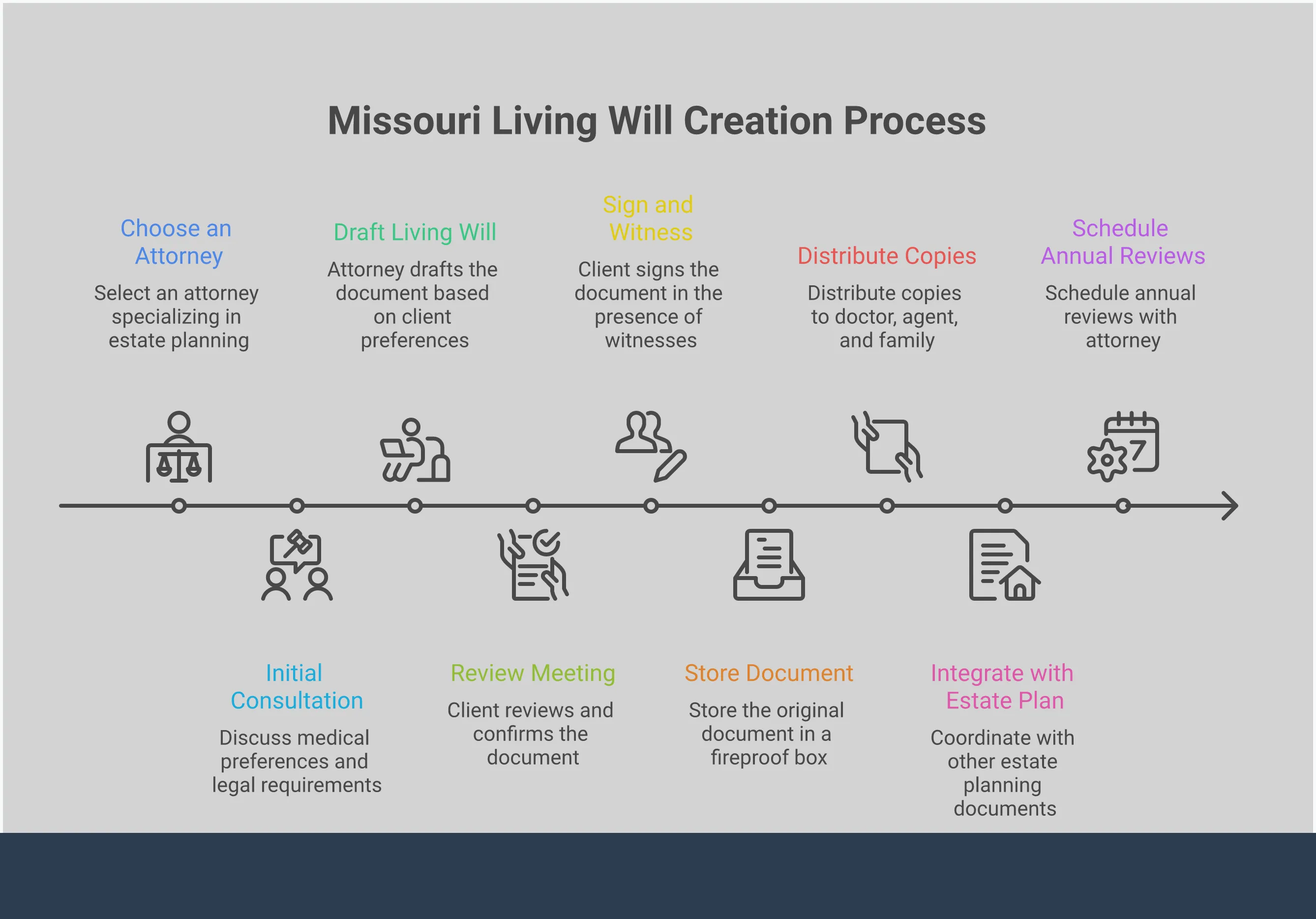
Think of a living will as your personal instruction manual for future medical care. It outlines your preferences for life-sustaining treatments and other medical interventions if you become incapacitated. To make sure your document holds up when it matters most, you’ll need to address a few key legal requirements, from how it’s signed to who witnesses it. Following these steps ensures that your family and healthcare providers have clear, legally valid directions to follow, removing any guesswork during a difficult time.
Getting the Signatures Right in Missouri
First and foremost, your living will must be a physical, written document. An oral agreement or a casual conversation with a loved one won’t carry legal weight in this situation. A living will is a formal document that explains your medical wishes if you become too sick or hurt to communicate them yourself. For it to be valid in Missouri, you must sign and date it. If you are physically unable to sign, another person can sign on your behalf, but they must do so in your presence and at your explicit direction. This signature is your official confirmation that the document accurately reflects your wishes for end-of-life care.
Do I Need Witnesses or a Notary?
Having your signature on the document isn’t quite enough—you also need witnesses. Missouri law requires that you sign your living will in the presence of at least two competent adult witnesses. These individuals are confirming that you signed the document willingly and appeared to be of sound mind. It’s important to choose your witnesses carefully; they cannot be the person you’ve appointed as your healthcare agent or anyone who stands to inherit from your estate. While notarization isn’t strictly required for a living will to be valid in Missouri, it is highly recommended. A notarized will becomes “self-proving,” which simplifies the process for courts and helps ensure your wishes are carried out without delay.
How to Change or Cancel Your Living Will
Your feelings about medical treatments can change over time, and your living will should always reflect your current wishes. Fortunately, this document is not set in stone. You can revoke your living will at any time by clearly communicating your intent to do so, whether verbally or in writing. To update it, the best practice is to create a new document and physically destroy all copies of the old one to prevent any confusion. As you consider your preferences, it’s wise to discuss them with an attorney who specializes in estate planning. They can help you think through different scenarios and ensure your new living will is clear, comprehensive, and legally sound.
How Can a Springfield Living Will Attorney Help You?
Thinking about end-of-life decisions is never easy, but creating a living will is one of the most considerate things you can do for your loved ones. While templates are available online, working with an experienced attorney ensures your wishes are legally protected and clearly understood. A Springfield living will attorney does more than just fill out a form; they provide guidance and foresight to protect you when you’re most vulnerable. They can help you think through difficult scenarios and make sure your final wishes are honored without placing an undue burden on your family. Here’s how a legal professional can help.
Drafting a Will That Holds Up in Missouri
A living will is a specific legal document outlining your medical preferences if you become terminally ill and can’t communicate. It addresses critical choices, like whether you want life-prolonging treatments or prefer to focus on comfort care. Missouri has specific requirements for what makes a living will valid, and any ambiguity can cause conflict among family members. An attorney ensures your document is drafted with precise language that leaves no room for misinterpretation and meets all state laws. This is a key part of our firm’s estate planning services, ensuring your personal values are legally protected when it matters most.
Is Your Current Living Will Still Valid?
Creating a living will isn’t a one-time task. A common mistake is drafting a will and then forgetting about it for years. Life changes, and your wishes might, too. Major life events—like a marriage, divorce, the birth of a child, or a new diagnosis—are all important reasons to review your living will. An attorney can help you establish a schedule for periodic reviews, ensuring your document stays current with your life and any changes in Missouri law. This proactive approach guarantees that the instructions in your living will are always accurate, giving you and your family continued peace of mind.
How Your Living Will Fits With Other Documents
Your living will, also known as an advance directive, is just one piece of your overall plan. It needs to work seamlessly with other important documents, like a Durable Power of Attorney for Health Care, which appoints someone to make medical decisions for you. Without careful coordination, these documents could contain conflicting information, creating legal headaches for your family. An attorney will review all your legal documents to ensure they are aligned. This comprehensive check confirms your wishes are consistent across the board, preventing disputes and making sure your designated agent can act confidently on your behalf.
The Living Will’s Role in Your Full Estate Plan
A living will functions best as part of a complete estate plan. Estate planning is a dynamic process that should evolve as your life does. An attorney helps you see the bigger picture, integrating your medical directives with your financial and personal goals outlined in your last will or trust. They help you understand how all the pieces fit together to protect your assets and provide for your loved ones. By building a comprehensive plan, you ensure every aspect of your future is accounted for. You can contact our office to start building a plan that works for you and your family.
Using Trusts to Protect Your Assets
While a will is essential, a trust can offer even greater control and privacy for your estate. Trusts are legal arrangements that allow a third party, or trustee, to hold assets on behalf of a beneficiary. One of their biggest advantages is that they can help your property pass to your loved ones without going through probate—a court process that can be both lengthy and expensive. A revocable trust, also called a living trust, is flexible; you can change or end it at any time. It lets you manage your property while you’re alive, and after you pass, it ensures a smooth transfer to your beneficiaries. An irrevocable trust, on the other hand, generally can’t be changed once it’s set up, but it offers powerful protection for your assets against creditors and certain taxes.
Other Essential Estate Planning Documents
A living will is a critical document, but it’s just one part of a complete plan. To ensure you’re fully protected, you’ll want a few other key documents in your toolkit. A Last Will and Testament is what most people think of; it explains how your assets should be distributed after you die and names guardians for any minor children. A Durable Power of Attorney for finances appoints someone to manage your financial affairs if you become unable to do so. Similarly, a Health Care Power of Attorney designates a trusted person to make medical decisions on your behalf, guided by the wishes you’ve outlined in your living will. Together, these documents create a comprehensive safety net, ensuring every aspect of your estate plan is covered.
How to Choose Your Springfield Living Will Attorney
Finding the right attorney to draft your living will is a deeply personal decision. This isn’t just about hiring someone to fill out a form; it’s about finding a trusted advisor who will help you articulate your most important wishes for your future medical care. You need someone who not only understands Missouri law but also understands you. The right attorney will listen to your concerns, answer your questions clearly, and give you confidence that your document truly reflects your values. When you start your search, think of it as looking for a long-term partner for your legal needs. Here are a few key things to consider to ensure you find the best fit for you and your family in Springfield.
Why Estate Planning Experience is a Must
Not all lawyers have the same focus. While many can handle general legal matters, creating a living will requires specific knowledge. You’ll want an attorney who specializes in estate planning. As the American College of Trust and Estate Counsel notes, “An estate planning attorney helps you make legal plans for your money and property, plan for who gets what after you pass away, and try to lower taxes.” This specialized experience means they are familiar with the nuances of Missouri’s laws and can help you avoid common pitfalls. They can guide you through complex what-if scenarios, ensuring your living will is comprehensive and legally solid, leaving no room for confusion when it’s needed most.
What Qualifications Should Your Attorney Have?
Once you’ve found an attorney with estate planning experience, take a moment to review their qualifications. It’s important to find someone who is not just practicing in this area but is truly dedicated to it. You can usually find this information on their website. Take a look at their professional biography to learn about their background, education, and any professional organizations they belong to. Reading articles they’ve written or client testimonials can also give you a sense of their expertise and reputation in the community. This step helps confirm you’re working with a knowledgeable professional who is committed to their field and their clients.
Where to Find a Qualified Attorney
A great place to start your search is with people you already trust. Ask friends, family, or even other professionals like your financial advisor for a personal recommendation. Hearing about someone’s direct experience can give you valuable insight into an attorney’s communication style, expertise, and overall approach. This isn’t just about finding a name in a directory; it’s about finding a professional who has already earned the confidence of someone in your circle, which can make the entire process feel more comfortable from the very beginning.
Online legal directories and attorney review sites can also help you create a shortlist of qualified professionals in your area. Once you have a few names, take advantage of the initial consultation, which many attorneys offer. This meeting is your chance to ask questions and see if you feel at ease with their communication style. It’s important to find someone who listens to your concerns and makes you feel confident in their ability to represent your wishes. You can schedule a consultation with our office to discuss your needs and see if we’re the right fit for you.
Find an Attorney Who Speaks Your Language
This might be the most important factor of all. You need to feel comfortable talking openly with your attorney about sensitive health and family matters. A good attorney-client relationship is built on trust and clear communication. Many attorneys offer a brief, free initial consultation, which is a perfect opportunity to see if you connect. As one resource points out, “This relationship is very personal, so it’s important to find someone you trust.” During your consultation, ask yourself: Do they listen to my concerns? Do they explain legal concepts in a way I can understand? Do I feel heard and respected? Choose someone who makes you feel at ease.
How Much Does a Living Will Attorney Cost?
Before you commit, make sure you have a clear understanding of the costs involved. Don’t hesitate to ask about fees during your initial conversation. A reputable attorney will be transparent about their pricing. Some may charge a flat fee for drafting a living will, while others might bill by the hour. The total cost can vary depending on the complexity of your situation. While a simple, lawyer-drafted will in Missouri can cost a few hundred dollars, it’s always best to get an estimate directly from the attorney. Knowing the costs upfront prevents surprises and allows you to budget accordingly, ensuring the process is as stress-free as possible.
DIY Wills vs. Professional Legal Advice
It’s tempting to use a free online template for your living will. They seem convenient and cost-effective, but this is one area where cutting corners can have serious consequences for your family. A generic form can’t understand your unique family dynamics or financial situation, and it might not meet all of Missouri’s specific legal requirements, which could make the document invalid when it’s needed most. This can lead to confusion and conflict among your loved ones—the very thing you’re trying to prevent. While templates are available, working with an experienced attorney ensures your wishes are legally protected and clearly understood. A professional will help you create a document that is drafted with precise language and works in harmony with your complete estate plan, providing peace of mind that a downloadable template simply can’t offer.
What’s it Like to Work With a Living Will Attorney?
Deciding to create a living will is a significant step, and it’s natural to wonder what the process looks like. Working with an attorney removes the guesswork and ensures your document is legally sound and accurately reflects your wishes. From the first conversation to the final signature, you’ll have a dedicated professional guiding you. Here’s a breakdown of what you can expect.
Your First Meeting: What to Bring and What to Ask
Your initial consultation is a chance for you to get comfortable and for the attorney to understand your goals. It’s a good idea to come prepared with some questions to make sure your needs will be met. Don’t hesitate to ask things like, “What should I state in my living will?” or “How can I change my living will later on?” This first meeting is all about clarity. You should leave with a clear understanding of the attorney’s approach and the next steps. It’s the perfect time to see if their communication style is a good fit for you before moving forward with your estate planning.
From Draft to Final Document: The Process Explained
Once you decide to proceed, your attorney will begin drafting your living will. This is a critical step that requires careful attention to detail. A poorly drafted document can cause confusion for your family and medical providers, which is the exact opposite of what you want. Your attorney will ensure the language is precise and legally binding, specifically stating who is responsible for carrying out your decisions. This clarity is essential to prevent potential disputes down the road. You will have the opportunity to review the draft and make sure it perfectly captures your wishes before it’s finalized.
From Start to Finish: Timeline and Ongoing Support
Creating a living will is about more than just signing a document; it’s about thoughtfully planning for your future. It’s important to think about your future medical care and write down your wishes. This helps ensure you get the treatment you want and saves your family from making difficult decisions. The timeline for completion is often quicker than people expect, but the support doesn’t end there. Life changes, and your wishes might, too. A good attorney provides ongoing guidance, helping you update your living will as your circumstances evolve. When you’re ready to start this process, you can contact our office to set up a meeting.
Ready to Create Your Living Will?
Taking the first step toward creating your living will is the most important one. It’s about taking control of your future healthcare decisions and giving your loved ones clarity and peace of mind. The process is more straightforward than you might think, especially with the right guidance. Breaking it down into a few manageable steps can help you feel prepared and confident as you move forward. It all starts with a little reflection and a conversation with a trusted professional.
Your Consultation Checklist: What to Prepare
Before you meet with an attorney, take some time to think about your personal wishes for end-of-life care. A living will is a document that outlines your desire for certain medical treatments to be withheld or withdrawn if you are unable to communicate. Consider what quality of life means to you and under what circumstances you would or would not want interventions like CPR or feeding tubes. You don’t need to have all the answers, but jotting down your thoughts and values will make your consultation much more productive. When you’re ready, you can schedule a meeting to discuss your specific situation.
Important Questions to Ask Your Attorney
Your consultation is your opportunity to get clear, personalized advice. Don’t hesitate to ask questions to ensure you understand everything. A great starting point is asking, “What should I state in my living will to make my wishes clear?” It’s also helpful to ask, “How does a living will compare to a last will and testament?” This clarifies their different roles in your overall estate plan. Finally, ask about your other options. This can open up a conversation about other important documents, like a durable power of attorney for health care, which appoints someone to make medical decisions for you.
How to Finalize and Safely Store Your Living Will
Once your living will is drafted, the final steps are signing and storing it properly. Your attorney will guide you through Missouri’s specific requirements for signatures and witnesses. After it’s signed, keep the original document in a safe, accessible place, like a fireproof box at home. The most important step is to distribute copies. Make sure your primary doctor, your appointed health care agent, and close family members have a copy. This ensures that the people who need it can find it quickly. A living will is only effective if your loved ones and medical team know it exists and can access it when needed.
Related Articles
- Understanding Living Wills & Advanced Healthcare Directives in Missouri – The Law Office of Chad G. Mann, LLC
- Missouri Power of Attorney Guide | Types, Laws & How to Set One Up
- Estate Planning in Missouri: A Simple 7-Step Guide – The Law Office of Chad G. Mann, LLC
- Missouri Estate Planning Guide – Understand Its Importance
Frequently Asked Questions
What happens if I don’t have a living will? Without a living will, your family and doctors are left to guess what you would have wanted during an already stressful time. This can lead to painful disagreements and medical treatments you might not have chosen for yourself. In Missouri, the law will then determine who gets to make these critical decisions on your behalf, and it may not be the person you would have trusted with that responsibility.
Is a living will the same as a Do Not Resuscitate (DNR) order? While they both relate to medical care, they serve different functions. A DNR is a specific medical order signed by a doctor that instructs healthcare providers not to perform CPR. A living will is a much broader legal document that outlines your preferences for a wide range of life-sustaining treatments if you become terminally ill or permanently unconscious.
Can my family ignore my living will? A properly drafted and legally valid living will is a binding document. Its entire purpose is to ensure your wishes are followed, even if family members disagree. While conflicts can be emotionally difficult, your written directive provides clear, legal instructions to your healthcare team, making sure your voice is the one that matters most.
Do I need a living will if I’m young and healthy? Yes. Unexpected accidents or illnesses can happen at any age, and it’s impossible to predict the future. Creating a living will when you are healthy and thinking clearly is the ideal time to make these important decisions. It’s a proactive step that protects both you and your loved ones from having to make difficult choices under pressure.
Once I create my living will, is it set in stone? Not at all. A living will is a flexible document that you can change or revoke at any time. Life is full of changes, and your feelings about medical care might evolve, too. It’s smart to review your living will every few years, or after a major life event like a marriage or new diagnosis, to ensure it always reflects your current wishes.