


Let’s be real: the word “bankruptcy” is scary. It brings up images of losing your home or having your credit destroyed for good. But those are just myths. The truth? Bankruptcy is a powerful tool designed to protect what’s important and give you a fresh start. It’s not a personal failure—it’s a strategic move to get back on your feet. The best way to understand your options is by talking to an experienced Springfield MO bankruptcy lawyer. They can show you how to safeguard your property and create a clear plan to rebuild.
Key Takeaways
- A lawyer is your strategic partner: An experienced attorney does more than just file documents; they analyze your unique financial situation to choose the right bankruptcy chapter, protect your assets, and create a clear path forward.
- Prioritize specialized experience and transparent communication: When choosing a lawyer, look for a specialist in bankruptcy law with local court knowledge. Use the initial consultation to confirm they are upfront about all fees and answer your questions in a way you understand.
- Professional guidance is a worthwhile investment: Filing for bankruptcy alone is risky and can lead to your case being dismissed. The cost of an attorney ensures the process is handled correctly, giving you the best chance at a successful financial fresh start.
What Can a Springfield MO Bankruptcy Lawyer Do For You?
Facing overwhelming debt can feel isolating, but you don’t have to figure it out alone. Hiring a bankruptcy lawyer is about more than just filing paperwork; it’s about having a knowledgeable guide who can help you find the best path to financial stability. An experienced attorney acts as your partner, translating complex legal jargon into plain English and creating a clear strategy tailored to your unique situation. They handle the stressful communications with creditors and the court, allowing you to focus on moving forward. A lawyer also ensures that all deadlines are met and that your filing is accurate, which prevents costly mistakes or even dismissal of your case.
A skilled lawyer does more than just manage the legal process. They provide sound advice, protect your rights, and ensure you make informed decisions every step of the way. From the initial financial assessment to the final discharge of your debts, they are there to answer your questions and advocate for your best interests. With the right legal support, you can confidently work toward a fresh start. The team at The Law Office of Chad G. Mann offers a range of legal services to help clients find relief and security.
Which is Right for You: Chapter 7 or 13?
The two most common types of personal bankruptcy, Chapter 7 and Chapter 13, work very differently. A lawyer will help you understand the nuances of each and determine which one aligns with your financial goals. Chapter 7, often called liquidation bankruptcy, typically involves selling non-exempt assets to pay off creditors, while Chapter 13 creates a three-to-five-year repayment plan. An attorney can explain the bankruptcy basics and analyze your eligibility for each, ensuring you choose the option that offers the most effective relief for your circumstances. Their guidance is key to making a choice that protects your future.
Get a Clear Picture of Your Financial Options
Before any papers are filed, a good bankruptcy lawyer will conduct a thorough review of your financial situation. This involves looking at your income, expenses, assets, and the types of debt you hold. This deep dive is essential for creating a successful strategy. By understanding the complete picture, your attorney can identify which assets you can keep, which debts can be discharged, and what potential challenges might arise. This personalized assessment ensures that the bankruptcy plan is built on a solid foundation, maximizing your chances of a smooth process and a successful outcome.
Ensure You Have a Strong Voice in Court
Filing for bankruptcy is a formal legal process that involves interacting with a court-appointed trustee and your creditors. Having a lawyer by your side means you have a professional advocate representing you at every turn. They will prepare you for the meeting of creditors, handle all legal correspondence, and speak on your behalf in any court proceedings. This representation is invaluable, as it removes the burden of facing trustees and creditors alone. An attorney like Chad G. Mann ensures your rights are protected and that you are treated fairly throughout the entire process.
Start Rebuilding Your Credit Sooner
Many people worry that filing for bankruptcy will permanently ruin their credit, but that’s not the case. While your credit score will take an initial hit, bankruptcy is often the first step toward rebuilding a healthier financial life. It clears away unmanageable debt, giving you a clean slate. A forward-thinking lawyer will not only guide you through the bankruptcy itself but will also offer advice on how to start re-establishing your credit once the process is complete. They can provide resources and tips for responsible credit use, helping you get back on your feet and work toward long-term financial wellness.
Who Qualifies for Bankruptcy in Missouri?
Deciding to file for bankruptcy is a big step, but it’s just as important to know if you’re eligible. The qualifications depend on several factors, including your income, the type of debt you have, and your financial history. Missouri has specific rules that determine who can file for different chapters of bankruptcy, and meeting these requirements is the first hurdle in the process. It’s not as simple as just having more debt than you can handle. The court system has checks in place, like the means test, to direct you to the right solution. Understanding these qualifications is where a knowledgeable attorney becomes your most valuable asset. You can contact our office to discuss your specific circumstances.
The Chapter 7 Means Test and Income Limits
For many individuals, Chapter 7 bankruptcy is the goal because it can wipe out certain debts completely. To qualify, you must pass what’s known as the “means test.” This test compares your household income to Missouri’s median income for a family of the same size. For example, the income limit for a single person is around $63,000, while a household of six can earn over $135,000. If your income is below the median, you generally qualify. If it’s higher, the test gets more complex, looking at your disposable income after accounting for specific expenses. Because these figures change, it’s important to get an accurate assessment. An attorney can run the calculations for you and explain what the results mean for your case.
What Debts Can and Cannot Be Discharged?
One of the biggest misconceptions about bankruptcy is that it eliminates all your financial obligations. In reality, some debts can be discharged while others cannot. Chapter 7 is highly effective for getting rid of unsecured debts, which are debts not tied to any specific property. This includes common financial burdens like credit card balances, medical bills, and personal loans. However, certain debts are considered non-dischargeable and will stick with you even after bankruptcy. These typically include student loans, child support, alimony, and most tax obligations. A thorough review of your debts with a legal professional is essential to understand exactly what relief you can expect from filing.
What Might Disqualify You From Filing?
Passing the means test is a major step, but other factors can also affect your eligibility. If your disposable income is too high after the means test calculations, you may be disqualified from Chapter 7 and pointed toward Chapter 13 instead. Another common reason for disqualification is a prior bankruptcy filing. You generally cannot file for Chapter 7 if you received a discharge in a previous Chapter 7 case within the last eight years. Furthermore, any attempt to hide assets or defraud creditors can lead to your case being dismissed and may even result in legal penalties. This is why complete honesty and accurate documentation are critical, and having an attorney like Chad G. Mann guide you helps ensure you avoid these potential pitfalls.
Bankruptcy Options for Businesses
Bankruptcy isn’t just for individuals; it’s also a tool that can help businesses find a path forward during financial distress. Instead of simply closing their doors, business owners can explore options that allow them to restructure their finances and continue operating. The most common route for this is Chapter 11 bankruptcy, which is designed for reorganization rather than liquidation. This process is complex and involves negotiating with creditors to create a viable repayment plan. For small business owners, a newer, more streamlined option called Subchapter V is also available. Understanding the right path for your business requires careful analysis, and our team can provide the clarity needed to make an informed decision.
Chapter 11
Chapter 11 bankruptcy is primarily designed for corporations and partnerships, though individuals can also file under it. The main goal is to allow the business to keep operating while it develops a plan to repay its creditors over time. This process gives the business owner, known as the “debtor in possession,” control over operations while they restructure debts and assets. It’s a powerful tool for preserving a business that is fundamentally viable but is struggling with its current financial obligations.
Subchapter V
Recognizing that traditional Chapter 11 can be too costly and complex for smaller companies, Congress created Subchapter V. This option is specifically for small businesses and offers a faster, more affordable path to reorganization. It simplifies the process by removing some of the hurdles found in a standard Chapter 11 case, such as the requirement for a creditors’ committee. Subchapter V makes it easier for small business owners in our community to get a fresh start while keeping their business alive.
How to Find the Right Bankruptcy Lawyer in Springfield, MO
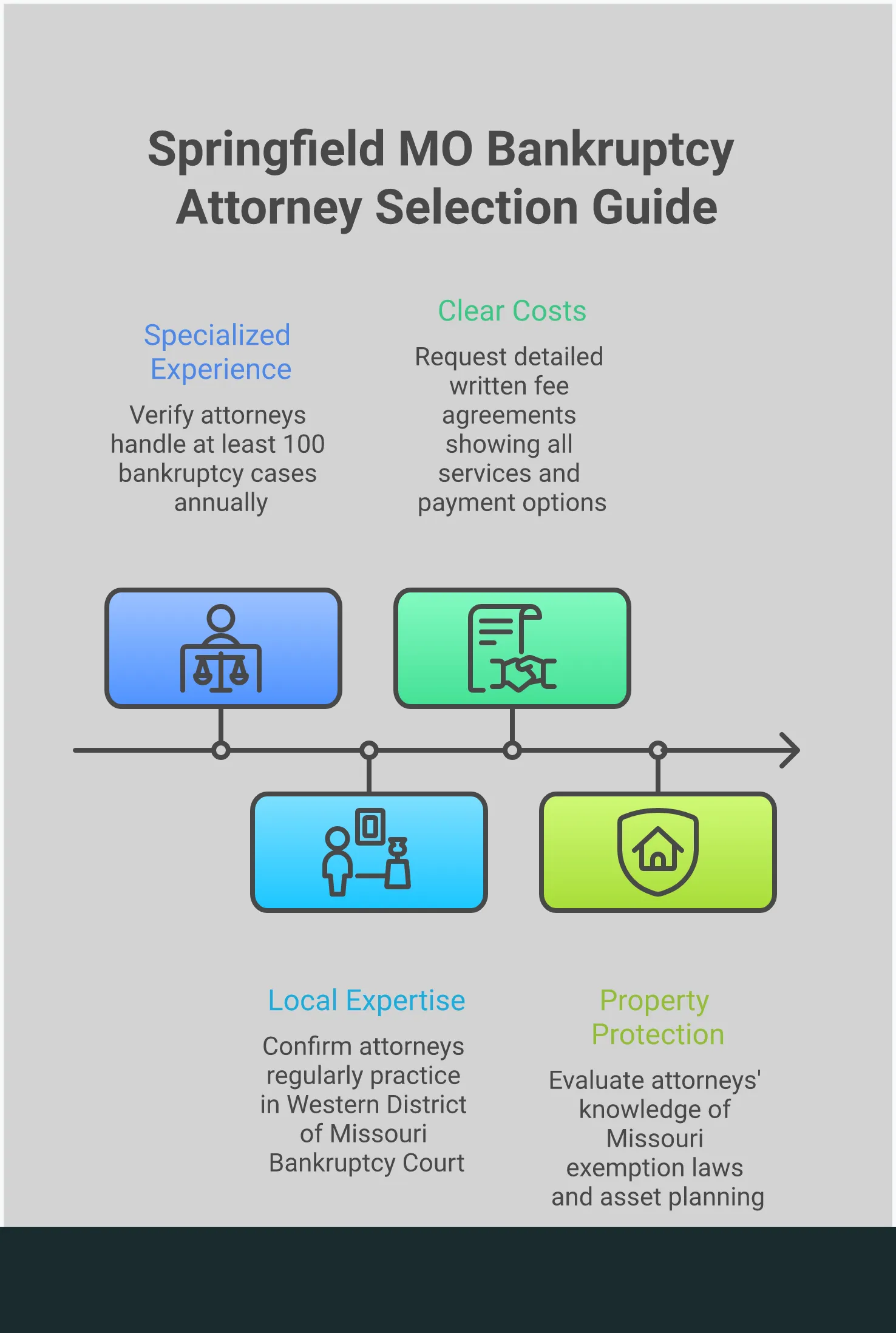
Choosing a lawyer to guide you through bankruptcy is one of the most important decisions you’ll make during this process. You need more than just a legal representative; you need a trusted advisor who understands what you’re going through and has the expertise to secure the best possible outcome for your situation. The right attorney can make the entire process feel more manageable and less intimidating. To find that person, you’ll want to focus on a few key areas: their specific experience, their professional background, how they communicate with clients, and how they handle their fees.
Choose a Lawyer Who Only Practices Bankruptcy Law
When you’re dealing with something as specific as bankruptcy, you don’t want a jack-of-all-trades. You need a specialist. Bankruptcy law is intricate, with its own set of rules, deadlines, and procedures that can be tricky to handle. An attorney who focuses on bankruptcy will be deeply familiar with these complexities. Having an experienced lawyer on your side is critical because it will directly shape the outcome of your case and your financial future. They know the potential pitfalls and can help you avoid them, ensuring your filing is handled correctly from the start. Look for a firm that demonstrates a strong understanding of financial legal matters, like creditor representation, as it shows a comprehensive grasp of the field.
Confirm Their Credentials and Local Expertise
Once you’ve found a few specialists, it’s time to do a little homework. A reputable attorney will be transparent about their qualifications. You can verify their credentials, including where they went to law school and their memberships in professional organizations like the Missouri Bar. It’s also incredibly helpful to work with a lawyer who has deep roots in the local community. A Springfield attorney will be familiar with the local bankruptcy court, the trustees, and the judges, which can be a significant advantage. You can often find this information on a lawyer’s website; take a look at their biography page to get a better sense of their background and professional journey.
Read Client Reviews and Test Their Communication Style
Legal expertise is crucial, but so is finding someone you can trust and communicate with easily. This process can be emotional, and you’ll want an attorney who is patient, responsive, and able to explain things in a way you can understand. Start by reading online reviews and testimonials from past clients. What do they say about their experience? Pay close attention to how the law firm staff treats you from your very first call or email. Do they get back to you promptly? Are they friendly and helpful? The right bankruptcy lawyer can make all the difference in how smoothly the process goes, and clear, supportive communication is a huge part of that.
Do They Offer a Free Consultation and Transparent Fees?
Don’t let worries about cost prevent you from seeking help. Many people believe hiring a bankruptcy attorney is too expensive, but that’s often a misconception. Most bankruptcy lawyers offer an initial consultation, sometimes for free, to discuss your situation and see if they can help. This is the perfect time to ask about their fee structure. A trustworthy attorney will be upfront and transparent about all costs, including their fees and any court filing expenses. They should be able to explain what their services cover and may even offer flexible payment plans. Getting your questions answered early will help you feel confident in your decision, so don’t hesitate to schedule a consultation to learn more.
Look for Key Services and Accommodations
When you’re evaluating a lawyer, look beyond their credentials and consider the actual services and accommodations they provide. A free initial consultation is a great start, as it gives you a chance to discuss your situation without any financial pressure. But also ask about their payment options. A firm that offers flexible payment plans or a flat fee for their services shows they understand the financial challenges you’re facing. Most importantly, you want a lawyer who offers comprehensive legal support. This means they do more than just file documents; they provide sound advice, protect your rights, and ensure you make informed decisions at every stage. This kind of holistic support is crucial for working through the complexities of bankruptcy and achieving a successful outcome. When you’re ready to find that support, you can schedule a consultation to discuss your specific needs.
What Does It Cost to Hire a Bankruptcy Lawyer in Springfield?
When you’re already dealing with financial stress, the thought of paying for legal help can feel overwhelming. It’s completely understandable to worry about the cost, but it’s helpful to see it as an investment in your financial future. The total expense for filing bankruptcy in Missouri is made up of three main parts: attorney fees, court filing fees, and costs for mandatory credit counseling courses.
The final amount depends heavily on which type of bankruptcy you file. Chapter 7 and Chapter 13 bankruptcies have different processes, which means they also have different fee structures. A good attorney will be transparent about all potential costs from the very beginning, so you know exactly what to expect. At our firm, we handle various practice areas and believe in clear communication, especially when it comes to fees. The goal is to find a path forward that resolves your debt, and understanding the costs is the first step.
How Attorney Fees Differ for Chapter 7 and 13
The biggest variable in your total cost is the attorney’s fee, which differs between Chapter 7 and Chapter 13 cases. For a Chapter 7 bankruptcy, lawyers typically charge a flat fee. This single payment covers all the work involved, from preparing your initial paperwork to representing you in court and communicating with your creditors.
A Chapter 13 bankruptcy is more complex and lasts for three to five years, so the legal fees are higher. However, you usually don’t have to pay this all at once. Instead, the court-approved attorney fee is often rolled into your monthly repayment plan. This structure makes getting expert legal help more accessible, as the cost is spread out over time.
Typical Attorney Fees in Missouri
So, what can you actually expect to pay? For a Chapter 7 bankruptcy in Missouri, attorney fees are typically a flat rate, often ranging from $1,200 to $2,500, depending on how complex your financial situation is. This single fee is designed to cover the entire process—from the initial consultation and document preparation to representing you at the meeting of creditors. The benefit of a flat fee is its predictability; you know the full cost of legal representation from the start, with no surprise bills later on. It’s a straightforward approach for a process that aims to liquidate debt and provide a clean slate.
Chapter 13 fees work differently. Because these cases involve a repayment plan that spans three to five years, the legal work is more extensive, and the fees are higher. However, you almost never have to pay the full amount upfront. Instead, a large portion of the attorney’s fee is rolled directly into your monthly repayment plan. This means the cost is spread out, making it much more manageable for someone already on a tight budget. Understanding the full picture of the total cost, including court fees and counseling, is something a good lawyer will clarify for you in your first meeting.
Accounting for Court Costs and Other Expenses
Beyond your attorney’s fee, there are a few standard costs associated with filing for bankruptcy. The court itself charges a filing fee, which is currently $338 for Chapter 7 and $313 for Chapter 13 in Missouri. This fee is paid directly to the U.S. Bankruptcy Court and is separate from what you pay your lawyer.
You will also need to complete two mandatory educational courses: one for credit counseling before you file and another in debtor education before your case is finalized. These courses are offered by government-approved agencies and have their own small fees. Other minor expenses might include the cost of pulling your credit reports or making copies of documents. A transparent lawyer will outline all of these costs for you during your initial consultation.
Factors That Influence the Total Cost
The total expense for filing bankruptcy isn’t a single number, as it’s shaped by your unique situation. The biggest variable is the type of bankruptcy you file. Chapter 7 is often a more direct process with a flat attorney fee, while a Chapter 13 bankruptcy involves a multi-year repayment plan, making it more complex and costly. Beyond legal fees, you’ll also need to budget for standard administrative costs. These include a court filing fee and payments for two mandatory educational courses from government-approved agencies. A good lawyer will provide a clear breakdown of every single expense upfront, so there are no surprises. To get a personalized estimate of what your case might cost, the best first step is to schedule a consultation.
Ask About Flexible Payment Options
Most bankruptcy attorneys understand that you’re in a tight financial spot and offer payment options to make their services more affordable. For a Chapter 7 case, the law requires that you pay your attorney’s fees in full before your petition is officially filed with the court. To help with this, many law firms allow you to pay the fee in installments. You can make payments over a few months until the full amount is paid, and then your lawyer will file your case.
For Chapter 13, the payment structure is different. Because the attorney’s fee is part of your court-approved repayment plan, you pay it off over the three-to-five-year life of your plan. This integrated approach means you can get legal help right away without needing a large sum of money upfront.
Paying the Court Filing Fee in Installments
If the court’s filing fee feels like another financial hurdle, you should know there’s a way to make it more manageable. The bankruptcy court allows you to request permission to pay the fee in installments. This isn’t automatic; your attorney will need to file a specific application on your behalf, proposing a payment schedule. Generally, the court gives you up to 120 days from your filing date to pay the full amount. This option provides valuable breathing room and prevents the upfront cost from delaying your path to relief. It’s important to note that this arrangement is strictly for the court’s fee and is separate from the payment plan you set up with your lawyer for their services.
Applying for a Fee Waiver
In some cases, you may not have to pay the court filing fee at all. This is possible through a fee waiver, but it’s reserved for individuals in specific circumstances. To qualify, you must be filing for Chapter 7 bankruptcy, and your household income must be below 150% of the federal poverty guidelines. If you meet these criteria, the entire filing fee can be waived, removing a significant cost barrier. Your attorney can review your financial situation to see if you’re eligible and will handle the official application to the court for you, making the process straightforward.
Why a Lawyer Is a Worthwhile Investment
While it might be tempting to save money by filing for bankruptcy on your own, doing so can be incredibly risky. The bankruptcy code is complex, and a simple mistake on your paperwork could lead to your case being dismissed. In fact, studies show that about 30% of people who file without an attorney fail to get their debts discharged. If that happens, you’re back at square one, without your filing fee and still facing your creditors.
Hiring an experienced lawyer is an investment in a successful outcome. An attorney ensures your paperwork is filed correctly, helps you protect your assets, and advocates for your best interests. With professional guidance from a lawyer like Chad G. Mann, you have a much higher chance of achieving a true financial fresh start.
What Can You Expect from the Bankruptcy Process?
Filing for bankruptcy can feel like a huge, complicated step, but it’s a well-defined legal process. Knowing what to expect can make the entire experience feel more manageable. While every case has its own details, the journey follows a few key stages, from your first meeting with an attorney to the final discharge of your debts. Having a professional guide you through these steps is essential for a smooth and successful outcome.
The “Automatic Stay”: Immediate Protection from Creditors
One of the most powerful and immediate benefits of filing for bankruptcy is something called the automatic stay. The moment your case is filed with the court, this legal injunction goes into effect, acting like a shield between you and your creditors. It legally requires them to stop all collection activities right away. This means no more harassing phone calls, no more threatening letters, and a halt to wage garnishments, repossessions, and foreclosure proceedings. The automatic stay provides the critical breathing room you need to pause, regroup, and work with your attorney on a long-term solution. It’s the first step toward taking back control of your finances and getting the peace of mind you deserve.
What Happens at Your First Consultation?
Your journey begins with an initial consultation. This is a confidential meeting where you’ll sit down with an attorney to discuss your financial situation in detail. You should come prepared with documents like recent pay stubs, tax returns, a list of your debts, and a summary of your assets. The goal is to give your lawyer a complete picture of your finances. A skilled attorney will use this information to determine if bankruptcy is the right choice for you and, if so, which chapter fits your circumstances. This first step is about getting honest, professional advice from someone who understands the system, like the team at the Law Office of Chad G. Mann.
From Paperwork Prep to Official Filing
Once you decide to move forward, the next step is preparing your bankruptcy petition. This is a set of official forms that details every aspect of your financial life, including your income, assets, debts, and monthly expenses. Accuracy and honesty are critical here, as any mistakes or omissions can cause major problems, even leading to your case being dismissed. Your lawyer will guide you through gathering the necessary information and will prepare the documents for you. They will ensure everything is filed correctly with the appropriate local court, handling the complex administrative work so you can focus on your next steps. This is one of the most important legal services a bankruptcy attorney provides.
What is the “Meeting of Creditors”?
About a month after filing, you’ll attend a required hearing called the “meeting of creditors,” or the 341 meeting. Despite the name, it’s usually not as intimidating as it sounds. The meeting is run by a court-appointed bankruptcy trustee, not a judge, and it’s often held in a meeting room instead of a courtroom. The trustee will ask you questions under oath to verify the information in your paperwork. Creditors have the right to attend and ask questions, but they rarely do. Your attorney will be by your side the entire time, having already prepared you for the questions you’ll be asked. This ensures you can answer confidently and correctly.
How Long Does the Bankruptcy Process Take?
The final stage is waiting for your case to conclude. The timeline depends on which chapter you file. A Chapter 7 bankruptcy is relatively quick, typically taking about four to six months from filing to when your eligible debts are discharged. A Chapter 13 bankruptcy involves a three-to-five-year repayment plan, so the process is much longer. Throughout this period, your lawyer is your advocate, handling any issues that arise and ensuring your case stays on track. The right bankruptcy lawyer can make all the difference in how smoothly the process goes. When you’re ready to take the first step toward your fresh start, you can reach out for a consultation.
Why Hire a Lawyer Instead of Filing Alone?
When you’re facing overwhelming debt, the idea of filing for bankruptcy on your own might seem like a way to save money. The paperwork is available online, and it can feel empowering to take matters into your own hands. However, bankruptcy law is incredibly complex, with strict deadlines and procedural rules that can easily trip up someone without legal training. A small mistake on a form or a missed deadline could lead to your case being dismissed, leaving you right back where you started, only with fewer options. This is where the value of professional legal guidance becomes clear.
Hiring an experienced bankruptcy attorney isn’t just about having someone fill out forms for you. It’s about having a strategic partner who understands the local court system, knows the trustees and judges, and can anticipate potential challenges before they arise. They will help you understand which type of bankruptcy is right for you, how to protect your most important assets, and what to expect at every stage. Think of them as your advocate, ensuring your rights are protected and you are positioned for the best possible outcome. The peace of mind that comes from knowing an expert is handling your case is invaluable.
The Truth About DIY Bankruptcy
One of the biggest myths about filing for bankruptcy is that you can’t afford an attorney. The reality is, you likely can’t afford not to have one. While it seems counterintuitive to spend money when finances are tight, the cost of a failed bankruptcy filing is far higher. In fact, about 30% of people who file for bankruptcy without a lawyer fail to receive a discharge of their debts. This means they go through the entire stressful process and still owe their creditors. An attorney’s fee is an investment in a successful outcome, ensuring you actually get the relief you’re seeking.
How a Lawyer Helps Protect Your Home and Assets
Filing for bankruptcy doesn’t mean you have to lose everything you own. The law includes exemptions that allow you to protect essential assets like your home, car, and retirement savings. However, applying these exemptions correctly is a complicated process. If you file on your own and make a mistake, you could risk losing valuable property that an attorney could have protected. An experienced lawyer will conduct a thorough review of your finances to make sure every available exemption is used, safeguarding your future while you work to resolve your debt.
Steer Clear of Costly Mistakes and Unnecessary Delays
The bankruptcy process involves a mountain of detailed paperwork and strict, non-negotiable deadlines. A single error, from miscalculating your income to forgetting to list a creditor, can cause significant delays or even lead to the dismissal of your case. An attorney ensures that your petition is accurate and filed correctly the first time. Having an experienced professional on your side is crucial, as it will directly shape the outcome of your case and the amount of money you ultimately pay. This attention to detail saves you from the stress and expense of trying to fix mistakes later on.
Get the Most Debt Relief Possible
A good bankruptcy lawyer does more than just manage paperwork; they develop a strategy tailored to your specific situation. They will help you decide between Chapter 7 and Chapter 13, handle all communications with your creditors, and represent you in court proceedings. The right legal partner can make a significant difference in how smoothly the process goes and how favorable the outcome is for you. By putting their expertise to work, they ensure you get the maximum benefit from the bankruptcy process, setting you on a clear path to financial recovery. If you’re ready to explore your options, you can contact our office for guidance.
Related Articles
- Springfield, MO Debt Collection Lawyer – Know Your Rights
- Guide to Debt Collection Attorneys in Springfield, MO
- Guide to Attorneys in Springfield, MO – Legal Help Near You
- Finding a Lawyer in Springfield, MO: Complete Guide
Frequently Asked Questions
Will I lose my home and car if I file for bankruptcy? This is one of the most common fears, but filing for bankruptcy doesn’t automatically mean losing your property. Missouri law provides exemptions that protect essential assets, including a certain amount of equity in your home and vehicle. An experienced attorney will carefully review your assets and apply all available exemptions to help you keep what matters most. The goal is to give you a fresh start, not leave you with nothing.
I’m already struggling financially, so how can I afford a lawyer? It seems contradictory to spend money when you don’t have any, but most bankruptcy lawyers understand this. Many firms offer payment plans, especially for Chapter 7 cases, allowing you to pay the fee in installments before your case is filed. For Chapter 13, the attorney’s fee is often included in your monthly repayment plan, so you don’t need a large sum upfront. Think of the fee as an investment in a successful outcome that will save you much more in the long run.
What is the main difference between Chapter 7 and Chapter 13 bankruptcy? The simplest way to think about it is that Chapter 7 is a liquidation process, while Chapter 13 is a reorganization. In a Chapter 7 case, non-exempt assets may be sold to pay creditors, and the process is usually over in about four to six months. In a Chapter 13 case, you create a three-to-five-year repayment plan to catch up on debts. A lawyer can analyze your income and assets to determine which chapter is the right fit for your situation.
Will filing for bankruptcy ruin my credit forever? No, it won’t. While your credit score will take a hit initially, bankruptcy is often the first real step toward rebuilding a healthy financial life. It resolves unmanageable debt that may have been damaging your credit for years. Many people are able to start re-establishing credit with secured cards or small loans within a year or two of their case being finalized. It provides a clean slate from which you can build a stronger future.
What happens if I make a mistake on my bankruptcy paperwork? The bankruptcy process is based on complete and accurate information, so even small mistakes can have big consequences. An error could lead to delays, the loss of an asset you could have otherwise protected, or even the complete dismissal of your case. If your case is dismissed, you’re back at square one with your creditors. Hiring a lawyer ensures everything is filed correctly and that your rights are protected from start to finish.