


Whiplash is so much more than a “minor” complaint. If you’re living with the pain, you know how real and disruptive it is. Unfortunately, insurance companies often try to downplay it, hoping you’ll accept a lowball offer without a fight. This is where knowledge becomes your power. Understanding the factors that build a fair settlement whiplash Missouri case is crucial. Your claim isn’t just an average number; it’s about your specific medical needs, lost income, and long-term recovery. We’ll show you exactly what to document to build a strong case for the full compensation you deserve.
Key Takeaways
- Your Settlement Is Based on Your Specific Losses: The value of your whiplash claim isn’t based on an average number; it’s calculated from your unique medical bills, lost income, and the personal impact the injury has on your daily life.
- Document Every Detail of Your Recovery: Keeping a thorough file of all expenses and a journal detailing how the injury affects you is crucial. This documentation serves as the primary evidence to prove the full extent of your damages.
- Legal Guidance Levels the Playing Field: An experienced attorney handles negotiations with insurance companies, understands how Missouri’s laws affect your case, and works to secure the full compensation you are entitled to, allowing you to focus on healing.
What Exactly Is a Whiplash Injury?
After an accident, you might hear the term “whiplash” used to describe neck pain. While it’s a common injury, especially after a car crash, it’s also frequently misunderstood. Whiplash isn’t just a minor ache; it’s a specific type of neck injury that can have lasting effects on your daily life if not taken seriously. The force from a sudden impact can strain the muscles and ligaments in your neck, leading to a range of symptoms that may not appear right away. Understanding what whiplash is, what to look for, and how it’s diagnosed is the first step in protecting your health and your rights.
What Causes Whiplash?
At its core, whiplash is a neck injury caused by a rapid, forceful back-and-forth movement of the head, much like the cracking of a whip. This sudden motion can injure the bones in your spine, the disks between the bones, and the ligaments, muscles, and nerves in your neck. The most common cause of whiplash is a rear-end car accident, but it can result from other traumas as well. Any incident that snaps your head forward and backward can lead to this injury. This includes other types of automobile accidents, physical altercations, contact sports injuries, or even a slip and fall. The key element is the abrupt jerking motion that your neck isn’t prepared for.
Are You Experiencing These Whiplash Symptoms?
Whiplash symptoms don’t always show up immediately. Sometimes it can take 24 hours or more for you to feel the full effects. Common signs include neck pain and stiffness, headaches that often start at the base of the skull, and pain in your shoulders or upper back. You might also experience dizziness, fatigue, memory problems, or difficulty concentrating. One of the biggest challenges with whiplash is that it’s a soft tissue injury, which means it won’t appear on an X-ray or MRI. Doctors must rely on the symptoms you describe to make a diagnosis. This makes it incredibly important to be thorough when you talk to your physician.
How Doctors Classify Your Whiplash Injury
To better understand the extent of the injury, medical professionals often use a grading system to classify whiplash. This scale typically ranges from Grade 0 to Grade 4, helping to standardize the diagnosis and guide treatment. A Grade 0 means you have no complaints about neck pain. Grade 1 involves neck pain or stiffness, while Grade 2 includes neck complaints along with musculoskeletal signs like a decreased range of motion. Grade 3 adds neurological signs, such as numbness or weakness in your arms. The most severe, Grade 4, involves a fracture or dislocation. This grading helps determine the seriousness of your injury and can be a key factor when a legal professional like Chad G. Mann evaluates your case.
Understanding the Whiplash Grading System
While your doctor uses this grading system to plan your treatment, it also becomes a critical piece of evidence in your personal injury claim. It provides a clear, standardized way to communicate the severity of your injury to insurance companies and, if necessary, a court. A Grade 0 means you have no neck pain, while Grade 1 involves pain or stiffness without other physical signs. Grade 2 is diagnosed when you have neck pain plus musculoskeletal issues, like a reduced range of motion. Things get more serious with Grade 3, which includes neurological symptoms like numbness or weakness in your arms. The most severe, Grade 4, involves a fracture or dislocation. Understanding where your injury falls on this scale is the first step in understanding the potential value of your claim.
Recovery Times for Different Grades
The grade of your whiplash injury directly correlates with your expected recovery time, which is a major factor in your settlement. A Grade 1 injury, with only neck pain and stiffness, typically heals within about 12 weeks. However, a Grade 2 injury, which includes physical signs like limited movement, can take six months or longer to resolve. For Grade 3 injuries involving nerve issues, recovery can stretch to a year, and Grade 4 injuries with fractures or dislocations often take over a year and may require ongoing treatment. A longer recovery period means more medical expenses, more lost income, and a greater impact on your daily life—all of which must be accounted for when pursuing compensation for different personal injury cases.
What About Severe Injuries?
When you’re dealing with a severe whiplash injury, the settlement should reflect the profound impact it has on your life. The more serious your injury, the more compensation you may be entitled to. This isn’t just about covering your immediate medical bills; it’s about accounting for all your losses. These are broken down into two categories: economic and non-economic damages. Economic damages cover tangible financial losses like medical treatments, physical therapy, lost wages, and even future earning capacity if you can’t return to your job. Non-economic damages address the non-monetary losses, such as your pain and suffering, disability, and the loss of enjoyment in life. For the most severe injuries, which can involve chronic pain or permanent damage such as spinal cord injuries from car accidents, accurately calculating these losses is complex, making it important to get professional legal advice.
What Is the Average Whiplash Settlement in Missouri?
If you’re dealing with a whiplash injury, one of the first questions on your mind is probably about compensation. It’s completely normal to wonder what your case might be worth, especially when you have medical bills piling up and you’re missing time from work. While there’s no magic calculator that can give you an exact number, we can look at typical settlement ranges in Missouri to give you a general idea. Just remember, every case is unique, and your final settlement will depend on the specific details of your situation.
A Look at Typical Settlement Amounts
In Missouri, the average settlement for a mild to moderate whiplash injury usually falls somewhere between $2,500 and $20,000. Many of the most straightforward cases, where the injury heals relatively quickly, tend to settle in the $2,500 to $10,000 range.
However, for more severe whiplash injuries that involve chronic pain, extensive medical treatment, or long-term complications, the settlement can be much higher. In these situations, it’s not uncommon for settlements to exceed $100,000. These figures show just how much the severity of the injury impacts the value of a claim.
Settlement Ranges for Severe Cases
When a whiplash injury goes beyond a few weeks of pain and becomes a long-term problem, the way compensation is calculated shifts dramatically. We’re talking about cases involving chronic pain, neurological issues, or the need for extended physical therapy. In these more complex situations, settlements are designed to cover the full impact on your life, which is why it’s not uncommon for them to exceed $100,000. This larger amount isn’t just a random figure; it reflects the reality of your situation, accounting for extensive medical bills, lost income, and the significant pain and suffering caused by long-term complications.
Why No Two Whiplash Settlements Are the Same
So, why is there such a wide gap between a $2,500 settlement and a six-figure one? The final amount depends heavily on the specific damages you’ve suffered. The most significant factor is the severity of your injury. A minor neck strain that resolves in a few weeks with rest is valued very differently from an injury that requires months of physical therapy, injections, and specialist visits.
Other key factors include the total cost of your medical treatments, the amount of income you lost while recovering, and the overall impact the injury has had on your daily life. The circumstances of the accident itself also play a role. An experienced personal injury attorney can help you document these details to build a strong case.
How Do Missouri Payouts Compare Nationally?
It can be helpful to see how Missouri’s numbers compare to the rest of the country. Generally, whiplash settlements in Missouri are in line with national averages. Across the United States, the typical settlement for a whiplash injury is between $12,000 and $30,000.
In Missouri specifically, settlements for whiplash often range from $10,000 to $25,000, which fits right within that national trend. This shows that while local laws and jury pools can influence outcomes, the core factors used to value a whiplash claim are consistent here and elsewhere. The best way to understand what your specific claim might be worth is to discuss the details with a legal professional who can give you personalized advice.
Key Factors That Affect Your Whiplash Settlement
When you’re dealing with a whiplash injury, one of the first questions you probably have is, “What is my case worth?” The truth is, there’s no simple calculator for personal injury settlements. Every case is unique, and the final amount depends on a combination of factors that paint a full picture of how the accident has affected your life. It’s not just about one single number; it’s about carefully piecing together all the ways the injury has impacted you, both financially and personally.
Think of it less like a fixed price tag and more like a detailed assessment of your losses. From the immediate medical bills and lost time at work to the long-term impact on your daily routine, several key elements come together to determine a fair settlement. Insurance companies will look at concrete evidence, like medical records and pay stubs, but they also have to account for less tangible damages, such as your pain and suffering. The goal is to reach a number that makes you whole again, at least from a financial standpoint. This process requires a thorough look at both your current situation and what your future might look like because of the injury. Understanding these factors can help you see what goes into building a strong claim and why having thorough documentation is so important. Let’s walk through the main components that shape the value of a whiplash settlement.
How Your Injury’s Severity Impacts Your Claim
The seriousness of your whiplash is the starting point for any settlement calculation. Medical professionals grade whiplash injuries on a scale, with higher grades indicating more significant damage that requires longer recovery times. A minor strain that heals in a few weeks will naturally result in a different settlement than a severe injury involving nerve damage or chronic pain.
This is why your medical records are the most critical piece of evidence in your claim. They provide the official diagnosis, outline your treatment plan, and create a timeline of your recovery. Detailed notes from your doctor are what prove the extent of your injuries to the insurance company. Without clear, consistent medical documentation, it’s much harder to justify a settlement that truly covers your needs.
The Risk of Chronic, Long-Term Symptoms
Insurance adjusters often work from a script that treats whiplash as a minor injury with a quick recovery time. The reality, however, can be much more complicated. For many people, the effects of whiplash can linger for months or even years, developing into chronic conditions that disrupt every aspect of life. These long-term symptoms can include persistent neck pain, debilitating headaches, sleep disturbances, and even depression. When an injury doesn’t resolve as expected, it’s critical that your settlement reflects the need for future medical care and the ongoing impact on your well-being. A fair settlement accounts for this possibility, ensuring you aren’t left covering the costs of long-term whiplash-associated disorders long after your case is closed.
How Pre-Existing Conditions Affect Your Claim
It’s a common worry: if you had a previous neck or back issue, will it hurt your whiplash claim? In Missouri, the law is on your side. The “eggshell plaintiff” rule means the person at fault is responsible for the harm they cause, even if you were more susceptible to injury than someone else. If the accident aggravated a pre-existing condition, making it worse than it was before, you are entitled to compensation for that new level of pain and limitation. In fact, proving that the accident worsened an old injury can sometimes increase your settlement value. The key is to be completely transparent with your doctor and your attorney about your medical history so they can clearly demonstrate how the accident impacted your health.
Tallying Up Medical Bills and Future Care
Your settlement should cover every dollar you’ve spent on medical care because of the accident. This includes everything from the initial emergency room visit and ambulance ride to diagnostic tests like X-rays or MRIs. It also covers the cost of prescription medications, physical therapy sessions, and any specialist appointments.
It’s essential to keep a meticulous record of all these expenses. But it’s not just about the bills you’ve already paid. If your doctor anticipates you’ll need future treatment, like ongoing physical therapy or pain management, the estimated cost of that care is also factored into your settlement. This ensures you aren’t left paying out-of-pocket for medical needs that arise down the road.
Estimating the Cost of Physical Therapy
Physical therapy is a common and crucial part of recovering from whiplash, but the costs can add up quickly. A single session typically runs between $100 and $250, and many treatment plans recommend therapy for six to twelve weeks. When you do the math, you can see how these expenses can easily reach several thousand dollars, a significant financial burden that your settlement is meant to cover. Because of this, whiplash cases that require physical therapy often result in higher settlements. While a mild case might settle for around $5,000 to $15,000, more serious injuries needing extensive treatment can push settlements well over $50,000. An experienced attorney works to ensure the full, anticipated cost of your treatment is included in the final settlement, so you aren’t left paying for your recovery out of pocket.
Accounting for Lost Wages and Earning Capacity
A whiplash injury can easily force you to take time off from work, and your settlement should compensate you for that lost income. This is calculated based on the wages you would have earned if you hadn’t been injured. You’ll need to provide proof of your income, like pay stubs or a letter from your employer, to document these losses.
In more severe cases, an injury might affect your ability to perform your job long-term or even require you to change careers. This is known as loss of future earning capacity. If your injury permanently reduces your ability to earn a living, your settlement should reflect that significant financial impact, ensuring your future stability isn’t compromised.
How Is Pain and Suffering Calculated?
Pain and suffering is a term used to describe the physical discomfort and emotional distress you experience after an accident. This can include chronic pain, anxiety, depression, insomnia, and the loss of enjoyment of life. While it’s impossible to put an exact price on these experiences, they are a real and significant part of your personal injury claim.
This portion of your settlement is often the largest and is calculated based on the severity of your physical injuries and the overall impact the accident has had on your life. An experienced attorney can help demonstrate how your daily routine, hobbies, and emotional well-being have been affected to ensure you are fairly compensated for these non-economic damages.
The Multiplier Method Explained
So how do you put a price on something as personal as pain and suffering? Insurance companies often use a formula called the “multiplier method” to come up with a starting number. They take the total of your economic damages—mostly your medical bills—and multiply it by a number between 1.5 and 5. This number, the multiplier, is chosen based on how severe your injury is. For example, a minor strain that heals in a few weeks might get a multiplier of 1.5 or 2. A more serious injury involving chronic pain or nerve damage could justify a 4 or 5. It’s important to remember this is just a starting point for negotiations, not a final guarantee. The actual settlement depends on the specific damages you’ve suffered and building a strong case to support them.
Why Insurance Policy Limits Matter
In Missouri, the person responsible for the accident is liable for your damages. This means you’ll be filing a claim with their insurance company. However, a major factor that can cap your settlement amount is the at-fault driver’s insurance policy limit. Every policy has a maximum amount it will pay out for an injury claim.
If your total damages exceed this limit, the insurance company is not obligated to pay the difference. While there may be other ways to pursue full compensation, such as through your own underinsured motorist coverage, the policy limits of the at-fault party play a crucial role. An attorney can help you understand these limits and explore all available options for recovery.
What Compensation Can You Claim for Whiplash?
If you’ve been injured in an accident, your settlement should cover all the ways the injury has impacted your life. These impacts are legally categorized as “damages.” Think of damages as the total harm you’ve suffered, from the money you’ve lost to the physical and emotional pain you’ve endured. A whiplash claim aims to provide financial compensation for these losses, helping you get back on your feet. The damages you can recover are generally split into two main types: economic damages, which cover your financial losses, and non-economic damages, which address your personal suffering.
Recovering Your Financial Losses
Economic damages are the most straightforward part of a whiplash claim because they cover your direct financial losses. These are the costs with clear price tags that you wouldn’t have faced if not for the accident. This includes every medical expense, from the initial emergency room visit and diagnostic tests like X-rays or MRIs to ongoing physical therapy and prescription medications. It’s also important to account for any income you’ve lost. If your injury kept you from working, your settlement should cover those lost wages. Keeping detailed records of all bills and pay stubs is essential for proving these automobile accident damages.
Getting Compensated for Pain and Suffering
Not every loss comes with a receipt. Non-economic damages compensate you for the intangible, personal impact of the injury. This is often the largest part of a whiplash settlement and includes your physical pain and suffering, emotional distress, anxiety, and loss of enjoyment of life. For example, you can be compensated if your injury prevents you from enjoying hobbies, playing with your children, or simply living without daily pain. While it’s harder to put a number on this kind of suffering, it’s a very real and significant part of your recovery. Documenting how the injury affects your daily life can help build a strong case for these damages.
Examples of Non-Economic Damages
To understand non-economic damages, it helps to think about the real-world impact the injury has had on your life beyond the medical bills. These damages cover the human cost of the accident. For instance, maybe you were an avid gardener, but now the constant neck pain makes it impossible to spend time in your yard. Perhaps you can no longer lift your grandchild without pain, or you’ve had to give up a favorite sport. It also includes the emotional toll, like the anxiety you now feel when driving or the frustration that comes from not being able to sleep through the night. These are significant losses, and they are a key part of what a fair settlement should cover. You can learn more about how these factors contribute to building a strong claim by exploring real-world case examples and legal insights.
Covering the Cost of Long-Term Care
A whiplash injury can sometimes become a chronic problem, causing pain and limitations long after the accident. Your settlement shouldn’t just cover your immediate bills; it must also account for any potential future medical care. This could include ongoing physical therapy, future surgeries, or long-term pain management. A fair settlement ensures you won’t be left paying out-of-pocket for treatment years down the road. An experienced attorney can work with medical experts to project these future costs and make sure your compensation is sufficient. This foresight is a key part of effective legal representation and is crucial for securing your future well-being.
How Missouri Law Affects Your Settlement
When you’re dealing with a whiplash injury, the last thing you want to do is decipher complex legal rules. But understanding a few key Missouri laws is essential because they directly shape your case and the compensation you can receive. These aren’t just minor details; they are the framework that insurance companies and courts use to determine the outcome of your claim. Knowing how the system works helps you protect your rights and set realistic expectations for your settlement.
Missouri is an “At-Fault” State
Missouri operates under an “at-fault” system, a crucial detail for any car accident claim. This simply means the person who caused the crash is legally responsible for the resulting damages. Their insurance company is required to pay for your medical treatment and other costs, but only up to their policy limits. If your expenses go beyond that amount, you may need to explore other avenues, such as your own health insurance or underinsured motorist coverage. This is why clearly establishing fault is one of the first and most critical steps in the claims process.
No Legal Cap on Compensation in Missouri
One of the most important things to know about Missouri law is that there is no legal cap on the amount of compensation you can receive for a whiplash injury. While some states limit the money you can be awarded for non-economic damages like pain and suffering, Missouri does not. This means your potential settlement is determined by the actual extent of your losses, not an arbitrary number set by law. The focus is on what you truly need to recover, allowing you to pursue the full compensation needed for your medical care, lost wages, and personal suffering.
Understanding Missouri’s Comparative Fault Rule
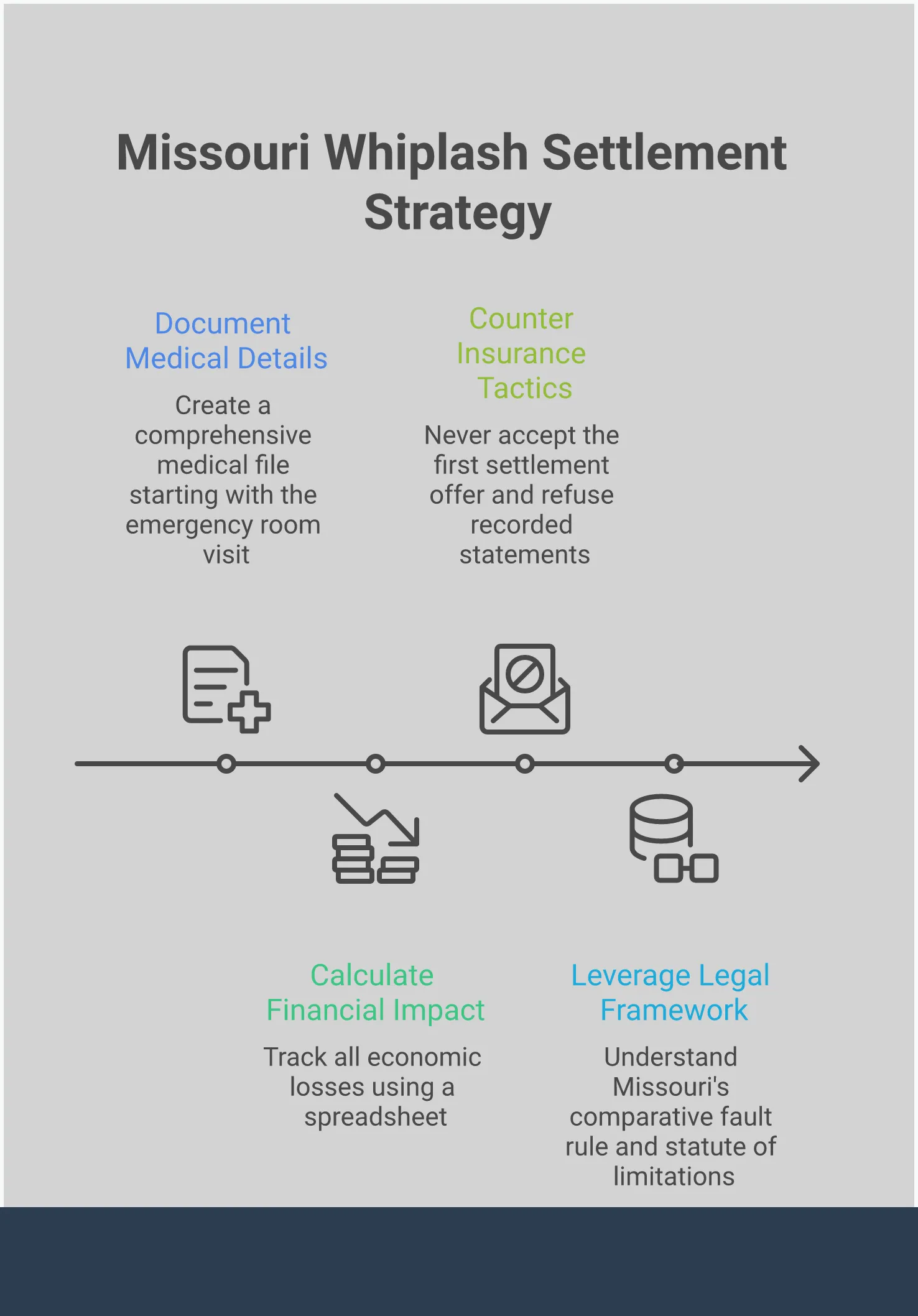
It’s common for an insurance company to try to shift some of the blame for an accident onto you. In Missouri, this tactic can directly reduce your settlement amount because of the state’s “pure comparative fault” rule. This means your total award is decreased by your percentage of fault. For example, if you are found to be 10% responsible for the crash, your final settlement will be reduced by 10%. This rule makes it incredibly important to build a strong case that clearly shows the other party was at fault, ensuring you receive the full compensation you deserve for your personal injury claim.
Don’t Miss Missouri’s 5-Year Filing Deadline
After an accident, time can feel like it’s flying by. However, there is a critical deadline you need to be aware of. In Missouri, you have five years from the date of the accident to file a personal injury lawsuit. This is known as the statute of limitations. If you miss this five-year window, you unfortunately lose your right to seek any compensation through the court system. While five years might sound like a long time, gathering evidence, documenting injuries, and negotiating with insurers takes time. It’s always best to start the process early to build the strongest case possible.
What to Know About Missouri’s Insurance Minimums
The at-fault driver’s insurance policy is usually the main source of your settlement funds. Missouri law requires every driver to carry a minimum amount of liability coverage: $25,000 for injuries to one person and $50,000 total for injuries in a single accident. While this is the minimum, these amounts can be quickly exhausted if your whiplash injury is severe and requires extensive medical treatment or causes you to miss significant time from work. Understanding these policy limits is a key part of evaluating what a realistic settlement might look like and exploring other potential sources of recovery.
Why a Lawyer Can Increase Your Settlement
After an accident, the thought of dealing with legal paperwork and insurance companies can feel overwhelming. While you can technically handle a whiplash claim on your own, partnering with a personal injury lawyer can significantly change the outcome. Think of an attorney as your professional advocate, someone who understands the system and is solely focused on protecting your interests. Insurance companies have teams of experts working to protect their bottom line; having a lawyer on your side simply levels the playing field.
An experienced attorney handles the complex parts of your claim so you can focus on your recovery. From negotiating with adjusters to making sure every piece of evidence is perfectly documented, they manage the process from start to finish. Their goal is to ensure you receive fair compensation that truly covers the full extent of your injuries and losses, not just what the insurance company first offers. This support can make all the difference in securing a settlement that helps you move forward.
Handling Negotiations with the Insurance Company
Insurance adjusters are trained negotiators, and their primary goal is to resolve your claim for the lowest possible amount. They often use specific tactics to achieve this. For instance, they might offer a quick, low settlement before you even know the full extent of your injuries. They may also downplay the severity of your whiplash, suggesting your doctor misdiagnosed you or that your pain isn’t as serious as you claim.
This is where a lawyer becomes invaluable. An attorney who specializes in automobile accidents understands these strategies and will not be intimidated. They will take over all communications with the insurance company, presenting a clear, evidence-based case for why you deserve full compensation. By handling the negotiations, your lawyer prevents you from falling into common traps and fights to secure a settlement that reflects the true impact of your injury.
Common Tactics Insurers Use to Lower Settlements
Insurance companies are businesses focused on their bottom line, and their adjusters are trained to protect it. This means they often use specific strategies to pay out as little as possible on a claim. A common tactic is the quick, lowball offer, which they might present before you fully understand your medical needs. They frequently dismiss whiplash as a minor issue and will push for a low settlement, hoping you’ll accept it just to be done with the process. They might also drag things out by requesting endless paperwork or questioning your doctor’s opinion to wear you down. It’s not unusual for them to imply your pain isn’t that serious or even suggest you’re faking it. These are all calculated moves to reduce payouts on personal injury claims and convince you to accept less than you’re owed.
Building a Strong Case with the Right Evidence
A successful whiplash claim is built on strong evidence. Simply telling the insurance company you’re in pain isn’t enough; you have to prove it. This requires meticulous documentation, including all your medical records, bills from doctor visits and physical therapy, and proof of any lost wages. It’s also incredibly helpful to keep a detailed journal describing how your injury affects your daily life, from chronic pain to the inability to perform certain tasks.
A personal injury lawyer knows exactly what kind of documentation is needed to build a compelling case. They will help you gather all the necessary paperwork and may even work with medical experts to provide an opinion on your condition and long-term prognosis. This thorough approach ensures that every aspect of your suffering and financial loss is properly recorded, leaving no room for the insurance company to dispute the facts.
How to Calculate Your Claim’s Full Value
How much is your whiplash claim actually worth? It’s a difficult question to answer on your own, and many people underestimate their claim’s value. A fair settlement isn’t just about covering your current medical bills. It should also account for future medical needs, lost income from time off work, and your physical pain and emotional suffering. These non-economic damages are often the largest part of a settlement, but they are also the most difficult to calculate.
An experienced lawyer knows how to determine the true value of your case. They will carefully analyze your medical expenses, project future costs, calculate lost earning capacity, and use established legal methods to assign a monetary value to your pain and suffering. By taking a comprehensive look at all your damages, they ensure your settlement demand is fair and complete.
Common Mistakes That Can Hurt Your Settlement
Insurance companies often try to settle claims as quickly and cheaply as possible. One of the biggest mistakes you can make is accepting their first offer, which is almost always far less than what you are entitled to. Another common pitfall is giving a recorded statement to the adjuster without legal counsel. They can use your words out of context to weaken your claim later on.
A lawyer helps you avoid these costly errors. They will advise you on what to say (and what not to say) and will review any settlement offer to make sure it’s fair. If the insurance company refuses to offer a reasonable amount, your attorney will be prepared to fight for you. Having professional guidance ensures you don’t leave money on the table or accidentally jeopardize your case. If you have questions about your situation, it’s always a good idea to contact a lawyer for advice.
Your First Steps After a Whiplash Injury
The moments following a car accident can feel chaotic and overwhelming. While you’re dealing with the immediate shock, it’s hard to think about the future. However, the steps you take right after an accident can significantly impact both your physical recovery and your ability to get fair compensation for your injuries. If you suspect you have whiplash, here’s a clear, actionable plan to protect your health and your legal rights.
Step 1: Seek Medical Care Right Away
Even if you feel fine, see a doctor as soon as possible after an accident. Whiplash is a neck injury that happens when your head is suddenly forced backward and then forward, and the symptoms don’t always show up right away. You might feel okay at the scene but wake up with severe neck pain and stiffness the next day. Seeking prompt medical care is crucial: it ensures you get a proper diagnosis and treatment plan, and it creates an official record linking your injury to the accident. This medical documentation is vital evidence in any personal injury claim.
What If Your Symptoms Are Delayed?
It’s very common for whiplash symptoms to take 24 to 48 hours to fully appear. The adrenaline from the crash can mask pain, and it takes time for inflammation to build in the soft tissues of your neck. Don’t make the mistake of thinking you’re fine just because you don’t feel pain at the scene. Insurance companies often use a delay in seeking treatment to argue that your injury isn’t related to the accident. As soon as you notice any stiffness, headaches, or pain, get a medical evaluation. Because whiplash is a soft tissue injury that won’t show up on an X-ray, your description of symptoms is the primary tool for diagnosis, making it essential to be detailed with your doctor.
Step 2: Document Everything
From the moment you’re injured, start keeping detailed records. Create a file for every piece of paper related to the accident: medical bills, receipts for prescriptions, and records of your physical therapy. Track any wages you lose from missing work. It’s also a great idea to keep a simple daily journal. Write down your pain levels, how the injury affects your ability to do daily tasks like cooking or driving, and any social events you have to miss. This detailed documentation is essential for proving the full extent of your damages and helps determine your final settlement amount.
Gathering Statements from Friends and Family
Your injury’s impact isn’t just financial; it affects your relationships and daily life in ways that bills can’t show. This is where statements from friends, family, or even coworkers can be incredibly powerful. Ask people who have seen your struggles firsthand to write down what they’ve observed—how your pain prevents you from picking up your kids, your difficulty with household chores, or changes in your mood and energy levels. These personal stories help paint a vivid picture of your suffering for an insurance adjuster or jury, adding a human element to your claim that medical records alone can’t capture. They provide crucial support for the “pain and suffering” portion of your settlement.
Keeping Records of All Communications
Alongside your personal journal, it’s just as important to keep a meticulous record of every conversation and piece of correspondence related to your accident. This means saving every email, letter, and text message from insurance companies and your employer. For phone calls, keep a log with the date, time, the person you spoke with, and a summary of the discussion. This documentation creates an undeniable timeline and serves as your proof of what was said and promised. It protects you from adjusters who might try to misrepresent earlier conversations and is a critical part of building a solid foundation for your case. If you’re unsure how to respond to an insurer’s request, it’s always wise to seek legal advice before you reply.
Step 3: Know When to Contact an Attorney
If you sustained a whiplash injury in an accident that wasn’t your fault, you should speak with an attorney as soon as you can. Insurance companies often aim to pay out as little as possible. An experienced lawyer knows how to handle their tactics and will fight to ensure you receive a fair settlement that covers all your needs. They can help you gather the right evidence, calculate your claim’s true value (including pain and suffering), and negotiate on your behalf. This step allows you to focus on your recovery. If you have questions, don’t hesitate to reach out for guidance.
Related Articles
- How to Get the Car Accident Compensation You Deserve
- Missouri Personal Injury Settlements — How to Calculate
- What Is My Car Accident Worth? A Missouri Guide
- What a Car Accident Lawyer Actually Does for You
- Injury Lawyer Springfield Guide – Your Legal Roadmap
Frequently Asked Questions
My neck pain didn’t start until a day after the car accident. Can I still file a claim? Yes, you absolutely can. It is very common for whiplash symptoms like pain and stiffness to have a delayed onset, sometimes taking 24 hours or more to appear. This is precisely why it’s so important to see a doctor immediately after any accident, even if you feel fine. A medical professional can properly diagnose your condition, and their report will create a crucial link between your injury and the accident, which is essential for building your case.
What if the insurance company says the accident was partially my fault? This is a common strategy insurance adjusters use to reduce the amount they have to pay. Missouri operates under a “pure comparative fault” rule, which means your final settlement can be reduced by whatever percentage of fault is assigned to you. An experienced attorney can counter this by thoroughly investigating the accident and presenting clear evidence to show who was truly responsible, protecting you from unfair blame and ensuring you are compensated appropriately.
Why is there such a big difference in settlement amounts for whiplash? There is no standard price tag for a whiplash injury because every case is valued based on its specific circumstances. The final settlement amount is a combination of many factors, including the total cost of your medical treatments, the amount of income you lost from being unable to work, and the overall severity of your injury. A minor strain that heals in a few weeks will naturally have a different value than a severe injury that leads to chronic pain and long-term physical therapy.
Do I really need a lawyer if the other driver’s insurance has already offered me a settlement? It is always a good idea to be cautious with early settlement offers. Insurance companies are businesses, and their goal is often to resolve claims for the lowest amount possible. An initial offer may not account for future medical bills, lost earning potential, or the full extent of your pain and suffering. A lawyer can properly assess the true value of your claim and negotiate for a fair settlement that covers all your losses, not just the immediate ones.
How is “pain and suffering” determined if it doesn’t have a price tag? While you can’t put an exact dollar amount on physical pain or emotional distress, these are very real damages that are a key part of your compensation. Attorneys and insurance companies use established methods to calculate this value by looking at several factors. These include the seriousness of your physical injuries, the length of your recovery period, and the overall impact the injury has had on your daily life, hobbies, and emotional well-being.
If you or a loved one has been affected by a car accident in Springfield or Southwest Missouri, the experienced legal team at The Law Office of Chad G. Mann is here to help. Contact our Springfield auto accident attorney for a free consultation, or call (417) 842-8679 today.
Have you been injured? Take our free injury questionnaire to help us understand your case, or call (417) 842-8679 for a free consultation today.