


Many people believe a dog owner gets a free pass the first time their pet bites someone. This idea, often called the “one-bite rule,” is one of the biggest myths about animal attacks. In reality, the law is much stricter. You might be surprised to learn an owner can be held responsible even if their dog has a perfect record. This is just one of several common misconceptions that can leave you feeling confused about your rights. To get the support you deserve, you need the facts. We’re here to cut through the confusion and explain the truth about the dog bite laws in Missouri, so you can move forward with confidence. For a broader look at liability when pets cause harm, see our article on understanding animal liability in Missouri.
Key Takeaways
- Missouri Holds Dog Owners Responsible: The state’s “strict liability” rule means an owner is generally liable for bite injuries, even if their dog has never been aggressive before. The focus is on the incident itself, not the dog’s history.
- Compensation Covers More Than Just Medical Bills: You can seek financial recovery for a wide range of damages, including lost income from time off work, future medical care, and the emotional distress caused by the attack.
- Act Promptly to Protect Your Rights: Missouri has a five-year deadline to file a dog bite claim. It’s important to start the process soon, as an owner can defend against a claim by arguing you were trespassing, provoked the dog, or shared some of the fault.
How Do Missouri’s Dog Bite Laws Work?
If you’ve been bitten by a dog, you might feel overwhelmed and unsure of what to do next. It’s important to know that Missouri has specific laws in place to protect you. Understanding your rights is the first step toward holding the responsible party accountable and getting the support you need to recover. These laws can seem complicated, but they are designed to ensure victims are treated fairly. Let’s break down exactly what Missouri law says about dog bite incidents.
What Does “Strict Liability” Mean for Dog Owners?
Missouri is a “strict liability” state when it comes to dog bites, which is great news for victims. In simple terms, it means that if a dog bites you, the owner is held responsible for your injuries. According to legal experts, “If a dog bites you without provocation while you’re in a public place or lawfully on private property, the owner (or possessor) is liable—period.” This rule removes the burden from you to prove the owner was negligent or knew their dog was dangerous. The focus is on the incident itself, making it a core principle of Missouri’s personal injury law. The owner is responsible, regardless of their dog’s history. If you were bitten in Greene County or elsewhere in Southwest Missouri, a Springfield dog bite attorney can review how strict liability applies to your claim and what compensation may be available.
How Missouri Law Differs from Other States
Not all states handle dog bite cases the same way. The laws can vary dramatically, which is why it’s so important to understand your rights here in Missouri. Our state’s approach is designed to be more direct and supportive for victims, especially when compared to the rules in other parts of the country. This difference can have a major impact on your ability to receive fair compensation for your injuries. While some states place a heavy burden on the victim to prove an owner’s negligence, Missouri law simplifies the process, putting the focus back where it belongs: on your recovery and well-being.
The “One-Bite Rule”
Many people mistakenly believe in the “one-bite rule,” which suggests an owner isn’t liable the first time their dog injures someone. This is a myth in our state. Missouri is a “strict liability” state when it comes to dog bites, meaning an owner can be held responsible even if their dog has never shown aggression before. The law focuses on the incident itself, not the dog’s past behavior. This is a significant departure from the one-bite rule you might find in other states, and it provides a clearer path to justice for victims. You don’t have to worry about investigating the dog’s history or proving the owner knew their pet could be dangerous.
“Mixed” or “Hybrid” Laws
In contrast to Missouri’s straightforward approach, some states use a more complicated mixed or hybrid system for dog bite liability. For example, states like New York combine elements of strict liability with the one-bite rule. In those places, a victim may have to prove the owner knew their dog had a history of aggression to hold them fully accountable. This creates a complex legal landscape and can make it much harder for victims to get the compensation they deserve. Thankfully, Missouri’s law removes that extra burden, allowing you to focus on what matters most: your physical and emotional recovery.
When and Where Do These Laws Apply?
The strict liability rule applies in specific situations. The law states that “dog owners are liable for any injuries or damages that are caused by their dog if it bites another person while on public property or on the dog owner’s property if the victim is there lawfully.” This covers a wide range of scenarios. Public property includes places like parks, sidewalks, and community spaces. Being “lawfully on private property” means you were not trespassing. For example, you could be an invited guest at a friend’s house, a mail carrier delivering a package, or a utility worker performing a service. If you were legally allowed to be where the bite occurred, the owner is generally held responsible.
Exemptions for Police Dogs
While Missouri’s strict liability laws hold most dog owners accountable, there is a notable exception for law enforcement dogs. Under Missouri law, any dog owned by or in the service of a law enforcement agency is exempt from the usual liability rules when it bites someone while performing its duties. This means the police department may not be held financially responsible for injuries caused by a K-9 unit in the line of duty. This exemption, further clarified in legislation like SB765, is in place to protect law enforcement agencies and their highly trained dogs as they carry out essential work. Understanding this distinction is important, as it underscores the unique legal status these working animals have while protecting public safety.
Common Myths About Dog Bite Laws, Busted
One of the most persistent myths is the “one-bite rule,” which suggests a dog owner isn’t liable the first time their dog bites someone. This is not true in Missouri. Thanks to the strict liability statute, “Even if the dog had never bitten anyone before, the owner can still be held liable. There’s no such thing as a guaranteed ‘free bite’ under Missouri law today.” A dog’s clean record doesn’t give its owner a free pass. The law holds them accountable from the very first incident. If you’ve been told otherwise or are unsure how the law applies to your situation, it’s wise to get in touch with an attorney who can clarify your rights.
What Legally Counts as a Dog Bite Incident?
When a dog causes an injury, it’s not always as straightforward as a simple bite. The law looks at the specifics of the situation, from the type of injury to where it happened. Understanding what qualifies as a dog bite incident in Missouri is the first step toward knowing your rights and figuring out what to do next. It’s important to know that the law can cover more than just puncture wounds, and the actions you take immediately after an incident can make a significant difference in your ability to seek compensation for your injuries.
What’s Considered a “Dog Bite” Injury?
In Missouri, the law is quite clear when it comes to actual bites. If a dog bites you, the owner is typically held responsible for the harm caused. This is true even if the dog has never shown aggression before. The key factor is whether you were legally on the property where the bite occurred. For example, if you were a guest at someone’s home, a mail carrier delivering a package, or a customer in a pet-friendly store, you are protected. This “strict liability” rule simplifies things by focusing on the fact that the bite happened, not on the owner’s prior knowledge of the dog’s behavior. It’s a core part of Missouri’s personal injury law designed to protect victims.
Are Other Injuries Covered Besides Bites?
What if a large dog jumps on you and knocks you down, causing a broken arm, but never actually bites you? While Missouri’s strict liability statute is specific to bites, you may still have a case under general negligence laws. If the dog’s owner was careless or failed to take reasonable steps to control their animal, they could be held liable for your injuries. This could include situations where an owner violates local leash laws or allows their dog to roam freely in an unfenced area. Proving negligence requires showing that the owner’s actions (or inaction) directly led to your harm, which is why documenting the circumstances of the incident is so important.
Your First Steps: Documenting and Reporting the Incident
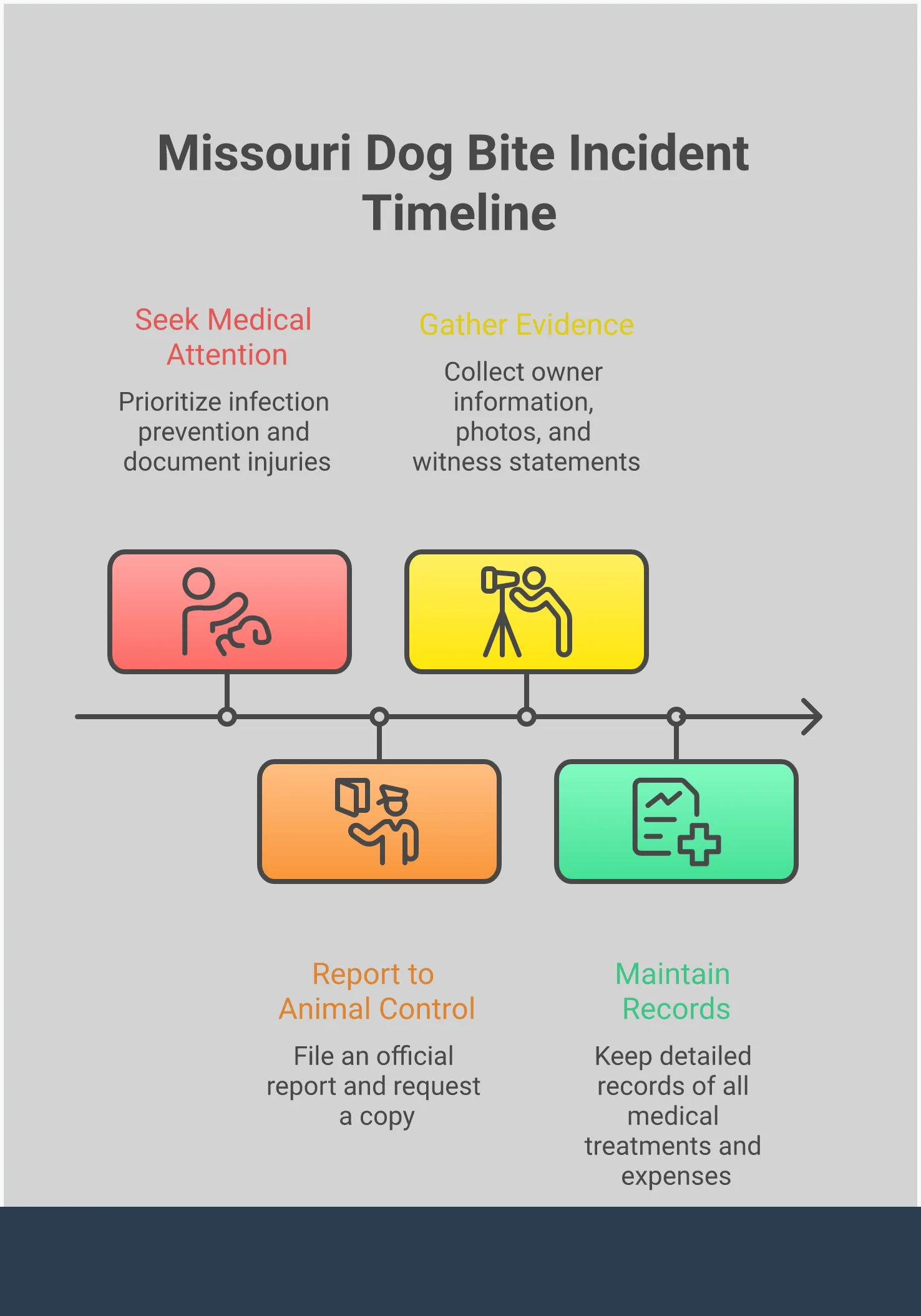
The moments after a dog-related injury are often chaotic, but the steps you take are crucial. First and foremost, seek medical attention immediately, even if the injury seems minor. Dog bites carry a high risk of infection. Next, if possible, get the dog owner’s name and contact information, along with contact details for any witnesses. Take photos of your injuries and the location where the incident happened. You should also report the incident to your local animal control agency. Once you’ve addressed your immediate health needs, it’s wise to discuss your case with an experienced attorney who can help you understand your legal options and protect your rights.
The Duty to Report Bites
It’s not just a good idea for a dog owner to report a bite—it’s a legal requirement. In Missouri, the owner of a dog that bites someone must report the incident to the local health department or animal control within 24 hours. This isn’t just a formality; it creates an official record that documents the attack, which is crucial for holding the owner accountable. This report serves as important evidence if you decide to pursue a personal injury claim to cover your medical expenses and other damages. Additionally, medical professionals who treat bite wounds are also typically required to file a report, adding another layer of documentation that can support your case and ensure the incident is properly recorded by authorities.
Can a Dog Owner Defend Against a Claim?
While Missouri’s strict liability rule holds dog owners accountable, it isn’t an automatic conviction. The law recognizes that not every bite incident is solely the owner’s fault. There are specific situations where an owner can present a defense, which could reduce or even eliminate their legal responsibility. These defenses almost always hinge on the actions and status of the person who was bitten. Was the person legally allowed to be where they were? Did they do something to antagonize the dog? Did their own carelessness contribute to the injury?
Understanding these potential defenses is vital for anyone involved in a dog bite incident. For victims, it underscores the need to have a clear, factual account of what happened. For owners, it provides a framework for a fair defense if the circumstances warrant it. The legal system aims to look at the complete picture to determine fault, not just the bite itself. It’s about fairness and context. If you’ve been bitten, knowing about these defenses can help you prepare for what the other side might argue. It’s important to remember that even with a strong case, the owner’s insurance company or legal team will likely investigate these possibilities. Let’s explore the three most common defenses raised in Missouri dog bite cases.
Defense #1: The Victim Was Trespassing
One of the strongest defenses for a dog owner is proving the injured person was trespassing. In simple terms, an owner might not be responsible if the person bitten was on their property unlawfully. Property owners have a right to protect their homes, and the law doesn’t extend the same protections to someone who isn’t supposed to be there. For example, if someone enters a fenced backyard without permission and is bitten, the owner has a strong argument that they aren’t liable for the injuries. This defense is based on the idea that the person created the dangerous situation by trespassing in the first place.
Clarification on the Trespassing Defense for Children
However, the situation becomes much more complex when the person trespassing is a child. Courts recognize that children, especially young ones, don’t always understand property boundaries or the potential danger a dog might pose. A friendly-looking dog, a colorful playset, or even just an open gate can be an irresistible invitation for a curious child. Because of this, the law often holds property owners to a higher standard. The focus may shift from whether the child was trespassing to whether the owner took reasonable precautions to secure their property, especially if they knew children lived or played nearby. These cases are incredibly nuanced, and the outcome often depends on the specific details of the incident, making it a key area where understanding the full scope of personal injury law is essential.
Defense #2: The Dog Was Provoked
Another key defense is provocation. If a person’s actions caused the dog to attack, the owner may not be held responsible. Provocation can include teasing, hitting, or cornering an animal, essentially forcing it to react defensively. Missouri law even specifies that an owner isn’t guilty of a crime if their dog bites someone who was committing a crime at the time of the incident. This defense acknowledges that dogs, like any animal, have a breaking point. If an individual’s aggressive or threatening behavior directly leads to a bite, it’s unfair to place all the blame on the owner and their pet.
What if Both Parties Share the Blame?
Sometimes, fault isn’t an all-or-nothing issue. Missouri law uses a system called “comparative fault,” which means responsibility for an injury can be shared. If your actions contributed to the dog attack, the compensation you can receive may be reduced. For example, if you ignored a clear “Beware of Dog” sign or continued to approach a growling, barking dog, a court might decide you were partially at fault for the incident. Under the principle of comparative fault, your potential compensation would be lowered by your percentage of blame. If you were found to be 20% at fault, your final award would be reduced by 20%.
Can Other Parties Be Held Liable?
When a dog bite happens, the focus is naturally on the owner. But what if other people had a role in allowing the incident to occur? In some cases, the responsibility can extend beyond the person holding the leash. This is especially true in situations involving rental properties or when a dog is under someone else’s care. The law recognizes that certain individuals have a duty to ensure safety, and if they fail to meet that obligation, they can be held accountable. It’s important to look at the full picture to identify everyone who may be legally responsible for your injuries.
Landlord Liability
In Missouri, a landlord’s responsibility can extend to injuries caused by a tenant’s dog. If a landlord knows a dog is dangerous—maybe they’ve received complaints or seen aggressive behavior themselves—and they don’t take reasonable action, they could be held liable. This falls under the umbrella of premises liability, which requires property owners to maintain a safe environment for tenants and visitors. Ignoring a known threat, like a dog with a history of aggression, means the landlord could share the blame for any harm that dog causes. It’s about ensuring the safety of everyone on the property.
What Compensation Can a Victim Receive?
After a dog bite, the path to recovery can feel overwhelming. Beyond the physical pain, you might be facing a pile of medical bills, time away from work, and significant emotional stress. The good news is that Missouri law allows you to seek financial compensation to cover these losses. This process isn’t about punishing the dog owner; it’s about making sure you have the resources you need to heal and move forward without bearing an unfair financial burden.
Successfully handling a personal injury claim means accounting for every way the incident has affected your life. This includes the obvious costs, like the emergency room visit, and the less visible ones, like future physical therapy or the wages you lost while recovering. Understanding what you’re entitled to is the first step toward getting the support you deserve. The goal is to restore your financial stability so you can focus completely on your well-being.
Who is Most at Risk for Dog Bites?
While any dog can bite under the right circumstances, some people are more vulnerable than others. Research consistently shows that young children and the elderly face the greatest risk. Children, particularly those between the ages of one and five, are often unable to recognize a dog’s warning signs and may interact with them in ways that trigger a defensive reaction. In fact, children account for nearly 60% of all dog bite victims who require medical treatment. Similarly, older adults can be more susceptible to serious injury from a bite or a fall caused by an aggressive dog. Studies on fatal dog attacks often highlight these two groups as the most frequent victims. While breed is a complex factor, some studies suggest certain breeds may be linked to more severe injuries, underscoring the importance of supervision around all dogs, regardless of their history.
Compensation for Your Medical Expenses
Medical expenses are often the most immediate and significant financial impact of a dog bite. Compensation can cover all costs related to your treatment, both now and in the future. This includes everything from the initial ambulance ride and emergency room care to any necessary surgeries, stitches, or prescription medications. It also extends to follow-up care, such as physical therapy to restore movement, reconstructive surgery for scarring, or counseling to address any trauma from the attack. It’s important to keep detailed records of every bill and treatment plan to ensure all your medical needs are accounted for.
What About Lost Wages, Pain, and Suffering?
A serious injury can easily keep you from working. You can seek compensation for any lost income and diminished earning capacity if your injuries affect your ability to do your job long-term. Beyond the purely financial losses, the law also recognizes the physical and emotional toll of the incident. This is often referred to as “pain and suffering.” It provides compensation for the physical pain of the injury, emotional distress, anxiety, scarring or disfigurement, and the overall impact on your quality of life. These damages acknowledge that the harm you experienced goes beyond what can be calculated on a receipt.
Damages for Disfigurement
Sometimes, the most lasting injuries from a dog bite aren’t the ones that heal completely. A scar, especially on a visible area like the face or hands, serves as a permanent reminder of the attack. The legal system recognizes that this kind of harm goes far beyond the initial pain. Compensation for disfigurement addresses the profound emotional and psychological toll of living with a permanent physical change. This is a distinct and serious component of your claim, acknowledging that a visible scar can affect your self-esteem, social interactions, and overall quality of life. Because these damages aren’t tied to a specific bill, an experienced attorney can help ensure the full, long-term consequences of a disfiguring injury are properly valued when you seek compensation.
How Long Do You Have to File a Claim?
In Missouri, there is a strict deadline for filing a personal injury lawsuit. This is known as the statute of limitations. For a dog bite incident, you have five years from the date the injury occurred to file your claim. While that might sound like a long time, it’s crucial to act promptly. Gathering evidence, documenting injuries, and building a strong case takes time. If you miss this five-year window, the court will likely dismiss your case, and you will lose your right to seek compensation. You can review the specific Missouri law for more details.
Statute of Limitations for Children
The five-year deadline has an important exception when the victim is a child. For minors, the statute of limitations doesn’t start until their 21st birthday. This means a child who is bitten by a dog has until they turn 21 to file a claim, providing them with crucial extra time. This legal protection acknowledges that children may not fully understand their rights or the long-term impact of their injuries, such as scarring or emotional trauma, until they are older. It ensures a child’s opportunity to seek justice isn’t lost due to their age at the time of the incident. While this extended timeline offers flexibility, it’s still wise for parents or guardians to consult with an attorney sooner rather than later to preserve evidence and understand their options.
Does Insurance Cover Dog Bites?
In many cases, a dog owner’s homeowner’s or renter’s insurance policy provides coverage for dog bite incidents. This is often the primary source for recovering compensation. However, it’s important to remember that insurance companies are businesses focused on their bottom line. They may try to minimize your claim’s value or argue that the policy doesn’t apply to the situation. An adjuster might pressure you into accepting a quick, low settlement. Understanding your rights is key to ensuring you receive a fair offer that covers all of your damages. If you have questions about an insurance company’s offer, it’s a good idea to discuss your case with a legal professional.
A Dog Owner’s Guide to Reducing Liability
As a dog owner, you want to do everything you can to keep your pet and your community safe. Understanding your responsibilities is the first step toward preventing incidents and protecting yourself from legal trouble. Taking proactive measures not only reduces your liability but also ensures your dog can be a happy, well-adjusted member of your family. Here are some key areas to focus on to be a responsible dog owner in Missouri.
Practical Safety Tips Every Owner Should Know
Missouri law places a strong responsibility on dog owners, so you can’t simply claim you didn’t know your dog might bite. The best approach is always prevention. Simple, practical steps can make a huge difference. Always supervise your dog, especially around children or unfamiliar guests. A secure fence is essential for your yard, and you should regularly check for any potential escape routes. Learning to read your dog’s body language can also help you recognize signs of stress or fear, allowing you to remove them from a situation before it escalates. These small actions are fundamental to responsible ownership and can prevent a serious personal injury incident.
Following Missouri’s Leash and Restraint Laws
While Missouri doesn’t have a single statewide leash law, state law does require you to keep your dog under control to prevent injury to people or property. This is where things can get tricky, as specific leash and restraint rules vary widely by city and county. For example, Springfield may have different ordinances than Joplin. It is your responsibility to research and follow your local laws. A quick search on your city or county’s website is usually the best way to find the specific regulations for your area. Adhering to these local rules is a critical part of reducing your liability if an incident occurs.
Why Training, Socialization, and Insurance Matter
A well-behaved dog is a safe dog. Investing in professional training and socializing your puppy from a young age can help prevent bites and other aggressive behaviors. Proper socialization teaches your dog how to interact calmly with new people, animals, and environments. Beyond behavior management, it’s also wise to review your homeowner’s or renter’s insurance policy. Most policies provide liability coverage for dog bites, but some may have exclusions for certain breeds or may not offer enough coverage. Confirming your insurance coverage can provide financial protection and peace of mind, ensuring you’re prepared for the unexpected.
When Can a Dog Bite Lead to Criminal Charges?
It’s important to understand that a dog bite can lead to more than just a civil lawsuit. In Missouri, you could face criminal charges if your dog has a history of aggression. If your dog has previously bitten someone without provocation and then bites another person, you could be charged with a misdemeanor or even a felony, depending on the severity of the new injuries. This is especially true if you were aware of your dog’s dangerous tendencies. These situations are serious and highlight the importance of managing a dog with a known bite history. If you find yourself in this position, seeking legal guidance is essential.
Missouri’s Criminal Charges Explained
In Missouri, a dog bite can escalate from a civil matter to a criminal one, particularly if the dog has a known history of aggression. If your dog has bitten someone before without being provoked and then bites another person, you could face criminal charges. The severity of these charges, which can range from a misdemeanor to a felony, often depends on how serious the new injuries are. The law focuses on whether you, the owner, were aware of your dog’s dangerous tendencies and failed to prevent another attack. This legal distinction is critical because it shifts the focus from simple liability to potential criminal negligence, carrying much more severe consequences for the owner.
Consequences for the Dog
When a dog bite incident is particularly severe, the consequences extend directly to the animal involved. According to Missouri law, if a dog with a previous bite history attacks again, it must be impounded. The same rule applies even to a first-time incident if the attack results in serious injury or a person’s death. In these specific situations, animal control or the county sheriff is required to immediately take custody of the dog. This action is not optional; it is a mandatory step outlined in the state statutes to ensure public safety while the incident is investigated and legal proceedings unfold.
Mandatory Impoundment and Euthanasia
Once a dog is impounded under these circumstances, a strict timeline begins. The animal will be held for ten business days after the owner receives written notification of the situation. This period gives the owner a window to understand their rights and consider their options. However, if no action is taken to legally challenge the decision, the law mandates that the dog will be euthanized once the ten-day period expires. This is undoubtedly the most difficult outcome for any pet owner to face, which makes understanding the legal process and its deadlines absolutely critical from the very start.
The Owner’s Right to Appeal
If your dog has been impounded and is facing euthanasia, you have the right to challenge the decision. An owner can file a formal appeal with the circuit court to contest the order to seize and destroy their dog. It is crucial to file this appeal correctly and within the designated time frame. Once a proper appeal is filed, the law provides a safeguard: the dog cannot be euthanized while the appeal is pending. This stay gives you and your legal counsel time to present your case. If you find yourself in this challenging situation, it is important to seek legal advice immediately to protect your rights and explore every available option.
Related Articles
- Bitten by a Dog in Missouri? A Comprehensive Guide to Handling Dog Bite Cases – The Law Office of Chad G. Mann, LLC
- Dog Bite in Missouri? A Step-by-Step Guide
- Dog Bite Law – The Law Office of Chad G. Mann, LLC
- Your Guide to Missouri Animal Control Laws
If you need experienced legal representation, our Springfield dog bite attorney can help protect your rights and fight for the compensation you deserve. Call (417) 842-8679 for a free consultation.
For more information, read our guide on hiring a dog bite lawyer.
Frequently Asked Questions
What are the most important first steps to take after a dog bite? Your first priority should always be your health. Seek medical attention right away, even for what seems like a minor wound, to prevent infection. After you’ve been treated, try to gather the dog owner’s name and contact information, as well as the names of any witnesses. It’s also helpful to take photos of your injuries and the location where the incident occurred. Finally, report the bite to your local animal control agency to create an official record.
Does the dog’s owner get a “free pass” if their dog has never been aggressive before? No, they do not. Missouri is a “strict liability” state, which means the old “one-bite rule” does not apply here. An owner is held responsible for a bite even if their dog has a perfectly clean history with no prior aggression. The law focuses on the fact that the bite happened, not on whether the owner knew their dog might be dangerous.
What if a dog injured me without actually biting me, like by jumping on me? While Missouri’s strict liability law is specific to bites, you can still pursue a claim for other types of injuries. If a dog knocks you down and causes you to break a bone, for example, you may have a case based on general negligence. This means you would need to show that the owner was careless in controlling their animal, such as by violating a local leash law, which directly led to your injury.
Is it true that my own actions could affect my claim? Yes, your actions can play a role. Missouri uses a system of “comparative fault,” which means responsibility can be shared. If it’s determined that you were partially at fault for the incident, for example by provoking the dog or ignoring clear warning signs, your potential compensation could be reduced. The court would assign a percentage of fault to you, and your final award would be lowered by that amount.
Who actually pays for my injuries, the dog owner or their insurance? In most situations, compensation for a dog bite claim is paid by the owner’s homeowner’s or renter’s insurance policy. These policies typically include liability coverage for incidents like this. This means you are usually dealing with an insurance company, not seeking money directly from the owner’s personal finances.
Have you been injured? Take our free injury questionnaire to help us understand your case, or call (417) 842-8679 for a free consultation today.