


Think a dog gets a “free bite” in Missouri? That’s a dangerous myth. Many people believe in the “one-bite rule,” but our state law is much clearer. Missouri follows a “strict liability” rule, which means the owner is responsible for bite injuries—period. It doesn’t matter if the dog has a perfect history. This is a critical protection for you, as it removes the heavy burden of proving the owner was negligent. Knowing your rights is the first step. We’ll break down the facts and explain the specific dog bite legal options available to you right here in Missouri.
Key Takeaways
- Missouri’s “strict liability” rule protects you: A dog’s owner is typically responsible for bite injuries, regardless of the dog’s past behavior. To build a strong case, you must show you were on the property lawfully and did not provoke the dog.
- Take immediate, specific steps after a bite: Prioritize your health by getting medical care, document everything with photos and written notes, and file an official report with the authorities. These actions are crucial for your recovery and your claim.
- You can be compensated for all your losses: A successful claim can cover medical bills, lost income, and the physical and emotional pain you’ve experienced. Keep in mind that Missouri has a five-year deadline to file, so don’t wait to explore your options.
Missouri Dog Bite Laws: What You Need to Know
If a dog has bitten you in Missouri, you’re likely wondering what your rights are. The good news is that our state has specific laws designed to protect victims. Unlike in some other states, Missouri law often holds dog owners accountable for the harm their pets cause. Understanding these rules is the first step toward getting the compensation you deserve for your injuries. Let’s walk through the key parts of Missouri’s dog bite laws so you know what to expect.
How Common Are Dog Bites? A National Perspective
If you’ve been bitten by a dog, it’s easy to feel isolated, but you are far from alone. Dog bites are a significant public health concern across the country. In fact, about 4.5 million dog bites happen in the U.S. every year, with many requiring medical attention. This statistic highlights just how frequently these incidents occur, turning a normal day into a traumatic and painful experience. Understanding the prevalence of dog bites can help you recognize that your situation is serious and that there are established legal frameworks to address it. It also underscores the importance of knowing your rights and the specific laws in your state, as they can vary quite a bit.
Understanding Different State Dog Bite Laws
When it comes to dog bite liability, the law isn’t the same everywhere. Each state has its own approach to determining who is responsible when a dog injures someone. These laws generally fall into three main categories: strict liability, the “one-bite” rule, or a mix of the two. Knowing which category your state falls into is essential for understanding your legal options. Missouri’s laws are designed to protect victims, but it’s helpful to see how they compare to other states. This context can clarify why your case might be handled differently than one in a neighboring state and what you need to prove to be successful.
Strict Liability States
Missouri is a strict liability state, which is great news for bite victims. In these states, dog owners are usually held responsible for any injuries their dog causes, even if the dog has never shown aggression before. This means you don’t have to prove the owner was negligent or knew their dog was dangerous. As long as you were lawfully on the property and did not provoke the animal, the owner is typically liable for your injuries. This straightforward approach simplifies the legal process for victims, allowing them to focus on recovery while holding owners accountable for their pets’ actions.
“One-Bite” Rule States
In contrast to Missouri’s laws, some states follow what is known as the “one-bite” rule. This rule essentially gives a dog owner a pass for the first time their dog bites someone, unless there’s another reason to hold them accountable. Under this doctrine, a dog owner is legally responsible for an injury only if they knew, or reasonably should have known, that their dog was likely to cause that kind of harm. This can make it much more difficult for a victim to receive compensation, as they have the added burden of proving the owner’s prior knowledge of the dog’s aggressive tendencies.
Mixed-Rule States
To make things even more complex, some states have adopted a hybrid approach. These “mixed-rule” states combine elements of both strict liability and the one-bite rule. For example, a state might apply strict liability for medical costs but require proof of the owner’s negligence to award damages for other losses, like pain and suffering. The laws in these states can be particularly intricate, as liability may depend on specific circumstances, such as where the bite occurred or the type of injury sustained. This variability is why consulting with a legal professional who understands local statutes is so important.
What Does “Strict Liability” Mean for You?
Missouri follows what’s known as a “strict liability” rule for dog bites. In simple terms, this means a dog’s owner is automatically responsible if their dog bites someone. It doesn’t matter if the dog had never shown aggression before or if the owner had no reason to believe it was dangerous. You don’t have to prove the owner was careless or negligent. If the dog bit you, the owner is liable for the damages. This is a crucial aspect of Missouri’s personal injury law because it removes a significant burden of proof from you, the victim, allowing you to focus on your recovery.
Were You Legally on the Property?
While strict liability is a strong protection, there are a couple of conditions you must meet. First, you must have been on the property lawfully when the bite occurred. This includes being in a public place, like a park or sidewalk, or on private property as an invited guest, a customer, or for a professional reason (like delivering mail). Second, you must not have provoked the dog. Provocation means you did something to intentionally antagonize or incite the dog, causing it to attack. If the owner can prove you were trespassing or that you provoked the dog, it could be used as a defense against your claim.
Beyond the Bite: What Other Injuries Are Covered?
It’s important to know that the strict liability rule specifically applies to bites. What if a large dog jumps on you and knocks you down, causing a broken arm? In cases involving non-bite injuries, the rules change. For these situations, you generally need to prove the owner was negligent. This means showing the owner failed to use reasonable care to control their dog, and that failure led directly to your injury. For example, maybe they let their dog run loose in an unfenced yard near a busy street. If your situation involves a non-bite injury, it can be more complex, so it’s a good idea to discuss the details with an attorney.
What if Strict Liability Doesn’t Apply? Proving Negligence
When an injury isn’t from a bite—say, a large dog jumps on you and causes you to fall—the legal approach shifts. In these cases, strict liability doesn’t apply. Instead, you have to prove the owner was negligent. This means you need to show that the owner didn’t take reasonable steps to control their dog, and their failure to do so is what caused your injury. For instance, if an owner consistently lets their powerful dog run off-leash in a public park and it tackles someone, that could be considered negligence. This puts the burden of proof on you, the victim, which can make the case more challenging than a straightforward bite claim. These types of personal injury claims require careful evidence gathering to be successful.
How to Show an Owner Knew Their Dog Was Dangerous
To build a strong negligence case, you often need to show the owner knew, or should have known, that their dog could be dangerous. Evidence is key here. You can establish the owner’s awareness through a few different avenues. Think about any past incidents—has the dog been aggressive or bitten someone before? Documented reports or even informal complaints can be powerful. Sometimes, the owner’s own words can be used as evidence if they’ve admitted their dog has aggressive tendencies. Witnesses are also incredibly helpful. Neighbors, friends, or even the mail carrier might have seen the dog behave aggressively and can provide testimony to establish a pattern of dangerous behavior. Proving what an owner knew is a critical step in handling dog bite cases where negligence is a factor.
First Steps to Take After a Dog Bite
A dog bite is a frightening and painful experience. In the moments after it happens, it’s easy to feel overwhelmed and unsure of what to do. Taking a few specific, deliberate steps right away can protect your health and preserve your rights. Think of this as your immediate action plan. Following these steps can make a significant difference if you decide to pursue a personal injury claim to cover your medical costs and other damages. Here’s what you need to focus on.
Seek Immediate Medical Attention
Your first priority is your health. You should seek medical attention right away, even if the bite seems minor. Puncture wounds can be deeper than they look and carry a high risk of infection, including tetanus and rabies. A doctor can properly clean the wound, determine if you need stitches or antibiotics, and create an official record of your injuries. This medical report is one of the most important pieces of evidence in a dog bite case. It directly links the incident to your physical harm and documents the cost of your treatment, which is essential for your claim.
Gather Key Evidence at the Scene
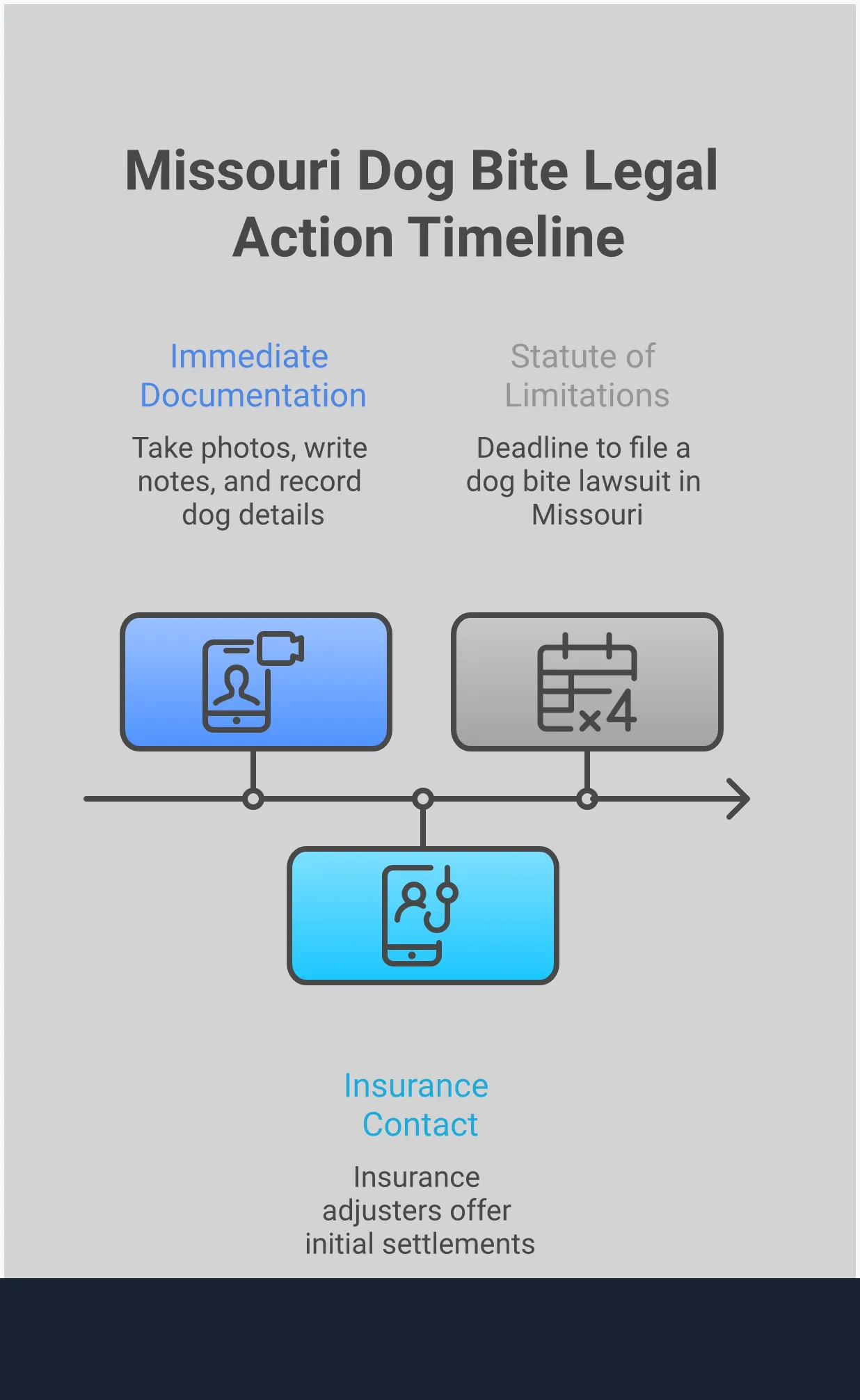
Once you are safe, try to document everything you can. Use your phone to take clear photos of your injuries before and after they are treated. You should also take pictures of the location where the bite happened, capturing details like a broken fence, the dog itself if possible, and any torn clothing. As soon as you can, write down everything you remember about the incident. Note the date, time, location, and what happened leading up to the bite. This detailed account will be incredibly valuable later, as memories can fade over time. This evidence helps build a strong foundation for your case.
Get the Owner’s Information
After a bite, getting the owner’s information is a critical step. Calmly ask for their full name, phone number, and address. It’s also smart to request their homeowner’s or renter’s insurance details, as this is often how a dog bite claim is paid. If the owner is uncooperative or becomes hostile, don’t escalate the situation. Your safety is the priority. Simply step away and call local animal control or the police to file a report. They can ensure the owner provides their details. While you’re at the scene, also try to collect the names and phone numbers of anyone who witnessed the incident. Their accounts can provide powerful support for your personal injury case.
Report the Bite to the Authorities
Filing an official report is a critical step. You should report the dog bite to your local animal control agency or the police department. This creates an official record of the event, which is crucial for legal purposes. It also serves an important public safety function. The authorities will likely investigate, check the dog’s vaccination records, and ensure it doesn’t pose a threat to others in the community. Having an official report from an authority figure adds a layer of credibility to your story and formally documents the facts of the incident, making it harder for the dog’s owner to dispute what happened.
Identify and Speak with Witnesses
If anyone saw the attack, their testimony can be a powerful part of your case. Politely ask for the names and contact information of any witnesses. A statement from a neutral third party can confirm your version of events and provide details you may have missed in the chaos of the moment. If they are willing, ask them to jot down a quick summary of what they saw. Even if they only saw the moments just before or after the bite, their perspective is valuable. Don’t hesitate to ask for help; people are often willing to assist someone who has just been injured. After you’ve taken these initial steps, you can contact our office to discuss your legal options.
Exploring Your Dog Bite Legal Options
After the initial shock of a dog bite wears off, you’re left with medical bills, pain, and a lot of questions. Understanding your next steps is key to protecting your rights and getting the compensation you need to recover. In Missouri, the law provides a clear path for victims, but it involves making some important decisions about how to proceed. Your main options involve filing a claim, negotiating with insurance companies, and deciding whether to settle the case or take it to court. Each step has its own set of challenges, but you don’t have to face them alone.
Starting a Personal Injury Claim
In Missouri, dog owners are held responsible for injuries their pets cause. The state follows a “strict liability” rule, which is good news for victims. This means an owner can be held accountable even if their dog has never been aggressive before. You don’t have to prove the owner was negligent or knew their dog was dangerous. To build a successful personal injury claim, you generally need to show three things: you were bitten by the dog, you were on the property legally (not trespassing), and you did not provoke the animal. This straightforward approach helps ensure that victims can seek justice without facing an uphill battle over the dog’s history.
Communicating with Insurance Companies
Soon after the incident, you will likely hear from the dog owner’s insurance company. It’s important to be cautious in these conversations. The insurance adjuster’s goal is to resolve the claim for the lowest amount possible. They might offer you a quick settlement that seems tempting, but it may not cover the full scope of your medical treatments, lost wages, and future needs. Accepting an early offer usually means you forfeit your right to ask for more compensation later. Having an experienced attorney handle these communications ensures your best interests are represented and that any settlement offer fairly reflects what you’ve been through.
Settlement vs. Lawsuit: What to Expect
Most dog bite cases are resolved through a settlement, which is a formal agreement negotiated between you and the dog owner’s insurance company. This avoids a lengthy court battle. However, if the insurance company refuses to offer a fair amount, filing a lawsuit may be necessary. In Missouri, you have five years from the date of the injury to file a lawsuit, which is known as the statute of limitations. While many cases settle for significant amounts, the final figure depends entirely on the specifics of your situation. To understand what your case might be worth and decide on the best path forward, it’s wise to get a professional legal opinion.
Potential Consequences for the Dog and Owner
When you’re recovering from a dog bite, your primary focus is on your health and well-being. It’s also natural to wonder what happens next for the dog and its owner. Many victims worry about the animal’s fate and are unsure if the owner will face any legal repercussions beyond a civil claim. The consequences can range from financial liability for your injuries to, in some rare cases, criminal charges for the owner and serious outcomes for the dog. Understanding these possibilities can provide clarity as you move forward with your own recovery process.
Could the Owner Face Criminal Charges?
Most dog bite cases are handled in civil court, where the goal is to compensate you for your injuries. However, in some severe situations, a dog owner can face criminal charges. This typically happens when an owner shows extreme negligence, such as knowingly keeping a dangerous dog without proper restraints, leading to a serious attack. If an owner’s reckless disregard for public safety results in severe injury or death, they could face misdemeanor or even felony charges. It’s important to understand that a criminal case is separate from your personal injury claim. The state pursues criminal charges to punish wrongdoing, while your civil claim is focused on securing the financial resources you need to recover.
What Happens to the Dog After a Bite?
Many people fear that a dog will be automatically euthanized after a bite, but this is rarely the case for a first-time incident. After a bite is reported, animal control will investigate. The dog is typically placed under a quarantine period, often at the owner’s home, to ensure it doesn’t have rabies. If a dog has a history of aggression or the attack was particularly severe, a court may intervene. A judge could order the owner to take specific safety measures, such as keeping the dog muzzled in public or securely confined. In the most extreme cases involving repeated, unprovoked attacks, a court may order that the dog be euthanized to protect public safety. The owner has a right to be heard in these proceedings. If you have questions about this process, feel free to contact our office for guidance.
Common Defenses Used by Dog Owners
Even though Missouri law holds dog owners strictly liable for bites, it doesn’t mean they are without a defense. When you file a claim, the dog owner’s attorney or insurance company will look for ways to reduce their client’s responsibility for your injuries. Understanding these common defense strategies is key to preparing a strong case and knowing what to expect.
An owner might argue that your actions contributed to the incident or that you weren’t legally supposed to be on the property where the bite occurred. These arguments don’t necessarily excuse the owner completely, but they can complicate the legal process. Knowing how to counter these claims is crucial, and it’s an area where an experienced attorney can provide significant help. Let’s look at the three most common defenses you might encounter.
Defense #1: You Provoked the Dog
One of the most frequent arguments a dog owner will make is that you provoked the dog. This doesn’t always mean you were intentionally teasing or harming the animal. Provocation can be unintentional. For example, a child who accidentally falls on a sleeping dog or startles it by running past too closely could be seen as provoking the animal. The owner’s defense would argue that the dog only reacted because it was scared or felt threatened by your actions. If this defense is successful, it can reduce the owner’s liability by suggesting you share some of the blame for the incident.
Defense #2: You Were Trespassing
Your legal right to be on the property where the bite happened is a critical factor in your case. Missouri’s strict liability law is designed to protect people who are on public property or lawfully on private property. If you were trespassing, meaning you were on someone’s property without permission, the dog owner can use this as a powerful defense. An owner is not typically held to the same standard of responsibility for injuries to a trespasser. This is why establishing your legal right to be at the location of the incident is one of the first steps in building your claim.
Defense #3: You Were Partially at Fault
Missouri operates under a “pure comparative fault” rule. This legal concept means that responsibility for an incident can be shared between you and the dog owner. A court might determine that while the owner was mostly at fault, your actions also played a part. For instance, if you ignored a “Beware of Dog” sign and approached the animal anyway, you could be found partially responsible. Your total compensation would then be reduced by your percentage of fault. If you are found to be 20% at fault, your final award is reduced by 20%. This defense can significantly impact the outcome of a personal injury claim.
Defense #4: You Assumed the Risk
Another defense an owner might use is that you “assumed the risk” of being bitten. This argument suggests you were aware of a clear and obvious danger but chose to interact with the dog anyway. For example, if you disregarded a prominent “Beware of Dog” sign to enter a yard, or if you decided to pet a dog that was actively growling and baring its teeth, the owner could claim you voluntarily accepted the risk of what might happen. The core of this defense is that you understood the potential for harm but proceeded regardless. Similar to comparative fault, this defense aims to shift some of the responsibility for the injury onto you. If an owner can successfully argue that you assumed the risk, it can complicate your personal injury claim and potentially reduce the amount of compensation you receive.
What Compensation Can You Claim?
After a dog bite, the focus is rightly on your physical recovery. But the financial and emotional fallout can be just as challenging. In a personal injury claim, the compensation you can receive is legally referred to as “damages.” The goal is to cover all the losses you’ve suffered because of the incident, helping you get back on your feet without the added burden of unexpected costs. These damages are typically broken down into two main categories.
The first is economic damages. Think of these as the tangible, out-of-pocket expenses that have a clear price tag. This includes every medical bill, from the initial emergency room visit to any ongoing physical therapy. It also covers the income you lost from being unable to work during your recovery. These are the costs that can be proven with receipts, invoices, and pay stubs.
The second category is non-economic damages. These are more personal and address the human cost of the injury. This compensation is for your physical pain, emotional distress, and the overall impact the attack has had on your quality of life. While you can’t put a receipt on trauma or scarring, these losses are very real. An experienced attorney can help you value these damages to ensure your settlement reflects the full extent of your suffering. Our firm handles a variety of personal injury cases and can help you identify all potential areas for compensation.
Medical Bills and Future Care
Medical expenses after a dog bite can add up quickly and often go beyond the initial treatment. Compensation for medical bills is meant to cover the full scope of your care, both now and in the future. This includes costs for the ambulance ride, emergency room care, stitches or surgery, and any necessary medications like antibiotics or rabies shots.
It also extends to follow-up care, such as appointments with specialists, physical therapy to regain mobility, or counseling to address any psychological trauma from the attack. It is essential to keep detailed records of every medical visit, procedure, and prescription. These documents serve as critical evidence to ensure you are fully reimbursed for every dollar you’ve had to spend on your recovery.
Lost Wages and Earning Capacity
A serious injury can easily keep you from doing your job, leading to a sudden loss of income right when you need it most. If a dog bite forces you to miss work, you are entitled to seek compensation for those lost wages. This covers the salary, hourly pay, and any commissions or bonuses you would have earned during your time away.
Furthermore, if the injury results in a long-term or permanent disability that affects your ability to perform your job or advance in your career, you may also be compensated for loss of future earning capacity. To support your claim, be sure to document the time you missed and gather proof of your income, such as recent pay stubs or a letter from your employer.
Pain, Suffering, and Emotional Distress
Some of the most significant impacts of a dog bite aren’t financial. The law recognizes this by allowing you to seek compensation for pain and suffering. This covers the physical pain of the injury itself, as well as the emotional and psychological trauma that follows. This can include anxiety, depression, a new fear of dogs, and the distress caused by permanent scarring or disfigurement.
While every case is different, these damages are a critical part of a fair settlement. Many factors affect the final amount, including the severity of your injuries and their long-term impact on your life. The average payment for a dog bite claim is significant, but your specific situation will determine the appropriate value for what you have endured.
Punitive Damages
In some particularly severe cases, you may be able to claim what are known as punitive damages. Unlike the compensation we’ve discussed for your medical bills or pain and suffering, these damages aren’t about making you whole. Instead, their purpose is to punish the dog owner for exceptionally reckless behavior and to deter others from acting the same way. These are not awarded lightly. To receive them, you typically have to show the owner knew their dog was dangerous and consciously disregarded the risk to others—for example, if they knew their dog had attacked people before but still let it roam the neighborhood freely. While most personal injury cases don’t involve punitive damages, they are a powerful tool the law uses to hold the most irresponsible owners accountable for the harm they cause.
Is There a Deadline to File a Dog Bite Lawsuit?
After a dog bite, your first priority is healing, not thinking about legal deadlines. But it’s important to know that every state has a time limit for filing a personal injury lawsuit, often called the statute of limitations. Think of it as a legal countdown clock that starts the moment the injury happens. This rule exists to make sure claims are filed while evidence is still available and memories are fresh. If you miss this deadline, you unfortunately lose your right to seek compensation through the court system, no matter how strong your case might be. For dog bite victims in Missouri, understanding this timeline is a critical first step in protecting your rights.
Understanding Missouri’s Statute of Limitations
In Missouri, the law gives you a specific window to take legal action. You have five years from the date of the dog bite to file a claim. If your injuries weren’t immediately obvious, the clock typically starts on the date you discovered them. This five-year period is defined by Missouri’s statute of limitations for personal injury cases. While five years might sound like a long time, building a strong case requires careful preparation. It’s always better to start the process sooner rather than later to ensure all details are accurately captured and all legal requirements are met well before the deadline approaches.
Why Acting Sooner Is Always Better
Waiting to file your claim can seriously weaken your case, even if you’re still within the five-year window. As time passes, crucial evidence can disappear. Witnesses might move away or their memories of the event could fade, making it harder to prove exactly what happened. Medical records need to be collected, and the full extent of your injuries and treatment costs must be documented. Acting quickly allows your attorney to preserve evidence, speak with witnesses while their memories are clear, and build the strongest possible argument on your behalf. By taking prompt action, you give yourself the best opportunity to secure the compensation you need to recover.
Missouri Dog Bite Laws: Myth vs. Fact
When you’re dealing with the shock and pain of a dog bite, the last thing you need is confusing or incorrect information about your rights. Unfortunately, there are many misconceptions floating around about Missouri’s dog bite laws. Getting clear on the facts is the first step toward protecting yourself and getting the compensation you deserve. Let’s walk through some of the most common myths and set the record straight so you can feel more confident about your next steps.
Myth: The “One-Bite Rule” Applies in Missouri
Many people believe you can only hold a dog owner responsible if you can prove they knew their dog had aggressive tendencies. In Missouri, that’s simply not the case. Our state follows a “strict liability” rule for dog bites. This means the owner is automatically responsible for any injuries their dog causes with a bite, regardless of the dog’s history. You don’t have to prove the owner was negligent or knew the dog might be dangerous. This law is in place to protect victims and simplifies the process of seeking compensation for your injuries.
What is the “One-Bite Rule”?
The “one-bite rule” is a legal principle used in some states that essentially gives a dog owner a pass for their dog’s first bite. Under this rule, an owner is only held liable for injuries if they already knew, or should have known, that their dog had the potential to be dangerous. This means the victim would have to prove the dog had a history of aggression, like a previous bite or a pattern of lunging at people. This creates a significant hurdle for the injured person, as finding evidence of a dog’s past behavior can be very difficult. Thankfully, Missouri’s strict liability law removes this burden, focusing on the fact that the bite happened, not on the dog’s history.
Myth: Only Bites Are Covered by the Law
It’s important to know that Missouri’s strict liability law applies specifically to bites. If a dog injures you in another way, like by jumping on you and knocking you down, the case is handled differently. For non-bite injuries, you may need to prove the owner was negligent, meaning they failed to take reasonable care to prevent the injury. In these situations, the owner’s knowledge of the dog’s behavior could become a key factor. Understanding these distinctions is crucial, as it affects the legal strategy for your personal injury claim.
Myth: You’re a Trespasser Without an Invitation
While you don’t need a formal invitation, your legal right to be on the property where the bite occurred is a critical detail. The strict liability statute protects people who are on public property or lawfully on private property, like guests or service workers. However, the law generally does not apply if you were trespassing. This distinction is a common defense for dog owners. It’s also worth noting that the law can be more complicated when a child is injured while trespassing. If you’re unsure about your specific situation, it’s a good idea to get in touch with an attorney.
When Should You Call a Dog Bite Attorney?
After a dog bite, you might wonder if you really need a lawyer. While some minor incidents can be resolved directly, many situations benefit from professional legal guidance. Knowing when to reach out can make a significant difference in the outcome of your case and your ability to recover fully. An attorney can help you understand your rights, handle communications with insurance companies, and ensure you receive the compensation you deserve for your injuries, lost wages, and emotional distress.
Signs You Need Professional Legal Help
Not every dog bite case is straightforward. If your situation involves serious injuries, high medical bills, or significant time off work, it’s a good idea to seek legal advice. Your case can also become complicated if your own actions may have contributed to the incident. For example, if you provoked the dog or ignored clear warning signs, the dog owner’s insurance company might argue that you were partially at fault. In Missouri, this could reduce the amount of compensation you receive. An attorney can help assess these details and build a strong case on your behalf, protecting your right to fair compensation.
How an Attorney Can Make a Difference
Trying to handle a dog bite claim alone can be overwhelming, especially when you’re focused on healing. Insurance adjusters may try to offer a quick, low settlement that doesn’t cover all of your expenses. An experienced personal injury lawyer acts as your advocate. They can help you understand your rights, gather the necessary evidence, and negotiate with the insurance company to secure a fair settlement. Having a professional on your side ensures that your best interests are represented throughout the process. This allows you to concentrate on your recovery without the added stress of legal battles and complex paperwork.
Choosing the Right Attorney for Your Case
Recovering from a dog bite involves more than just physical healing; the emotional trauma can be just as significant. It’s important to address these emotional aspects as part of your recovery. While a lawyer handles the legal side of things, you might also find comfort in other resources. Some people find that support groups or community resources for dog bite victims provide guidance and reassurance during a difficult time. When you’re ready to discuss your legal options, our team is here to provide a compassionate and comprehensive consultation. You can contact us to get the support you need.
Related Articles
- Bitten by a Dog in Missouri? A Comprehensive Guide to Handling Dog Bite Cases – The Law Office of Chad G. Mann, LLC
- Dog Bite in Missouri? A Step-by-Step Guide
- Dog Bite Law – The Law Office of Chad G. Mann, LLC
- Your Guide to Missouri Animal Control Laws
If you need experienced legal representation, our dog bite injury lawyer can help protect your rights and fight for the compensation you deserve. Call (417) 842-8679 for a free consultation.
Frequently Asked Questions
Does it matter if the dog has never been aggressive before? In Missouri, a dog’s past behavior doesn’t change the owner’s responsibility for a bite. Our state’s strict liability law means that if a dog bites you, the owner is held accountable for the damages. You don’t need to prove the owner knew the dog was dangerous, which makes the legal process much more direct for victims.
What happens if the dog owner doesn’t have homeowner’s insurance? This can make a case more challenging, but it doesn’t mean you are out of options. While homeowner’s or renter’s insurance is the most common source for payment, you may still be able to file a claim directly against the dog owner’s personal assets. An attorney can help you investigate the owner’s financial situation to determine the best way to pursue the compensation you need.
Do I have to go to court to get compensation? Not necessarily. The vast majority of dog bite cases are resolved through a negotiated settlement with the owner’s insurance company. Going to court is typically a last resort used only when the insurance provider refuses to offer a fair settlement that covers your medical bills, lost income, and other damages. The goal is always to reach a just resolution as efficiently as possible.
What if my child was the one who was bitten? Cases involving children are handled with special care. The law recognizes that children may not understand the risks of interacting with an unfamiliar animal. Because of this, defenses like provocation are often harder for a dog owner to prove when a child is the victim. The focus remains on securing compensation for the child’s injuries, future medical needs like scar revision, and emotional trauma.
How is the amount for “pain and suffering” decided? There isn’t a simple calculator for pain and suffering, as it’s unique to each person’s experience. The value is determined by looking at several factors, including the severity of your physical injuries, the extent of any permanent scarring or disfigurement, and the emotional impact of the attack. We consider how the incident has affected your daily life and overall well-being to arrive at a figure that fairly reflects what you have endured.
Have you been injured? Take our free injury questionnaire to help us understand your case, or call (417) 842-8679 for a free consultation today.