


Many parents entering a custody battle believe it comes down to who earns more money or who was the primary caregiver. While those factors can play a role, they are just small pieces of a much larger puzzle. A judge’s decision is far more nuanced, focusing entirely on creating the best possible outcome for your child. So, what do courts look at for child custody? Is it complicated? Yes. But understanding the process helps. In the state of Missouri, judges consider everything from each parent’s stability to their willingness to support the child’s relationship with the other parent. This guide will clarify the common myths and detail exactly what judges are looking for.
Key Takeaways
- “Best Interest” is the Guiding Principle: Missouri courts prioritize your child’s total well-being, which includes their physical safety, emotional health, and need for stability. Every decision is made to support their development, not to reward or punish a parent.
- Your Stability and Conduct Matter: A judge will carefully review your ability to provide a consistent and safe environment. This involves your job security, living situation, and emotional capacity, while also weighing any negative factors like substance abuse or a history of violence.
- Cooperation Can Make or Break Your Case: How you interact with your co-parent is critical. Demonstrating that you can communicate respectfully and actively support your child’s relationship with the other parent shows the court that you are putting your child’s needs first.
What Does “Best Interest of the Child” Actually Mean in Missouri?
When you’re going through a custody case, you’ll hear the phrase “best interest of the child” a lot. In Missouri, this is the legal standard that guides every decision a judge makes about your family. It’s not about which parent is “better” or who “wins.” Instead, the court looks at a wide range of factors to determine the living situation that will best support your child’s health, happiness, and overall development. This standard ensures the focus stays exactly where it should be: on the child. Understanding what this means in practical terms can help you prepare for the process ahead.
Missouri’s Guiding Principle: “The Good of the People”
At the heart of every custody decision in Missouri is a simple yet powerful idea: the child’s well-being comes first. This isn’t about picking a winner or a loser. Instead, judges focus on what will create a stable, safe, and nurturing environment for your child to grow. They consider everything from physical safety and emotional health to the need for a consistent routine. The court’s goal is to support your child’s development, not to penalize one parent for past mistakes or reward the other. Understanding this principle is the first step in approaching your case with the right mindset, focusing on cooperation and what truly serves your child in all family law matters.
The State’s Diverse Family Landscape
Missouri law recognizes that no two families are alike, and a cookie-cutter approach simply doesn’t work for custody. The “best interest” standard allows a judge to look at your family’s unique circumstances from every angle. They aren’t just checking boxes; they’re evaluating a wide range of factors to create a living situation that supports your child’s health, happiness, and long-term growth. This means the focus shifts away from who might have been the “better” parent in the past and toward who can provide the most supportive environment moving forward. If you have questions about how these factors apply to your specific situation, it’s always a good idea to reach out for guidance.
Prioritizing Your Child’s Physical and Emotional Health
At its core, the court’s first priority is ensuring your child is safe and healthy. Judges in Missouri make decisions based on what is best for a child’s physical, emotional, and mental health, and they don’t automatically favor one parent over the other. This involves looking at which parent can provide a stable and secure home environment, free from harm or neglect. The court will consider your ability to meet basic needs like providing nutritious meals, appropriate clothing, and consistent medical care. It also means protecting your child from emotional distress, such as witnessing parental conflict. Handling these matters is a key part of our family law services.
Nurturing Your Child’s Mental and Developmental Growth
Beyond basic safety, judges look closely at the emotional bonds between a child and each parent. The court wants to see which parent is more likely to nurture the child’s emotional and intellectual growth. This includes being actively involved in their education, encouraging their hobbies and friendships, and providing consistent discipline and guidance. A judge will assess the strength of your child’s connection with you and how you contribute to their self-esteem and happiness. If a child has a strong, healthy attachment to both parents, the court will often lean toward a custody arrangement that preserves those important relationships.
The Importance of a Child’s Bond with Each Parent
A major factor in any custody decision is how well each parent supports the child’s relationship with the other parent. Missouri law recognizes that a child’s need to have a meaningful connection with both parents is vital. Because of this, judges prefer parents who can communicate respectfully and work together. Actively encouraging your child to call, text, and spend time with their other parent demonstrates that you are putting their needs first. On the other hand, badmouthing the other parent or interfering with their parenting time can seriously hurt your case. If you need guidance on co-parenting, you can contact our office to discuss strategies.
What Do Courts Look for in a Stable Parent?
When a judge makes a custody decision, their primary goal is to create a situation that serves the child’s best interests. A huge part of that is evaluating each parent’s ability to provide a stable environment. But “stability” means much more than just having a steady income. It’s a holistic concept that covers everything from the physical home to the emotional support you provide.
The court looks for consistency, safety, and a nurturing atmosphere where a child can thrive. Judges understand that divorce and separation are disruptive for children, so they prioritize the parent who can offer a sense of predictability and security. They will carefully examine several key areas of your life to build a complete picture of the environment you can offer your child. This isn’t about judging your lifestyle, but about assessing your capacity to meet your child’s needs now and in the future. Understanding what the court looks for can help you prepare and present your case effectively.
Does Your Income and Job Affect Custody?
A judge needs to know that you can consistently provide for your child’s basic needs. This isn’t about which parent makes more money, but about who can offer financial stability. The court will look at your employment history, income, and your ability to manage your finances responsibly. A steady job shows the court that you can reliably cover expenses like food, clothing, housing, and healthcare.
If you’re worried about your financial situation, it’s important to be transparent and show the court how you plan to provide for your child. Demonstrating responsible budgeting and a stable work life can go a long way. An experienced family law attorney can help you gather the right financial documents to present a clear and accurate picture to the court.
How Missouri’s Cost of Living Factors In
The good news for parents in our state is that demonstrating financial stability can be more manageable here than in other parts of the country. With Missouri ranked as the sixth most affordable state, judges recognize that a parent’s income can stretch further. This affordability makes it easier to provide a safe home, healthy meals, and consistent care—all key factors the court evaluates. Ultimately, the focus isn’t on who earns more, but on who can create a nurturing and secure environment. A judge simply needs to see that you can consistently provide for your child’s basic needs. The lower cost of living in Missouri can help you clearly demonstrate that you are fully capable of meeting that standard, keeping the focus on your child’s well-being.
Providing a Safe and Stable Home Environment
Your living situation is another critical piece of the puzzle. A judge wants to see that you can provide a safe and stable home for your child. This involves more than just having a physical residence; it’s about the quality of that environment. The court will consider the safety of the home and neighborhood, whether the child will have adequate space, and your ability to maintain that residence long-term.
Consistency is also key. Judges prefer a living situation that minimizes disruption for the child. This includes maintaining regular routines and staying involved in the child’s school and community activities. A parent who can offer a stable home life and a sense of normalcy is often viewed favorably because it helps children feel secure during a period of significant change.
Geographic Considerations in Southwest Missouri
Where you choose to live plays a major role in a custody decision, especially in a region like Southwest Missouri where towns and school districts can be quite spread out. A judge’s primary concern is maintaining stability in your child’s life. This means keeping their daily routines as consistent as possible. The court will look at factors like your child’s connection to their school, their friendships, and their involvement in local activities. A proposed move that would disrupt these important community ties will be scrutinized carefully to ensure it truly serves the child’s best interests, rather than just the parent’s convenience.
Because location is so important, Missouri has specific laws about moving with your child. If you are the custodial parent, you are generally required to provide written notice to the other parent if you plan to relocate more than 50 miles away. This law exists to protect the child’s relationship with both parents, ensuring that one parent cannot simply move away and make it difficult for the other to remain involved. Failing to follow this procedure can have serious consequences for your custody arrangement. Understanding these legal requirements is essential before making any plans to move.
Demonstrating Your Ability to Nurture Your Child
A child’s emotional well-being is just as important as their physical safety. The court will carefully evaluate each parent’s ability to provide love, affection, and emotional guidance. This involves looking at the existing bond you have with your child. A judge will consider which parent has historically been the primary caregiver, handling daily tasks like helping with homework, taking them to doctor’s appointments, and comforting them when they’re upset.
Your ability to recognize and respond to your child’s emotional needs is a major factor. The court wants to ensure the child is with a parent who can foster their self-esteem and provide a supportive, nurturing environment. The strength of the emotional connection between you and your child will play a significant role in the final custody arrangement.
Will a Judge Consider Your Mental and Physical Health?
The court will also consider the mental and physical health of each parent, but only as it relates to their ability to care for the child. Having a health condition does not automatically disqualify you from getting custody. The key issue is whether your condition could negatively impact your child’s welfare.
For example, if a parent has a history of untreated mental health issues or a substance abuse problem, the court will have serious concerns. However, if you can show that you are actively managing your health through therapy, medication, or other treatments, the court will take that into account. The goal is to ensure that you are physically and emotionally capable of providing consistent and reliable care for your child.
What Kind of Evidence Does the Court Consider?
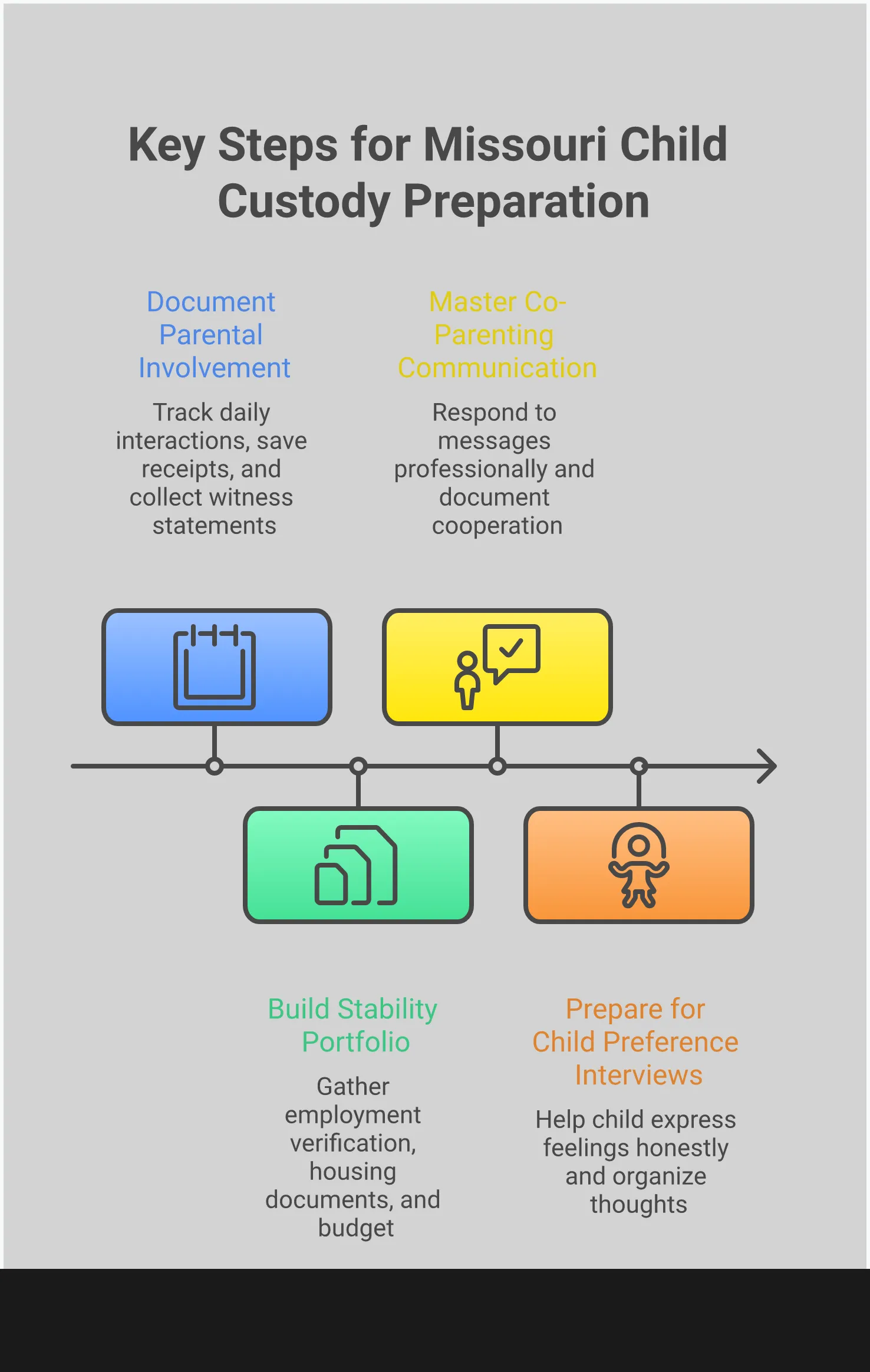
A judge won’t simply take your word for it when assessing stability. They rely on concrete evidence to make an informed decision based on the best interest of the child. This can include a wide range of documents and testimony, such as pay stubs, bank statements, and employment records to prove financial stability. They might also review school and medical records, as well as testimony from teachers, counselors, or family friends who can speak to your parenting abilities.
In some cases, a judge may order a custody evaluation, where a neutral third party assesses the family situation and makes a recommendation. Preparing and presenting this evidence effectively is crucial. If you have questions about what information you’ll need, it’s a good idea to contact an attorney who can guide you through the process.
Does Your Child Get a Say in Custody?
One of the most common questions parents ask during a custody case is, “Does my child get a say in where they live?” In Missouri, the answer is yes, but it’s not as simple as a child making the final decision. A judge will consider a child’s wishes as one of several important factors when determining what is in their best interest. However, the weight given to that preference depends heavily on the child’s age, maturity, and the reasons behind their choice.
The court’s primary goal is to create a stable and supportive environment for the child. While their opinion is valued, it’s balanced against all other evidence to ensure the final custody arrangement truly supports their long-term well-being. Understanding how a judge approaches this sensitive issue can help you prepare for your case and manage your family’s expectations.
Does Age Matter When a Child States a Preference?
There is no specific age in Missouri law when a child can definitively choose which parent to live with. Instead, the court looks at the child’s maturity level. The older and more mature a child is, the more significance their preference will have in the judge’s decision. For example, a teenager who can clearly and thoughtfully explain their reasons for wanting to live with one parent will have their opinion taken very seriously.
On the other hand, a younger child’s preference might be given less weight, especially if their reasoning seems superficial, like wanting to live in the house with a bigger playroom. The court understands that young children can be easily influenced. The key is whether the child is old enough to form and express a reasoned preference.
Will the Judge Talk to My Child?
If the court believes it’s necessary, a judge may decide to speak with your child directly to understand their wishes. This isn’t a scary courtroom testimony. Instead, it’s typically a private conversation held in the judge’s office, known as an “in-camera interview,” with only the judge, the child, and sometimes a court reporter or a guardian ad litem present. This setting is designed to help the child feel safe and speak openly.
This step is more common with older children, often around ages 11 or 12 and up. The judge will ask questions to get a sense of the child’s reasoning and to make sure their preference is genuine, not the result of pressure from a parent. Navigating these sensitive aspects of family law requires a thoughtful approach to protect your child’s emotional health.
How Courts Handle Potential Parental Influence
Even when a child expresses a strong preference, it is never the only factor the court considers. The judge must weigh the child’s wishes against all other elements that contribute to their best interests. This includes the emotional bonds the child has with each parent, each parent’s ability to provide a safe and nurturing home, and the child’s adjustment to their school and community.
A judge will also try to understand the “why” behind the child’s choice. Are they choosing a parent because of a deep, healthy connection, or because that parent has fewer rules? The court is trained to look for signs of parental influence or alienation. Ultimately, the child’s preference is one important piece of a much larger puzzle. An experienced attorney can help you present a comprehensive picture of your family’s situation when you contact our office.
Can You Co-Parent? How It Affects Custody
When a judge decides on a custody arrangement, they look at much more than just who has a nicer house or a more flexible job. A major factor is how well you and your ex-partner can work together for your child’s sake. The court’s goal is to create a stable, supportive, and low-conflict environment. Proving you can be a cooperative co-parent is one of the most powerful things you can do to support your case. It shows the judge that you prioritize your child’s well-being above any personal disagreements, which is exactly what they want to see.
Encouraging a Bond with the Other Parent
A judge wants to see that you are actively encouraging your child to have a strong, healthy relationship with their other parent. This means speaking respectfully about your ex in front of your child and facilitating communication and visitation. Any behavior that seems to undermine the other parent, like badmouthing them, blocking phone calls, or interfering with their parenting time, can be a major red flag for the court. It suggests you are putting your own feelings ahead of your child’s need for both parents. Showing that you can rise above conflict to support that bond is a critical piece of any family law case and demonstrates your maturity and focus on what truly matters.
How to Show You Can Communicate Effectively
Actions speak louder than words, especially in a courtroom. You need to show a pattern of healthy communication with your co-parent. This involves discussing school, healthcare, and extracurricular activities calmly and respectfully. If phone calls are tense, stick to text messages or emails to keep a clear, business-like record of your conversations. Using a co-parenting app can also be a great way to manage schedules and share information without direct conflict. A judge will be impressed by a parent who has been consistently involved and can prove they are capable of working with the other parent as a team. This history of cooperation is powerful evidence that you can provide a stable future for your child.
What “Cooperation” Doesn’t Mean in Court
Many parents mistakenly believe that a custody battle is about “winning” by proving the other parent is unfit. While serious issues like abuse or neglect are important, trying to paint the other parent in a bad light over minor disagreements often backfires. The court is not interested in petty drama; it wants to see parents who can find solutions. Another common mistake is being inflexible. Refusing to compromise on a holiday schedule or a weekend swap can make you appear difficult and uncooperative. Demonstrating flexibility shows the court that your primary concern is your child’s happiness and stability, not just getting your way. An experienced attorney can help you present your case effectively without falling into these traps.
When the Court Appoints a Guardian ad Litem
In particularly contentious custody cases, the court may appoint a Guardian ad Litem, or GAL. A GAL is an attorney whose sole job is to represent the child’s best interests. They act as the court’s eyes and ears, conducting an independent investigation by interviewing you, your co-parent, your child, and other relevant people like teachers or therapists. The GAL then makes a recommendation to the judge about what custody arrangement would be best for the child. This recommendation carries significant weight. It is crucial to cooperate fully with the GAL and be open and honest. How you interact with the GAL provides a direct window into your ability to co-parent effectively. If you’re facing a complex case, it’s wise to contact an attorney for guidance.
What Factors Can Harm Your Custody Case?
While judges focus on positive attributes that support a child’s best interests, they must also consider factors that could put a child at risk. Certain behaviors and circumstances can seriously damage your position in a custody case. The court’s primary goal is to ensure a safe, stable, and nurturing environment for the child. Any evidence suggesting a parent cannot provide this will be weighed heavily. Understanding these potential pitfalls is the first step toward addressing them and presenting the strongest possible case. If any of these issues are relevant to your situation, it’s critical to work with a family law attorney to handle them with honesty and a clear strategy.
How Domestic Violence Allegations Impact Custody
A parent’s history of violence or abuse is one of the most serious factors a judge will consider. The court’s top priority is protecting the child from physical and emotional harm. Any documented instances of domestic violence, child abuse, or even a child expressing fear of a parent can have severe consequences for custody rights. A conviction is not always necessary; credible allegations, restraining orders, or police reports can all influence the outcome. The court will thoroughly investigate these claims to determine if a parent poses a risk. If you have concerns about your child’s safety, it is essential to present this information to the court clearly and effectively.
How Drug or Alcohol Use Affects Custody
A parent’s struggle with drug or alcohol abuse can be a major obstacle in a custody case. If there is evidence of current or recent substance abuse, the court will question your ability to provide a safe and stable home. This doesn’t mean a past issue automatically disqualifies you, but you will need to demonstrate a commitment to recovery and sobriety. Judges may look for proof of completed treatment programs, consistent attendance at support groups, and clean drug tests. The court’s focus is always on the child’s welfare, so it will take any necessary steps, like ordering supervised visitation, until it is confident the child is not at risk.
What the Court Considers Neglect or Abandonment
Parenting is about more than just providing food and shelter; it’s about being consistently present and emotionally available. A history of neglecting a child’s basic needs, whether physical, medical, or emotional, will weigh heavily against you. This can include failing to provide proper supervision, missing important appointments, or demonstrating a general lack of involvement in the child’s life. Similarly, if a parent has a history of abandoning the child for periods of time, the court will question their commitment and stability. Consistency is key, and judges look for parents who have been a steady and reliable presence for their child.
Will a Criminal Record Prevent Me From Getting Custody?
A criminal record can impact a custody decision, but the context matters. The court is most concerned with crimes that suggest a parent might be a danger to the child. This includes offenses involving violence, domestic abuse, sexual misconduct, or drug-related charges. A single DUI from years ago may be viewed differently than a recent pattern of criminal behavior. The judge will consider the nature of the crime, how long ago it occurred, and what steps you have taken to rehabilitate yourself since. Being upfront about your past and showing how you have changed is a much better approach than trying to hide it.
Understanding Parental Alienation
Judges in Missouri want to see parents who can work together for their child’s benefit. Any behavior that attempts to damage the child’s relationship with the other parent can seriously backfire. This is often called parental alienation and includes things like constantly badmouthing the other parent, interfering with their visitation time, or trying to make the child choose sides. The court believes that, in most cases, a child benefits from having a strong bond with both parents. Demonstrating that you support this relationship shows maturity and a focus on your child’s well-being, which is exactly what a judge wants to see. If you’re struggling with co-parenting communication, our team can help you understand your options when you contact us.
What’s New in Missouri Custody Decisions?
Family law is always evolving, and Missouri’s approach to child custody is no exception. Courts are adapting to reflect modern family structures and a deeper understanding of child development. While the core principle remains the “best interest of the child,” how judges interpret that standard is changing. Today, there’s a greater emphasis on shared parenting, stability, and a comprehensive view of the family’s dynamics. Understanding these modern trends can help you prepare for your custody case and focus on what truly matters: your child’s well-being.
Is 50/50 Custody Becoming the Norm?
There is a significant movement in Missouri toward making 50/50 shared parenting time the standard for custody cases. This reflects a belief that children benefit from having a strong, consistent relationship with both parents. While this equal arrangement is becoming more common, it isn’t guaranteed. The court’s final decision will always prioritize the child’s best interests above all else. A judge will still carefully examine whether a 50/50 split is practical and beneficial given your family’s specific circumstances. Factors like parental conflict, distance between homes, and each parent’s ability to care for the child can influence the outcome. An experienced family law attorney can help you understand how this trend might apply to your case.
Why Keeping Things Consistent for Your Child Matters
When making custody decisions, Missouri judges place a high value on creating a stable and continuous environment for the child. The goal is to minimize disruption in the child’s life during and after the parents’ separation. Judges weigh factors like each parent’s proposed parenting plan, the child’s existing routine, and the emotional bonds they share with each parent. They will look at which parent is more likely to maintain the child’s connection to their school, friends, and community. Presenting a clear, thoughtful parenting plan that demonstrates your commitment to providing this stability can significantly strengthen your position in court.
How Courts See the Entire Family Dynamic
Missouri courts are guided by the “best interest of the child” standard, which requires a multifaceted evaluation of the entire family situation. Judges look beyond the surface to understand the complex relationships and dynamics at play. This holistic view means considering each parent’s ability to provide emotional support, the child’s specific needs, and any history of conflict or abuse. The child’s safety is always the highest priority. The court aims to understand the complete picture to make a decision that truly supports the child’s long-term emotional and physical health. You can learn more about our firm’s client-centered approach and how we handle these sensitive matters.
Getting the Right Legal Guidance for Your Case
How you handle yourself during a custody dispute can have a major impact on the outcome. Judges favor parents who show flexibility and a genuine commitment to cooperative co-parenting. A lack of cooperation can be viewed negatively and may harm your case. A family law attorney can guide you through this challenging process, helping you communicate effectively and avoid common pitfalls, like speaking poorly of the other parent. We can help you focus on presenting yourself as a stable, loving, and collaborative parent who will always support your child’s relationship with the other parent. If you need guidance on your custody case, please contact our office to discuss your situation.
Related Articles
- CHILD CUSTODY DETERMINATION IN MISSOURI – The Law Office of Chad G. Mann, LLC
- JOINT CUSTODY VS. SOLE CUSTODY IN MISSOURI – The Law Office of Chad G. Mann, LLC
- How to Get a Custody & Support Modification in Missouri
- CHANGING A CHILD CUSTODY AGREEMENT IN MISSOURI – The Law Office of Chad G. Mann, LLC
Frequently Asked Questions
Does Missouri law favor mothers over fathers in custody cases? No, that’s a common myth. Missouri law is completely gender-neutral. The court’s only goal is to determine what is in the child’s best interest, regardless of whether a parent is the mother or the father. Judges look at factors like stability, emotional bonds, and each parent’s ability to support the child’s relationship with the other parent, not gender.
Will I lose custody if I earn less money than my ex-partner? Not necessarily. While financial stability is important, the court isn’t looking for the parent with the higher income. The focus is on your ability to consistently provide for your child’s basic needs, like food, housing, and healthcare. Demonstrating responsible budgeting and a steady employment history is often more important than the size of your paycheck.
My child says they want to live with me. Is that enough for the judge to decide? A child’s preference is definitely a factor, but it’s not the only one. The weight a judge gives to your child’s wishes depends on their age and maturity. A teenager’s well-reasoned opinion will carry more weight than a young child’s. The judge will balance this preference with all other factors, such as each parent’s stability and ability to co-parent, to make a final decision that serves the child’s overall well-being.
What’s the most important thing I can do to help my custody case? Focus on your child and demonstrate your ability to be a cooperative co-parent. Show the court that you can communicate respectfully with your ex-partner and that you actively support your child’s relationship with them. Judges want to see parents who can put their child’s needs ahead of their own disagreements. Maintaining stability in your child’s life and being a consistent, positive presence are powerful actions.
What happens if my ex-partner is making false accusations against me? This is a serious situation that requires a careful and strategic response. It is crucial not to react emotionally or retaliate. Instead, focus on gathering evidence to disprove the claims and continue to act in a way that is calm, stable, and child-focused. This is a complex issue where the guidance of an experienced family law attorney is essential to protect your rights and present the truth to the court effectively.