


There is a lot of misinformation about head trauma. You might hear that if you didn’t lose consciousness, you’re fine, or that a “mild” concussion is nothing to worry about. These are dangerous myths, especially when dealing with a closed head injury. The truth is, even a seemingly minor impact can have profound and lasting consequences on your health, work, and daily life. We’re here to set the record straight by explaining the realities of these injuries, debunking common misconceptions, and providing clear, actionable information so you can make informed decisions about your recovery and your legal rights.
Key Takeaways
- Prioritize a medical evaluation immediately: A closed head injury doesn’t break the skull, so serious symptoms like brain swelling can develop slowly without any visible signs. Getting checked by a doctor right after an accident is the best way to protect your health.
- Keep a detailed symptom journal: Your day-to-day experiences are critical evidence for your case. Write down everything from headaches and memory fog to mood changes, as this log provides a clear picture of the injury’s impact for both your doctors and your attorney.
- Understand that “mild” doesn’t mean insignificant: A concussion or “mild” TBI can still have serious, long-lasting effects on your life and ability to work. Take your symptoms seriously and seek legal support to help cover the costs of your recovery.
What Is a Closed Head Injury?
When you hear the term “head injury,” you might picture a visible wound, but that’s not always the case. A closed head injury is a type of brain injury where your skull isn’t broken or penetrated. Think of it like a bruise on an apple; the skin is intact, but the fruit underneath is damaged. This happens when a sudden, forceful impact causes your brain to move and hit the inside of your skull. Even without an open wound, the bruising, bleeding, and swelling inside can cause serious problems. These injuries are a common form of traumatic brain injury (TBI) and can range from mild concussions to severe, life-altering conditions.
How Do Closed Head Injuries Happen?
These injuries can happen in many everyday situations. The most frequent causes are events that involve a sudden jolt or blow to the head. This includes things like car accidents, where the force of a collision can whip your head back and forth, or a slip and fall where your head hits the ground. They can also result from physical violence or sports-related impacts, like a hard tackle in football or a fall from a bicycle. In each case, the external force is strong enough to make the brain collide with the hard surface of the skull, leading to injury.
Closed vs. Open Head Injuries: What’s the Difference?
It’s helpful to know the difference between a closed and an open head injury. With a closed head injury, the skull remains intact. This is the most common type of head trauma. An open, or penetrating, head injury is when an object actually breaks through the skull and enters the brain. These are typically caused by more severe, direct trauma. While an open injury might sound more frightening, it’s crucial to understand that a closed head injury can be just as dangerous. The internal damage isn’t visible, which sometimes leads people to underestimate its severity and delay seeking the care they need.
What Are the Symptoms of a Closed Head Injury?
After an accident, it’s easy to focus on visible injuries like cuts or bruises. But a closed head injury isn’t always obvious, and its symptoms can range from subtle to severe. Because the brain is such a complex organ, the signs of a Traumatic Brain Injury can show up immediately or take days, even weeks, to appear. Knowing what to look for is the first step in protecting your health. Pay close attention to how you or your loved one feels after any incident involving a blow to the head, even if it seemed minor at the time.
Immediate Signs to Watch For
Right after an injury, some symptoms may be clear. You might feel “off” or notice changes that weren’t there before the accident. These signs are your body’s way of telling you that something is wrong and that your brain has been affected.
Common immediate symptoms include:
- Headaches or a feeling of pressure in the head
- Dizziness or problems with balance
- Nausea or vomiting
- Confusion or feeling dazed
- Memory loss surrounding the event
- Fatigue or drowsiness
- Sensitivity to light or noise
Even if these symptoms feel manageable, they shouldn’t be ignored. Documenting everything you experience is crucial for both your medical care and any potential legal claim.
Red Flags: When to Seek Emergency Care
Some symptoms are more than just warning signs; they are emergencies. If you or someone else experiences any of the following after a head injury, seek immediate medical care. Do not wait to see if things get better on their own.
Go to the emergency room if you notice:
- A headache that gets progressively worse
- Seizures or convulsions
- Repeated vomiting
- Slurred speech or difficulty speaking
- Weakness or numbness in the arms or legs
- Profound confusion or agitation
- Loss of consciousness, even for a moment
These are indicators of a serious injury that requires urgent medical intervention. Acting quickly can make a significant difference in the outcome.
Symptoms That Can Show Up Later
One of the most challenging aspects of a closed head injury is that symptoms don’t always appear right away. It’s possible to walk away from an accident feeling fine, only to develop problems days or weeks later. This delay often happens because of slow brain swelling or bleeding, which gradually increases pressure inside the skull. Delayed symptoms can include headaches, dizziness, memory problems, or changes in mood and personality. It’s vital to continue monitoring your health and see a doctor if any new symptoms arise, no matter how much time has passed since the initial injury.
What Are the Most Common Causes of Closed Head Injuries?
A closed head injury can happen in a split second, often during activities we do every day. Understanding the common causes can help you recognize the risks and know what to look for if an accident happens. While some situations are obviously dangerous, others are less so, which is why these injuries can be so unexpected. From a fender bender on the way to work to a simple fall at home, the force required to cause a serious brain injury can be surprisingly small. Knowing where the risks lie is the first step in protecting yourself and your loved ones. If you or someone you know has been in an accident, it’s important to connect the event to any symptoms that appear afterward, even if they seem minor at first.
Car Accidents and Head Trauma
It’s no surprise that car accidents are a leading cause of closed head injuries. When a collision occurs, the sudden stop or change in direction can cause your head to whip back and forth. This violent motion can make the brain strike the inside of the skull, leading to bruising, swelling, and other damage. You don’t even have to hit your head on the dashboard or window for this to happen; the force of the impact alone is enough to cause a significant closed-head injury. This is why even seemingly minor accidents can have serious consequences. If you’ve been in a crash, seeking a medical evaluation is always a good idea, even if you feel fine immediately after.
Slips, Trips, and Falls
Falls are another incredibly common reason people experience closed head injuries. According to Kaiser Permanente, falls are responsible for a large number of brain injuries, particularly among young children and older adults. A simple slip on a wet floor, a trip over an uneven sidewalk, or a fall from a ladder can all result in your head hitting a hard surface. When a fall happens on someone else’s property due to unsafe conditions, it can fall under premises liability. The impact from a fall can be just as damaging as a high-speed collision, causing the brain to jolt and sustain injury without any visible wound to the skull.
Injuries from Sports and Recreation
Staying active is great for your health, but it sometimes comes with risks. Contact sports like football, hockey, and soccer are well-known for causing head injuries, but they can happen in almost any recreational activity. A collision with another player, a fall from a bicycle, or a hard hit from a piece of equipment can all lead to a traumatic brain injury. Concussions, a type of mild traumatic brain injury, are especially common in sports. It’s crucial for athletes, coaches, and parents to recognize the signs of a head injury and ensure proper medical attention is received before returning to play. Taking any head impact seriously is key to preventing long-term complications.
Who Is Most at Risk?
While a closed head injury can happen to anyone, some groups are more vulnerable. Statistics show that the very young and the elderly are at the highest risk. Specifically, children under the age of four and adults over 75 are most likely to experience these injuries, often from falls. Gender also appears to be a factor, as men and boys are generally more likely to get a closed head injury than women and girls. In fact, boys between birth and four years old have the highest rates of emergency room visits for brain injuries. Understanding these risk factors helps highlight the need for extra caution and protective measures for these vulnerable populations.
How Do Doctors Diagnose and Treat a Closed Head Injury?
After a head injury, figuring out what’s happening inside your body is the first priority. The medical process can feel overwhelming, but understanding how doctors approach diagnosis and treatment can give you a sense of control. It all starts with a careful evaluation to determine the exact nature of the injury and the best path forward for your health. This medical journey is also the foundation for protecting your rights if the injury was caused by someone else’s negligence.
The Diagnostic Process
To get a clear picture of what’s going on, doctors use a multi-step approach. The evaluation usually starts with a physical and neurological exam where they’ll check things like your reflexes, balance, memory, and concentration. This gives them a baseline for your cognitive function. From there, they often rely on imaging tests like CT scans or MRIs to get a detailed look inside your skull. These tools can reveal bleeding, swelling, or structural damage to the brain. This thorough process is essential for accurately diagnosing the injury and creating a treatment plan that’s right for you.
Treatment Options for Your Injury
Your treatment plan will depend entirely on the severity of the injury. For a mild injury like a concussion, your doctor might simply recommend rest and over-the-counter pain relievers. More serious injuries, however, require a different approach. The main goals are to stop any bleeding and prevent dangerous pressure from building up inside the skull, which can cause further brain damage. This could involve specific medications to reduce swelling or, in some cases, surgical intervention. Your medical team will monitor you closely to ensure you’re getting the right care for your specific needs.
Emergency Care vs. Long-Term Recovery
Getting medical help right away is critical after any head injury. Symptoms can be delayed or worsen over time, and prompt attention can prevent more serious complications. The recovery journey looks different for everyone. Some people feel better within a few weeks, while others may need months or even longer to heal fully. It’s important to follow your doctor’s advice and not rush back into your normal activities. This patience is not only key for your physical healing but also for documenting the full impact of the injury, which is vital in personal injury cases.
What Does Long-Term Recovery Look Like?
Recovering from a closed head injury is a marathon, not a sprint. The path looks different for everyone, and it often extends far beyond the initial physical healing. Long-term recovery involves addressing the cognitive, emotional, and physical changes that can follow this type of injury. It’s a process of adapting and finding a new normal, supported by medical professionals, loved ones, and a solid understanding of what to expect. Knowing the potential challenges ahead can help you and your family prepare for the journey and ensure you have the right resources in place.
Impact on Thinking and Memory
After a closed head injury, you might notice that your thinking feels different. Even a seemingly mild injury can lead to lasting issues with concentration, memory, and processing information. You may find yourself easily distracted, struggling to remember appointments, or having a hard time following conversations. These cognitive changes are a direct result of the injury to your brain and can be incredibly frustrating. It’s important to be patient with yourself as you heal. These challenges can affect your ability to work and manage daily tasks, which is a key reason why securing support for your personal injury case is so critical for your future.
Coping with Physical and Emotional Changes
The effects of a closed head injury aren’t just cognitive; they are deeply emotional and physical, too. It’s common to experience mood swings, irritability, anxiety, or depression. In fact, research shows that more than half of people who sustain a traumatic brain injury will face mental health challenges. These feelings are a physiological response to the injury, not a personal failing. Physically, you might deal with chronic headaches, dizziness, or fatigue. Acknowledging these changes is the first step. Leaning on a support system of family, friends, and mental health professionals can make a significant difference in how you cope and move forward.
What to Expect from Rehabilitation
Rehabilitation is a crucial part of the recovery process. Starting a rehabilitation program early and sticking with it can dramatically improve long-term outcomes. Your care team will create a plan tailored to your specific needs, which may include several types of therapy. Physical therapy can help with balance and coordination, while occupational therapy focuses on helping you regain skills for daily living. For many, cognitive rehabilitation is essential for improving memory, attention, and problem-solving abilities. This structured support is designed to help you regain as much function as possible. If you have questions about covering the costs of long-term care, it may be time to contact a legal professional.
Common Myths About Closed Head Injuries
When it comes to head injuries, misinformation can be as damaging as the injury itself. Well-meaning friends, family, and even online articles can spread myths that create confusion and prevent you from getting the care you need. Understanding the truth is the first step toward protecting your health and your legal rights. Let’s clear up a few common misconceptions about closed head injuries so you can focus on what really matters: your recovery.
Myth: Scans Can Detect Every Injury
It can be incredibly frustrating to be told your CT scan or MRI is “clear” when you’re still dealing with headaches, dizziness, or memory fog. The truth is that standard imaging tests don’t always show the full picture. According to the Brain Injury Association of America, not all brain injuries, especially concussions, will appear on these scans. Microscopic damage to brain cells doesn’t show up on a typical image. This means you can have significant, life-altering symptoms from an injury that is essentially invisible to a scan. Your symptoms are real, and they deserve to be taken seriously, regardless of what an initial imaging report says.
Fact: “Mild” Doesn’t Mean “Minor”
You may hear a doctor refer to a concussion as a “mild” traumatic brain injury (TBI). This medical term is often misunderstood. “Mild” is used because the injury isn’t typically life-threatening, but it says nothing about the severity of the effects. A “mild” TBI can have profound and long-lasting consequences on your ability to work, think, and enjoy your life. The symptoms can disrupt your daily routine and cause significant emotional and physical distress. Never let the word “mild” convince you that your injury isn’t serious or that you don’t need support for your automobile accident or fall.
Understanding the Realities of Recovery
There’s a persistent myth that if you haven’t recovered from a brain injury within a year or two, you never will. This simply isn’t true. While the most rapid improvements often happen in the early stages, recovery can and does continue for years. The brain has a remarkable ability to heal and adapt over time, a concept known as neuroplasticity. With ongoing therapy, support, and personal effort, many people continue to see progress long after their initial injury. Don’t let an arbitrary timeline discourage you. Recovery is a marathon, not a sprint, and every small step forward is a victory.
Your Legal Rights After a Closed Head Injury
After a serious injury, the last thing you want to deal with is legal paperwork and phone calls. But understanding your rights is a critical step toward protecting your future. If someone else’s carelessness caused your closed head injury, you may be entitled to compensation to cover your medical bills, lost income, and other costs. This isn’t about getting a windfall; it’s about getting the resources you need to recover without facing a financial crisis.
Navigating a personal injury claim can feel overwhelming, especially when you’re trying to heal. The process involves proving who was at fault, calculating the full extent of your damages, and dealing with insurance companies. Having a clear understanding of these steps can help you feel more in control. It’s important to know that you don’t have to figure this out alone. A dedicated legal advocate can handle the complexities for you, allowing you to focus on what matters most: your health and your family.
Determining Who Is at Fault
One of the first steps in any personal injury case is figuring out who is legally responsible, or “liable,” for the accident. In legal terms, the burden of proof is on you, the injured person, to show that another party’s negligence caused your injury. This might sound straightforward, but it can be quite complex. It involves gathering evidence like police reports, witness statements, and expert opinions to build a clear picture of what happened.
This is where having an experienced personal injury attorney on your side makes a significant difference. An attorney knows what evidence is needed to establish fault, whether your injury was from a car accident, a fall on someone else’s property, or another incident. They handle the investigation and piece together the facts to create a strong foundation for your claim.
What Kind of Compensation Is Available?
If another person is found to be at fault for your closed head injury, you can seek compensation for your losses. This compensation, often called “damages,” is meant to cover the financial, physical, and emotional costs of the injury. The goal is to help you get back to the position you were in before the accident occurred. Every case is different, but compensation typically covers tangible costs like medical bills, ongoing therapy, and rehabilitation expenses.
It also includes income you lost while unable to work and any future loss of earning capacity if your injury affects your ability to do your job long-term. Beyond these financial costs, you may also be compensated for non-economic damages, such as pain and suffering, emotional distress, and loss of enjoyment of life.
Why Your Medical Records Are So Important
Your medical records are the cornerstone of your personal injury claim. They provide the official, documented proof of your closed head injury, its severity, and the treatments you’ve received. These records create a direct link between the accident and your injuries, which is essential for proving your case. That’s why it’s so important to seek medical attention right away and follow through with all recommended appointments, therapies, and treatments.
Before you speak with an insurance adjuster, it’s wise to consult with an attorney. Insurance companies often try to minimize payouts, but your lawyer will use your medical records to build a comprehensive claim that reflects the true extent of your injuries. They will handle all communications with the insurer, protecting you from pressure to accept a low settlement and fighting for the full compensation you deserve.
How to Protect Your Health and Your Rights
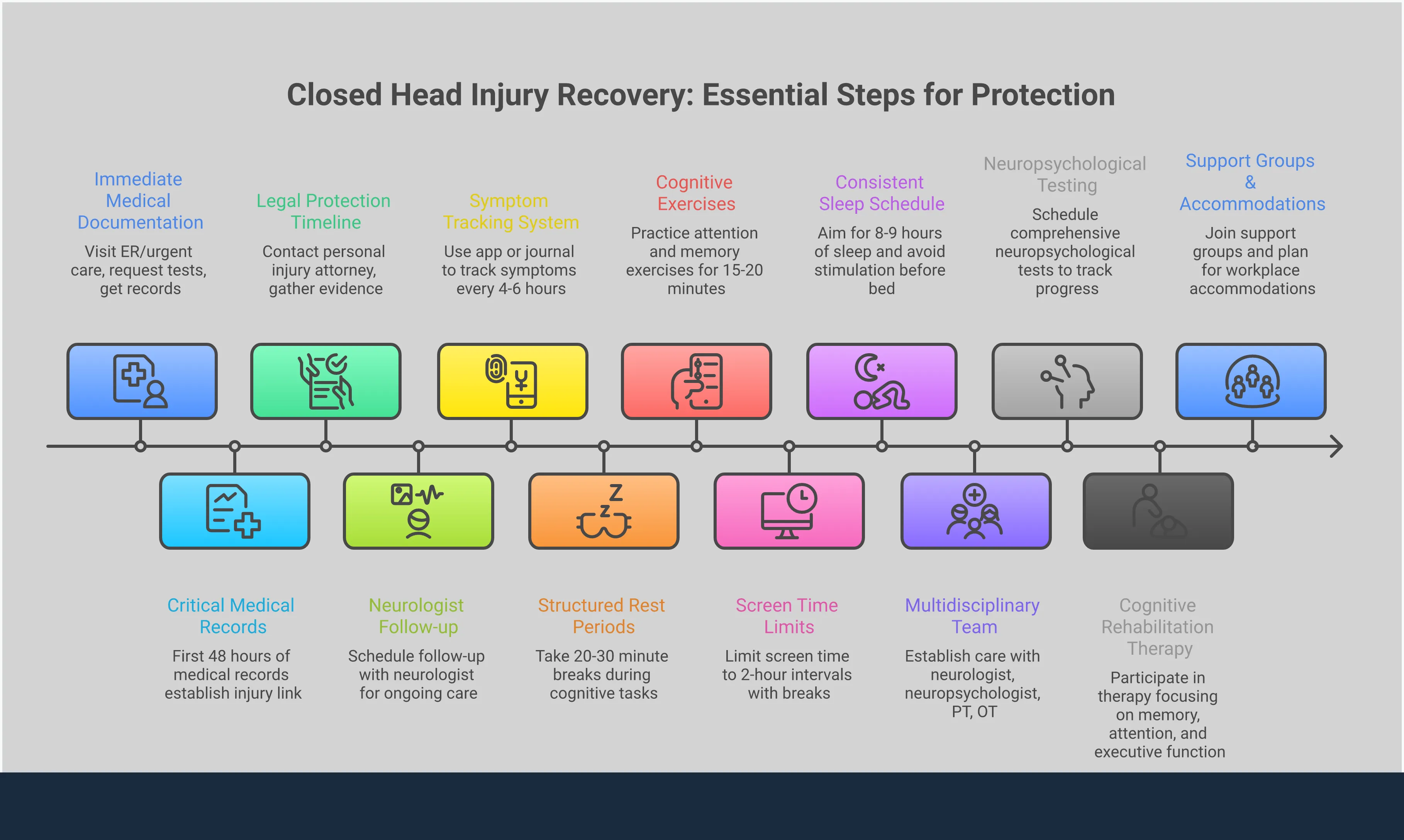
After a head injury, it’s easy to feel overwhelmed. You’re dealing with physical pain, emotional stress, and a lot of uncertainty. Taking a few specific steps right away can make a huge difference, not just for your recovery, but for protecting your future. Your health is always the top priority, but understanding your legal options is a close second. By focusing on your medical care, documenting your experience, and knowing when to seek legal advice, you can take control of the situation and set yourself up for the best possible outcome.
Prioritize Your Medical Follow-Up
Your first and most important step is to see a doctor. Even if you feel fine, some serious symptoms can be delayed. As medical experts at Kaiser Permanente explain, anyone who might have a closed head injury needs a professional evaluation. A doctor can run the right tests to understand the extent of your injury and create a treatment plan. Some injuries might require a hospital stay for observation, while more severe cases could involve medication or surgery. Following through with all recommended appointments, treatments, and therapies is not only crucial for your recovery but also creates an official record of your medical journey.
Keep a Record of Your Symptoms
Because the brain can swell slowly, symptoms might not appear for days or even weeks after the initial incident. This is why keeping a detailed journal is so important. Every day, take a few minutes to write down how you’re feeling. Note any headaches, dizziness, nausea, or sensitivity to light and sound. Also, track any changes in your thinking, like memory lapses, confusion, or difficulty concentrating. Don’t forget to include emotional shifts, such as irritability or mood swings. This log will be an invaluable tool for your doctors to adjust your treatment and for your legal team to understand the full impact of the injury on your daily life.
Know When to Call a Lawyer
If your closed head injury was caused by someone else’s actions, like a car crash or a fall on poorly maintained property, you may have a right to compensation. However, proving that another party is responsible can be challenging. As the Brain Injury Help Center notes, establishing liability in these claims is often complex. The responsibility falls on you to prove that the defendant’s negligence caused your injuries. An experienced personal injury attorney can manage this process for you, gathering evidence and building a strong case so you can focus on healing. It’s wise to seek legal advice early to ensure your rights are fully protected.
Related Articles
- What is CTE? A Guide to Causes and Symptoms
- Your Guide to Recognizing Early CTE Symptoms
- Live Brain Lesion: Your Guide to What Comes Next
- Can Trauma Cause Brain Damage? What to Know
- How Long Can You Live With a Brain Lesion? Explained
For more information, read our guide on types of closed brain injuries.
Frequently Asked Questions
My accident seemed minor. Do I really need to see a doctor? Yes, absolutely. The force required to cause a closed head injury can be surprisingly small, and you don’t have to lose consciousness for an injury to be serious. Because symptoms can take time to appear, getting a medical evaluation is the only way to know for sure what’s going on. This creates a crucial medical record and ensures you get the care you need right from the start.
Why are my symptoms showing up days after my accident? This is a very common and often confusing part of a closed head injury. The initial impact can cause slow bleeding or swelling inside the skull. As this pressure gradually builds over hours or days, it begins to affect brain function, leading to delayed symptoms like headaches, dizziness, or confusion. This is why it’s so important to monitor yourself closely after any incident and report new symptoms to your doctor immediately.
My doctor said my brain scan was normal, so why do I still have symptoms? It’s incredibly frustrating to feel unwell when a test comes back “clear,” but your symptoms are very real. Standard imaging like CT scans or MRIs are great for spotting major issues like bleeding or fractures, but they can’t detect microscopic damage to brain cells. Many concussions and other closed head injuries are diagnosed based on your symptoms, not what shows up on a scan.
Is a concussion considered a serious closed head injury? While doctors may classify a concussion as a “mild” traumatic brain injury, that term refers to the immediate threat to your life, not the impact on it. A concussion is a serious injury that can have significant and lasting effects on your memory, concentration, and emotional well-being. It’s important to treat any concussion with the seriousness it deserves to support a full recovery.
How can a lawyer help if the insurance company already made an offer? Insurance companies often make quick, low offers to settle claims before the full extent of an injury is known. An initial offer rarely accounts for future medical care, long-term rehabilitation, or the full impact on your ability to work and enjoy life. An experienced attorney can calculate the true, long-term cost of your injury and negotiate for a settlement that actually covers all of your needs, ensuring you aren’t left with unexpected expenses down the road.
If you or a loved one has been affected by a brain injury in Springfield or Southwest Missouri, the experienced legal team at The Law Office of Chad G. Mann is here to help. Contact our brain injury legal resources for a free consultation, or call (417) 842-8679 today.
Have you been injured? Take our free injury questionnaire to help us understand your case, or call (417) 842-8679 for a free consultation today.