

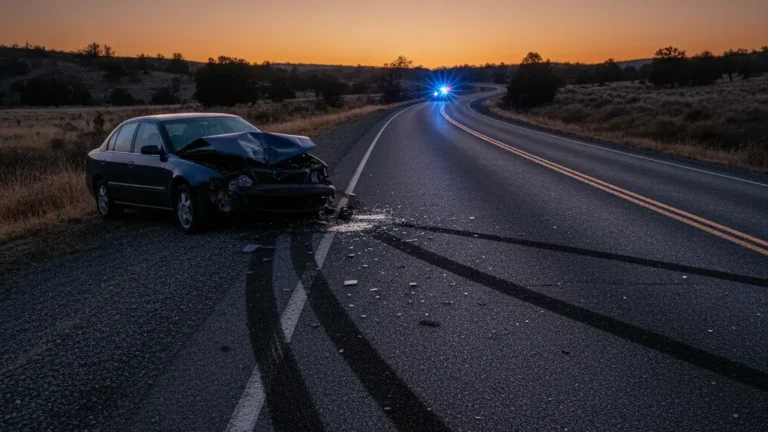
The jolt of impact, then just taillights disappearing down the road. The driver who hit your car is gone, leaving you stranded on the side of a Missouri road. You’re left with a damaged car, potential injuries, and a huge question: who is going to pay for this? A springfield mo hit and run is devastating because the responsible person chose to flee. But their choice doesn’t leave you without options. You have rights, and there is a path to compensation. A dedicated springfield hit and run accident lawyer can be your strongest advocate, helping you pursue the recovery you deserve.
But disappearing from the scene does not mean disappearing from accountability. Missouri law gives injured victims real tools to recover compensation, even when the at-fault driver is never found, and a skilled attorney can often locate drivers that victims and police alike had written off.
If you were injured in a hit-and-run accident in Springfield or anywhere in Southwest Missouri, call The Law Office of Chad G. Mann at (417) 842-8679 for a free consultation. You pay nothing unless we recover compensation for you.
What Counts as a Hit-and-Run in Missouri?
A hit-and-run accident is any crash where a driver involved in the collision leaves the scene without stopping to exchange insurance and contact information or render aid. Under Missouri Revised Statutes Section 577.060, any driver involved in an accident causing injury, death, or property damage exceeding $500 is legally required to stop, identify themselves, and assist any injured parties. Violating that requirement is a crime, and the severity of the charge depends on the harm caused.
Hit-and-Run in Springfield, MO? Here’s What to Do Now
The actions you take in the first minutes and hours after a hit-and-run directly affect both your physical recovery and your legal case. Shock and adrenaline make it easy to miss steps that matter. Work through the following systematically, even if you feel fine.
Stay Put and Get to Safety
Pull your vehicle off the road if it can be moved. Turn on your hazard lights. Do not chase the fleeing driver. Pursuing a vehicle at high speed after a collision creates serious danger for yourself and others, and it removes you from the scene before evidence is secured and witnesses can give statements.
Report the Accident: Call 911
Missouri law requires you to report any accident involving injury, death, or property damage exceeding $500. Almost every accident clears that threshold. Beyond the legal obligation, the police report generated by this call becomes one of your most important documents. It records the scene conditions, your account of the fleeing vehicle, and the responding officer’s observations, all of which carry weight with insurance adjusters and in court.
When speaking with the 911 dispatcher and responding officers, give as much detail as you can about the fleeing vehicle: color, make, model, partial plate number, direction of travel, and any distinguishing features. Every detail matters.
Get Medical Help, Even If You Feel Fine
Even if your injuries feel minor, get evaluated by a physician the same day. Soft-tissue injuries, concussions, and internal bleeding frequently do not produce obvious symptoms at the scene. Delayed diagnosis is common and dangerous. There is also a legal reason to go quickly: a gap between the accident date and your first medical visit gives insurance companies ammunition to argue that your injuries were not caused by the crash. Same-day treatment eliminates that argument.
Supporting Claims for Emotional Distress
The impact of a hit-and-run goes far beyond bent metal and physical pain. The feeling of being abandoned at the scene, the anxiety that follows, and the new fear of getting behind the wheel are all real and significant injuries. Missouri law recognizes this, allowing you to seek compensation for emotional distress as part of your personal injury claim. However, because you can’t show an adjuster a picture of your anxiety, proving this part of your case requires careful documentation. Start a journal to record your feelings, nightmares, sleep loss, and any ways the accident has affected your daily life. Seeking help from a therapist or counselor not only supports your mental health but also creates a professional record of your struggles. An experienced attorney knows how to weave these records, along with testimony from you and your family, into a compelling narrative that demonstrates the true scope of your suffering.
Document the Scene: Every Detail Matters
Before you leave the scene, use your phone to photograph and record:
- All visible damage to your vehicle, including close-up and wide-angle shots
- The position of your car in the road and surrounding environment
- Skid marks, debris, and any paint transfer or vehicle parts left behind
- Traffic signals, street signs, and road conditions
- Your injuries, including bruising, cuts, and swelling
- Nearby businesses, intersections, and anything that might indicate camera locations
This documentation supports your account of events and helps investigators piece together what happened after the other driver fled.
What to Memorize About the Fleeing Car and Driver
In the chaos of a crash, your mind is racing, but try to lock in a few key details about the car that fled. Think of it like a mental snapshot. What was the car’s color, make, and model? Did it have any distinguishing marks like a dent, a bumper sticker, or a roof rack? The most powerful piece of information is the license plate number—even a partial plate can be a game-changer. An experienced attorney can work with investigators to cross-reference partial plates with vehicle descriptions, significantly narrowing the search. Also, note the direction the car was headed and any details you saw about the driver, like their gender or hair color. These details give law enforcement and your legal team the leads they need to find the person responsible.
Building Your Case: Police Reports & Witness Accounts
In a standard two-car accident, you exchange insurance and contact information and move forward through the claims process. In a hit-and-run, you are starting from almost nothing. Police reports and witness statements fill that gap.
What’s in the Police Report?
A Missouri accident report is more than a formality. The responding officer documents scene conditions, road and weather at the time of the crash, your statement about the fleeing vehicle, any physical evidence left behind, and a preliminary assessment of fault. When your insurer processes your uninsured motorist claim, the report is the primary independent record of what occurred.
Request a copy of your accident report from the Springfield Police Department or the Missouri State Highway Patrol as soon as it becomes available. Review it carefully. If any detail is inaccurate, an attorney can help you address the discrepancy early before it becomes embedded in the record.
Why Witness Accounts Are So Important
Bystander and driver witnesses can provide the details that make or break a hit-and-run case. A witness who recorded a license plate number, even partially, can give investigators the lead they need. A witness who observed the color and make of the fleeing vehicle can corroborate your account. A witness who saw the impact and can describe how the other driver was operating helps establish negligence.
At the scene, ask anyone who stopped or was nearby whether they saw what happened. Get their name and phone number before they leave. Do not assume the police have already spoken with everyone. Witnesses scatter quickly after accidents, and the window to obtain their statements closes fast.
Can a Camera Help Find the Driver?
Modern Missouri intersections and commercial areas are heavily covered by cameras. Traffic signal cameras, business security systems, ATM cameras, and even residential doorbell cameras may have captured the fleeing vehicle. This footage often holds the key to identifying a hit-and-run driver.
The challenge is that footage is typically overwritten within 24 to 72 hours. Acting quickly, either directly or through an attorney who can send preservation letters, is essential. Law firms experienced in personal injury cases know how to identify camera locations, contact property owners promptly, and secure footage before it disappears.
Can My Own Insurance Cover a Hit-and-Run?
Many hit-and-run victims assume that if the driver is never identified, there is no recovery. That assumption is wrong, and it can cost you significantly if you act on it without speaking to an attorney.
Missouri law requires auto insurers to offer uninsured motorist (UM) coverage as part of every policy. Under Missouri Revised Statutes Section 379.203, UM coverage applies not just to crashes involving drivers with no insurance, but also to accidents where the at-fault driver cannot be identified at all. That is exactly the situation in a hit-and-run. Your own policy becomes the mechanism for compensation.
If you were injured in a hit-and-run in Missouri and the driver was never found, you may be able to recover compensation through your UM coverage for:
- Medical expenses, including emergency treatment, surgery, physical therapy, and future care
- Lost wages and reduced earning capacity
- Pain and suffering, emotional distress, and loss of enjoyment of life
- Vehicle damage through UM property damage coverage (subject to a $200 deductible under Missouri law)
For a full breakdown of how uninsured motorist claims work in Missouri and what steps to take when filing, see our guide: Uninsured Motorist Claims in Missouri: How to Protect Yourself.
Did Their Car Actually Have to Hit Yours?
Some UM policies include a physical contact requirement, meaning the hit-and-run vehicle must have actually struck your car for coverage to apply. This requirement exists to prevent fraudulent phantom-vehicle claims. Review your policy declarations page carefully. Missouri courts have addressed this requirement in several cases, and an attorney familiar with local UM litigation will know whether your facts and policy support a claim even in close calls.
What Your Insurer Won’t Tell You
When you file a UM claim, your own insurance company is the one paying, which means they have a financial interest in minimizing your recovery. They may claim your injuries are not as serious as documented, argue that the accident happened differently, or drag out the process hoping you will accept a low settlement. Having an attorney who understands UM litigation puts you on equal footing.
Call (417) 842-8679 today to speak with Chad G. Mann about your hit-and-run claim. The consultation is free and you owe nothing unless we win.
What Happens to a Hit-and-Run Driver in Missouri?
Leaving the scene of an accident is not just a moral failure. It is a crime under Missouri law, and the penalties escalate significantly based on the harm caused.
Under Missouri Revised Statutes Section 577.060, a driver involved in an accident that results in injury or property damage must stop immediately, render reasonable assistance, and provide contact and insurance information. Failing to do so constitutes leaving the scene of an accident.
Misdemeanor vs. Felony Hit-and-Run
The criminal classification depends on the severity of the harm:
- Property damage only: Class A misdemeanor, punishable by up to one year in jail and fines up to $2,000
- Personal injury: Class E felony, punishable by up to four years in prison
- Death or serious physical injury: Class D felony, punishable by up to seven years in prison
A criminal conviction for leaving the scene also carries mandatory driver’s license suspension, points on the driver’s record, and dramatically increased insurance rates. Missouri prosecutors take these cases seriously because fleeing the scene demonstrates a conscious choice to avoid responsibility for harm caused.
Why Would a Driver Flee the Scene?
It’s a question that haunts every hit-and-run victim: Why would someone just drive away? The decision to flee is rarely logical. It’s a choice driven by panic and a desperate attempt to avoid immediate consequences. More often than not, the driver has something to hide. They might be driving under the influence, operating without a valid license or insurance, or have outstanding warrants for their arrest. In other cases, they could be transporting illegal items or simply be overcome by fear. Whatever the reason, their decision to run compounds their legal trouble, turning a traffic accident into a potential felony. Their choice is a reflection of their own problems, not a personal attack on you.
Does a Criminal Case Help My Injury Claim?
If the driver is identified and charged criminally, that criminal proceeding can help your civil case in several ways. A guilty plea or conviction for leaving the scene can be used as evidence in your personal injury lawsuit, and it significantly increases the driver’s exposure in settlement negotiations. Most defendants and their insurers settle quickly once a criminal conviction is on record.
Even before any criminal resolution, the fact that a driver fled the scene is powerful evidence of consciousness of guilt. Missouri courts and juries understand what it means when someone makes the deliberate choice to drive away from an accident scene rather than face accountability.
What Compensation Can You Recover in a Hit-and-Run?
After a hit-and-run, your first concern is often financial. How will you pay for medical treatment and car repairs when the responsible party is gone? The path to compensation depends on one key factor: whether the driver is ever identified. If they are found, you can file a claim against their auto insurance. If they are not, you are not out of options. As we covered earlier, your own Uninsured Motorist (UM) coverage is designed for this exact scenario. It allows you to seek recovery from your own insurer for the damages you’ve suffered.
If you were injured in a hit-and-run in Missouri and the driver was never found, you may be able to recover compensation through your UM coverage for medical expenses, lost wages and reduced earning capacity, pain and suffering, emotional distress, and loss of enjoyment of life. The goal is to cover the full scope of your losses, from the tangible bills piling up on your counter to the intangible impact the crash has had on your daily life. An attorney can help you identify all available insurance policies and build a comprehensive claim for damages that reflects what you’ve truly been through.
Typical Settlement Ranges
Every hit-and-run case is different, so there is no “typical” settlement amount. The value of your claim depends entirely on the severity of your injuries, the total of your economic losses, and the limits of the available insurance coverage. Your settlement will be built by calculating several types of damages. This includes all past and future medical bills, from the initial emergency room visit to ongoing physical therapy. It also covers lost income if you were unable to work, as well as any impact on your long-term earning potential. Finally, it includes non-economic damages for your physical pain and emotional suffering, which are very real consequences of a traumatic crash.
The Role of Punitive Damages
When a hit-and-run driver is identified, you may be able to seek punitive damages in addition to your standard compensation. Unlike compensatory damages, which are meant to cover your losses, punitive damages are designed to punish the defendant for extreme or malicious behavior and deter others from doing the same. Fleeing an accident scene is exactly the kind of conduct that can justify a punitive award. Missouri prosecutors take these cases seriously because fleeing the scene demonstrates a conscious choice to avoid responsibility for harm caused. This intentional act of abandoning an injured person can be used to argue that the driver’s conduct was outrageous and warrants financial punishment.
How a Drunk Driver Impacts Your Case
Drivers often flee an accident scene because they have something to hide, such as driving under the influence. If the driver is identified and charged criminally with a DWI, that criminal proceeding can help your civil case in several ways. A guilty plea or conviction for leaving the scene can be used as evidence in your personal injury lawsuit, and it significantly increases the driver’s exposure in settlement negotiations. An insurance company is far more likely to offer a fair settlement when its client has been convicted of both drunk driving and fleeing the scene, as a jury would likely view that behavior very unfavorably.
Special Insurance for Rideshare Accidents
Hit-and-run accidents involving rideshare vehicles like Uber or Lyft add another layer of complexity. The available insurance coverage often depends on the driver’s status at the time of the crash—were they waiting for a ride request, on their way to pick someone up, or transporting a passenger? These companies carry large insurance policies, including high-limit Uninsured Motorist (UM) coverage, that may apply. Figuring out which policy is responsible is a critical step. An attorney who is familiar with the various practice areas of personal injury law can investigate the driver’s status and pursue a claim against all available policies to ensure you are fully compensated.
Proving Fault and Understanding Your Claim
It seems obvious that a driver who flees an accident is the one at fault, but legally, it’s not that simple. In a standard two-car accident, you exchange insurance and contact information and move forward through the claims process. In a hit-and-run, you are starting from almost nothing. Police reports and witness statements fill that gap. To recover compensation, you must still prove that the other driver was negligent—meaning they failed to drive with reasonable care—and that their negligence caused the crash. The fact that they fled is powerful evidence suggesting guilt, but it doesn’t replace the need to establish how the accident actually happened.
Leaving the Scene Isn’t Proof of Fault
Leaving the scene of an accident is not just a moral failure. It is a crime under Missouri law, and the penalties escalate significantly based on the harm caused. However, the crime of leaving the scene is separate from the fault for the collision itself. For example, if you accidentally ran a red light and were hit by a driver who then fled, that driver is guilty of a hit-and-run, but you may still be considered partially at fault for the crash. This is why evidence from the scene—like skid marks, vehicle damage, and witness testimony—is so important for proving the other driver’s actions caused the impact.
How Comparative Fault Can Affect Your Settlement
Missouri follows a “pure comparative fault” rule. This means that if you are found to be partially at fault for an accident, your total compensation will be reduced by your percentage of fault. For instance, if you are awarded $100,000 in damages but are found to be 10% responsible for the crash, your final recovery would be reduced by $10,000, leaving you with $90,000. Insurance companies, including your own UM carrier, will use this rule to their advantage, looking for any reason to shift blame onto you to reduce their payout. An experienced attorney’s job is to build a strong case with the available evidence to minimize any fault assigned to you and protect your right to full compensation.
Finding the Driver: How a Springfield Hit-and-Run Lawyer Can Help
Law enforcement investigates hit-and-run accidents, but they carry large caseloads and limited resources. Cases with no immediate lead are often deprioritized within days. That does not mean the investigation is over. It means an attorney working on your behalf may be the difference between identifying the driver and receiving nothing.
Securing Critical Evidence Before It’s Gone
An attorney can act immediately to preserve critical evidence that disappears quickly. This includes sending preservation letters to businesses and property owners near the scene, formally requesting traffic camera footage from the city or state, and working with accident reconstruction experts who can analyze physical evidence from the scene to narrow down the type and description of the fleeing vehicle.
Going Beyond the Police Investigation
Personal injury attorneys with established local practices often have access to private investigators who specialize in accident cases. They know how to canvass neighborhoods for witnesses who may not have come forward initially, conduct social media investigations, and cross-reference partial plate information with DMV records.
Missouri law allows certain parties to formally request DMV records in the context of accident investigations. An attorney familiar with the relevant statutes can work through that process and obtain leads that are simply not available to accident victims acting on their own.
Following the Insurance Trail
Sometimes the path to identifying a hit-and-run driver runs through an insurance company. If another vehicle was observed at the scene or a witness captured a plate number, an attorney can investigate whether an insurance policy is associated with that vehicle and pursue a claim accordingly. Even when the driver is technically unidentified, there may be enough information to make an insurer aware of the potential exposure, which creates its own incentive for cooperation.
Exploring Every Option for Compensation
If the driver is never found, an experienced attorney will simultaneously pursue your UM claim under your own policy, evaluate whether any third parties share liability (such as a business whose employees were driving a company vehicle), and assess whether road condition or signage defects contributed to the accident. In serious cases, Missouri’s Crime Victims’ Compensation program may also provide limited assistance with medical expenses.
For guidance on filing a personal injury lawsuit in Missouri and understanding how the statute of limitations applies to hit-and-run cases, see: How Long Do I Have to File a Personal Injury Lawsuit in Missouri?
Fighting for a Higher Settlement
When you file a UM claim, you are technically in an adversarial position with your own insurance provider. Because your insurer is the one paying, they have a financial incentive to minimize your recovery. They might argue your injuries aren’t as severe as your medical records show, dispute the facts of the accident, or intentionally drag out the process, hoping you’ll get frustrated and accept a low offer. It’s a difficult position to be in, but you don’t have to face it alone. Having an attorney who understands UM litigation puts you on equal footing and signals to the insurer that you are serious about receiving fair compensation for your personal injury claim.
Overturning a Denied Claim
Receiving a denial letter for your hit-and-run claim can feel like a final blow, but it is often not the end of the road. Insurers may deny claims for many reasons, from missed reporting deadlines to disputes over policy language. An attorney can review the denial, analyze your policy, and determine the best strategy for an appeal. Sometimes, new evidence can completely change the outcome. For example, if the driver is later identified and charged, that criminal proceeding can significantly help your civil case. A guilty plea or conviction for leaving the scene serves as powerful evidence in a personal injury lawsuit, and it dramatically increases the pressure on the driver’s insurer to settle fairly. If your claim was denied, contacting a lawyer to review your case is a critical next step.
Why Your Lawyer’s Experience with MO Insurers Is Key
Most attorneys tell you they fight for clients. Chad G. Mann spent years working with major national insurance companies before founding his practice in 2017. That experience means he knows exactly how carriers evaluate hit-and-run UM claims, where they look for reasons to reduce payouts, and what evidence they find hardest to dispute.
Hit-and-run cases require an attorney who understands both sides of the table. When your own insurer is the one who owes you compensation and they have every financial incentive to minimize the payout, an attorney who has worked inside that system is the most effective advocate you can have.
The Law Office of Chad G. Mann has secured multiple policy-limit settlements in serious injury cases and was recognized with the second-largest judgment in Missouri for 2024: a $12 million wrongful death verdict. For every client, regardless of case size, the commitment is the same: personalized attention, direct attorney contact throughout, and contingency fee representation.
If you or someone you care about was injured in a hit-and-run accident in Springfield, Ozark, Nixa, Republic, or anywhere in Southwest Missouri, contact The Law Office of Chad G. Mann today. Call (417) 842-8679 or reach out online for a free, no-obligation consultation. You pay nothing unless we recover compensation for you.
Common Questions After a Springfield Hit-and-Run
If you are unsure where to start after a hit-and-run, this summary covers the immediate steps:
- Stay at the scene. Do not chase the fleeing driver.
- Call 911. File a police report even if injuries feel minor.
- Get medical evaluation the same day, even for minor symptoms.
- Document the scene thoroughly with photos and video.
- Collect contact information from any witnesses before they leave.
- Note any nearby businesses, traffic cameras, or ATMs that may have captured footage.
- Contact your insurance company to report the incident and preserve your UM claim rights.
- Call a hit-and-run accident attorney before giving a recorded statement to any insurer.
For a full walkthrough of the accident process from scene to settlement, see our complete guide: What to Do After a Car Accident: A Step-by-Step Legal Guide. For information about distracted driving accidents, which frequently involve drivers who flee, see: What to Do After a Distracted Driving Accident.
Frequently Asked Questions About Hit-and-Run Accidents in Missouri
Can I still recover compensation if the driver who hit me was never found?
Yes. Missouri’s uninsured motorist (UM) coverage applies to hit-and-run accidents where the driver cannot be identified. If you have UM coverage on your own auto policy, which Missouri law requires insurers to offer, you can file a claim against your own insurer for medical expenses, lost wages, and pain and suffering, even if the driver is never found.
How long do I have to file a hit-and-run claim in Missouri?
Missouri’s statute of limitations for personal injury claims is generally five years from the date of the accident under Missouri Revised Statutes Section 516.120. However, some UM policies have their own notice and filing deadlines that are much shorter. Contact an attorney promptly to ensure you do not miss any policy-imposed deadline.
Do I need a police report to make a UM claim in Missouri?
Most Missouri UM policies require you to report the accident to law enforcement within a reasonable time as a condition of coverage. Filing a police report also creates an official record of the incident that supports your claim. Report the accident to the Springfield Police Department or Missouri State Highway Patrol immediately and obtain a copy of the report for your records.
What if I only have liability coverage and no UM coverage?
Missouri law requires insurers to offer UM coverage, but policyholders can reject it in writing. If you rejected UM coverage or carry only liability insurance, recovery from an unidentified driver is significantly more difficult. In some cases, Missouri’s Crime Victims’ Compensation Fund may provide limited assistance with medical costs. An attorney can review all available options based on your specific situation.
What if a witness got the license plate number but I am not sure it is accurate?
Partial or possibly inaccurate plate information is still worth pursuing. An attorney can work with law enforcement and, in appropriate circumstances, use legal tools to cross-reference partial plates with vehicle descriptions in DMV records. Even an incomplete plate significantly narrows the field of potential vehicles.
Key Takeaways
- Use your own insurance for recovery: Even if the driver who hit you is never found, your Uninsured Motorist (UM) coverage is designed for this exact situation. You can file a claim with your own insurer to cover medical bills, lost wages, and pain and suffering.
- Preserve evidence immediately: The moments after a crash are critical for your case. Call 911 to create a police report, get same-day medical attention to document injuries, and photograph everything at the scene, as evidence like security footage can disappear quickly.
- Establish fault beyond the driver fleeing: While leaving an accident is a crime in Missouri, it doesn’t automatically prove the driver was at fault for the crash itself. You still need to demonstrate their negligence caused the collision, which an attorney can help establish using police reports, witness accounts, and physical evidence.
Related Articles
- Missouri Uninsured Motorist Accident Lawyer: A Full Guide
- What to Do After a Car Accident in Springfield, MO
- Missouri Statute of Limitations: Personal Injury Claims (2026)
- Distracted Driving Accident Attorney in Springfield, MO: What You Need to Know
- Guide to Auto Insurance and Injury Claims in Missouri