
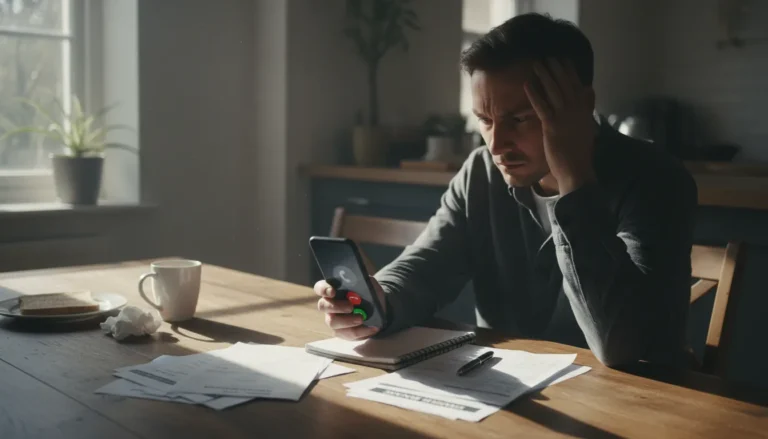
One recorded call can damage a Missouri injury claim long after the crash. The adjuster’s polite questions may preserve gaps, guesses, and pain-blurred answers for later use.
Being pressed to record a statement now? Contact Chad G. Mann for a consultation before speaking with the other driver’s insurer.
The Law Office of Chad G. Mann advises that a Springfield MO car accident lawyer can help. For a recorded statement after car accident Missouri claim, you generally need not record an interview for the other driver’s insurer. The request may sound routine, yet the adjuster can compare your words against medical records, later symptoms, and other evidence as your claim develops. While hurt, medicated, or still learning your injuries, you may guess, downplay pain, or omit facts that become important after further treatment. The insurer may later use that recording to argue you accepted fault, changed your account, or reported milder injuries than you now claim. Missouri insurance rules require standards for claim handling, but do not require this statement to the other driver’s insurer before you seek legal advice.
Chad G. Mann worked for insurance companies before representing injured Missourians, so he knows why early recorded calls matter. Must you answer the other insurer right now while treatment is unfolding and the full cost of the crash remains unclear? The next section starts there.
Recorded statement after car accident Missouri: Do you have to give one?
The short answer
If the other driver’s insurance adjuster calls after a Missouri crash, you do not have to give an immediate recorded statement. You may say that you are not agreeing to an interview now. You may respond after getting advice. That choice is not the same as refusing to report the collision or hiding facts.
A request may sound routine, especially when the adjuster asks before treatment and records are complete. A recording fixes your early words in place. Pain, shock, or missing details can make a fair answer sound inconsistent later. The firm’s discussion of ways insurers evaluate injury claims explains why early claim talks deserve care.
Whose insurer is asking?
Start by asking who the caller represents and whether the call is being recorded. The other driver’s carrier represents its insured’s interests, not yours. Under the firm’s Missouri guidance, an injured person has no automatic duty to give that carrier a recorded interview right after the crash.
Missouri insurance rules set claim-handling duties for insurers. For example, the rule covers written grounds for a denial. It also addresses a first-party claim after needed forms are submitted. The Missouri claim-handling rule governs insurer conduct. It is not a reason to rush into a recorded talk with another driver’s adjuster.
Your policy and a safe reply
Your own auto insurer is different from the other driver’s insurer. Your policy may require notice, cooperation, papers, or a statement in some cases. Do not assume that a polite decline to the other carrier answers a request from your own company. Check the policy and ask counsel how to meet its terms safely.
If the other carrier calls, a short reply can set a boundary: “I am not giving a recorded statement today. Please send your request in writing.” You can provide basic contact details. You do not need to agree to a recorded account of fault, symptoms, or treatment.
Keep the caller’s name, company, phone number, claim number, and the date of the request. Save letters, messages, photos, and medical papers. Before any recorded interview, you can speak with a Missouri car accident attorney. Counsel can help you learn which duties may apply under your own policy.
Why do insurance adjusters ask for a recorded statement?
If an adjuster calls soon after a crash, the request may sound like routine paperwork. If you are asked for a recorded statement after a car accident in Missouri, timing can still matter. The adjuster is gathering information for the insurer, not giving the injured person advice.
A request during early investigation
Insurance carriers need facts to investigate a claim, such as where the crash happened and who was involved. Missouri claim-handling rules require certain communications during the investigation, as shown in the state insurance regulation. Those rules do not turn every request for a recorded statement into a required step for the other driver’s claim.
Early in a case, important facts may still be developing. Pain can become clearer after the first call, and treatment records may not exist yet. An answer meant to be helpful can later be compared with medical records, photographs, or witness reports. A fuller overview of insurance company claim strategies explains how early claim details may be reviewed.
Questions about fault and injuries
The adjuster may ask what you saw, which direction each vehicle traveled, or whether you had time to brake. These questions help the carrier assess fault and possible defenses. An unsure answer is not the same as a false answer, but a recording preserves the words used on that call.
- Where were you looking just before impact?
- Did you say you were fine at the scene?
- When did pain begin, and where do you feel it?
- Were you treated before for the same body part?
A person may say, “I am fine,” meaning they do not need an ambulance at that moment. Later, the carrier may compare that phrase with a report of neck or back pain. This is why injury questions deserve care, even when the adjuster’s tone is polite.
Consistency in the claim file
A recording gives the carrier a fixed account to check against later information. Small differences may have ordinary reasons: stress, pain, incomplete treatment, or a simple memory gap. Still, an adjuster can note differences involving fault, symptoms, prior injuries, or daily limits.
The adjuster may be professional and courteous while doing this work. Their role is to evaluate the claim for the insurance company. Your role is not to guess, fill silence, or agree with a summary that is incomplete. Before answering a recorded request, it is reasonable to understand who is asking and why.
Common recorded-statement traps after a Missouri crash
A recorded statement after a car accident in Missouri may sound like routine claim paperwork. It creates a fixed account while details, pain, and treatment may still be developing. Answer only with facts you know; do not guess to keep the call moving.
Early answers that may be misunderstood
Missouri claim-handling rules address how insurers communicate about claims and give required notices. The rules include deadlines and written notice duties during certain negotiations. They do not make an early recorded interview the measure of an injured person’s honesty or recovery. You can review the Missouri claim-handling regulation before deciding how to respond.
Small talk can carry more weight on a recording. A polite “I am fine” may be repeated later if pain appears after the call. An estimate of speed or distance may sound firm when you only meant it as a guess.
| Question or request | Risk | Safer reply |
|---|---|---|
| “How fast were you going?” | A guess may conflict with records. | Say only what you know. |
| “You are fine now, correct?” | Symptoms can change after a crash. | Do not label your condition early. |
| “Any prior back problems?” | Context may be lost. | Seek advice before discussing history. |
| “Could you have avoided this?” | The answer may suggest blame. | Do not speculate about fault. |
| “Sign for all records.” | A release may be too broad. | Review it before signing. |
Accuracy without speculation
The safe course is not to hide facts or change your story. It is to avoid turning an uncertain memory into a recorded answer. If you do speak, state what you saw, heard, and did, then stop when a question calls for a guess.
A request may also blend basic claim information with questions about blame or injury history. Learning about common how insurers may challenge a claim can help you spot that shift. You may pause a conversation and ask for the request in writing.
Requests for records and blame
Medical history and authorizations deserve care. A prior condition does not answer what the crash changed, and a broad release may reach records outside the injury issue. Before signing or discussing sensitive history on a recording, ask what is needed and why.
The same caution applies to fault questions. Be truthful about what you observed, but do not accept blame just to be cooperative. If the questions turn broad or unclear, you can pause and speak with a Missouri car accident attorney before giving a recorded statement.

Before the call continues, request guidance from Chad G. Mann. He previously worked for insurance companies and can help you understand what the adjuster is asking.
What should you do when the other driver’s insurer calls?
A calm first response
An unexpected adjuster call can put you on the spot. You can be polite without discussing fault, injuries, treatment, or settlement. If the adjuster asks for a recorded statement after a car accident in Missouri, say that you are not giving one today.
Missouri claim-handling rules address insurer duties, including written notice about a time limit during direct talks with an unrepresented claimant. Those rules do not make an immediate recorded statement part of your response to the other driver’s insurer. Review the rule in Missouri’s unfair claims settlement regulation.
Six steps for the call
Keep the first conversation short and controlled. A simple plan helps you protect useful records while you decide what help you need.
-
Get the caller’s information. Write down the adjuster’s name, company, phone number, email address, claim number, and the insured driver’s name.
-
Ask for future contact in writing. Give only basic contact details needed for mail or email. Do not guess about speed, impact, pain, work loss, or prior health history.
-
Decline a recorded statement for now. Say, “I am not providing a recorded statement today.” You do not need to debate the request or fill the silence.
-
Save evidence before it is lost. Keep crash photos, witness names, the police report number, repair records, medical bills, appointment notes, and the adjuster’s messages together.
-
Get care if you are hurt. If you have pain or other symptoms, seek medical care as appropriate. Follow treatment advice, and keep records of visits and limits on daily activity.
-
Speak with counsel before a follow-up call. An attorney can review what the insurer requested and help decide how claim communications should proceed.
What to do after you hang up
Make a short note with the date, time, caller, and requests made. Save voicemails and emails. Do not post crash details, medical updates, or photos on social media while the claim is being reviewed. A pause helps you respond from records instead of memory.
If an adjuster is pressing for a statement, learn more about common claim denial warning signs. You can then ask a Missouri car accident attorney to review the call, your records, and the next step.
How can a recorded statement affect your injury claim?
A recorded statement can shape the way an insurer views your account of a crash. It is not the same as the full proof of your claim. But it may be compared with medical records, photographs, witnesses, and later answers. That comparison can create arguments about fault, injury, and damages.
Gaps in the injury account
After a wreck, people often answer before they know how their injuries will develop. Pain may worsen after the call, or a doctor may later find another injury. If you first report neck pain and later report back pain, an adjuster may call that change inconsistent. The issue may become credibility, even when the change has a sound explanation.
A brief answer may omit limits that matter, such as missed work or trouble sleeping. Later, the insurer may argue those limits were not part of your early account. This is why accuracy matters more than speed when describing symptoms and daily limits. The firm’s guide to insurer denial tactics in Missouri explains other ways a claim may face added scrutiny.
Arguments about how the crash happened
A statement also fixes your early wording about lanes, lights, distance, speed, and timing. You may not know every detail while you are shaken or without the crash report. A casual guess can become a disputed point. The insurer may use it to argue you share fault or that its insured caused less of the harm.
A small difference in wording does not end a valid injury claim. People can use different words for the same event. Records and other proof still matter. But an unclear answer can add a dispute that must be addressed before settlement talks can move forward.
Pressure in settlement talks
When the insurer believes it has a contradiction, it may use that point in negotiations. The dispute can affect how the insurer values pain, treatment, lost income, or fault. A careful claim should be based on full records and an accurate account, not a rushed call made soon after the crash.
Missouri claim handling rules address how insurers must respond during a claim investigation. If more time is needed after initial notice, an insurer must send notices that state the reasons for delay. This duty appears in Missouri’s unfair claims settlement regulation. Those rules do not make an incomplete statement reliable proof of the crash or your injuries.
When should you talk with a Missouri car accident lawyer?
Before you answer an adjuster
If an adjuster asks for a recorded statement after car accident Missouri claim calls begin, pause before agreeing. A recorded interview can lock in words said while you are shaken, sore, or still learning what treatment you need. Missouri claim handling rules require written steps in parts of the claims process.
You do not need to decide during an unexpected call. Ask who is calling, note the claim number, and say you want to review the request first. This keeps the conversation focused on logistics, not a detailed account recorded before records and treatment plans are clear.
This matters most when the other driver’s carrier requests a recording, medical authorization, or early settlement talk. If your care is not complete, you may not yet know the full effect of the crash. Fault may also be disputed even when the first call sounds routine.
Signs legal advice should come first
Talk with a lawyer before a statement or settlement discussion if you have lasting pain or an unclear diagnosis. Do the same if you missed work or a doctor may recommend surgery. Get advice first when fault is disputed or an insurer wants broad access to medical records.
A quick offer can seem helpful when bills are arriving. It may not account for care that is still underway or facts not yet collected. Chad G. Mann’s guide to insurance adjuster tactics explains why an insurer may question an injury claim or value it narrowly.
Red flags include pressure to answer on the same day or language suggesting that a settlement expires at once. A lawyer can help separate routine claim paperwork from requests that could shape how injuries or fault are viewed.
What a lawyer can review first
A lawyer can review the police report, available records, insurance requests, and the stage of your treatment before you respond. He can also flag a release or authorization that reaches beyond the information needed for the crash claim.
Chad G. Mann previously worked for insurance companies. That background informs his advice about questions an adjuster may ask and documents an insurer may seek. Before recording a statement or accepting a quick resolution, you can speak with a Missouri car accident attorney about the next step.
You have more power than you may think in that first exchange. A short pause leaves room for careful facts, current medical information, and informed choices.
Frequently Asked Questions
Chad G. Mann helps injured Missourians understand the risks of early insurance conversations. These short answers address common recorded-statement questions before you decide how to respond.
Do I have to give a recorded statement after a Missouri car accident?
No. An injured person generally does not have an automatic legal duty to give the other driver’s insurer a recorded statement immediately after a Missouri crash. That request is different from reporting the accident to your own insurer. The firm’s Missouri guidance recommends speaking with an attorney before answering recorded questions about fault, injuries, or treatment.
Can a recorded statement hurt my Missouri car accident claim?
Yes. A recorded statement creates fixed answers that may be compared with medical records, later recollections, and other evidence. A rushed answer about pain, movement, or prior symptoms may be framed as an inconsistency. According to the Law Office of Chad G. Mann, adjusters may look for inconsistencies that can be used against a claimant later.
Why do insurance adjusters ask for a recorded statement?
An adjuster may ask for a recording to gather the claimant’s account early, before injuries and treatment are fully understood. The insurer can review that recording when deciding fault, causation, or claim value. The firm’s claim guidance explains that recorded statements may be used to identify inconsistencies later in the claim. A polite refusal pending legal advice preserves the option to respond carefully.
Can I speak with the other driver’s insurance company after a crash?
You can provide basic contact information and request that communications be in writing. Avoid a recorded interview, guesses about speed or fault, and detailed injury descriptions before you know your medical condition. Missouri rules address fair claim handling, but they do not require a third-party claimant to give a recorded statement, according to Missouri insurance regulations. Counsel can communicate with the insurer for you.
Ready to protect your injury claim before you speak?
A recorded conversation can leave you explaining words chosen while you were hurt, stressed, and still learning the full impact of the crash. Waiting to get guidance may allow an insurance conversation to happen before you know which details matter and what questions require care. Starting now gives you time to organize your concerns, understand your next step, and approach any requested statement with a clear plan.
Ready to protect your claim before speaking with an adjuster? Request a consultation before speaking with an insurance adjuster. Bring your questions about calls, requests, and next steps so your first decision is informed and deliberate. Contact our office now to discuss the request before a recorded response creates avoidable uncertainty in your claim.