

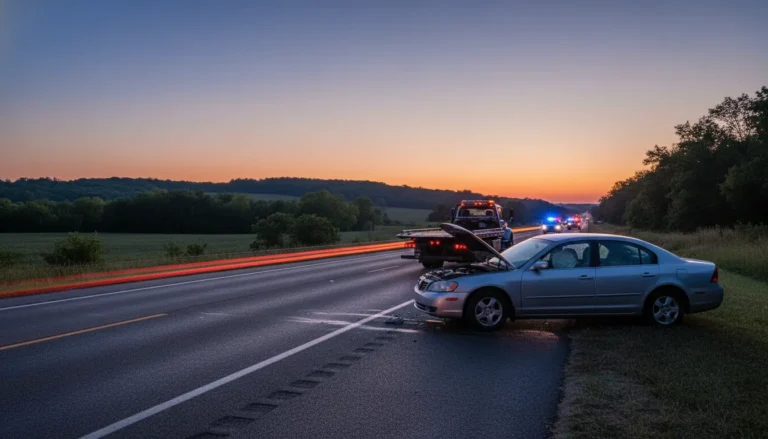
An impaired driver’s arrest does not pay your hospital bill or missed wages. If you were injured by a drunk driver in Missouri, your path to recovery usually runs through a separate civil injury claim. A Missouri car accident lawyer can help pursue the civil claim beyond any criminal case.
Injured in a Missouri drunk driving crash? Schedule a consultation with The Law Office of Chad G. Mann to discuss your civil claim options.
Injured by a drunk driver Missouri is the search many crash victims make after an arrest fails to resolve their injuries or bills. A civil claim is separate from the state’s criminal DWI prosecution. The criminal case seeks punishment, while the civil case can address proven medical costs, lost income, pain, and other losses.
Preserve the crash report, treatment records, witness details, and insurance communications. The Missouri State Highway Patrol recognizes civil recovery as distinct from criminal prosecution. Early review may also help identify available insurance coverage and evidence that could disappear while the criminal process continues.
The question is not only whether the driver will face charges; it is how you can pursue documented losses without waiting for prosecution to fix them. Injured by a drunk driver in Missouri: your civil claim explains that next step. Here is how.
Injured by a Drunk Driver Missouri: Civil Claim Basics
If you were injured by a drunk driver in Missouri, you may have a civil injury claim. That claim is separate from the DWI case filed by the state. A criminal case may affect evidence. It does not take your place as the person seeking payment for losses.
Two cases with different purposes
The prosecutor controls the criminal DWI case. Its purpose is to prove an offense and seek a criminal penalty. You control whether to bring a civil claim against the responsible party. That claim asks for payment tied to harm from the crash.
The Missouri State Highway Patrol explains that civil legal action may address losses such as medical expenses and lost wages. Your records and the crash facts guide what losses can be claimed. Each case depends on its own proof.
| Issue. | Criminal DWI case. | Civil injury claim. |
|---|---|---|
| Who brings it. | The state. | The injured person. |
| Main purpose. | Address an alleged offense. | Seek payment for crash harm. |
| Who directs it. | Prosecutor. | Injured person and counsel. |
| Proof standard. | Higher criminal standard. | Lower civil standard. |
| Possible result. | Criminal penalty. | Payment if proven. |
Why the criminal case is not your claim
A guilty plea or conviction can be useful evidence. You do not have to treat it as your only path. The two cases answer different questions. The state seeks to prove DWI; a civil claim addresses supported harm from the crash.
A civil case also uses a different proof standard from the criminal case. In plain terms, the prosecutor faces a higher proof burden. An injured person bringing a civil claim faces a lower one. A criminal outcome does not decide what a civil case may recover.
Why waiting can cost you proof
Do not assume you should wait until the DWI case ends before learning your civil options. Crash reports, medical records, bills, wage records, and witness contact details may be easier to gather soon after the crash. Early review can help you understand papers before signing them.
You can read more about compensation for accident victims after a Missouri crash. For advice on an impaired driver claim, speak with a Springfield auto accident injury attorney about your case facts.
What evidence should you preserve after a drunk driving crash?
If you were injured by a drunk driver in Missouri, preserve records before details are lost or overwritten. You do not need to investigate the driver yourself. Your task is to save what exists and keep your care on track. The Missouri State Highway Patrol notes that the official accident report and treatment documents can matter in a civil case.

Records to save first
Protect your health first, then start a simple evidence file. A family member can help if pain, medicine, or stress makes record keeping hard.
-
Get emergency and follow-up care. Keep discharge papers, visit summaries, referrals, prescriptions, test results, and bills. Note new symptoms and the date you report them to a provider.
-
Request crash and DWI information. Save the report number, agency name, officer details, and citation details. Keep any instructions for obtaining the report. Do not try to gather alcohol-test results at the scene.
-
Preserve photos and vehicle condition. Save photos of injuries, vehicles, the road, debris, skid marks, and damaged property. Do not repair, sell, or discard the vehicle before its condition is documented.
-
Keep witness and recording details. Save names, phone numbers, and messages from witnesses. Ask nearby businesses or homeowners to save available video. Let counsel handle formal requests.
-
Track financial loss. Keep receipts for care, travel, medication, towing, rental cars, and replacement items. Save pay stubs and employer notes about time missed from work.
-
Save insurance communications. Keep claim numbers, letters, emails, texts, voicemail, and copies of forms. Write down the date, caller, and subject of each phone call.
Photos, devices, and storage
Original files are stronger than a memory of what happened. Back up photos, dashcam clips, phone videos, and messages without editing them. For more on scene records, see this guide to collecting evidence in Missouri injury cases.
Keep damaged clothing, helmets, child seats, and personal property in a safe place. Label each item with the crash date and where it was found. Do not post crash photos or comments about fault on social media.
Information to preserve, not pursue
A suspected impaired-driving crash may involve police, medical providers, insurers, and witnesses. Save what they give you and request copies through proper channels. Avoid confronting the other driver or searching for evidence on your own.
Create one folder for paper records and one digital backup. A short timeline of care, work loss, calls, and expenses can keep the record clear as the case moves forward.
What damages may be part of a Missouri injury claim?
A Missouri civil injury claim may address documented medical costs, lost income, property damage, pain, and disruption to daily life caused by the collision. The available damages depend on the facts and proof in each claim, not simply on whether the other driver was arrested.
Losses tied to the crash
A civil claim asks for payment for losses caused by the crash. It is separate from the criminal case against an impaired driver. Missouri State Highway Patrol materials explain that victims may seek medical expenses and lost wages through civil legal action.
Medical damages can include emergency care, hospital bills, therapy, medication, and later care when records support the need. Income loss may include missed work or less ability to earn. A claim may also address vehicle repairs or replacement, plus damaged items inside the vehicle.
Pain and daily life effects
Some losses do not appear on a bill. Pain, sleep problems, limits on movement, and loss of usual activities can affect a claim. The issue is not a set price for suffering. The issue is how the injury changed daily life and what proof shows that change.
If you were injured by a drunk driver in Missouri, the value of a claim depends on its own facts. Bills, recovery time, work loss, insurance limits, and disputed fault may all matter. Our guide to compensation for accident victims explains this review in more detail.
Proof and punitive damages
Proof often starts with medical records, invoices, pay records, repair estimates, photos, and notes about missed activities. Keep the police report and contact details for witnesses as well. The Highway Patrol describes the accident report and medical records as important parts of a civil case.
Punitive damages are different from payment for treatment, wages, or pain. They may be requested only when the facts and Missouri law support that request. Alcohol use alone does not promise any award. The available proof and legal rules control whether punitive damages can be pursued.
A careful damages review connects each claimed loss to the collision. It also separates known expenses from future needs that still require medical or work proof. That approach gives the claim a clear basis without promising a result.
How can the DWI case affect your civil claim?
When you are injured by a drunk driver in Missouri, a DWI investigation may preserve evidence for a separate injury claim. The state addresses the alleged offense. Your civil matter asks who caused the crash and what losses followed. Missouri Highway Patrol materials describe civil claims as separate from criminal prosecutions.
Evidence gathered in the DWI investigation
The officer’s work may create a useful record soon after the collision. The crash report can identify drivers, passengers, road conditions, witnesses, and the officer’s first observations. Those early details may help test later accounts from a driver or insurer.
- Crash reports may record the scene, cited conduct, and witness names.
- Breath, blood, or urine test records may address alcohol evidence.
- Officer notes may describe speech, balance, odor, or driving conduct.
- Body camera, dash camera, or nearby video may show events and timing.
- Witness statements may describe driving before impact or behavior afterward.
Missouri law allows chemical analysis of blood, breath, saliva, or urine to show alcohol content. A civil attorney can seek available records and compare them with medical records and crash damage. This work is part of documenting a Missouri vehicle accident, not just tracking the DWI charge.
The criminal outcome and liability
A plea or conviction may support an argument that the driver was impaired. It does not, by itself, prove each part of an injury claim. The civil case still must connect the driver’s conduct to the collision and the injuries claimed.
A dismissal, amended charge, or pending criminal case does not decide the civil matter on its own. Witness accounts, recordings, vehicle damage, treatment records, and other proof may still support liability. Civil and criminal proceedings serve different purposes, with different evidence issues.
Proof of harm after the crash
Even strong DWI evidence does not show the full cost of an injury. Medical bills, treatment notes, wage records, and proof of daily limits help explain damages. A claimant must also show that the crash caused or worsened the harm.
A civil claim does not always need to wait for the criminal court result. Preserving records early can matter because video may be lost and memories may fade. An alcohol seller may also share fault in some cases. If so, liability for businesses serving intoxicated drivers may need separate review.
Could anyone besides the impaired driver be responsible?
The impaired driver is usually the first focus of a civil claim. But fact-supported evidence may warrant reviewing insurance coverage or, in limited circumstances, alcohol service by a business. A separate party should be considered only when the records justify that investigation.
The main civil claim
If you were injured by a drunk driver in Missouri, the main civil claim starts with the driver who caused the crash. A DWI charge is handled in a criminal case. An injury claim seeks payment for losses. Missouri public safety guidance explains this difference between criminal and civil cases.
That starting point does not prove that every loss will be paid, or that another party must pay it. The review should start with the crash facts and the driver’s insurance. It should also include medical records, wage records, and evidence of how the wreck occurred.
Sources of recovery to review
A careful case review looks for each fact-supported source of recovery. That often includes the impaired driver’s auto coverage. It also includes proof of losses tied to the crash, such as medical bills and lost wages. The records may raise coverage issues that need close review.
Keep police reports, witness information, treatment records, bills, and insurance letters together. Those items help support the claim against the driver. They can also show whether there is a sound reason to investigate any separate claim. That is better than making assumptions early.
Questions about alcohol service
Some crashes raise questions about whether a business served alcohol before the driver took the wheel. That question needs evidence about the service and the events before the crash. Impairment alone does not establish that a bar or restaurant is responsible for the injuries.
For careful context, the firm’s article on liability for businesses serving intoxicated drivers discusses that separate issue. It does not replace the injured person’s main claim against the driver and the driver’s insurer.
When the records support further review, an attorney can examine both paths without losing focus on the main injury claim. The goal is simple: follow the proof, preserve valid claims, and avoid naming parties without a sound factual basis.
What happens after you start a civil injury claim?
If you were injured by a drunk driver in Missouri, a civil claim has its own purpose. It seeks payment for losses caused by the crash. That claim is separate from the criminal prosecution brought by the state, as the Missouri State Highway Patrol victim guidance explains. The steps below describe a usual path, but each injury and insurance dispute can change it.
The early claim sequence
A claim should begin with care and clear records, not a rush to settle. Early work helps show what happened, what treatment was needed, and what losses may still develop.
- Get medically stable and keep records. Follow the treatment plan and save bills, discharge papers, work notes, and receipts. Keep a simple list of symptoms, visits, and missed work.
- Give needed notice to insurers. A claim may trigger calls, forms, or requests for a recorded statement. Before signing releases or discussing a final payment, know what the document covers.
- Investigate the crash and injuries. Gather the crash report, photos, witness details, medical records, and available insurance information. Criminal DWI evidence can matter, but the civil claim still requires proof of loss.
- Present a demand or negotiate. Once the injury picture is clear enough, the claim can set out responsibility and documented losses. The insurer may respond, ask for more records, or dispute part of the claim.
- File suit when appropriate. A lawsuit may be needed if fault, insurance coverage, or fair payment remains in dispute. Filing suit starts formal court steps; it does not mean every case goes to trial.
Records guide the value of the claim
Medical records connect the crash to your care and show how recovery unfolds. Pay stubs, employer notes, and bills can also help show financial harm. Evidence from the scene can help address questions about the driver and the cause of the wreck.
Do not assume that a DWI arrest alone proves every part of your civil loss. A lawyer may compare the crash report, treatment history, wage records, and witness accounts. The firm’s guide to records after a Missouri vehicle accident explains items that may help protect a claim.
Negotiation, suit, and timing
Many claims include insurer contact before a lawsuit is filed. An early offer may arrive before doctors understand the full course of recovery. Accepting a final settlement can end the ability to seek more payment for that claim, so review matters before signing.
Deadlines also require care. The time to file can depend on the claim, the parties, and other facts. It is safer to ask about the deadline soon after the crash than to wait while records become harder to secure.
If you are weighing an offer or do not know the next step, contact the Law Office of Chad G. Mann. The office can review the crash facts, current care, insurance contact, and the civil path that may fit your situation.
When should you talk with a Missouri injury lawyer?
A separate civil claim
If you were injured by a drunk driver in Missouri, you may be watching for an arrest or court date. That criminal case does not replace your need to address hospital bills, missed work, and the effects of your injuries. Missouri State Highway Patrol materials explain that a civil case is separate from the criminal prosecution. A case review can help you understand that separate path.
You do not have to wait for the criminal case to end before asking about your options. A lawyer can review what is known and explain what still needs proof. The lawyer can also track how the criminal process may affect evidence. This is not a promise of a result. It is a practical way to keep your own losses in view.
Records and insurance contact
A review is worth considering soon after medical care begins or an insurer requests a recorded statement. Crash reports, treatment records, bills, pay records, photographs, and witness details can matter to a claim. Memories fade. Records can be harder to gather later. Early calls from insurers may arrive while you are still healing.
A lawyer can help organize records and handle contact with the insurance company about your injury claim. You can focus on medical care while your claim is documented in a careful way. Chad Mann discusses related steps in his guide to vehicle accidents in Missouri.
Damages and possible added claims
It may also be time to talk with a lawyer when the injury affects your work, home duties, or future care. A review can account for documented medical costs, lost income, pain, and the course of recovery. It should not be based only on the first bill or an early insurance offer.
Some impaired-driving crashes raise questions about other responsible parties, such as a business that served alcohol. Those questions call for proof, not guesses. Records, witness accounts, and facts leading up to the crash must guide any added claim.
You may want advice if fault is disputed, your treatment continues, or the insurer asks you to settle. A Springfield auto accident injury attorney can assess the records and explain the next step. A review can show which losses have support and which evidence still needs to be gathered.
Frequently Asked Questions
Does a Missouri civil injury claim require a DWI conviction?
No. A person injured by a drunk driver in Missouri may pursue a civil injury claim separately from the state’s criminal DWI case. The Missouri State Highway Patrol explains that criminal cases punish offenders, while civil cases seek compensation for victim losses. A conviction may provide useful evidence, but a civil claim depends on proof of liability and damages under civil standards.
What records should I keep after a Missouri crash involving an impaired driver?
Keep the crash report, photographs, witness contact details, insurance communications, medical records, bills, prescription receipts, wage-loss proof, and notes about symptoms or missed activities. The Missouri State Highway Patrol identifies accident reports and medical-treatment documentation as important civil-case evidence. Save original files and correspondence, and avoid discarding records after an insurer or criminal court becomes involved.
Does insurance pay damages after a drunk driving crash in Missouri?
Insurance may provide a source of recovery, but payment is not automatic and depends on policy coverage, liability evidence, documented losses, and any applicable defenses. In a civil claim, recoverable losses may include medical expenses and lost wages, as noted by the Missouri State Highway Patrol. An injured person should preserve bills and review any settlement offer carefully before signing a release.
When should I contact a lawyer after being injured by a drunk driver in Missouri?
Consider contacting a Missouri injury lawyer soon after urgent medical needs are addressed, especially before giving a recorded statement or accepting a settlement. Early advice can help identify records to preserve and explain the separate civil and criminal processes. Timing matters because evidence can become harder to obtain; speaking with counsel does not guarantee a claim outcome or a particular recovery.
Ready to Discuss Your Civil Claim After an Impaired Driver?
After an impaired-driver crash, waiting can leave medical expenses, missed work, and insurer questions hanging over your recovery. Taking action now gives you time to understand your civil claim options and decide on practical next steps. A careful review can help you organize your concerns, ask informed questions, and choose how to move forward with confidence.
You can explain what happened, raise your concerns, and discuss your legal options in plain terms. Use the conversation to clarify your questions and choose what you want to do next.
Ready to protect your next steps after a Missouri crash? Schedule a consultation with The Law Office of Chad G. Mann.