

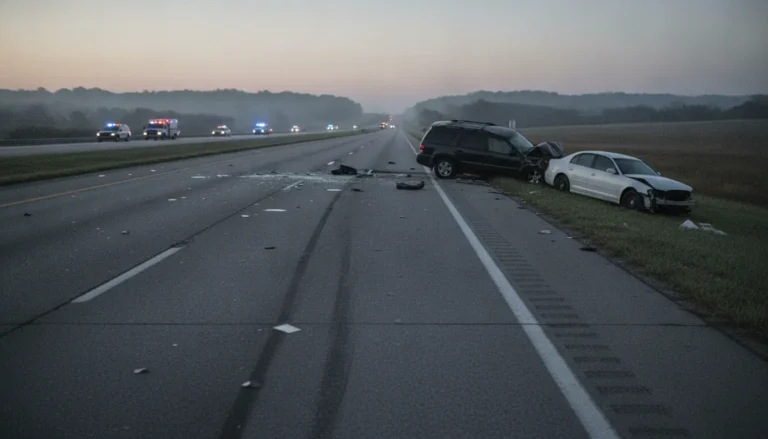
A car accident with an out-of-state driver in Missouri can make an already difficult situation feel even more complicated. The other driver may leave Missouri within days. Their insurer may be based hundreds of miles away. You may also hear conflicting information about which state’s rules apply and where a claim can be handled. Insurance questions may also involve a rental car accident or pressure from an insurance adjuster.
Schedule a Springfield consultation about your Missouri car accident claim. A Missouri car accident attorney can help sort out coverage when an out-of-state driver is involved.
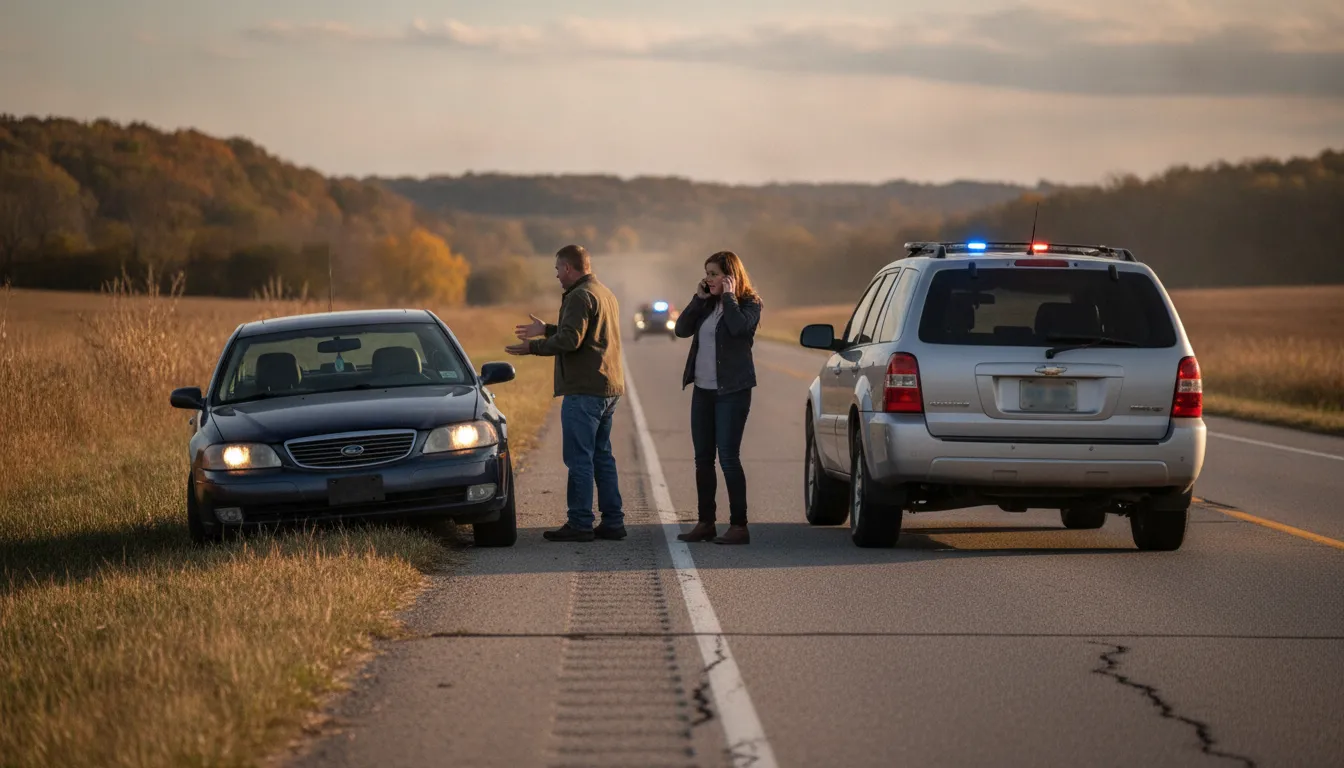
The short answer is that an out-of-state license plate does not prevent an injured person from pursuing a claim. When a collision happens in Missouri, the crash location, the facts, and the applicable insurance policies all matter. Promptly documenting the scene, obtaining medical care, and preserving information about every involved driver and vehicle can protect your ability to evaluate the claim. For more information, see our guide on rental. For more information, see our guide on uninsured.
This guide explains the practical issues that can arise after a Missouri collision involving a visitor, rental vehicle, or commercial driver. It is general information, not legal advice for a particular claim. A Springfield attorney can review the details and explain how they may affect your options.
Why a car accident with out-of-state driver Missouri claim is different
The basic work of proving a collision does not disappear when the other driver lives elsewhere. A claimant still needs evidence showing how the crash happened, who may be responsible, and what losses resulted. The difference is that an interstate claim can add questions about jurisdiction, policy terms, service of legal papers, and communication across state lines.
The crash location matters
The location of the collision is often central because Missouri roads, investigating agencies, witnesses, medical providers, and physical evidence may all be connected to the claim. Missouri law may govern important issues arising from a crash in Missouri, but the complete analysis depends on the particular facts. The driver’s home state and the language of each insurance policy can also affect certain questions.
Do not assume that you must travel to the other driver’s state or negotiate under unfamiliar rules simply because the vehicle had an out-of-state plate. Likewise, do not assume that every issue will automatically be resolved in Missouri. Jurisdiction and venue can be technical, especially if multiple companies, vehicles, or policies are involved. The firm’s overview of its personal injury practice areas explains related representation available in Southwest Missouri.
Distance creates practical challenges
An out-of-state driver may be difficult to contact after leaving. Their vehicle could be repaired before it is inspected. A rental company or employer may hold records that are not immediately available. Witnesses who were traveling may also disperse quickly. These realities make early evidence preservation especially important.
Insurance communication can also become fragmented. You may hear from the other driver’s carrier, your own carrier, a rental company, or a commercial insurer. Each may request information for a different reason. Keeping a written log of calls, emails, names, claim numbers, and requests can reduce confusion.
What should you do immediately after the crash?
Your first priorities are safety and medical attention. Once urgent needs are addressed, take practical steps that create a reliable record. If an injury or safety concern prevents you from gathering information, ask a trusted person to help when possible.
- Call 911 and report the collision. Request emergency help when anyone may be hurt. An official response can document the drivers, vehicles, location, and initial observations.
- Move to a safer location when appropriate. Follow instructions from law enforcement and emergency personnel. Do not place yourself in danger to take photographs or inspect damage.
- Exchange complete information. Obtain the driver’s name, home address, phone number, license state and number, license plate, insurer, policy information, and vehicle owner information. Photograph documents when permitted.
- Document the scene. Take wide and close photographs of vehicle positions, damage, road markings, traffic controls, debris, weather, and visible injuries. Record the exact road, direction of travel, and nearby landmarks.
- Identify witnesses. Ask for names and contact information. A neutral witness may later clarify what happened after the drivers have left the scene.
- Seek appropriate medical care. Some symptoms are not obvious immediately. Describe symptoms accurately and follow the provider’s instructions.
- Save every record. Preserve the report number, medical paperwork, receipts, repair estimates, towing records, photographs, and communications with insurers.
Avoid arguing about fault at the roadside. Give accurate information to law enforcement, but do not guess about speed, distance, or injuries. Stress and adrenaline can affect perception. A careful record is more useful than a rushed conclusion.
How does insurance work when the other driver lives elsewhere?
The other driver’s insurer may assign an adjuster who handles claims nationally or from another state. The adjuster may ask for a recorded statement, medical authorization, photographs, or a quick settlement discussion. Cooperation obligations differ depending on whether the request comes from your own insurer or another party’s carrier, so it is sensible to understand the request before responding.
Confirm the policy and the claim number
Start by confirming the carrier name, claim number, adjuster’s contact information, and the policy being reviewed. Ask how documents should be submitted and keep copies. If the driver was using a vehicle owned by someone else, identify that owner and any additional available insurance. Your own policy may also contain relevant coverages, depending on its terms and the circumstances.
Insurance policies are contracts. Their definitions, exclusions, limits, notice provisions, and endorsements can matter. A policy issued elsewhere may still respond to a Missouri crash, but it should be reviewed rather than assumed. The existence of coverage is also separate from the question of who caused the collision.
Be cautious with recorded statements and releases
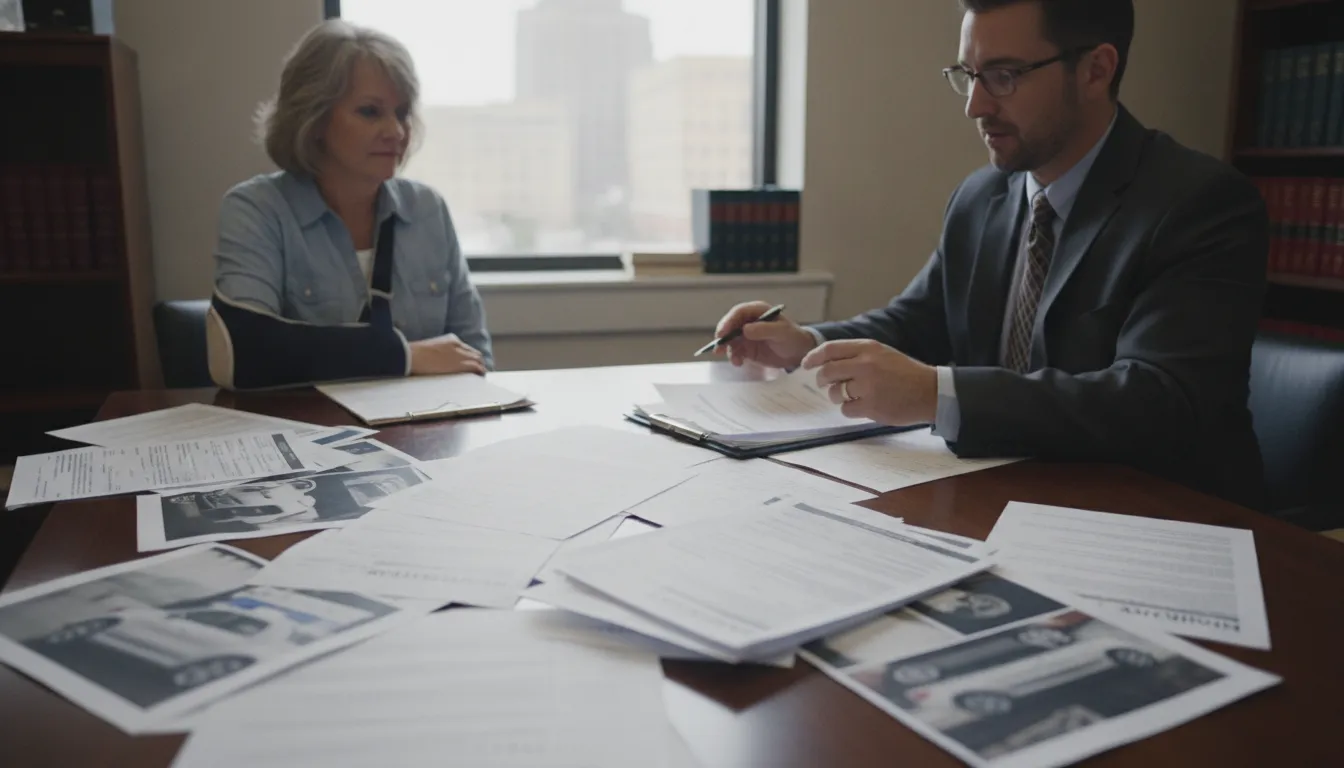
An adjuster may ask questions before the full extent of an injury or loss is known. Answering accurately is important, but guessing can create problems. Do not estimate what you did not observe. Do not minimize symptoms merely because they are still developing. Before signing any release, understand which claims and parties it covers and whether signing ends the claim.
If you need help evaluating communications and policy issues, review the firm’s page about working with a Springfield auto accident injury attorney. Legal review can be particularly useful when insurers dispute responsibility, coverage, or the connection between the crash and an injury.
Learn what to expect from a free injury-law consultation.
Evidence to preserve before the out-of-state driver leaves Missouri
Strong claims are built on evidence, not assumptions. Some evidence remains available for years, while other information can disappear quickly. A vehicle may be repaired or sold. Surveillance video may be overwritten. Electronic data may not be retained indefinitely. Witness memories can fade.
Scene and vehicle evidence
Preserve original photographs and videos rather than only screenshots or compressed copies. Images showing the whole scene provide context, while close images document specific damage and marks. Save photographs of every side of each vehicle, not just the most obvious impact point. If a dash camera or phone captured the event, preserve the original file and any associated date or location data.
Repair estimates, invoices, towing records, and vehicle inspection material can help explain the force and location of impact. In a serious crash, decisions about inspection or disposal of a vehicle may have consequences. Get advice before evidence is altered when liability or vehicle condition is disputed.
Medical and financial documentation
Keep a timeline of symptoms, appointments, treatment recommendations, and limitations. Save bills and records from hospitals, clinics, pharmacies, therapists, and other providers. Accurate documentation helps connect the treatment history to the collision without relying only on memory.
If the crash affects your work, retain schedules, pay information, employer communications, and records showing missed time or changed duties. Save receipts for transportation, replacement services, and other collision-related expenses. Not every expense is necessarily recoverable, but a complete record allows it to be evaluated.
Communications and official records
Write down the police report or incident number and the investigating agency. Save emails, letters, texts, and portal messages from insurers, rental companies, employers, or vehicle owners. Keep a call log listing the date, person, organization, and topic. If facts are later disputed, contemporaneous records may clarify what was reported and when.
Rental cars and commercial vehicles can add more layers
An out-of-state plate does not necessarily mean the driver owns the vehicle. Visitors often use rentals, and commercial vehicles regularly cross Missouri. Identifying the driver, owner, employer, and every potentially relevant policy early can prevent an incomplete claim analysis.
| Issue. | Personal vehicle. | Rental or commercial vehicle. |
|---|---|---|
| Potential parties. | Driver and vehicle owner. | Driver, owner, rental company, employer, contractor, or other business depending on the facts. |
| Useful records. | Policy, photographs, repair records, and driver information. | Rental agreement, employment records, dispatch data, inspection records, and applicable policies. |
| Coverage questions. | Driver and owner policies. | Personal policy, rental coverage, employer or commercial policy, and contract terms. |
| Early concern. | Preserving scene and vehicle evidence. | Identifying all entities and requesting preservation of business records. |
A rental agreement may identify authorized drivers and selected coverage options. It may also contain notice or reporting requirements. The rental company’s role should be evaluated from the facts and applicable law, not assumed merely because it owns the vehicle.
A commercial crash may involve records that do not exist in an ordinary collision, such as dispatch information, maintenance material, driver qualification records, electronic data, or company policies. Whether any particular record exists or matters depends on the vehicle and operation. Early investigation helps identify what should be requested and preserved.
How crash location and policy terms affect the claim
Two separate questions often become blurred: which legal rules apply, and which insurance contract may provide coverage. The collision location can be important to liability and procedure. Policy language can determine what coverage is available, who qualifies as an insured, and what steps must be followed. Both questions require close attention.
For example, the fact that a policy was issued in another state does not by itself answer every coverage question. Nor does a Missouri crash automatically resolve every dispute about an out-of-state contract. Courts and insurers may examine the policy language, the parties’ connections, the vehicle, and the circumstances of the collision.
Deadlines can also matter. A claimant should not rely on informal negotiations as proof that every deadline is protected. Because the correct timing analysis depends on the facts and potential parties, obtaining an individualized review sooner is generally safer than waiting until evidence is harder to obtain. For cost-related context, see this explanation of contingency fees in Missouri law.
Common mistakes that can make an interstate claim harder
- Failing to record the driver’s home-state information. A license plate alone may not provide everything needed to identify and contact the proper parties.
- Assuming the police report decides the entire claim. A report is important, but photographs, witnesses, medical records, and other evidence may also matter.
- Giving estimates or guesses to an adjuster. If you do not know an answer, say so rather than speculating.
- Signing a release before understanding it. A release may end rights against named parties or claims. Read it carefully and obtain advice when needed.
- Waiting to preserve evidence. Vehicles get repaired, video is overwritten, and traveling witnesses become harder to reach.
- Ignoring your own policy. Depending on its terms, your insurer may require notice or provide coverage relevant to the loss.
- Posting details publicly. Social posts, photographs, and comments can be taken out of context during a dispute.
Careful organization is one of the most useful things an injured person can do. Create a folder for claim communications, records, photographs, and expenses. Maintain a simple chronology. This helps an attorney or insurer understand the events and makes missing information easier to spot.
Frequently asked questions
Can I bring a claim if the other driver does not live in Missouri?
Potentially, yes. An out-of-state residence does not erase responsibility for a Missouri collision. The proper claim process and forum depend on the crash facts, parties, insurance policies, and applicable law.
Which state’s law applies to an out-of-state driver crash?
The Missouri crash location may be important, but a complete choice-of-law analysis can depend on the issue being decided and the parties’ connections. Insurance policy language may raise additional questions.
Should I speak with the other driver’s insurance adjuster?
Understand who the adjuster represents and what information is requested before responding. Be truthful, do not guess, and consider legal advice before a recorded statement or release.
What if the out-of-state driver was using a rental car?
The rental agreement, authorized drivers, selected coverage, personal policies, and other facts may matter. Preserve the rental information and identify every involved company and insurer.
Talk with a Springfield car accident attorney
A car accident with an out-of-state driver in Missouri can involve unfamiliar insurers, disappearing evidence, and questions about where and how to proceed. The Law Office of Chad G. Mann can review the collision facts, available records, and insurance communications with you. Individual results and options depend on the specific circumstances.
Schedule a Springfield consultation about your car accident claim to discuss your next steps.