


A fall on a wet store floor, an unmarked step, or an attack by a dog can leave you facing pain, medical bills, and uncertainty about what happened. Missouri premises liability law asks an important question: did the property owner or occupier take reasonable steps to keep lawful visitors safe from hazards they knew or should have known about?
A premises liability lawyer Missouri residents trust can investigate the condition, identify who controlled the property, and explain whether a claim may be available. The strength of a claim depends on the facts, including why you were on the property, how the injury occurred, and what evidence remains.
These cases can involve businesses, landlords, hotels, parking areas, and private residences. Understanding the basic duty owed to visitors is the starting point for evaluating what happened and what steps may protect your rights.
Get a free consultation about your slip and fall, dog bite, or unsafe property injury.
What Is Premises Liability in Missouri?
Premises liability is the area of personal injury law that addresses injuries caused by dangerous conditions on property. A person may have a claim after a slip and fall, a fall on broken stairs, an injury near a pool, or another unsafe condition.
In general, Missouri property owners and occupiers must take reasonable steps to keep their premises safe for people who are allowed to be there. That can include fixing a dangerous condition, inspecting for hazards, or providing an appropriate warning. The issue is often whether the owner knew, or reasonably should have known, about the danger and failed to respond. Missouri law expressly preserves liability for certain failures to guard against or warn of dangerous conditions, including conditions connected with residential areas and swimming pools. Read the Missouri statute.
What counts as a residential area?
For purposes of the Missouri statute, a residential area generally means a tract of one acre or less used predominantly for residential purposes. It can also mean land of any size used for multifamily residential services. This definition may matter when an injury occurs at an apartment complex, a shared residential property, or another place where people live.
Why visitor status matters
Missouri premises liability law also considers why the injured person was on the property. An invitee is generally someone invited for a purpose connected to the property owner’s business, such as a customer in a store. A licensee has permission to be present for a personal or social purpose, such as a houseguest. A trespasser enters without permission. The legal duties and available arguments can differ depending on that status, the condition involved, and the circumstances of the visit.
These cases are fact-specific. A warning sign does not automatically resolve responsibility, and the absence of one does not automatically prove liability. Missouri courts have also moved away from treating an open and obvious condition as an automatic defense when an occupier could reasonably anticipate that a visitor would still encounter the danger. Missouri legal research discusses this development.
Invitee, Licensee, or Trespasser: The Duties Property Owners Owe
Missouri law does not treat every person on property the same way. A visitor’s legal status can affect what the owner or occupier must do to prevent an injury and whether a warning was reasonably required. That distinction matters after a fall, especially when someone is trying to understand why a store, landlord, or homeowner denies responsibility.
These categories are useful starting points, not automatic answers. The circumstances of the visit, the condition itself, and what the owner knew or should have known can all affect the analysis. Missouri law generally expects property owners to maintain premises in a reasonably safe condition for foreseeable visitors. Missouri premises-liability research also recognizes that the traditional treatment of an open and obvious condition has been modified in some circumstances.
| Visitor status. | Typical example. | General duty. |
|---|---|---|
| Invitee. | A customer entering a store or other business open to the public. | The owner generally must use reasonable care to inspect for dangerous conditions, correct hazards, and provide a reasonable warning when a hazard cannot be promptly fixed. A shopper who slips on an unaddressed store spill may fall within this category. |
| Licensee. | A social guest entering a friend’s home with permission. | The owner generally must warn the guest about dangerous conditions the owner actually knows about when the guest is unlikely to discover them. For example, a homeowner may need to warn a guest about a known broken stair or concealed hazard. |
| Trespasser. | Someone who enters property without permission or a legal right to do so. | The duty is usually more limited. Important exceptions may apply when the owner knows of a dangerous condition or when children may be attracted onto property and face a foreseeable danger. The specific facts are critical. |
A store visitor and a guest at a private home may therefore have different legal questions, even if both suffer similar injuries. Evidence about permission, the purpose of the visit, prior complaints, inspections, and the owner’s warnings can help establish which duty applied. An insurer may focus on visitor status to minimize a claim, but classification is only one part of the complete liability analysis.
Common Hazards Behind Missouri Premises Liability Claims
Dangerous property conditions are not limited to a single type of accident. A store, apartment complex, bar, office, or parking area may create liability concerns when an owner or manager knows, or reasonably should know, about a hazard. Liability can follow when the owner fails to correct it or provide an adequate warning. Missouri law recognizes duties involving dangerous conditions on land, including certain residential areas and swimming pools. Missouri’s premises liability statute addresses failures to guard against or warn of known dangers.
Wet Floors and Spills
Store spills are a common example. A liquid near a checkout aisle, freezer, restroom, or entrance can cause a sudden slip and serious injury. The key questions include how long the spill existed, whether anyone reported it, and whether warning signs were visible to customers.
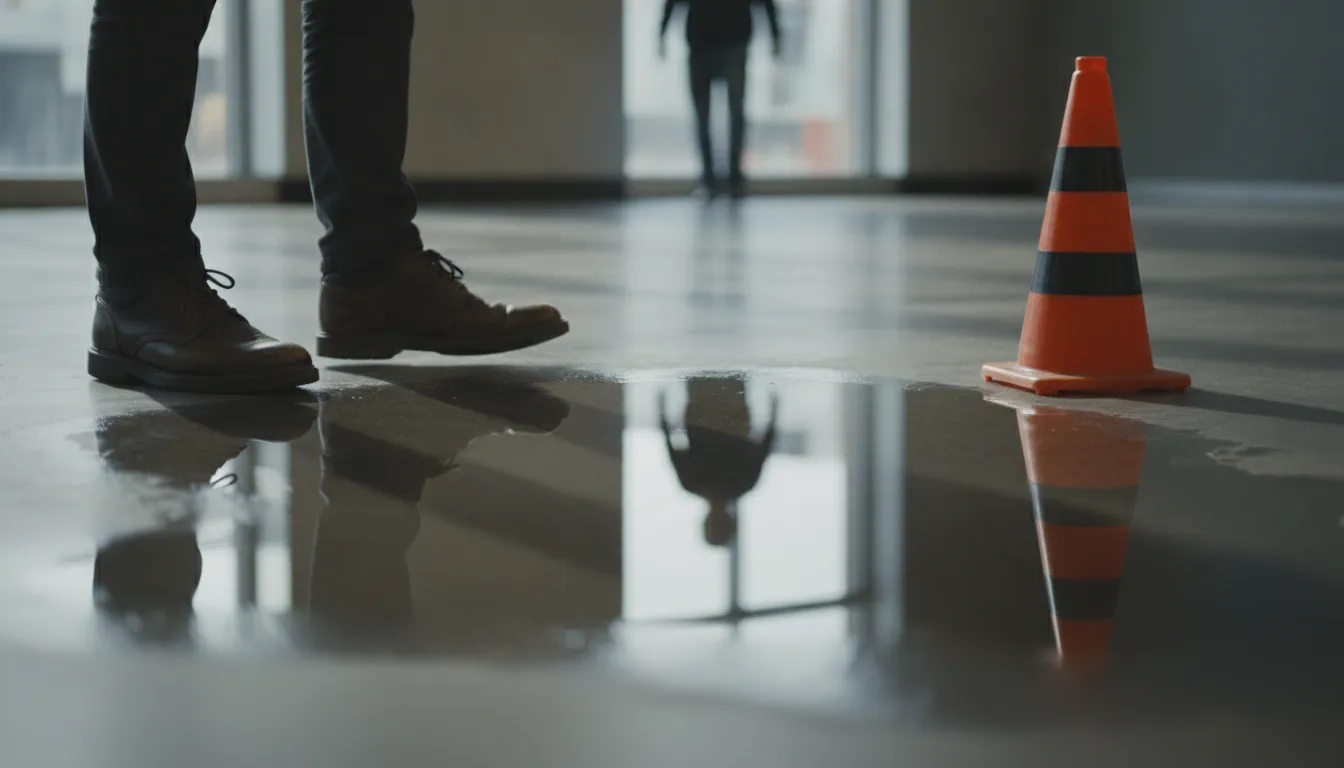
A warning sign may help, but its location and visibility matter. A small sign positioned away from the spill may not adequately alert a customer who must walk through the area. Photos, witness information, incident reports, and surveillance footage can help show what happened and whether the business had a fair opportunity to respond.
Snow and Ice
Missouri winters can create hazards in parking lots, sidewalks, exterior stairs, and walkways. Snow and ice may be difficult to see, especially at night or when lighting is poor. A claim may involve questions about the property owner’s inspection practices, snow or ice removal, drainage, salting, lighting, and warnings.
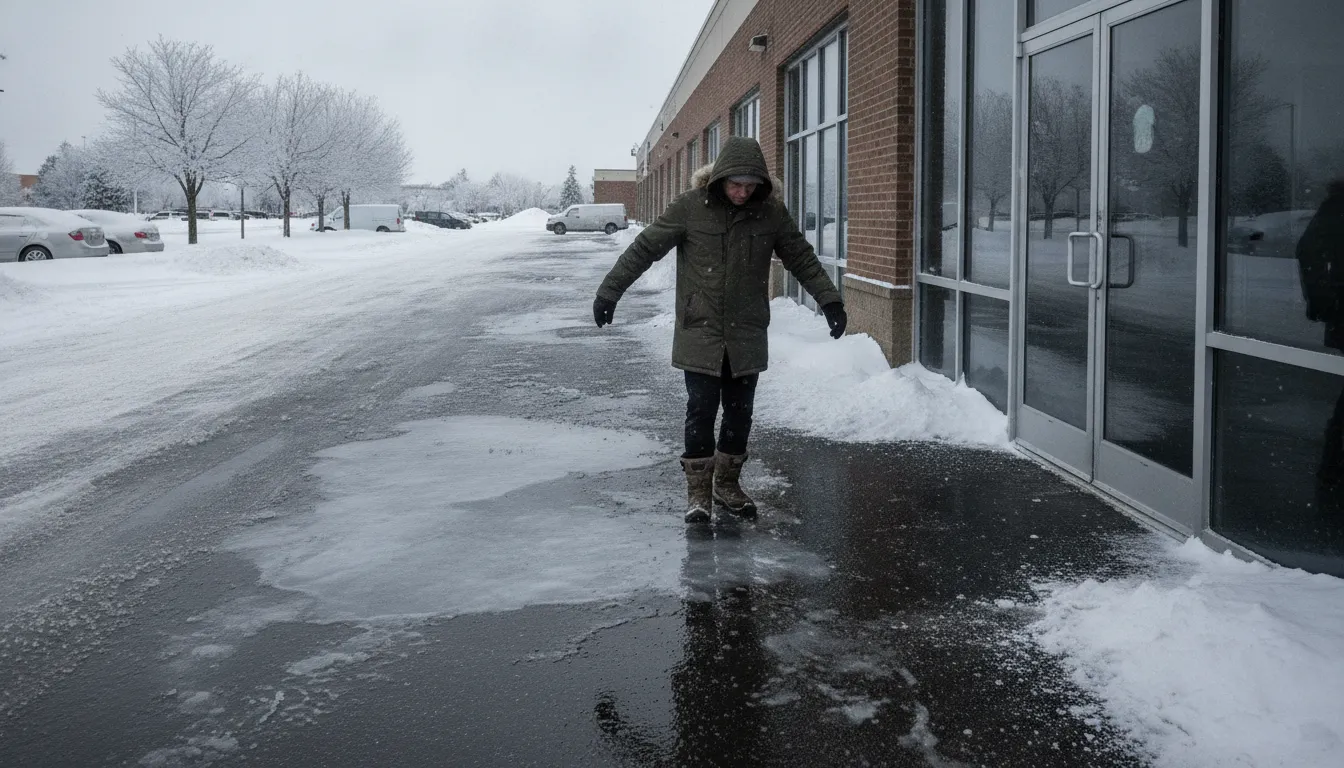
Parking areas can also involve vehicle strikes, potholes, poor traffic control, and other dangerous conditions. Learn more about liability for parking lot accidents when an injury occurs in or around a Missouri parking lot.
Inadequate Security
Negligent security claims may arise when a property lacks reasonable safeguards against foreseeable criminal activity. Examples can include dark parking lots, broken gates, missing locks, nonfunctioning cameras, or inadequate security at an apartment complex, bar, or other business. The facts may include prior incidents, reported security problems, the property’s layout, and whether management took reasonable steps to address known risks.
Broken Stairs and Other Structural Hazards
Broken stairs, loose handrails, damaged flooring, uneven walkways, and poorly maintained elevators can cause falls or other injuries. A property owner may need to repair the condition, restrict access, or provide a clear warning while arranging repairs. The circumstances of each accident matter, including whether the defect was visible, how visitors were expected to use the area, and what the owner knew before the injury.
Dog Bites and Missouri Premises Liability Law
A dog bite can cause puncture wounds, nerve damage, infection, scarring, and lasting fear. Missouri law provides a specific rule for many bite injuries, and the victim’s right to be on the property can make these cases especially important.
Missouri’s strict liability rule
Under RSMo 273.036, a dog owner is liable for a bite when the victim was in a public place or lawfully in a private place. This rule does not depend on proving that the owner knew the dog was dangerous or had bitten someone before. A person may be lawfully present as a guest, customer, delivery worker, tenant, or visitor with permission.
The law focuses on the bite and the victim’s lawful presence, but every claim still requires careful attention to the available evidence. The location, ownership of the dog, circumstances leading to the attack, and extent of the injuries may all affect how the claim is evaluated. A victim should not assume that a bite is minor simply because the wound appears small.
When the owner can still be liable for a dog’s history
Missouri’s bite statute is often described as a strict liability rule, but a dog’s history can still matter. Evidence that the owner knew the dog had acted aggressively, escaped confinement, or bitten someone before may support additional negligence theories.
Potential defenses may involve whether the victim was lawfully present, whether the statute covers the bite, or whether the victim’s own conduct contributed. These issues are fact-specific. Statements made immediately after an attack can also affect an insurance investigation, so it is wise to describe what happened accurately without speculating about fault.
What to document after a bite
Seek medical care promptly, even if the wound seems manageable. Ask the provider to document the injuries and follow all treatment instructions. If it is safe, photograph the wounds, torn clothing, the location, and any gate, leash, warning sign, or other condition relevant to how the attack occurred.
- Record the date, time, address, and names of witnesses.
- Identify the dog and its owner if possible, and preserve animal-control or police reports.
- Keep medical bills, prescription records, travel expenses, and notes about missed work or continuing symptoms.
For more practical guidance, review these Missouri dog bite laws and steps after an attack.
How a Premises Liability Lawyer in Missouri Proves the Owner Knew
Notice is often the central question in a premises liability case. It is not enough to show that a hazard caused an injury. The evidence must connect that condition to the property owner or operator and show that the owner had a fair opportunity to address it.
Actual notice versus constructive notice
Actual notice means the owner or an employee knew about the dangerous condition before the incident. Examples may include a store employee who saw a spill, a landlord who knew a stair rail was loose, or a manager who noticed an unsafe condition.
Constructive notice applies when the owner may not admit knowing about the hazard, but the condition existed long enough that a reasonable inspection should have discovered it. A substance tracked across a floor, a damaged step, or repeated complaints about the same area can help establish constructive notice. The relevant question is what a reasonably careful owner should have discovered and corrected under the circumstances.
Missouri law addresses an owner’s failure to guard against or warn of dangerous conditions the owner knew or should have known existed. The statute also recognizes claims involving negligent failures to warn or protect against certain dangerous conditions. See Missouri Revised Statutes Section 537.348. The specific duty and proof required can depend on the property, the visitor’s reason for being there, and the nature of the hazard.
How insurance companies evaluate these claims
Insurers commonly look for gaps in the notice timeline. They may ask when the hazard appeared, who first saw it, whether anyone reported it, when the last inspection occurred, and whether employees followed the property’s inspection procedures. They may also argue that the condition was too brief, too minor, or too obvious to have been discovered in time.
Chad Mann’s experience working for insurance companies provides insight into how these questions shape claim evaluation. Insurance companies are not in the business of paying claims; they are in the business of minimizing them. That does not determine the outcome, but it explains why photographs, witness accounts, incident reports, maintenance records, surveillance footage, and medical documentation can matter so much. Preserving evidence early can make it harder for an insurer to rely on an incomplete account.
For a practical discussion of gathering evidence for a premises liability claim, document the location, identify witnesses, and keep treatment and expense records.
Request a free case review to understand your options.
What Damages You Can Recover in a Missouri Premises Liability Case
A serious injury on unsafe property can affect much more than the day of the accident. A premises liability claim may seek compensation for reasonable medical expenses, lost wages, reduced future earning ability, pain and suffering, permanent disability, and loss of enjoyment of life. The available damages depend on the injury, the evidence, and the property owner’s legal responsibility.
Compensation for medical care, income, and long-term harm
Medical damages can include emergency treatment, hospitalization, medication, rehabilitation, follow-up care, and reasonably anticipated future treatment. If an injury prevents you from working, damages may account for past lost wages and the income you may be unable to earn in the future. Documentation such as pay records, medical opinions, and vocational evidence can help show the financial effect.
Pain and suffering is not limited to physical discomfort. It can reflect ongoing pain, emotional distress, limitations on daily activities, scarring, and the loss of activities that once mattered to you. Permanent disability may increase the significance of both economic and non-economic losses. No lawyer can promise a particular recovery, but a complete claim should account for the injury’s full impact rather than only its initial bills.
Missouri rules that can affect recovery
Missouri does not impose a cap on compensatory damages in ordinary personal injury cases. Missouri also follows pure comparative fault under RSMo 537.765. You may recover even if you share some responsibility for the incident, although the award is reduced by your percentage of fault.
Missouri’s general personal injury filing deadline is five years under RSMo 516.120. Waiting can make evidence harder to preserve, so it is sensible to learn about your options early. For practical guidance, review these steps to take after a slip and fall.
Open-and-obvious conditions are not always the end of a claim
Property owners and insurers sometimes argue that an injured visitor should have seen and avoided a danger. Missouri courts have moved away from treating an open-and-obvious condition as an automatic defense. An occupier may still face liability when it could reasonably anticipate that an invitee would encounter the danger despite the condition being visible. See the Missouri Law Review discussion of the open-and-obvious doctrine.
Hotel and innkeeper responsibility
Hotels and other inns may have heightened duties to protect guests. RSMo 419.020 addresses the duty owed by innkeepers. A claim involving a hotel may therefore require careful analysis of guest safety, the dangerous condition, and what management knew or should have known.
Talk to a Missouri premises liability lawyer about your case today.
Frequently Asked Questions
Are premises liability cases hard to win in Missouri?
They can be challenging. An injured person must connect the injury to the condition, show the owner knew or should have known, and prove reasonable precautions were not taken. Photos, incident reports, witness statements, medical records, and evidence of inspection practices can help address those issues. The fact that a condition was visible does not automatically end a claim because Missouri courts have moved away from treating every open-and-obvious danger as a complete defense. Missouri legal scholarship discusses this development.
What is the premises liability law in Missouri?
Missouri premises liability law generally requires property owners and occupiers to take reasonable steps to maintain reasonably safe conditions and warn visitors about dangerous conditions they knew or should have known existed. The duty can depend on why the person was on the property and whether the hazard was reasonably foreseeable. The facts of each incident, including notice, inspections, warnings, and the visitor’s conduct, matter. Missouri’s statutory framework addresses certain landowner duties, including failures involving dangerous conditions. See Missouri Revised Statutes Section 537.348.
What evidence do you need to prove a Missouri premises liability claim?
Useful evidence may include:
- Photographs or video of the condition, the location, and the lighting.
- Surveillance footage, incident or maintenance reports, and inspection logs.
- Witness contact information and communications with the property owner or insurer.
Prompt medical documentation can help connect the event to the injury. Preserve shoes, clothing, and other items involved in the incident, and avoid deleting photographs or messages that may later establish timing and notice.
Does Missouri hold dog owners liable for bites on their property?
Missouri law generally imposes liability when a dog bites a person who is in a public place or lawfully in a private place. The circumstances still matter, including where the bite occurred, whether the person was lawfully present, and the nature of the injury. Missouri Revised Statutes Section 273.036 addresses liability for injuries caused by dog bites.
How long do I have to file a Missouri premises liability lawsuit?
Missouri generally provides a five-year statute of limitations for personal injury claims, but exceptions and claim-specific rules can change the deadline. Waiting can also make it harder to preserve surveillance footage, identify witnesses, and document the condition of the property. Because the deadline may depend on the facts, an injured person should have the incident reviewed promptly. See Missouri Revised Statutes Section 516.120.
Ready to Discuss Your Missouri Premises Liability Claim?
An unsafe property injury can leave you managing medical care, financial pressure, and questions about what happened. A conversation with an experienced attorney may help you understand the facts, available options, and next steps. To schedule a free consultation, contact the Law Office of Chad G. Mann through the online form. Share what you know about the incident, and the firm can discuss how your circumstances may fit Missouri premises liability law.