


A spinal cord injury can change far more than movement. It may affect sensation, strength, independence, medical care, work, and the daily responsibilities of an entire family. After the immediate emergency, many families must make serious decisions while still trying to understand what happened.
A spinal cord injury lawyer Missouri families trust can explain how the injury affects long-term care, lost income, and legal options as the medical picture develops. A spinal cord injury can permanently change strength, sensation, and other functions below the injury site, according to the Mayo Clinic.
Get a free consultation with a spinal cord injury lawyer Missouri families trust, and start evaluating your family’s legal options today. Contact The Law Office of Chad G. Mann to learn what your claim may be worth.
Understanding the physical consequences is an important first step. It provides context for the care a person may need, the costs a family may face, and the evidence that can matter when evaluating a Missouri injury claim.
What a Spinal Cord Injury Means for the Rest of Your Life
A spinal cord injury can change nearly every part of daily life. It may affect movement and sensation, personal care, work, relationships, and long-term health. The spinal cord carries signals between the brain and the rest of the body. When it is damaged, the effects below the injury site may be permanent. The Mayo Clinic explains that an injury can cause lasting changes in strength, sensation. And other body functions, including paralysis, sensory loss, and loss of bowel or bladder control.
How the level of injury affects the body
The location and severity of the injury help determine which parts of the body are affected. A cervical spinal cord injury, in the neck, can affect the arms, hands, trunk, legs, and breathing muscles. This type of impairment is commonly called quadriplegia or tetraplegia. A person with a higher injury may need extensive assistance with mobility, breathing, eating, dressing, or other everyday activities.
An injury lower in the spinal cord may affect the trunk and legs while leaving the arms and hands functional. This condition is commonly called paraplegia. The person may use a wheelchair or other mobility equipment and may still need ongoing support for bladder and bowel management, skin care, transfers, and other health needs. These terms describe broad patterns, not a complete prediction of one person’s future. Incomplete injuries can preserve some movement or sensation, while a complete injury may result in more extensive loss of function.
A lifelong medical and personal challenge
The first hospital stay is only the beginning of recovery for many survivors. Rehabilitation may focus on physical function, communication, independence, equipment, and adapting the home or vehicle. Future care can include specialist visits, therapy, medications, attendant services, replacement equipment, and treatment for complications. Families may also need to reorganize work and caregiving responsibilities around the survivor’s needs.
These injuries are devastating because they can affect independence and identity as well as physical health. National data estimates about 18,000 new traumatic spinal cord injuries occur in the United States each year, with roughly 305,000 people living with traumatic SCI. Fewer than 1% of patients fully recover by hospital discharge, underscoring why early assumptions about a quick return to normal life can be misleading. Families facing similar questions after other catastrophic brain injuries can find parallel guidance in our traumatic brain injury guide for Missouri families.
Understanding the medical outlook is important when planning for future care and evaluating catastrophic injury claims in Missouri. A careful assessment should account for the survivor’s changing needs, not only the immediate emergency treatment.
The Real Cost of Living With a Spinal Cord Injury in Missouri
A spinal cord injury can change far more than a person’s ability to work in the weeks after an accident. It may create ongoing needs for medical care, rehabilitation, prescription medication, assistive equipment, personal assistance, transportation, and changes to a home. Those needs vary based on the level and severity of the injury, but they can continue for decades.
The Christopher & Dana Reeve Foundation, drawing on estimates from the National Spinal Cord Injury Statistical Center (NSCISC), reports substantial first-year and annual costs. For a person with high tetraplegia involving C1-C4, estimated costs are about $1.06 million in the first year and approximately $185,000 in each subsequent year. Low tetraplegia involving C5-C8 carries an estimated first-year cost of about $769,000. For paraplegia, the estimated first-year cost is about $519,000. These figures are national estimates, not a prediction of what any individual Missouri family will spend.
Lifetime care costs depend on age and injury level
Age at the time of injury is one factor in estimating lifetime needs because a younger person may require care and support for more years. At age 25, the NSCISC estimates lifetime costs of approximately $4.72 million for high tetraplegia, $3.45 million for low tetraplegia, and $2.31 million for paraplegia. At age 50, the corresponding estimates are about $2.60 million, $2.12 million, and $1.52 million. The estimates include direct costs associated with medical care, living needs, and equipment, but they do not represent a guaranteed case value.
The same NSCISC data estimates indirect costs, including lost wages, at an average of roughly $71,961 per year. That loss can affect the injured person, a spouse who leaves work to provide care, or other family members who take on unpaid responsibilities. A careful damages analysis should account for both the visible bills and the less obvious financial effects of reduced earning capacity, similar to how Missouri calculates pain and suffering damages for catastrophic injuries.
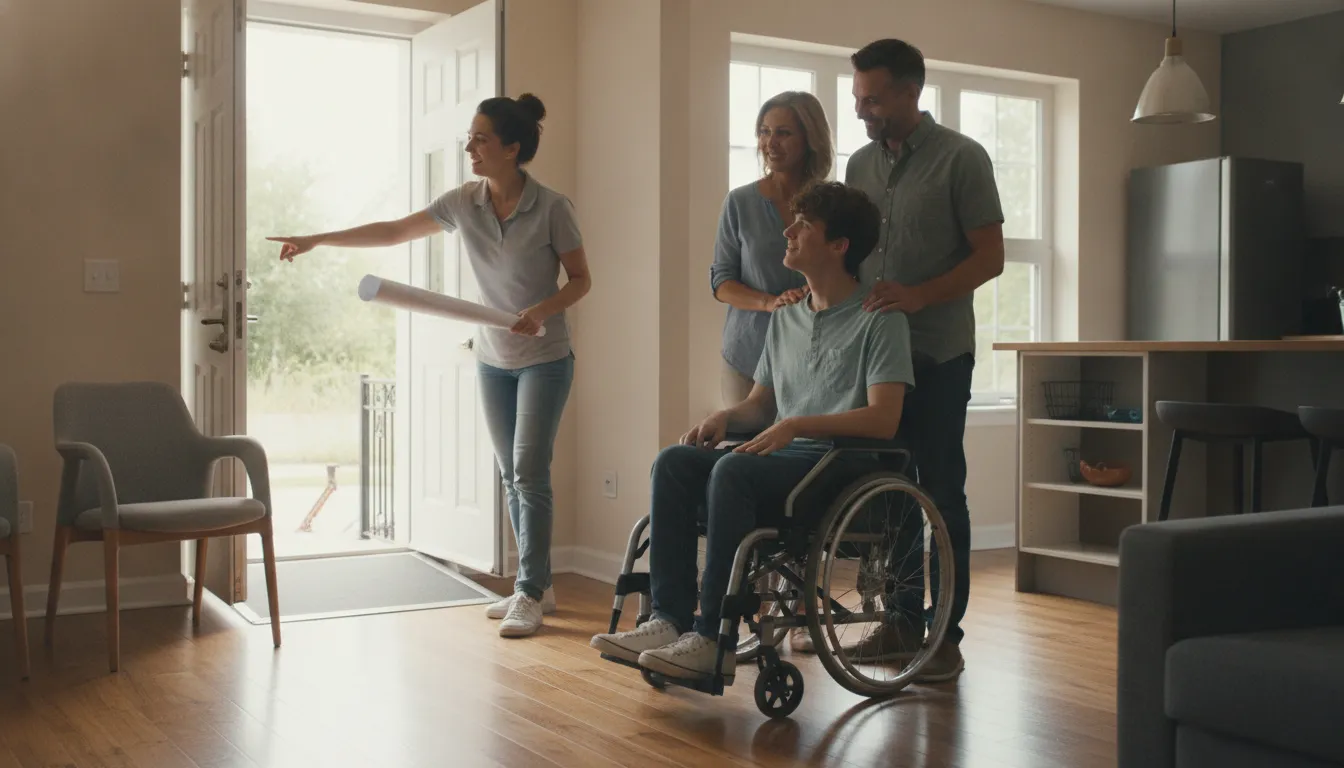
Aging in place with a spinal cord injury often means rethinking how a home works. Wheelchair ramps, wider doorways, roll-in showers. And other accessibility features can make everyday routines safer and less exhausting for the injured person and the family members who provide support.
Planning for needs that may not be visible today
Economic damages in a Missouri spinal cord injury claim may include reasonably supported future medical treatment, therapy, home modifications, mobility equipment, attendant care, and lost income. A home that was functional before the injury may require ramps, widened doorways, bathroom changes, or other accessibility work. The right evidence often includes medical records, life-care planning, vocational analysis, and testimony about the person’s future needs.
These estimates are meant to help families understand the scale of planning, not to create fear. The Reeve Foundation’s cost information and the NSCISC’s research and FAQs provide useful background. A case-specific review can then distinguish general statistics from the care, work, and living circumstances of the injured person.
How Missouri Law Protects Catastrophic Injury Victims
A spinal cord injury can change strength, sensation, mobility, and other body functions below the injury site. It can also affect bladder and bowel control, employment, relationships, and the ability to live independently. Missouri law provides several protections that may help an injured person pursue compensation for those lasting effects.
Missouri has no statutory cap on personal injury damages
Missouri does not impose a statutory ceiling on compensatory damages in ordinary personal injury cases. That means the law does not automatically limit recovery for documented losses such as medical treatment, rehabilitation, lost income, future care, physical impairment, and pain and suffering. The absence of a cap does not determine what a particular claim is worth. Compensation still depends on the evidence, the injuries, the available insurance or assets, and the legal issues involved.
For a catastrophic injury, this distinction matters because consequences may continue for decades. A case may need to account for future medical care, home or vehicle modifications, attendant assistance, and changes in earning capacity, not only early medical bills.
Partial fault does not automatically prevent recovery
Missouri follows a pure comparative fault approach under RSMo 537.765. An injured person may still recover damages even when they are found partly responsible for the accident. The award is reduced by the person’s percentage of fault. For example, a $500,000 award reduced by 20 percent fault would result in $400,000 before other applicable considerations.
Fault analysis can be complicated after a crash or other serious incident. Statements, physical evidence, medical records, witness accounts, and expert opinions may all affect how responsibility is evaluated. A person’s partial fault should be examined carefully rather than treated as an automatic bar to a claim.
There is generally a five-year deadline for personal injury claims
Missouri’s general statute of limitations for personal injury actions is five years under RSMo 516.120. That period is longer than the deadline in many states, but it is not a reason to delay. Exceptions can apply, and the timing may differ depending on the defendant, the type of claim, the injured person’s age, or how the injury occurred.
Venue can also influence litigation strategy. Missouri cases may be filed in urban venues such as St. Louis City or Jackson County, including Kansas City, when the facts and jurisdictional rules support it. Rural counties may have different local conditions. A careful venue analysis should be based on the parties, evidence, governing rules, and proper filing requirements, not a promise about an outcome.
How a Spinal Cord Injury Lawyer in Missouri Evaluates Insurance Offers
After a spinal cord injury, an insurance adjuster may begin evaluating the claim before the long-term medical picture is clear. Early records describe emergency treatment and immediate limitations, while the effects on mobility, work, daily care, and independence may take longer to document. An early offer can reflect what the insurer can verify quickly, rather than what the injured person may need for years to come.
Chad Mann brings an insurance insider perspective to this process. Before representing injured people, he worked for major national insurance carriers. He understands how insurers evaluate claims, identify weaknesses, set negotiation ranges, and decide whether to challenge or deny components of a demand. That background helps him recognize the difference between a legitimate request for information and a tactic that delays a fair evaluation.
What adjusters examine
For a serious spinal cord injury, the evaluation turns on the connection between the injury and future care. Insurers may scrutinize hospital records, rehabilitation notes, diagnostic findings, treatment recommendations, and statements about functional limitations. They may also analyze a life care plan or biomedical evidence to question whether a proposed service is medically necessary. How often it will be required, or whether a less expensive alternative exists.
Those questions are not merely technical. A spinal cord injury can affect strength, sensation, mobility, and other body functions below the injury site. It can also involve paralysis, changes in sensation, and loss of bowel or bladder control, as described by the Mayo Clinic. A valuation that overlooks those realities may underestimate the support a person will require.
An experienced Missouri personal injury attorney can look beyond the insurer’s early numbers and build a valuation that reflects the full scope of the injury. That work starts with the client’s medical history and extends to life care planning, earnings, and the effects on daily life.

Why documentation and expert testimony matter
A well-supported claim connects current medical evidence to anticipated lifelong needs. Treating physicians, rehabilitation professionals, life care planners, economists, and other qualified experts may explain expected care, equipment, home modifications, attendant services, lost earning capacity, and related effects. The goal is to give the insurer a medically grounded picture that records from the first weeks alone cannot show.
Insurers may respond with form-letter denials, repeated information requests, or offers made before future costs are documented. These tactics can be especially difficult for families managing treatment and major life changes. Reviewing the insurer’s conduct and the evidence together can show whether the claim is being evaluated fairly. In some situations, it may also raise concerns about insurance company bad faith tactics.
A careful evaluation does not promise a particular result. It makes sure the person’s medical needs, losses, and future risks are presented with the depth a spinal cord injury claim requires.
Spinal Cord Injury Settlement vs Trial: What Missouri Victims Should Know
Choosing between settlement and trial is not a decision that should be made from a slogan or an early insurance offer. A spinal cord injury can change mobility, independence, employment, and family responsibilities for decades. The right path depends on the available evidence, the projected medical and care needs, the parties responsible, insurance coverage, and the venue where a case would be heard.
Most of The Law Office of Chad G. Mann’s cases, approximately 95%, settle outside court. That reflects the practical value of resolving a claim without the uncertainty and delay of a trial, not a reluctance to prepare for one. A case is often stronger in negotiation when the insurer understands that the evidence and legal strategy are being developed with trial in mind.
| Consideration | Settlement | Trial |
|---|---|---|
| Timing | Often resolves sooner, depending on medical documentation and negotiations. | Usually takes longer because of discovery, motions, scheduling, and the trial itself. |
| Certainty | Creates a known resolution if the client accepts the agreement. | Produces a decision by a judge or jury, but the result cannot be predicted with certainty. |
| Control over outcome | The client decides whether to accept the proposed terms. | The judge or jury decides disputed facts, fault, and damages within the case. |
| Evidence burden | Strong medical, liability, and life-care evidence supports negotiation. | The evidence must be presented under courtroom rules and withstand opposing challenges. |
| Maximum recovery potential | Limited to the amount the parties agree upon. | Missouri has no damage caps for personal injury cases, so a verdict is not subject to a statutory cap, though no outcome is guaranteed. |
| Emotional cost | May avoid testimony and the public stress of a trial. | May require revisiting the injury, treatment, and its impact in a public proceeding. |
| Cost of litigation | Generally involves fewer litigation steps than a trial. | Usually requires more preparation, expert work, depositions, and courtroom expenses. |
Early settlement discussions can be especially difficult in SCI cases. Insurers may evaluate a claim before the full lifelong consequences are documented. Then make an offer that does not account for future treatment, equipment, home modifications, lost earning capacity, or personal assistance. Accepting too soon can make it impossible to address needs that become clearer later. A careful evaluation should distinguish temporary recovery from permanent limitations and use qualified medical and financial evidence.
Fault is another part of the leverage analysis. Missouri’s pure comparative fault rule generally allows an injured person to recover even when that person is partly responsible. With the recovery adjusted for the assigned share of fault. That can affect both negotiations and trial strategy. Venue may matter as well. Urban Missouri counties may be viewed as more receptive to plaintiffs in some cases, while rural counties may present a more conservative jury pool. The specific facts and applicable venue rules must guide that assessment.
There is no universal answer. A lawyer who understands catastrophic injury claims in Missouri can explain the tradeoffs, test the insurer’s position, and recommend a course based on the evidence rather than pressure.
Ready to talk through your family’s situation? A free consultation can help you understand the evidence, the deadlines, and the decisions ahead. Contact The Law Office of Chad G. Mann before the five-year deadline passes.
Frequently Asked Questions
How much is a spinal cord injury lawsuit worth in Missouri?
There is no reliable fixed value. Potential compensation depends on the injury’s severity, medical treatment, expected lifelong care, lost income, pain and suffering, available insurance, and the evidence establishing fault. Missouri has no damage caps for personal injury cases, but the facts and proof of each claim determine what recovery may be available.
What are the common causes of spinal cord injuries in Missouri?
Vehicle crashes and falls are common causes, along with acts of violence and sports-related incidents. The cause matters because it helps determine which people or entities may be legally responsible, what evidence should be preserved, and which insurance policies may apply.
How long do I have to file a spinal cord injury claim in Missouri?
Missouri generally provides five years for personal injury claims under Section 516.120. Exceptions can change the deadline, so families should not assume the full period applies without reviewing the facts promptly.
What damages can I recover in a Missouri spinal cord injury lawsuit?
A claim may seek compensation for past and future medical care, rehabilitation, equipment. Home or vehicle modifications, lost earnings, reduced earning capacity, pain, suffering, and the effects of permanent disability. The evidence should show both current needs and reasonably expected future costs.
How does Missouri’s comparative fault rule affect my spinal cord injury case?
Missouri follows pure comparative fault. An injured person may still recover even if partly responsible, but the recovery is reduced by that person’s percentage of fault. For example, a 20 percent fault finding generally reduces the recoverable damages by 20 percent. See Section 537.765.
Schedule a Free Consultation About Your Options
A spinal cord injury can affect medical care, family responsibilities, and long-term planning in ways that are difficult to evaluate alone. A conversation with an experienced Missouri personal injury attorney can help your family understand the available legal options and decide what information to gather next. To discuss your family’s situation, schedule a free consultation with The Law Office of Chad G. Mann.