


A collision with a commercial truck can change a family’s life in seconds. The injuries may be catastrophic, the recovery may extend for years, and the claim may involve more than the driver who was behind the wheel.
A truck accident attorney helps identify every potentially responsible party, protect evidence. And evaluate the long-term costs of injuries such as traumatic brain injuries, spinal cord injuries, burns, or amputations. Missouri generally allows five years to bring a personal injury claim. But early investigation still matters because important records and electronic data can become harder to obtain over time.
Truck cases can involve a driver, trucking company, cargo loader, maintenance provider, or manufacturer, along with federal safety requirements and commercial insurance carriers. Chad Mann’s prior insurance industry experience gives him insight into how carriers evaluate and defend serious claims. While his one-on-one approach keeps the injured person in direct contact with the attorney. Understanding why these cases demand a different investigation is the first step toward protecting a catastrophic injury claim.
Schedule a free 30-minute consultation to discuss what happened and review how Missouri law may apply to your truck accident claim.
Why Truck Accident Attorneys Handle More Complex Cases Than Car Accident Attorneys
A collision with a commercial truck can leave a Missouri family facing serious injuries, interrupted work, and difficult questions about what happened. These cases require more than determining which driver entered a lane or failed to stop. Commercial trucking involves regulated businesses, specialized equipment, cargo operations, and insurance policies designed for potentially catastrophic losses.
Unlike a typical car accident claim, responsibility may involve several parties. The truck driver may have violated a safety rule or driven while fatigued. The trucking company may have failed to supervise the driver, maintain the vehicle, or preserve required records. A manufacturer may be responsible for a defective component, while a cargo loader may have improperly secured or distributed the freight. Federal Motor Carrier Safety Administration regulations provide the framework for examining these issues, but applying those rules to the evidence requires a careful investigation. FMCSA regulations address many of the safety obligations that can matter in a commercial crash.
The potential causes are also broader than they may first appear. Hours-of-service rules are intended to address the danger of driver fatigue, a recognized risk in commercial trucking. Federal regulations also restrict commercial drivers from using hand-held mobile devices because distracted driving can have severe consequences when a large vehicle is traveling at highway speed. Cargo that is overloaded or improperly secured can make a truck unstable, increasing the risk of a rollover or jackknife. Brake defects and other mechanical failures may create another line of inquiry. Each possibility calls for different records, witnesses, and technical analysis.
Commercial trucks are substantially larger and heavier than passenger vehicles, which can increase the severity of a collision. A resulting traumatic brain injury, spinal cord injury, burn, or amputation may affect a person’s independence and future care needs for years. The financial issues can be correspondingly significant. Commercial trucking insurance policies often carry higher coverage limits than personal auto policies because the potential damages are greater. That does not mean a claim is automatically worth a particular amount, or that an insurer will evaluate it fairly without scrutiny. It means the available coverage, policy language, and competing claims must be identified accurately.
A truck accident attorney may need to assess driver and company records, maintenance history. Cargo documentation, vehicle data, and applicable federal requirements while preserving evidence before it is lost. Depending on the facts, accident reconstruction and other qualified experts may help explain how the crash occurred. For an injured person and family already coping with the aftermath, that process can feel overwhelming. A focused, Missouri-specific review helps separate supported conclusions from assumptions and keeps attention on the evidence relevant to recovery.
How a Missouri Truck Accident Attorney Investigates Commercial Truck Crashes
A commercial truck crash investigation should begin as soon as possible. Trucking companies and their insurers may control important records, vehicles, and electronic data, and critical evidence can be destroyed, overwritten, misplaced, or changed after a serious collision. A prompt investigation helps preserve the facts before that happens and gives the injured person a fair opportunity to understand what caused the crash.
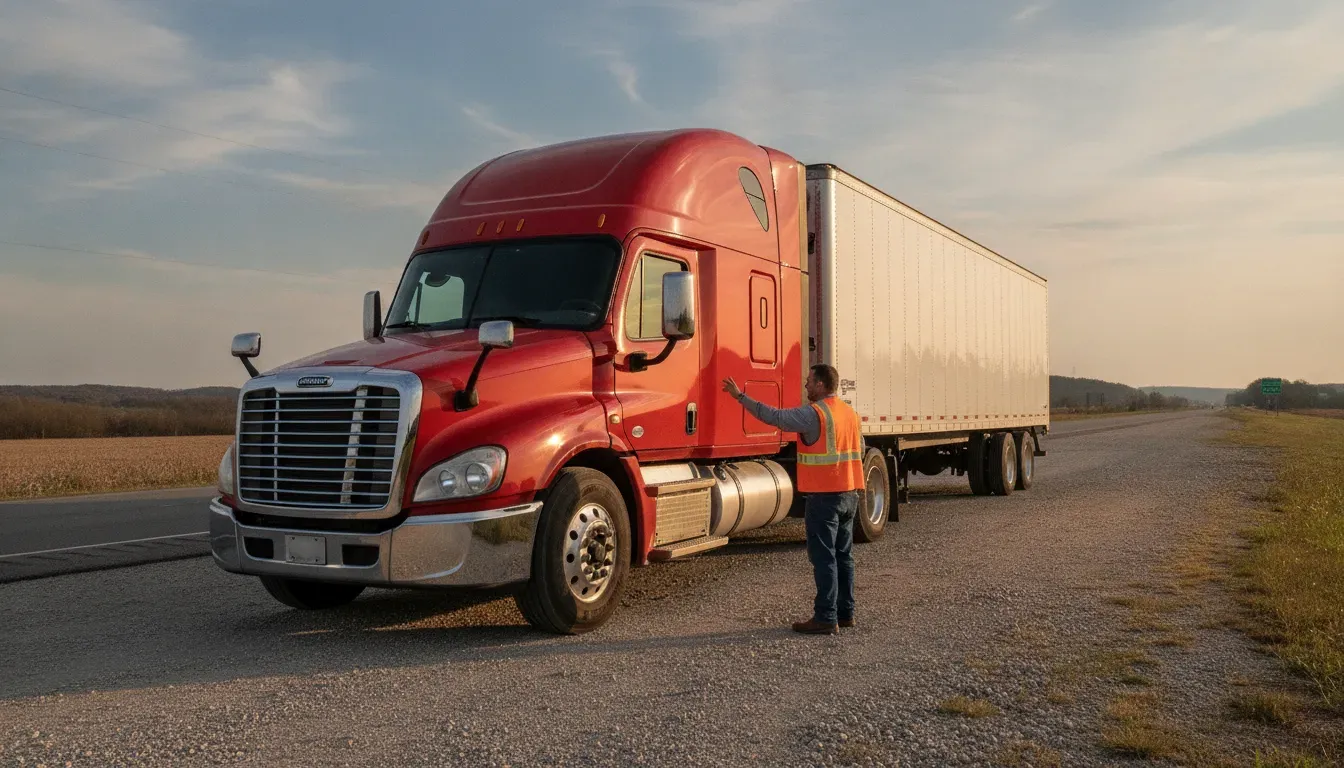
The process is more involved than simply obtaining a traffic citation. A truck accident attorney examines how the collision happened, who had responsibility for each part of the operation. And whether the evidence supports a claim against the driver, motor carrier, maintenance provider, manufacturer, or cargo loader.
Preserving the truck and electronic evidence
An attorney may send a preservation letter instructing the trucking company and other responsible parties to retain relevant evidence. This can include the truck itself, damaged components, onboard systems, dispatch records, photographs, video, and communications created before or after the crash.
Electronic Logging Device data, sometimes called black box data, may provide information about speed, braking, and the truck’s operational status immediately before the incident. These records can help test whether the driver’s account is consistent with the physical evidence. They may also show whether hours-of-service concerns or other operational issues deserve closer review. Federal rules and carrier obligations are outlined by the Federal Motor Carrier Safety Administration.
Reviewing records and identifying responsibility
The investigation typically gathers the police report, witness statements, photographs, medical records, driver logbooks, and available video. It also examines records that motor carriers are required to maintain, including driver inspection reports, maintenance schedules, and hours-of-service documentation. Those records may reveal worn equipment, missed inspections, inadequate repairs, or fatigue-related concerns that are not apparent from the crash scene alone.
Commercial drivers are also subject to mandatory drug and alcohol testing under federal regulations. When applicable, post-crash testing records may be relevant to understanding the driver’s condition and the carrier’s compliance. The FMCSA drug and alcohol testing rules explain the federal requirements.
Using reconstruction experts when the facts are disputed
In a serious or contested collision, an accident reconstruction expert may analyze skid marks, vehicle damage, roadway conditions, ELD information, photographs, and witness testimony. The expert can help determine speed, braking, impact sequence, visibility, and the relationship between the truck’s actions and the resulting injuries. This analysis is especially important when a crash involves multiple vehicles or when the parties disagree about fault.
Families dealing with traumatic brain injuries, spinal cord injuries. Or other life-changing harm should not be expected to manage this investigation while also handling medical care and major changes at home. Prompt legal attention does not guarantee a particular result, but it can help preserve the evidence needed for an informed evaluation of the claim.
How a Missouri Truck Accident Attorney Leverages the State’s Legal Advantages
Missouri law gives truck accident victims important protections, but those protections still require careful application. A serious collision may leave a family facing extensive medical treatment, lost income, permanent changes in daily life, or the loss of a loved one. Understanding the legal framework can help you recognize why timing, evidence, and a complete evaluation of fault matter.
Missouri does not cap compensation in personal injury cases
Missouri does not impose damage caps on personal injury cases. That does not guarantee a particular recovery, and it does not eliminate the need to prove liability and damages. It does mean that the law does not place an automatic ceiling on compensation for qualifying personal injury losses. This can be especially significant when a truck collision causes a traumatic brain injury, spinal cord injury, amputation, or another condition requiring long-term care.
Future medical treatment, rehabilitation, assistive equipment, reduced earning capacity, and the personal impact of a catastrophic injury may extend far beyond the first hospital stay. A complete claim should account for the injury’s likely course rather than treating early bills as the full measure of harm. Missouri court resources provide additional context on personal injury law and damages at Missouri Courts.
Pure comparative fault can preserve a claim
Missouri follows a pure comparative fault rule under RSMo 537.765. A person may recover damages even when that person was partially responsible for the crash. The amount recovered is reduced according to the victim’s assigned share of fault. For example, a finding that a victim was 20 percent responsible would generally reduce, rather than automatically eliminate, the recoverable damages by that percentage.
Truck accident investigations therefore should not stop at the first insurance company’s version of events. Driver conduct, road conditions, vehicle maintenance, cargo loading, visibility, and the actions of other motorists may all affect how fault is evaluated. An attorney can assess the available evidence and challenge an unsupported attempt to shift an excessive share of blame onto an injured person.
Deadlines differ for injury and wrongful death claims
Missouri generally allows five years to bring a personal injury claim, including a claim arising from a truck accident, under RSMo 516.120. You can review the timing rules in this Missouri statute of limitations for truck accidents guide. A longer deadline should not be treated as a reason to delay. Evidence can become harder to locate, memories can fade, and trucking records may require prompt preservation.
When a truck accident is fatal, the deadline is different. A Missouri wrongful death action generally must be commenced within three years after the cause of action accrues under RSMo 537.100. Families should obtain legal guidance promptly so the applicable deadline, eligible claimants, and available evidence can be evaluated without adding avoidable pressure during an already painful time. The Missouri Revisor provides the statutory text for RSMo 537.100.
Urban venues can add practical complexity
Truck crashes in high-traffic areas such as St. Louis and Kansas City may involve dense traffic patterns, multiple witnesses, commercial routes, and jurisdictional questions. Those circumstances can make early evidence review particularly valuable. A Missouri truck accident attorney who understands local courts and the state’s comparative fault and damages rules can build the claim around the facts of the collision. The full extent of the injuries, and the legal protections available to the injured person.
The Insurance Insider Advantage in Catastrophic Truck Accident Claims
After a catastrophic truck collision, the insurance process can feel like a second burden layered onto an already overwhelming injury. A commercial carrier may have a claims department, investigators, medical reviewers, and defense counsel working to protect its financial interests. Understanding that process matters, particularly when a spinal cord injury, traumatic brain injury, amputation, or other serious harm may require years of treatment and support.

How Commercial Trucking Insurers Evaluate a Claim
Commercial trucking insurers commonly focus on two questions: who was responsible for the crash, and how much of the claimed medical harm is related to it. They may scrutinize the accident scene, driver conduct, vehicle maintenance, cargo handling, and the trucking company’s records. They may also examine medical histories, treatment decisions, gaps in care, and whether a condition was documented before the collision. The Missouri Department of Commerce and Insurance identifies fault and medical records as central areas insurers examine when evaluating accident claims. Learn more about Missouri automobile insurance and claims.
That review does not automatically mean the insurer is acting improperly. It does mean an injured person should be cautious about making recorded statements, accepting an early settlement, or assuming the first explanation of fault is complete. A claim involving a commercial vehicle may involve the driver, trucking company, maintenance provider, manufacturer, or cargo loader. The insurer’s initial position may not account for every responsible party or every future consequence of the injury.
Commercial trucking policies also often carry higher coverage limits than personal auto policies because the potential damages from a truck collision can be catastrophic. Higher limits do not guarantee that a claim will be valued fairly, however. They can make the carrier’s investigation and negotiation strategy more consequential, especially when future medical care, lost earning capacity, rehabilitation, and family support are part of the claim.
What an Insurance Background Adds to Legal Strategy
Chad Mann’s prior work with insurance carriers gives him an insider perspective on how these claims are assessed, negotiated, and defended. That experience can help him anticipate arguments about fault, causation, preexisting conditions, treatment, and the projected cost of care. It also helps him recognize when an insurer is focusing on a narrow part of the record while overlooking the full effect of a catastrophic injury.
The goal is not to treat every disagreement as misconduct or to promise a particular outcome. It is to build a careful, evidence-based response to the carrier’s position. That may include organizing medical records, obtaining appropriate expert opinions, preserving relevant trucking evidence, and presenting the person’s current and future needs clearly. Chad Mann’s one-on-one approach means clients communicate directly with the attorney handling their case, rather than being passed through a high-volume intake process.
When an Insurance Dispute May Involve Bad Faith
There is a difference between a legitimate dispute over liability or damages and an unreasonable failure to handle a valid claim. Insurance bad faith issues can arise when a carrier unreasonably denies a valid claim or fails to investigate the circumstances of a truck crash thoroughly. Those issues are fact-specific and require careful review of the policy, claim communications, investigation, and available evidence. An attorney familiar with the insurance side can assess whether the carrier’s conduct reflects an ordinary dispute or a potentially improper claims decision.
For families coping with life-changing injuries. The insurance insider advantage is practical rather than promotional: it provides a clearer understanding of the carrier’s playbook and a more informed way to respond to it.
Contact the Law Office of Chad G. Mann if you have questions about how an insurance carrier is handling your truck accident claim.
What Compensation Covers in a Catastrophic Truck Accident Claim
A catastrophic truck crash can change nearly every part of a person’s life. Treatment may continue long after the emergency has passed, while family members may need to provide care, manage appointments, or adjust their own work. A claim should account for the full effect of the injury, not only the bills received during the first weeks after the collision.
For injuries such as traumatic brain injuries and spinal cord injuries, medical needs may include rehabilitation, assistive equipment, home modifications, medication, attendant care, and future treatment. These cases often require careful evaluation of both current expenses and the services a person may need for years to come. Medical expenses for catastrophic injuries can be overwhelming, and future needs should be calculated with qualified evidence rather than treated as a guess. Learn more about a catastrophic truck accident injury.
| Type of damages | What it may cover |
|---|---|
| Economic damages | Past and future medical expenses, rehabilitation, long-term care, medical equipment, home or vehicle changes, lost wages, and reduced future earning capacity. |
| Non-economic damages | Physical pain, emotional distress and mental anguish, permanent disability, disfigurement, loss of independence, and loss of enjoyment of life. |
Economic losses can continue long after the crash
Economic damages may include ambulance and hospital care, surgery, therapy, prescriptions, and other past expenses. They can also include projected treatment and long-term care. A severe brain or spinal cord injury may affect mobility, communication, memory, employment, and the ability to perform ordinary daily tasks. The claim may therefore address lost earnings already incurred and the difference between what the injured person could have earned without the injury and what they may be able to earn in the future.
Long-term care can be especially important when a person needs ongoing assistance at home or in a specialized setting. A thorough evaluation may consider life-care needs, vocational limitations, and the cost of adapting a home or vehicle. The goal is to present a supported picture of what recovery and daily life will require.
Non-economic harm is also part of the loss
Compensation may also address pain and suffering, mental anguish, permanent disability or disfigurement, and the loss of activities that once gave life meaning. These harms do not come with simple invoices, but they are real consequences of a catastrophic injury. Families may be documenting changes in sleep, relationships, independence, and participation in work or community life. For a more detailed discussion, see this guide to truck accident pain and suffering.
Missouri does not impose damage caps on personal injury cases, including catastrophic injury claims. That does not guarantee a particular result, and the available recovery still depends on the evidence, liability, and the circumstances of the case. Missouri’s pure comparative fault rule may also affect the amount recovered if the injured person is found partially responsible.
Get a free case evaluation with a Missouri truck accident attorney before you respond to anything the carrier asks for.
Frequently Asked Questions
Who may be liable for a commercial truck accident?
Depending on the evidence, responsibility may involve the truck driver, trucking company, vehicle manufacturer, maintenance provider, or cargo loader. A careful investigation helps determine whether negligent driving, unsafe maintenance, a defective part, or improperly secured cargo contributed to the collision. Federal Motor Carrier Safety Administration regulations can help identify the records and safety duties involved.
What evidence is important in a truck accident claim?
Useful evidence may include the police report, photographs, witness accounts, driver logs, maintenance and inspection records, and electronic logging device data. ELD data can provide information about speed, braking, and vehicle operation before the crash. Prompt preservation matters because important trucking records or electronic data may be lost or overwritten. Source: FMCSA ELD guidance.
What is the deadline to file a Missouri truck accident lawsuit?
Missouri generally allows five years for a personal injury claim, although the specific deadline can depend on the facts and parties involved. A wrongful death claim generally has a three-year limitations period under RSMo 537.100. Because identifying the correct deadline is fact-specific, an early case review is important. Sources: RSMo 516.120 and RSMo 537.100.
How much does a truck accident lawyer cost?
Many truck accident attorneys use a contingency fee arrangement, meaning the fee is tied to a successful recovery rather than an upfront hourly payment. The agreement should explain the percentage, case expenses, and what happens if there is no recovery. Discuss those terms during the initial consultation so you understand the financial arrangement before moving forward. Source: American Bar Association contingency-fee guidance.
Ready to Discuss Your Truck Accident Claim?
After a catastrophic commercial truck collision, a clear review of the available information can help you understand possible next steps. Chad Mann offers a free 30-minute initial consultation to listen to what happened and discuss how Missouri law may apply to your situation. Schedule a free 30-minute initial consultation when you are ready to talk through your concerns.