


After a serious truck collision, searching for a big rig accident lawyer near me can feel like one more difficult task for a family already managing medical care, missed work, and uncertainty. A useful first step is to compare how a lawyer would investigate a commercial-vehicle case, explain communication and fees, and address the needs of someone with a catastrophic injury. The right fit is not determined by an advertisement or a promised result. It comes from clear answers about the work, the relationship, and the decisions ahead.
Talk with a Missouri big rig accident lawyer
What makes a big-rig case different from an ordinary car crash?
A collision involving a tractor-trailer or another large commercial vehicle may require the lawyer to examine more than the drivers’ accounts and vehicle damage. Depending on the facts, relevant materials could include the truck’s electronic data, inspection and maintenance records, driver qualification or duty records, dispatch communications, cargo information, photographs, and statements from witnesses. Not every case will involve every category. A lawyer should explain which evidence may matter in your particular collision and why.
There may also be several people or companies whose conduct or records need to be considered. The truck driver, motor carrier, vehicle owner, maintenance provider, cargo loader, or another party could be relevant depending on the evidence. Their involvement should not be assumed before the facts are investigated. Ask how counsel identifies potential sources of responsibility without jumping to conclusions.
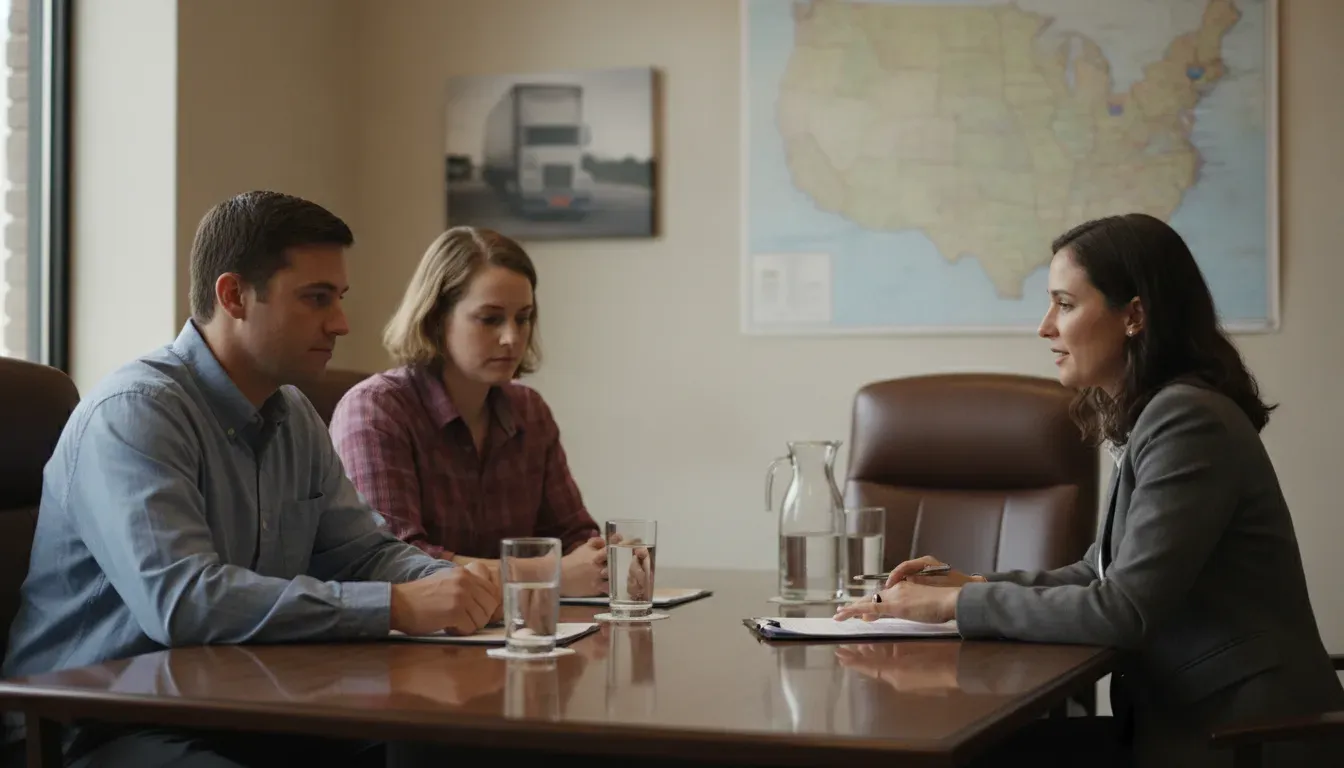
In a serious injury case, medical needs and future effects can also make the evaluation more involved. A spinal cord injury, traumatic brain injury, severe burns, or amputation may affect a person’s mobility, independence, work, and family responsibilities. A careful legal review should account for the person’s circumstances and medical information rather than reduce the case to a quick estimate.
How can you evaluate a lawyer’s relevant experience?
Ask about the lawyer’s direct role in cases involving commercial vehicles and serious injuries. A firm’s website may discuss truck accidents broadly, but your conversation should make clear who will actually handle the investigation, communicate with the family, and make strategic decisions. It is reasonable to ask for an explanation of the lawyer’s experience without expecting confidential details about another client.
- Ask about comparable issues. Has the lawyer handled cases involving commercial carriers, disputed fault, serious or long-term injuries, or multiple potentially responsible parties? No two cases are identical, so look for relevant experience rather than a claim that your case is a match for a past result.
- Clarify the lawyer’s personal role. Who will be your main contact? Who will review the evidence and attend important meetings? Will the attorney you meet remain involved as the case progresses?
- Ask how the lawyer approaches insurance negotiations. How does counsel respond when an insurer disputes fault, injury severity, or the connection between an injury and the crash? An attorney’s explanation should be understandable and grounded in the facts, not a guarantee of a particular outcome.
- Discuss trial readiness realistically. Many injury claims resolve without trial, but a lawyer should be able to explain how the case would be prepared if negotiations do not resolve it. Ask what decisions would require your approval.
For a broader set of questions about hiring injury counsel, see signs it may be time to speak with a personal injury attorney. You can also learn about Chad G. Mann and his background before arranging a conversation.
How can you make consultations easier to compare?
Families may speak with more than one lawyer, and a short, consistent list of questions can make those conversations easier to remember. Before the meeting, write down what is known about the collision, the most pressing practical concerns, and questions about the lawyer’s role. Separate facts you have personally observed from things you have heard or are still trying to confirm. This helps the attorney understand the starting point without treating uncertain details as established.
During each consultation, note whether the lawyer explains what is known, what remains uncertain, and what information would help answer open questions. For example, if the family asks whether a carrier or maintenance company may be involved, a careful answer should describe what evidence could clarify that issue rather than naming a responsible party without investigation. Ask who would follow up, what the next step might be, and whether you will receive a written agreement to review before making a decision.
Afterward, compare the substance of the answers, not just how confident or reassuring they sounded. Did you understand who would handle the matter? Were questions about fees and expenses answered directly? Did the lawyer explain options without rushing the family or implying a certain result? A simple comparison can reveal where you need clarification before choosing counsel. You do not have to make a decision during the first conversation.
What should you ask a big rig accident lawyer near me about evidence?
Evidence can change, disappear, or become harder to locate as time passes. For that reason, ask a prospective lawyer what early steps may be appropriate and who would take them. A sound answer should be specific to the collision, but it should not pretend that every document or record is available in every case.
- What information should the family preserve? Ask about photographs, contact details for witnesses, medical discharge papers, bills, correspondence from insurers, and records of missed work. Keep original files where possible and note when and how photos or messages were obtained.
- How would the lawyer seek commercial-vehicle records? Ask what types of records may be relevant, how they might be requested or preserved, and whether the firm would consult appropriate professionals if the evidence calls for it. The answer should distinguish a possible investigative step from a fact already established.
- Who coordinates scene or vehicle evidence? Find out whether the attorney or a qualified investigator would assess what can still be documented, and how the family will be kept informed. Do not enter a crash site, approach a truck, or try to obtain private records on your own.
- How will medical information be handled? Ask how the lawyer gathers records, understands the treatment timeline, and accounts for ongoing evaluation. Families should not feel pressured to make medical choices for legal reasons; treatment decisions belong with the patient and medical providers.
- What should we do with insurer requests? Ask who will review requests for statements, records, or forms and how questions will be handled. Do not assume that every request is harmless or that an early settlement offer reflects the full situation. Get advice about the specific request before signing or giving a recorded statement.
Crash records can be complex and have limits. A Missouri-focused study, for example, examined reported motor-vehicle crashes and licensing outcomes for older drivers; such research addresses a defined group and does not establish fault in an individual commercial-vehicle collision. Read the study record.
For practical next steps after a collision, you may also review this guide to evidence and fault questions after a Missouri rear-end crash. The exact investigative needs of a big-rig collision may differ, so use a general article as background rather than a substitute for case-specific advice.
How should a lawyer address catastrophic injuries?
When an injury is life-altering, the legal discussion should make room for the person’s health, privacy, and changing needs. A family may still be learning what recovery will involve. No lawyer can responsibly predict the full course of treatment from a first call, and an early conversation should not force the injured person to tell a painful story in unnecessary detail.
Ask how the attorney considers the different effects of the injury. Depending on the facts and available medical information, that may include current care, follow-up treatment, rehabilitation, accessibility needs, changes to daily activities, the ability to work, and support the family provides. These are subjects to evaluate with appropriate medical and other professional input, not assumptions to convert into a promised case value.
Consider whether the lawyer describes the person as more than an injury or claim. A family should be able to ask how sensitive records will be handled, who may see them, and how the attorney will keep the client informed when care or family circumstances change. If the injured person cannot participate easily, ask how counsel will communicate accessibly and who may assist, subject to the client’s wishes and applicable rules.
Missouri law can affect an injury claim, including how fault is considered. The firm’s content rules identify Missouri as applying pure comparative fault, which generally means a person’s own share of fault does not automatically bar recovery; how the rule applies and affects a claim depends on the evidence and law. Do not treat a quick comment about fault as a final legal determination. Ask the lawyer to explain the issue in plain language using the known facts.
What communication and access should you expect?
Clear communication matters when a family is dealing with treatment, work, and practical demands. Before hiring counsel, agree on how updates will work. Ask who will answer routine questions, how urgent developments are escalated, and how often the lawyer expects to provide updates when there is no major development. There is no single schedule that fits every case, but expectations should be discussed rather than left unclear.
- Who is the main point of contact, and can you speak with the attorney when a significant decision arises?
- What is the best way to reach the firm, and what response time should you generally expect?
- Will important advice and decisions be summarized in writing?
- How will the firm communicate if the client has difficulty traveling, speaking, hearing, or using digital tools?
- How will family involvement be handled, and what permission is needed to share confidential information?
Ask whether the lawyer will explain the stages of a claim, what may cause delays, and what choices will require the client’s informed decision. A careful attorney can describe likely processes while acknowledging that timing depends on evidence, medical circumstances, negotiations, and other case-specific factors.
What should you compare about fees and case costs?
Many personal injury lawyers use a contingency fee, but the percentage and treatment of expenses can differ. Do not rely on a verbal shorthand such as “no fee” without reading the written agreement. Ask for a copy, take time to review it, and make sure you understand what happens if there is no recovery, if the case resolves before suit, or if litigation is needed.
| Topic | Questions to ask | What to confirm in writing |
|---|---|---|
| Attorney fee | What percentage applies, and can it change at different stages? | The rate, how it is calculated, and when it is deducted. |
| Case expenses | What costs may arise for records, filing, experts, or investigation? | Who advances costs, how they are tracked, and whether repayment is due from a recovery. |
| No recovery | If the case does not result in a recovery, what fees or costs might remain owed? | The exact agreement terms and any exceptions. |
| Settlement decision | Who decides whether to accept an offer? | That the client retains the decision and how the lawyer will explain the options. |
The Law Office of Chad G. Mann’s business information describes a contingency fee with a 30% cap and says the firm advances case costs until resolution. Ask the firm to explain the agreement for your specific matter and confirm every fee and cost term in the signed contract. A percentage alone does not tell you what a case is worth or whether a particular lawyer is the right fit.
How can you compare a big rig accident lawyer near me in Missouri?
“Near me” can help find someone accessible, but physical proximity is only one consideration. Ask whether the lawyer can represent clients where the crash and claim require, how meetings can be arranged, and whether the firm understands the courts and procedures relevant to the case. The Law Office of Chad G. Mann serves Springfield and Southwest Missouri and is licensed in Missouri, Kansas, and Arkansas state courts, according to the firm’s business information. A family elsewhere should confirm directly that the lawyer can take the matter and that the location is a practical fit.
Use a consistent checklist for each consultation. Take notes, compare the answers, and pay attention to whether you understand the explanation. A lawyer who is a good fit should welcome reasonable questions, distinguish known facts from open issues, and avoid pressure to decide before you have reviewed the agreement.
- Does the attorney have relevant commercial-vehicle and catastrophic-injury experience?
- Can the attorney explain a case-specific investigation plan without overstating what is known?
- Have you met the lawyer who will personally oversee the matter?
- Were communication, fees, expenses, and client decision-making explained clearly?
- Did the lawyer treat the injured person and family with respect?
- Can the firm explain Missouri law and the possible role of fault without promising a result?
To learn more about the firm’s injury practice, visit its Springfield personal injury law office page. Families can also use the personal injury questionnaire to organize information, or review the firm’s general guide to deciding whether to consult a lawyer after a crash. For a local example, see its page for a car accident lawyer serving Republic, Missouri.
Contact a big rig accident lawyer near me in Missouri
Frequently Asked Questions
Should I hire the closest big-rig accident lawyer?
Not necessarily. A nearby office may make meetings easier, but experience with commercial-vehicle evidence, clear communication, fee terms, and the lawyer’s personal involvement are also important. Confirm that the attorney can handle the matter in the relevant jurisdiction.
What should I bring to an initial consultation?
If available, bring the crash report or incident information, photographs, insurer letters, contact details for witnesses, and medical or employment records you are comfortable sharing. Do not delay asking questions simply because you do not have every document. Ask the lawyer what is useful and how sensitive records will be protected.
Can a lawyer tell me what my case is worth at the first meeting?
A responsible lawyer may be able to explain factors that affect an injury claim, but a reliable valuation can depend on evidence, liability, medical information, and other facts that are not yet known. Be cautious of guaranteed outcomes or firm dollar promises made before a meaningful review.
How long do I have to bring a Missouri injury claim?
Deadlines can depend on the claim, parties, and circumstances, and exceptions may apply. The firm’s content guidance identifies a five-year limitations period for many Missouri personal injury claims, but that should not be assumed to govern every case. Ask a Missouri attorney promptly to assess the deadline that applies to the specific facts.
Contact a Missouri injury lawyer to discuss your questions
Contact the Law Office of Chad G. Mann
Choosing counsel after a big-rig collision is a personal decision, and a family deserves time to understand the options. Use the consultation to ask direct questions, compare the answers, and decide whether the lawyer’s approach and communication feel appropriate for the person’s needs.