


A collision involving a commercial truck can leave an injured person and family facing medical care, lost income, vehicle damage, and unanswered questions about who was responsible. If you are researching a St. Louis truck accident lawyer, it helps to understand what makes a Missouri claim well-documented: timely evidence preservation, consistent medical records, careful venue analysis, and measured communication with insurers. These steps do not guarantee an outcome, but they can help clarify what happened and what losses may need to be considered.
Request a conversation about your situation
What makes a truck-crash claim different from a typical car wreck?
A commercial truck collision may involve more than the drivers and their vehicles. Depending on the facts, an investigation may need to examine the trucking company, a vehicle owner, a maintenance provider, a cargo handler, or another party. The presence of a commercial vehicle does not automatically make any particular person or business legally responsible. Evidence must connect a party’s conduct to the crash and resulting injuries.
Truck cases can also involve records that are not part of an ordinary passenger-car claim. These may include company safety policies, driver qualification and work records, inspection and repair history, dispatch information, electronic vehicle data, and records about the load. Which records matter depends on how the collision occurred. Some information may be controlled by a trucking company or another business, and certain records may be retained only for a limited period. That is one reason early, focused preservation can matter.
A strong claim is not simply a large stack of documents. It is a reliable account supported by relevant records: what happened before impact, what each person did, how the crash caused specific injuries, and what consequences followed. Keeping those questions separate helps avoid assumptions while the facts are still being collected.
Which evidence should be preserved after a truck collision?
When it is safe and practical, start with the information available to you. Photograph vehicle positions, damage, skid marks, debris, road conditions, traffic controls, and the surrounding area. Capture several views, including wider images that show context and close-ups of damage. Do not put yourself in danger to take a photograph or return to a hazardous scene.
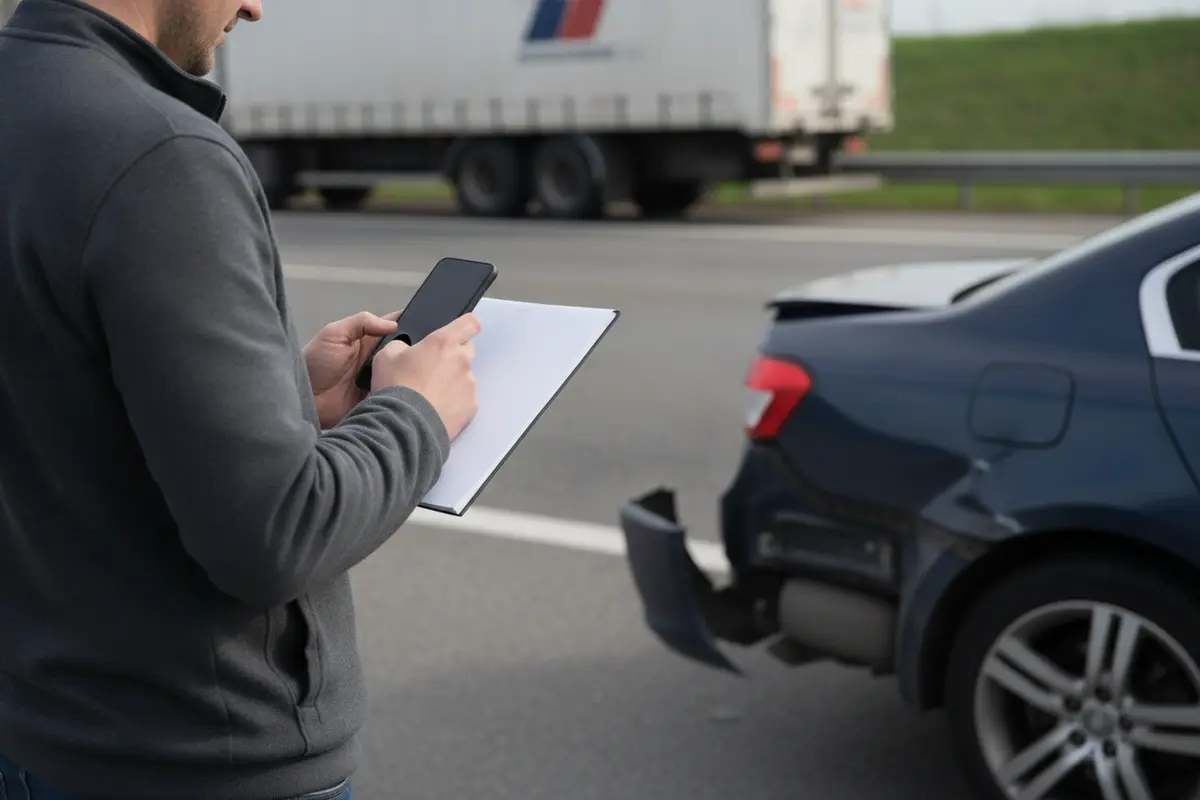
Keep the original photographs and videos, including files shared by passengers. Write down the date, approximate time, location, weather, direction of travel, and a plain description of what you remember. Memory can change as time passes, so a dated account can help you distinguish what you observed from what you learned later. Do not edit originals; keep copies of any marked-up versions separately.
Other useful sources may include:
- Names and contact details for drivers, passengers, witnesses, and responding agencies, if available.
- Crash or incident report information and any documents provided at the scene.
- Dash-camera, home-security, business-camera, or nearby traffic-camera footage, if it exists.
- Vehicle repair estimates, towing and storage records, and photographs taken before repairs.
- Work schedules, delivery records, or other timeline information relevant to the truck’s trip.
- Notes about conversations with insurers, including the date, representative’s name, and what was requested.
| Evidence source | What it may help clarify | Practical next step |
|---|---|---|
| Scene photographs and video | Vehicle positions, visible damage, road conditions, and nearby traffic controls | Save original files with the date and location; do not return to an unsafe scene. |
| Witness and crash-report information | Who observed the collision and what was documented by responding agencies | Keep names or report details available and note how to request a report. |
| Commercial vehicle and company records | Potential trip timeline, inspection or maintenance history, dispatch details, or vehicle data | Note who may control the records and tell counsel promptly so preservation options can be considered. |
| Medical, work, and expense records | Injuries, treatment, missed work, and costs connected to the collision | Keep bills, visit summaries, wage documents, and receipts together in a secure file. |
| Insurer communications | Requests made, information shared, and any proposed settlement terms | Record the date, representative, claim number, and response; save all correspondence. |
Do not assume that every source exists or that you can obtain it yourself. A lawyer can evaluate what may be relevant, who controls it, and what formal steps may be appropriate to preserve or request it. The firm’s personal injury questionnaire is one way to organize basic incident and injury details for an initial discussion.
How can families protect evidence they do not control?
Some of the most important records may be held by a trucking company, insurer, repair facility, or public entity. A family member should not trespass, access a company system, or try to remove a vehicle component. Instead, write down what records or footage may exist, who may have them, and when they could be at risk of being lost. Share that information with counsel promptly.
Potentially relevant materials can include onboard event or location data, driver logs or duty-status records, dispatch and route information, inspection reports, maintenance history, cargo documentation, and internal communications. Not every case calls for every category. The crash mechanics and applicable rules determine what is pertinent. An attorney may send preservation requests and use appropriate legal procedures to seek records, but a request alone does not establish fault or ensure that all material will be available.
Also preserve your own records. Keep copies of bills, appointment summaries, prescriptions, wage documents, repair paperwork, and messages related to the collision. Store them in one secure place and note when each item was received. Do not discard damaged property or authorize extensive repairs before documenting it, when doing so is safe and reasonable. If a vehicle must be moved or repaired promptly, take photographs and retain the estimate and invoices.
How should medical records document injuries and recovery?
Medical care comes first. Seek emergency help for urgent symptoms and follow the advice of qualified medical professionals. Tell providers about symptoms and how they affect daily activities, even if a symptom seems minor at first. After a crash, some problems may become clearer over time; do not self-diagnose or delay necessary care because you are worried about how a claim may look.
For a claim, medical documentation helps show the nature and timing of an injury, treatment recommended, and how the condition affects the person. Be accurate and consistent. Explain when symptoms began, whether they changed, and what tasks are difficult. If you do not know an answer, say so rather than guessing. Keep a simple log of appointments, symptoms, missed work, and practical limits, but do not treat the log as a substitute for medical evaluation.
Families may find it useful to keep these items together:
- Discharge instructions, visit summaries, referrals, and treatment plans.
- Receipts and billing statements, along with notes about health-insurance payments or adjustments.
- Work absence records, pay information, and written restrictions provided by a clinician.
- A dated symptom and activity journal that records observations without exaggeration.
- Names of providers and appointment dates, so records can be identified if needed.
Gaps in care can prompt questions, but there may be many reasons for them, including access, cost, scheduling, or medical advice. Keep records that explain the circumstances and discuss treatment concerns with your providers. Do not stop, start, or change treatment based on an insurer’s opinion or legal concerns alone.
What does venue mean in a St. Louis truck-crash claim?
Venue is the place where a lawsuit may properly be filed. It is not the same question as which state’s law applies, which court has authority over a defendant, or which location is most convenient. The right venue depends on the parties, where relevant events occurred, and procedural rules. A crash described as “in St. Louis” may call for clarification about whether it occurred in the City of St. Louis or St. Louis County, or somewhere else in the region. The exact location and the identity of potential defendants matter.
Venue should not be selected based on a promise that one location will produce a particular result. Courts decide cases under governing law and the evidence presented. A lawyer can examine the crash location, residence or business connections of parties, potential defendants, and applicable filing rules before advising where a case may proceed. The Missouri Courts website provides general information about the state court system; it is not a substitute for legal advice about a specific venue question.
St. Louis can be relevant to a claim in practical ways, too. The scene may include busy interchanges, urban streets, construction zones, or multiple nearby jurisdictions. The location can affect where to look for cameras, witnesses, records, and responding-agency information. But local details should be verified rather than inferred from a mailing address or a broad description of the crash site.
The Law Office of Chad G. Mann is based in Springfield and is licensed to practice in Missouri, Kansas, and Arkansas state courts, according to the firm’s background information. A St. Louis-specific inquiry should begin by confirming directly whether the firm can assist with the particular case and location. See the attorney background page for more about Chad Mann.
How should you communicate with truck and auto insurers?
Report the crash as required by your policy and cooperate with reasonable requests for basic claim information. Keep communications factual. You can provide the date, location, vehicles involved, and other details you know without speculating about fault or the full extent of injuries before they are understood. If you are unsure about a question, ask what information is being requested and take time to review it.
An insurer may ask for a recorded statement, medical authorization, or settlement release. The effect of signing or agreeing to something depends on its terms and circumstances. Do not assume that a broad authorization is limited to records from the crash, or that an early offer accounts for future treatment. Read documents carefully and consider getting legal advice before giving a recorded statement about disputed events or signing a release. This is especially important when injuries are ongoing or multiple parties may be involved.
Chad Mann’s prior work with national insurance companies informs his understanding of how insurers evaluate, negotiate, and deny claims. That background does not guarantee a result, but it can help frame useful questions about what information an insurer is requesting and why. The firm also explains its approach to when a personal injury attorney may be useful.
Keep a communication log. Record the date, person, company, claim number, request, and your response. Save letters, emails, text messages, and envelopes. Avoid posting detailed commentary, photographs of injuries, or speculation about the crash on social media while a claim is being evaluated. Preserve posts and messages rather than deleting material; discuss any concerns with counsel.
What Missouri legal issues can affect a truck claim?
Missouri uses comparative fault principles. Depending on the evidence, responsibility may be assigned among parties, and a claimant’s own share of fault can affect recovery. The fact that a person made a mistake does not, by itself, answer how a court would allocate responsibility. Evidence about speed, visibility, following distance, signaling, road conditions, and the actions of each driver may all matter.
Missouri generally has a five-year limitations period for many personal injury claims, but important exceptions and different deadlines can apply. Claims involving public entities, minors, or particular legal theories may require separate analysis. Do not rely on a general description to calculate a filing deadline. Prompt legal review is prudent because evidence can become harder to obtain even when a deadline is not imminent.
Missouri generally does not impose a broad cap on compensatory damages in ordinary personal injury cases, but legal exceptions and limits can apply to particular types of damages or claims. The facts and law need to be reviewed before drawing conclusions about damages. A lawyer can explain which deadlines, fault rules, and damage issues may matter in an individual case. To learn about the firm’s broader injury work, see its personal injury articles or firm website.
What practical steps can you take in the first days?
- Address safety and medical needs. Follow emergency responders’ instructions and seek appropriate care. Do not put evidence gathering ahead of health or safety.
- Make a basic record. Write down the time, location, people involved, and what you recall. Save photos, report details, and witness information.
- Preserve documents. Keep medical, work, vehicle, insurance, and expense records in an organized folder.
- Track requests. Log each insurer contact and ask for important requests in writing when practical.
- Identify missing evidence. Note possible cameras, company records, or other sources and tell an attorney about them.
- Get case-specific guidance. An attorney can help assess likely responsible parties, venue, evidence needs, deadlines, and the next steps appropriate to the facts.
For a separate Missouri example involving a smaller regional community, the firm has an informational page about a car accident in Republic. A truck collision may raise additional evidence and party questions, so do not assume that guidance for another crash applies in every detail.
Contact the firm to discuss the facts and location
Frequently Asked Questions
Do I need a lawyer immediately after a St. Louis truck accident?
Not every collision requires a lawyer, and urgency depends on the injuries, disputed facts, and evidence at risk. If the crash caused serious injury, fault is disputed, a commercial company may hold important records, or an insurer asks for a statement or release, a timely legal review can help you understand options. Seek medical attention first when needed.
Can I choose where to file a truck accident lawsuit?
Venue is controlled by law and the facts, not simply by personal preference. The crash location, parties, and applicable procedural rules may affect where a case can be filed. A lawyer should evaluate the specific facts before advising on a court or location.
What if I was partly responsible for the crash?
Missouri comparative fault rules may allow a claim even when an injured person shares some responsibility, but any assigned share of fault can affect recovery. The evidence and legal analysis determine how fault is evaluated. Do not assume that an insurer’s fault assessment is the final word.
Should I accept an insurer’s early settlement offer?
Consider what the offer requires you to release and whether your medical condition and losses are sufficiently understood. A signed release may end claims covered by its terms. Review the document carefully and consider legal advice before accepting, particularly if treatment continues or the full impact of the injury is not yet clear.
Ready to discuss a truck collision?
A careful claim review begins with the crash location, available evidence, medical documentation, and the people or businesses whose conduct may have contributed. No article can determine liability or predict a recovery. If you are dealing with a serious truck collision in Missouri, gather what you have, preserve what may disappear, and seek advice about the facts and deadlines that apply to your situation.