


After a commercial truck crash, the scene can change quickly: vehicles are moved, road debris is cleared, and electronic or paper records may be overwritten or discarded under ordinary business practices. If you are searching for a st louis truck accident attorney, understanding what evidence may need attention can help you and your family take organized, safe steps while medical care and immediate needs come first.
Discuss your truck crash with an attorney
Why can evidence disappear after a commercial truck crash?
Some evidence is visible only briefly. Skid marks fade, damaged vehicles are towed or repaired, and debris is cleared. Other evidence is held by a trucking company, a motor carrier, a maintenance provider, a vehicle owner, or a public agency. Digital files may be overwritten or retained for limited periods, while paper records may be subject to routine retention practices.
That does not mean every record will disappear, or that a company has done anything wrong. It does mean that identifying likely evidence early can be useful. A preservation request can identify specific material and ask that it not be changed or discarded. It is not a guarantee that everything will be retained, and it does not replace formal legal procedures when those are appropriate.
Evidence preservation is separate from deciding who is at fault. A collision may involve the truck driver, a motor carrier, a vehicle or parts manufacturer, a maintenance provider, another driver, or more than one party. The relevant records depend on how the crash happened. You can read more about how negligence may be considered in a vehicle collision, but the facts of each crash matter.
What should you do first at the scene?
Protect people before evidence. Call 911 when anyone may be hurt or traffic creates a hazard. Accept emergency medical care and follow medical advice. Do not enter traffic, approach unstable vehicles, or try to collect evidence in a dangerous area. Follow instructions from responders and law enforcement.
If you can do so safely, and without interfering with responders, take a few practical steps:
- Note the date, approximate time, road, direction of travel, nearby intersections or exits, and weather and lighting conditions.
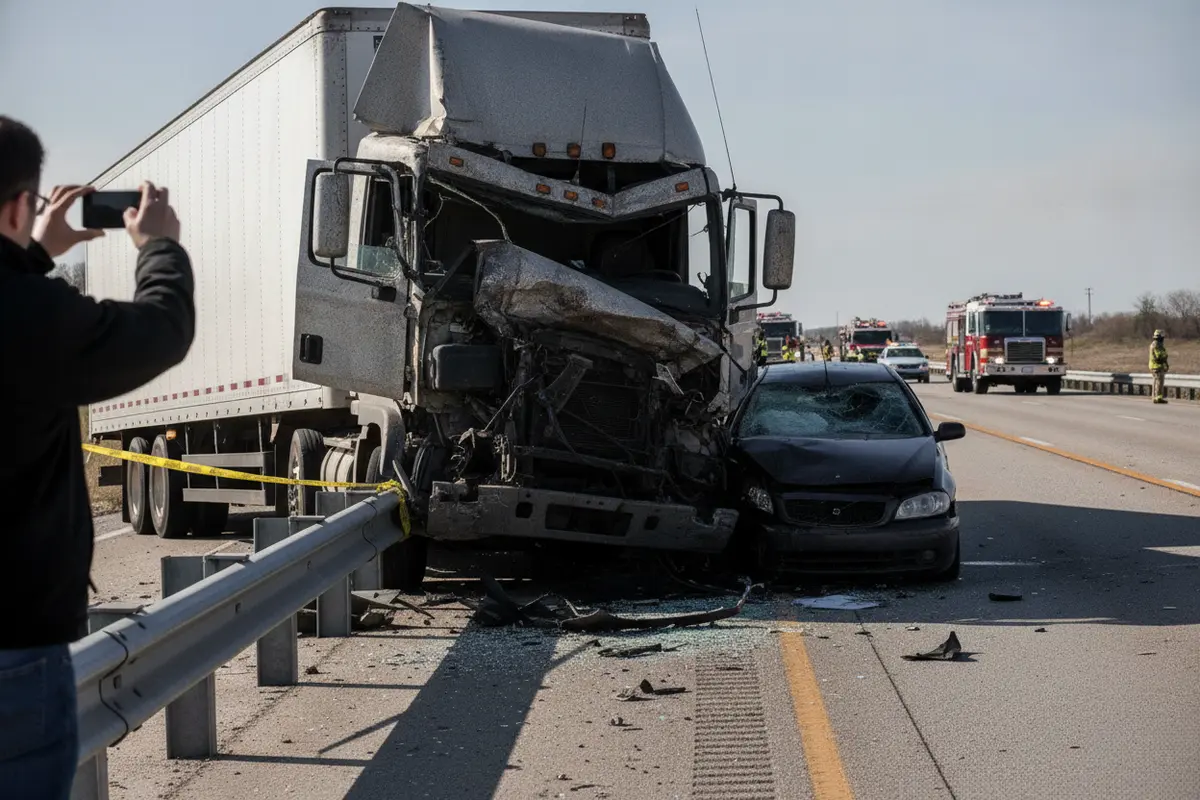
- Photograph the overall scene from a safe location before vehicles or debris are moved, if permitted. Include road layout, signs, traffic controls, vehicle positions, visible damage, and relevant conditions such as construction or standing water.
- Record the truck’s company name, unit or trailer number, license plate, and any identifying information visible without approaching an unsafe vehicle.
- Get names and contact details for witnesses who are willing to share them. Ask whether they saw the collision or only its aftermath; do not coach them or argue about what happened.
- Exchange required information and cooperate with responders. Avoid guessing about speed, distance, or fault when you do not know.
Do not delay care to take pictures. If you are injured or unable to document the scene, a passenger or family member may be able to help when it is safe. If no one can, write down what you remember later, including what you could not see or do.
Nearby businesses, homes, or traffic systems may have cameras that captured part of the roadway, but footage availability and retention vary. If you know of a camera, note its location, the direction it faces, and the time window that may matter. Do not trespass or demand access. A polite, prompt inquiry or a lawyer’s preservation request may help identify whether a recording exists before routine deletion, but the owner may not be able to share it directly. Note the business name and contact details so the lead can be followed up.
Which evidence may be important to preserve?
Evidence is not limited to photographs. A careful review may consider physical, digital, business, and medical records. The table below gives examples and practical first steps; it is not a complete list, and not every item will exist in every case.
| Evidence | Who may have it | Practical preservation step |
|---|---|---|
| Scene and vehicle photographs; witness details | People at the scene, passengers, responders, nearby businesses | Save original files and notes; record who took each photo and when. |
| Truck and passenger-vehicle data | Vehicle owner, motor carrier, service provider, vehicle systems | Identify each vehicle and ask promptly about preservation of relevant electronic data before inspection, repair, or further use. |
| Driver logs, dispatch, route, and communications | Driver, motor carrier, dispatch or communications systems | Identify the crash date, time range, driver, truck, and trip; request specific records rather than a vague category. |
| Inspection, repair, and maintenance records | Motor carrier, fleet owner, repair shop, parts provider | Note known defects or recent repairs and identify the vehicle, component, and relevant time period. |
| Medical records, bills, and injury photographs | Medical providers, pharmacies, the injured person | Keep visit summaries, bills, prescriptions, and dated photographs in a secure, organized file. |
| Crash and incident reports | Law enforcement or other reporting agency | Keep report numbers and agency details; request a copy through the appropriate agency process. |
One way to make this manageable is to sort the possible evidence by who controls it. You or a family member may hold photographs, receipts, and messages. An agency may have an incident report or roadway records. A carrier, truck owner, repair business, or insurer may control other material. Make a short list of each source, the information you have about it, and whether anyone has already asked that it be kept. That list helps separate material you can safely preserve now from records that need to be requested from someone else.
How can you document the scene and physical evidence?
Photographs are most useful when they show context as well as detail. If it is safe and allowed, capture a wide view of the road and then closer images of vehicle damage, tire marks, broken parts, cargo, signals, signs, and anything that may have affected visibility or stopping distance. Do not move objects just to make a picture look clearer. If an item must be moved for safety, leave that to responders or note what changed and why.
Keep the original image files when possible. Avoid editing, cropping, or adding marks to the only copy. Back them up in a secure place and make a simple note of the date, location, photographer, and what each image shows. If you receive photographs or video from someone else, note who provided them and when.
A practical photo sequence can help someone understand the scene later. Start with a broad view that shows the road and surrounding features, then take medium-distance views of each vehicle and its position, followed by close views of visible damage or debris. If weather, lighting, or a traffic control device may matter, photograph that context too. Do not assume a close-up of damage alone explains where the vehicles were or how the road was arranged. When possible, keep the images grouped by date and source rather than mixing them with unrelated photos.
Vehicles may need to be moved, inspected, or repaired. Safety and necessary repairs come first. Before work begins, if circumstances permit, document the damage and ask the owner, insurer, or repair facility how an inspection can be arranged. Keep estimates, invoices, parts lists, and communications. Do not keep a vehicle in an unsafe condition or refuse necessary work solely to preserve evidence; ask a lawyer about reasonable options for documenting it.
What truck and company records might matter?
Commercial vehicles may generate or be associated with several kinds of records. Depending on the truck and circumstances, potentially relevant material can include event data, onboard camera footage, GPS or fleet telematics, electronic logging information, dispatch messages, bills of lading, driver qualification or training records, inspection reports, maintenance history, and communications about a mechanical concern or route.
Do not assume that every truck has the same system, that a particular device recorded the crash, or that a file will be available in a standard format. Data sources may be controlled by different parties. A truck may also have a separate trailer, camera, or fleet system. A lawyer can help identify what may exist and frame a focused request using details such as the vehicle identification, unit number, date, time, trip, and incident.
Driver logs and supporting records can help establish a timeline, but they are only one part of the picture. Maintenance records can help show inspection and repair history, while dispatch or delivery documents may clarify the trip and the people or companies involved. Preserve any documents or messages you already have, but do not try to access a company’s systems or another person’s private account.
It can help to think in terms of questions rather than presume a particular record proves a point. For example, if the issue is when the truck arrived or departed, trip and dispatch records may provide context. If a mechanical condition is a concern, inspection and repair materials may be relevant. If the collision sequence is disputed, vehicle data, photographs, video, and witness accounts may each provide different pieces of information. A record should be considered with its source, timing, and limits in mind; no single document necessarily tells the whole story.
How do you ask a company to preserve evidence?
Once the responsible company or vehicle owner is known, a written request can identify the collision and ask that potentially relevant records and physical evidence be preserved. In many cases, an attorney sends a more detailed preservation letter after reviewing what is known. The request should be specific enough to identify the incident and likely sources, without claiming that a recipient has already destroyed anything.
A useful request may identify:
- The collision date, approximate time, location, and involved vehicles.
- The driver, carrier, vehicle, trailer, and trip identifiers known to you.
- Potentially relevant electronic data, video, logs, dispatch and communication records, inspection and maintenance materials, and physical vehicle components.
- A request to avoid overwriting, altering, repairing, or disposing of relevant evidence until the parties can address inspection, while recognizing that urgent safety or operational needs may require action.
Keep a copy of the request and proof of how and when it was sent. A letter by itself does not prove a claim or guarantee preservation. Do not make threats, demand access to restricted systems, or assume you can personally inspect a commercial vehicle. If a vehicle is about to be repaired or released, explain the concern promptly to counsel or the appropriate insurer contact.
For official crash-report paperwork, the Missouri Department of Revenue provides its Motor Vehicle Accident Report form. A report form and an incident report are not substitutes for preserving photographs, witness information, company records, or medical documentation.
When describing what should be kept, use details you can support and identify uncertainty plainly. You might write that a particular truck was involved at a stated location and that you are asking the recipient to retain relevant records for the known time window. If you do not know the carrier or unit number, say so and provide other identifiers instead of guessing. Save a dated copy and any delivery confirmation. If more information becomes available, an updated request can clarify the vehicle, records, or time range rather than relying on an overly broad description.
How should you preserve medical and personal records?
Follow your treatment plan and keep a timeline of appointments, symptoms, restrictions, and questions for your providers. Save discharge instructions, test results you receive, prescriptions, bills, and explanations of benefits. A dated note about how an injury affects daily activities can help you remember details when months have passed. Be accurate and do not exaggerate; make clear when a note describes your own recollection.
Keep copies of work schedules, wage information, and messages about time missed if those records may relate to an injury. Store them privately and share sensitive information only through an appropriate process. Avoid posting crash details or medical updates publicly while the facts are being reviewed. Do not delete relevant messages, photographs, or social media material after a collision.
When possible, maintain a simple folder with subfolders for photographs, reports, medical care, expenses, and communications. Write down the source of a file and when you received it. Keep originals unchanged and use copies for annotations. This kind of organization can make it easier to explain what is known and what still needs to be requested.
A basic timeline can be as simple as a dated list: crash and emergency response; first medical visit; follow-up appointments; communications with an insurer or business; and dates when documents or photographs were received. Keep factual notes separate from questions or assumptions. For example, record “called repair shop; spoke with person who said vehicle is scheduled for inspection” rather than interpreting what that statement means. If a detail is uncertain, mark it as uncertain. This makes later review more reliable and avoids turning a best guess into an apparent fact.
What if the truck driver or company disputes fault?
A disagreement about fault is a reason to preserve facts, not to argue at the scene or make assumptions. Save any correspondence from insurers, record the date and name of the person who contacted you, and ask for important requests in writing. You may choose to provide basic factual information, but do not guess or sign a statement you do not understand. For more on general Missouri vehicle-crash issues, see this guide to Missouri car accident laws.
Missouri uses a comparative fault system, so an allegation that an injured person shared some responsibility does not automatically answer every question about recovery. How the rules apply depends on the evidence and the specific circumstances. A lawyer can assess the available facts and explain how fault arguments may affect a particular claim. Learn more about the firm’s personal injury practice or attorney background.
It may be useful to keep a record of the questions raised by the insurer or another party, along with the documents or information requested. You do not have to resolve a disputed reconstruction or fault question in an informal call. Stay factual, avoid speculating about details you do not remember, and keep copies of what you send. If you are unsure whether a request is routine or whether a document needs review before signing, get legal guidance rather than rushing to respond.
When may legal help with preservation be useful?
Prompt legal advice may be useful when a person has a serious injury, a truck or trailer is likely to be repaired or sold, important electronic data may be at issue, or several companies appear to have a role. It can also help when there is uncertainty about the correct carrier, a disputed account of the crash, or a request for a recorded statement. The right timing depends on the facts, but waiting can make it harder to identify who has evidence.
A consultation can help sort out what you already have, what may be held by others, and what steps are appropriate to request it. The firm handles automobile accident cases and represents injury victims in Springfield and Southwest Missouri. You can use the personal injury questionnaire to organize information, or review signs that it may be time to consult a personal injury attorney. For general vehicle-collision context, this resource on motor vehicle accidents may also be useful.
Request a conversation about your crash
Frequently Asked Questions
Should I collect evidence if I am hurt?
No. Get to safety and seek medical care first. A passenger or family member may document the scene if it is safe and responders permit it. You can also write down what you remember when you are able.
Can I ask a trucking company to keep its records?
You can make a clear written preservation request, but a request is not a guarantee or a substitute for legal procedures. Identify the collision and records as specifically as you can, keep a copy, and consider speaking with a lawyer if key evidence may be at risk.
Does the police report contain all the evidence?
No. A report may document information gathered by an officer, but it may not include every photograph, witness account, vehicle-data file, company record, or medical record. Keep track of report details and preserve other sources separately.
How long do I have to bring a Missouri injury claim?
Deadlines depend on the claim and circumstances, and special rules can apply. Do not assume that evidence preservation pauses a filing deadline. Ask a Missouri attorney to assess the applicable deadline based on the facts of your case.
After a St. Louis-area truck collision, a calm record of what happened and prompt attention to evidence that others control can help preserve useful information while you focus on recovery.