

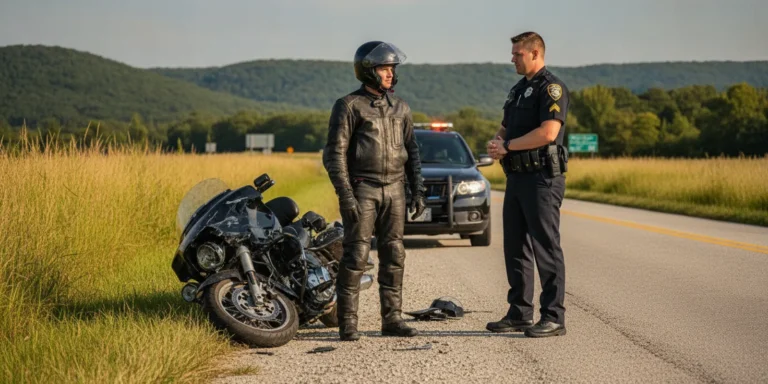
A Missouri motorcycle hit-and-run claim can feel difficult to manage while you are hurt and the driver who struck you is gone. Start with safety and medical care, report the collision, and preserve information that may help identify the vehicle or explain what happened. The steps below also cover how uninsured motorist coverage, helmet evidence, and Missouri fault rules may affect what happens next.
Contact the firm about your motorcycle collision
What should you do immediately after a motorcycle hit-and-run?
Do not chase the other driver. A pursuit can put you and other road users in greater danger, and it may take you away from the scene before important details are recorded. If you can do so safely, move out of traffic and call 911. Tell the dispatcher that a driver left after a collision and give the location, direction of travel, and a description of the vehicle and rider or driver.
- Get emergency help when needed. If you or anyone else may have a serious injury, request an ambulance. Do not remove a helmet or move someone with a possible head, neck, or back injury unless there is an immediate danger that makes movement necessary.
- Report the collision. Give responding officers a factual account. Ask how to obtain the report number and the process for getting a copy of the report. If police cannot respond, ask how to make a report through the appropriate local agency.
- Record what you remember. As soon as you are able, write down the time, exact location, traffic and weather conditions, the vehicle’s color, make, model, damage, license plate characters, and the direction it went. Record details even if they seem incomplete.
- Identify witnesses. Ask witnesses for names and reliable contact information. If you are injured or unable to do this, ask someone you trust to help.
- Get medical care and follow up. Some injuries are not obvious at the scene. Describe all symptoms to a medical professional, keep appointments, and follow the care plan you receive.
Motorcycle collisions can result in severe harm. The National Safety Council’s motorcycle data page reports 6,228 fatalities and a rate of 28 per 100 million vehicle miles; its chart and data table provide context for the reporting period. This information is not a forecast for any individual crash, but it reinforces why prompt safety steps and medical assessment matter.
What evidence can help identify the driver?
A hit-and-run investigation may depend on small details gathered quickly. Preserve evidence without putting yourself at risk or disturbing the scene. Photos and notes can help clarify where the impact occurred, which way each vehicle was moving, and what the driver may have seen.
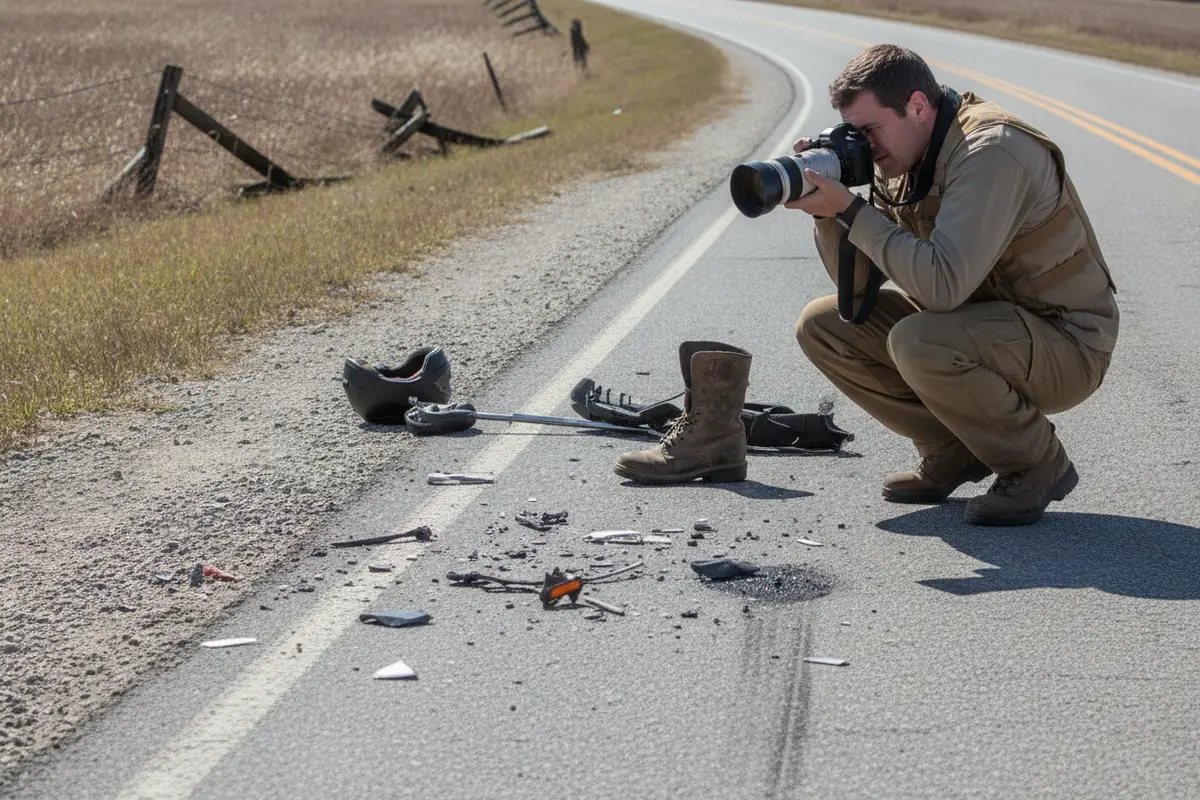
- Photograph the scene and damage. When safe, take wide views of the road, intersection, signs, traffic signals, skid marks, debris, motorcycle position, and any visible vehicle parts. Also photograph damage to your motorcycle, helmet, clothing, and other equipment. Keep the original files if possible.
- Save physical evidence. Do not discard damaged riding gear, a broken mirror, or pieces that may have come from the other vehicle. Store them safely and note when and where they were found.
- Look for nearby cameras promptly. Businesses, homes, parking areas, and traffic systems may have cameras that captured the road or the vehicle leaving. Note their locations and ask the owner or manager to preserve footage from the relevant time. Some systems overwrite recordings quickly. Do not trespass or try to obtain restricted recordings yourself.
- Keep witness details and messages. Write down what each person says in their own words, when you spoke, and how to reach them. Keep texts, emails, and any communications about the crash.
- Ask about official follow-up. Give police any new plate details, footage leads, or witness information. Keep a log of the report number and the name or contact information of the agency handling the report, if provided.
Think through the route the vehicle took before and after the impact. Nearby cameras may be aimed at a driveway or storefront rather than the road, but could still capture a plate, vehicle color, or direction of travel. Record the camera’s location and the time window that may matter. If a camera owner agrees to preserve a recording, note who you spoke with and when. Do not assume the owner will keep it indefinitely, and do not enter private property or confront a driver you suspect was involved.
Keep a timeline that separates what you saw from what someone else told you. For example, note that you personally saw a dark SUV turn west, while a witness later mentioned a broken passenger-side light. This distinction makes it easier for investigators or an insurer to follow up without treating secondhand information as your own observation. If you later remember a detail, add it with the date you remembered it rather than changing an earlier note without explanation.
Preserve digital files in a way that keeps their context. Keep original photos and videos on the device or in a backup, and avoid cropping, adding captions, or applying filters to the originals. If a family member took the photo, record who took it and approximately when. Keep any dash-camera file together with the moments before and after impact where possible. A recording that includes more context may help clarify traffic movement and timing.
Do not edit or post crash footage as if it were complete proof. Keep an untouched copy and make a separate working copy if you need to trim a clip for review. Avoid speculating publicly about who was at fault or what the video proves. A short clip may omit what happened immediately before or after the impact.
How does uninsured motorist coverage apply?
If the driver is not found, there may be no identified driver’s liability policy to pursue. Your own policy may include uninsured motorist (UM) coverage that could apply to injuries caused by a hit-and-run driver. Whether it applies depends on the policy language, the facts, and the requirements for establishing that an unknown vehicle caused the collision.
Review the policy for the UM limits, covered people, covered vehicles, and any notice, reporting, or proof requirements. A policy may require prompt notice to the insurer or a police report within a specified period. Some policies also set out requirements for physical contact or other evidence in an unidentified-driver crash. Do not assume that every policy uses the same terms. Give notice in a timely manner while avoiding guesses about facts you do not know.
When you report the crash to your insurer, keep a copy of what you send and note the date and person you spoke with. Provide accurate information, but do not sign a broad release or accept a proposed resolution before you understand what claims it covers. An insurer may ask for a recorded statement or documents. Ask what the request is for and consider getting advice before agreeing, particularly if your injuries or the driver’s identity remain uncertain.
A related overview of uninsured motorist claims in Missouri can help explain the coverage questions. It is not a substitute for reading the specific policy that may cover your crash.
If the driver is later identified, keep the new information with your original report rather than replacing it. The driver’s identity may open questions about the vehicle owner’s role, insurance coverage, and whether the policy applies to the driver. Do not assume that finding a name means the claim is resolved; confirm the identity and let investigators and insurers evaluate the evidence. If an insurer says the driver was not covered or disputes whether the vehicle caused your injuries, ask for the position and supporting policy language in writing.
Keep separate records for different parts of the claim. One folder can hold the police report and scene evidence, another can hold medical records and bills, and a third can hold insurance correspondence and policy documents. A simple index with dates and file names can save time when a doctor, insurer, or lawyer asks for a particular record. Store sensitive medical and financial documents securely, and share copies only through a suitable channel with people involved in handling the claim.
What records should you keep about injuries and losses?
Medical records help document the timing of symptoms, the care received, and the effect of an injury on daily activities. Seek evaluation even if you initially feel able to continue your day. Tell the provider about every symptom, including pain, numbness, dizziness, memory problems, or changes in sleep. Follow instructions and ask the provider what to do if symptoms worsen.
Keep a simple file with discharge papers, visit summaries, prescriptions, referrals, bills, and insurance explanations of benefits. Save receipts for out-of-pocket expenses and make a note of missed work or tasks you can no longer do as usual. A brief dated journal can record pain, mobility limits, sleep disruption, and help needed at home. Describe what you experience; do not exaggerate or try to diagnose yourself.
Preserve the helmet and riding gear in the condition they were in after the collision. Photograph them from several angles before storing them. A helmet can be relevant to an injury investigation, including questions about fit, damage, and how the impact occurred. Its condition alone does not establish the cause or severity of an injury.
Helmet use may become a subject in a claim, but do not assume that not wearing one automatically eliminates a claim. The legal effect can depend on the facts, applicable law, and the injury being considered. Keep the gear and records, and avoid making conclusions about fault based on one detail. If you are looking for practical ways to organize records, the firm’s personal injury questionnaire is one available starting point.
How can Missouri fault rules affect a motorcycle claim?
Missouri follows a pure comparative fault approach. In general, an injured person may recover damages even if that person shares some fault, but a recovery can be reduced by the person’s share of responsibility. The insurer may examine speed, lane position, visibility, signals, and other circumstances. A driver fleeing the scene does not by itself answer every question about how the collision occurred.
Evidence can help separate assumptions from facts. For example, a witness might remember a vehicle turning across a rider’s path, while a camera could show the signal or the timing. Medical documentation may help establish which injuries followed the crash. Keep your account consistent and correct any genuine mistake promptly rather than trying to fill gaps with guesses.
Missouri generally does not cap compensatory damages in ordinary personal-injury claims arising from a motorcycle collision, though the type of claim and applicable law matter. A claim’s facts and proof still affect what damages may be established; no rule guarantees a particular result. For a broader overview of available injury matters, see the firm’s practice areas page.
What deadlines and insurance communications should you track?
Missouri’s general statute of limitations for many personal-injury claims is five years, but exceptions, claim types, parties, and other circumstances can change the deadline. An insurance notice deadline may arrive much sooner than a court filing deadline. Do not wait for the driver to be identified or for treatment to end before asking what deadlines apply to your situation.
Write down each contact with an insurer, including the date, the person, and what was requested or said. Save letters, emails, claim numbers, and copies of anything you submit. If an adjuster asks for documents, clarify the scope and keep a copy of your response. Avoid signing a release without understanding whether it would close the claim or affect later claims.
For help considering whether to speak with a lawyer, read these signs that legal help may be useful after an injury. Getting legal guidance does not guarantee a result. It can help you understand the issues, preserve relevant evidence, and review communications about a claim.
How do key next steps compare?
| Issue | Useful next step | What to preserve |
|---|---|---|
| Immediate danger or injury | Call 911 and seek medical care | Names of responders, report number, and medical records |
| Unknown driver | Report the collision and share identifying details with police | Vehicle description, witness contacts, photos, and camera locations |
| Possible camera footage | Ask the camera owner to preserve the relevant time period | Location, date and time, contact person, and any response |
| Potential UM coverage | Review the policy and notify the insurer as required | Policy, notices, claim number, and insurer communications |
| Injury documentation | Follow medical advice and keep a dated record | Visit summaries, bills, receipts, symptoms, and damaged gear |
Frequently asked questions
Should I wait to contact my insurer until police find the driver?
Usually, you should not delay checking your policy and meeting its notice requirements while an investigation continues. Report facts accurately, ask what the policy requires, and keep a copy of each communication. The terms of your policy govern.
What if I only remember part of the license plate?
Write down the characters you recall and mark which parts are uncertain. Include the vehicle’s color, type, damage, direction of travel, and anything witnesses saw. Share the information with police; do not turn an uncertain memory into a definite claim.
Can I make a claim if the other motorcyclist left the scene?
Possibly. A claim may depend on identifying the driver, available insurance, your own UM coverage, the evidence, and applicable policy terms. A report and prompt evidence preservation may help clarify the available options, but they cannot guarantee coverage or recovery.
What if my symptoms appear later?
Seek medical advice when symptoms appear or change, and explain that they followed the collision. Keep records of when symptoms began and how they affect your activities. Do not delay care because you are unsure whether the injury is serious.
Discuss the facts and questions about your claim
A hit-and-run can leave important questions unanswered, but timely care, a clear report, preserved evidence, and careful review of insurance terms can give you a more complete picture of the next steps.