

A road rage accident claim Missouri drivers consider after a collision can raise questions beyond who hit whom. You may be shaken by an aggressive encounter, concerned about injuries, and unsure what to tell an insurer. The useful starting point is a careful record of actions, timing, injuries, and losses—not the label “road rage.” The other driver’s anger may be relevant, but it does not by itself prove fault or guarantee payment. Put safety and medical care first, then preserve what you can.
Discuss your accident with the firm
What does “road rage” mean in a crash investigation?
People use “road rage” to describe anger-driven conduct behind the wheel. Examples may include pursuing another vehicle, deliberately blocking it, making threats, or using a vehicle to intimidate someone. The phrase describes a possible context; it is not a legal finding. A civil injury claim still requires evidence connecting conduct to a collision and showing resulting harm.
Separate what you observed from what you infer. “The pickup followed me for several blocks, moved beside my car, then braked sharply” records a sequence. “The driver wanted to hurt me” is an interpretation unless the driver said or did something that supports it. This distinction helps police, insurers, and lawyers evaluate the same facts without turning an uncertain motive into a conclusion.
Not every unsafe act is driven by anger. A sudden lane change, speeding, or following too closely may result from careless driving, distraction, or another cause. On the other hand, words or actions before impact may help explain why a driver made an abrupt maneuver. Even when intentional conduct is suspected, the physical sequence—positions, speed, visibility, and timing—remains important.
What should you do immediately after a suspected road rage collision?
A threatening encounter can make it hard to think through ordinary crash steps. Use a simple order: get away from immediate danger, address urgent health needs, report the collision, and preserve information. Do not follow or confront the other driver to obtain evidence. If it is unsafe to remain where you are, move to a well-lit public place or another safe location if you can do so without creating more danger.
- Move to safety. If the vehicles can be moved and it is safe, get out of active traffic. Call 911 when anyone is injured, there is an immediate threat, or emergency help is needed. Tell the dispatcher where you are and describe the threat plainly.
- Get medical attention. Seek care for injuries and concerning symptoms. Some problems may not be obvious at the scene. Explain what happened and follow the medical professional’s instructions. Save discharge papers, visit summaries, prescriptions, and follow-up recommendations.
- Report the event. Give officers factual information about the collision and the conduct you personally observed. Ask for the report or incident number and how to request a copy later. A report can help preserve the initial account, but it does not decide every civil issue.
- Exchange information without escalating. Share required identifying and insurance details. Keep the conversation brief if the other driver is angry. Do not argue about fault or agree to meet elsewhere to discuss the incident.
- Record the scene if safe. Photograph vehicle positions, damage, road markings, nearby signs, weather, and visible injuries. Do not step into traffic or approach a person who is threatening you to get a better picture.
- Keep the original material. Save dashcam files, photographs, texts, and call records. Avoid editing, trimming, or deleting potentially relevant files. Make a backup while retaining the original source where possible.
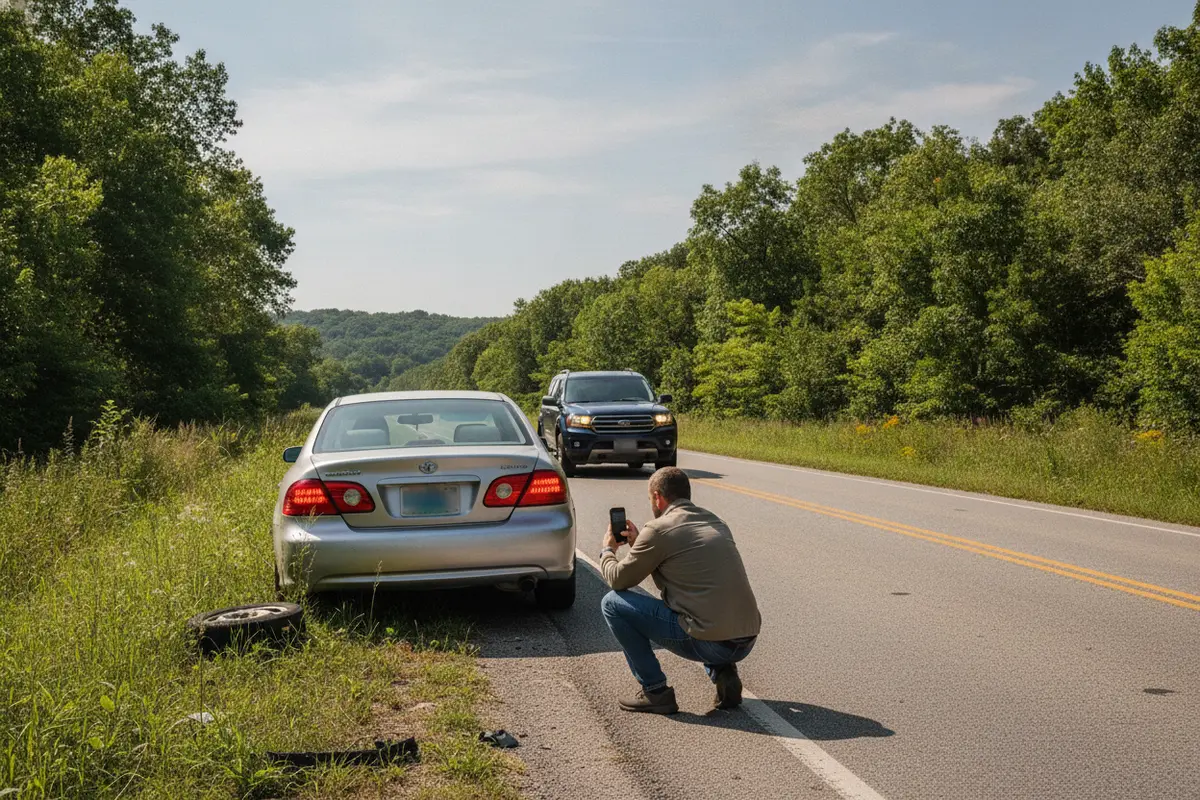
How can you preserve evidence before it disappears?
Road rage cases can turn on a short sequence that neither driver describes the same way. A dash camera may show lane changes and braking; a witness may have seen the interaction before the impact; a nearby camera may capture only a few minutes. Some recordings are overwritten on a routine schedule. Make a list of possible sources promptly, even if you do not yet know whether the material will be available.
Start a dated incident note while your memory is fresh. Include your route, approximate times, direction of travel, traffic, lighting, weather, and the sequence of driving actions. Note the exact words you remember, but identify them as approximate if you cannot recall them precisely. Record the location of each witness and how to contact them if they provided details. Do not fill gaps with guesses.
Build a practical evidence log
A useful log can be short and organized. Give each item a source, date collected, and a brief description of what it might show. For example, “dashcam, front view, 4:10–4:18 p.m.—vehicle enters lane and brakes before impact” is more useful than “video proves road rage.” Add a separate note for a witness who saw the initial pursuit, a business that may have a camera facing the road, and any photographs taken at the scene.
- Keep originals intact. If you make a working copy or add notes, keep the unaltered file too. Preserve metadata where available.
- Record how you obtained each item. Note who gave you a file, when it arrived, and whether it is a copy or original.
- Ask about camera retention quickly. If a business or residence may have footage, note the exact location and time window. A lawyer can advise on an appropriate preservation request.
- Protect private information. Avoid posting crash footage, medical details, or accusations online. Public posts can lose context and may complicate later discussions.
When describing the event to an officer or insurer, distinguish what you saw from what another person told you. A calm, consistent account does not mean you must remember everything immediately. It is reasonable to say that you do not know an exact speed, time, or phrase. If additional records refresh your memory, note when and how you learned the detail rather than silently revising the original account.
How can Missouri fault rules affect a road rage accident claim?
Missouri generally applies pure comparative fault in personal injury cases. That means an injured person’s own share of responsibility can reduce damages, but partial responsibility does not automatically bar recovery. The evidence may show that more than one person contributed to a collision. For example, one driver may have made a dangerous braking maneuver while the other was traveling too fast to stop. The fact finder may consider both acts when assigning fault.
Comparative fault makes the full driving sequence important. Insurers may examine speed, following distance, lane position, visibility, signals, and the actions of every involved driver. A road rage allegation does not erase a question about the injured driver’s conduct, just as a possible mistake by the injured driver does not erase another driver’s conduct. Learn more about how comparative fault may be considered and the broader Missouri car accident law issues that can arise.
Missouri does not impose a general cap on compensatory damages in ordinary personal injury cases, although specific rules and exceptions may apply. The usual time limit for many Missouri personal injury lawsuits is five years, but the deadline depends on the claim and parties involved. Do not treat a general period as a deadline calculation for your case. Prompt legal review can help identify which rules apply.
What evidence helps explain how the collision happened?
Evidence is strongest when different sources fit together. Photos may show final positions and damage, but not the entire sequence. A witness may see a vehicle swerve but not hear what was said. A dash camera may capture the approach but miss the impact if it stops recording. The goal is to assemble a timeline and identify what each item can—and cannot—establish.
| Evidence or record | What it may help clarify | Practical way to preserve it |
|---|---|---|
| Scene and vehicle photographs | Damage, position, road layout, visibility, and conditions | Keep original files and note when and where each was taken |
| Dashcam or nearby video | Timing, movement, lane changes, and the moments captured | Save the full original recording and promptly identify other cameras |
| Witness details | What another person saw or heard from a particular vantage point | Record contact details and a neutral description of their location |
| Police and dispatch records | Initial reports, response timing, and information provided at the scene | Keep report numbers and track requests for available records |
| Medical and work records | Injury complaints, care, missed work, and related expenses | Save bills, visit summaries, wage documents, and instructions |
| Insurance correspondence | Claim questions, coverage positions, and requests for information | Keep letters and emails together with dated call notes |
A citation or criminal investigation may provide information about a driver’s conduct, but a civil injury claim has its own questions about causation, fault, and losses. A traffic matter and an injury claim are not interchangeable. If you have questions about the separate traffic process, the firm’s page on traffic tickets provides related information. The record should stay factual: avoid assuming that a ticket, charge, or absence of one settles civil responsibility.
How should you handle insurance questions?
Notify your insurer as required by your policy and answer questions truthfully. Keep a record of claim numbers, dates, names, and requests. An insurer may ask for a recorded statement, medical authorization, photographs, or other documents. Before agreeing to a broad authorization or statement, understand its scope and consider obtaining advice. Do not guess when you do not know an answer, and do not sign a document you do not understand.
Insurance review often involves several separate issues: how the impact occurred, whether an injury is connected to it, what coverage may apply, and how claimed losses are documented. A threatening gesture may be one part of the timeline, while vehicle damage, independent witnesses, and medical records address other questions. A claim decision is not made simply by deciding whether a driver was angry.
Keep a folder for estimates, bills, letters, repair records, and notes from calls. After a conversation, write a brief dated summary of what was requested and any deadline mentioned. Store original photographs and videos separately from documents you send. If the insurer gives a position that you do not understand, ask for the reason in writing and keep the response with the claim file. The firm’s motor vehicle accident resources offer additional background on crash-related questions.
Chad Mann’s prior work with major national insurance companies informs his understanding of how insurers evaluate, negotiate, and deny claims. That background is not a promise about the outcome of any matter. Every coverage question and claim depends on policy language, evidence, and applicable law.
What losses may need to be documented?
Depending on the facts and applicable law, an injury claim may involve medical expenses, lost income, and the effects of pain or limitations on daily activities. Save bills, receipts, appointment records, wage information, and instructions from medical professionals. A clear record helps distinguish amounts already incurred from future needs that may require further evaluation. The “road rage” label alone does not establish that a loss is recoverable or determine its value.
A practical way to document day-to-day effects is a short weekly note. Write down symptoms, appointments, activities that became harder, and time missed from work. Specific examples are more useful than broad statements. For instance, note that a household task took longer or that a planned work shift was missed, but do not overstate or speculate about the cause. Keep the original notes dated and update them as circumstances change.
Medical records should reflect what you actually report and the care you receive. Tell the treating professional about relevant symptoms and changes; do not rely on a personal log instead of appropriate care. If treatment is delayed or interrupted, keep an accurate record of why. Family members who help organize paperwork should do so with the injured person’s permission and respect their privacy.
When injuries are severe or affect long-term independence, the consequences can extend beyond immediate bills. Families may need to coordinate care, work changes, and records while coping with uncertainty. A discussion of serious and life-altering injury claims may be relevant when the collision caused a major injury. The specific needs and possible legal issues still depend on the individual circumstances.
When may legal guidance be useful?
It may be helpful to speak with a Missouri injury lawyer when fault is disputed, injuries are significant, several vehicles or policies are involved, or an insurer questions the cause or extent of harm. A lawyer can review the sequence, identify evidence that may need preservation, explain applicable rules, and communicate with insurers. Legal advice can also help separate a traffic citation or allegation of intentional conduct from the questions in a civil claim.
Consider the uncertainties that remain. Is there a disagreement about which vehicle moved first? Could a camera recording be overwritten? Did anyone witness the interaction before impact? Are you receiving requests for broad medical records or a recorded statement? Is ongoing treatment making it difficult to keep up with calls and paperwork? These are practical reasons to seek an informed review, not proof that a lawsuit is necessary or that a particular result will follow.
When looking for counsel, ask who will handle communication, what information the lawyer needs to assess the matter, and how questions about evidence and insurance will be addressed. The firm’s attorney background information explains Chad Mann’s professional experience. The article on signs that legal help may be worth considering offers another framework for deciding whether to request a conversation. For a broader overview of rear-end collisions, see how the event’s mechanics can raise questions distinct from motive or anger.
For readers in the region, the firm also provides information about car accident representation in Republic, Missouri. Whether that or another resource fits depends on where the crash occurred and the legal questions involved. Review the information and decide whether a direct conversation would help clarify next steps.
Frequently asked questions
Does road rage automatically make the other driver liable?
No. Evidence must support that the driver’s conduct caused the collision and injury. The phrase can describe the incident, but it does not replace proof of responsibility and losses.
Can I bring a claim if I was partly at fault?
Missouri generally follows pure comparative fault, so an injured person may still recover when partly responsible, with damages reduced according to the assigned share of fault. How fault is allocated depends on the evidence and legal analysis.
Should I follow or confront the other driver to get information?
No. Prioritize safety, move to a secure place if possible, and contact law enforcement when appropriate. Do not increase the danger to collect a license plate, recording, or explanation.
How long do I have to file a lawsuit?
Many Missouri personal injury lawsuits are subject to a five-year limitations period, but exceptions and different deadlines can apply. The correct deadline depends on the claim and parties, so do not rely on a general description to calculate it.
What are sensible next steps after a road rage crash?
First address safety and health. Then preserve original footage, make a factual timeline, identify witnesses or possible cameras, and keep claim and medical records together. Avoid public accusations and assumptions about coverage while the facts are being reviewed. An academic article, Understanding Road Rage, discusses road rage as a road-safety concern; it does not decide liability in an individual Missouri case. A focused review can help clarify what evidence is available and which questions remain.
Contact the office to discuss your situation
Every collision is different, and reading this article does not create an attorney-client relationship. If you are injured, seek appropriate medical care and obtain legal advice based on the facts of your situation.