


A serious injury involving a government vehicle, public building, or other public property can raise a difficult question: can the injured person bring a claim against a Missouri government body? Missouri sovereign immunity personal injury exceptions may allow certain claims, but the rules are narrow and depend on the facts, the defendant, and statutory requirements. Identifying an exception is only the starting point; notice, deadlines, evidence, and possible limits also matter.
What do Missouri sovereign immunity exceptions generally allow?
Sovereign immunity is a legal protection that can shield government entities from certain lawsuits. Missouri law preserves that protection but recognizes limited circumstances in which a claim may proceed. The main statutory exceptions commonly discussed in personal injury cases involve injury caused by a public employee’s negligent operation of a motor vehicle in the course of work, a dangerous condition of public property, or insurance coverage that waives immunity to the extent of the coverage.
These are not automatic paths to payment. A claimant must still establish the applicable legal elements and connect them to reliable evidence. A government defendant may dispute whether the exception applies, whether the entity or employee is the proper defendant, and whether the facts satisfy each requirement. The official Missouri Revisor of Statutes website is a place to consult current Missouri statutes; the relevant law and current wording should be checked for the specific claim.
It helps to separate three questions that are sometimes treated as one. First, does immunity protect the public entity from this kind of lawsuit, or does an exception apply? Second, can the claimant prove negligence or another required basis for liability? Third, what procedural rules and limits govern the claim? A favorable answer to the first question does not prove the other two. A claimant may have strong evidence that someone acted carelessly yet still face a dispute over whether the defendant is a public entity, whether a statutory exception covers the facts, or whether required procedures were followed.
It is also important to distinguish a claim against a government body from a claim involving an individual employee. The employee’s job and conduct may be relevant to an exception, but that does not automatically resolve who can be sued or what defenses apply. The correct analysis depends on the claim and the capacity in which a person is named. Avoid choosing defendants based only on a vehicle logo, uniform, or the name used in a brief conversation at the scene.
Which situations may fall within an exception?
The exceptions are different from one another. The label attached to an incident does not decide the issue. The investigation needs to establish what happened, who controlled the vehicle or property, and how the alleged negligence caused the injury.
| Potential route | Question to investigate | Important limitation |
|---|---|---|
| Public employee motor-vehicle negligence | Was a public employee operating a motor vehicle while performing work, and did negligent operation directly cause injury? | The employee’s role, course of employment, and causal facts matter; not every crash involving a government vehicle qualifies. |
| Dangerous condition of public property | Was the property in a dangerous condition, and did that condition directly cause the injury? | Specific statutory elements, including notice and foreseeability issues, may apply. |
| Insurance coverage | Did the public entity have applicable insurance covering the type of claim? | Any waiver may be limited to the coverage and terms; coverage should not be assumed. |
Negligent operation of a government vehicle
One exception may concern injuries directly resulting from a public employee’s negligent operation of a motor vehicle while acting within the course of employment. A vehicle owned by a city, county, or state agency does not by itself establish the exception. The facts may include whether the driver was an employee, whether the trip related to assigned work, how the vehicle was being operated, and whether that conduct caused the injury.
Evidence can include the crash report, photographs, witness accounts, vehicle or dispatch records, and available video. Records may be controlled by a public agency and may not remain available indefinitely, so it is sensible to preserve what is already accessible and get prompt advice about appropriate requests. A crash involving a government-owned vehicle may still involve other drivers or entities, making careful identification of each potential defendant important. The firm’s article on a Missouri truck accident claim discusses accident-claim considerations, though a public-entity case has additional immunity issues.
Dangerous conditions on public property
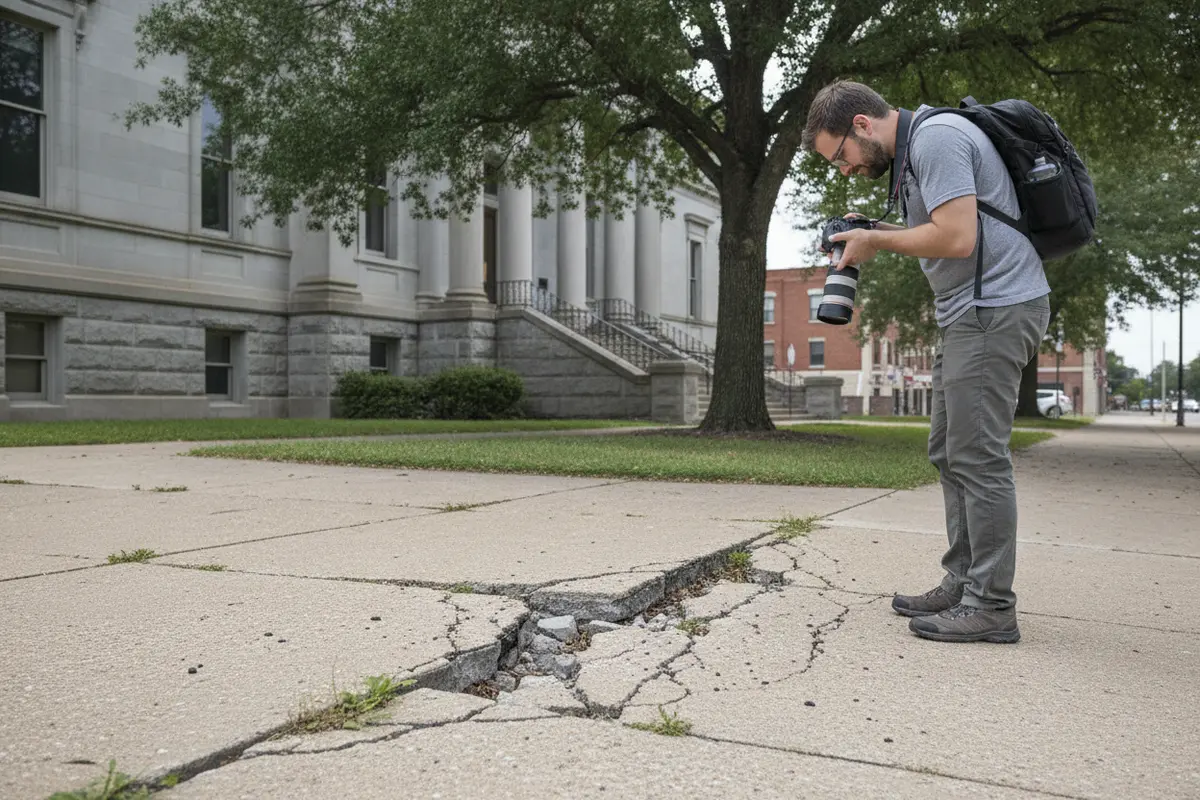
A second statutory route may apply when injury is directly caused by a dangerous condition of public property. The claim is not simply that a person fell or was hurt on government-owned land. The condition must meet the legal test. Among the issues identified in Missouri law are whether the condition created a reasonably foreseeable risk, whether it directly caused the injury, and whether the public entity had actual or constructive notice in the circumstances. The precise requirements need to be evaluated under current law.
Useful evidence can include dated photographs, measurements, maintenance and inspection information, prior reports, work orders, and statements from people familiar with the site. Record the exact location and condition as soon as it is safe. Do not alter the scene or put yourself at risk to collect material. A maintenance record may help show what the entity knew and when, but the absence of a record in a person’s possession does not establish that no notice existed.
There may also be disputes about whether the public entity owned or controlled the exact area, whether the condition was open and apparent, and whether some other cause contributed. Sidewalks, parking lots, buildings, and roads can have different owners or maintenance responsibilities. Determine the responsible entity rather than assuming that the nearest government office is the right defendant.
Insurance and the scope of any waiver
Missouri law also addresses circumstances in which a public entity has insurance for a claim. The existence of a policy is not a blanket waiver of immunity for every injury. The terms, limits, exclusions, insured parties, and kind of risk covered can affect whether and how far a claim may proceed. A claimant generally cannot infer coverage simply because the entity has insurance for some purposes.
Coverage questions may require policy documents and legal analysis. An insurer may evaluate liability, causation, and the wording of the policy separately. This is one reason that an early discussion with counsel can help clarify what records and questions matter. Attorney Chad Mann’s background in the insurance industry informs the firm’s understanding of how insurers assess and respond to claims; it does not change the legal elements or promise a particular result.
Why do notice and deadlines need early attention?
Notice can mean more than one thing. In a dangerous-property claim, notice may be part of the substantive question of whether the public entity knew or should have known of the condition. Separately, a particular statute or local rule may impose a notice or procedural requirement for a claim against a certain public body. Which rules apply can depend on the defendant and claim type. Do not assume that sending a letter to a general government contact satisfies a legal notice requirement.
Deadlines also require individual review. A general personal injury limitations period should not be treated as a complete answer for a public-entity claim. The potential defendant, the legal theory, the date and nature of the injury, and any special notice provisions can affect what must be done and when. Because missing a required step can jeopardize a claim, identify the possible public entity and seek legal guidance promptly rather than waiting for the investigation to finish.
When contacting a public body, keep a copy of any written communication and proof of delivery. Describe the incident and location accurately, but avoid guessing about facts that are not known. A notice document is not a substitute for filing a lawsuit when one is required, and a conversation with an employee should not be assumed to extend a deadline.
Keep an organized file from the beginning. Save the original photographs and video with the date information intact, and make a simple list of where each item came from. Write down witness names and contact details while they are still available. Keep copies of medical instructions, bills, missed-work information, and communications from an agency or insurer. If you receive a form or request for a recorded statement, read it carefully and understand what is being asked before responding. Do not speculate about an unknown cause or agree to a description that does not match your memory.
Public entities and their insurers may investigate an incident independently. Their questions can help clarify what facts are being reviewed, but an investigation does not mean that an exception has been accepted. You can be accurate and cooperative without guessing or making assumptions about coverage, fault, or the legal effect of a document. If the injury is serious or the request could affect a claim, consider getting legal advice before signing a release or giving a detailed statement. Preserve the communication and note when it arrived.
Can a claimant recover every type of loss?
Even if an exception applies, questions about damages remain. Missouri law provides for limits on certain claims against public entities, and the applicable limit may depend on the defendant, claim, and current statutory language. Do not rely on an outdated dollar figure from an online article. Verify the current rules and whether a particular limit applies before assessing potential recovery.
Fault can also be contested. The conduct of the injured person or another party may be relevant under Missouri’s comparative-fault framework. The effect depends on the evidence and legal theory; the presence of shared fault does not by itself answer whether a claim is allowed. See the firm’s resource on comparative negligence in Missouri for a general discussion of that issue.
Medical treatment records, wage information, photographs, and other evidence can help document the injury and its effects. Keep copies of bills and correspondence, follow medical advice, and tell providers how the injury occurred. A claim’s value cannot be determined from a short description alone, and no article can establish what a particular case may recover.
What should you do after a government-related injury?
- Get medical care. Address urgent health needs first and follow up as recommended. Keep the records and instructions you receive.
- Write down the basic facts. Note the date, time, exact location, people involved, and what you observed. Separate what you know from what you assume.
- Preserve available evidence. Save photos, video, contact details for witnesses, incident paperwork, and relevant messages. Do not edit originals.
- Identify possible public entities. A state agency, county, municipality, or another body may have responsibility. Ownership, employment, and maintenance facts can help identify the correct party.
- Ask promptly about records and notice. Potential video, vehicle data, and maintenance records may require timely preservation steps. Do not rely on a general inquiry as formal legal notice.
- Get claim-specific legal review. Ask which immunity exception may fit, what elements must be proved, what deadlines may apply, and whether a cap or insurance issue is relevant.
A legal review should begin with the actual facts rather than assumptions about the government’s responsibility. The firm handles personal injury matters across Missouri and prepares cases with the possibility of litigation in mind. To learn more about the attorney and the firm’s approach, visit Chad Mann’s background page or review the firm’s personal injury information.
What questions should you ask before moving forward?
For an initial conversation, organize the incident date and location, the agency or vehicle involved if known, your injury and treatment to date, and any reports or photographs. You can also use the firm’s personal injury questionnaire to prepare information. A consultation can help identify unanswered questions; it does not guarantee that an exception applies or that a claim will succeed.
Frequently asked questions
Does every injury on government property qualify for an exception?
No. The location alone is not enough. A dangerous-property claim requires proof of the applicable statutory elements, which may include a dangerous condition, direct causation, foreseeable risk, and notice. Ownership or control of the exact area also may be disputed.
Is a city automatically responsible when its vehicle causes a crash?
No. The facts must support the relevant exception, including the driver’s public employment and work-related role, negligent operation, and a causal connection to the injury. Other potentially responsible parties may need to be considered as well.
Does government insurance mean immunity is waived?
Not necessarily. Any waiver based on insurance can be limited by the applicable coverage and policy terms. The existence of insurance for one risk does not establish coverage for a different claim.
How long do I have to make a claim?
There is no safe universal deadline to apply without reviewing the facts and defendant. A general injury deadline may not resolve notice or other special procedural requirements. Have the date, location, and potential government entity reviewed promptly.
What are sensible next steps?
Missouri sovereign immunity cases turn on narrow exceptions and practical details that may be easy to overlook. Preserve what you can, identify the responsible public body, and get advice about the exception, evidence, notice, deadline, and potential limits that may apply to your situation.