


The biggest worry after a work injury is almost always money. Medical bills are piling up, you’re out of work, and hiring a lawyer feels completely out of reach. This is the single biggest myth that stops injured workers from getting the help they deserve. Here’s the truth: you pay nothing upfront. Most workers’ compensation lawyers work on a contingency fee, meaning they only get paid if they win your case. Their fee is simply a percentage of the settlement they secure for you. This system gives you access to an expert columbia work comp lawyer without any financial risk. They invest in your case because their success is tied directly to yours.
Key Takeaways
- Focus on Your Recovery, Not the Paperwork: A workers’ compensation attorney manages the entire legal process for you, from filing claims and handling deadlines to fighting insurance company tactics, so you can concentrate on getting better.
- Expert Legal Help Costs Nothing Upfront: Most workers’ comp lawyers work on a contingency fee basis, which means you don’t pay anything unless they win your case. This removes the financial risk of hiring a professional to protect your rights.
- Acting Quickly is Crucial to Your Claim’s Success: Strict deadlines, like Missouri’s 30-day rule for reporting an injury, can jeopardize your benefits. Contacting an attorney early ensures your claim is filed correctly and your rights are protected from the very beginning.
What Does a Workers’ Comp Lawyer *Really* Do?
When you get hurt on the job, your focus should be on one thing: getting better. But suddenly, you’re faced with a confusing system of forms, deadlines, and phone calls from insurance adjusters. It’s overwhelming, and it’s easy to feel like you’re on your own. This is where a workers’ compensation attorney comes in. Their job is to step into your corner and handle the entire legal process for you.
Think of them as your professional advocate. They take on the complex and often frustrating tasks of the workers’ comp system so you don’t have to. From the moment you hire them, they work to protect your rights and ensure you receive the full benefits you’re entitled to. This includes everything from filing the initial claim and managing all the paperwork to negotiating with the insurance company and fighting for you if your claim is denied. They become the point person for all communication, shielding you from the pressure and allowing you to concentrate on your recovery.
Managing Your Claim and All the Paperwork
The workers’ compensation process is built on paperwork, and it starts right away. In Missouri, you typically have to report your injury to your employer within 30 days. Missing this deadline can put your entire claim at risk. A workers’ comp attorney ensures all timelines are met and that every form is filled out accurately and completely. They know exactly what information is needed to build a strong case from the start, which helps minimize the chances of your claim being delayed or denied because of a simple error or omission. They handle the administrative burden so you can avoid the stress.
Negotiating with the Insurance Company for You
One of the most critical roles an attorney plays is negotiating with the insurance company on your behalf. Insurance adjusters are trained negotiators whose goal is to protect their company’s bottom line, which often means paying out as little as possible. An experienced attorney levels the playing field. They understand the tactics insurers use and know what your claim is truly worth. As skilled negotiators, they fight for all the personal injury benefits you deserve, including things like future medical care that you might not have known you could receive.
Handling Any Appeals or Disputes That Arise
It’s disheartening, but legitimate workers’ comp claims get denied. If this happens, you have the right to appeal the decision, but the process is complex and has strict legal rules. An attorney will manage the entire appeals process for you, from filing the necessary documents to representing you at hearings. It’s also important to know that it is illegal for your employer to fire you or otherwise retaliate against you for filing a claim. If you face any form of retaliation, your attorney will step in to protect your job and your rights.
Ensuring You Receive Proper Medical Care and Benefits
A work injury can throw your life into chaos. Beyond the physical pain, you’re suddenly dealing with medical bills, lost wages, and a great deal of uncertainty about the future. A good attorney does more than just handle the legal claim; they help you manage the fallout. They can assist in coordinating your medical treatment to ensure you’re getting the care you need and that the bills are being handled properly. By taking charge of the logistics, they provide the stability and peace of mind you need to focus on your health and family.
Investigating Potential Third-Party Claims
Sometimes, your employer isn’t the only one responsible for your on-the-job injury. If you were hurt because of a faulty piece of equipment or the carelessness of a contractor from another company, you might have what’s called a third-party claim. For example, if a defective machine malfunctions and causes your injury, the manufacturer could be held liable. A workers’ compensation attorney knows to look beyond the immediate circumstances of your accident to identify these other potential sources of compensation. Pursuing these types of personal injury claims doesn’t affect your workers’ comp benefits; it’s an additional path to securing the financial support you need to cover all of your losses.
Assisting with Related Benefits
A thorough attorney looks at the full picture of your life after an injury. Their support often extends beyond the workers’ compensation claim itself to include other related benefits you may be entitled to. A serious injury can have a ripple effect, impacting your ability to work long-term and creating significant financial strain. A lawyer can help you identify and apply for all available sources of support, such as Social Security Disability, if your injury prevents you from returning to work. This comprehensive approach ensures that no stone is left unturned in the effort to secure your financial stability while you focus on healing.
Social Security Disability
If your work injury results in a long-term or permanent disability, you may be eligible for Social Security Disability (SSD) benefits. The application process for SSD is notoriously complex and has its own strict set of rules and medical evidence requirements. An attorney who is experienced in this area can guide you through each step, helping you gather the necessary documentation and present your case in the strongest possible light. Having a professional advocate manage this process can significantly improve your chances of approval and relieve you of the stress of dealing with another government agency during an already difficult time.
Death Benefits for Families
In the tragic event that a work accident results in a fatality, the surviving family members are often left facing not only immense grief but also sudden financial hardship. Workers’ compensation law provides for death benefits to help support the dependents of the deceased worker. During such an emotional time, the last thing a family should have to do is fight with an insurance company. A compassionate attorney can handle the entire claims process, ensuring the family receives the full financial support they are entitled to without added stress. If you’ve lost a loved one, please reach out for help to protect your family’s future.
Understanding Workers’ Compensation in Missouri
The workers’ compensation system can seem like a maze, but its core purpose is straightforward: to provide a safety net for employees who get hurt on the job. It’s a specific type of insurance that most employers in Missouri are required to carry. This system is designed to cover your medical expenses and a portion of your lost wages while you recover, without you having to file a lawsuit against your employer. It creates a more direct path to getting the help you need, so you can focus on healing instead of a lengthy court battle. Understanding the basic rules is the first step to protecting your rights and securing your benefits.
It’s a “No-Fault” System
One of the most important things to know about workers’ compensation in Missouri is that it’s a “no-fault” system. This means you don’t have to prove that your employer did something wrong or was negligent to receive benefits. Even if the accident was just that—an accident—you are still covered. The only thing that matters is that the injury occurred at work or while you were performing your job duties. This design removes a huge barrier for injured workers, allowing them to get medical care and wage support quickly without the burden of proving fault in a traditional personal injury case.
Common Types of Covered Injuries
Workplace injuries aren’t limited to dramatic, one-time accidents. The law recognizes that harm can happen in many ways, and it generally covers two main categories of injuries. The first is the kind that happens in an instant, like a fall or a machine malfunction. The second type develops slowly over time due to the nature of your job. Both are equally valid claims under Missouri law, and it’s important to recognize when your pain or medical condition might be work-related, even if it wasn’t caused by a single, memorable event.
Injuries from Accidents
These are the injuries most people think of when they hear “workplace accident.” They are caused by a specific, sudden event. This includes things like falling from a ladder on a construction site, suffering a back injury from lifting a heavy box in a warehouse, or getting burned in a kitchen. Car accidents that happen while you are driving for work also fall into this category. These injuries are typically easy to connect to a specific time and place, which makes reporting them fairly straightforward.
Injuries from Repetitive Actions
Not all work injuries are sudden. Many develop over months or even years of performing the same tasks day after day. These are known as repetitive stress or overuse injuries. A classic example is carpal tunnel syndrome from constant typing or assembly line work. Other common examples include chronic back pain from frequent lifting, or shoulder and neck issues from holding a certain posture for long periods. These claims can be more complex to prove, but they are just as legitimate as injuries from a single accident.
Important Deadlines You Can’t Miss
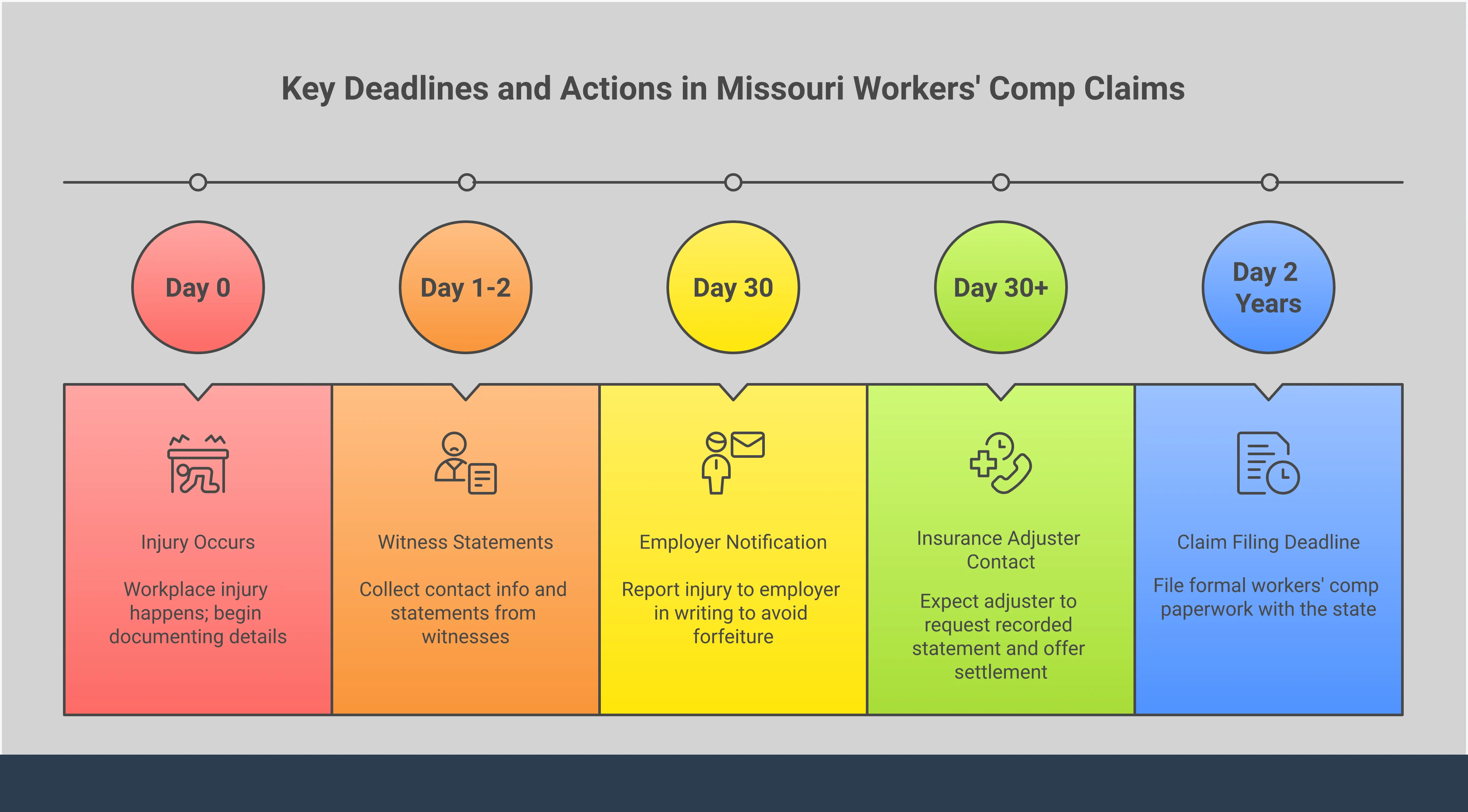
The workers’ compensation system runs on strict deadlines. Missing one can seriously jeopardize your ability to receive benefits, no matter how valid your injury is. The insurance company and your employer are required to follow rules, and so are you. These timelines are not suggestions; they are firm rules within the law. From the moment you are injured, the clock starts ticking on two very important deadlines that you absolutely need to know. Being aware of them is critical to protecting your rights and ensuring your claim moves forward smoothly.
The 30-Day Reporting Rule
In Missouri, you must report your work-related injury to your employer within 30 days of the incident. It is highly recommended that you do this in writing so there is a clear record of when you provided the notice. This report should go to your direct supervisor, manager, or HR department. Forgetting or waiting too long to report the injury is one of the most common reasons claims are denied. The sooner you report it, the stronger your case will be, as it creates a clear link between the accident and your injury.
The Two-Year Filing Deadline
Reporting the injury to your employer is just the first step. You also have a deadline to file a formal claim with the Missouri Division of Workers’ Compensation. Generally, you have two years from the date of the injury to file this claim. If your employer’s insurance was paying for benefits and then stopped, you typically have two years from the date of the last payment. This formal filing is what legally protects your right to benefits if there are any disputes. If you need help with this process, it’s a good idea to contact an attorney to ensure everything is filed correctly.
What to Do After a Workplace Injury
Getting hurt at work is disorienting. In one moment, you’re focused on your job, and in the next, you’re in pain and facing a wave of uncertainty. It’s hard to think clearly, but the actions you take immediately following an injury are critical for both your health and your potential workers’ compensation claim. Having a simple, clear plan in mind can make all the difference. By focusing on a few key steps, you can protect your well-being and your legal rights, creating a solid foundation for your recovery and your claim from the very beginning.
Seek Medical Attention Immediately
Your health is the top priority. Get medical help right away after an injury, even if you think it’s minor. Adrenaline can mask pain, and some serious conditions, like internal injuries or concussions, don’t always show immediate symptoms. Seeing a doctor right away does two things: it ensures you get the care you need, and it creates an official medical record that documents your injury. This record becomes crucial evidence that connects your injury directly to the workplace incident, which is essential for your workers’ compensation claim.
Report the Injury to Your Employer
As soon as you are able, you must formally report your injury to your employer. As mentioned, you have 30 days in Missouri, but you should do it much sooner—ideally on the same day it happens. Tell your supervisor or HR department exactly what happened, how you got hurt, and what parts of your body were injured. Make sure you submit this report in writing, even if it’s just a simple email, and keep a copy for your own records. This official notice is what triggers your employer’s responsibility to report the claim to their insurance provider.
Document Everything
From the moment the injury occurs, you should become the primary record-keeper of your own case. While your attorney and the insurance company will gather documents, your personal notes and evidence can be incredibly powerful. Memories fade, and details can become fuzzy over time, but a well-documented file will help you keep the facts straight. This information provides a clear and consistent account of what happened and how the injury has affected your life, which can be invaluable during negotiations or if any disputes arise with the insurance company.
Take Photos of the Scene and Your Injuries
If you are able, use your phone to take pictures of the accident scene right after it happens. Photograph whatever caused your injury, whether it was a wet floor with no warning sign, a broken piece of equipment, or a disorganized work area. You should also take clear photos of any visible injuries, like cuts, bruises, or swelling, as soon as they appear. Visual evidence is compelling and can help paint a clear picture for anyone reviewing your case down the line.
Write Down What Happened and Keep a Journal
As soon as you can, write down every detail you can remember about the accident. Include the date, time, location, what you were doing, and how the injury occurred. Also, start a simple journal to track your recovery. In it, you can log your pain levels, medical appointments, medications you’re taking, and any days you have to miss from work. This journal will serve as a detailed timeline of your recovery and can help demonstrate the full impact the injury has had on your daily life.
Get Witness Contact Information
If anyone saw your accident happen, their account can be a huge help to your claim. Ask any coworkers or other witnesses for their full names and phone numbers. A statement from someone who saw what happened can confirm the details of your report and counter any attempts by the insurance company to dispute the facts. Having a witness provides an objective, third-party perspective that strengthens your credibility and supports your version of events.
How to Find the Right Columbia Work Comp Lawyer
Choosing an attorney can feel like a huge task, especially when you’re already dealing with an injury and the stress that comes with it. But finding the right legal partner is one of the most important steps you can take. You’re not just looking for a lawyer; you’re looking for an advocate who will stand by you, understand your situation, and fight for the best possible outcome. The right fit comes down to a few key factors: their specific expertise, their knowledge of local laws, their history of success, and how well you connect with them on a personal level.
Choose an Attorney Who Specializes in Workers’ Comp
Not all attorneys handle workers’ compensation cases day in and day out. Just like you’d see a heart specialist for a heart problem, you need a lawyer who specializes in workplace injuries. An attorney with deep experience in this specific area of law understands the tactics insurance companies use and knows how to build a strong case for you. They are better equipped to help you secure the full range of benefits you’re entitled to, which can include things like lifetime medical care for a permanent injury—something unrepresented workers often miss out on. Look for a firm whose practice areas clearly include workers’ compensation.
Why Local, Missouri-Based Experience Matters
Workers’ compensation laws are complex and vary significantly from state to state. Having an attorney who is an expert in Missouri’s specific statutes is non-negotiable. For example, Missouri law makes it illegal for your employer to fire you or otherwise retaliate against you for filing a legitimate workers’ compensation claim. An attorney who is well-versed in our state’s laws can protect your rights and your job while you recover. They will understand the local court systems, the administrative judges, and the strategies that work best right here in Southwest Missouri.
Check Their Reviews and Past Results
Before you commit, do a little research. A reputable attorney should be transparent about their experience and past results. Look for client testimonials or online reviews to get a sense of how they treat their clients. Many people assume the workers’ comp system will just work on its own, but that’s rarely the case. A great attorney will be an active partner, helping you understand each step of the process while they advocate for your rights. Reading about an attorney’s background and approach can give you confidence that you’re putting your trust in the right hands.
Look for Proven, Specific Experience
When you meet with a potential attorney, don’t be shy about asking direct questions about their track record. While a website might list workers’ compensation as a practice area, what you really need is proof of their hands-on experience. Ask them how many cases similar to yours they’ve managed and what the outcomes were. An attorney with proven, specific experience knows more than just the law—they understand the common tactics insurance companies use to downplay injuries or deny claims. They can anticipate the challenges unique to your situation, whether it’s a complex injury or a dispute over medical treatment. This depth of knowledge is what turns a good lawyer into a true advocate who can confidently guide you through the process, because they’ve been down this road many times before.
How Well Do They Communicate?
This might be the most underrated factor, but it’s incredibly important. You need to feel comfortable with your attorney. Are they responsive? Do they take the time to answer your questions in a way you can understand? You’ll be sharing personal medical and financial information, and you need to trust the person handling your case. A commitment to clear and timely communication can make a world of difference. When you first reach out to a law firm, pay attention to how they treat you. You deserve an advocate who is not only skilled but also supportive and available when you need them.
How Much Does a Workers’ Comp Attorney Cost?
If you’re dealing with a work injury, the last thing you need is another bill to worry about. Many people hesitate to call a lawyer because they assume it’s too expensive. The good news is that hiring a workers’ compensation attorney is structured to be affordable for injured workers, so you can get the legal help you need without paying anything out of pocket.
Most personal injury lawyers, including those who handle workers’ comp, use a payment system that removes the financial risk from your shoulders. This approach ensures that your ability to get justice isn’t determined by your bank account. Let’s break down how it works so you can move forward with confidence.
What Are Contingency Fees?
Workers’ compensation attorneys typically work on a contingency fee basis. This is a straightforward arrangement: the attorney’s fee is “contingent” on them winning your case. In simple terms, they only get paid if you get paid. If you don’t receive a settlement or award, you owe them nothing for their time and effort.
This model allows injured workers to access high-quality legal representation without any upfront costs. The fee is a pre-agreed-upon percentage of the final settlement. In Missouri, this percentage is regulated by state law, ensuring it’s fair and transparent. This way, your attorney is fully invested in getting you the best possible outcome for your workers’ compensation claim.
Why You Pay Nothing Upfront
The most significant benefit of the contingency fee model is that you pay nothing upfront. You can hire an experienced attorney to start fighting for you immediately without the financial stress of paying legal fees out of pocket. This is crucial when you’re already dealing with medical bills and lost wages from being unable to work.
This system levels the playing field between you and the large insurance companies. It also means your attorney is confident in your case—their success is directly tied to yours. You can focus on your recovery while your lawyer handles the complex legal work. If you’re worried about costs, don’t let that stop you from getting the help you deserve. You can schedule a free consultation to discuss your case without any financial obligation.
What About Other Expenses?
While the attorney’s fee is contingent on winning, a legal case can have other costs. These are separate from the attorney’s fee and cover the expenses needed to build a strong case. It’s important to discuss these potential costs with your attorney from the very beginning.
Common case expenses can include court filing fees, the cost of obtaining your medical records, fees for expert witness testimony, or costs for depositions. A trustworthy attorney will be completely transparent about how these expenses are handled. Often, these costs can be advanced by the law firm and then reimbursed from the final settlement. By having this conversation upfront, you’ll have a clear picture of the entire process and can avoid any surprises down the road.
What Can Go Wrong With Your Workers’ Comp Claim?
Getting the benefits you’re entitled to after a work injury should be a straightforward process. Unfortunately, it rarely is. Many injured workers run into frustrating and confusing obstacles that can delay or even derail their claims. Understanding these common hurdles is the first step toward overcoming them. From mountains of paperwork to tight deadlines and the pressure from insurance companies, the path to receiving your benefits can feel overwhelming. Knowing what to expect can help you prepare for the fight ahead and ensure you don’t make a mistake that could cost you the support you need to recover.
The Problem: Overwhelming Paperwork
The workers’ compensation system is built on paperwork. Filing a claim involves a series of complex forms, medical records, and official documents that all have to be filled out perfectly. A single mistake, a missed signature, or an incomplete section can be enough for an insurance company to question your claim or deny it outright. This isn’t just about filling in blanks; it’s about presenting a clear, accurate, and compelling case for why you deserve benefits. An experienced attorney handles these intricacies for you, making sure every document is completed correctly and submitted on time so your claim stays on the right track from the very beginning.
The Problem: Insurance Company Pushback
It’s important to remember that insurance companies are businesses, and their goal is often to pay out as little as possible. They may use various tactics to minimize or deny your claim, such as questioning the severity of your injury, arguing it wasn’t work-related, or rushing you into a low settlement offer before you know the full extent of your medical needs. They have teams of adjusters and lawyers working to protect their interests. Having a legal advocate on your side levels the playing field and ensures someone is fighting just as hard for your right to compensation.
The Problem: Costly Mistakes and Missed Deadlines
The workers’ compensation process is governed by strict deadlines. For example, in Missouri, you generally have 30 days to report your injury to your employer. If you miss that window, you could lose your right to file a claim altogether. There are other critical deadlines for filing formal claims and appealing denials. Trying to manage these dates while also focusing on your recovery is incredibly stressful and leaves room for costly errors. A simple mistake can jeopardize your entire case, which is why having a professional manage your claim’s timeline is so critical for a successful outcome.
The Problem: Fear of Getting Fired
Many people hesitate to file a workers’ comp claim because they’re afraid they’ll get fired or face other forms of retaliation from their employer. This is a valid concern, but it’s one you shouldn’t have to face alone. It is illegal for your employer to punish you for filing a legitimate workers’ compensation claim. Knowing your rights is empowering. An attorney can protect you from unlawful retaliation and give you the confidence to pursue the benefits you deserve without fear of losing your job. They can handle communication with your employer so you can focus on getting better.
The Problem: Tension with Your Employer
A work injury can strain your relationship with your employer, even if you’ve been a loyal employee for years. Suddenly, there’s an awkward tension. Your boss might seem distant, or you might feel pressure to return to work before you’re ready. This added emotional stress is the last thing you need while you’re trying to heal. An attorney can step in and act as a professional buffer. They handle all communication about your claim, which depersonalizes the process and keeps the focus on the facts. This allows you to maintain a more professional relationship with your employer while ensuring your legal rights are protected. It is illegal for them to retaliate against you, and having a lawyer in your corner sends a clear message that you know your rights.
How an Attorney Solves These Common Problems
The workers’ compensation system is supposed to help injured employees, but it’s often full of hurdles. From confusing paperwork and strict deadlines to uncooperative insurance adjusters, it’s easy to feel overwhelmed and alone. When you’re trying to recover from an injury, the last thing you need is the added stress of a legal battle. This is where having a skilled attorney on your side makes all the difference. A lawyer acts as your guide and your advocate, clearing the path so you can focus on what truly matters: your health. They understand the system’s intricacies, handle the complex legal procedures, and fight for the benefits you deserve. Instead of you having to decipher legal jargon and go head-to-head with insurance companies, your attorney takes on that burden, turning a frustrating process into a manageable one. They anticipate the insurance company’s moves, build a proactive strategy to protect your interests, and ensure every piece of evidence is properly collected and submitted. Essentially, they manage the entire claim so you don’t have to, giving you the space and peace of mind to heal.
Helping You Appeal a Denied Claim
It’s a gut-wrenching moment: you get a letter saying your workers’ comp claim has been denied. Don’t panic—this isn’t the end of the road. An experienced attorney can manage the entire appeals process for you, from filing the necessary documents to representing you at hearings. They know how to build a strong case to challenge the denial. More importantly, lawyers often secure benefits that unrepresented workers rarely get, like lifetime medical care for a serious injury. Having a professional in your corner significantly increases your chances of turning that denial into an approval and getting the support you need.
Fighting Back Against the Insurance Company
Let’s be honest: the insurance company isn’t on your side. Their goal is to protect their bottom line, which often means paying out as little as possible. They might delay your claim, question your injury, or offer a lowball settlement. A workers’ comp attorney steps in to handle all communication with the insurance adjuster, so you don’t have to. They know the tactics insurers use and won’t let you be intimidated. They fight to ensure you’re treated fairly and receive the full value of your claim. Your lawyer also protects you from illegal employer retaliation, ensuring your job is safe while you pursue the benefits you’re entitled to under our personal injury law system.
Gathering Strong Medical Evidence for Your Case
Your workers’ comp claim is only as strong as the evidence supporting it. This means getting the right medical documentation is crucial. A lawyer helps you connect with trusted medical professionals who can accurately assess your injuries and provide the detailed reports needed for your case. They also make sure you meet critical deadlines, like the requirement to report your injury within 30 days in Missouri. An attorney understands what the insurance company and the court need to see, and they work tirelessly to gather and present that medical evidence in a clear, compelling way that leaves no room for doubt about the extent of your injuries.
Protecting Your Job and Your Rights
A workplace injury can throw your entire life into chaos. Suddenly, you’re dealing with medical bills, lost wages, and a whole lot of uncertainty about the future. It’s an incredibly stressful situation. Hiring an attorney helps level the playing field. They become your shield, protecting your rights and making sure you aren’t taken advantage of by your employer or the insurance company. With a legal expert managing your case, you can have peace of mind knowing someone is fighting for you. This allows you to step back from the legal battle and focus on your recovery. If you feel like you’re in over your head, don’t hesitate to reach out for help.
Common Myths About Hiring a Workers’ Comp Lawyer
When you’re hurt on the job, misinformation and fear can cloud your judgment. It’s easy to talk yourself out of getting the help you need because of something you heard from a coworker or assumed was true. Let’s clear the air and tackle some of the most common myths about hiring a workers’ comp attorney. The truth is, having a professional on your side is often the most practical and protective step you can take. An attorney’s job is to handle the legal complexities so you can focus on what really matters: your health and recovery.
Myth: “I can’t afford a lawyer.”
This is probably the biggest misconception out there. Most workers’ compensation attorneys, including our firm, work on a contingency fee basis. This means you pay nothing upfront. The attorney’s fee is a percentage of the settlement or benefits they win for you. If you don’t get a recovery, you don’t owe a fee. Think of it this way: hiring a lawyer often means you secure more benefits overall, even after fees are accounted for. An experienced attorney can fight for things like lifetime medical care or fair compensation for permanent disability—outcomes that unrepresented workers rarely achieve on their own. A free consultation can help you understand your options without any financial risk.
Myth: “My boss will fire me.”
Fear of retaliation is real, but the law is on your side. It is illegal for your employer to fire you, demote you, or otherwise retaliate against you simply for filing a legitimate workers’ compensation claim. These protections are in place to ensure injured employees can seek the benefits they are entitled to without fear of losing their livelihood. If you experience any negative action from your employer after filing a claim, that’s a separate legal issue your attorney can address. Your right to a safe workplace and fair treatment doesn’t disappear when you get hurt, and a lawyer’s job is to make sure those legal rights are protected.
Myth: “My injury isn’t serious enough.”
Don’t make the mistake of downplaying your injury. A strain that seems minor at first could develop into a chronic condition that requires ongoing treatment. Any injury that happens at work deserves to be taken seriously. In Missouri, you must report your work injury to your employer within 30 days to protect your right to benefits. Waiting to see if it gets better can jeopardize your entire claim. It’s always better to report the injury immediately and consult with an attorney to understand your options. An attorney can help ensure you get the proper medical evaluation to determine the true extent of your injury.
Myth: “I don’t need a lawyer for a ‘simple’ claim.”
There is rarely such a thing as a “simple” workers’ comp claim. Even straightforward injuries can become complicated when an insurance company gets involved. Their goal is to pay out as little as possible. A workplace injury can cause devastating stress from mounting medical bills, lost income, and uncertainty about your future. An attorney acts as your advocate, handling all communication with the insurer, managing the paperwork, and fighting for every benefit you deserve. This allows you to focus on your recovery instead of dealing with adjusters and deadlines. Having a professional guide you removes the guesswork and protects you from costly mistakes.
When Should You Call a Columbia Work Comp Lawyer?
Figuring out when to get a lawyer involved can feel tricky. You might think your case is straightforward, but waiting too long can put your benefits at risk. The workers’ compensation system is complex, and your employer’s insurance company has professionals working to protect their bottom line—not yours. Recognizing the signs that you need an advocate is the first step toward securing the compensation you deserve. If something feels off or you’re overwhelmed, that’s a good sign it’s time to make the call.
Signs It’s Time to Get Legal Help
If your injury requires surgery, extensive rehabilitation, or results in a permanent disability, you should consult an attorney. These cases involve significant medical costs and long-term wage loss, which insurers are more likely to fight. Another red flag is if your employer denies your claim, disputes your injury’s severity, or pressures you to return to work too soon. An experienced attorney can help you secure crucial benefits, like lifetime medical care, that are difficult to get on your own. When facing these challenges, getting legal advice is a critical next step.
Why You Shouldn’t Wait to Call
Time is not on your side after a workplace injury. In Missouri, you must report your injury to your employer within 30 days, and missing this window could jeopardize your claim. Many people hesitate because they fear getting fired, but it is illegal for an employer to retaliate for a legitimate claim. Waiting to call a lawyer gives the insurance company time to build a case against you or find reasons to deny your benefits. Acting quickly ensures that evidence is preserved and your rights are protected from the start.
Red Flags from the Insurance Company
Be wary of how the insurance company communicates. If an adjuster pushes for a recorded statement, offers a quick, lowball settlement, or ignores your calls, they likely aren’t looking out for you. Insurance companies often try to pay as little as possible or deny claims outright. They might tell you that you don’t need a lawyer or that your injury isn’t covered. Don’t take their word for it. If you feel you’re getting the runaround, it’s time to get a professional in your corner. You can contact a lawyer to understand your options.
Does Hiring an Attorney Actually Pay Off?
It’s the biggest question on your mind: Is hiring a lawyer worth the cost? When you’re already dealing with medical bills and lost wages, adding another expense feels like the last thing you should do. But the reality is, handling a workers’ compensation claim on your own can end up costing you far more in the long run. An experienced attorney doesn’t just file paperwork; they advocate for your best interests, ensuring you aren’t short-changed by an insurance company focused on its bottom line. Think of it as an investment in your recovery and your financial stability. A good lawyer often more than pays for themselves by securing benefits you might not have known you were entitled to.
Getting the Full Compensation You Deserve
When you’re injured, your main focus should be on getting better, not haggling with an insurance adjuster. An attorney’s primary goal is to ensure you receive the full compensation you deserve. This goes beyond just covering your immediate medical bills. A skilled lawyer will fight for benefits like ongoing physical therapy or even lifetime medical care for severe injuries—things unrepresented workers rarely secure on their own. They understand the true value of a personal injury claim and won’t let an insurer pressure you into accepting a lowball offer. Even after accounting for legal fees, many people walk away with a much better outcome than they would have achieved alone.
Weekly Compensation Payments
One of the most immediate worries after a work injury is how you’ll pay your bills when you can’t work. Workers’ compensation is designed to address this by providing weekly payments to replace a portion of your lost income. Generally, these checks cover about two-thirds of your average weekly wage, offering a crucial financial lifeline while you recover. This benefit, known as temporary total disability, helps you cover essential living expenses like rent, groceries, and utilities. An attorney ensures these payments are calculated correctly based on your full earnings—including overtime—and that they start on time, providing you with the stability you need to focus on your health instead of your finances.
Payments for Permanent or Partial Disability
Sometimes, a work injury leaves you with a lasting impairment that affects your ability to work or live as you did before. In these situations, workers’ compensation provides benefits for permanent partial or permanent total disability. This is a lump sum or series of payments intended to compensate you for the long-term effects of your injury. Calculating the value of a permanent disability is incredibly complex and is a common point of dispute with insurance companies. An experienced attorney is essential to prove the full extent of your disability and fight for a fair settlement that accounts for your future medical needs and diminished earning capacity, ensuring your long-term well-being is protected.
Reimbursement for Medical Travel
Many injured workers don’t realize that workers’ compensation can cover more than just doctor’s visits and lost wages. The cost of traveling to and from medical appointments can add up quickly, especially if you need to see a specialist in another town. The good news is that you can often get reimbursed for these travel expenses. This includes mileage for driving your own car to physical therapy, doctor’s appointments, and pharmacy trips. While it might seem like a small detail, these costs are a real part of your recovery. A thorough attorney will help you track these expenses and ensure you file for reimbursement, making sure no benefit you’re entitled to gets overlooked. If you have questions about what is covered, you can always contact a lawyer for clarity.
Increasing Your Odds of a Successful Claim
The workers’ comp system is filled with strict deadlines and complex rules. One missed deadline or incorrectly filled-out form can jeopardize your entire claim. An attorney manages this process for you, making sure every detail is handled correctly and on time. They also know how to build a strong case supported by the right medical evidence. Many people worry that filing a claim will cause problems at work, but it’s illegal for an employer to retaliate against you for filing a legitimate claim. A lawyer is there to protect your rights and ensure you are treated fairly throughout the process, significantly improving your odds of a successful outcome.
Protecting Your Financial Future
A workplace injury can quickly spiral into a financial crisis. The stress of mounting medical bills and lost income is overwhelming. Hiring an attorney levels the playing field. Instead of you having to fight with an insurance company while trying to recover, your lawyer takes on that burden. They handle the negotiations and legal battles, freeing you to focus on your health. By ensuring you get the benefits you’re owed, an attorney helps protect your family’s financial future and prevents a temporary injury from causing long-term hardship. If you’re feeling overwhelmed by the process, it’s always a good idea to get in touch and understand your options.
Related Articles
- Why You Need a Springfield MO Workers Compensation Attorney
- Missouri Workers’ Comp Guide: Know Your Legal Rights
- How to Hire a Workers Compensation Attorney Springfield MO
- How to Choose a Work Comp Attorney in Springfield, MO
Frequently Asked Questions
What if I can’t afford to hire an attorney? This is the most common concern we hear, and the answer is simple: you don’t pay anything upfront. Workers’ compensation attorneys work on a contingency fee basis, which means our fee is a percentage of the money we recover for you. If you don’t get a settlement or award, you owe us nothing for our work. This approach allows you to get expert legal help right away without any financial risk, so you can focus on your recovery instead of worrying about legal bills.
I’m worried my employer will fire me if I file a claim. Can they do that? It is illegal in Missouri for your employer to fire you or punish you in any way for filing a legitimate workers’ compensation claim. These laws are in place to protect injured workers. If you feel you are facing retaliation, that is a serious issue that an attorney can address immediately. Part of our job is to protect your rights and your job, giving you the confidence to pursue the benefits you need without fear.
My injury doesn’t seem that serious. Should I still talk to a lawyer? Yes, it’s always a good idea. Some injuries that seem minor at first can develop into chronic problems that require long-term medical care. In Missouri, you have a strict 30-day deadline to report your injury to your employer. Waiting to see how you feel could cause you to miss that window and lose your right to benefits. A brief consultation can help you understand your rights and ensure you’ve taken the right steps to protect yourself, no matter the severity of the injury.
The insurance company already offered me a settlement. Why would I need a lawyer now? Insurance companies often make quick settlement offers to close a case for the lowest amount possible. That initial offer may not account for future medical treatments, lost earning capacity, or permanent disabilities. An experienced attorney can evaluate the true, long-term value of your claim to ensure you aren’t leaving money on the table. We can negotiate on your behalf to secure a fair settlement that covers all of your needs, not just the immediate ones.
What is the very first thing I should do after getting hurt at work? Your first priority is to report the injury to your employer in writing as soon as possible. This officially starts the process and is critical for protecting your claim. After you have reported the injury and sought initial medical attention, your next step should be to contact an attorney. A free consultation can provide you with a clear understanding of your rights and help you avoid common mistakes that could harm your case down the road.