


When a disability stops you from working, the financial strain can be overwhelming. Social Security Disability benefits are a critical lifeline, but getting them approved is often a frustrating process. It’s easy to feel discouraged by a denial letter, but that denial is not the end of the road. It’s a sign that it’s time to bring in a professional ally. An experienced Springfield MO social security disability attorney understands the appeals process inside and out. They help gather the necessary medical evidence and represent you effectively, significantly improving your chances of a successful outcome.
Key Takeaways
- Partner with an Expert to Strengthen Your Claim: An experienced disability attorney understands the SSA’s complex requirements and helps you build a compelling case from the start, significantly increasing your odds of approval by avoiding common application errors.
- Hiring an Attorney Costs Nothing Upfront: Disability lawyers work on a contingency basis, meaning they only get paid a federally-regulated percentage of your back pay if you win. You owe no attorney fees if your claim is denied.
- A Denial is a Critical Time for Action: Don’t give up if your initial claim is denied. This is the most important time to hire an attorney who can manage the strict appeals deadlines and represent you effectively in a hearing.
What Can a Springfield Disability Attorney Do for You?
Applying for Social Security Disability (SSD) benefits can feel like a monumental task. The process is notoriously complex, filled with confusing paperwork, strict deadlines, and specific legal standards you have to meet. It’s easy to feel overwhelmed, especially when you’re already dealing with a health condition that makes working impossible. This is where a disability attorney can make all the difference, stepping in to manage the legal side of things so you can focus on what matters most: your health.
Think of an attorney as your dedicated guide and advocate. They understand the system inside and out and can anticipate the challenges you might face. They handle the legal heavy lifting, from helping you file the initial application correctly to representing you in a hearing if your claim is denied. An attorney ensures your application is complete, your medical evidence is compelling, and every deadline is met. With an experienced professional on your side, you can feel confident that your case is being presented as strongly as possible, giving you a much better chance at a successful outcome.
Understanding the Types of Social Security Benefits
The Social Security Administration (SSA) offers different types of disability benefits, and knowing which one you might qualify for is a crucial first step. The two main programs are Social Security Disability Insurance (SSDI) and Supplemental Security Income (SSI). While both provide financial assistance to people with disabilities, they have very different eligibility requirements. One is based on your work history, while the other is based on your financial need. In some cases, you might even be eligible for both. Understanding these distinctions will help you and your attorney build the strongest possible claim for the support you need.
Social Security Disability Insurance (SSDI)
Think of Social Security Disability Insurance (SSDI) as an insurance program you’ve paid into. If you’ve worked and paid Social Security taxes from your paychecks, you’ve been earning “work credits.” To qualify for SSDI, you must have earned enough of these credits and have a medical condition that meets the SSA’s strict definition of disability. The program is designed to provide income to people who can no longer work due to a significant, long-term medical impairment. The amount you receive each month is based on your lifetime average earnings, not on your household income or the severity of your disability. The SSA offers a detailed fact sheet that explains how these benefits work for you and potentially for certain members of your family.
Supplemental Security Income (SSI)
Unlike SSDI, Supplemental Security Income (SSI) is not based on your past work history. Instead, it is a means-tested program designed to help aged, blind, and disabled people who have very limited income and resources. Because it’s a needs-based program, the SSA will look closely at your financial situation—including your income, savings, and other assets—to determine if you qualify. This makes SSI an essential safety net for individuals who haven’t worked enough to be eligible for SSDI or who have been unable to work for most of their lives due to a disability. Both adults and children with disabilities can qualify for SSI if they meet the strict financial and medical criteria.
Concurrent Benefits
It’s also possible for some individuals to receive both SSDI and SSI at the same time. This is known as receiving “concurrent benefits.” This situation typically occurs when a person is approved for SSDI but their monthly payment is very low. This can happen if they didn’t have high earnings or worked inconsistently before becoming disabled. If their SSDI benefit amount falls below the federal benefit rate and they meet the strict income and resource limits of the SSI program, they can receive an SSI payment to supplement their SSDI. This ensures they have a baseline level of support to help meet their basic needs.
Benefits for Family Members
When you are approved for SSDI, it’s not just you who might receive financial help. Certain members of your family may also be eligible for benefits based on your work record. This can provide a critical source of additional income for your household when you are unable to work. Eligible family members often include your spouse, your minor children, and even an adult child who became disabled before age 22. These auxiliary benefits do not reduce your own monthly payment. Instead, they are an extension of the support you’ve earned, designed to help ease the financial burden on your entire family. The SSA provides a comprehensive overview of how these programs extend to family members.
Getting Your Initial Application Right
Social Security Disability claims are incredibly detailed and can quickly become confusing. A simple mistake or omission on your initial application can lead to a denial, forcing you into a lengthy appeals process. An attorney helps you get it right from the start. They will work with you to complete the application accurately, making sure to highlight the specific details of your condition and work history that the Social Security Administration (SSA) needs to see. By ensuring your case is clear and complete from day one, you improve your chances of a faster, more favorable outcome.
Fighting for You in Appeals and Hearings
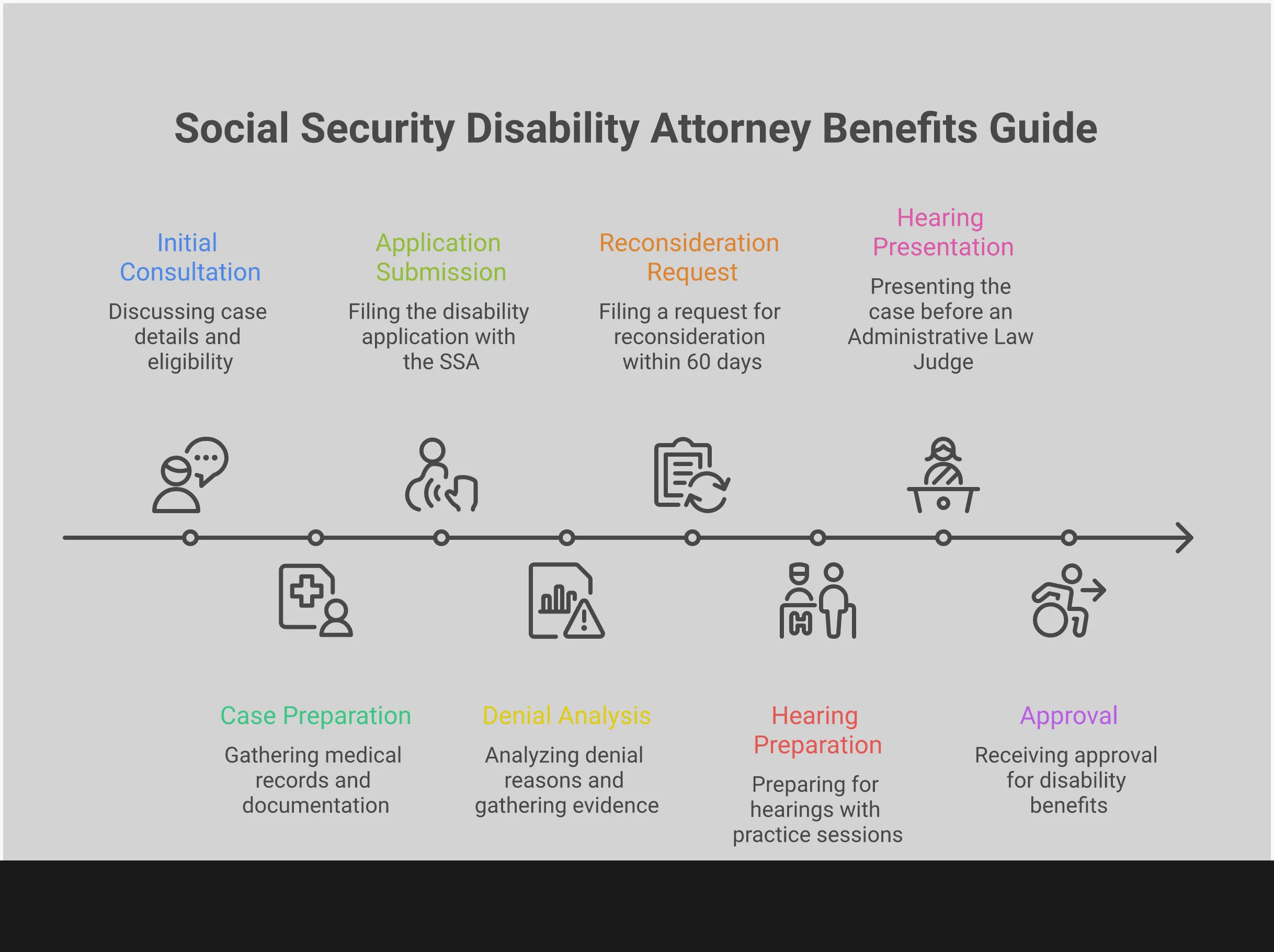
Receiving a denial letter is disheartening, but it’s not the end of the road. The appeals process is where an attorney’s legal expertise becomes invaluable. If your initial claim is denied, your lawyer will file the appeal and prepare your case for a hearing before an Administrative Law Judge (ALJ). They will gather additional evidence, prepare you for the questions you’ll be asked, and make a compelling legal argument on your behalf. You can still be awarded benefits after being denied, and having a skilled representative in your corner is key to navigating the pitfalls of the appeals system.
Building a Strong Case with Medical Evidence
The strength of your disability claim rests on your medical evidence. It’s not enough to simply state that you have a condition; you must prove it with detailed documentation. A disability attorney knows exactly what the SSA is looking for. They can help you gather and submit new information about your medical condition, work history, and limitations to build a stronger case. They will work with your doctors to obtain supportive statements, organize your medical records, and present the evidence in a way that clearly demonstrates how your disability prevents you from working.
Managing Paperwork and Critical Deadlines
The SSD process is governed by strict deadlines. If you miss a deadline to file paperwork or appeal a decision, your case could be dismissed, and you might have to start all over again. Hiring an attorney removes this burden from your shoulders. They will manage all communications with the SSA, keep track of every important date, and ensure all necessary documents are filed correctly and on time. This attention to detail is crucial for keeping your claim on track and can greatly improve your chances of winning your appeal and getting your benefits faster.
Does an Attorney Increase Your Approval Odds?
While you have the right to apply for Social Security Disability benefits on your own, the process can be incredibly challenging. The Social Security Administration (SSA) has strict rules and technical requirements that can trip up even the most organized applicant. Bringing in a disability attorney isn’t just about having someone fill out paperwork; it’s about having a dedicated advocate who understands the system inside and out. An experienced lawyer can help you build the strongest possible case from the very beginning, significantly improving your odds of getting the benefits you need.
Let’s Look at the Approval Statistics
The numbers speak for themselves. According to one study, people who hire a lawyer for their disability claim are three times more likely to be approved for benefits. This isn’t a coincidence. Attorneys who specialize in Social Security Disability law know what the SSA is looking for. They understand how to present your medical evidence, document your work history, and articulate how your condition prevents you from working. Facing the government alone can be intimidating, but having a professional in your corner levels the playing field and gives you a clear statistical edge. It’s a practical step toward securing your financial future when you can no longer work.
The Reality of Initial Claim Denials
It’s incredibly disheartening to open a letter from the Social Security Administration only to find your disability claim has been denied. Before you lose hope, it’s important to know this is a very common part of the process. In fact, the SSA denies the majority of initial applications—about two-thirds of them, to be exact. This isn’t a reflection of your condition’s severity; it’s a reflection of a complex system with strict technical and medical requirements that are difficult to meet without expert guidance. A denial is not the end of your journey, but it is a clear signal to change your approach.
Think of a denial not as a final “no,” but as a critical turning point where you need to take decisive action. This is the most important time to hire an attorney who can manage the strict appeals deadlines and represent you effectively in a hearing. An experienced lawyer will review the SSA’s decision, identify weaknesses in your initial application, and build a much stronger case for your appeal. They will gather additional medical evidence and ensure your file clearly demonstrates how your disability prevents you from working. Navigating these complex disability claims is what they do, giving you the best possible chance to secure the benefits you need.
Understanding Complex SSA Rules
Social Security Disability claims are notoriously complex and can quickly become overwhelming. The SSA operates under a massive set of laws, regulations, and internal policies that are constantly evolving. An experienced disability attorney has dedicated their career to understanding these intricate rules. They know the specific criteria for different medical conditions and can frame your application to meet those standards. Instead of you spending countless hours trying to decipher legal jargon, your attorney can apply their expert knowledge to your case, ensuring every detail aligns with what SSA examiners need to see for an approval. This expertise is crucial when so much is at stake.
The SSA’s Definition of Disability
One of the biggest hurdles in a disability claim is understanding that the SSA’s definition of “disability” is a strict legal term, not a medical one. It’s not enough for a doctor to say you’re disabled. To qualify for benefits, you must prove your condition prevents you from performing what the SSA calls Substantial Gainful Activity (SGA). This means you are unable to earn more than a certain amount each month. Additionally, your condition must be expected to last for at least 12 consecutive months or be terminal. This rigid standard is why so many initial applications are denied; it’s a high bar to clear, and your evidence must directly address these specific legal points.
Working While Receiving Benefits
Many people wonder if they can work part-time while receiving disability benefits. The answer is yes, but there are very specific rules you must follow. The SSA has work incentives in place designed to help you test your ability to return to the workforce without immediately losing your benefits. The most well-known is the Trial Work Period, which allows you to work for nine months while still receiving your full disability payment, no matter how much you earn. After that, other rules apply to help you transition. These programs are a great safety net, but they are also complex, and it’s crucial to report all your earnings to avoid any issues with your benefits.
How an Attorney Prepares a Winning Case
A common reason for denial is a case file that’s incomplete or lacks compelling evidence. A disability attorney does more than just submit your initial application; they act as your case manager. They will help you gather all relevant medical records, request detailed statements from your doctors, and organize everything into a persuasive claim. If your initial application is denied, an attorney is essential for the appeals process. They can help you understand why you were denied, gather new evidence to strengthen your case, and prepare you for a hearing before an administrative law judge. This thorough preparation ensures your claim is presented as strongly as possible at every stage.
Avoiding Costly Application Mistakes
It’s a tough reality, but do-it-yourself Social Security Disability applications are denied more than 70% of the time on the first try. Simple mistakes like missing a deadline, providing incomplete information, or failing to describe your limitations clearly can lead to a denial, forcing you into a lengthy appeals process. An attorney acts as your safety net, catching potential errors before your application is ever submitted. They will review every form for accuracy and completeness, ensuring you avoid the common pitfalls that derail many otherwise valid claims. Getting it right the first time saves you stress, time, and uncertainty. If you’re ready to get started, you can contact our office for a free consultation.
How to Strengthen Your Disability Claim
While having an attorney on your side is a huge advantage, there are also steps you can take to make your disability claim as strong as possible. The Social Security Administration needs a clear, consistent, and well-documented picture of your condition and how it limits your ability to work. By being proactive about your medical care and honest in your communications, you provide your legal team with the solid evidence they need to build a winning case. Think of these actions as laying the groundwork for your claim’s success.
Maintain Consistent Medical Treatment
Your medical records are the single most important piece of evidence in your disability claim. The SSA needs to see that you are actively seeking treatment and following your doctor’s orders. Consistent medical care creates a detailed paper trail of your condition, including diagnoses, test results, prescribed treatments, and your response to them. Gaps in your treatment history can be a major red flag for the SSA, as they might interpret it to mean your condition isn’t severe enough to require ongoing care. Make sure you attend all your appointments and tell your doctor about all your symptoms. This consistent documentation provides the objective proof needed to substantiate your claim and demonstrate the severity of your limitations.
Be Honest and Detailed About Your Condition
When you describe your condition to the SSA, honesty and detail are your best allies. It’s not enough to just name your diagnosis; you need to explain exactly how your symptoms affect your day-to-day life. Be specific about your limitations. Can you stand for more than ten minutes? Can you lift a gallon of milk? Do you have trouble focusing on tasks? Clearly explaining how your condition impacts your ability to perform basic activities like cooking, cleaning, shopping, and even socializing helps paint a complete picture for the claims examiner. Avoid the temptation to either exaggerate or downplay your symptoms. A truthful, detailed account of your struggles provides the credible information needed to support your case.
Report All Earnings to the SSA
If you are able to work in any capacity while applying for or receiving disability benefits, you must report all of your earnings to the Social Security Administration. The SSA has strict rules about how much income you can earn while qualifying for benefits, a threshold known as Substantial Gainful Activity (SGA). Failing to report your income can have serious consequences, including the denial or termination of your benefits and a requirement to pay back any money you received. Being transparent about your work activity is essential for maintaining your eligibility and building a trustworthy case. If you have questions about how your earnings might affect your claim, it’s always best to discuss it with your attorney.
Finding the Right Social Security Disability Attorney in Springfield
Finding the right attorney can feel like the most challenging part of the disability claims process, but it doesn’t have to be. Think of it as hiring a key partner for your team. You want someone who not only understands the law but also understands you and your situation. The right legal professional will be your guide and advocate, handling the complex legal work so you can focus on your health. When you start your search, you’ll find many options, but not every attorney will be the right fit for your specific needs.
To make a confident decision, it helps to have a clear set of criteria. You’re looking for a combination of specialized experience, a solid history of success, and a commitment to clear communication. It’s also important that they have a strong local presence and the right professional credentials. By evaluating potential attorneys against these key qualities, you can find someone who is truly equipped to handle your case and fight for the benefits you deserve. This isn’t just about finding a lawyer; it’s about finding a trusted ally for the road ahead.
Why Experience in Disability Law Matters
When you’re dealing with a specific health issue, you see a specialist. The same logic applies to law. Social Security Disability is a highly specialized area with its own complex rules, procedures, and deadlines. An attorney who occasionally handles a disability case is not the same as one who dedicates a significant portion of their practice to it. Experience in Disability Law is crucial because it ensures your lawyer is deeply familiar with the system. They know what the Social Security Administration (SSA) looks for in medical evidence and how to present your case in the strongest possible light. Don’t hesitate to ask directly about their experience with cases like yours.
Ask About Their Track Record and Success Rate
Experience is one thing, but a history of success is another. You want an attorney who not only knows the process but has a proven track record of winning benefits for their clients. During your initial consultation, ask about their success rate, particularly at the hearing level, where an attorney’s skill can make a significant difference. While no lawyer can guarantee a specific outcome, their past performance can give you a good sense of their competence and dedication. A confident attorney will be transparent about their history and the types of cases they have successfully handled. This information will help you gauge whether they have the skill to get results.
Find a Communicator Who Puts You First
The disability application process can be long and stressful. The last thing you need is an attorney who leaves you in the dark. A great lawyer is also a great communicator. They should take the time to explain things clearly, answer your questions patiently, and keep you updated on the status of your case. The right disability attorney will make sure you are well-informed about your rights and responsibilities every step of the way. During your first meeting, pay attention to how they listen and respond. Do you feel heard and respected? Choose someone you feel comfortable talking to, as you’ll be working closely together for months or even years.
Does Your Attorney Have Local Expertise?
While any licensed attorney in the state can represent you, there are distinct advantages to hiring a local Springfield lawyer. A local attorney is familiar with the administrative law judges who will hear your case if it goes to an appeal. They understand the local SSA office’s procedures and have likely worked with the medical and vocational experts in our area. This local expertise can be a subtle but significant advantage. They know the community and the people who will be making decisions about your future, giving your case a home-field advantage that an out-of-town attorney simply can’t offer.
What Credentials Should You Look For?
Finally, do a quick background check to confirm the attorney’s qualifications. You’ll want to ensure they are in good standing with the Missouri Bar and have the necessary credentials to practice law. You can also look for any special certifications or memberships in professional organizations related to Social Security Disability law, like the National Organization of Social Security Claimants’ Representatives (NOSSCR). Reputable online directories are a great place to verify an attorney’s credentials and read client reviews. Taking this final step ensures you are placing your trust in a qualified and respected professional.
How Much Does a Disability Attorney Cost?
When you’re unable to work and facing a mountain of paperwork, the last thing you need is another bill. It’s completely understandable to worry about the cost of hiring a Social Security Disability attorney. The good news is that the payment structure is designed specifically for people in your situation. You don’t need to have money saved up to get professional legal help.
Most disability attorneys work on a contingency fee basis, which means they only get paid if they win your case. This system removes the financial risk from your shoulders and ensures your attorney is motivated to secure the benefits you deserve. Federal law also puts a cap on how much an attorney can charge, so you’re protected from excessive fees. Let’s walk through exactly how it works so you can move forward with confidence.
How Contingency Fees Work (No Win, No Fee)
The most important thing to know is that you won’t pay any attorney fees upfront. Disability lawyers operate on a “contingency fee” agreement. This is a fancy way of saying their payment is contingent—or dependent—on winning your case. If your claim is approved and you are awarded back pay, the attorney receives a portion of that amount. If your claim is not approved, you owe them nothing for their time and effort.
This “no win, no fee” model aligns your attorney’s goals with yours. They have a direct financial incentive to build the strongest case possible and fight for your approval. It allows you to access expert legal representation without any initial out-of-pocket expense, which is a huge relief when you’re already dealing with financial strain from a disability.
Are There Limits on Attorney Fees?
To protect you, the Social Security Administration (SSA) regulates what disability attorneys can charge. The fee is limited to 25% of your past-due benefits (also known as back pay), or $9,200, whichever is less. Back pay is the money that has accumulated from the date you were found disabled until your claim is approved. The SSA sets this cap and typically pays your attorney directly from your back pay, so you don’t have to handle the transaction yourself.
This federal limit ensures that the fee is fair and predictable. You will never be asked to pay more than this capped amount from your back pay for attorney fees. You can find more information about these regulations directly on the SSA’s website.
Ask About Any Additional Costs
While the attorney’s fee is contingent on winning, there can be small, separate costs associated with your case. These are not fees for the lawyer’s time but rather expenses for gathering evidence to support your claim. For example, your attorney may need to pay for copies of your medical records from doctors or hospitals or get a written opinion from your physician.
A reputable attorney will be transparent about these potential costs from the very beginning. During your initial meeting, be sure to ask for a clear explanation of any additional expenses you might be responsible for. These details should also be clearly outlined in the written fee agreement you sign, so there are no surprises down the road.
Making the Most of Your Free Consultation
Nearly all disability attorneys offer a free initial consultation to discuss your case. This is your opportunity to get answers to all your questions without any pressure or financial commitment. You can learn more about the attorney’s experience, their process, and how they would approach your specific situation. It’s also the perfect time to review their fee agreement and clarify any questions you have about costs.
This meeting is a two-way street—it helps you decide if the attorney is the right fit for you. If you’re ready to explore your options, you can schedule a free, no-obligation consultation to get the personalized information you need to make an informed decision.
Disability Attorney Myths, Busted
When you’re thinking about applying for Social Security Disability, you’ll probably hear a lot of different opinions. Friends, family, and online forums all have advice to share, but unfortunately, a lot of it is based on myths. These misconceptions can cause unnecessary stress and might even prevent you from getting the legal help you need. It’s easy to get overwhelmed by the complex Social Security system, and misinformation only makes it harder.
Let’s clear up some of the most common myths about hiring a disability attorney so you can make an informed decision that’s right for you. Understanding the truth about what a lawyer does, how they get paid, and when you should reach out can make a world of difference. We’ll walk through the facts, separating them from the fiction, to give you a clearer picture of how legal support can fit into your disability claim. Believing these myths can lead you to make choices that aren’t in your best interest, like waiting too long to seek help or giving up after an initial denial. The goal is to equip you with accurate information, so you feel confident in the path you choose. An experienced attorney can be a valuable partner, but first, you need to know what to expect.
Myth: “I Can’t Afford an Attorney”
This is probably the biggest worry for people considering legal help. The good news is, you don’t need to have money upfront to hire a Social Security Disability attorney. Most, including our firm, work on a contingency fee basis. This simply means the attorney’s fee is “contingent” on winning your case. If you don’t receive benefits, you don’t owe any attorney fees. The fee is a percentage of your back pay, and it’s capped by federal law, so there are no surprises. You can start the process with a free consultation to discuss your case without any financial risk.
Myth: “I Should Wait to Hire an Attorney”
Many people believe they should only contact a lawyer after their initial application is denied. While an attorney is essential for the appeals process, getting professional guidance earlier can be beneficial. However, the most critical time to hire a lawyer is right after you receive a denial letter. The Social Security Administration has strict deadlines for appeals, and an attorney can immediately get to work on building a stronger case for you. They understand the specific reasons for denials and know how to gather the right evidence to address them. Don’t let a denial discourage you; see it as the moment to bring in professional legal support.
Myth: “An Attorney Guarantees Approval”
It’s important to have realistic expectations. No ethical attorney can ever guarantee that your disability claim will be approved. The final decision always rests with the Social Security Administration. What an experienced attorney can do is significantly improve your chances of a successful outcome. They do this by ensuring your application is complete and accurate, gathering crucial medical evidence, and effectively presenting your case at a hearing. Think of your lawyer as a skilled guide who knows the system inside and out. An attorney with a client-centered approach will focus on building the strongest case possible on your behalf.
Myth: “Applying on My Own is Just as Effective”
While you certainly have the right to apply for disability benefits on your own, the statistics show it can be a tough road. Many initial applications are denied—some studies show acceptance rates below 30%—often due to simple mistakes or insufficient medical evidence. The Social Security process is governed by complex rules and regulations that can be difficult to understand. An attorney knows what the SSA is looking for and can help you avoid common errors that lead to denial. They ensure your file is properly developed and that your limitations are clearly documented, which can make all the difference in the outcome of your claim.
Additional Services a Disability Representative May Offer
A good disability attorney’s support doesn’t always stop once your benefits are approved. Their goal is to help you achieve stability, and that often involves more than just the Social Security system. Many representatives offer guidance on related issues that can arise when you’re living with a disability. They can become a valuable resource for connecting you with programs and services that address your broader financial and healthcare needs. This comprehensive support is part of a truly client-centered approach, ensuring you have the tools to move forward with confidence long after your case is won.
Help with Veterans’ Disability Appeals
If you are a veteran, you may be dealing with two separate and equally complex disability systems: the Social Security Administration and the Department of Veterans Affairs (VA). An unfavorable disability rating from the VA can be just as frustrating as an SSDI denial. Some disability attorneys are also equipped to help veterans with their VA claims. They can assist you in appealing a low disability rating or a denied claim for a service-connected condition. This specialized knowledge is incredibly valuable, as it means you have an advocate who understands the unique challenges veterans face and can help you fight for the full range of benefits you have earned through your service.
Support with Return-to-Work Programs
For many people, receiving disability benefits is a necessary step toward regaining stability, with the ultimate goal of returning to work if their health improves. A disability representative can be a key partner in this transition. They can help you understand and use programs like the SSA’s Ticket to Work program. This program provides support and services to help you find and maintain employment, allowing you to test your ability to work while keeping your disability benefits and Medicare or Medicaid. Having a guide who can explain these work incentives ensures you can explore your options without jeopardizing the financial and medical safety net you rely on.
Assistance with Other Financial and Healthcare Needs
Living with a disability often brings a host of related financial and healthcare questions. A dedicated representative understands that your needs extend beyond your disability claim. For instance, after being approved for SSDI, you will eventually become eligible for Medicare. This process can be confusing, and some representatives can help you understand your options and enroll in a plan. They can also serve as a resource for other financial challenges, connecting you with community programs or other services designed to provide support. This holistic approach ensures you’re not left to figure out these complex systems on your own after your disability case is resolved.
Related Articles
- Guide to Attorneys in Springfield, MO – Legal Help Near You
- Short Term Disability Missouri: A Complete Guide
- Your Guide to Workers Compensation Lawyers in Springfield MO
- Need a Personal Injury Lawyer in Springfield? Here to Help
Frequently Asked Questions
I just received a denial letter. Is it too late to hire an attorney? Not at all. In fact, this is the most critical time to get legal help. A denial is not the end of the road, but you have a strict deadline to file an appeal. An attorney can immediately take over, figure out why your claim was denied, and start building a stronger case to present to the administrative law judge. Many successful claims are won during the appeals process with the help of an experienced lawyer.
What does a disability attorney do besides fill out paperwork? While managing paperwork and deadlines is a key part of the job, a good attorney does much more. They act as your strategist and advocate. They will review your entire medical history to identify the strongest evidence, work with your doctors to get supportive statements, and prepare you for any questions you might face at a hearing. Their main role is to build a compelling legal argument that clearly shows how your condition prevents you from working.
Will I have to pay any money upfront for legal help? No, you will not have to pay anything out of your own pocket to get started. Disability attorneys work on a contingency fee basis, which means they only get paid if they successfully win your case and you are awarded past-due benefits. The fee is a federally regulated percentage of that back pay, so there are no surprise bills. If you don’t win, you owe no attorney fees.
My doctor says I’m disabled. Why isn’t that enough to get approved? Having your doctor’s support is essential, but the Social Security Administration has its own strict legal definition of disability. A doctor’s note stating you can’t work isn’t enough on its own. You need to provide specific medical evidence that proves your condition meets the SSA’s criteria. An attorney knows exactly what kind of documentation is needed and can work with your doctor to present the information in a way that satisfies those legal standards.
Does it really matter if my attorney is local to Springfield? Hiring a local attorney offers a distinct advantage. A Springfield lawyer is familiar with the specific administrative law judges who preside over cases in our area and understands their expectations. They also have established relationships with local medical providers and vocational experts whose input can be crucial to your case. This familiarity with the local system can provide a valuable edge that an out-of-town firm simply can’t match.