


A car crash can leave you injured, disoriented, and unsure what to do next. The choices you make at the scene and during the following days may affect your health and your ability to document an injury claim. If you are looking for a car accident lawyer Nixa MO residents can contact, start by protecting yourself, preserving evidence, and avoiding rushed decisions with an insurance company. After a Nixa crash, medical bills and calls from an insurance adjuster can arrive quickly.
Contact The Law Office of Chad G. Mann to discuss the next steps after a Nixa car accident. A car accident lawyer near Springfield can help protect your claim before deadlines or statements create problems.
This guide provides a practical timeline for injured drivers and passengers in Nixa. It explains what to document, how to approach insurance calls, and when legal guidance may help. It is general information, not legal advice for a specific case.
What to do immediately after a Nixa car accident
Safety and medical needs come first after a collision. If you can safely do so, move away from active traffic, call 911, and check whether anyone needs emergency assistance. Do not risk another collision to take photographs or inspect vehicle damage.
- Request emergency help. Tell the dispatcher where the collision happened and whether anyone appears injured.
- Accept appropriate medical evaluation. Some symptoms are not obvious immediately. Explain every symptom you notice to the responding medical professionals.
- Exchange essential information. Obtain names, contact details, license plate numbers, driver information, and insurance details.
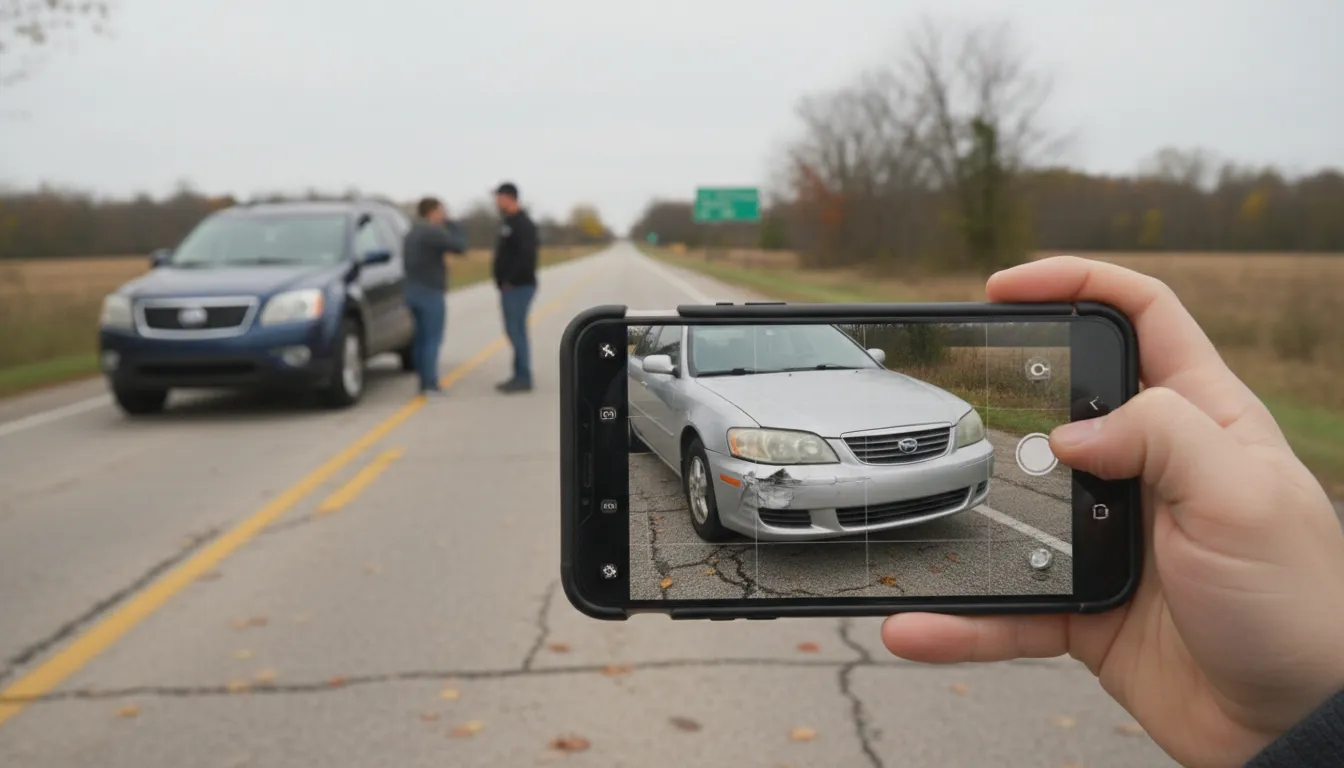
- Document the scene if it is safe. Photograph vehicle positions, damage, debris, traffic controls, skid marks, road conditions, and visible injuries.
- Identify witnesses. Ask for contact information rather than relying on someone else to locate them later.
- Avoid arguing about fault. Give responders accurate facts, but do not speculate or make statements about injuries you have not yet had evaluated.
If you cannot collect evidence because you need medical attention, that is understandable. Ask a trusted person to preserve what they can and write down what you remember as soon as you are able. Your health should not take second place to collecting photographs.
What should you do during the first 24 hours?
During the first day, focus on medical care, basic reporting, and preserving information while it is fresh. Follow the treatment instructions you received. Arrange further evaluation if pain, dizziness, numbness, confusion, or other symptoms appear or worsen.
Write a simple account of the collision while you can still recall the details. Include the time, location, direction of travel, weather, traffic signals, what you observed, and what happened immediately afterward. Keep this record private and factual. Do not fill gaps by guessing.
Notify your insurer and save claim details
Report the collision to your own insurer as required by your policy. Save the claim number, representative’s name, and copies of emails or letters. You can provide accurate basic information without speculating about fault or the long-term effects of an injury.
Preserve damaged property
Photograph the vehicle and any damaged personal items from several angles before repairs or disposal. Save relevant receipts and repair estimates. If an item cannot be retained, make sure you have clear photographs and a record explaining what happened to it.
The first week after a Nixa collision
The first week is often when medical needs, insurance requests, work disruptions, and transportation problems begin to overlap. An organized routine can make the process more manageable and help create a clearer record of how the collision affected you.
Create one claim file
Use a folder or secure digital location for photographs, the incident report number, medical records, repair estimates, insurance correspondence, and wage information. Name digital files clearly and back them up. Keep original files rather than relying only on copies sent through a claim portal.
Start a recovery journal
Note symptoms, sleep problems, physical limitations, missed work, and activities you cannot perform normally. Keep entries factual and brief. A short note written at the time can be more useful than trying to reconstruct several weeks from memory.
Follow through on medical care
Keep appointment summaries, prescriptions, discharge paperwork, and receipts together. If transportation, work, cost, or another practical barrier affects an appointment, contact the provider and document the reason. Do not change treatment based on an insurance representative’s suggestion.
Protect your privacy
Consider limiting social media posts while the claim is unresolved. A photograph or comment can be misunderstood when viewed without context. Ask friends and family not to post details or images of the crash, your activities, or your recovery.
How should you handle insurance calls and settlement offers?
Handle insurance communications carefully, accurately, and in writing when possible. Keep notes showing the date, the representative’s name, the claim number, and what was discussed. Before giving a detailed recorded statement to another driver’s insurer, signing a medical authorization, or accepting a settlement, consider getting legal guidance.
An early offer may arrive before the full extent of an injury is clear. Review what the offer covers, whether it requires a release, and whether future care or lost income has been considered. Once a claim is resolved and a release is signed, reopening it may be difficult or impossible depending on the circumstances.
Keep communications organized
Ask that important requests and offers be sent in writing. Do not guess when answering questions. If you do not know an answer, say so. Avoid exaggeration, but also avoid minimizing symptoms that have not yet been medically evaluated.
Read every authorization and release
A request may cover more information or a longer time period than you expect. Read it carefully before signing. If the language or consequences are unclear, a case-specific legal review can help you understand what the document would permit.
What evidence can strengthen a car accident claim?
A claim is easier to evaluate when records connect the collision, the injuries, and the resulting losses. Preserve evidence early because video may be overwritten, memories can fade, and vehicles may be repaired.
| Evidence | Where to find it | What it may help show |
|---|---|---|
| Scene photos and video | Your phone, passengers, witnesses | Vehicle positions, road conditions, visible damage |
| Incident report information | Responding law enforcement agency | People involved, reported observations, location |
| Medical records and bills | Hospitals, clinics, therapists, pharmacies | Diagnosis, treatment timeline, expenses |
| Witness information | People at the scene, nearby businesses | Independent observations about the collision |
| Income records | Employer, pay statements, tax records | Time missed and income impact |
| Insurance correspondence | Email, mail, claim portal | Offers, requests, and claim communications |
Do not edit original photographs or delete files after sending copies. Back up important evidence and keep a log of where records came from. If a business or home near the scene may have a camera, record its address promptly. Footage may not remain available indefinitely.
When should you contact a car accident lawyer Nixa MO?
You may want to speak with a lawyer when injuries require ongoing treatment, fault is disputed, multiple vehicles are involved, an insurer requests a broad authorization, or a settlement offer does not appear to account for your losses. You can also seek guidance simply because the process is unclear or difficult to manage while recovering.
A lawyer can review available evidence, help identify records that may be missing, communicate with insurers, and explain possible next steps based on the specific facts. Early guidance may also help identify time-sensitive evidence before it becomes unavailable.
Questions to ask during a consultation
- Who will communicate with me about my case?
- What records should I preserve or request?
- How will attorney fees and case expenses work?
- What insurance communications should I expect?
- What factors could affect the timeline?
The firm’s guide to free consultations with an injury lawyer explains how to prepare for that first conversation. You can also review its explanation of contingency fees in Missouri before deciding how to proceed.
Why do local details matter in a Nixa accident claim?
Local details can help identify the specific collision, the people involved, and possible sources of evidence. Write down the exact location, direction of travel, nearby intersections, landmarks, and the time of day. Note lighting, weather, traffic volume, construction, and anything that may have affected visibility.
Nearby homes or businesses may have exterior cameras. Record the names and addresses of potential video sources without entering private property or confronting anyone. A lawyer can discuss appropriate steps for requesting available footage.
Keep treatment and travel records together
Nixa residents may receive care from providers throughout the Springfield area. Keep a calendar of appointments, travel, referrals, and treatment instructions. This can help you explain the practical demands of treatment and identify gaps that need clarification.
Separate local facts from assumptions
Local relevance does not replace evidence. Avoid assumptions about what caused the crash based only on a road, intersection, or neighborhood. A well-organized record of the collision, treatment, communications, and losses provides a stronger foundation for evaluating what happened.
Common mistakes to avoid after an injury collision
Many problems begin with rushed decisions made while someone is in pain or under pressure. You can reduce avoidable complications by staying factual, preserving records, and taking time to understand requests before responding.
- Delaying appropriate medical attention. If symptoms develop or worsen, seek an evaluation and explain them accurately.
- Discarding evidence too soon. Document damaged property, correspondence, and expenses before anything is lost.
- Posting recovery details publicly. Social media content can be viewed without the context you intended.
- Guessing during an insurance call. Say when you do not know or do not remember rather than filling in gaps.
- Signing without reading. Understand authorizations, releases, and settlement terms before signing.
- Waiting to identify witnesses or cameras. Contact information and footage may become harder to obtain over time.
Every collision is different. A mistake does not automatically prevent a claim, but it may create questions that require explanation. If you are concerned about something you already said, signed, or posted, discuss it honestly with a lawyer rather than trying to hide or change it.
Frequently asked questions
Should I talk to the other driver’s insurance company?
You can provide necessary basic information, but use caution before giving a detailed recorded statement, signing an authorization, or accepting an offer. Consider legal guidance if you are injured or uncertain about the request.
What if I did not feel hurt at the scene?
Some symptoms may appear later. Seek appropriate medical evaluation if symptoms develop, describe them accurately, and follow the provider’s recommendations. Do not make unsupported claims or ignore new symptoms.
What documents should I bring to a lawyer?
Bring the incident report information, photographs, insurance correspondence, medical records, bills, repair documents, witness contacts, and information about missed work. Do not delay a conversation merely because some records are missing.
Can a passenger pursue an injury claim?
An injured passenger may have options depending on who caused the collision and the available coverage. Because multiple policies or parties may be involved, a case-specific review can clarify the next steps.
How long will a car accident claim take?
The timeline depends on factors such as the injuries, treatment, available evidence, insurance coverage, disputed issues, and whether a lawsuit becomes necessary. Be cautious of anyone promising a specific result or deadline without reviewing the facts. Related guidance: our Nixa car accident claim steps article explains another issue that can affect injury claims and insurance negotiations. Related guidance: our out-of-state driver accident issues article explains another issue that can affect injury claims and insurance negotiations.
Talk with The Law Office of Chad G. Mann
If a Nixa collision has left you injured, you do not have to sort through insurance requests and claim questions alone. The Law Office of Chad G. Mann offers one-on-one attorney attention and can review the circumstances, discuss your documentation, and help you understand possible next steps.
Contact the firm to schedule a consultation about your Nixa car accident claim.