

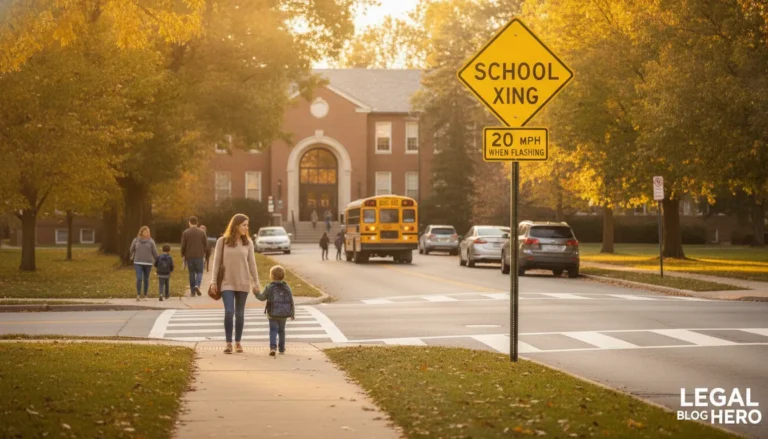
A routine school pickup can become a medical emergency in seconds. After a child or parent is struck, calm action protects both their health and the family’s options. A Springfield auto accident attorney can help investigate driver conduct, signage, and child injury damages.
Get clear guidance for your family after a school-zone crash: contact The Law Office of Chad G. Mann.
After a school zone pedestrian accident Missouri families should call 911, obtain medical care, ask police to document the crash, and preserve evidence before it disappears. If it is safe, photograph the crosswalk, signs, flashing lights, vehicle, and injuries. Collect witness details, request that available video be preserved, and avoid a recorded insurance statement until you understand your options.
Careful action matters because Safe Routes to School research links safety measures with lower injury and fatality risks for Missouri school-age children.
Families often need clear steps before they can think about fault, insurance, or a possible injury claim. The first question is: What should your family do immediately after a school zone crash? Protecting the injured person and preserving reliable evidence should guide every choice, so the path begins with
School Zone Pedestrian Accident Missouri: What should your family do immediately after a school zone crash?
First minutes at the scene
A school zone crash can leave a family frightened and unsure what to do next. Start with the child’s health and the safety of everyone nearby. Move away from traffic only if doing so will not cause more harm.
Call 911 and ask for police and medical help. Follow the dispatcher’s directions, and do not assume a child is unhurt because there is no clear wound. Keep the child calm and still until trained help arrives, unless the scene remains dangerous.
A six-step family checklist
- Get emergency care. Tell responders where the child was struck and describe any pain, confusion, bleeding, or loss of awareness.
- Make a police report. Give the officer a clear account, but avoid guessing about speed, distance, or fault. Ask how to get the report number.
- Document the scene. If it is safe, photograph the road, crosswalk, signs, flashing lights, vehicle, visible injuries, and the child’s clothing.
- Collect witness details. Ask witnesses for their names, phone numbers, and email addresses. Note where each person stood and what they saw.
- Notify the school. Ask an administrator to preserve camera footage, crossing-guard notes, visitor logs, and any reports made by school staff.
- Preserve key items. Keep damaged clothing, shoes, backpacks, medical papers, receipts, and all messages about the crash. Do not repair or discard physical items.
When speaking with police or school staff, focus on facts you directly know. Write down the time, weather, traffic signals, and any statements made at the scene. If possible, have another adult keep these notes while a parent stays with the child.
Care and records after leaving the scene
Follow the medical team’s discharge instructions and attend recommended follow-up visits. Keep a simple daily record of symptoms, sleep changes, missed school, and care needs. Save copies of bills and records rather than relying on an online portal alone.
Preserving evidence matters because safety in school areas depends on driver conduct and the design of walking routes. The CDC describes child pedestrian safety as a mix of awareness, behavior, and safer walking settings. Photos and records may help show which parts of that setting affected the crash.
Insurance calls may begin soon after a school zone pedestrian accident in Missouri. Families can provide basic contact details without giving a recorded statement before they are ready. A Springfield pedestrian lawyer can explain what records may matter and help a family understand its options.
Why school zone pedestrian accidents require a focused investigation
A changing traffic environment
A school zone pedestrian accident in Missouri may occur within seconds, but the surrounding traffic pattern changes throughout the day. Arrival and dismissal bring children, caregivers, buses, and cars into the same limited space. A focused investigation must recreate that brief set of conditions, not merely document the road after traffic clears.
Investigators should establish where each person entered the scene and what may have blocked a driver’s view. A stopped bus, a line of vehicles, or a crowd near the curb can change sight lines. Crossing guards, school staff, and nearby families may also have seen different parts of the event.
Controls in effect at the time
Signs, pavement markings, crosswalks, signals, and any flashing school-zone lights should be photographed and checked. The key issue is not only whether a control existed. The investigation must also determine whether it was visible, working, and in effect at the precise time of the crash.
The same care applies to speed. A posted reduced limit may apply only during stated hours or while warning lights operate. Records, video, and witness accounts can help establish those details. This approach fits the CDC’s child pedestrian safety framework, which addresses driver behavior and the walking environment together.
Evidence that preserves the full picture
Useful evidence often comes from several sources, and some may disappear quickly. School cameras may show crossings, traffic flow, or the position of a bus. Nearby homes, businesses, and vehicle cameras may capture the moments before impact. Phone records, vehicle data, dispatch logs, and physical marks can add context.
- Document the exact time, weather, light, and road conditions.
- Map the pedestrian’s path, the vehicle’s path, and all sight obstructions.
- Record active signs, signals, markings, crossing guards, and bus movements.
- Request available video and speak with witnesses before memories fade.
No single item should be viewed in isolation. A driver’s speed may matter differently when a crossing is crowded or a bus limits visibility. A child’s location may also make little sense without the signal timing and traffic pattern. Families seeking help can review these issues with a Missouri pedestrian injury attorney who understands how the evidence fits together.
The goal is to establish the precise facts before deciding what caused the crash or who may be responsible. That means testing accounts against records, images, road features, and the timing of every relevant control.
Which evidence can help explain what happened?
After a school zone pedestrian accident in Missouri, no single item may tell the full story. Useful evidence can show where people were, what drivers could see, and what happened next. Families can start by keeping a simple list of possible records and where each one may be found.
Records created at the scene
An incident report may identify drivers, witnesses, responding officers, road conditions, and statements made at the scene. Ask for the report number and keep any witness names, phone numbers, or email addresses. A crossing guard or school employee may also know who saw the event.
Photos can capture crosswalk markings, flashing lights, signs, parked cars, and blocked sight lines. These details matter because pedestrian safety depends on both driver behavior and the walking environment. A CDC child pedestrian safety report discusses strategies that address behavior and create safer places for walking.
| Question | Records held by others | Items a family may have |
|---|---|---|
| Where did it happen? | Incident report and crossing guard notes | Scene photos and map notes |
| What could be seen? | School or nearby business video | Photos of signs and sight lines |
| How did the event unfold? | Bus camera footage and witness details | Written timeline and messages |
| What harm followed? | Medical records and billing records | Symptom notes and care instructions |
| Was property damaged? | Repair or replacement records | Clothing, backpack, phone, or bicycle |
Video and witness sources
Potential video may come from the school, a school bus, nearby businesses, homes, or traffic systems. Families can note each camera’s location and ask the person or group in control to preserve the footage. Requests should be made promptly because video may not remain available.
Witness contact details are useful even when a witness gave a statement at the scene. Record what each person saw without coaching them or filling gaps in their memory. A lawyer familiar with pedestrian claims can explain how these separate sources may fit together.
Medical and physical proof
Medical records can connect the event with the care that followed. Keep discharge papers, test results, treatment plans, therapy notes, bills, and appointment details together. A short daily symptom log can also help track pain, sleep problems, missed activities, and changes in school attendance.
Damaged belongings may show impact points or the force involved. Keep the child’s clothing, shoes, backpack, phone, bicycle, or other damaged items in their current condition. Photograph each item from several angles, and save related repair estimates or replacement receipts.
Preservation matters, but families should not guess at deadlines or discard originals after making copies. Store digital files in more than one safe place. Keep a note showing when each record was requested, received, photographed, or saved.
How are Missouri school zone pedestrian claims evaluated?
A Missouri school zone pedestrian accident claim starts with a close review of what happened before, during, and after the impact. No single fact decides every claim. The review usually connects scene evidence, medical records, insurance information, and the conduct of each person or organization that may be involved.
Driver conduct and scene evidence
Investigators may examine the driver’s speed, attention, braking, and response to signs, lights, crossing guards, or a stopped school bus. They also consider visibility, weather, road design, and the pedestrian’s location. The CDC describes child pedestrian safety as a mix of driver behavior, public awareness, and safer walking environments.
Right-of-way facts matter, but they must be placed in context. Useful evidence may include police reports, witness accounts, photos, video, vehicle data, and records from nearby traffic controls. A prompt review can help preserve details before memories fade or physical conditions change.
Possible parties, insurance, and medical care
The driver may not be the only person whose actions need review. Facts could raise questions about a vehicle owner, an employer, a road contractor, or another party. Each situation is different, so possible responsibility should be assessed against the available evidence rather than assumed.
Insurance adjusters often request statements, records, and other information while they assess a claim. Families should keep copies of letters and avoid guessing about unknown facts. Guidance from a Springfield pedestrian injury lawyer can help them understand requests before giving a recorded statement or signing a release.
Medical care also helps show the nature and course of an injury. Records may connect symptoms to the crash, document treatment, and explain future care needs. Following medical advice and keeping bills, receipts, and appointment notes can create a clearer record without overstating the injury.
Damages and comparative fault
A claim review may consider medical costs, lost income, pain, activity limits, and other harm tied to the accident. Supporting records matter because an insurer may dispute whether a loss resulted from the collision. The value and availability of damages depend on the facts, proof, and applicable law.
Missouri comparative fault can also make the conduct of each involved person important. An insurer may argue that the pedestrian or another party shared fault. That argument does not settle the issue by itself, and evidence may support a different view. Individual legal advice can address fault questions and the Missouri statute of limitations based on the claim’s facts.
can also make the conduct of each involved person important. An insurer may argue that the pedestrian or another party shared fault. That argument does not settle the issue by itself, and evidence may support a different view. Individual legal advice can address fault questions and the Missouri statute of limitations based on the claim’s facts.
Supporting an injured child while protecting the family’s options
After a school zone pedestrian accident in Missouri, a family’s first task is helping the child feel safe and supported. Practical steps can also preserve useful information if questions arise later. Parents do not need to solve every medical, school, and insurance issue at once.
Follow-up care and symptom notes
Keep every follow-up visit and follow the care team’s instructions. Watch for new pain, sleep changes, fear, headaches, or trouble focusing. If a symptom appears or gets worse, contact the child’s medical provider. A short daily note can help the provider understand changes between visits.
Save discharge papers, visit summaries, medication lists, and therapy plans in one folder. Add photos of visible injuries when appropriate. These records help the family track recovery without asking the child to repeat painful details. They may also help a pedestrian accident attorney understand the injury’s full effect.
School and emotional support
Tell the school about the injury and ask what support is available. The child may need excused absences, extra time, reduced physical activity, or help moving between classes. Keep copies of attendance records, accommodation requests, and messages with teachers or school staff.
Emotional recovery matters too. Some children may fear traffic, buses, or the place where the crash happened. Listen without pressure and tell the medical team about lasting changes in mood or behavior. For future safety planning, CDC research on child pedestrian safety describes the role of awareness, driver behavior, and safer walking areas.
Expenses and insurance choices
Use one place to track medical bills, prescription costs, travel, missed work, and school-related expenses. Note who paid each bill and keep receipts. A simple log can reduce stress and show how the injury affected daily family life.
An insurer may ask for a statement, broad medical authorization, or quick settlement decision. Families can request time to review documents and should avoid guessing about the child’s future needs. A child’s recovery may change, so an early offer may not reflect later care or school support.
Keep all insurance letters, emails, claim numbers, and names of representatives. Before signing a release, consider how it could affect the family’s options. Missouri also places time limits on injury claims, and this overview of the Missouri statute of limitations explains why timely review matters.
When should your family speak with a Missouri injury lawyer?
When early legal guidance may matter
Families often speak with a lawyer when a school zone pedestrian accident in Missouri causes injuries, missed work, or costly care. Legal guidance may also help when the driver, insurer, or other party disputes what happened. A Missouri auto accident injury attorney can review the known facts and explain possible next steps.
An early conversation does not require a family to file a claim. It can help parents understand the process before they answer detailed questions or sign insurance forms. The lawyer can also explain what information may matter and which deadlines need attention.
Preserving evidence and finding responsible parties
Evidence can become harder to find as time passes. Video may be erased, witnesses may forget details, and physical conditions near the crossing may change. A lawyer may help preserve photos, video, witness accounts, police records, medical records, and school-zone signs or signals.
The cause may involve more than one act or condition. The CDC describes child pedestrian safety as a mix of driver behavior, public awareness, and safer walking environments. A careful review can examine the driver’s actions, traffic controls, road design, and any other facts tied to the crash.
- Request and organize records related to the crash and medical care.
- Identify people, businesses, or public bodies whose conduct should be reviewed.
- Track bills, lost income, travel costs, and other documented losses.
- Handle insurer messages while keeping the family informed.
A lawyer may compare accounts, review available records, and seek more evidence when facts conflict. This work can help the family understand who may bear responsibility. It can also create a clear record of the child’s injuries, care needs, and financial losses.
Support through the claim process
Insurance questions can add stress while a child is healing. A lawyer can serve as a point of contact, respond to requests, and explain the choices at each stage. The family still controls key decisions, including whether to accept an offer or take another lawful step.
Consider seeking advice if an insurer requests a recorded statement, disputes the cause, or pressures the family to settle quickly. Legal help may also be useful when injuries require ongoing care or several parties may share responsibility.
Every case turns on its own evidence, and no lawyer can promise a result. Families can contact the firm to discuss the facts, ask questions, and learn what options may be available.
Frequently Asked Questions
What are the common causes of school zone pedestrian accidents in Missouri?
Common causes include distracted driving, speeding, unsafe pickup or drop-off practices, failure to yield, and blocked sightlines. A collision may also happen when a driver swerves to avoid another hazard. For example, KY3 reported that a pedestrian in Republic was struck after a car swerved to avoid a school bus.
What speed are Missouri drivers required to maintain in a school zone?
Drivers must follow the speed shown on each school zone’s posted signs and observe any limits tied to flashing lights. Missouri drivers are generally required to reduce speed to 15 to 20 mph when school zone lights are flashing, according to this school zone law overview. Conditions and local signs may vary.
How is liability determined after a pedestrian is struck in a Missouri school zone?
Liability depends on the facts showing who failed to use reasonable care. Evidence may include the police report, witness statements, camera footage, vehicle data, posted signs, and driver phone records. A driver may be responsible for speeding or failing to yield. Other parties may share responsibility if their conduct or unsafe property conditions contributed to the collision.
What rights do Missouri families have after a school zone injury?
Missouri families may seek payment from a responsible party for losses caused by a school zone injury. Recoverable losses can include medical costs, lost income, pain, and future care needs, depending on the facts. Families should preserve records, avoid signing an early insurance release, and review the applicable Missouri statute of limitations promptly. Related guidance: our pedestrian accident lawyer in Springfield article explains another issue that can affect injury claims and insurance negotiations. Related guidance: our school zone pedestrian injury claims article explains another issue that can affect injury claims and insurance negotiations.
Ready to Protect Your Family’s Next Steps?
After a school-zone injury, waiting can leave your family balancing medical care, missed work, insurance calls, and difficult questions without a clear, manageable plan today. Starting now gives you time to preserve important details, organize records, understand your options, and make careful decisions before added stress clouds the path. Early guidance can also help you set practical next steps while your family focuses on recovery, school routines, work, and other daily responsibilities with confidence.
Ready to understand your legal options and build a clear plan for your family’s next steps after a serious school-zone injury? Contact the firm for a consultation to discuss your concerns, ask questions, and learn what actions may help your family move forward with greater confidence.