
A missing or inaccurate crash report can weaken an injury claim before negotiations begin. Getting the right record quickly helps you spot errors and protect the evidence your claim may need. A Missouri car accident lawyer can help use the report without letting mistakes define the claim.
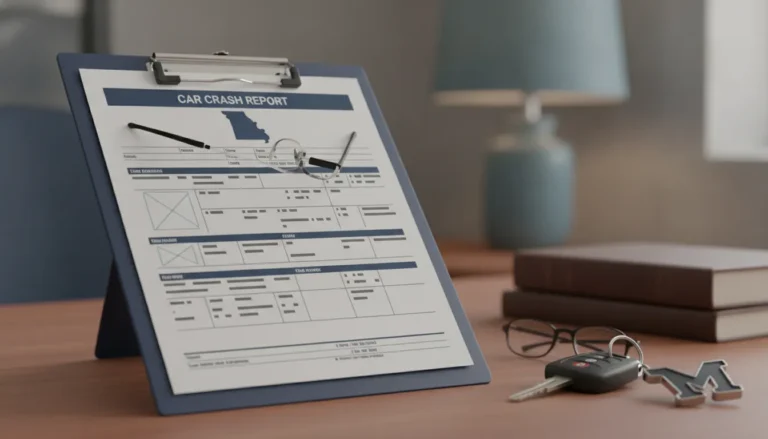
A Missouri car accident police report records details gathered by the investigating officer, including the drivers, vehicles, crash location, witnesses, and apparent contributing factors. Request it from the law enforcement agency that investigated your injury crash, then review every page for mistakes, omissions, and unfamiliar statements. The report can help identify witnesses, confirm insurance information, explain the collision to your attorney, and support settlement talks with the insurance company. However, an officer’s report is one piece of evidence, and its statements or conclusions do not always settle who was legally at fault. If the Missouri State Highway Patrol investigated, wait 10 days before requesting its basic $6 report, then keep an untouched copy for your records.
The key question is not simply whether you can obtain the report, but whether you know where to request it and what to check. The next section, How to get a Missouri car accident police report, explains the correct agency, request steps, timing, and records to gather. Here’s how.
How to get a Missouri car accident police report
Start with the investigating agency
A Missouri car accident police report usually comes from the agency whose officer responded to the crash. Check any exchange sheet, incident card, or case number given at the scene. The officer’s badge, patrol car, or paperwork may also name the agency.
City police often handle wrecks inside city limits, while a county sheriff may respond outside those limits. The Missouri State Highway Patrol often investigates crashes on state highways and in areas without a local response. Its official crash report search lets people look for qualifying reports online.
If you are unsure who responded, start with the local police department where the crash happened. Give the records clerk the road name and crash date. The clerk may find the report or direct you to the correct agency.
Request the report step by step
The request process changes by agency, but the basic steps stay similar. Begin with the agency named on your scene paperwork. If that agency has no record, ask which office received or prepared the report.
- Identify the responding agency from your exchange sheet, case number, or notes from the scene.
- Visit that agency’s official records page or call its records unit. Ask whether the report is ready and how to request it.
- Search with the crash date, location, and a driver’s name. Add the report or incident number when you have it.
- Choose the available delivery method, such as online download, mail, or in-person pickup. Follow the agency’s payment and identity rules.
- Review the report after receipt. Check names, vehicles, location, insurance details, and the officer’s crash description for clear errors.
Some reports are not available right after a wreck. An officer may still need to finish the narrative or complete a review. Ask the records unit when to check again instead of sending repeated requests to several agencies.
Online access is often the fastest option when it is offered. Still, some requests may require a form, an identity check, or direct contact with records staff. Follow the instructions on the agency’s official site.
Information needed for a report search
Gather key details before starting the search. Useful items include the crash date, approximate time, road or intersection, and names of involved drivers. Vehicle details, the investigating officer’s name, and an incident number can help narrow the results.
Use the exact spelling shown on scene paperwork when possible. A report may appear under a driver’s legal name rather than a passenger’s name. If an online search returns nothing, call the records unit and explain what information you have.
Read the full report and save an unchanged copy. It may include a crash diagram, witness information, driver statements, citations, and insurance details. A report can guide an investigation, but it does not always contain every fact or decide legal fault.
After a serious crash, medical records, photos, witness accounts, and other evidence may also matter. A Springfield auto accident injury attorney can request the report and compare it with the rest of the evidence.
What information does the crash report contain?
A Missouri car accident police report puts key details from the crash scene into one record. It can help an injured person recall what happened and give an attorney a starting point. Still, the report is not the full claim file. Photos, medical records, witness talks, and other proof may add facts that the officer did not have.
People, vehicles, and insurance details
The report commonly lists each driver’s name, address, license information, and insurance details. It may also identify passengers, vehicle owners, and witnesses. Vehicle entries often show the make, model, plate number, and damaged areas. These details help the parties confirm who was involved and which insurers may handle the claim.
Contact information can also guide follow-up work. An attorney may speak with witnesses before memories fade or ask an insurer to preserve useful records. If a listed fact is wrong, the injured person should flag it early. A wrong plate number, address, or insurance carrier can slow the investigation.
The officer’s scene record
The officer may note the crash date, time, location, road design, weather, and light conditions. Reports can include a diagram, vehicle travel directions, apparent damage, and statements from drivers or witnesses. The Missouri State Highway Patrol crash report system provides access to qualifying reports after they become available.
- Where each vehicle traveled before impact
- Points of impact and visible vehicle damage
- Road, traffic, weather, and light conditions
- Names and contact details for listed witnesses
- Citations or suspected contributing actions
A diagram or short narrative can show the officer’s first view of the event. It may point to a missed signal, unsafe turn, or failure to yield. But officers do not always see the crash happen. Their notes may rely on limited scene evidence and conflicting accounts.
How the report supports a claim
An injured person can use the report to check basic facts before speaking with an insurer. An attorney can compare it with photos, repair records, medical notes, video, and witness accounts. That review may reveal gaps or errors that need more work. It can also help shape requests for records and other proof.
The report may help explain how the crash happened, but it does not always decide legal fault. Insurance companies may weigh its statements and diagram while also reviewing other evidence. A personal injury attorney can test the report against the full record instead of treating one entry as final.
Can a police report prove who caused the accident?
A Missouri car accident police report can be strong evidence, but it does not always settle fault by itself. The report records an officer’s early view of the crash. It may help insurers, lawyers, and courts understand what happened, yet each part can carry a different weight.
What the officer saw firsthand
An officer’s direct observations may be the report’s most useful parts. These can include vehicle positions, road marks, weather, visible damage, and apparent injuries. A diagram may also show lanes, travel directions, and the point of impact. Photos or body-camera footage can add context that a written diagram cannot capture.
A citation can support an argument about fault, but it is not the same as a final civil finding. The officer may have arrived after the collision and relied on limited facts. Even the Missouri State Highway Patrol crash report system describes its online injury and fatal crash information as preliminary.
Recorded facts versus fault conclusions
The table shows why readers should separate observed details from secondhand statements and conclusions. A report can point an investigation in the right direction. Other proof may confirm, explain, or challenge what the report says.
| Report item | What it may show | Why it may need support |
|---|---|---|
| Officer observations | Scene conditions, damage, and vehicle locations | The scene may have changed before arrival |
| Driver statements | Each driver’s account of the crash | Accounts may conflict or include hearsay |
| Witness statements | An outside view of events | Memory, sight lines, and timing can affect accuracy |
| Diagram | A visual summary of the scene | It may not be drawn to scale |
| Citation or fault opinion | The officer’s initial assessment | Later evidence may change the analysis |
Admissibility and the full evidence record
Whether a report or part of it can be used in court depends on the facts and the legal issue. Statements within the report may raise hearsay concerns. An officer’s direct observations may be treated differently from a driver’s claim repeated in the report.
Fault analysis often looks beyond the report. Useful proof can include scene photos, video, medical records, repair estimates, phone records, and sworn witness testimony. Vehicle data or expert review may also help when the drivers give different accounts.
Preserve the report, but do not assume every line is accurate or final. Check names, insurance details, road descriptions, statements, and the diagram against other records. A Missouri car accident attorney can review how the report fits with the rest of the evidence.
What should you do if the report contains an error?
A Missouri car accident police report may contain a wrong name, address, vehicle detail, or account of the crash. Read the full report as soon as you receive it. Mark each issue, but do not write on your only copy.
Some errors are easier to correct than others. An agency may fix an objective detail when clear records show the correct information. A dispute about fault, a witness statement, or an officer’s opinion may require a written supplement instead.
Objective errors and disputed statements
Objective errors involve details that documents can confirm. Examples include a misspelled name, wrong license plate, incorrect insurance carrier, or inaccurate date of birth. A driver’s license, registration, insurance card, photo, or medical record may support the requested change.
A disagreement about how the crash happened is different. The agency may decline to remove an officer’s conclusion or another person’s statement. Still, you can ask to add your written account and supporting proof to the file.
Steps for requesting a correction
Contact the law enforcement agency that prepared the report, not an unrelated records office. For Highway Patrol reports, the state directs requests to the proper troop headquarters or the Patrol Records Division. Review the Missouri State Highway Patrol crash report instructions before sending your request.
- Save the original report. Keep an unchanged paper copy and a digital copy. Note when and how you received it.
- List each error. Quote the disputed field or statement, then explain the requested correction in plain terms. Keep facts separate from opinions.
- Gather supporting proof. Save crash photos, video, contact details, medical records, repair records, and messages. Do not edit or crop original files.
- Send a written request. Include the report number, crash date, your contact information, and copies of supporting records. Ask whether the agency uses a correction or supplement form.
- Keep a complete record. Save the request, attachments, delivery proof, and every response. Follow up in writing if you receive no answer.
Use copies for the request and keep the originals secure. A clear paper trail shows what you disputed, when you raised it, and what evidence supported your position.
If the agency will not change the report
A refusal does not mean you should ignore the error. Ask for the agency’s decision in writing and whether it will attach your statement. Do not argue with the officer or ask a witness to change an honest account.
Fault disputes can affect an injury claim even when the report stays unchanged. An auto accident injury attorney can review the report with other evidence. That review may include photos, witness accounts, medical records, and vehicle damage.
Preserve all evidence while the issue is being reviewed. Avoid posting crash details online, and do not discard damaged property or original files. These materials may help explain why a statement or conclusion is incomplete.
Evidence to preserve beyond the police report
A police report is a useful starting point, but it rarely contains every fact needed to evaluate an injury claim. Preserve your own evidence as soon as you can. Conditions change, vehicles are repaired, video is overwritten, and witnesses become harder to locate.
Photos, video, and physical evidence
Keep every photo and video from the scene, including wide views of the roadway and close views of vehicle damage. Save images of traffic controls, skid marks, debris, weather, visible injuries, and anything that may have obstructed a driver’s view. Do not edit the original files. Their timestamps and other metadata may help establish when and where they were taken.
Ask nearby businesses or homeowners whether cameras may have captured the collision. Make that request quickly because many systems overwrite recordings. Preserve the damaged vehicle when a disputed mechanical issue, impact location, or severity could matter. Before repairs or disposal, speak with counsel about whether an inspection is appropriate.
Medical and financial records
Follow medical advice and keep copies of discharge instructions, bills, test results, prescriptions, and appointment records. A simple journal can document pain, sleep problems, missed activities, and the ways injuries affect daily life. Also retain pay records, employer communications, receipts, and other documents showing accident-related losses.
Witness and insurance communications
Write down witness names and contact information, even if the officer also recorded them. Preserve texts, emails, and letters with insurers. Keep notes of phone calls, including the date, the person involved, and the subjects discussed. Avoid guessing about fault, speed, or injuries when speaking with an adjuster. If you do not know an answer, say so.
An attorney can compare this evidence with the report, identify missing information, and investigate inconsistencies. If you were hurt in southwest Missouri, learn how a Springfield auto accident injury attorney may help preserve evidence and evaluate your options.
How to use the report while protecting your injury claim
Prompt review and careful corrections
Read your Missouri car accident police report as soon as you receive it. Check names, contact details, vehicle information, insurance data, road conditions, and the officer’s description. Compare those details with your photos, medical records, repair papers, and notes from the crash.
Mark anything that seems incomplete or wrong, but do not alter the report yourself. Contact the investigating agency and ask about its process for requesting a correction or adding information. Keep the original report, your written request, and every later version together.
A report can help organize the early facts, but it may not tell the whole story. The officer may not have seen the crash or known the full extent of your injuries. The National Highway Traffic Safety Administration also provides road safety information that can help readers understand common crash risks.
Recorded statements and document sharing
An insurance adjuster may ask for a recorded statement soon after the crash. Answering broad questions before you know your diagnosis may create gaps or wording that later causes a dispute. You can ask what information is required and whether the request can be made in writing.
When you do communicate, stick to facts you know. Do not guess about speed, distance, fault, or how long recovery will take. Avoid saying that you are fine when symptoms are still changing, and do not sign a broad medical release without reviewing its scope.
- Save emails, letters, claim numbers, and adjuster contact details.
- Write down each call’s date, time, participants, and main points.
- Send copies when possible and keep the originals in a safe place.
- Keep social media posts private and avoid discussing the crash online.
Share the report only with people who need it for the claim, treatment, repair, or legal review. A careful file helps your Auto Accident Injury Attorney compare statements, records, and other evidence without relying on memory alone.
Legal review after an injury
Consider speaking with counsel before giving a recorded statement, signing a release, or accepting a settlement when you were injured. Early legal review can help preserve evidence and spot report errors. It can also help you understand which records support the claim.
Bring the report, photos, medical papers, wage records, repair estimates, and insurance messages to the meeting. Explain any error you found and every effort made to correct it. Missouri’s Department of Commerce and Insurance offers consumer information about auto insurance and claims.
Do not wait for the report to seek medical care or follow treatment advice. Keep notes about pain, limits, missed work, and appointments as they occur. Those timely records may provide context that a short crash report cannot capture.
Frequently Asked Questions
How do I get a Missouri car accident police report?
First, identify the agency that investigated the crash, such as the Missouri State Highway Patrol, a city police department, or a county sheriff. Request the report directly from that agency using its online portal, records office, or request form. Have the crash date, location, involved drivers’ names, and report number ready. The agency may require identification and a records fee.
When will my Missouri car accident police report be available?
A Missouri car accident police report may not be available immediately because the investigating officer must finish and submit it. Processing time depends on the agency and the crash’s complexity. Ask the investigating agency when it expects to release the report, then check again after that date. Serious crashes involving further investigation may take longer than routine collisions.
What should I do if my Missouri car accident police report has an error?
Contact the investigating agency promptly and explain the specific error. Provide documents that support the correction, such as photographs, insurance records, or witness contact information. An agency may correct an objective mistake or add a supplemental statement, but it may not change an officer’s conclusions. Keep copies of your request, supporting materials, and any updated report.
Can I use a Missouri car accident police report for an injury claim?
A police report can help document when and where the crash happened, who was involved, witness information, and the investigating officer’s observations. Insurers and attorneys may use these details while reviewing an injury claim. However, a report does not automatically decide fault or prove every loss. Preserve photographs, medical records, repair estimates, and other evidence alongside the report.
What if no police report was made after my Missouri car accident?
If no officer investigated the crash, document the incident as thoroughly as possible. Save photographs, videos, medical records, repair estimates, insurance communications, and witness contact details. Notify the proper authorities and your insurer as soon as possible, and ask whether a later report can be filed. A missing police report does not erase other evidence related to an injury claim. Related guidance: our Missouri car accident police report article explains another issue that can affect injury claims and insurance negotiations. Related guidance: our recorded statement after a car accident article explains another issue that can affect injury claims and insurance negotiations.
Ready to protect your Missouri accident claim?
Waiting to obtain your police report can leave important crash details harder to confirm when questions arise about fault, injuries, damages, or insurance coverage. Delays can also leave less time to compare the report with your records and address errors that could complicate an injury claim. Starting now helps organize evidence early, clarify your next steps, and keep avoidable paperwork problems from adding more pressure during your physical recovery.
A lawyer can review the report, identify gaps, and explain how it may fit with photographs, medical records, witness accounts, and other evidence. Ready to protect your options? Contact the Law Office of Chad G. Mann to schedule a consultation and get clear guidance on your next step.