
Multi Vehicle Accident Liability Missouri: Key Facts
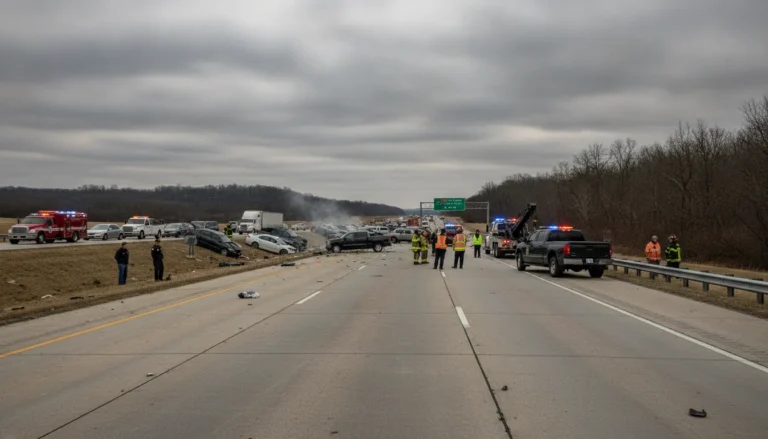
Pileups on Missouri highways leave injured drivers wondering which insurance company is responsible for medical bills, lost income, and vehicle damage. When many cars collide, proving who started the crash becomes a puzzle, and each insurer may try to shift blame. Missouri rules for shared fault protect an injured person’s right to pursue fair compensation. Related evidence issues often overlap with Missouri comparative fault and the need for a complete police report.
Talk with The Law Office of Chad G. Mann about protecting your rights after a Missouri multi-vehicle crash. In serious pileups, speaking with a Missouri car accident lawyer can help preserve facts before insurers shift blame.
Multi vehicle accident liability Missouri is governed by a system of pure comparative fault. This rule allows you to seek money for your injuries even if you played a small role in the crash. Missouri lets you recover money as long as another driver shares the blame. A court or insurance company assigns a share of fault to every person in the pileup. Your total check is then lowered by your own portion of fault. This system is found in Missouri Statute 537.765. It explains that any fault given to you reduces your payout but does not stop you from winning. This legal standard ensures that every driver at fault pays for the damage they caused.
Multi Vehicle Accident Liability Missouri: How Missouri decides fault in a multi-vehicle accident
When many cars crash at once, finding who is at fault is hard. Missouri uses a rule called pure comparative fault for these cases. This system lets more than one driver share the blame based on what they did. Since Missouri is an at-fault state, the driver who caused the crash pays for the loss. In a big pileup, several people may have made a mistake that led to the damage.
The pure comparative fault rule
The Missouri comparative fault rule means you can still get money if you were partly to blame. Your payout goes down by your share of fault. For example, if a court finds you 10% at fault for a $100,000 loss, you would get $90,000. In Missouri, you can win your case even if you were more than 50% responsible for the wreck. This rule keeps the law fair for everyone in a crash.
How experts find the truth
Finding the truth in a chain-reaction crash takes a deep look at the facts. Pros check police records, talk to witnesses, and look at car damage. They try to find out which driver started the first hit. They also check if other drivers were too close or were on their phones. To build a strong case, you should file a car accident claim with clear proof. Photos and dash cam video can show what happened before the cars hit.
Problems with insurance claims
Insurance firms often fight over who should pay in a large crash. Each firm wants to show their driver did nothing wrong. This can lead to long wait times and low offers. If an uninsured driver is in the wreck, you must report the accident to the Driver License Bureau within one year. Dealing with many insurance firms is a big task. You need a clear plan to protect your rights and get the pay you need for bills and repairs.
Why the sequence of impacts changes liability
In a multi-car crash, the order of hits is key to finding who is at fault. The sequence helps show which driver started the pileup and which drivers could not stop in time. For Missouri comparative fault laws, this timing changes how much each person must pay. Each hit is a new event that may add more blame to other drivers.
The first point of impact
Finding the car that hit first is a top goal for any lawyer. Finding who has multi vehicle accident liability Missouri often starts with the lead car. Most of the time, the driver who hits first is the one who carries the most blame. If a driver hits the car in front of them, they might be at fault for that first hit. If that car is then pushed into a third car, the first driver may also be at fault for that next hit too.
This happens often in stop-and-go traffic on local roads near Springfield or Nixa. A driver might be on their phone and fail to see brake lights. They hit the car ahead at high speed. This starts a chain of hits that takes in many cars. Knowing the order of these hits helps us prove which driver set the whole thing in motion.
Shared fault in follow-on crashes
Not every driver in a pileup is free of blame. Even if you did not start the crash, you could still be held at fault for your part in it. If you were following too close, a court might say you are partly to blame for the hit. Missouri law says that even a small amount of fault can change your case.
Under Missouri statute 537.765, any fault on your part will lower the money you get. For example, a jury might find you are 20 percent at fault because you could not stop fast enough. In that case, you can only get 80 percent of your total losses. This is why the order of hits matters so much for your claim. Insurance firms often use these facts to try to pay out less money.
Proving the order of events
To find the truth, we look at the car damage and road marks. Police reports and witness words also help build the case. In some cases, we use a pro to rebuild the crash. These pros look at the physics of the crash to find the exact time of each hit.
We also use data from the cars. Most new cars have a black box that records speed and braking. This data can prove if a driver tried to stop or if they were not looking at the road. In Springfield, we see many crashes on James River Freeway where this data is key. By putting all these facts together, we can show the court the real story of what happened on the road. We use our knowledge of car accident laws in Missouri to build a strong case. This helps you get the full pay you need to move on.
What evidence helps prove a Missouri pileup claim?
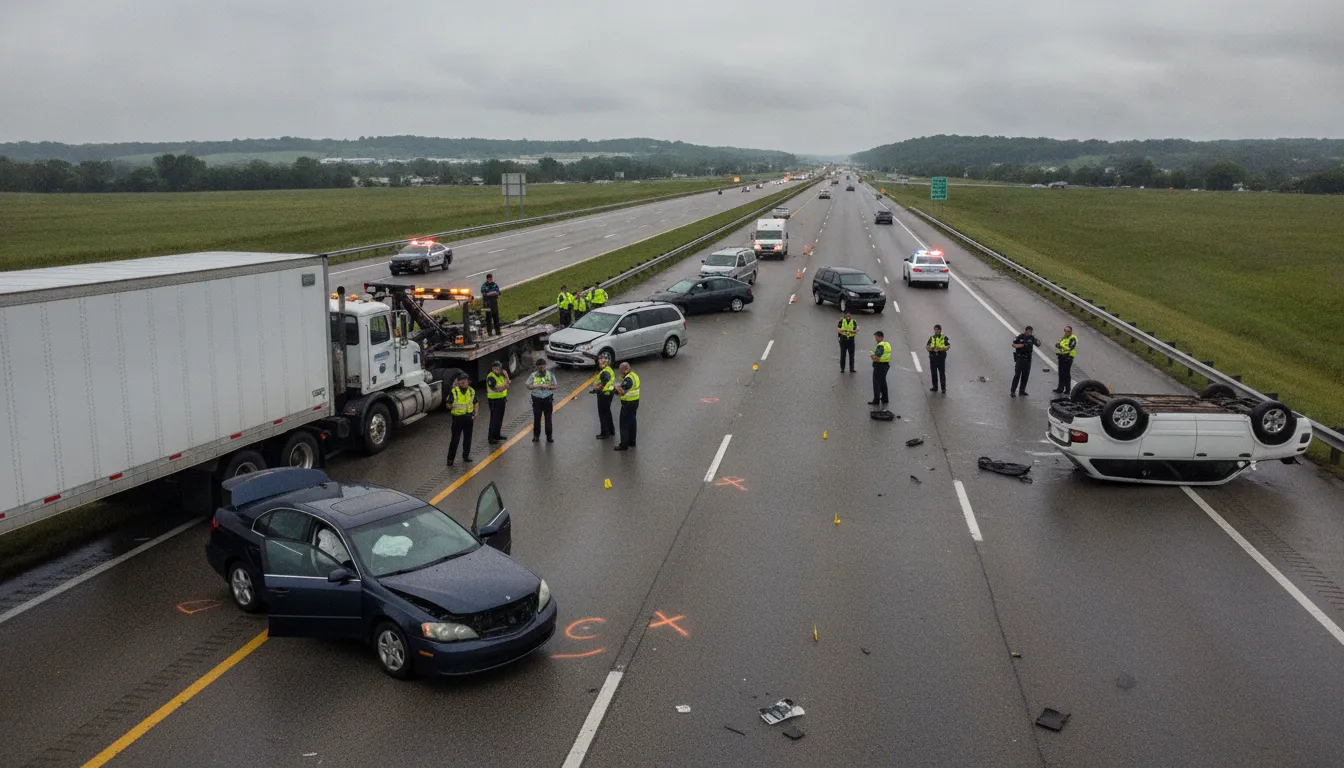
Proving who is at fault in a big crash is hard. In a multi vehicle accident liability Missouri case, several drivers may share the blame. You must collect clear proof to show what really happened. This helps ensure you get fair pay for your losses. Without good facts, insurance firms may try to lower your claim.
Gathering proof at the scene
The first steps you take after a crash are the most vital. You should use your phone to take photos of every car. Capture the damage from many angles. Also, take shots of skid marks on the road or broken glass. These details help experts see how the cars moved before they hit. You also need to exchange insurance details with every driver there.
Talk to people who saw the crash but were not in it. These witnesses can give a neutral view of the event. Ask for their names and phone numbers. Their words can help prove who hit first. Police reports are also a key part of your case. Officers will note the weather and road state. They may even give tickets to drivers who broke the law.
Using tech and health records
Modern cars often have a “black box” called an EDR. This tool saves data like speed and brake use. This tech can show if a driver was speeding or did not slow down. Your lawyer can help you get this data through a letter. This letter stops the other side from destroying vital proof. It is a key tool in many legal steps after an auto accident.
Your own health records are also proof. See a doctor right away, even if you feel okay. Some injuries take days to show up. Medical bills and doctor notes prove you were hurt in the crash. These records link your pain to the accident. They make it hard for insurers to say your injuries came from something else.
Five steps to keep your claim evidence safe
- Call the police right away. Missouri law says you must report crashes that cause injury or big damage. The official report is a neutral record that helps prove the facts of the case.
- Take photos and video. Get shots of the cars, the road, and any signs. Video can show the weather and how busy the street was at the time of the pileup.
- Get witness contact info. Write down the names and numbers of people who saw the crash. Their words can back up your story in a complex pileup.
- Seek medical care fast. Go to an ER or clinic within 24 hours. This creates a clear link between the crash and your health issues, which is vital for filing a car accident claim.
- Send a notice letter. Have your lawyer send a notice to other drivers and firms. This tells them they must save data like logbooks or EDR records for the case.
Which insurance policy pays after a multi-car crash?
A pileup on a highway often involves many cars. This leads to a complex web of insurance claims. In a multi-vehicle accident, many drivers may share blame. Because Missouri is an “at-fault” state, the driver who caused the crash is responsible for the bills. But in a chain reaction, three or more drivers might be at fault at the same time.
How Missouri liability limits work
Each driver in Missouri must carry a minimum amount of insurance. State law requires $25,000 per person for bodily injury. It also requires a total of $50,000 per accident. In a crash with five or six people, these low limits may run out fast. If one driver’s policy cannot cover all the costs, other policies must step in to help.
When claims exceed these limits, you may need to look at your own coverage. Uninsured or underinsured motorist coverage can fill the gap. These policies help when the at-fault driver does not have enough money to pay for your medical care. Understanding your legal steps after an auto accident is vital when policies are thin.
Disputes between multiple insurers
In a multi-car crash, insurance firms often fight over who pays first. Each firm wants to show its driver was not at fault. They may use police reports and witness notes to shift blame. Missouri uses pure comparative fault rules to divide costs. This means you can still get money even if you were partly to blame.
Because fault is split by percentages, insurers often disagree on the math. One company might say their driver is 10% at fault, while another says 40%. This fight can delay your check for months. Having an expert who knows Missouri comparative fault laws can help speed up the process.
| Coverage Type | Who it Pays | When it Applies |
|---|---|---|
| Liability Insurance | Other people | When you are found to be at fault for a crash. |
| Underinsured (UIM) | You | When the at-fault driver’s policy is too small. |
| Uninsured (UM) | You | When the at-fault driver has no insurance at all. |
| MedPay | You | Pays medical bills fast regardless of who is at fault. |
Why competing insurers complicate recovery
When you are in a crash with many cars, things get messy fast. You do not just deal with one driver and one insurance firm. Instead, you might face three, four, or more insurance staff. Each one wants to save their company money. This means they will look for any reason to deny your claim or pay you less. These firms often work against each other, which makes it much harder for you to get the help you need. You can end up stuck in the middle of their fights while you try to heal.
Finger-pointing and shared blame
The biggest problem in these cases is blame. In a multi vehicle accident liability Missouri case, every driver’s insurance company will try to point the finger at someone else. They want to show that their driver did not cause the crash. They might say a different driver stopped too fast or turned without a signal. This finger-pointing can lead to long fights between the firms.
Because of Missouri comparative fault laws, a court can split blame among many people. Insurers use this for their own gain. They will try to put even a small part of the blame on you. If they can show you were 10 percent at fault, they can pay you 10 percent less. We have seen this move many times. They hope that by spreading the blame, no one has to pay a full payout.
Low limits and payment delays
Another big hurdle is the amount of money ready. Missouri only needs drivers to have $25,000 in bodily injury plans per person. In a big crash, this money can run out fast. If five people are hurt and the driver at fault has low limits, there is not enough to go around. This leads to more fights as each victim tries to get a piece of the small pie.
Insurers also use delay as a tool. They may wait to pay until they finish a long study of the crash. They might say they need more statements or more photos. While they wait, your medical bills pile up. They know that if you are stressed for cash, you might take a low offer just to get some money now. This is a common way they try to settle for less than what is fair.
Watch for quick releases and statements
You must be careful about what you say and sign. A claim worker might call you very soon after the crash. They may act kind and ask for a taped statement. Do not give one without help. They want to find any slip-up in your story to use against you later. They look for negligence in personal injury cases to avoid paying.
Also, watch out for quick payout offers. If a firm sends you a check and a release form right away, be wary. Signing that form usually means you can never ask for more money. You might not even know how bad your injuries are yet. Once you sign, your case is over. Always talk to a pro before you sign anything that ends your right to seek more help.
How can an injured person protect the value of a claim?
A multi vehicle accident can cause big physical and financial stress. You may face medical bills, lost pay, and car repairs. To get the money you need, you must take steps to guard the value of your case. Missouri law allows you to seek pay for these losses, but the path is not always easy. You should know what you can recover and how to prove it.
Keep track of your medical care and costs
Your health is the first thing to think about after a crash. Seeing a doctor right away shows that your injuries came from the wreck. If you wait, an insurance company might say you were not hurt that bad. Save every bill, note from a doctor, and receipt for drugs or therapy. These papers are proof of your losses when you file a claim for auto accident injuries in Springfield.
You also need to track how the crash affects your work. If you miss days or cannot do your job, you may lose income. Keep pay stubs and tax records to show what you would have earned. Under Missouri law, you must report an accident to the state if it causes more than $500 in damage or if anyone gets hurt (Missouri Department of Revenue). Having this official report helps link your losses to the crash.
Understand the role of fault in your case
In a multi vehicle accident liability Missouri case, the state uses a pure comparative fault system. This means that more than one driver can be at fault for the same crash. Even if you are partly to blame, you can still get some money for your losses. Your total award will be lower by your share of the fault (Missouri Revised Statutes Section 537.765). For example, if you are 20% at fault, you can still get 80% of your damages.
Because your fault share matters so much, you must be careful about what you say. It is best to stick to the facts when you talk to the police or other drivers. Never say you are sorry or take the blame at the scene. Small details about the crash can change how much pay you get. You can learn more about how Missouri comparative fault laws work to see how they might touch your case.
Work with a lawyer to coordinate claims
Multi car pileups often involve many drivers and several insurance firms. This makes it hard to know who should pay for what. A lawyer can help by looking at the facts and talking to the insurance groups for you. They can gather proof like witness words and police files to build a strong case. This is a key part of negligence in personal injury cases where many people are involved.
If you have questions about your wreck, you can contact us to talk about your options. A lawyer can handle the hard work of the claim while you focus on getting well. They make sure you do not miss deadlines and that you get a fair deal. This help is often needed when dealing with many insurance groups at one time.
Frequently Asked Questions
How is fault determined in a multi-car accident in Missouri?
Proving fault in a multi-car crash involves a deep look at police reports, witness statements, and physical evidence. In Missouri, investigators look at each driver to see if they broke any traffic laws. Because these wrecks involve many people, teams often use experts to rebuild the scene. According to the u003ca href=u0022https://dor.mo.gov/driver-license/insurance/accident-information.htmlu0022 rel=u0022nofollowu0022 target=u0022_blanku0022u003eMissouri Department of Revenueu003c/au003e, all drivers must exchange their contact and insurance details after any collision.
What is Missouri’s comparative fault rule?
Missouri uses a pure comparative fault system to handle injury claims. This rule allows you to seek money for your losses even if you were partly to blame for the crash. Your final payout will drop by the same percentage as your level of fault. For example, if you are 20 percent at fault, you can still get 80 percent of your total damages. Under u003ca href=u0022https://revisor.mo.gov/main/OneSection.aspx?section=537.765u0022 rel=u0022nofollowu0022 target=u0022_blanku0022u003eMissouri lawu003c/au003e, this rule ensures that every party pays their fair share.
Who is liable in a chain-reaction car accident?
Liability in a chain-reaction crash usually falls on the driver who started the first impact. However, more than one person can be found at fault if other drivers were speeding or following too close. Missouri is an at-fault state, which means the person who caused the wreck must pay for the harm they did. A u003ca href=u0022https://becklawmo.com/blog/liability-in-chain-reaction-car-accident/u0022 rel=u0022nofollowu0022 target=u0022_blanku0022u003elegal reviewu003c/au003e is often needed to sort through the complex layers of insurance and blame in these events.
How much insurance must Missouri drivers carry?
Every driver in Missouri must have a certain amount of liability insurance. State law requires at least 25,000 dollars per person for bodily injury and 50,000 dollars total per crash. You also need 25,000 dollars in coverage for property damage. If a multi-vehicle pileup causes more harm than these limits cover, getting full pay can be hard. The u003ca href=u0022https://dor.mo.gov/driver-license/insurance/accident-information.htmlu0022 rel=u0022nofollowu0022 target=u0022_blanku0022u003estateu003c/au003e also requires you to report any crash that involves an uninsured driver.
Ready to find the help you need for your Missouri crash claim today?
Waiting to start your legal case can lead to lost proof like dash cam clips or store safety videos that show how your crash really happened. If you do not act now, state laws may stop you from getting the money you need for your doctor bills and for your missed pay. When you start your work with a lawyer now, you help protect your key legal rights while you focus on getting well and staying safe.
Ready to get help? Use our online contact page. Contact the firm to discuss your Missouri multi-vehicle accident claim and to start your clear path toward getting better after your crash today.