


An 18-wheeler crash can change a family’s life in seconds. Serious injuries may require years of treatment, rehabilitation, and support, while the trucking company and its insurers may begin investigating before your family understands what happened.
An experienced 18 wheeler accident lawyer can investigate the crash, identify every potentially responsible party, and protect evidence needed to evaluate a Missouri claim. Commercial cases may involve the driver, motor carrier, maintenance provider, or broker. Along with federal safety records and insurance coverage that do not arise in an ordinary car accident.
Understanding how those responsibilities fit together is the first step toward making informed decisions after a catastrophic collision. It also explains why the lawyer’s experience with commercial carriers and insurance defense can matter from the beginning.
Talk with an 18 wheeler accident lawyer about your Missouri case today
Why an Experienced 18 Wheeler Accident Lawyer Matters in Missouri
An 18-wheeler crash is not simply a larger version of a two-car collision. The truck’s size and weight can cause catastrophic injuries, but the legal investigation is also more complicated. The facts may involve driver training, dispatch practices, vehicle maintenance, cargo loading, federal safety requirements, and the relationship between the driver and the trucking company. A lawyer who regularly handles serious commercial-truck claims can identify these issues before important evidence is lost.
There may be more than one party whose conduct contributed to the crash. Depending on the evidence, potential defendants can include the truck driver, the motor carrier, a maintenance facility, or a freight broker. Each party may have separate lawyers, insurers, and arguments about who should bear responsibility. This is why an experienced 18 wheeler accident lawyer does more than review the police report. The investigation should examine the full chain of decisions and responsibilities surrounding the trip. Learn more about commercial trucking liability investigations.
The defense effort may begin quickly. Trucking companies often deploy rapid-response teams that include lawyers and insurance adjusters soon after a major crash. Their goal is to preserve the company’s position and limit its exposure while the available evidence and the injured person’s condition are still developing. That early activity can place an injured Missouri family at a disadvantage, particularly when the family is focused on emergency treatment, rehabilitation, lost income, and basic recovery.
Insurance companies may also evaluate a catastrophic injury claim through an initial, short-term lens. Early medical bills and visible injuries do not always show the full effect of a spinal cord injury, traumatic brain injury, or other life-changing harm. Future care, changes in earning ability, pain, and the support a family member may need can become clearer over time. Chad Mann’s insurance-defense background provides insight into how insurers evaluate, negotiate, and deny claims, including the ways they may undervalue long-term needs. See the firm’s guide to insurance bad faith and how insurance companies assess serious injury claims.
Choosing counsel with commercial-truck and catastrophic-injury experience does not guarantee a particular result. It does give a family a better-informed process for preserving evidence, identifying all potentially responsible parties, and presenting the injury’s long-term consequences accurately. In Missouri, that careful preparation can matter while the family makes difficult medical and financial decisions after a devastating collision.
What Makes 18 Wheeler Accidents Different From Passenger Car Crashes
An 18-wheeler claim can involve a broader investigation and more than one potentially responsible party. The driver may be involved, but so may the motor carrier, a maintenance company, a freight broker, or another business connected to the trip. Identifying each role matters because the available evidence, insurance coverage, and legal responsibility may differ.
Commercial trucking is also governed by federal safety rules. The Federal Motor Carrier Safety Administration (FMCSA) establishes standards for motor carriers, including financial-responsibility requirements under Part 387. For qualifying interstate operations, those requirements create mandatory public-liability insurance minimums that can reach the multi-million-dollar range. A Form MCS-90 endorsement is designed to ensure that required public-liability protection is available to the public. The specific coverage in a claim still depends on the carrier, vehicle, cargo, operation, and facts of the crash.
Commercial carriers may also purchase excess or umbrella coverage above the required minimums. That does not automatically establish fault or guarantee that a particular amount will be available, but it makes a careful policy and corporate-structure investigation important. A Missouri insurance bad faith analysis may become relevant if an insurer mishandles a valid claim, although coverage and bad-faith questions require a fact-specific review.
| Issue | 18-wheeler or commercial claim | Standard passenger-car accident |
|---|---|---|
| Potential defendants | May include the driver, motor carrier, maintenance provider, freight broker, or other responsible businesses. | Often centers on the individual driver and that driver’s insurer, though other parties can be involved. |
| Insurance limits | Federal minimum public-liability requirements may apply, and excess or umbrella coverage may exist. | Usually involves a personal auto policy, with limits and additional coverage determined by that policy. |
| Regulation | Federal motor-carrier safety rules and carrier policies may provide standards for evaluating conduct. | Generally governed by ordinary traffic laws and the driver’s personal responsibilities. |
| Evidence | Important evidence may include electronic logs, vehicle data, inspection records, maintenance files, dispatch records, and company safety materials. | Evidence commonly includes photographs, witness accounts, police reports, medical records, and vehicle data when available. |
| Defense response | Carriers may mobilize adjusters, claims counsel, and other rapid-response personnel soon after the crash. | The insurer may investigate through an adjuster, but the response is often less structurally complex. |
Because trucking companies may have rapid-response teams working to protect their interests immediately after a collision, preserving records and documenting injuries early can be especially important. That difference is not a reason to make rushed decisions. It is a reason for an injured person or family to understand the claim’s commercial, regulatory, and insurance dimensions before responding to carrier representatives.
Common Causes of 18 Wheeler Crashes and Who Can Be Liable
Truck crashes rarely result from one simple mistake. A collision may reflect a chain of safety failures involving a driver, a trucking company, a maintenance provider, or another business involved in moving the freight. Identifying each contributing cause matters because the responsible parties may have different records, insurance policies, and legal defenses.
What causes many 18-wheeler crashes?
Driver fatigue is a recurring concern in commercial trucking. A driver who remains on the road beyond allowable hours may have slower reactions, reduced attention, and difficulty making safe decisions. Federal hours-of-service rules are intended to limit this risk, and mandatory electronic logging devices, or ELDs, generally track a commercial driver’s hours. A review of those records may help show whether the driver’s schedule complied with the Federal Motor Carrier Safety Regulations.
Vehicle maintenance failures can create another serious source of danger. Worn brakes, defective tires, steering problems, or neglected inspections may make it impossible for a driver to stop or control a loaded tractor-trailer. The condition of the vehicle, maintenance invoices, inspection records, and repair history can help determine whether a mechanical problem existed before the crash and who knew about it.
Speeding and reckless driving also increase the force and likelihood of a collision. Following too closely, unsafe lane changes, distracted driving, and driving too fast for traffic or weather conditions may support a negligence claim. In some cases, the motor carrier’s hiring, training, supervision, or scheduling practices may also be relevant.
Which parties may share responsibility?
The truck driver may be liable for unsafe conduct behind the wheel. The motor carrier or trucking company may bear responsibility for its own policies and for employees’ actions within the scope of their work. A maintenance facility may be responsible when careless repairs or an inadequate inspection contributed to the failure. Depending on the transportation arrangement, a freight broker or shipper may also face questions about selection, loading, securement, or other conduct.
Separate negligent acts can combine to cause one injury. Missouri’s pure comparative fault system may allow recovery even when more than one person or business contributed to the crash. Although the amount recovered can depend on the claimant’s assigned share of fault. The investigation should therefore look beyond the first explanation offered by an insurer or carrier.
That analysis becomes especially important when a crash causes a spinal cord injury or another catastrophic injury. Preserving ELD data, maintenance records, driver files, and other evidence can help clarify how the collision happened and which parties should be included in the claim.
What Damages Can You Recover After a Catastrophic Truck Accident?
A catastrophic 18-wheeler crash can change nearly every part of a person’s life. Compensation is not limited to the emergency treatment received in the first days after the collision. It should account for the medical care, income, support, and quality of life the injured person may need over many years.
Missouri law recognizes broad categories of compensatory damages in serious injury cases. Those damages are tied to the actual harm suffered, not to an arbitrary ceiling. Missouri does not impose caps on compensatory damages in personal injury cases, which is especially important when a catastrophic injury creates substantial lifelong needs. The evidence can show the full scope of those losses rather than stopping at an early, incomplete estimate.

Medical care and future rehabilitation
Recoverable medical expenses can include ambulance transport, hospitalization, surgery, medication, therapy, assistive equipment, home modifications, and follow-up treatment. They can also include reasonably supported future expenses. A spinal cord injury, for example, may require comprehensive, long-term rehabilitation and medical care, according to the Mayo Clinic. A proper evaluation considers what care may be needed after the initial settlement discussion, not just the bills already in the file.
Income, earning capacity, and daily independence
Damages may include wages already lost and the future earning capacity reduced by the injury. That analysis can be significant when a person cannot return to the same job, must work fewer hours, or needs a different occupation. It may also account for the value of assistance with ordinary activities when permanent disability or disfigurement changes how someone lives.
Human losses that do not appear on a bill
Missouri law also recognizes pain and suffering, mental anguish, loss of consortium, permanent disability or disfigurement, and loss of enjoyment of life. These categories reflect sleep disruption, physical limitations, emotional distress, changes in family relationships, and the loss of activities that once gave life meaning. Our guide to pain and suffering damages explains why this evidence matters. When a crash causes a traumatic brain injury, symptoms can include lasting changes in memory, mood, and concentration, even when the injury is not obvious to others.
Valuing these losses requires patience and medical evidence. An insurer may focus on early bills while overlooking future care and the quieter ways a catastrophic injury affects a family. A complete claim keeps both visible, without promising a particular result.
Why Missouri’s Laws Give Truck Accident Victims an Advantage
Missouri’s personal injury laws can provide important protections for people seriously injured in an 18-wheeler crash. Those protections do not guarantee a particular result. But they can give an injured person a meaningful opportunity to pursue compensation that reflects the full impact of the harm.
Missouri Does Not Cap Compensatory Damages in Personal Injury Cases
Missouri does not impose statutory caps on compensatory damages in personal injury cases. That matters when a truck crash causes permanent disability, disfigurement, significant pain, or years of medical treatment. The value of a claim still depends on the evidence and the individual circumstances. But the law does not place an automatic ceiling on compensatory damages simply because the injury is serious.
Missouri law recognizes several categories of loss, including medical expenses, lost earnings, pain and suffering. Mental anguish, loss of consortium, permanent disability or disfigurement, and loss of enjoyment of life. Understanding how those losses fit together is important when evaluating a catastrophic injury claim. Our guide to pain and suffering damages explains one part of that analysis in more detail.
Partial Fault Does Not Automatically Bar Recovery
Missouri follows a pure comparative fault rule under RSMo 537.765. If an injured person is found partly responsible for the crash, that person may still recover damages. The award is reduced by the person’s percentage of fault. For example, a finding that a victim was 20 percent at fault would generally reduce the recoverable damages by 20 percent, rather than eliminate the claim altogether.
Insurance carriers may try to shift blame to the injured driver, especially when the trucking company has its own legal and investigative team working immediately after the collision. A careful review of vehicle data, roadway conditions, witness accounts, and the conduct of every involved party can help separate documented facts from unsupported blame.
Missouri’s Filing Deadlines and Venue Rules Matter
Missouri generally allows five years to file a personal injury lawsuit. That is a comparatively generous period for investigating a complex truck claim, but it is not a reason to wait. Electronic data, maintenance records, and witness memories can become harder to preserve as time passes.
Wrongful-death claims follow a separate rule. Missouri law generally provides a three-year statute of limitations for a claim arising from a family member’s death, under RSMo 537.100. Venue also requires careful analysis. Depending on the facts and applicable rules, urban jurisdictions such as St. Louis and Kansas City may offer favorable venue options for plaintiffs. An experienced 18 wheeler accident lawyer can evaluate the proper forum and deadline while the family focuses on medical care and recovery.
Request a free case review after your 18 wheeler accident
What Evidence an 18 Wheeler Accident Lawyer Investigates
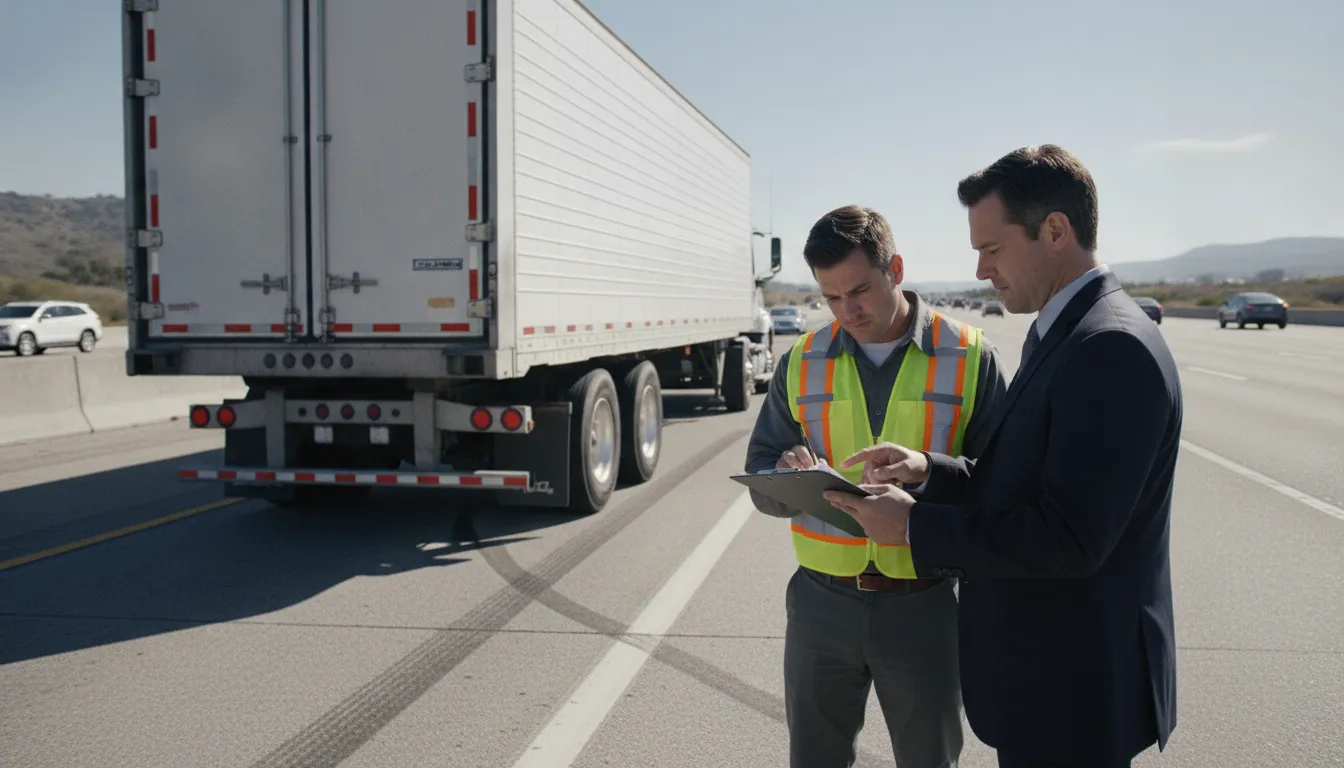
After a serious truck crash, the physical scene can change quickly. An 18 wheeler accident lawyer may begin by seeking preservation of the records and data that can explain what happened. Who was responsible, and how the collision affected your life.
Electronic records and onboard data
Electronic logging device data can show whether the driver was complying with hours-of-service requirements before the crash. ELDs are mandatory for most commercial truck drivers and track driving hours. Comparing those records with dispatch messages, fuel purchases, delivery schedules, and cellphone data may reveal whether fatigue or scheduling pressure played a role. FMCSA identifies driver fatigue connected to hours-of-service violations as a major commercial-vehicle crash factor. Federal safety regulations provide the standards used in that analysis.
An investigator may also request the truck’s event data recorder or electronic control module data. Depending on the vehicle, this information may preserve details such as speed, braking, throttle position, and other mechanical events close to impact. Dashcam and outward-facing camera footage can provide another perspective on traffic conditions, driver actions, and the moments immediately before the collision. These systems may overwrite older recordings, which makes a prompt preservation request important.
Maintenance, inspection, and insurance records
Maintenance files, pre-trip and post-trip inspection reports, repair invoices, tire records, and safety policies can identify problems that should have been found or corrected. The investigation may also examine the carrier’s hiring and supervision practices. Because an 18-wheeler claim can involve the driver, trucking company, maintenance provider, or freight broker, identifying every potentially responsible party matters.
Insurance coverage requires a separate review. Form MCS-90 is an endorsement for motor carrier policies providing public liability coverage, and federal rules establish minimum financial-responsibility requirements for many carriers. The policy, endorsement, and any excess coverage can help clarify which insurers must respond to a claim. An attorney with insurance industry experience can recognize how rapid-response adjusters evaluate evidence and where an initial claim assessment may overlook long-term medical needs.
Why early preservation matters
Roadside crews may remove debris, tow vehicles, repair damaged equipment, and repaint or alter the scene. Tire marks and other physical evidence can disappear. FMCSA records, carrier files, camera footage, and onboard data may also be lost through routine retention practices. A prompt investigation can preserve this material before it is cleared or overwritten. This is especially important when a traumatic brain injury is involved, because symptoms and functional effects may not be fully apparent immediately. Families can learn more about the medical and legal issues in this traumatic brain injury guide.
How Long Do I Have to File an 18 Wheeler Accident Claim in Missouri?
Missouri generally gives an injured person five years from the date of an 18-wheeler crash to file a personal-injury lawsuit. This deadline comes from Missouri Revised Statutes section 516.120 and is often described as one of the more generous personal-injury filing periods in the country. It can provide time to understand the full extent of serious injuries, investigate a complicated collision, and determine which parties may be legally responsible. However, five years is not a reason to delay speaking with an 18 wheeler accident lawyer.
Why Should You Act Before the Filing Deadline?
The legal deadline is only one part of the timeline. Evidence can disappear long before a lawsuit must be filed. Electronic logging device data, vehicle information, dashcam footage, maintenance records, and other materials may need to be requested and preserved promptly. Tire marks and debris can be cleared from the roadway, and witnesses’ memories may become less reliable over time. Missouri’s five-year period does not guarantee that the evidence needed to prove a claim will remain available until the final day.
Early investigation can also help identify every potentially responsible party. An 18-wheeler claim may involve the driver, trucking company, maintenance provider, or freight broker. Those parties may have separate records, insurers, and legal interests. A lawyer who understands commercial trucking claims can send preservation requests, examine the available records. And evaluate how the crash and resulting injuries should be documented before important information is lost. The initial hours after a commercial truck crash can be especially important for securing physical and electronic evidence, according to the firm’s trucking-accident guidance.
What If the Crash Resulted in a Death?
Wrongful-death claims follow a different rule. Missouri generally allows three years to bring a wrongful-death claim under Revised Statutes section 537.100, rather than the five-year period that generally applies to personal-injury claims. The proper deadline can depend on the facts and legal nature of the claim, so a family should not assume that the longer period applies. A careful review early in the process can help protect the family’s options while the investigation proceeds.
After a devastating truck crash, families often need time to focus on medical care, rehabilitation, grief, and daily responsibilities. Consulting counsel early does not require rushing into a decision. It gives the family an opportunity to understand the applicable deadline, preserve evidence, and make informed choices while the facts are still available.
Talk with an 18 wheeler accident lawyer about your Missouri case
Frequently Asked Questions
How long do I have to file an 18 wheeler accident claim in Missouri?
Missouri generally allows five years to file a personal injury claim, but important exceptions can apply. A wrongful-death claim generally has a three-year limit. Because evidence such as electronic logging data, vehicle records, and video can become harder to obtain over time, it is wise to discuss the claim promptly. See the firm’s guide to Missouri truck accident claims for time-limit context.
What are the common causes of 18 wheeler accidents?
Common causes include driver fatigue, hours-of-service violations, speeding, unsafe driving, inadequate maintenance, and defective equipment. A careful investigation looks beyond the immediate collision to determine whether the driver, carrier, maintenance provider, or another business contributed to the crash.
Why might I need a specialized 18 wheeler accident lawyer?
Commercial truck claims can involve federal safety requirements, driver logs, maintenance records, multiple insurance policies, and several potentially responsible parties. A lawyer familiar with these cases can help preserve evidence, evaluate the carrier’s role, and assess whether an insurer’s early evaluation overlooks long-term medical and care needs.
What damages may be available after an 18 wheeler accident?
Depending on the evidence and injuries, a claim may include past and future medical care, lost earnings. Pain and suffering, emotional distress, permanent disability or disfigurement, loss of enjoyment of life, and loss of consortium. Missouri does not impose general caps on compensatory damages in personal injury cases, but recovery depends on proof of liability, harm, and applicable defenses. Our guide to pain and suffering damages explains one part of that analysis.
Talk With an Experienced 18 Wheeler Accident Lawyer in Missouri
If you or a family member have been seriously injured in an 18-wheeler crash. You do not have to face the investigation, the insurance negotiations, or the medical and financial decisions alone. A knowledgeable Missouri attorney can help preserve the evidence, identify every potentially responsible party, and keep the full, long-term scope of your injuries in view.
Contact the Law Office of Chad G. Mann to discuss your 18 wheeler accident case
The firm offers a free consultation and personally reviews every case from beginning to end. There is no obligation, and there is no fee unless a recovery is obtained. Consulting counsel early does not commit you to anything. It simply ensures the evidence and your legal options are protected while you focus on healing.