

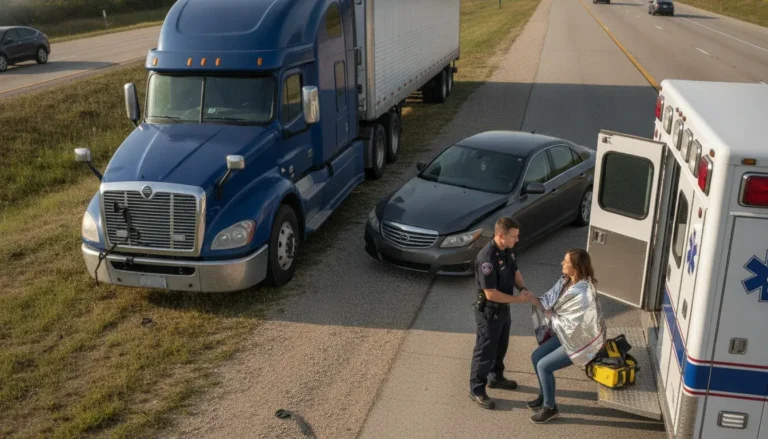
A commercial truck collision can cause common truck accident injuries that are painful, disruptive, and not always obvious at first. Symptoms may change after the crash, and medical records can help explain what happened, what care was recommended, and how the injury affected daily life. This guide offers general information for Missouri families, not a diagnosis or a prediction about recovery.
Request a consultation with the Law Office of Chad G. Mann about your truck accident injuries.
What are the most common truck accident injuries?
Common truck accident injuries include head and brain injuries, neck and back injuries, spinal cord damage, fractures, chest or abdominal trauma, burns, soft-tissue injuries, and nerve damage. A crash can affect several body systems at once. Only a qualified medical professional can evaluate an individual injury, determine appropriate testing, and explain what treatment may be needed.
The size and weight difference between a commercial truck and a passenger vehicle can create substantial forces. Occupants may experience rapid movement, crushing damage, contact with the vehicle interior, or exposure to broken glass, hot fluids, or fire. The following categories are educational examples, not a checklist for self-diagnosis.
Head injuries and concussion
A blow to the head or a sudden change in movement can cause a concussion or another traumatic brain injury. Possible symptoms include headache, dizziness, nausea, fatigue, confusion, memory changes, trouble concentrating, sleep changes, sensitivity to light or noise, and mood changes. A person does not need to lose consciousness for a head injury to require medical evaluation.
The Centers for Disease Control and Prevention explains that concussion symptoms can appear immediately or hours or days later. The CDC also warns that symptoms can affect how a person feels, thinks, acts, or sleeps. Family members may notice changes that the injured person does not recognize, so those observations should be shared with a healthcare provider.
Neck, back, and spinal cord injuries
Truck crashes can injure the neck, back, vertebrae, discs, muscles, ligaments, or spinal cord. Symptoms may include pain, stiffness, weakness, numbness, tingling, reduced range of motion, or changes in balance. Spinal cord injuries can affect sensation, movement, breathing, or bladder and bowel function, depending on the location and severity. Suspected spinal injuries need prompt professional care.
The National Institute of Neurological Disorders and Stroke describes possible spinal cord injury symptoms, including weakness, changes in sensation, difficulty walking, breathing problems, and loss of bladder or bowel control. Do not attempt to test or reposition someone who may have a serious spinal injury unless directed by emergency professionals. The firm’s Missouri spinal cord injury guide provides more focused information about that narrower injury category.
Fractures, chest trauma, and internal injuries
Fractures may involve the arms, legs, ribs, pelvis, spine, or other bones. Blunt force can also affect the chest or abdomen, including the ribs and internal organs. Some internal injuries are not visible from the outside. New, worsening, or concerning pain, swelling, breathing problems, or unusual bleeding should be evaluated promptly rather than dismissed as ordinary soreness.
Burns, soft-tissue injuries, and nerve damage
Truck crashes may involve fuel, hot fluids, fire, broken glass, or other hazards that cause burns and lacerations. Soft-tissue injuries can involve muscles, tendons, ligaments, or bruised tissue. Nerve injuries may cause pain, tingling, numbness, weakness, or changes in function. Whiplash-type neck symptoms can occur without an obvious fracture. A clinician must determine the diagnosis and treatment plan. For a deeper discussion of serious burns and recovery considerations, see the firm’s Missouri burn injury guide.
| Injury category | Possible symptoms or effects | Records that may help explain the condition |
|---|---|---|
| Head or brain injury | Headache, dizziness, memory or concentration changes, sleep or mood changes | Emergency evaluation, imaging when ordered, follow-up notes, family observations |
| Neck, back, or spinal injury | Pain, stiffness, weakness, numbness, tingling, reduced movement | Examination findings, imaging, specialist notes, therapy and restrictions |
| Fracture or internal trauma | Limited movement, chest or abdominal symptoms, swelling, tenderness | Emergency records, imaging, procedures, discharge instructions |
| Burn, soft-tissue, or nerve injury | Pain, scarring, bruising, strain, tingling, loss of function | Wound care, therapy notes, medication records, functional descriptions |
Why can symptoms appear later after a truck crash?
Symptoms may appear later because shock, adrenaline, and the urgency of the crash scene can mask discomfort. Swelling and inflammation can also develop over time, and concussion symptoms may be noticed only after a person returns to ordinary routines. Delayed symptoms do not prove a specific diagnosis, but they should be reported to a qualified medical professional promptly.
Neck or back soreness may become clearer after movement resumes. Headaches, dizziness, fatigue, nausea, trouble focusing, sleep changes, or unusual irritability may become more noticeable at home. A person may also realize that pain interferes with driving, lifting, work, childcare, or household tasks only after trying those activities.
The Mayo Clinic notes that whiplash symptoms often start within days and may include neck pain, limited motion, headaches, shoulder or arm pain, tingling, fatigue, dizziness, and trouble focusing. That information does not mean every delayed symptom is whiplash. It illustrates why a changing symptom picture deserves medical attention instead of an assumption about the cause.

What should medical records document after a truck accident?
Medical records should create a clear timeline from the collision through evaluation, treatment, follow-up, and functional changes. They should accurately reflect the symptoms a patient reports, the findings a provider documents, the tests or referrals ordered, and the instructions given. Complete records help clinicians make decisions and may help a legal team understand the medical history without relying on guesswork.
When speaking with a provider, describe symptoms in ordinary language and be specific about timing. Useful details can include:
- When the symptom first appeared and whether it is changing.
- Where pain, numbness, weakness, dizziness, or other symptoms occur.
- What activity makes a symptom better or worse.
- Whether symptoms affect sleep, concentration, walking, driving, lifting, or communication.
- Which work, household, or caregiving tasks are harder or no longer possible.
- Whether a medication, therapy session, or activity caused a concern that should be reported.
Keep copies of emergency records, imaging reports, prescriptions, discharge instructions, referrals, therapy notes, bills, and work-restriction documents. A chronological folder can make it easier to identify missing records and prepare questions for a provider. A private symptom journal may add useful context, but it is not a substitute for medical care or the official medical record.
Do not exaggerate symptoms, change a record, or skip medical advice to create a stronger claim. Honest, consistent communication is more useful than trying to use legal terminology. If transportation, cost, scheduling, or another barrier affects treatment, tell the provider and keep any related documentation so the timeline is understandable.
How can injury records relate to a Missouri truck accident claim?
Injury records can help connect the collision to the condition being claimed, show the care that was recommended, and describe how symptoms affect work and daily activities. They do not guarantee a settlement or establish liability by themselves. A Missouri claim also depends on crash evidence, fault, other responsible parties, prior health information, damages, and the specific facts reviewed by legal and medical professionals.
Insurance companies may examine the timing of treatment, gaps in care, prior symptoms, test results, work restrictions, and whether the reported limitations are consistent with the records. That does not mean a delayed symptom or a preexisting condition automatically defeats a claim. It means the medical history should be presented accurately, with a provider’s explanation where appropriate. Chad Mann’s prior insurance-industry experience gives him insight into how carriers evaluate, negotiate, and sometimes deny injury claims, but that perspective is not a promise of any result.
A truck claim may involve more than the injured driver’s account. Crash reports, vehicle damage, photographs, witness information, commercial vehicle records, and other evidence can help establish what happened. The firm’s Missouri truck accident claim guide discusses liability and damages at a broader level. This article’s narrower focus is the injury timeline and medical documentation.
Missouri’s general limitation statute, RSMo section 516.120, lists five years for many actions, but exceptions and different defendants can change the analysis. Wrongful-death claims and claims involving government entities can have different rules. Do not treat a general deadline as a case-specific answer. An attorney should review the collision date, the parties, the injury, and any other facts that affect timing.
Missouri also uses a comparative-fault framework in negligence cases. The amount potentially recovered may be affected by the evidence about each party’s responsibility, but the legal effect depends on the claim and facts. Preserving accurate medical and crash records gives a legal team better information for evaluating those issues. Read the firm’s Missouri truck accident attorney guide for broader discussion of commercial crash investigations and insurer evaluation.
What is a practical record-keeping checklist?
A practical checklist can help a family organize information while medical care continues. Keep the focus on accurate health information and daily function, not on trying to predict a claim’s value. Share changes with healthcare professionals, follow their instructions, and preserve the original records.
- Seek evaluation. Get appropriate medical attention after the crash, even if symptoms initially seem manageable. Follow emergency instructions and ask what changes require urgent care.
- Track the timeline. Record appointment dates, symptom changes, referrals, treatment instructions, work restrictions, and questions for the next visit.
- Save source records. Keep visit summaries, imaging, prescriptions, therapy notes, bills, discharge instructions, and provider communications together.
- Describe function. Note specific changes in walking, lifting, driving, sleeping, concentrating, working, household tasks, or caregiving.
- Preserve work information. Keep restriction notes, schedules, pay records, missed-time information, and communications about modified duties.
- Ask for clarification. If a diagnosis, referral, medication, or restriction is unclear, ask the treating provider rather than relying on an insurer or online article.
Records are most useful when they are created during ordinary care and describe the person’s actual experience. A symptom journal should not replace treatment, and a legal claim should not delay emergency care. When a family is overwhelmed, a trusted person can help organize documents while the injured person focuses on recovery.
When should someone seek urgent medical care?
Emergency care is appropriate for serious or rapidly worsening symptoms after a truck collision. Warning signs can include a worsening headache, repeated vomiting, seizure, fainting, increasing confusion, new weakness or numbness, trouble speaking, difficulty walking, severe breathing problems, chest pain, severe abdominal pain, unusual bleeding, or difficulty waking. Call emergency services when the situation may be life-threatening.
The CDC’s danger-sign guidance for adults with possible mild traumatic brain injury includes worsening headache, repeated vomiting, seizures, weakness or numbness, slurred speech, unusual behavior, confusion, and loss of consciousness. The list is not a diagnosis and is not complete. Do not delay urgent treatment to collect documents, photograph an injury, or speak with an insurance representative.
Frequently asked questions
What injuries can happen after a truck accident?
Truck collisions can cause head and brain injuries, neck and back injuries, spinal cord damage, fractures, chest or abdominal trauma, burns, soft-tissue injuries, and nerve damage. A person may have more than one injury, and symptoms do not always show the full condition immediately. A qualified medical professional must evaluate the individual circumstances.
Can truck accident symptoms start days later?
Yes. Some symptoms may be noticed hours or days later, especially when shock initially masks discomfort or when swelling and inflammation develop. Delayed symptoms do not prove a particular diagnosis. Tell a healthcare provider about the change, follow medical instructions, and keep an accurate timeline of what you experience.
What medical records should I keep after a truck crash?
Keep emergency records, imaging reports, follow-up notes, prescriptions, therapy records, referrals, discharge instructions, bills, work restrictions, and communications about appointments. A factual symptom and function journal can help organize timing and daily effects. Do not alter records or replace professional medical advice with a private log.
Do medical records prove a Missouri truck accident claim?
Medical records can support the injury timeline, treatment history, restrictions, and functional effects, but they do not prove every part of a claim by themselves. Liability, causation, damages, comparative fault, and other issues may require additional crash evidence and legal analysis. A Missouri attorney can explain what information is relevant to a specific situation.
What if I had symptoms before the truck crash?
Prior symptoms do not automatically answer whether a crash caused a new injury or worsened an existing condition. Tell medical and legal professionals about the history accurately. Providers may compare earlier records, current findings, and the timeline. An attorney should review the complete facts rather than assuming that prior treatment ends the analysis.
Learn more about your next steps
Common truck accident injuries can affect health, work, family responsibilities, and future decisions. Medical care comes first. Accurate records, clear communication with providers, and timely legal guidance can help a family understand the issues without relying on a diagnosis or outcome promise. The Law Office of Chad G. Mann represents Missouri injury clients and invites you to contact the firm through its online form to discuss your situation.
Medical and legal disclaimer: This article provides general educational information, not medical advice or legal advice. It does not diagnose an injury, establish an attorney-client relationship, or predict the outcome or value of a claim. Seek emergency care for urgent symptoms and speak with a licensed healthcare professional about medical concerns. For legal guidance, consult a Missouri attorney about the facts of your case.